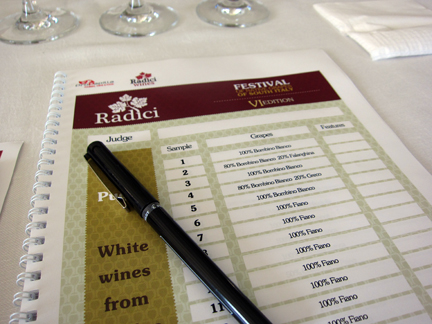
This morning we began tasting and scoring wines in the competitive sessions of the Radici Wines festival. We have to blind taste more than 200 labels between today and Wednesday, when the winners will be announced. All of the wines are made from indigenous grape varieties from Southern Italy.
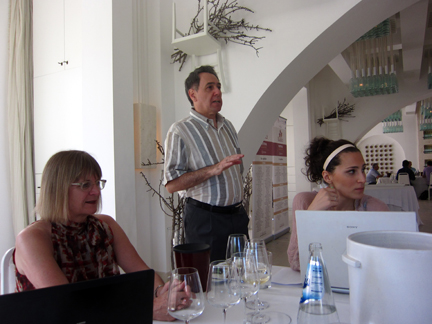
They’ve gathered a remarkable group of judges for the media jury — Italian and international (there’s also an Italian restaurant and wine professional jury). This morning I was seated next to Jancis Robinson (she’s “number 1” and I’m “number 2”; how cool is that???!!!). That’s Franco Ziliani center addressing the “jury” and our excellent interpreter, Marilena Balletta, who’s been doing a great job interpreting for the solely English speakers of our group (as a veteran interpreter at events like this, I can’t say that I envy her!).
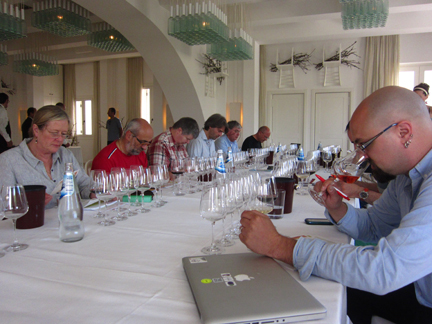
It’s been great to rub shoulders with über-cool wine blogger Ryan Opaz (in the foreground, sitting to my right, “number 3”).
And I’ve also had a lot of fun horsing around with Jo Cooke, David Berry Green, and Kyle Philips. And I’ve also been enjoying sharing thoughts on Marxist ideology and Latin epithets with Maurzio Gily.
The Borgo Egnazia resort where we’re staying is pretty incredible but so far we haven’t had much time to enjoy it…
And as Alfonso can imagine, there’s no internet in the rooms…
Since I’ve spent the last week in Apulia, it only seemed appropriate to feature an Apulian grape this week for the Italian Grape Name and Appellation Pronunciation Project. And since we’ve already done Negroamaro, it seemed a propos to feature another one of the most widely planted grapes here, Primitivo. And so, the other day when we went swimming the other day in the Adriatic (at Torre dell’Orso, not far from Lecce), I asked Paolo to pronounce Primitivo for my camera.
Of course, Primitivo is one of the easiest for English-speakers to pronounce. And so I thought it would be fun to spice things up with a dialectal pronunciation.
I’m waiting until after the Radici Wines festival ends to start posting on the wines I’ve tasted, but I’ll give a little preview by revealing that I LOVED the Primitivo by Pasquale Petrera (Fatalone, Gioia del Colle). As it so happens, he uses the dialectal name of the grape on one of the labels of his excellent wines (and I’ll post on my tasting down the road): u Pr’matìv (Il Primitivo, in Italian, the Primitivo [grape]). And so I asked him to take a break from one of the preview tastings and pose for my camera.
Buona visione! And thanks for speaking and drinking Italian grapes!
There’s no denying it: so far, the Radici Wines gathering has been one of the best tasting festivals I’ve ever attended in Italy. In past years (now its fourth), the festival was limited to Apulian and Lucanian producers. But this year it includes more than 100 producers from Apulia, Basilicata, Calabria, and Campania.
And even though the unusual “speed-dating” format can lead to some awkward silences, it’s been fantastic to taste and chat one-on-one with so many interesting producers.
There’s no time this morning to begin posting on the many amazing wines (1997 Gaglioppo, anyone? 1975 Primitivo?). But I’ll get to them soon enough.
In the meantime, fiordilatte — literally, crème de la crème, one of the many wonderful “plastic” cheeses produced here in Apulia — and crusty bread were just what I needed for lunch…
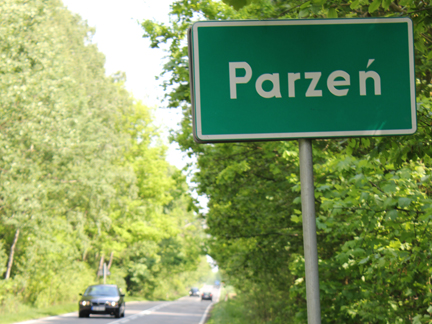
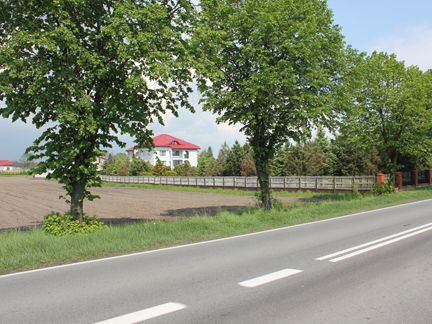
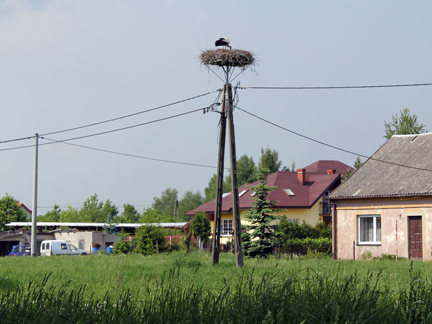
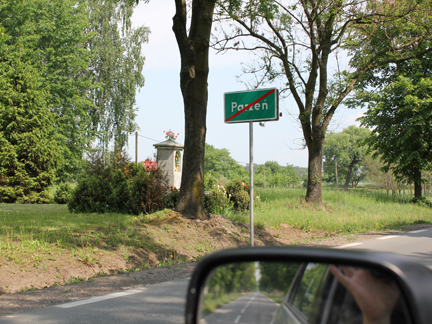
The most remarkable thing happened last weekend: my friend and Polish blogging colleague Andrzej Daszkiewicz — wine writer and author of a number of Polish-language wine blogs — snapped some photos as he passed through the village of Parzeń and sent them to me.
Like many Jews of Eastern European descent, my surname comes from a toponym, in this case Parzen, which at one time was most likely home to a shtetl. The name Parzen came to our family after my biological paternal grandfather died and my paternal grandmother married Rabbi Maurice Parzen in South Bend, IN. The Rabbi, who passed away when I was still a child, is survived by my great uncle Manny Parzen, his youngest brother, famous in his own right for his research in the field of statistics. The Parzens were from Lodz (Łódź) and they came to the U.S. in the first decade of the last century.
Here’s what Andrzej — to whom I am eternally grateful — had to report:
Two older houses there have their roofs covered with asbestos, which used to be very popular (because very cheap) material for that. Now it’s almost gone, but in some places you can still see it, as here.
This village is located at one of the roads I could take driving from Warsaw, where I live now, to Toruń, where I used to live and drink wine and still have many wine drinking friends. We had a friend’s birthday party on Friday, and on Saturday I took that road driving back to Warsaw (usually I take a bit faster, but much less scenic one)…
It is a small village now, with several rather isolated farms and no typical village center, no church (at least I could not see any). Two neighboring villages are much bigger, more typical ones. It is so small that there is no speed limit stricter than the regular highway one (around 55 mph).
Parzeń is about 15 km from a quite big (for Polish standards at least) city Płock, and around 120 km from Warsaw.
Just this morning, Tracie P said to me, after she finished a business call, “Well, I’ve certainly gotten used to my new last name.” It’s incredible to think that our family name — the name our children will have — comes from so far away from Austin, Texas.
A heartfelt thanks, once again, to Andrzej for the fraternity and the friendship, and this wonderful virtual window into the origins of our family.
As ubiquitous as Malvasia (mahl-vah-ZEE-ah) may be in Italy (and in Europe), it is unfortunately one of the most mispronounced grapes beyond Italy’s borders.
For today’s episode of the Italian Grape Name and Appellation Project, I have created two videos: 1) Malvasia pronounced by a Tuscan speaker (Valeria Losi of Querciavalle); and 2) Malvasia (Istriana) pronounced by a Friulian speaker (Giampaolo Venica of Venica & Venica). Note the more nasal vowel system in Giampaolo’s pronunciation and the more rapid scansion of the ampelonym. Valeria’s vowels (ah) are more open and even speaking at a normal pace, she pronounces the grape name more slowly.
That’s a view of Giampaolo’s land from his top growing site, Ronco delle Mele. Giampaolo will be joining us at Sotto in Los Angeles on Wednesday June 22 for a winemaker dinner where we’ll be pouring 4 of his Friulian whites and his Magliocco from Calabria. Details to follow…
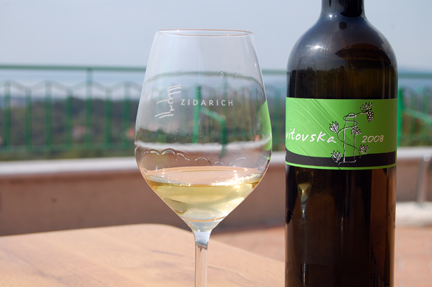
This week’s episode of the Italian grape name and appellation pronunciation project is devoted to a variety that I simply cannot drink enough of, Vitovska, a grape grown primarily in the Carso (Eastern Friuli) and Slovenia, a grape that produces bright white-fruit wines with low alcohol and high acidity, and a variety that has become a flagship for orange-wine (skin-contact) producers like Vodopivec and Zidarich — two of my all-time favorite wineries and wines.
Above: The Zidarich winery is one of the most amazing sites I’ve ever seen in all of my vinous travels. It was constructed using only locally found materials, like “Carso Onyx,” the red limestone of the Carso in Eastern Friuli.
Above, you can hear and see Benjamino Zidarich (BEHN-yah-MEE-noh ZEE-dah-reech) speaking the ampelonym Vitovska, with the rapid rhythm very commonly found among speakers in the Carso (the dialectal inflection of nearby Trieste is famous for this signature of its prosody). I visited Benjamino and his amazing winery back in September of 2010. Even though we’d never met, we share some very close friends (the uncle of a very good friend of mine is the architect who designed his incredible facility). We both remarked about the fact that he and I both have Old Testament names: his family has a long-standing tradition of giving its children names from the Hebrew Bible.
Above: Every element — including the artistic — in the Zidarich cellar is an expression of Benjamino’s respect for nature and his deep sense of spirituality inspired by her, like the four bas-reliefs on the columns supporting the ceiling, each of them representing one of the four seasons.
One of the things that impressed me the most about Benjamino and his winery was his deep sense of spirituality, expressed not only in the way he spoke about his wines but also in the cellar itself. The facility was built using only materials found locally in the Carso and it includes many artistic elements that depict nature and its balance. I don’t think Benjamino would disagree with my observation that he has built a temple consecrated to nature and Natural wine.
Lately, I’ve been thinking a lot about how the biodynamic movement in America rarely includes its spirituality — one of the very foundations upon which it rests. However much they may disagree, the one thing that ties nearly all of the European producers of Natural wine together is their spirituality and quasi-religious devotion to what they do and how they speak about their wines and nature. Benjamino is one of the most deeply spiritual I know.
Above: In the U.S., we almost only see Vitovska vinified with skin contact as an orange wine. And the wines are DELICIOUS! But when I visited Benjamino, I got to taste his entry-level Vitovska, vinified as a lighter-style white wine. Man, I could drink that wine every day…
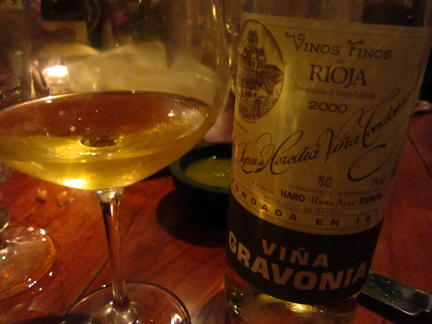
The list at one of me and Tracie P’s FAVORITE restaurants in the world, Fonda San Miguel (Austin), is OFF THE CHARTS ROCKING right now. Earlier this week, a close friend treated us to dinner and a bottle of the 2000 Gravonia white by López de Heredia. Man, that wine is INSANE right now. Wonderful fruit, great acidity, and the oxidative note that takes those wines over the top. Great pairing with the queso and the sopecitos.
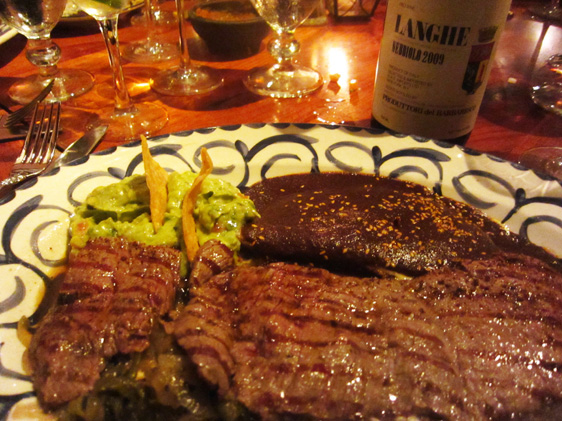
Next we paired the 09 Produttori del Barbaresco Langhe Nebbiolo with our entrées. I had the carne asada tampiqueña… A match made in heaven (I wrote about it today over at the Houston Press for my “Odd Pair” rubric).
Produttori’s 09 Langhe Nebbiolo is one of the more light-bodied vintages in recent years and its bright fruit and acidity were fantastic with the dish and stood up beautifully to its intense flavors and spiciness. Seriously, one of the best meals of the year so far…
How cool is that? The best Mexican restaurant in the U.S. and they have Produttori del Barbaresco on their list! Love it…
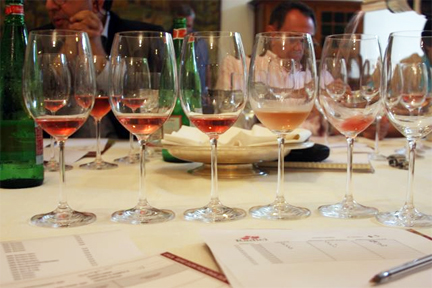
Above: A scene from last year’s Radici (Roots) Wine Festival in Apulia (photo by Brunellos Have More Fun).
My year in southern Italian wine continues as I prepare to head back to Apulia in a few weeks for the Radici (Roots) Wine Festival in the province of Bari, where I’ll be tasting literally hundreds of wines made from native southern Italian grape varieties.
I’m going to be seeing some old friends and making some new ones. And as tired as I am from too much travel and too much time away from the love of my life Tracie P, I accepted a spot on this trip because I believe in the festival’s mission of promoting awareness of native Italian grape varieties.
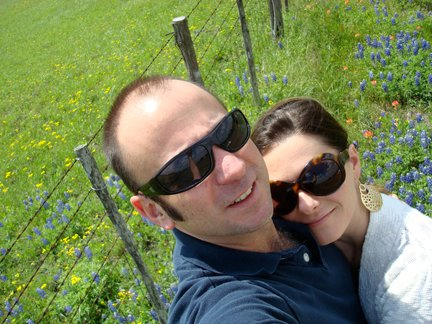
Above: I’d rather be here, holding Tracie P tight and smelling Texas springtime bluebonnets!
Believe me: as glamorous as these trips sound, they are a complete drag (ask Alfonso, a 30-year veteran of what we call “death marches” in the trade, and he will tell you the same thing). You begin tasting scores of wines at 9 in the morning and you taste all day with just a short break for lunch. You have to listen to every local fat cat bureaucrat give the same speech (and the subsequent poorly and slavishly translated version in English, “We wish to valorize the territory” etc.). The wifi never works (the Atlantic Monthly reports that “Internet penetration is only around 50 percent” in Italy, thank you very much Mr. Berlusconi). And ultimately, you are a prisoner of the festival organizers: you eat when and what they tell you to eat (although I have become a master of politely moving my food around my plate so that it looks like I have consumed some of it).
But when Italy’s top and most politically charged wine blogger Mr. Franco Ziliani asked me to join him and an international group of colleagues in Apulia later this month, I gladly accepted out of solidarity and camaraderie with those who share my belief that Italy’s greatest wines are made from native grape varieties by people who believe that wine is a cultural and ideological expression.
There will be foreign buyers there: they’re looking for new wines to import and distribute. There will be some of the usual suspects who continue to live on the gravy train of Italian wine press junkets: some of our older and hard-on-their-luck colleagues will be there looking for a meal ticket. But there will also be some of us — observers (writers/bloggers) and actors (winemakers/grape growers) — who are looking for the ethos of these wines: their characteristic spirit, prevalent tone of sentiment, of a people or community (definition from the OED online edition).
Stay tuned and I’ll let you know what I find (the trip begins in early June)… Thanks for reading…
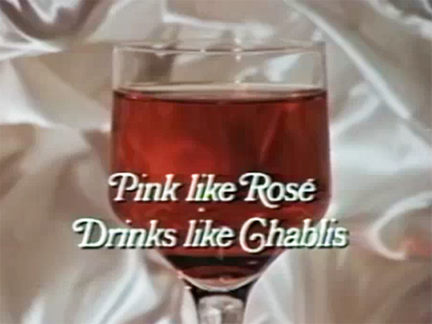
Just had to share the above video (circa 1978?). I stumbled across it as I was doing some research for a piece on rosé I wrote for the Houston Press (watch it before Gallo yanks it!).
Isn’t it incredible to see how wine was marketed in this country a generation ago?
You’ve come a long way baby! (Who can name the ad campaign for this slogan?)




 Do Bianchi