The story behind La Licenziana vs. Vicenziana Barbaresco

Silvio Giamello 2005 Barbaresco Vicenziana, made from grapes in the Ovello cru of Barbaresco. Vicenziana is a named place (a lieu-dit, in French) in the cru and lies in the northernmost area of this famous growing site. Photo by Tracie B.

We depend so much today on the immediacy of the internet for information and today, more than ever, there is so much information available to consumers on wines, wineries, and wine prices — via blogging, chat rooms, bulletin boards, and subscription archives like WineSearcher and CellarTracker.

I was thoroughly impressed when I tasted the 2005 Barbaresco Vicenziana by Silvio Giamello the other day but deeply disappointed when my Google search for info about the wine proved fruitless. So I figured I’d do things the old-fashioned way: I decided to call Silvio and looked for his number at PagineBianche.it. But this dude’s not even in the phone book!

I finally found another Giamello who owned an azienda agricola (literally a farming estate or farming company) and called him in the hopes that they were relatives (there are a lot of Giamellos in Piedmont!). He didn’t have Silvio’s number but he gave me just enough geographical information to find the winery. Sheesh!

So here’s the story behind this wine…

The estate, Silvio told me, is called La Licenziana. It was planted to Nebbiolo and Dolcetto by Sivlio’s grandfather and it lies in the northernmost part of Barbaresco in Ovello (one of the famed Barbaresco crus), just a few rows in the western part of the cru, with south-eastern exposure. Silvio’s father used to bottle small amounts of the wine but sold most of the fruit to Langa négociants and also made some bulk wine. About ten years ago, Silvio decided to start bottling Barbaresco and when he researched the origins of his family’s growing site, he consulted municipal records and discovered that the name Licenziana was a dialectal corruption of Vicenziana. In antiquity, the estate was owned by a Roman noble named Lolio Vicenziano (I was able to find some info on Lolio but not much and I imagine his Latin name was Lollius, but I’ll have to get to the bottom of that later). According to Silvio, the estate was called Villa Gentiana in antiquity: villa means farmhouse in Latin and my hunch is that the designation gentiana might have been derived from gens, which means race, clan, or house, and often denotes Roman upper-class Roman citizens. In other words, it probably meant noble farmhouse. Somewhere along the way, Villa Gentiana became Vicenziana, according to Silvio.

I liked the wine so much that I bought a bottle and Tracie B and I drank it last night with a little sausage ragù that I made.

This wine was all earth, mushroomy and savory, my favorite style of Barbaresco, what I like to call “rustic.”

Silvio told me that he employs integrated farming practices and vinifies (no surprise here) in a traditional style (large old-oak cask aging).

His maximum production is around 5,000 bottles and he made roughly 3,000 of the 2005.

When I mentioned to him that there is very little info available about his wines on the internet, he said that he likes it that way: “I’m in no hurry to let people know about my wines,” he told me. It reminded of the story that Maria Teresa Mascarello told me about how her father, the legendary Bartolo, didn’t want a phone in their home. When the young Teresa complained, Bartolo finally relented and told her she could have a phone but it had to be registered in her name.

Silvio does have an email address and he promised to send me info on the 2009 harvest… but only when they’re done picking the grapes. I guess I’ll just have to wait!

Great wine, highly recommended for the pricepoint.

The origins of Zibibbo (closer reading part 2)

pant1

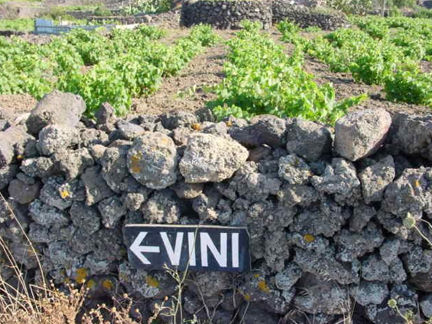
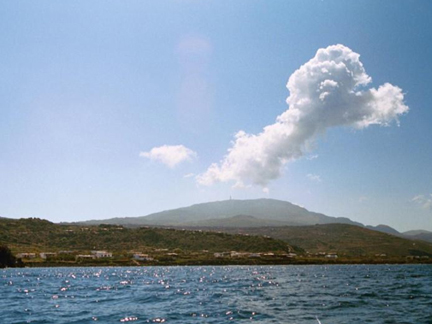
Photos of Pantelleria by Alfonso Cevola.

In response to my post on Sir Robert the other day, both Charles (friend, mentor, venerated palate, and husband to Italian cookery authority Michele Scicolone) and Tracie B (my soon-to-be better and definitely better looking half) asked about the origins of the grape name Zibibbo.

In 1605, Sir Robert writes of white Tuscan grape “Zibibbo,” which is “dried for Lent.” It is highly likely that he is referring to the Tuscan tradition of Vin Santo. One of the unique things about Vin Santo, beyond the winemaker’s intentional oxidation of the wine, is that it often undergoes a second fermentation in the spring when temperatures begin to rise and my hunch is that the reference to Lent has something to do with vinification practices (but that’s another story for another post).

Today, we know Zibibbo as the white Moscato used to make the famed wine of Sicily, Passito di Pantelleria. But in antiquity, the word meant simply “dried grape,” from the Arabic zabib, akin to the Egyptian zibib. As it turns out, it was only recently that the term began to denote specifically the grapes used for the famous wine of Pantelleria. It’s not clear which variety Sir Robert is referring to but he’s clearing referring to a dried grape wine (especially in the light of his reference to Lent).

pant2

When I was a grad student, my dissertation adviser used to call me the segugio, the blood hound or sleuth: this morning I did some snooping around and found and translated the following passage by one of Italy’s greatest philologists, Alberto Varvaro, professor at the University of Naples (o what a joy to be reunited, finally, with my library!). I love what professor Varvaro has to say in his conclusion, i.e., that part of the reason why we’ve come to know Moscato d’Alessandria as Zibibbo is because Palermitan shopkeepers adopted the term as a designation of higher quality in order to charge higher prices.* I also love Varvaro’s Sicilian style and humor in describing this linguistic phenomenon — all the while in a highly erudite and scientific context. Varvaro was born in Palermo in 1934 and is one of Italy’s leading experts in dialectology.

    Everyone knows Zibibbo, the excellent white table grape variety, grown for the most part in Pantelleria (hence the name)… Many are quick to say that this has always been its name and that the connection between the name, meaning, and referent-object has ancient and undisputed origins.** But this is not the case: the Arabic zabib, which with all likelihood gave the name to our grape, was a dried grape and was probably the meaning of the term when it began to be used in Sicily (according to [anthropologist] Alberto Cirese, its meaning remained unchanged in outlying areas and as far away as Central Italy). Even if this were not true, there is no disputing the fact that dictionaries in the 1700s and 1800s unhesitatingly define the term zibbibbu as a red grape and therefore, there is no doubt that the word’s meaning has changed only recently. Lastly, it is worth noting that the grape’s history in Pantelleria is proof of this recent change. Apart from its past history, it is useful to consider the present state of things: as if to play a trick on Linnaeus [the father of modern taxonomy] and surely motivated by profit and self-promotion, most of the shopkeepers in Palermo make a clear-cut distinction between zibbibbu and uva: if you use the word uva [i.e., grape] when you ask for zibibbo, the shopkeepers will correct you, perhaps because they suspect you wish to pay less. Thus, we have a case in which the solidarity of the name, meaning, and referent object has been broken in relation to a change in the referent-object as well as in relation to the linguistic articulation of the meaning.

pantelleria3

If I keep up this scholarly Sicilian sleuthing, ya’ll might have to start calling me Dr. Montalbano!

Thanks for reading…

* In Grape Varieties of Italy, Calò, Scienza, and Costacurta list these synonyms for Zibibbo: Zibibbo Bianco, Moscatellone, Moscato di Pantelleria, Salamonica, Salamanna, Seralamanna, Moscato di Alessandria [Muscat d’Alexandrie, Muscat from Alexandria, a reference to its Egyptian origins], Muscat [in French].

** Referent or referent-object is a term used in linguistics to denote “The entity referred to or signified by a word or expression; a thing or person alluded to” (OED). In this case, Varvaro is using a classic triangular model of linguistics, articulating the word itself (the name or signifier), its meaning (the signified), and the actual object to which it refers.

A closer reading: “The vine is the greatest commodity of Tuscany, if not of Italy.”

This just in: taste old Australian Semillon with me at Jaynes Gastropub in San Diego on Saturday, September 26… yes, Australian wine, can you believe it?

Above: At the time of Dallington’s visit to Italy (1596), Bacchus was often depicted with Ariadne, his wife, as in this painting by Guido Reni (1557-1642). Today, we think of Bacchus (or Dionysus) as the god of wine. In fact, he was the god of luxuriant fertility, which was symbolized by the vine in antiquity, and so by association he became the god of wine. In ancient Italy, he was associated with the indigenous god Liber, who was celebrated with joyous abandon during the time of the grape harvest.

My post the other day on an “earlier Tuscan sun” and the description of grape growing and viticulture in late 16th-century Tuscany elicited some interesting comments and questions. Thanks, everyone, for taking the time to read and comment.

Simona, author of Briciole, brought up an important point: in the first line of the passage, Dallington uses the term Italy.

    The Vine.. without comparison is the greatest commodity of Tuscany, if not of Italy

Italy, as we know it today, was unified for the first time for a brief period in the modern era under Napoleon (1805-1814). Only in 1861 did Italy — as a nation — achieve independence from foreign domination. Until that time, the Italic peninsula was divided among its principalities or microstates, which often aligned themselves in league with foreign powers but never achieved a confederation defined by Italy’s natural geographical boundaries.

According to the OED, the toponym Italy begins to appear in the English language toward the end of the sixteenth-century, the same time that Dallington made his trip to Tuscany. (The terms Italy, Italian, and Italo, derive ultimately from the Latin Italia, in turn from the Latin Vitalia from vitulus, meaning calf; the ancient name Vitalia was owed to Italy’s abundant cattle.)

Even though the notion of the Italian nation and the term Italia had distinctly emerged by the 14th century (think of Petrarch’s song 126, Italia mia, ben che’l parlar sia indarno [My Italy, although speech does not aid]), the citizens of the Duke State of Tuscany encountered by Dallington would hardly have called themselves “Italians.”

Simona was right on: it’s truly remarkable that Dallington uses the term Italy and implicitly refers to an Italian nation. But what I find even more remarkable is the fact that he calls the vine the “greatest commodity of Tuscany, if not of Italy.”

More than two centuries had passed since Petrarch reproached the gluttonous cardinals of Avignon for their immovable love of Burgundian wine, asking them, “Is it not a puerile ambition to malign the many types of wines, so plentiful, found in all parts of Italy?” (See my post on this famous letter by Petrarch to Pope Urban V here.) The papacy was returned to Italy in 1378.

More than two centuries later, a foreigner arrived from Elizabethan England, and called the vine “Italy’s greatest commodity” — a preview of how viticulture would become a sine qua non of the Italian nation and Italian national identity.

This is the first in a series of “closer readings” of the Dallington text inspired by visitors’s comments. Next up: the origins of the term zibibbo. Stay tuned…

Super Texans: tasting Texas with the Austin Dream Team

Above: The Austin Dream Team. From left, Craig Collins (Central Texas Sales Manager for Prestige Cellars), Devon Broglie (Southwest Regional Wine Buyer for Whole Foods Markets, which was founded in Austin), and June Rodil (recently crowned “best sommelier in Texas,” sommelier at Uchi in Austin, a world-class and cutting-edge Japanese restaurant in land-locked central Texas).

This was no run-of-the-mill focus group. It was an Austin Texas USA dream-team of young sommeliers gathered by the PR firm that reps the Texas Department of Agriculture to taste some Texan wines blind.

Folks in Texas are serious about their wine (Texans love to drink locally) and when it comes to marketing of local products, they don’t kid around: these top young somms had been asked to give their honest no-holds-barred opinions of the wines (each flight included a ringer, not from Texas) to help gauge which wines to present to food and wine writers and pundits etc.

Frankly, I haven’t taken Texan wines very seriously since I moved here nearly 10 months ago but — as Franco rightly reminds me — rules are rules: when you taste blind and you taste something you like, you have to admit it (even when you weren’t expecting to like it) and frankly, I tasted more than one wine I liked in yesterday’s degustation.

And there was another surprise as well.

I had never heard the term Super Texan before and when I wondered out loud why so many Texan wineries are Italophilic as opposed to Francophilic (like their Californian counterparts), one of the more interesting theories was proposed by June, who noted that Texas is a predominantly Republican state and has a historic distaste for Francomania.

Above: Also in attendance was wine writer David Furer who came to town especially for the tasting and who was lucky enough to taste Tracie B’s farro salad the other day at our impromptu Labor Day picnic.

In the first flight of red, we tasted a number of wines made with Sangiovese (monovarietal or blended) and varietal expression was clearly evident. The wine that impressed me the most was the Llano Estate Newsome Vineyards High Plains Viviano, a “Super Texan” blend of Cabernet Sauvignon and Sangiovese. The wine was real, it was elegant, it had natural acidity, honest fruit, and genuine freshness (although I’m not sure I would reach for it at $40 a bottle).

In the same flight, however, was a wine that the panel didn’t seem to like because of a green, herbaceous quality. When asked my opinion (and frankly, I was out-classed by these top somms in their superior ability to taste and describe blind, ubi major minor cessat), I asked the other participants “to cut it some slack,” as it was also one of my favorites in the flight. Anyone who knows me wouldn’t be surprised at the laughter in the room (Devon and Craig and I have tasted a bunch of times together) when it was revealed that my ugly duckling was Italian.

But to my great surprise, it was a wine that I never would have thought I’d like, 2006 Chianti Classico by Badia a Coltibuono, a high-volume winery that has enjoyed wide success in the U.S. thanks to aggressive, intelligent marketing. According to the website, 170,000 bottles of this wine are produced every year, but, frankly, I could really taste place in this wine: it had that characteristic Sangiovese plum note and I liked its food-friendly herbaceousness. For $25, I like it. There you go: rules are rules and there’s a lot to be said for tasting locally.

In other news, another taste of Texas…

Tracie B snapped this slice of Texan life last night outside the Broken Spoke where I played a gig. I gotta say that I love living in Austin… not that the lovely Tracie B has anything to do with it… ;-)

More grape porn triple x

This just in… Chardonnay from Salento, Apulia. For a while, I repped my friend Paolo Cantele’s wines here in Texas. I’m a big fan of his Salice Salentino and his Rosato is one of my favorite rosés from Italy this year. I’ve always found that Negroamaro is one of the best grapes for rosé.

You can see Paolo’s entire photo stream here and man, are those some sexy Chardonnay grapes or what! I can almost hear my mother knocking on the bathroom door and saying, “what have you been doing in there so long?”

You may remember a post I did about Negro Amaro and a possibile answer to the riddle of its name. Paolo subscribes to the theory that amaro is not Italian but rather a corruption of the Greek mavros meaning black (see the post for the background on the debate).

It recently occurred to me, however, that the commonly accepted explanation for the name of the Greek red grape Xinomavro is that it means acid black or bitter black from the Greek oxy (sharp, keen, acute, pungent, acid) and mavros (black). Could this be a clue that the origin of Negro Amaro’s name is indeed black bitter?

I don’t have time to get to the bottom of this today but rest assured, I will!

The N word

From the “so to speak department” otherwise known as the “department of semiotics and semantics”…

It’s not a bad word.

Nor is it a racially charged or in any way nocive or noxious word.

It’s a nice, normal nomination that we use nomenclaturally.

It’s no nomen novum, nomen nudum, nomen dubitum, nor a nomen oblitum. No, it’s a word that most folks use nearly every day in one way or another.

It has become the subject of gnostically nuclear debate in the notoriety of Saignée’s recent series 31 Days of N… OOPS! SAWWY! I almost said it.

This morning, two of my blogging colleagues, both of whom I respect immensely, posted on its meaning and its contextualization with regard to enological epistemology here and here. In diametrically opposed stance (however unaware of each other’s posts), they contemporaneously espoused two radically different points of view. I won’t dare SAY the WORD but I do recommend both posts to you.

Last night, Tracie B made us a dinner of rotisserie chicken (from Central Market) and iron-skillet roasted potatoes and peppers that we enjoyed with one of our favorite wines of the summer of 2009, our current house white: Luneau-Papin’s 2005 Muscadet Sevre & Maine Clos des Allées, which retails for under $20 in Texas and is imported by one of the prime movers of N wines in this country, Louis-Dressner. We love this wine and I don’t know, nor will I venture to guess whether or not it is a N wine. All I know is that it is great, we can afford it, and we LOVE it. (Love is a great four-letter word, isn’t it?)

The minerality and acidity of the wine was FANTASTIC and was a great match for the spiciness of the peppers that I bought at a road-side rustic gastronomy on my way back to Austin the other day from Dallas, where stuffed armadillos guard over bottles of sorghum syrup. We love the wine so much that we cleaned out our local retailer’s stock and it has become our “go-to” white for the summer of 2009.

Yesterday, as I headed to Tracie B’s after a long day’s work, I snapped this photo of the sunset over Austin. One of the things that has impressed me the most about living in Texas is the beauty of the sky here. The sunsets and dawns are among the most stunning and truly inspirational that I’ve ever seen. When you gaze up at its beauty and its awesome expanse, you can understand why the Texans are such a G-d-fearing nation (and I mean nation in the etymological sense of the word). Like the N word, the word of G-d is not for me but for higher authorities to discuss.

Sometimes when a word is repeated over and over again, it begins to lose its meaning. Children often indulge in what scholars of linguistics call “nonsense-word repetition.” I will not dare repeat the N word but I will leave you today with the epistemological conundrum: could the bird be the word?

A bratty sparkling Barbera for the summer of 09

Above: The inimitable Michael Housewright (right) with his Italian business partner Antonello Losito. Michael’s new wine bar and shop Block 7 in Houston is on the cutting edge of wine sales and marketing and has already proved a success in highly competitive market.

This dude knows what he’s doing. Michael Housewright’s aggressive pricing at the newly opened Block 7 in Houston is like nothing I’ve ever seen. Every bottle on his list can be ordered by the glass (at market price), by the bottle (at a competitive retail price), or by the case (with case discount) in which case you can open a bottle and drink it in the restaurant/wine bar.

Above: 07 Barbera Vivace (i.e., slightly sparkling) by Roagna Igino (not the other Roagna, producer of old-school Nebbiolo) is competing with Bisson Ciliegiolo as my official favorite wine of the summer of 09.

When Tracie B, her childhood friend Talina, and I dined there the other night, Michael turned me on to a vivace (i.e., slightly sparkling) Barbera by Clò di Roagna Igino. The proprietary name birichina means brat in Italian, in other words, someone who is excessively vivace. Served slightly chilled, the acidity and fruit in this wine was awesome with my burger and fries. We also shared a bottle of Produttori del Barbaresco 2005 Barbaresco with another party: the price was too alluring to resist.

In other news…

Budweiser (well actually Shiner Bock) instead of Barbera tomorrow night: I’m playing my first Austin gig tomorrow at the Broken Spoke with this guy. Not exactly the summer of 1969 (more like the summer of 2009) but I’m stoked to break out my Tele at the Spoke.

Natural wine with a capital N: 91 Nicolas Joly Coulée de Serrant

Above: What is natural wine? The question of what it is (and what it isn’t) is one of the most hotly debated topics in the world of wine blogging and punditry today. No one would deny, however, that Nicolas Joly’s Coulée de Serrant is natural wine. The 1991 was fantastic the other night.

Things have been so crazy lately — between “keeping the world safe for Italian wine” (check out this recent post I translated for VinoWire) and hawking wine in California (hey, Alder, there are wine bloggers who start wine clubs and are proud to attach their names to them!). So crazy that I neglected to post about a very special bottle of wine — 1991 Coulée de Serrant — that Tracie B and I opened to celebrate our anniversary a few weeks ago.

Above: I had packed the bottle in a thermal bag (recycled from my mom’s annual mother’s day gift of gravlax from Barney Greengrass) with an ice pack and stashed it my suitcase and brought it back from La Jolla to Austin. The sturdy wine held up well — not surprisingly.

Where did we find this bottle? In this most unlikely of places: La Jolla’s oldest luxury hotel, located on Prospect, in the heart of downtown, La Valencia (often pronounced lah vah-LEHN-chah by locals), affectionately known as “The Pink Lady” or “La V.” A good friend and fellow wine dude had mentioned that he found the wine on the list, which is otherwise dominated by flights and flights of big, oaky California Cabernet. Tracie B and went in there a few months ago at the end of the night and convinced the current sommelier to sell it to me (I have to say it was a steal for a Joly that old).

Above: At Trio, chef Todd Duplechan prepares shishito peppers the same way that padrón peppers are served in Spain. The pepper is not spicy but tangy and moreish, as the British might say.*

As it turns out, I recently became friends on Facebook with the sommelier who put that wine on the list at La V, Dustin Jones, who now reps for Fourcade and Hecht. “It was definitely a hand sell,” he wrote me, “and a tough one at that, the fact that 6 bottles were put in inventory and they still have it suggests that this is not a wine that sells itself!” One man’s esoterica turned out to be our golden Chenin treasure: Tracie B and I were thrilled to get to taste an older Joly and it didn’t disappoint.

Above: We shared our 91 Coulée de Serrant with sommelier Mark Sayre and chef Todd, who surprised us with this special dessert for the occasion. Mark is without a doubt the top sommelier in Austin and so whenever I have something really special that we want to open away from home, I take it to him. Mark and I are good friends but whenever you BYOB, you should always remember to share a glass with your sommelier.

The wine had bright acidity and nuanced fruit on the nose and in the mouth and it showed a caramel note that Tracie B attributed to the winery’s practice of letting botrytis form on the grapes. (Remember her post on our visit there?) No one would question the “natural wine” street cred of Joly and Joly’s approach to winemaking proves over and over again how natural winemaking can deliver remarkably delicious wines with remarkable aging ability.

Above: We had so much fun that night at Trio and Mark and Todd made such a special dinner for us. Even I feel handsome when I’m standing next to the beautiful Tracie B. Who wouldn’t?

In the wake of the San Diego Natural Wine Summit, a few folks have written me pointing out that not every wine we poured at the event would be considered a “natural wine” by everyone. I’ve even heard from some of the most authoritative voices in the field. I’m beginning to believe that the notion of “Natural Wine” (with a capital N) is more of an ideology and an attitude about living, eating, and drinking than a set code of self-imposed regulations. Recently, I’ve been fortunate enough to have the opportunity to interact with Kermit Lynch, who, when I asked him about this, told me: “Before I find out how the wine is made, I taste it, and if I like it then I ask about the winemaking.”

Can a wine taste “natural” even if some elements of vinification go against natural winemaking dogma?

* Of food or drink: that makes one want to have more (Oxford English Dictionary, online edition).

Americanata: Mondavi in Italy

From the “no go paroe” department…

big_gulpAs much as Italians generally like Americans and the U.S. of A., they also love to make fun of us. They even have a word for it, americanata: the word (a noun) is used disparagingly to describe Americans’s tendency toward the grandiose, the overblown, exaggeration, bad taste, and kitsch. A classic if banal example of an americanata would be the Big Gulp. According to Wikipedia, the Big Gulp was introduced by 7-Eleven in 1980 and in its largest size, contains 64 fluid ounces of soda pop. Is it humanly possible to drink 64 ounces of Coke in one serving? That’s a lot of corn syrup. The Big Gulp is clearly an americanata.
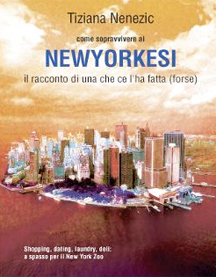
tiziana nenezicThere is an entire genre of commentary on Americans and their americanate in Italian journalism. Vittorio Zucconi writes about the U.S. from an Italian perspective for the Italian national daily La Repubblica and is perhaps the most famous chronicler of americanate. There is even a blog called Americanata, authored by an Italian writer living in the U.S. Tiziana Nenezic has published two books: How to Survive New Yorkers, the Tale of a Woman Who Managed to Do So (Maybe) and Love in the Times of Globalization.

Over the weekend, Franco and I reported on a new and disturbing wine industry partnership that represents another step in globalization’s seemingly unstoppable march of progress: the behemoth Cantina di Soave has become the exclusive distributor of mammoth Constellation Brands in Italy and will begin to market and sell “new world products of excellence” like Mondavi.

Do Italians really need another barriqued and oaky, overly extracted, jammy, hyperalcoholic Merlot? From California? I fear that this merger does not bode well for those of us who love Italy for its mosaic of indigenous grapes and who crave food-friendly wines made in the traditional style (wines for which no new oak has been used, no artificial concentration has been employed, and wines that express grape and place and people). It will only foster the continued Coca-Colization of the Italian palate. I can’t think of a bigger americanata.

I’m going to get down off of my soap box now but before I do, I invite you to watch the following Coca Cola commercial that aired recently in Italy. In the spot, a girl named Giulia from Pisa says, “lately everyone’s been talking about [the economic] crisis.” But she’s an optimist because she likes “simple things.” She eats pizza instead of sushi, a sandwich with salami instead of caviar. She likes to stay home and eat with her family instead of going to “gala dinners.” The spot ends with a message from Coca Cola, la felicità a tavola non va mai in crisi: “happiness at the table is never in crisis.”

Now watch the parody. In the original version, the girl has an Italianized Tuscan accent in the voice over. In the parody, she has a strong Tuscan accent (the use of dialect and dialectal accents is important and very Pasolinian here, btw). Bear with me if you don’t speak Italian: it’s worth it for the images.

No go paroe, I am speechless, as they say in the Veneto.

(Thanks Ale for sending me the “Real Giulia Commercial”!)

Poetry for Sunday: Petrarch’s musical rivers

People seemed to enjoy last week’s Poetry for Sunday so I thought I’d try another one this week…

A quick search online revealed this wonderful gallery at the Beinecke Library (Yale) site. Petrarch’s script inspired a generation of Northern Italian amanuenses and calligraphers who developed what would later be called “humanist script.” The inscription at the top of the folio reads: “Here happily begin the songs in verse in elegy of Laura by the illustrious poet Francis Petrarch.”

When I lived in Italy in the 1990s as a graduate student, I had the great fortune to meet a number of twentieth-century Italian poets, including Giovanna Sandri, whose poetry I translated for a collection of modern poetry published by my dissertation adviser. One day, when I was doing research for my dissertation at the Vatican library, she invited me over for a lunch of rice and baby shrimp — “translation and risotto di gamberetti” she wrote playfully in a dedication she signed in a copy of one of her books that she gave to me. Her primary literary interest was the group of Roman poets and the Gruppo 63 poets among whom she had come of age literarily and literally. But when she asked me about my studies devoted to Petrarch (Francesco Petrarca, fourteenth-century Italian poet and humanist) she fondly remembered her favorite sonnet. She loved the way that Petrarch ingeniously listed the great rivers of the world in meter (in this case, rhymed hendecasyllables — eleven-syllable lines, the classic meter of Italian medieval lyric).

The following is Robert Durling’s translation of the sonnet and the original Italian. Even if you don’t read Italian, try reading the lines out loud to hear the music of Petrarch’s verse.

The tree in the poem is central to the body of poetry and the new poetical language that Petrarch created for his beloved Laura: the laurel tree (do you hear the paronomasia between Laura and lauro or laurel?), the tree so dear to Apollo the god of music and poetry (among other things) because his beloved Daphne had been transformed into a laurel tree so she could escape his amorous advances.

    Not Tesino, Po, Varo, Arno, Adige, or Tiber, Euphrates, Tigris, Nile, Hermus, Indus or Ganges, Don, Danube, Alpheus, Garonne, the sea-breaker Timavus, Rhône, Ebro, Rhine, Seine, Elbe, Loire, or Hebrus —

    not ivy, fir, pine, beech, or juniper — could lessen the fire that wearies my sad heart as much as a lovely stream that from time to time weeps along with me, and the slender tree that in my rhymes I beautify and celebrate.

    I find this a help amid the assaults of Love, where I must live out in armor my life that goes by with such great leaps.

    Then let this lovely laurel grow on the fresh bank; and he who planted it, let him — in its sweet shade, to the sound of the waters — write high and happy thoughts!

    Non Tesin, Po, Varo, Arno, Adige e Tebro
    Eufrate, Tigre, Nilo, Ermo, Indo et Gange,
    Tana, Istro, Alfeo, Garona, e’l mar che frange,
    Rodano, Ibero, Ren, Sena, Albia, Era, Ebro —

    non edra, abete, pin, faggio o genebro —
    poria ‘l foco allentar che’l cor tristo ange
    quant’un bel rio ch’ad ogni or meco piange
    co l’arboscel che’in rime orno e celebro

    Questo un soccorso trovo fra gli assalti
    d’Amore, ove conven ch’armato viva
    la vita che trapassa a sì gran salti.

    Così cresca il bel lauro in fresca riva,
    e chi’l piantò pensier leggiadri et alti
    ne la dolce ombra al suon de l’acque scriva!

What does wine have to do with any of this? In his prose, Petrarch wrote famously about wine and in particular about the wines of Burgundy, but that will have to wait for another post. Today, let’s just enjoy his musical rivers.

Thanks for reading…