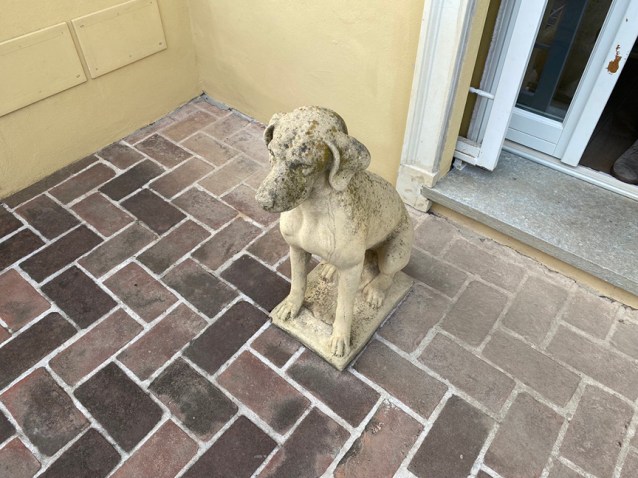
In Turin, a 17th-century villa looks out over the old city.

My Vinitaly began not in Verona but in Turin, the capital of Piedmont and former capital of Italy, one of Italy’s most beautiful risorgimento cities, with the architecture and urban planning befitting a world touchstone.

Not far from its origins in the Cottian Alps, the mighty Po river flows through this majestic metropolis, hugging its eastern border and dividing it from the rolling hills where the Villa della Regina — the Queen’s country house — looks out over the famed Mole Antonelliana, one of Italy’s most recognizable architectural landmarks.

I wish I could tell you more about the 17th-century villa, just up the road from the Queen’s sojourn, where a group of my colleagues and I were hosted by one of the city’s leading citizens.

But I can share the foods we ate.

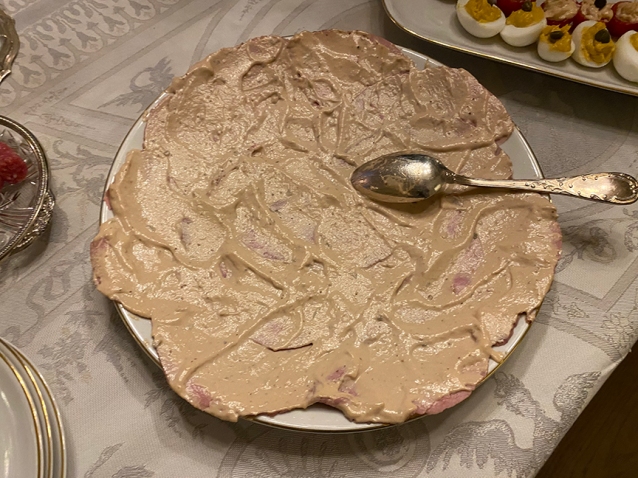
There’s really nothing quite like vitello tonnato when it’s homemade. Thinly sliced veal topped with a sauce made of anchovies, capers, and olive oil-cured tuna. It’s a Jewish boy’s dream.

Also above, those are the classic tuna-stuffed eggs from the Piedmontese culinary canon, otherwise known as “deviled” in Anglo-Saxon culture.

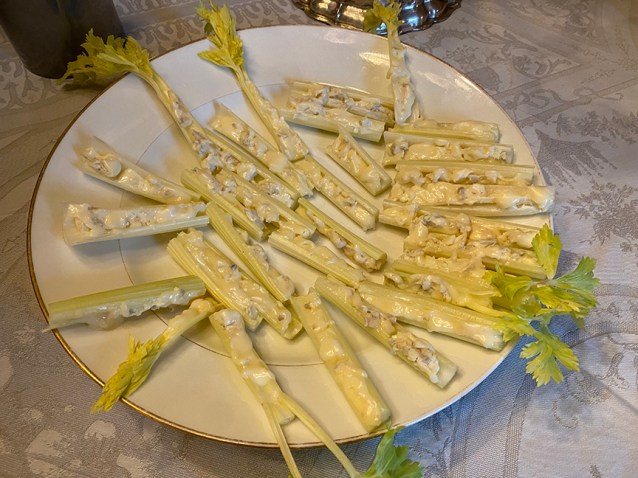
These stalks of Apium graveolens were slathered with creamy gorgonzola. Please try this at home.

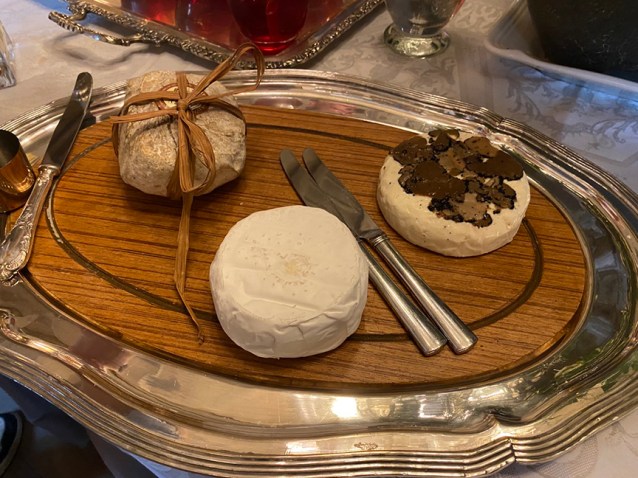
No self-respecting torinese host would end a meal sans fromage. After all, the region is renowned for its pastures, breeds, and traditions.

I wish I could reveal more about our host and the reason we were gathered there in the days leading up to the fair.

But that will all come in time… Thanks for sharing the adventure with me and more to come!

Here’s why every aspiring food and wine communicator should have a blog. Congrats to my former student on her new site!

One of the things I love the most about my teaching gig at the Slow Food University of Gastronomic Sciences in Piedmont is that many of my ex-students have carved exciting career paths for themselves after graduating from the school.

But nothing could be more rewarding in my teaching experience than discovering that one of my ex-students has launched a blog.

And that’s what happened last week when a student who took my food and wine communications seminars last year sent me her excellent new site, Sophie Eats (check it out… it’s great!).

Over the years, it’s become clear that a lot of the students want to pursue careers as influencers. For them, social media is the medium where they see a path forward. And one of the things we discuss each year is how social media has reshaped the way we think about food and wine communications. Just think of the restaurant-focused #MeToo movement and the key role social media played in driving the narrative and bringing about social change (it’s always one of the most exciting seminar days when we cover the subject).

But social media, I always point out, doesn’t allow the aspiring food and wine influencer, communicator, writer-for-hire to build an independent space for themselves on the internets. That space is important in part, I tell them, because it helps them to create brand recognition (after all, they are their own brand) and to optimize their search engine results.

But even more significantly, an independent blog serves as their resume and calling card. And this, in my experience, is an essential element for those who want to find work as writers and copywriters. Nearly every young writer I know has at the very least a site where they aggregate links for their recent works and host an about page.

We can argue all day about what exactly a blog is. In my view, a blog is an online journal that is updated regularly. In line with this, I believe that social media is a form of microblogging and thus is also a blogging medium. What is Instagram anyway? A media sharing platform that most users update on a regular basis.

But social media gets to keep the clicks and the search engine optimization for itself. By feeding our feeds with our media, we are working for the social media companies. I don’t think there is anything wrong with using social media to build your brand and brand awareness. But I believe those who plan to forge a career in food media need to have their own space where their own stories can have a long-term impact on their career path.

It’s always a disappointment to my students when I talk to them about how there are a dwindling number of mainstream food and wine writing gigs today. But in an age where every food and wine brand needs high-quality content that will engage readers, it couldn’t be a better time for young writers hungry for work.

I just met with a just-turned-thirty writer in New York who currently has apartments in Paris and New York thanks to the amount of writing gigs she has on both sides of the Atlantic. And she even finds time to write the occasional eno-journalism piece. And yes, she has a website that she updates regularly with links to her recent publications (sounds like a blog, doesn’t it?).

Sophie, congrats on the launch of your big, beautiful, loud, colorful, and wonderful blog. I’m looking forward to following along.

Food industry readers, if you’re looking for a writer to hire, I can’t recommend Sophie — and her blog — highly enough.

Calling all Houston food and wine lovers: Taste of Italy (3/6) registration now open. BBQ/Italian Wine seminar tickets going fast.

Above: developed by the Italy-America Chamber of Commerce in Houston, the Taste of Italy trade fair and festival, the largest in the U.S. devoted exclusively to Italian food and wine, now has “chapters” in Dallas and Vancouver.

What do you get when you put a bunch of Italians, a bunch of great Italian foods and wines, and a bunch of hungry and thirsty gastronomes in a room together in Southeast Texas?

Now in its ninth year, Taste of Italy is back in full swing on Monday, March 6 in Houston. I’ve been involved as one of the organizers and the event’s emcee for eight years now. And the work I’ve done together with the Italy-America Chamber of Commerce, the gathering’s host, is something I am the most proud of. The chamber, which is ranked in the top ten worldwide and the number-one chamber office in North America, genuinely connects Italian and American businesses (see the event’s “Success Stories” here).

On Monday, March 6, we are returning to the swank Omni hotel where more than 50 Italian food and wine companies will be showing their products.

Click here to register for the grand tasting.

And click here to register for the BBQ and Italian wine seminar that I will be leading with Spec’s Italian wine buyer Tom Dobson and celebrity pit master Ara Malekian (this event is close to selling out so please be sure to sign up to ensure availability; see the link for the super cool flight of wines that Tom has chosen).

I’ll also be leading a seminar on Calabrian gastronomy. I’ll share that link as soon as it becomes available.

Thank you for loving Italian food and wine and thank you for supporting the work I do with the Italy-America Chamber of Commerce here in Houston. I hope to see you on Monday, March 6 at the Omni!

Some good meals on the road last week…

Man, what a week last week! Four planes in four days!

On Tuesday, I flew up to Dallas to have dinner with the president and communications director of the Abruzzo consortium.

Honestly, I wasn’t expecting to love Fachini as much as I did. The whole Eye-Talian concept as presented on their website seemed a little bit misguided at first glance. And the waiters in tuxes, while cute, made it seem like it was going to be more of a show than substance.

But the homemade gardiniera that they served as an aperitivo at the bar was fantastic, as were the ricotta and focaccia.

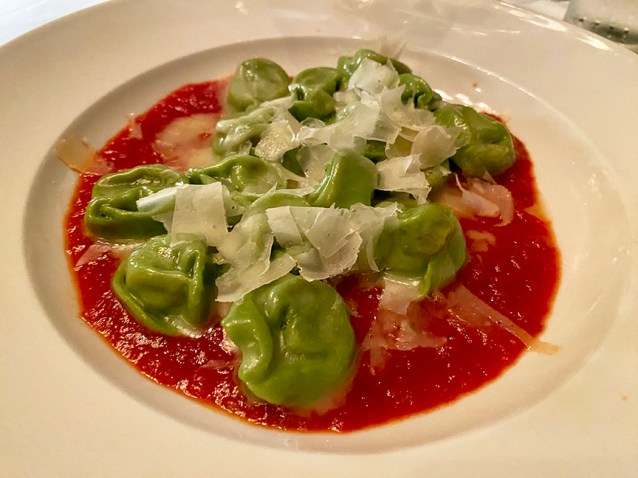
Those are the cappelletti above. I had never seen green cappelletti before and we were a far cry from the traditional way this filled pasta is served (traditionally in capon broth with generous amounts of freshly grated Parmigiano Reggiano). But the pasta was delicious, the stuffing perfectly calibrated, and the tomato sauce was more of a coulis than a true sauce. The latter was light and not overly acid-driven. I loved this dish.

And after all, as Tony used to say (and I agree wholeheartedly), Italian food is not authentic unless it’s creative.

The next day, I led three seminars at Eataly — Moscato d’Asti, Pinot Grigio delle Venezie, and Abruzzo — over the course of four hours with 15-minute breaks between each one. Huge shout-out to the event staff at Eataly for another job well done and heartfelt thanks to my friends at IEEM in Miami/Verona who asked me to come up for a morning of tasting and sharing notes on some great wines. It was exhilarating but exhausting. I made a mad dash the airport and flew home… only to get on a plane Thursday morning and fly to NYC.

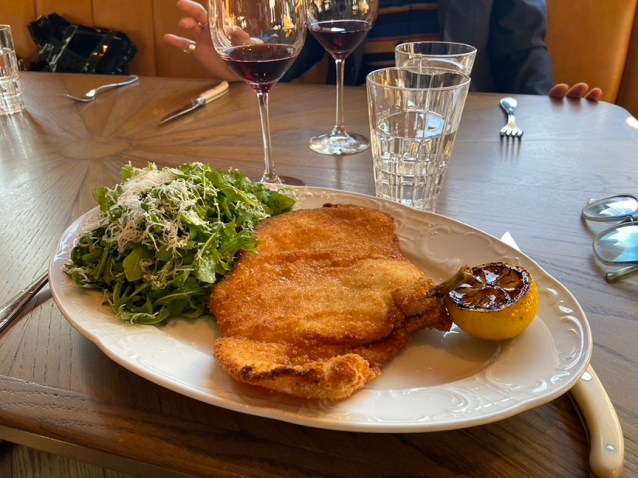
Friday found me at the swank and beautiful surf and turf Carne Mare at South Street Seaport in Manhattan where I joyfully dug into the chicken cutlet alla milanese. Again, not traditional but utterly delicious. I really enjoyed and highly recommend this place.

South Street Seaport has been totally renovated and is super fun, with high-end shops and restaurants. It was a beautiful day in New York and the view of the Brooklyn Bridge… as my friend Paul says, it just never gets old.

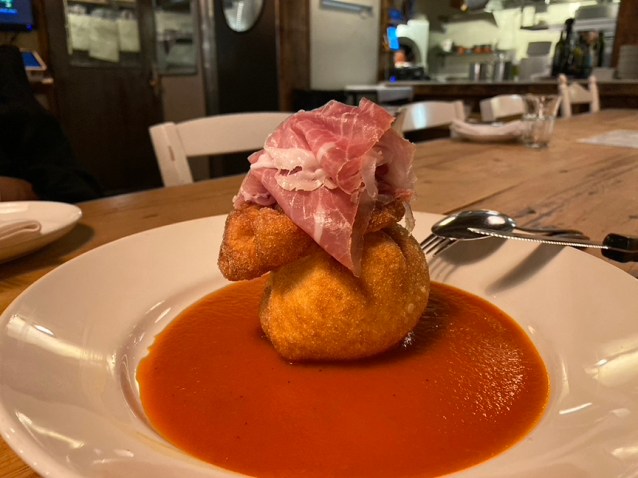
Also have to give a shout-out to the fine staff at Ulivo on West 28th St. They took such great care of our party and I loved the fried burrata (below). It was as decadent and as delicious as it looks. And man, their kitchen really knows how to slice prosciutto correctly.

All in all it was an amazing week of wines and wonderful italophile folks. I feel so blessed to do what I do for a living. But I couldn’t wait to get home to Tracie and the girls and our chihuahuas.

Thanks to everyone who took such good care of us. The wave of Italian cuisine in this country only gets better and more compelling every year. And it’s so wonderful that New York has opened up again. I can’t wait to get back next week (yep, life on the road keeps on keeping on!). Stay tuned…

Italian growers cautiously optimistic about 2022 vintage.

Posting on the fly this early Monday morning in Brescia where I’m staying. Two more days and many more meetings and tastings before I head back to Texas on Wednesday.

But I wanted to get a quick post up with an update about the 2022 vintage.

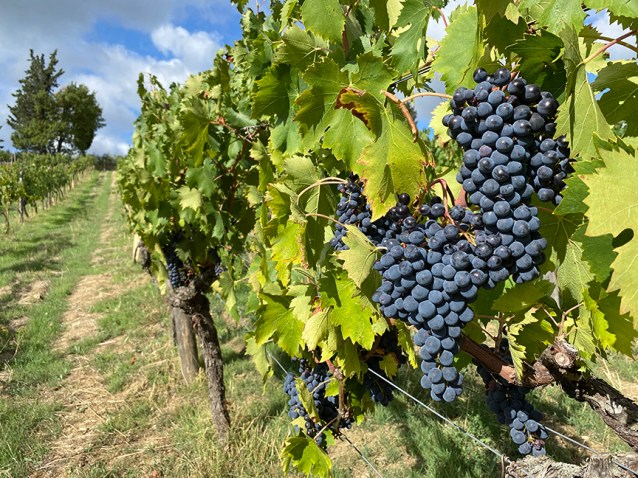
Those are Sangiovese clusters, above, in Panzano in Chianti.

Light rain there late last week was just what the growers need as the red grape begins.

As one winemaker pointed out to me, the biggest challenge they were facing wasn’t just the fact that the summer had been so hot and dry.

There was very little rainfall in the early part of the growing cycle, she pointed out. As a result, the summer heatwave and drought could have been catastrophic.

Luckily, the August rainfall seems to be just what the doctor called for. And despite some scattered hail and some reports of mildew, growers are optimistic that this will be a good and even great vintage in certain spots.

I’ll be writing a more detailed report when I get back to my desk. But let’s just all keep praying for mild weather in the days to come.

In other news…

Anyone who’s ever been a working wine trip like this knows what a slog it can be. I’ve been going non-stop.

But on Sunday I took time out to have lunch with Giovanni and a friend from my Italian university years in downtown Brescia.

Man, it was amazing to see the piazzas and restaurants full of happy people kissed by sunny skies! I couldn’t help but remember the time when we were reading about Brescia every day on the cover of the New York Times. We all talked about how blessed we are to be here today after what happened here and across the world in 2020.

Those are the casoncelli I had for lunch at Trattoria Gasparo in the city’s historical center.

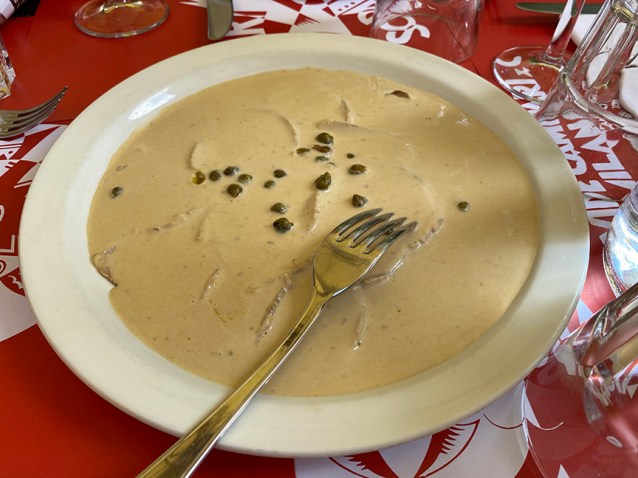
And, of course, who could resist a plate of vitello tonnato? Not me!

In Lombardy, they add a ton of sauce to the dish as you can see below. It’s like the Italian equivalent of a “wet burrito.” It was super delicious paired with Giovanni’s Franciacorta.

Wish me luck, wish me speed. Thanks for being here.

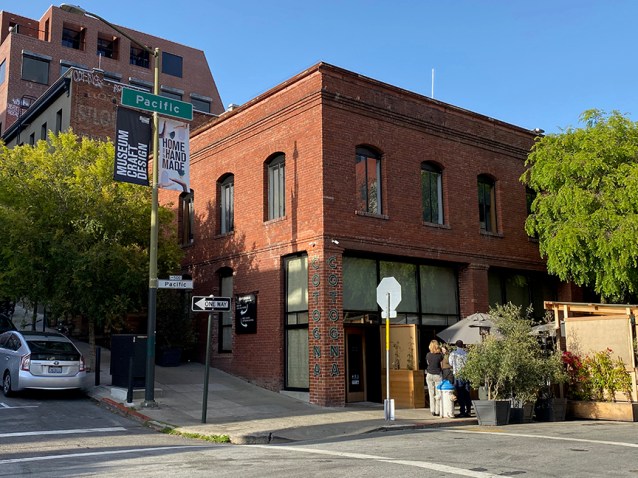
Where homage to tradition is transcendent: Cotogna in San Francisco, one of my best meals this year.

Wines for Peace: Brunello Consortium auction benefitting Ukraine, Monday, April 11, at Vinitaly. Click here to learn more.

Since the late 1980s, Italian cuisine in the U.S. has been shaped by a tension between traditional- and creative-leaning forces.

Remember the wave of “northern Italian cuisine” that came around in the Reagan years? “Sunday gravy” was out and polenta was in.

The problem was that culinary interpreters often didn’t see these dishes in historical or cultural context. The rich meat- and jus-driven sauces we ate as kids in this country were a derivative of haute Neapolitan cuisine (vis-à-vis Ippolito Cavalcanti).

Polenta, on the other hand, so popular “rustic” and “peasant” (ugh, I can’t stomach that term) movements of the late 1990s, was a dish that many older people in Italy refused to eat at the time because it reminded them of a time when there wasn’t enough to eat (the 19th-century pellagra crisis in Italy was caused in part because polenta had become a staple for economically marginalized families; in the years following WWII, many older Italians in the north will tell you, polenta was all they had to eat).

Making my way over to Cotogna from my hotel in San Francisco the other night, I couldn’t help but remember a chilly winter evening in the late 80s when I stopped a man on the street and asked him if he knew the way to a certain “trattoria,” a name for pseudo-Italian restaurants that had become popular in the second half of the decade.

He did, he responded, but he would only tell me — and I’m not kidding about this — if I pronounced it correctly.

It wasn’t traht-toh-REE-ah, as I had enunciated it. It was traht-TOH-ree’ah, with the emphasis on the second syllable, not the second to last.

It kinda says it all, right there.

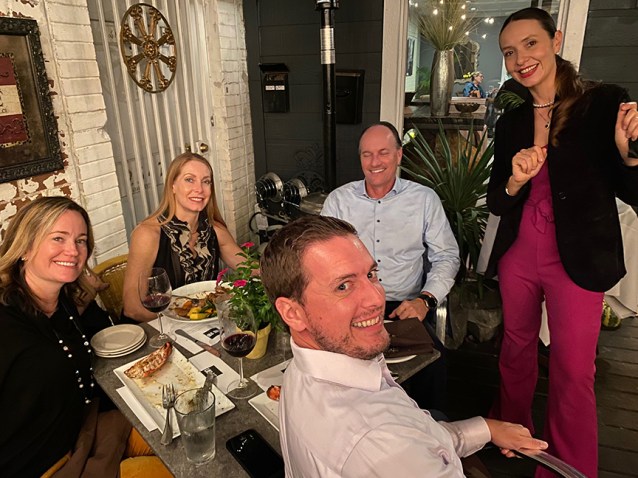
In my view and experience, the greatest Italian restaurants in the U.S. have always found a precarious however brilliant balance between the traditional and creative. And my meal at Cotogna was a fantastic example of how respectful homage to tradition can be transcendent.

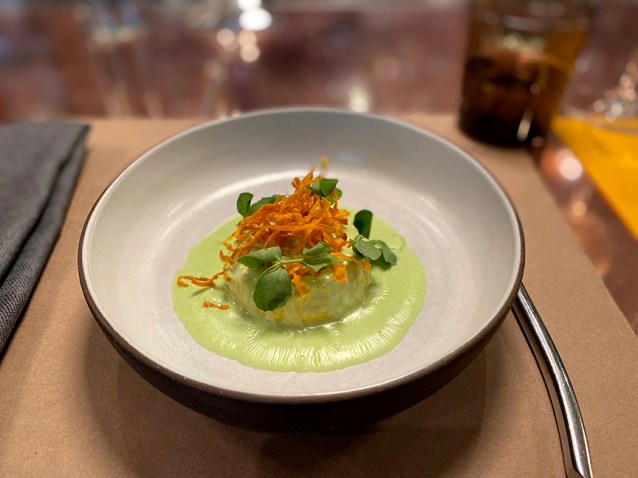
The carrot sformato (first photo) blew me away with its ethereal texture and subtle dance of bold but elegant flavors. Sformato — properly called a savory custard in English — is all about the texture. It should be firm but light, rich but buoyant. I know already from my Instagram that people agree with me: this dish was nothing short of show-stopping. I loved it.

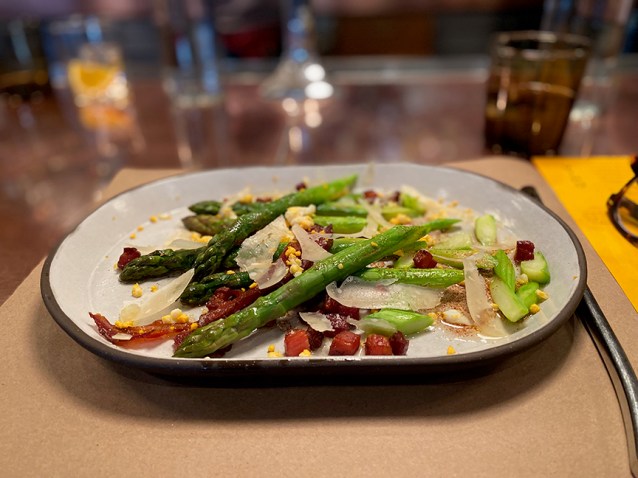
The asparagus alla fiorentina (second photo) brought to mind trips to San Francisco with my parents when I was a child in the 70s. They would slurp coffee as they inhaled “eggs Florentine” at a swank hotel restaurant on Union Square.

This truly Florentine-inspired dish sang out to me. The flavor — the bontà or goodness as we say in Italian — of the materia prima was nothing short of spectacular. And I loved the play in texture — again, texture! — between the lardons and American-style bacon (which btw is extremely popular in Italy today).

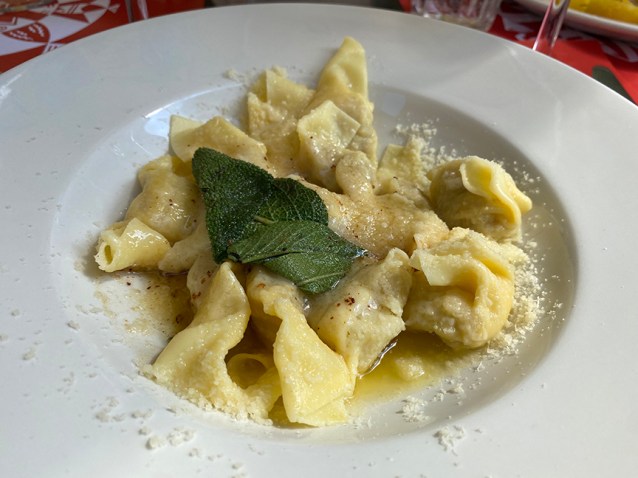
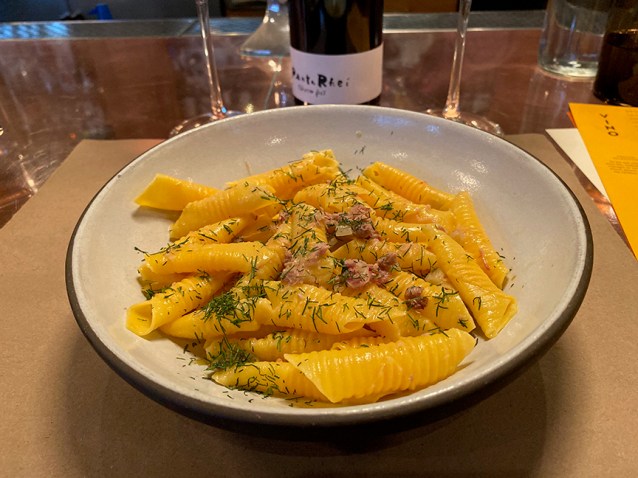
The finale, garganelli with rabbit, also played on its balance of textures and subtle flavors. I loved that the rabbit was ground, not stringy, and the richly flavored pasta was the focus of this dish, not the rabbit. I couldn’t agree or have enjoyed it more.

Paired with the delicious, spicy Ruché Panta Rhei by Valdisole (thank you, Ceri Smith!), this dish became the synecdoche for the entire dinner. For a generation who grew up complaining that there wasn’t enough sauce on the soggy over-cooked and rinsed pasta, it made me feel like we might finally have adolesced.

Thank you wine director Joseph Di Grigoli and team for taking such good care of me. Your work is as inspiring as it is delicious.

Addio Roma. You really broke my heart.

Please consider giving to Unicef’s Ukraine child refugee fund. This link takes you straight to the donation page. G-d bless our Ukrainian sisters and brothers. Thank you.

Above: in November of last year, I presented a sold-out dinner at Roma in Houston featuring the wines of Alicia Lini (standing).

It’s with deep sadness that I share the news: Roma, the Houston restaurant where I ran the website, e-letter, and social media for nearly five years; where I helped the owner rebrand his business; where I ran weekly virtual wine dinners during the lockdowns; and where I wrote the wine list since May of last year, is no longer my client.

The reason? The new chef, Kevin Bryant, doesn’t believe my marketing skills are up to snuff. Evidently he and his wife are marketing geniuses. Five years down the drain. Just like that. All because of a pig-headed chef who thinks that chicken liver mousse passes for a bona fide topping on crostini toscani.

It was clear from the start that he wanted me out and he wanted his wife in. She’s a high-powered publicist with a who’s who of leading Houston restaurateurs in her portfolio. At least that’s what she and her husband think.

Honestly, I wasn’t really interested in working with a chef who believes “steak tartare” is an Italian dish. (All the previous chefs I worked with there were Italian and had cooked and trained in Italy.)

The thing I’ll miss is the incredible community we built through the weekly virtual wine dinners I ran for nearly two years. It’s hard to believe now but we must have presented roughly 100 Zoom events, often with an Italian winemaker participating on the other side of the Atlantic. It was one of the most compelling and rewarding experiences in my career in wine. So many of my now ex-guests have told me that those events were what kept them sane during isolation. It was a virtual supper club where people forged connections and friendships. I’ll never forget the night that a prominent Houston doctor, the wife of a noted Houston wine blogger, began helping people get vaccine appointments in the early days of availability.

No regrets, coyote. The restaurant business is always full of drama and microcephalic players like “the Kevin,” our family’s apt nickname for him. And this wasn’t my first rodeo, as we say in Texas.

Addio Roma. You really broke my heart.

A bollito of my dreams at a favorite restaurant in Emilia.

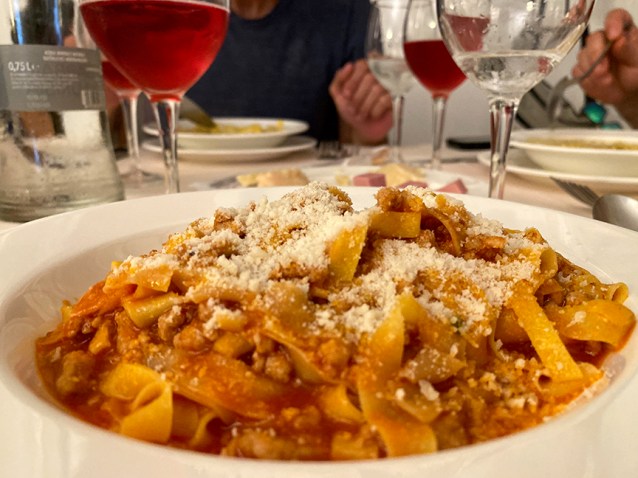
Above: in Reggio Emilia, they don’t call it “tagliatelle alla bolognese.” They just call it “tagliatelle al ragù.” It’s a subtle but meaningful distinction.

One of the things that people don’t realize about gastronomy in Emilia — the land of Prosciutto di Parma, Culatello, and Parmigiano Reggiano where there are more pigs and Ferraris per capita than anywhere else in the world — is that you have to venture outside of its capital city Bologna to find the best food.

Another crucial element that many people miss is that for great bollito misto, you have to head west from Bologna toward Modena and Reggio Emilia. That’s the true spiritual homeland of bollito misto.

What is bollito misto? It’s meats that have been slowly simmered together. It’s typically made in different parts of northern Italy. But in Modena and Reggio Emilia zampone is used instead of cotechino sausage to give the dish its decadent character.

What is zampone? Meaning literally hoof, zampone (the sausage) is a pig’s trotter that has been filled with head cheese. It’s considered one of Italy’s greatest delicacies (and it’s one of my favorite things in the world to eat!).
Continue reading

The best mortadella I’ve ever had. Here’s where to find it in Bologna.

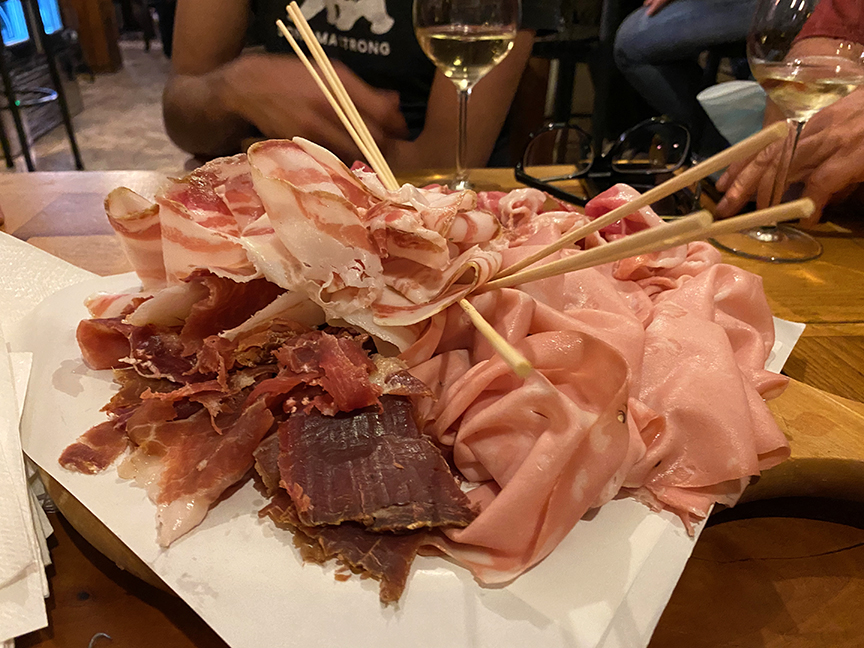
Above: Dario Barbieri’s take on mortadella blew my mind — and my palate — the weekend before last in Bologna. The mortadella is on the right of the cutting board.

Every time Slow Food U. asks me to come teach in Piedmont, my Italian crew and I plan at least one night of enogastronomic adventure.

For this last stint in early October, we headed to Emilia-Romagna where our first stop was the legendary Dario Barbieri’s wine bar Zampa in the city of Bologna.

Dario, whose wine program features labels from both Paolo Cantele and Giovanni Arcari (my southern and northern Italian bromances, respectively), had asked us to come on the later side that Saturday night so that we could all sit, visit, and discuss the finer points — we later learned — of mortadella.

For anyone not familiar with mortadella and more specifically Mortadella Bologna, it’s a sausage made from finely ground pork and pork fat. See the Wiki entry for some useful background info on mortadella. But see also this excellent post by WebFoodCulture.com. And also the Mortadella Bologna PGI consortium’s not-so-easy-to-find website.

Don’t confuse it with other types of mortadella made in other parts of Italy, sometimes not from pork.

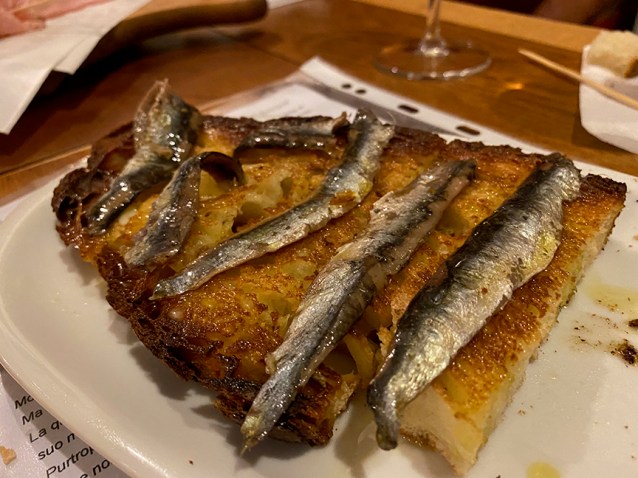
Above: marinated fresh anchovies followed our salumi tasting that evening. Bologna and Emilia in general has some of the best bread I’ve ever had in Italy.

It has been considered one of the greatest delicacies of Europe since the 17th century and beyond. Even French cookery books from the pre-modern era describe with great reverence the then highly advanced techniques for making charcuterie in the city of Bologna (the French also loved and learned a lot from Milanese pastry production).

Mortadella is also the inspiration for a poor imitation that we call “bologna” or “baloney” (as in Oscar Myer; but we will leave Upton Sinclair out of this).

As Dario explained that evening, there are “three or so” classic recipes that are still being used by artisanal mortadella producers in Bologna today. They are all excellent, he told us.

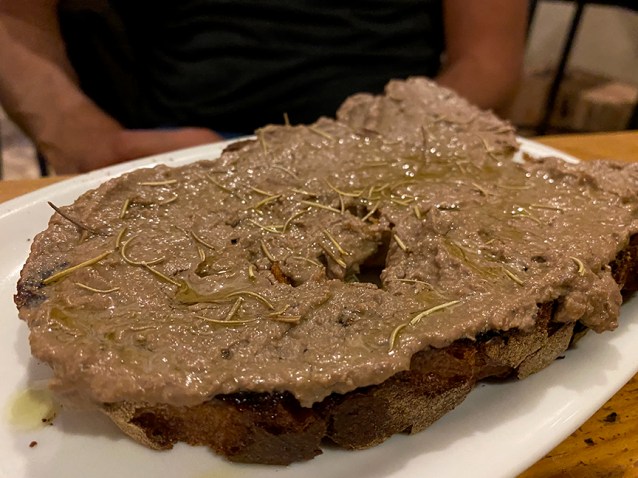
Above: the crunchy oven-fired thyme sprinkled on the pâté took it over the top.

But in order to become their clients, he said, you have to be willing to take only one mortadella at a time. The key, he emphasized with his rich baritone, is to consume the mortadella immediately, within a few days after it was produced. Otherwise, it loses the richness of its flavor and delicacy of its texture.

As someone who has been obsessed with mortadella since I first traveled to Italy in the late 1980s, I am here to tell you, people, this was absolutely the best mortadella I have ever tasted.

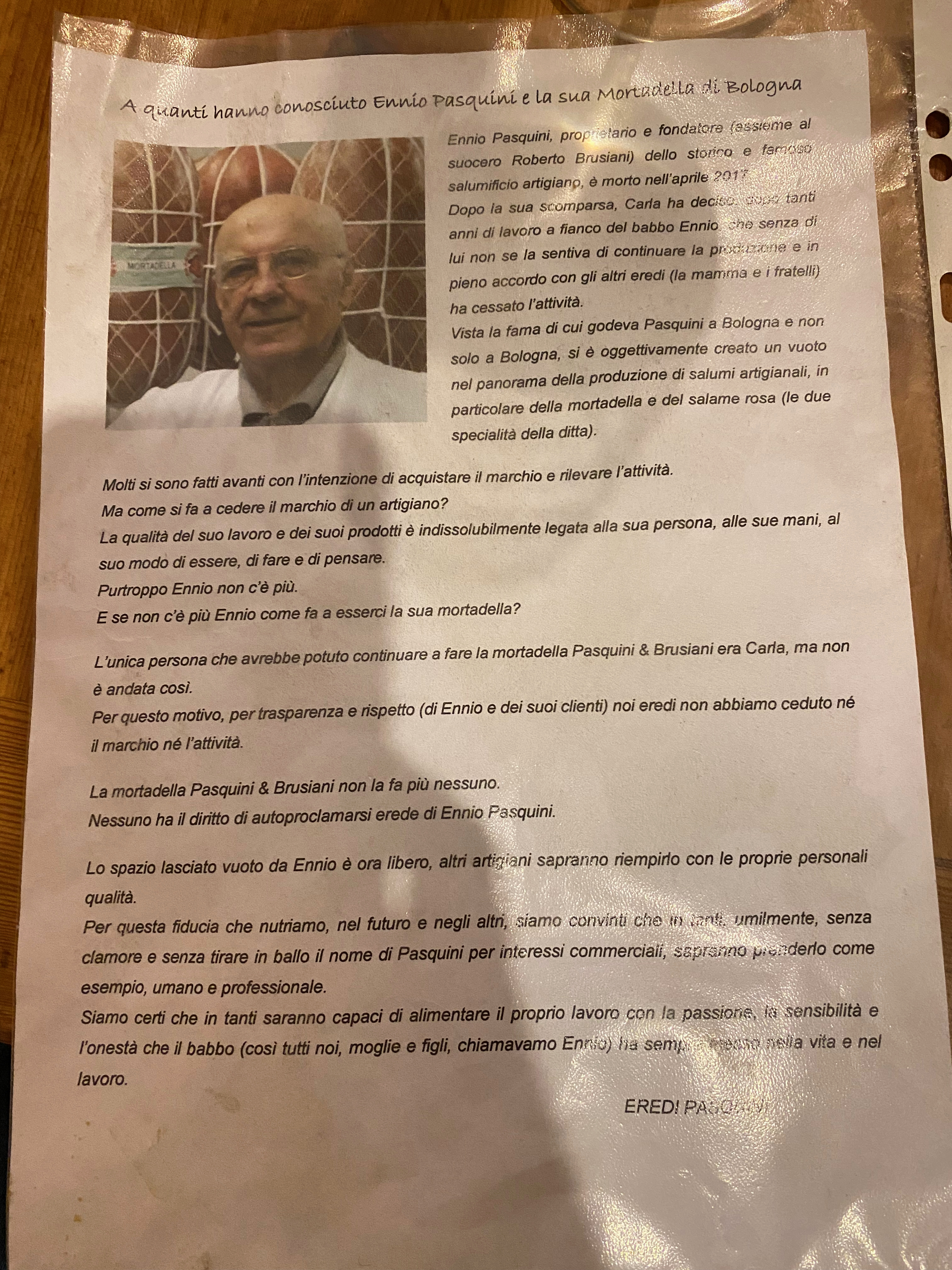
With great pride, Dario told us the story of Ennio Pasquini, one of the great mortadella craftspeople of our time. He recently passed away and his family is now arduously defending his legacy from those who would cash in on his namesake. For those who read Italian, click on the image below to read their “open letter” to the world of mortadella lovers. Pasquini was Dario’s “mortadella mentor,” as it were. He had refused to sell Dario his sausages until Dario agreed to take only small quantities each week.

Our literally five-hour tasting with Dario was one of the greatest culinary experiences of 2021 for me. I highly recommend his wonderful wine bar Zampa in Bologna (no website, at least that I can find).

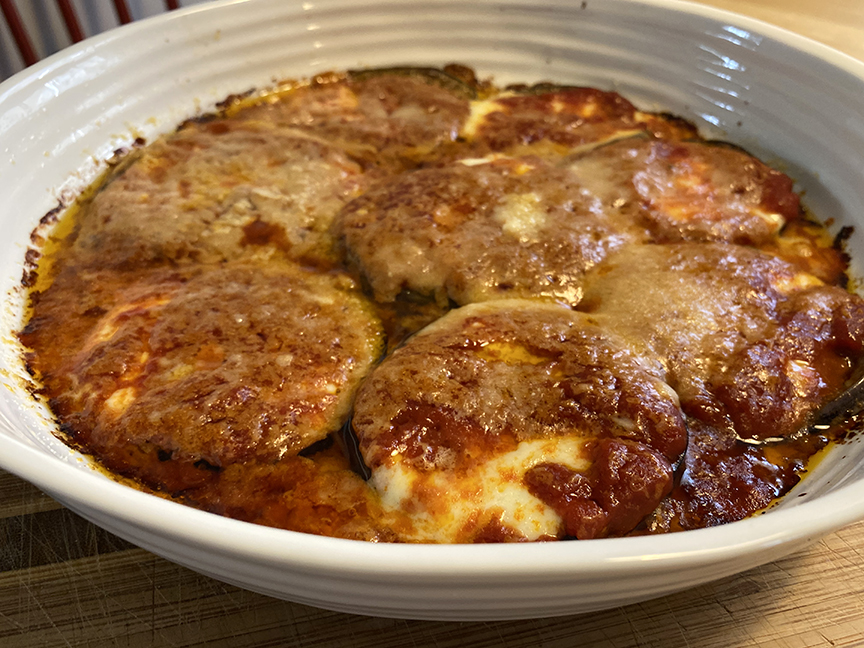
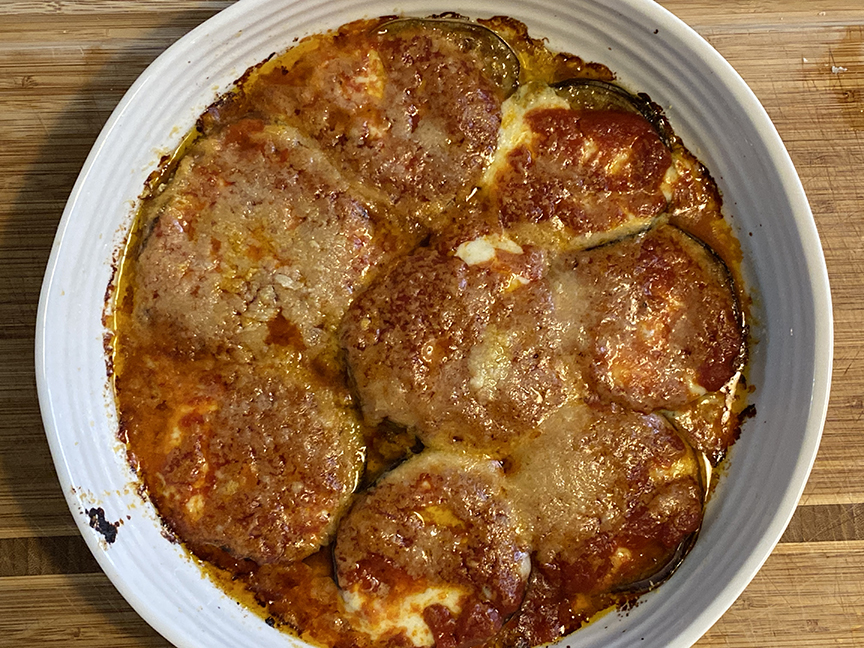
How to make eggplant parmigiana (and a short treatise on the origin of the dish).

One of the things that makes melanzane alla parmigiana such a fascinating dish is that it is arguably Italy’s only truly national recipe beyond spaghetti al pomodoro (spaghetti with tomato sauce).

Yes, you can order pesto at a restaurant in Rome. Yes, you can choose your own style of pizza in Barbaresco. But no savvy, self-respecting italophile gastronome would ever indulge in such a transgression of the Italian culinary canon.

Eggplant alla parmigiana — aka eggplant parmigiana (without the articulated preposition), eggplant parmesan, or eggplant parm — is a dish that can generally be found in homes (although not in restaurants) throughout the country.

As the name reveals, it incorporates what many consider the greatest “food product” of all time: Parmigiano Reggiano, the famed friable cow’s milk cheese from Parma in Emilia (parmigiana is the demonym when used in reference to gastronomy; parmense is the city’s ethnonym).

The name doesn’t reveal however the dish’s connection to Sicily where eggplants were first consumed in Italy thanks to the island’s connection to the Arab and — some will be surprised to learn — to the Jewish world (Artusi, the still highly influential 19th-century cookery book writer from Romagna, writes about how only Jews in Italy ate eggplant at the time; the nightshade was believed to cause insanity but as Artusi points out with an antisemitic microaggression that I will forgive him, Jews have a “good nose” for great food).

To the northern cultural influence of Parma and the southern cultural legacy of Sicily, we must add yet another southern element: mozzarella. A great melanzane alla parmigiana is defined in part by its diversity of texture. The plastic cheese provides a sine qua non light and moreish chewiness to the best expressions of this timeworn and now international recipe.

Parmesan, Neapolitan, and Sicilian traditiones coquinariae combine to create a pan-Italian dish that I have enjoyed as far south as Lecce and as far north as Belluno.

To make a great melanzane alla parmigiana, the home cook must be patient. In the case of our family, the dish must be preceded by a tomato sauce prepared the night before to dress pasta. It’s that leftover sauce, with all of its flavors now perfectly fused and slightly desiccated, that really can take the recipe over the top.

Another important element is the olive oil you use — for both frying the eggplant rounds and greasing the pan. High-quality olive oil makes a marked difference in dishes like this.
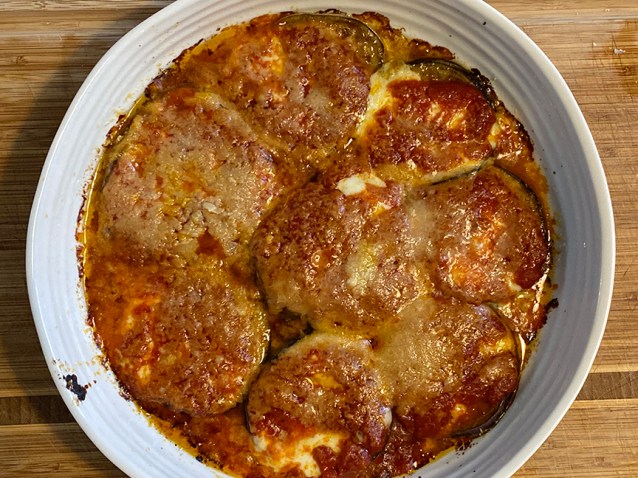
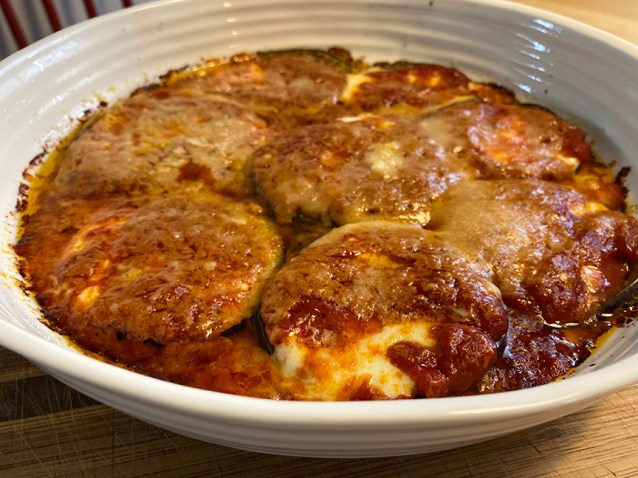
For the recipe below, I haven’t included exact quantities. But that shouldn’t be a hindrance in making the dish the way we like it at our house. Years of translating and editing Italian recipes has taught me that the Italian indication quanto basta, an expression rendered in English as needed, is a good guide to all things in life. You just enough of each ingredient to achieve the desired result.

Melanzane alla Parmigiana
eggplant alla parmigiana

Ingredients:

extra-virgin olive oil
garlic, peeled
tomato purée (passata)
white wine
kosher salt
freshly cracked pepper
chili flakes
basil leaves (optional)
eggplant (ideally globe or graffiti), sliced into thin rounds
mozzarella, sliced
Parmigiano Reggiano, freshly grated

Make the sauce:

Over low flame, gently heat the olive oil in a large pot, add the garlic and sauté but do not brown. Just as the garlic begins to turn golden in color, add the tomato purée and bring to a gentle simmer. Add the wine and when the alcohol has evaporated, season with salt, pepper, and chili flakes to taste. Simmer slowly for roughly 30 minutes and as soon as you remove the pot from heat, add 1 or 2 basil leaves (optional). Cool and reserve, ideally overnight, covered on the stovetop (not in the refrigerator). Remove garlic cloves and basil.

Purge the eggplant:

Generously season the eggplant rounds with kosher salt. Transfer to a colander and reserve for at least 30 minutes until the eggplant purges its bitter liquid. (This is an extremely important step.) Use a clean kitchen towel to absorb any excess liquid and reserve the rounds.

Fry the eggplant:

Heat a generous amount of olive oil (roughly 5-6 teeming tablespoons or as needed) to a broad frying pan over medium flame. Once the oil has heated through, add the eggplant rounds. Turn them once they have lightly browned on one side. Once they have browned on both sides, remove and distribute over a clean kitchen towel to remove any excess oil. (Using high-quality olive oil for frying the eggplant will make this dish even more tasty.)

Assemble the dish:

Grease an oven-ready casserole dish with olive oil. Add the eggplant rounds. Top with the sliced mozzarella. Smother with tomato sauce and top generously with the grated Parmigiano Reggiano. Fire the dish in a pre-heated oven at 350° F. for 30 minutes or until a golden brown crust forms. Remove from oven and cool.

At our house, eggplant alla parmigiana is either reheated to be served at dinner or served room temperature for lunch or for a late afternoon snack. One of my favorite ways to serve it is as a sandwich on a favorite crusty bread. In my experience, letting it cool (and then reheating it) is key.