
 The funniest thing happened on my last trip to Italy.
When I sat down last week to taste with Marina Savoia, one of the owners of the Coali winery in Sant’Ambrogio in Valpolicella, something didn’t add up.
The excellent wines were traditional in style, very old school but clean and focused. I liked them a lot.
There wasn’t a barrique to be found. All of their wines are aged in larger formats, casks that have been reused vintage after vintage, the way the old line producers there do it.
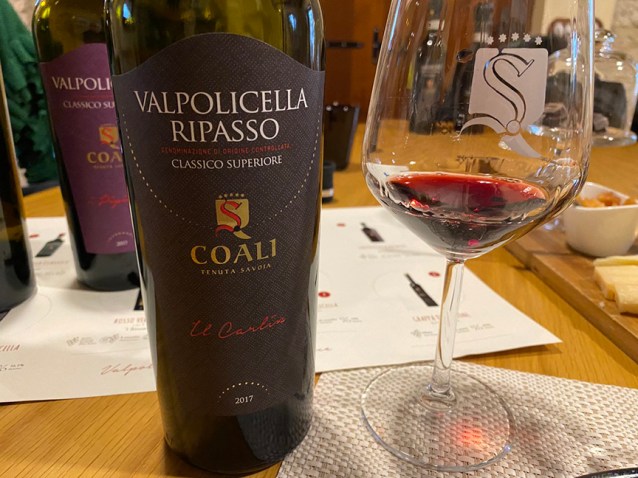
But when I picked up a bottle to reposition it for a photo, I noticed that the glass was extremely heavy and thick. And the punt was deep. The vessel had the classic “Napa Valley” shape, often used by producers of “important” wines that have American appeal for the American market. It didn’t align with the people that make these wines, the style, or the place where they are raised.
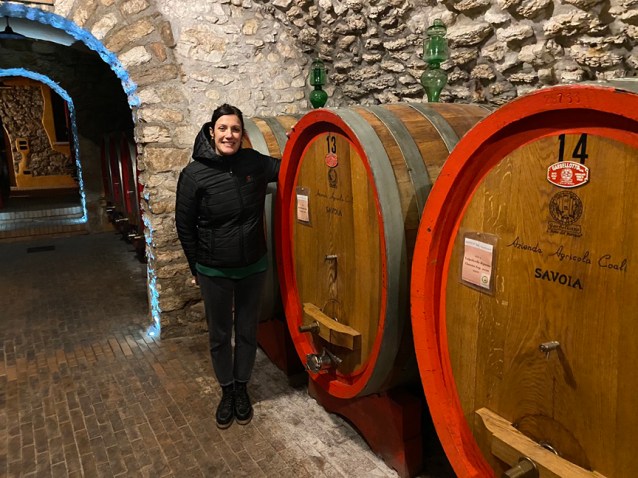 I asked Marina Savoia, above, why the odd choice of bottle format? After all, in my experience, producers like her and her family often like to use older, more classic formats, and they are keen to reduce their carbon footprint by using the lightest glass possible — the antithesis of the Super Tuscan craze of the aughts.
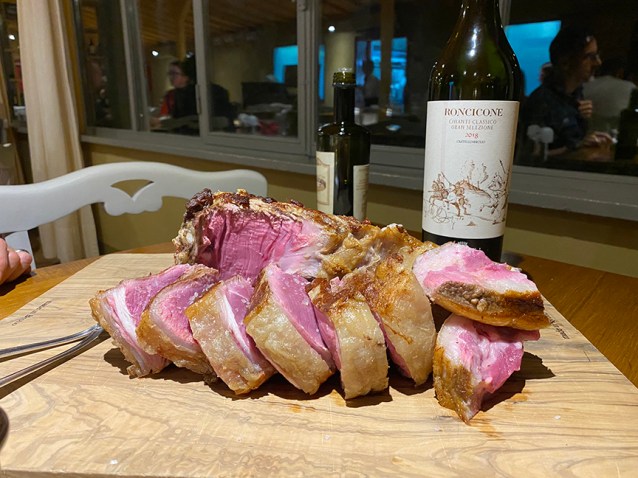
The answer was simple, she said. There were simply no other formats available. And she and her family were forced to use the one you can see in the photo at the beginning of this post.
Across Italy, winemakers are telling me that bottles are becoming harder and harder to come by and the cost is rising rapidly. Putin’s insanity-fueled bellic campaign is to blame, they tell me.
For sparkling wine producers, the problem is compounded by the rigid rhythms of vinification and aging. They can’t just let their wine sit another year in cask, like a producer of Valpolicella Ripasso, for example. When it’s time to bottle, it’s time to bottle and that’s it.
The major concerns, of course, are availability and costs. Demand is high and supply is lower than it’s ever been. The price hikes were are going to see next year will be owed in no small part to this critical issue.
And the fallout is also manifesting itself in surprising ways, as in the case of Marina’s wines.
You can’t just a book by its cover. And increasingly, you can’t judge a wine by its bottle.
 Even after all these years of coming to Italy for study and work, I had never really spent proper time in the city of Turin.
  I only had a little free time to stroll the city’s beautiful porticoes but I was blown away by all the rare book shops. I even found a vintage record store that specializes in classical — one of my recent collecting interests.
  The Egyptology museum blew me away! As a dog lover, of course, I was drawn to the mummified animals section, purportedly one of the biggest collections in the world beyond Cairo. It was amazing. The whole thing was amazing. There’s even a “tomb” designed by Renzo Piano. Not to miss.
 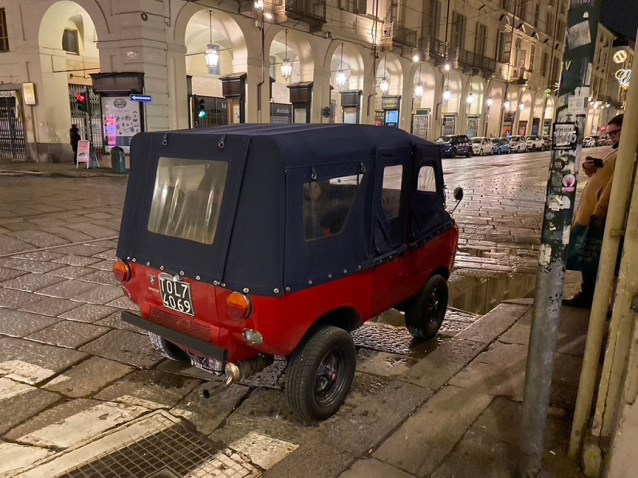 Car culture, as one would imagine, is big in Turin. I was told that the automobile museum is great. Next on my list. And it was cool to see some of the crazy cars that people drive in the city.
  One of the things that I really dug was how the city has retained its old-school feel. There’s not just a sushi place and a Burger King on every corner. Those are tajarin al Castelmagno at Porto di Savona — SUPER OLD SCHOOL and wonderful.
  Still so much to explore there. I can’t wait to get back.
  I’m actually heading out again tonight for Italy to meet a new client (more on that later). And I still haven’t finished blogging about my early September trip!
 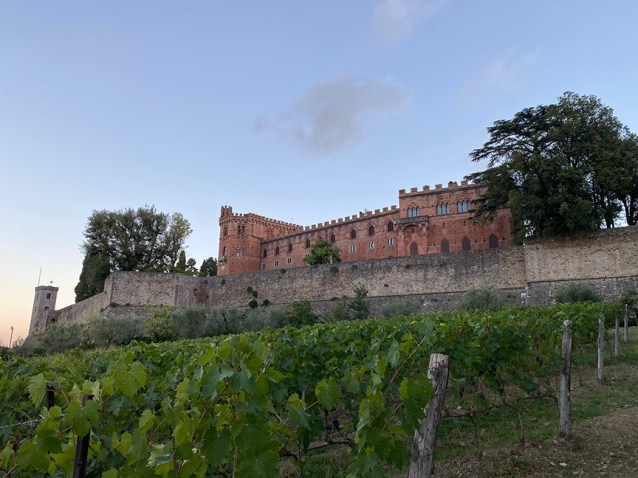 I slept that night at Ricasoli’s “Agriroom,” a spartan but perfectly anointed bed and breakfast in the main piazza of the small village where the Ricasoli offices are located.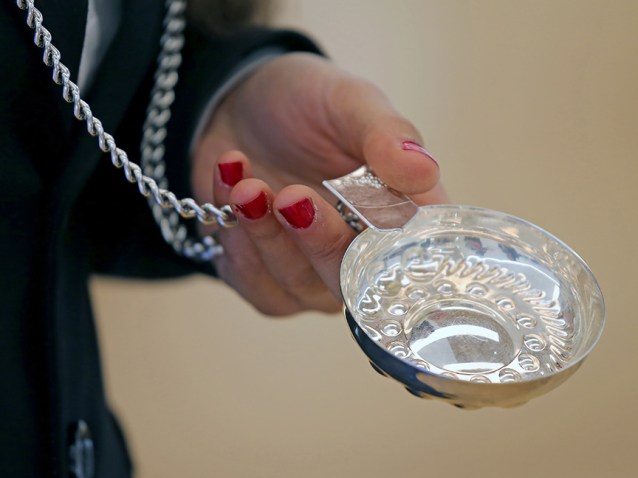
 The world of wine is encyclopedic in breadth and scope. No matter how much you know, you’ll never know everything there is to know about wine.
  I also have to give a shout out to the excellent wines of Gianni Tessari.
  Tracie, the girls, and I couldn’t be more geeked to share the good news: earlier this month, we closed on a house in the same Houston neighborhood where we’ve been living for the last eight years.
  I have a big confession to make: I’ve been sleeping with my realtor!
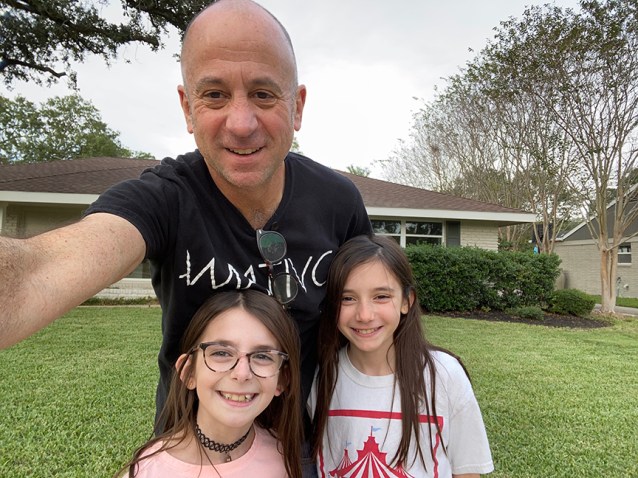 It’s been a surreal and magical time for all of us and maybe most of all for the girls.

 As I stuffed myself silly a few weeks ago at my friend Jeff Berlin’s new Georgian restaurant in Sebastopol, California, I couldn’t help but remember a restaurant that opened in 1998 in New York called Bondì.
  The menu at Bondì was a breakthrough because it was being hailed as “authentic Sicilian food.” In other words, even though “Southern Italian” — aka Sicilian or Neapolitan — was passé, this was something brilliantly new and deliciously old at the same time.
 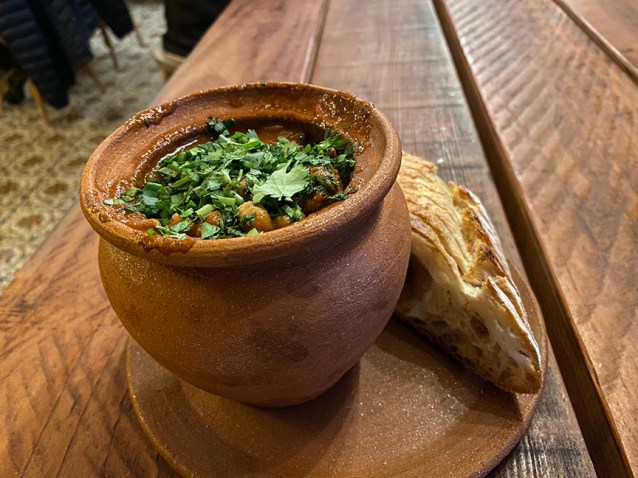 Some here are old enough to remember that the late 1990s wave of the “new/old” Italian gastronomy was preceded by a new wave of Italian wine that focused on — excuse the pleonastic — the authentic and the native.
 I was blown away by how good the food was at Piala.
  In retrospect, those italophilic entrepreneurs were on the cutting edge of a movement that would reshape the way citizens of the U.S. and the world would dine. They transformed an “ethnic” cuisine (ooooooo! how I despise that term!) into a world cuisine. And they had a “new” wine to lead them.
 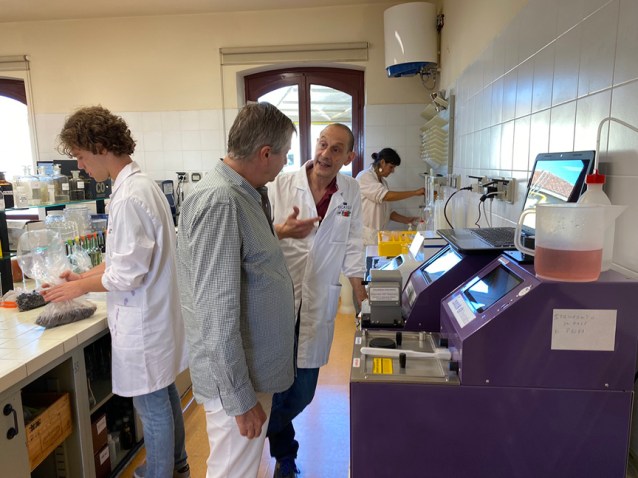 Above: Francesco Ricasoli, legacy Sangiovese grower and Chianti Classico producer, with technicians in the Ricasoli winery’s laboratory.
 On Tuesday and Wednesday, November 29-30 in Houston, the Italy-America Chamber of Commerce South Central is proud to present two wine tastings featuring three Italian producers:
  Do Bianchi