

Above: Produced by Carlo Ponti, Jean-Luc Godard’s 1963 Contempt, based on Alberto Moravia’s novel, Il Disprezzo, was an Italian and French co-production. The results were decidedly better than last week’s Italissima at Vinexpo in Bordeaux.
It would have been enough that Franco rightly chastised his French counterpart and longtime sparring partner Michel Bettane for the selection of Bordeaux-inspired Italian wines to be presented in Bettane’s seminars at last week’s Italissima, a would-be Italian wine fair held in Bordeaux in conjunction with but with no official affiliation to Vinexpo, the annual see-and-be-seen French wine trade fair.
 “Instead of calling it, ‘Italissima, the Italy that you love,’” wrote Franco, “they should have called it ‘Italissima, the Italy that they love,” where the ‘they’ stands for presumptuous French critics who do not know the real Italy of wine. In fact, they don’t understand it at all and they wouldn’t understand even if they seriously tried to study it…”
Wouldn’t the French be offended, asked one commenter to Franco’s post rhetorically, if Italians were to present French wines made with Italian varieties as authentically French?
But making matters worse was a slew of reports and blog posts about how Italissima participants were left sadly disappointed by lackluster turnout and poor organization. One Italian blogger called it a pasticciaccio brutto, borrowing from the title of Gadda’s 1957 novel Quer pasticciaccio brutto de via Merulano written in Roman dialect (That Awful Mess on Via Merulana).
Adding insult to injury, the French daily Sud Ouest called the event the “pavillion de la discorde,” a “monster,” and a case of “parasitism,” where the organizers were trying illicitly trying to piggy back on the exposure of Vinexpo just 200 meters down the road.
There was an even a report of wine destined for Italissima being hidden by Vinexpo organizers and a claim by the Italissima organizer that she had been attacked by one of the Vinexpo organizers.
Some of the greatest movies ever made were the French and Italian co-productions of the 1960s, like Godard’s Contempt. Maybe it’s best if dreamers of French and Italian partnership stick to movie-making.


 Of the entire corpus of Dante’s writings, his Inferno — the first canticle of his Commedia, with its gallery of eternally damned, their sordid tales, and their punishments — is indisputably the most popular (in part because of its inherently cinematic and more immediately accessible content). The other two canticles are much more dense and more difficult to penetrate but they are equally — and in many cases more — inspired, as Dante travels up toward heaven through Purgatorio (see the terraces of Purgatory left) toward Beatrice in Paradiso.
 I had been thinking about this tercet after I posted in


 Cheech and Chong’s Up in Smoke was released in 1978.
 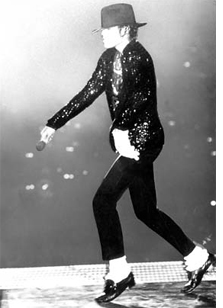 Where were you when you heard the news? I was outside San Antonio, at the end of the work day, in a traffic jam and on the phone with
  Life’s been a little stressful lately and there’s so much negativity going around right now in the world of wine that I thought it was time for some “just for fun.”


 As much as Italians generally like Americans and the U.S. of A., they also love to make fun of us. They even have a word for it, americanata: the word (a noun) is used disparagingly to describe Americans’s tendency toward the grandiose, the overblown, exaggeration, bad taste, and kitsch. A classic if banal example of an americanata would be the Big Gulp. According to Wikipedia, the
 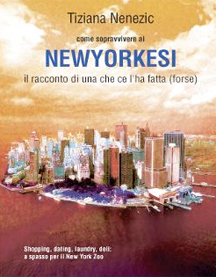 There is an entire genre of commentary on Americans and their americanate in Italian journalism. Vittorio Zucconi writes about the U.S. from an Italian perspective for the Italian national daily La Repubblica and is perhaps the most famous chronicler of americanate. There is even a blog called


 Do Bianchi
