Mr. Zaia goes to Washington (and lets Montalcino down)

smith1

It’s seems like it was just yesterday that I was posting a sigh of relief that the U.S. Alcohol, Tobacco, Tax, and Trade Bureau (TTB) was lifting its requirement of Italian government certification for Brunello di Montalcino imported to this country. Nearly every Italian news agency and feed (ANSA, Yahoo.it, etc.) had reposted agricultural minister Luca Zaia’s press release in which he announced — with cocksure nonchalance, I may add — that the requirement had been lifted following his successful meeting in Washington with TTB bureau head John Manfreda. Even Brunello producers association director Patrizio Cencioni issued a release praising minister Zaia and thanking him for a job well done. (You can read all of the press releases here.)

But it seems that minister Zaia was a little too quick to sing his own praises.

Late yesterday afternoon, another post hit the feed as the Italians were already sleeping: the TTB issued a press release in which stated plainly and clearly that the agricultural minister had falsely represented the agreement negotiated in the minister’s meeting with Manfreda last week. Despite claims otherwise, states the document, Italian government certification is still required. And it will continue to be required, according to the document, until the Italian government presents the Siena prosecutor’s final report on the investigation (the so-called “Operation Mixed Wine” inquiry into the suspected adulteration of Brunello and other Tuscan wines).
smith2

I spoke this morning to Brunello producer Fabrizio Bindocci of Il Poggione in Sant’Angelo in Colle and he told me that he and Il Poggione’s owner Leopoldo Franceschi were left dumbstruck when they read the news of the TTB’s clarification. “Maybe Zaia met with the doorman, not the TTB administrator,” Fabrizio wondered out loud with classic Tuscan wit. (Fabrizio’s son Alessandro has posted the entire series of press releases at his blog Montalcino Report.) “We feel that certification should be required and it should continue to be required,” said Fabrizio, whose wine has been certified by an independent Norwegian risk management firm since 2003, long before the controversy began.

smith3

In his post this morning, Franco published an image of Walt Disney’s Pinocchio and asked: “Just for the sake of clarity, can somebody — in Montalcino, Rome, or Treviso — help us to understand what’s going on?” (Minister Zaia hails from Treviso.) And making reference to Zaia’s bid to become governor of the Veneto (his home region), Franco asks rhetorically, “is it so hard to understand that it’s not possible and it makes no sense to run an electoral campaign in the Veneto using the supposed great success obtained in the [minister’s] campaign in Montalcino?”

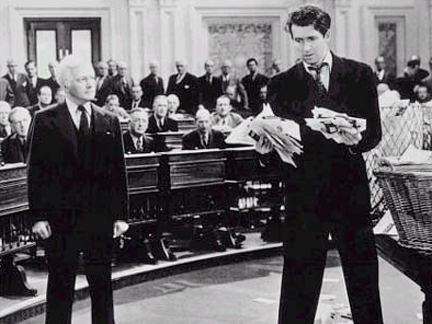
@Mr. Zaia you are no James Stewart: if you need an interpreter the next time you head to Washington, feel free to give me a call!

Looking back at Brunello

On Friday, Franco and I posted the news that the U.S. Alcohol, Tobacco, Tax, and Trade Bureau (TTB) has lifted the requirement of Italian government certification for Brunello di Montalcino imported to the U.S. The lift was agreed after Italian agricultural minister Luca Zaia met with bureau administrator John Manfreda last week.

I am happy to observe that despite the hail of the controversy (like the early-fall hail of 2008, that damaged but did not destroy the harvest; see above), Brunello and its producers — large and small — have emerged intact and healthy.

Looking back at the Brunello affair, in the glow of the Montalcino sunset, I am convinced of two things: that the controversy was a healthy wake-up call for producers (and that, ironically, it helped to raise positive awareness of the appellation abroad); and that, in many ways, it shed light on the importance and strength of the Italian appellation system.

At the same time, I believe the TTB’s response to the controversy was a trans-Atlantic misunderstanding: as the dearly departed Teobaldo Cappellano pointed out in the Brunello debate a year ago, the DOC/G system was created to protect the producers and the territory, not the consumer. And as much as I loath the thought of a Brunello producer “cutting” his Sangiovese with another grape variety, the transgression is a victimless crime as it relates to the consumer. If the consumer likes the wine and is satisfied with the perceived price-quality ratio, s/he is not molested by this misdeed.

The real victims were those producers who remained and continue to remain true to the territory and the territory itself. If unscrupulous enologists and calculating landowners did indeed adulterate their wines, and in doing so, co-opted and misappropriated an appellation tied to the land and the people who created it, therein lies the injury inflicted on their compatriots.

The saddest legacy of the Brunello controversy is the ill will it has created in the microcosm of Italian wine. On the same day that the Italian agricultural ministry issued a statement announcing the requirement for certification had been lifted, Franco (above, right; mentor, friend, and my partner in VinoWire) posted about a “cease and desist” letter he received from a lawyer representing a commercial winery. (For the record, Franco expunged any reference to the winery and wine in his post and I am merely speculating that the winery in question produces Brunello.) But the letter did not refer to something Franco had written: it referred to comments made by his readers! In one of the comments in question, a reader had made a remark about the unusual dark color of the wine by said winery. Has it really come to this? Do behemoth, commercial producers of Brunello really feel so threatened by a comment thread on a blog? Has it really come to this? Must a blogger feel threatened for merely allowing his readers to express their opinions in the comment thread of a blog?

Today, few who reside beyond Montalcino remember that Montalcino and its environs were one of the Germans’s last battlegrounds as they retreated in the face of the Allied advance in the last year of the Second World War. Even before the war, Montalcino and Tuscany were centers of the “red” resistance to fascist rule. Looking back on the whole Brunello affair, I was reminded of a little red book given to me by the mother of three brothers in Montalcino, whom I’ve known well since 1989. The locally published tome is by political activist, later partisan, and then local politician Carlo Sorbellini (above): Le mie memorie (My Memories). His descriptions of the years leading up to the war and the sacrifices made by him and his compatriot partisans during the German occupation are among the most humbly written and most moving narratives I have ever read. Many people shed their blood and gave their lives to protect this unique place: the same mountainous geography that made it a German stronghold also made it a great place to make fine wine after the war. And this Unesco-protected valley is among the most beautiful places in the world.

One thing I know to be true: I heart Brunello and I heart the people that lived, loved, and died to make it what it is today.

Quintarelli’s putative son

luca fedrigo

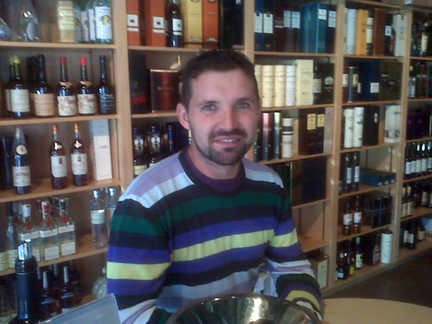
After a year in Texas, you’d think that I wouldn’t be surprised by the vinous talent that comes out to see us. On Saturday, I had the opportunity to chat with Luca Fedrigo, above, owner of L’Arco in Santa Maria di Negrar, whose wines I’d never tasted. “After I started making wines in the late 1990s,” he told me, “my first sale in the U.S. was here in Austin.” The Texas market’s loyalty to his wine has brought him back ever since.

Just as Texas holds a special place in Luca’s heart for the sweet memory of that first sale, so do the wines of Valpolicella in mine: I first tasted great wines from “the valley of alluvial deposits” when I went to study at Padua in the late 1980s.

Franco has written about the regrettable “Amaronization” of Valpolicella that has taken place over the last decade: the region is sadly over-cropped and too many producers are making Amaronized expressions of fruit that would be better destined for Valpolicella Classico.

Luca is part of a small but determined movement of winemakers who remain true to the origins of the appellation. I really dug his traditional-style Valpolicella and Amarone, classic expressions of the appellation, aged in large old casks. I even liked his Cabernet Franc/Cabernet Sauvignon blend, which showed great minerality and acidity (I think I’m going to use this wine for my Veneto class on November 3 as an example of the tradition of Bordeaux varieties long present on Veneto soil).

As it turns out, thirty-something Luca left school at the age of 14 and went to work for the “father of Valpolicella,” Giuseppe Quintarelli, who, in turn, became his putative father (I won’t go into the personal details, but let’s just say that Luca is practically a member of the family). For years, Luca studied winemaking with the great master of the appellation and ultimately became his vineyard manager. Quintarelli, he told me, helped him (and many others) to branch out on his own and create the Arco label. A gift that keeps on giving: thank goodness for Luca and the preservation of the traditions of this truly great appellation. “Valpolicella without Quintarelli,” Luca said, “is like a family without a father.”

The wines are available at The Austin Wine Merchant.

In other news… a savory oatmeal cookie…

oatmeal

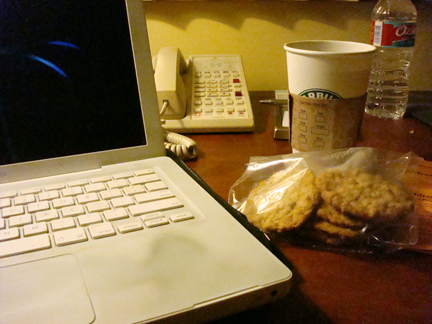
After three months of scraping by on writing and teaching gigs, I’m thankfully back to hawking wine. This early morning finds me in a hotel in Houston, where I “showed” wine all day on a “ride with,” as we say in the biz, with a famous French winemaker. It’s only my first day back out on the road and I already miss her terribly. But like manna from heaven, her savory oatmeal cookies somehow found their way into my wine bag and made for an excellent breakfast with my coffee.

Proust had his madeleine…

The Italian DOC/G system does (and doesn’t) matter

Photos by Tracie B.

A number of folks have posted recently about the Italian appellation system, bemoaning the fact that there is no “official” comprehensive list of DOCs and DOCGs. Back in NYC, my friend and colleague James Taylor posted at the VinoNYC blog: “as is the case with most things governmental in Italy, the system for classifying its wines can be apparently simple but deceptively complex, and can oftentimes cause a headache.” (In case you are not familiar with the Italian appellation system, see the note following this post below.)

Out here in Texas, Italian Wine Guy recently updated his list of DOCGs. His is the most comprehensive list that I know of. (Considering how much Italian wine he “touches,” as he likes to put it, as the Italian wine director for behemoth distributor Glazer’s, you’d think the Italian government would give this dude a medal. He certainly deserves one.)

It’s remarkable to think that neither the Italian government nor its Trade Commission, nor the Agriculture Ministry, nor the Italian Wine Union publish an online, comprehensive, definitive, exhaustive, up-to-date list.

But does a list really matter? Especially now?

IWG notes that while some might wonder why such a list is really necessary, it is important “because sommeliers studying for their tests want and need this information [and] anyway, it is kind of fun trying to figure a way through the labyrinth of Italian wines on that (or any) level.”

The point about sommeliers studying for their exams is a valid one: as Franco and I reported the other day at VinoWire, none of the three finalists in the recent AIS sommelier competition recognized a Langhe Bianco DOC (and one of its producers is no less than the Bishop of Barbaresco, Angelo Gaja!). Needless to say, the award was conferred to one of the contestants despite this glaring lacuna. The fact of the matter is that in the U.S. we perceive these regulations in an entirely different perspective — one that reveals our pseudo-Protestant and quasi-Progressivist tendencies and predilections for precision and accuracy.

One of our (American) misconceptions about the Italian appellation system is that it was designed to protect the consumer. In fact, as Teobaldo Cappellano pointed out in last year’s Brunello Debate, the DOC/DOCG system was created to protect “the territory,” i.e., the production zone and the people who live there and make wine.

On August 1, 2009, the DOC and DOCG system was essentially put to rest by newly implemented EU Common Market Organization reforms. August 1 was the deadline for the creation of wine appellations by EU member states and from that day forward, the power to create appellations passed from member states to the EU. The deadline created a mad rush to create new DOCs and DOCGs in Italy. Beginning with the current vintage, all wines produced in the EU will be labeled as Protected Designation of Origin (PDO) and Protected Geographical Indication (PGI). The new designations will recognize and allow labeling using the members states’s current appellation classifications. But from now on, no new DOCs or DOCGs will be permitted.

It’s important to note that the DOCG does denote a higher standard of production practices: generally, lower yields, longer aging, and a second tasting of the wine by local chambers of commerce (after bottling but before release), thus conferring the “G” for garantita (guaranteed). But even though the DOCG classification has been used historically as a more-or-less deceptive marketing tool (like this pay-to-play press release on the just-under-the-wire new Matelica DOCG), it does not necessarily denote higher quality. Think, for example, of Quintarelli’s 1999 Rosso del Bepi Veneto IGT, his declassified Amarone. A few years ago, when I called him to ask him about this wine, Giuseppe Quntarelli told me that he thought it was a great wine and wanted to release it but he felt it wasn’t a “true Amarone” and so he declassified it. (Yes, I hate to break the news to you, Bob Chadderdon, you’re not the only person in the U.S. allowed to speak to Quintarelli. He complimented me, btw, for my Paduan cadence!)

The rush to create new appellations (and in particular, new DOCGs), has created a great deal of confusion and in some cases commotion. I’ll post more on the subject later this week: self-proclaimed xenophobe, racist, and separatist agriculture minister Luca Zaia truly stirred the pot with the creation of a Prosecco DOCG. Stay tuned…

*****

Currently, the Italian appellation system has three basic classifications for fine wine: DOCG, DOC, and IGT.

Acronymic articulations and translations:

DOCG: Denominazione d’origine controllata e garantita (Designation of Controlled and Guaranteed Origin)

DOC: Denominazione d’origine controllata (Designation of Controlled Origin)

IGT: Indicazione Geografica Tipica (Typical Geographical Indication)

There are wines still labeled VdT, i.e., Vino da Tavola or table wines but few of them make the Atlantic passage. In other words, few cross that body of water otherwise known as the “great misunderstanding.”

Who cuts Jim Clendenen’s unruly hair? (and Dr. J in the Statesman)

felice partida

Above: You wouldn’t believe it but rockstar winemaker Jim Clendenen and I have the same hair stylist, the rockin’ Felice Partida. The only difference? Jim has hair…

BrooklynGuy is not the only guy who gets to go to cool tastings this week, during our industry’s fall preview season (although I have to confess I wish I had had a chance to check out the Jenny and François portfolio in New York with him).

Those highfalutin New Yorkers might be surprised by the caliber of wine folk who come out to visit with us down here in central Texas. ;-)

Yesterday, I tasted a lot of great wines, including current releases from some of my favorite Italians from importer Dalla Terra — Selvapiana (07 Chianti Rufina was KILLER), Marchesi di Grésy (05 Barbaresco was stunning), Tenuta Sant’Antonio (05 was great, always one of my favorite expressions of Amarone).

I also enjoyed tasting with Jim Clendenen, whose wines — especially the high-end bottlings — are always fresh, elegant well-balanced expressions of California Pinot Noir. And I couldn’t resist the above photo op moment: Jim and I share the same hair stylist, Felice Partida! She and I met simply because I booked an appointment last year with the first stylist available at Tracie B’s salon, James Allan, in the Rosedale neighborhood of Austin where we both live. Felice is simply the coolest and as it turns out, her big sis’ Susana is also one of the coolest wine brokers in Texas, AND Felice’s boyfriend Ronnie James is one of the town’s hottest bass players (who plays and tours with the likes of Booker T, Gary Clark Jr., and Jimmy Vaughn — not bad eh?). I highly recommend Felice: being her client comes with “fringe” benefits! ;-)

bin 36

Above: Restaurateur and winemaker Brian Duncan is one of our country’s most dynamic food and wine experts. He’s also one of the coolest guys in the biz.

I also got to catch up with rockstar restaurateur and winemaker Brian Duncan from Chicago. I thought his Pinot Noir show beautifully and the packaging alone made it worth the price of admission. The back label reads: Sexy Pinot Noir seeks short term relationship with recipes that include mushrroms, pork, beef, or poultry (No strings attached).

In other news…

Check out Mike Sutter’s excellent article in yesterday’s Austin American-Statesman, “Messages in a bottle: The mystique of the restaurant wine list.” I was thrilled that Mike interviewed me for the piece and was glad to make the point that you shouldn’t “go into a restaurant with the presumption that people are going to try and take advantage of you… When you pay for a glass of wine in a restaurant, you’re not just paying for the wine. You’re paying for the restaurant’s cellaring of the wine. You’re paying for the service of the wine, and you’re also paying for the expertise.” The other wine professionals interviewed for the piece give some great advice about how to decipher a wine list. The bottom line: go out and enjoy restaurants and their wines. That’s what they’re there for! :-)

In other other news…

Above: Tracie B and I tasted 1988 Bertani Amarone with our friends Charles and Michele Scicolone and Frank Butler earlier this year when we were on tour with Nous Non Plus.

Today, Franco published this great interview with our mutual friend (and one of my mentors) Charles Scicolone. It’s in Italian so if you’re not Italophone, check out Charles’s blog. Charles started drinking and collecting fine Italian wine in the late 70s and early 80s, long before the current renaissance of Italian food and wine. His insights into how the Italian wine industry has evolved over the last 40 years are invaluable.

In an unrelated story…

Is Berlusconi’s number finally up? The Italian courts have revoked his immunity.

Buona lettura!

Banfi 2004 Brunello, I cannot tell a lie (and other notes and posts on 04 Brunello)

Tracie B snapped the above pic of me using my Blackberry the other night, when she came home with an open bottle of Banfi 2004 Brunello di Montalcino in her wine bag (when not otherwise occupied being knock-out gorgeous, Tracie B works as a sale representative for a behemoth mid-west and southeastern U.S. wine and spirits distributor).

The moment of truth had arrived: it was time for me to taste the wine with my dinner of Central Market rotisserie chicken, salad, and potatoes that Tracie B had roasted in her grandmother’s iron skillet.

The wine was clear and bright in the glass and had bright acidity and honest fruit flavor. The tannin, while present, was not out of balance and the wine had a slightly herbaceous note in the finish that might not please lovers of modern-style wines but that I enjoy. If ever there were a wine made with 100% Sangiovese grapes, I would say this were one — tasted covertly or overtly.

According to WineSearcher.com, the average retail price for this wine in the U.S. is $65. I can’t honestly say that I recommend the wine: it’s not a wine that I personally look for at that price point. I did not find this to be a great or original or terroir-driven wine but I will say that it is an honest expression of Sangiovese from Montalcino.

Anyone who reads my blog (or follows news from the world of Italian wine), knows that Banfi has been the subject of much controversy over the last year and a half. But fair is fair and rules are rules and I cannot conceal that I enjoyed the 04 Brunello by Banfi. (Btw, Italian Wine Guy, who is Glazer’s Italian Wine Director, recently posted on 04 Brunello, including a YouTube of Banfi media director Lars Leight speaking on the winery’s current releases at a wine dinner in Dallas.)

Above: Facing south from Il Poggione’s vineyards below Sant’Angelo in Colle, looking toward Mt. Amiata.

Despite the will of some marketers to make us think otherwise, 2004 was not an across-the-board great vintage in Montalcino. In my experience with the wines so far, only those with the best growing sites were able to make great wines in the classic style of Montalcino and wines that really taste like Montalcino.

Btw, in all fairness, it’s important to note that the Banfi vineyards lie — to my knowledge — primarily in the southwest subzone of the appellation, one of the historic growing areas for great Sangiovese. When you drive south from Sant’Angelo in Colle, you see signs for the Banfi vineyards on the right. Earlier this year, my friend Ale over at Montalcino Report posted this excellent series on understanding the terroir of Montalcino using Google Earth. It’s one of the best illustrations of why the wines from that part of the appellation are always among the best, even in difficult years. (Ale’s killer Il Poggione 04 Brunello, which I tasted for the first time at Vinitaly in April, received such glowing praise from one of the world’s greatest wine writers that it caused near pandemonium in the market, prompting wine sales guru Jon Rimmerman to write that it “may be the most offered/reacted to wine I’ve ever witnessed post-Wine Advocate review.”)

Above: Facing north in Il Poggione’s vineyards, looking at the village of Sant’Angelo in Colle (literally, Sant’Angelo “on the hill”).

Franco recently tasted 93 bottlings of 04 Brunello at the offices of The World of Fine Wine in London and wrote of his disappointment with the wines delivered by even some of the top producers. Here are Franco’s top picks and straight-from-the-hip notes, posted at VinoWire.

In other news…

One of the greatest moments of personal fulfillment in my life was when my band NN+’s debut album reached #6 in the college radio charts so I guess that stranger things have happened: a colleague in Italy emailed me last week to let me know that my blog Do Bianchi was ranked #9 in the official (?) list of “top wine blogs.” Who knew?

Thanks, everyone, for taking the time to read Do Bianchi. The blog has been such a rewarding experience for me and it means so much to me that there are people out there who enjoy it.

The (de)criminalization of alcohol in Italy

Above: Italy’s agricultural minister Luca Zaia is widely recognized as having an ego the size of the world’s largest panettone. Note the signature green pocket square (a nod to his separatist, xenophobic Northern League party) and his black tie (I’ll leave the semiotic analysis to the reader but fascism is always in the eye of the beholder).

“Incredible but true: I am in agreement with Zaia!” This was the title of a Facebook note that Franco posted yesterday after the ever-patriotic (patriotic, that is, if you consider the Veneto a sovereign state) Italian agricultural minister was quoted in a magazine interview as saying that Italy’s new “zero-tolerance” drunk driving law is excessive. Currently, “0.2 grams per liter of blood” is the legal limit, making the consumption of even one glass of wine illegal if you get behind the wheel. In the interview, published in Italy’s leading consumer automotive magazine, Quattro Ruote, Zaia proposed that it should be raised to 0.5 grams so that drivers will be allowed to have 2 glasses of wine as long as the alcohol content of the wine does not exceed 11%, in other words, as minister Zaia put it, as long as drivers are not consuming “structured” wines. (In a subsequently posted FB note, Franco suggested that minister Zaia take a full-immersion sommelier course: “where,” asked Franco, throwing his hands in the virtual FB air, “does he find wines with 11% alcohol content?”)

Zaia should know something about drinking and driving: although you won’t find it in his ill-translated and prolix Wikipedia entry, the forty-something minister used to work as a nightclub bouncer, or so I have been told by someone who knows him well.

I’ve been known to indulge in some of my own Zaia bashing, but today I’ll leave it to the experts.

And not that it’s any of my business, but Zaia is right: the new legal limit, which went into effect earlier this year and has been rigorously enforced with myriad check points, has led to senseless arrests and steep fines for food and wine writers, like Andrea dal Cero who lost his license in May after attending a spumante presentation in Emilia-Romagna.

Above: Just days before the event was to be held, organizers of the Taurasi Wine Fair canceled the convention, citing recent legislation that makes it illegal to serve alcohol at public events in town squares.

Italy (like Europe in general) has been wrestling with its relationship with alcohol and in some cases, the results have been disastrous, like the recent cancellation of one of the most important wine festivals in southern Italy, the Taurasi Wine Fair. See this editorial posted at VinoWire by the author of Divino Scrivere, Luigi Metropoli.

I sure hope that Italian pols will look closely and carefully at current legislation and I’m glad that Zaia is taking this issue seriously. After all, can you imagine how many folks will lose their licenses as they roll out of Vinitaly next April? If you’ve ever been caught in the post-fair traffic of the trade show (where there are never any traffic police to guide traffic and avoid grid lock), you get the picture.

Savary Chablis and Tracie B’s enchilada casserole. Who knew? (also, Gramsci, Gaja, Israel Merlot in Italy, and natty wine in SF)

Above: Tracie B’s enchilada casserole may not be pretty but it’s shot to the top of my list of favorite things she cooks with meteoric celerity. And what better with the spicy and rich flavors of tomatillo sauce, cotija cheese, fresh peppers, corn, and cilantro, roast chicken, and corn tortilla than steely, mineral-driven (and affordable) Chablis? Who knew?

Seems we weren’t the only ones drinking Savary Chablis last night: a series of backs-and-forth on Facebook with Anthony on whether or not my silverface Princeton is a 69 or 71 was interrupted around dinner time because Savary 07 Chablis and Tracie B’s enchilada casserole were calling in my case, Savary Chablis Vieilles Vignes (I believe the 06) after his show last night (wherever he is!).

It’s Saturday and I’m working today (because I have a tight deadline on a hefty translation: a folio edition of twentieth-century Italian photography, pretty cool stuff actually). But before getting to work this morning, I did indulge in some Antonio Gramsci and his notion of cultural hegemony. I’d been thinking about Gramsci over the last week and how wine, in his era, was considered a luxury product in the eyes of the agrarian class (Italy was still in the early phases of its industrialization) and an important trading commodity by the landlords. How far the western world has come in such a short period of time! With the rise of globalization (unthinkable in Gramsci’s time when protectionism reigned) and the seemingly boundless exchange of wine today, Tracie B and I can enjoy an excellent and affordable (at our price point) Chablis that has traveled seemingly effortlessly across that misunderstanding otherwise known as the Atlantic Ocean. And we enjoyed it — no less! — with Mexican cooking spiced up by peppers grown in the farmland that stretches between Dallas and Austin in Texas (we still had some peppers left over from my stopped at the sorghum syrup and stuffed armadillo store).

My hankering for Gramsci was whetted in part by the soul searching that followed the wild exchanges this week but it was garnished by the news — which I read at Franco’s blog — that Angelo Gaja is importing Israeli Cabernet and Merlot to Italy. It seems that like the historic stockfish vendors of the Roman ghetto, Gaja saw an opportunity in bringing modern-style international grape varieties from the promised land and selling them to the “Israelite” communities (as they are called there) in Italy. Does Italy really need another international-style Merlot? From Israel?

Gramsci, where art thou?

In other news…

Above: I bet this guy knows his Gramsci. Guilhaume Gerard, one of the owners of Terroir in SF, pours great wine and writes a great blog with an emphasis on you know what.

I read at McDuff’s excellent blog that there is a now a site with information about the natural wine week event going on in San Francisco next week, hosted by different venues, including one of my favorite natural wine destinations, Terroir, with a symposium led by the inimitable Guilhaume (whose natural wine credentials, by all accounts, are impeccable and who has an amazing palate and writing style).

Soldera Rosso 91 backstage at Diana Krall

From the “Good wine bloggers go to heaven, bad ones go back stage” department…

Franco is not the only one who gets to go see Diana Krall thanks to his connections in the wine world.

Most of the folks who visit my blog know that blogging has been an incredibly rewarding experience for me, professionally and personally, bringing me into contact with a wide range of people, from all walks of life, whom I wouldn’t have met otherwise.

I probably would have met Anthony Wilson — wine dude and jazz master (I’m not kidding) at one point or another: as it turns out he and I have a ton of friends in common (including my old friend John Mastro who manages our band Nous Non Plus). We met “virtually” after Anthony stumbled upon a post of mine on López de Heredia, one of our shared enophilic passions, and we made the connection of all the folks we knew in common.

Above: Pre-show dinner with the gang at Pt. Loma Seafood, around the corner from Humphrey’s by the Bay where Anthony played with Diana Krall. The name of the venue is SO 70s!

On Monday, Tracie B and I picked up Anthony (second from right) and took him to dinner at Pt. Loma Seafood, where we drank 2007 Soave Classico by Suavia and Lini Lambrusco Cerasa Rosé with our dinner (no corkage!). Pt. Loma Seafood is a San Diego classic and the freshness of the materia prima is second to none — highly recommended. That’s our friend Frank Sciuto, owner of Tio Leo’s, sitting next to Jon and Jayne, center. When I mentioned to Frank that we were going to see Diana Krall, his mouth dropped to the floor and his wife Violet said, “Diana Krall is Frank’s freebie.” So we just had to take him along.

Above: Soave Classico 07 by Suavia and crab louie paired like the warm tones of Anthony’s Clark amplifier and the tender notes of his custom Monteleone archtop guitar.

I have to confess that I hadn’t really done my due diligence. I knew that Anthony was a wildly talented musician but it wasn’t until I ordered some of his disks from Amazon and started listening to his music that I realized he is one of the jazz greats of our country (and the son of legendary band leader Gerald Wilson).

Above: Jon said it was the most “rock ‘n’ roll” label he had ever seen, hence the headbanger’s homage.

I really wanted to thank Anthony for being so generous with tickets and passes and so we smuggled in a bottle of 1991 Soldera Rosso Intistieti. I couldn’t figure out the origin of the name Intistieti and so I asked Franco to write to Gianfranco Soldera, who answered that Intistieti is a highly localized dialectal form that means terra tra i sassi or literally land among the stones. The soil is stony and poor and thus unsuited for growing crops other than grapes destined for fine wines. I had never tasted one of Soldera’s declassified wines, i.e., a wine that he felt didn’t rise to the quality of his Brunello di Montalcino, but a wine he felt should be released nonetheless. He is one of Italy’s most exacting winemakers and I knew this would be great. The Pegasus on the label was inspired by the notion that his wines rise above mediocrity — and indeed, they do. This wine showed gorgeously and was shining example of how Sangiovese can age gloriously when made in traditional manner (I’ll do a post on my mind-blowing visit to Soldera last year and his unique approach to winemaking.)

Above: I brought a bottle of Lini Lambrusco Labrusca Rosso for Anthony to take on the buss with him that night for a night cap. That’s him, left, with bassist Robert Hurst (also, a super nice guy). Lambrusco, so low in alcohol, light, and refreshing, is a great end-of-the-night wine.

Thanks again, Anthony, for a truly unforgettable night and a great way to celebrate the success of the San Diego Natural Wine Summit on Sunday. And thanks to Winnie, who was the first connection that Anthony and I made, and who suggested that I write a blog so many moons ago! I am amazed, over and over again, how wonderful surprises continue to emerge from the world of blogging. As the virtual world grows smaller, so the real one seems to be richer every day.

Mexican porn: Bahia adds tortilla soup to its menu

Above: Bahia Don Bravo’s new Tortilla Soup was too sexy to resist. No trip home to La Jolla where I grew up is complete without a visit to Bahia.

Tracie B and I returned late last night to Austin from San Diego where we met a lot of great people, poured and tasted a lot of great wine at the SD Natural Wine Summit, and caught up with mama Judy, the German Professor, and the Cheese Hater’s mom over dinner at Jaynes Gastropub (yes, even on my night off, I ate there, that’s how much I love it).

Above: Owner Carlos Bravo aka Don Bravo was in the kitchen on Monday when we stopped in with mama Judy for lunch. The carnitas were particularly delicate and tasty, moist and rich on the tongue.

I’ve got a lot of really cool posts on deck, including more from the Natural Wine Summit, a wonderful toasty vintage grower’s champagne shared by a dear friend, and some old and very special traditional-style Sangiovese from one of the most famous producers of Brunello di Montalcino.

Above: Who ever thought beans could be so seductive?

It’s 8 a.m. and I’ve already been at my computer since 6:30, trying to catch up. So I’ll make this post a quickie.

On deck for tomorrow: “Good wine lovers go to heaven, bad wine lovers go back stage.”

In other news…

Excerpts of an interview with Franco — on recent developments in Montalcino — appeared in The New York Times today — cartaceous version. Read it while it’s hot! (And you can read the entire interview here.)