Italy meets California circa 1982 (by Burton Anderson, Wine Spectator)

Source: Alfonso Cevola. Check out his truly stunning post on tasting Sangiovese in Tuscany in the 1970s, Our Sangiovese.

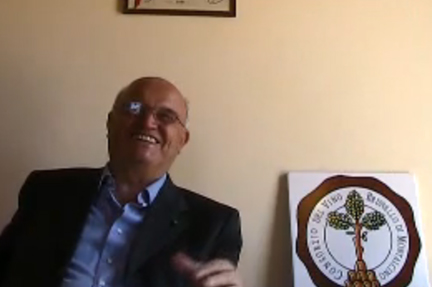
The above image of Ezio Rivella (now president of the Brunello producers association) has been culled from the December 1-15, 1982 issue of the Wine Spectator. The article, filed from Florence, was written by Burton Anderson and is entitled “Italian vintners look to Cabernet, Chardonnay for future wine styles; results mixed so far.”

“We’re deliberately adopting a California style because our main market is the United States and also because the technology is more suitable,” Rivella, then director of Banfi, told Anderson. “But we have an advantage. Conditions in our hill vineyards are not only better than in Napa or Sonoma, they’re the best I know of anywhere. We plan to fully exploit this advantage in our wines, which will be aged in barriques of split French oak.”

A picture’s worth a thousand words, isn’t it?

In other [Brunello] news…

Who knew that Gianfranco Soldera was a natural winemaker? Read what he had to say in an interview published last week, translated and posted by Mr. Franco Ziliani and me at VinoWire.

Eating our way through California

california tomatoes

Above: Top Italian wine writer Mr. Franco Ziliani (possessor of a palate I admire immensely) likes to tease me (rightly) about how I’m so crazy for the wines of Piedmont, I’ll even drink Barolo in the middle of the “scorching hot” Texas summer (and believe me, it’s been a hot one in Texas this year!). Well, yesterday I quit the California dreaming and did me some serious California eating! Those are tomatoes from Chrissa and Dan’s garden.

grilled marlin

Grilled marlin, scallops, and shrimp for lunch with client and new friend Mike K at the classic ol’ San Diego downtown eatery Dobson’s. (Thanks again for lunch, man!)

baker and olive

Savory San Diego Bread and Cie bun with locally sourced olive oil from Baker and Olive, and Fra’ Mani salame at epicurean Chrissa and Dan’s place (a truly yummy locus amoenus their house is!).

california produce

Dan’s excellent heirloom tomato salad, sourced from their garden (what’s the name of the Polish cultivar?).

california sushi

Late-night sushi at Miso Harney sushi in Old Town (they serve until 12 a.m.!) after Tracie P got in from Austin (I got in the day before). Geared for a young crowd, Miso Harney is a great place for later-in-the-night super fresh San Diego sushi and an SD-restaurant-industry fav.

california traffic

Of course, there’s also the California summer traffic to contend with. Ugh… Not so bad though, considering the view!

I bet you’re gonna like where we’re headed today… Stay tuned… It’s a special one…

Ezio Rivella: “80% of Brunello was not pure Sangiovese.”

Above: I hope that Tuscan wine writer and internet-based interviewer Carlo Macchi doesn’t quit his day job. I certainly wouldn’t call him the next Antonioni. Although he might give Dario Argento a run for his money. Last week, the newly elected president of the Brunello producers association, Ezio Rivella, told Macchi that “80% of Brunello was not pure Sangiovese.”

You can imagine my utter and profound astonishment when I watched a recently taped interview with the new president of the Brunello producers association in which he stated the following: at least up until the time of the Brunello controversy that broke in March 2008, “80 of Brunello was not pure Sangiovese” and that the practice of adding “3-5% of grapes other than Sangiovese” was “widespread” and “commonly accepted” among the 250 or so bottlers of Brunello di Montalcino. (The interview was filmed in two parts: the above statements were made in the second segment, and here’s a link to the first.)

The interviews were conducted last week by Italian (Tuscan) wine writer Carlo Macchi, editor of the online wine magazine WineSurf. The videos came to my attention via the weekly web news roundup published on the Italian Sommelier Association website by Mr. Franco Ziliani (who, btw, is not currently blogging right now).

I’m only partly astonished by the figure. In fact, most people whom I’ve spoken to on the ground would arrive at the same figure more or less through guesstimation. As Gian Franco Soldera told me when I visited with him in September 2008 (at the height of the crisis), “the tanker trucks come in weighted down, their load riding low to the ground, and they leave riding high.”

No, what amazed me was the nonchalance with which Rivella brandished this astounding figure. But at the same rate, considering the fact that he spent four decades (the majority of those at the helm) at the largest producer in the appellation (you don’t need me to tell you who that is), I’m not surprised that he would so unabashedly utter these words. And in all fairness and in honesty, I must applaud Rivella for sharing this insight (so often spoken sotto voce, under one’s breath in Montalcino) in a public forum.

What alarmed me was the fact that Rivella also told his interviewer that “for the moment were not going to be talking about changing the appellation to allow for grapes other than Sangiovese.” The law states that the producers get to decide the rules, he explains, and the producers have voted for 100% Sangiovese. But — ugh and here it comes — “we will discuss changing it in future because it needs to be changed.”

When asked the wine figure that impressed him the most, he replied Robert Mondavi. Are you surprised?

I translated and paraphrased some other highlights (?) here at VinoWire.

The story behind Vajra’s Barolo Albe

Above: The good news is that it looks like Vajra’s wines will be coming to Texas soon.

So many questions, so little time…

When Mr. Franco Ziliani took Tracie P and me to taste with Aldo Vajra back in February at the winery, I neglected to ask Aldo what the “Albe” in his “Barolo Albe” denoted.

Luckily, we got a chance last week to sit down with Aldo’s son Giuseppe here in Austin. (I’d never met Giuseppe before but I felt like I knew him already: his face and his family were familiar to me, however virtually, through the excellent blog of David McDuff, whose palate and writing I admire immensely and whose taste in music and Nebbiolo are unsurpassed.)

The designation “Albe,” he explained, is simple: it’s the plural of the Italian alba, which in this context, means dawn.

“You see, our Barolo Albe is a traditional-style Barolo made from fruit sourced from three different vineyards,” Giuseppe told us, “Fossati, Le Coste, and La Volta. When the sun rises in the morning, it takes about 20 minutes for the sunlight [dawn] to reach each vineyard. So, there are three different albe [dawns].”

I’ve tasted the 2005 Barolo Albe by Vajra on three different occasions this year, and, man, it just keeps getting better and better. As much as I love their flagship Barolo — the single-vineyard Bricco delle Viole — it’s always the blended Barolo that keeps calling me back. At each occasion, I’ve found that signature freshness and drinkability that Vajra magically seems to capture in the bottle (a quality due, no doubt, to meticulous, gentle vineyard management and an honesty in the cellar).

@David, btw, would love to hear your recent notes on this wine.

Above: The Vajra family begin bottling the historic Baudana wines in 2009 with the 2005 vintage.

We also re-tasted the 2005 Barolo by Baudana, which the Vajra family began bottling for the iconic Langa family in 2009. I can’t say that I am a big fan of the 2005: its woody notes are a turn-off for me. Giuseppe did tell me that for the 2006 vintage, the barrique is toned down. And he added that we’ll see great things from these historic vineyards in vintages to follow (where he plays a greater role in the aging regimen).

As an indication of the greatness and potential of these historic vineyards in Serralunga (Baudana and Cerretta), Giuseppe also pointed to Mr. Franco Ziliani’s recent post on the 1982 Franco Fiorina Barolo, which was sourced in part from Baudana (I translated Mr. Ziliani’s post for VinoWire).

In all honesty, I’m not such a fan of the wine as it is right now. But I do believe that its future in the hands of Giuseppe and his father Aldo has immense potential to become one of the great icons of Langa. Stay tuned…

And let’s keep our fingers crossed that Vajra wines make it to Texas this fall! I don’t know how much longer Tracie P and I can survive without super-old-school Vajra Moscato d’Asti!

Thanks for reading!

The James Suckling era ends (and what we ate and drank for my birthday)

poggione

Above: We treated ourselves to a bottle of 2004 Il Poggione Brunello di Montalcino and porterhouse steak last night in celebration of my birthday. When we planned this classic Tuscan meal, I had no idea that my birthday would also deliver the news that James Suckling had left the Wine Spectator.

Yesterday, as we were preparing for birthday and Bastille Day celebrations chez Parzen, the following news arrived via email from a colleague and friend:

    James Suckling, who joined Wine Spectator in 1981 and has served as European bureau chief since 1988, has retired from the company.

    Suckling’s tasting responsibilities have been reassigned. The wines will be reviewed in our standard blind-tastings in the company’s New York office.

    Senior editor and tasting director Bruce Sanderson will oversee coverage of Italy. Sanderson, who has been with the magazine for 18 years, currently reviews the wines of Burgundy, Champagne and Germany.

fiorentina

Above: To make a proper “bistecca alla fiorentina” at our house, we season the porterhouse generously with kosher salt, rubbing the salt into the meat, and then we char the T-bone, with the steak upright.

Neither Tracie P nor I could ignore the uncanny coincidence that we had decided to open a bottle of 2004 Brunello di Montalcino by Il Poggione, a traditional-style wine made by a family who has vehemently and vociferously opposed the modernization of its appellation. There’s no two ways about it: during James Suckling’s tenure at the Wine Spectator, the scores he gave to modern-style Brunello — with Casanova di Neri as its poster child — helped to eclipse the sale of traditional-style wines, like those made by Il Poggione. (In all fairness, Suckling also gave good scores to Il Poggione but his historic preference for dark, concentrated, oaky Brunello with higher alcohol levels, indisputably skewed his evaluations toward modernism.)

fiorentina

Above: Then you cook the steak on either side, very quickly at high heat. By cooking the steak upright first, the meat “heats through” entirely.

Another layer of irony was cast upon the news and our Brunello by the fact that Mr. Franco Ziliani — at times Mr. Suckling’s detractor — had suspended publication on his wine blog Vino al Vino, the leading Italian-language wine blog, a few days earlier. (Mr. Ziliani’s relationship with Mr. Suckling is even referenced by the author of the Wiki entry on the Italian wine writer.) “A pause for reflection,” wrote Mr. Ziliani on Monday, a search for “clarity” in his life and for a sense of purpose for the blog, he explained. “To blog or not to blog,” he asked rhetorically.

fiorentina

Above: High heat is the key to searing and caramelizing the fat on the outside of the steak while leaving the meat in the center tender and nearly raw.

The two events are certainly unrelated but their confluence is rich with meaning. We often forget that that the current economic crisis has affected both the wine industry and the publishing industry. Hawking wine is no easy tasks these days (especially when it comes to high-end, luxury wine like Brunello) and hawking newspapers and magazine is even harder.

fiorentina

Above: Traditional style Brunello and steak, one of the great gastronomic pairings in the Western Canon. (Honestly, I wish I would have used a slightly shorter cooking time. I prefer my steak “black and blue,” charred on the outside, blood rare on the inside. But it was delicious nonetheless!)

While I’ve been a devoted fan of Mr. Ziliani’s blog since I first discovered his writing more than 5 years ago, I can’t say that I’ve been such an admirer of Mr. Suckling’s take on Italian wine. In fact, I think that Suckling historically ignored and omitted the great icons of Italian wine from the canon of the Spectator’s “top wines of the world” because he was looking for wines that appealed to his idiosyncratic sensibility without viewing them in a broader scope and without consideration for the wines that Italians consider to be indicative of their winemaking tradition. At the same rate, looking back on Suckling’s legacy (however skewed) as an arbiter of Italian wine, I feel compelled to acknowledge his contribution to the world’s awareness of the overarching greatness of Italian wines.

fiorentina

Above: Potatoes, spinach, grilled onions, and steak, all dressed simply with kosher salt and extra-virgin olive oil.

And so we raised a glass of 2004 Brunello di Montalcino by Il Poggione last night, to both Mr. Suckling and Mr. Ziliani, polar opposites in their approach to Italian wine, leading voices of antithetically positioned vinous philosophies. I hope and trust that both will continue to share their impressions and palates, using whatever media they see fit, with a world ever-thirsty for Italy’s unique wines.

A “must read” for the true lover of Barolo

Above: Silvia and Nino Rocca preside over the kitchen and dining room of one of Piedmont’s most important wine destinations, Da Felicin in Monforte d’Alba. I took this photo in March when I dined there with the Barbera 7.

It was Charles Scicolone who, many years ago, first told me about Da Felicin, one of the great restaurants of Piedmont’s Langa hills and one of the world’s most important wine destinations — especially for those of us who worship in the temple of Nebbiolo.

Today, over at VinoWire, I’ve posted a translation of a post by my colleague and co-editor of the blog, Mr. Franco Ziliani (Italy’s A-number-1 wine blogger), about a very special bottle of wine that Felicin’s owner Nino Rocca shared with him. I hope that you’ll find Mr. Ziliani’s notes on this wine as moving as I did.

But, more importantly, this post — in part because of Mr. Ziliani’s interview of Armando Cordero, who made the wine in question — should be required reading for anyone trying to wrap their mind around what great Nebbiolo truly is and the modernist-vs.-traditionalist dialectic that is taking place on the ground in Langa. The information contained therein is subtle but fundamental. So please have a look

Buona lettura, as they say in Italian…

An Oltrepò Pavese Riesling that commands our attention

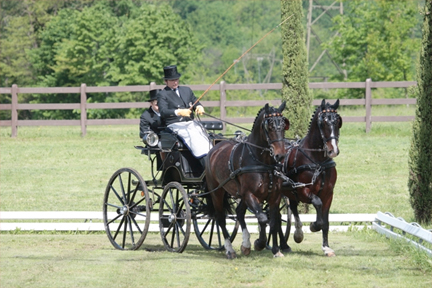
Above: Lombardy and the Oltrepò Pavese are home to an active community of 17th-century carriage collectors and competitors. The Riesling “Landò” produced by Le Fracce is so-called after its owner Count Bussolera’s collection of landau carriages.

Have a look today at a post on an Oltrepò Pavese Rhine Riesling by Italy’s top wine blogger and leading enojournalist Mr. Franco Ziliani, translated by me over at the blog we edit together, VinoWire.

For those of you studying for your master sommelier and certified wine specialist and educator exams, it’s most definitely worth a look-see. We tend to think of the Oltrepò Pavese solely as a producer of great Pinot Nero, Croatina, and Bonarda (including the many excellent traditional-method expression of Pinot Nero made there). But the appellation is one of the few Italian growing zones that can produce a Riesling DOC and bottle it with the grape name on the label (unlike, say, Piedmont, where producers like Vajra can bottle 100% Riesling but have to call it “Langhe Bianco”).

Le Fracce’s “Landò” is so-called because the owner of the estate collects 17th-century landau carriages.

Check it out here…

Happy birthday Giorgio Grai!

Above: Legendary and most beloved Italian winemaker Giorgio Grai turns 80 today. Photo by Franco Ziliani.

From Friuli to Trentino, from Piedmont to Tuscany, and even as far south as Apulia, there is perhaps no one more respected and beloved by Italian winemakers than Giorgio Grai, who turns 80 years old today.

Check out what Mr. Franco Ziliani had to say about Giorgio in this post over at VinoWire today.

I only met Giorgio once, introduced to him by my good friend Charles Scicolone, many years ago in the library at the old Le Cirque in the Palace Hotel in Manhattan. Before introducing me, Charles, who seemingly knows everyone in the business, turned to Giorgio and said famously, “It’s always a pleasure.”

Jancis Robinson: “Syrah di Montalcino”

From Jancis Robinson’s blog, yesterday, “Montalcino votes for modernism”:

“After dramatic last-minute machinations, it has just been revealed that the secret ballot to elect the new president of the Brunello di Montalcino consortium revealed that arch-modernist Ezio Rivella of Banfi garnered most votes and will now direct the fortunes of this controversial wine.

Until very recently it looked as though the most prominent woman in Montalcino, Donatello Cinelli Colombini, would win, but at the eleventh hour, in a move that took many by surprise, she withdrew her candidacy and threw her weight behind Rivella. Concerned that this would be the final nail in the Brunello coffin, and that Piemonte-born Rivella would encourage the use of grape varieties other than Brunello (Sangiovese), veteran winemaker Fabrizio Bindocci of the respected estate Il Poggione declared his own bid for the presidency yesterday. …

It seems as though the juggernaut rolling towards the likes of Syrah di Montalcino is unstoppable.”

Nightmare in Montalcino: Fabrizio is our only hope!

I just saw a retweet in my Twitter feed and am literally feeling ill after what I just read over at Montalcino Report: Donatella Cinelli Colombini has “stepped aside” and is giving her support to Ezio Rivella in his bid to become president of the Brunello producers association (if you haven’t been following events there, just scroll down on my blog to my most recent posts).

A nightmare is unfolding in Montalcino and Fabrizio Bindocci (left, in a photo I took probably 6 years ago) is our only hope. Fabrizio had not officially announced his candidacy for the presidency but Cinelli’s “abdication” has led him to speak out finally. He did so today in an open letter he wrote to Italy’s top wine blogger Mr. Franco Ziliani. Fabrizio’s son Alessandro has published an English translation at Montalcino Report.

In it, his father writes:

    It is, however, with a certain dismay that I have learned — in a meeting that we held yesterday with some of the councillors — that Donatella Cinelli Colombini wishes to give way (and to give the presidency) to the very person, in my opinion (and in accordance with my own sense of propriety), who is the farthest from my land and the wine that we steadfastly wish to continue to produce (perhaps by improving our tradition but certainly not by bastardizing it). He is the farthest from it in his actions, his feelings, and his interests.

    I am referring to Cavalier Rivella, whom I have known since his earliest days in Montalcino and whose bluntness I appreciate.

    Therefore, I believe that it is my duty, on the eve of this most delicate of appointments, to ask all of my fellow councillors and all of those who hold dear the reputation (and success) of this wine to banish from our behaviour any interest that does not correspond to that of the producer Consortium members.

    This — and only this — is what I would wish to do if I were to be President!

However distant this election may appear, it is the front line in the battle to save traditionalism and indigenous winemaking in Italy. I know Fabrizio well and as outspoken as he is (in the true Tuscan tradition), he is also a very humble man who would not have taken such a brazen stance if the situation were not grave.

Keeping my fingers crossed (and hoping you are, too)… thanks for reading…