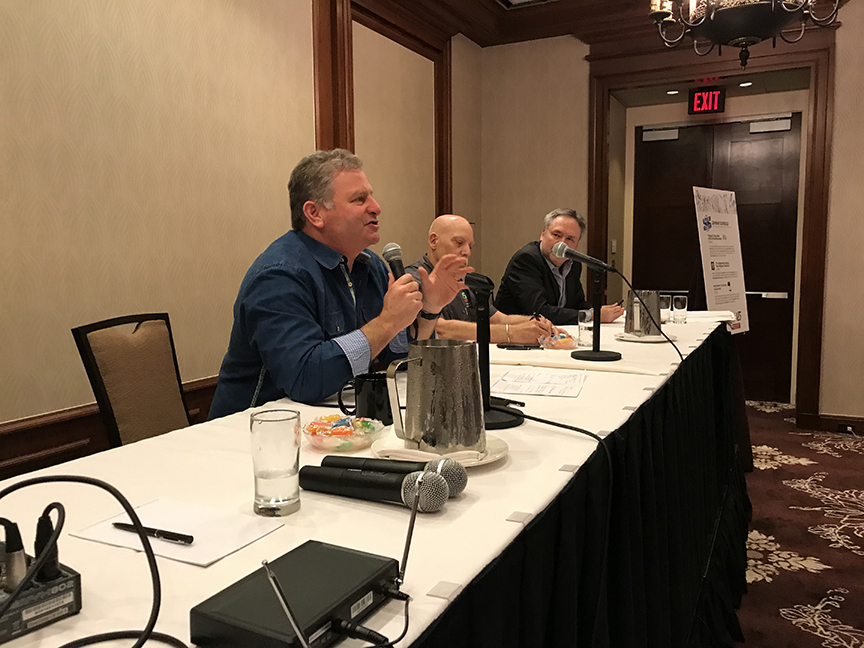
“Fire and Wine: Boccaccio and the end of ampelophobia” Oct. 16, a virtual tasting available across the U.S.

Dante only mentions wine once in the 100 cantos of his poem the Commedia.

Petrarch never mentions wine in his Italian songbook, the Rerum vulgarium fragmenta (Fragments of Vernacular Things) even as he rails against ubiquitous alcoholism and gluttonous cardinals thirsty for (French) wine in his Latin writings.

But with Boccaccio, their successor to the Italian literary crown, wine suddenly emerges as a diegetic and extra-diegetic element central to mimesis. In the Florentine writer’s Decameron, wine not only plays a key narrative role but also transcends its alimentary value and becomes a quasi-epistemological device.

On Friday, October 16, I’ll be leading a virtual tasting where I’ll share some of my research into Boccaccio’s unique textual relationship with wine and discuss how he vanquished his predecessors’ ampelophobia.

I promise it won’t be as boring as it sounds! And even more importantly, the event is open to anyone who lives in a state where Chambers St. Wines can ship.

The tasting, organized by Italian poet Luigi Ballerini, Lacanian psychoanalyst Paola Mieli, and New York gallerist Robert Simon, benefits Animal Zone International.

Click here for details (deeply discounted early-bird tickets available as of this posting). I would love for you to join us.

And for Houstonians and Texans at large, here are some other tastings that should be on your radar…

Sommelier Riccardo Guerrieri and the good folks at Vinology wine bar and shop in Houston have mounted a savory “week-long exhibition of skin-contact wines,” September 28-October 5. Visit their site for forthcoming details. The event will feature discounted macerated white wines and accompanying videos. Give me some skin! Tracie and I are HUGE skin-contact enthusiasts!

On Thursday, September 24, Court of Sommeliers members Jack Mason and Steven McDonald will be leading a superb virtual wine tasting to benefit She Has Hope, “a Houston-based human trafficking response initiative operating programs for vulnerable girls and women in Asia and Africa.” It’s always an amazing experience to taste with these dudes.

There is still time to sign up for virtual tastings with Italian wine and food producers September 21-22 at the Taste of Italy virtual trade fair organized by the Italy-America Chamber of Commerce South Central. Click here for participating producers and appointment portal. All trade members and wine and food-focused media active in Texas (Austin, Dallas, San Antonio included) are eligible to take part. Free wine and food delivered to your doorstep? It’s a no brainer, if you ask me.

Lastly, I continue to lead virtual wine dinners every Thursday night for my restaurant client here in Houston Roma. Each week, we host an Italian winemaker and the cost is $119 for 3 bottles of wine and dinner for two. See the restaurant’s website for weekly details and click here if you’d like me to add you to our distribution list.

Thanks for reading, speaking, tasting, and supporting Italian wine! Italian winemakers and the wine and food professionals who rely on them need our support more than ever!
What is a “Super Tuscan” and where did the term come from? The answer might surprise you.

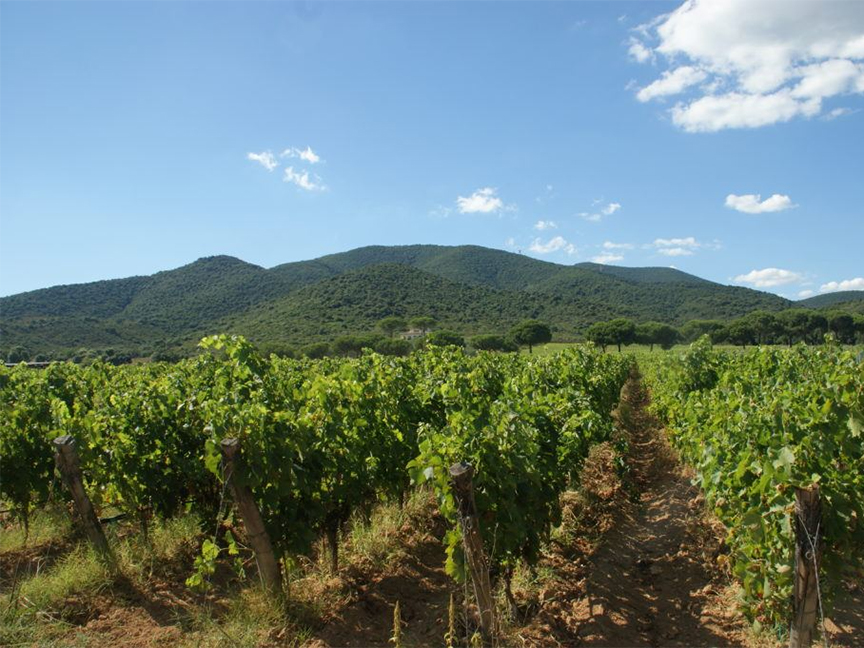
Above: vineyards in Maremma along the Tuscan coast where “Super Tuscans” are produced (image via the Wilson Daniels website).

The more closely you look at a word, wrote the early 20th-century aphorist and poet Karl Kraus, the more distantly it looks back at you.

This couldn’t be more true when it comes to the meaning and origin of the expression “Super Tuscan.”

Historically, the named was used unofficially to denote high-quality Tuscan wines that were classified as vino da tavola (table wine) because they didn’t qualify to be included among the “designations of controlled origin” (DOC). Ostensibly, the reason they didn’t qualify was because they used Bordeaux grape varieties that weren’t recognized by the Italian DOC (appellation) system at the time.

The earliest mention of a Super Tuscan (wine) I’ve been able to find in Google Books is in a 1987 tasting note in America Wine Society News. It references a Sangiovese and Cabernet Sauvignon blend “that cannot be considered a true Chianti.” You can’t read the entire passage on Google but it’s likely that the writer was referring to Tignanello, the famous blend of Sangiovese and Cabernet Sauvignon that Antinori first produced as a “table wine” with the 1975 vintage.

There are, however, antecedents beyond the wine world.

In his 1972 monograph, The Fascist Experience Italian Society and Culture, 1922-1945, Edward R. Tannenbaum calls Italian writer Curzio Malaparte a “super Tuscan publicist.”

And in 1915, in Howard’s Blue Book: The Only Index-catalogue of the Paint, Oil, and Varnish Industry, there is mention of a “Super Tuscan Red” paint, possibly a reference to the distinctive light red color we call “Sienna Red” today.

Most Italian wine trade observers agree that Tignanello (produced in Chiantigiana) and Sassicaia (produced in Bolgheri on the Tuscan coast) are the earliest examples of wines that were commonly referred to as Super Tuscans. Sassicaia was available in the U.S. in the early 1970s. According to the winery that produces it, San Guido, the 1968 vintage of Sassicaia was the first to ship to the U.S. (thus predating the arrival and advent of Tignanello).

But no one knows for sure who first used or coined the term in the context of wine.

By the late 2000s, it had become fashionable in the alternative U.S. wine media to denigrate the Super Tuscans — the “aia wines,” as some of us called them — as bottlings created specially for the American market. The wines were excessively “oaked,” writers moaned, overly concentrated (“extracted”), and jammy like the “fruit bombs” that Napa-loving Americans preferred.

But cum granus salis, the claim wasn’t entirely true. In 1989 when I visited Montalcino for the first time, sommeliers there were eager to pour Sassicaia and Ornellaia side-by-side with Brunello (another wine that had yet to make its name on this side of the Atlantic). Looking back on it now, there’s no doubt in my mind that these wine professionals were extremely proud of the wines and considered them some of the best expressions of Italian viticulture at the time. And many of the wines, especially from the top tier, were and are still today elegant, restrained, and impeccably balanced. They may be “oaked” but they are not necessarily “oaky.”

Other Tuscan winemakers would try to reproduce the historic Super Tuscans model — some successfully and some not so much. But the legacy of the aforementioned wines was firmly and undeniably established by the late 1990s when Italian wine would begin trending upward in the U.S.

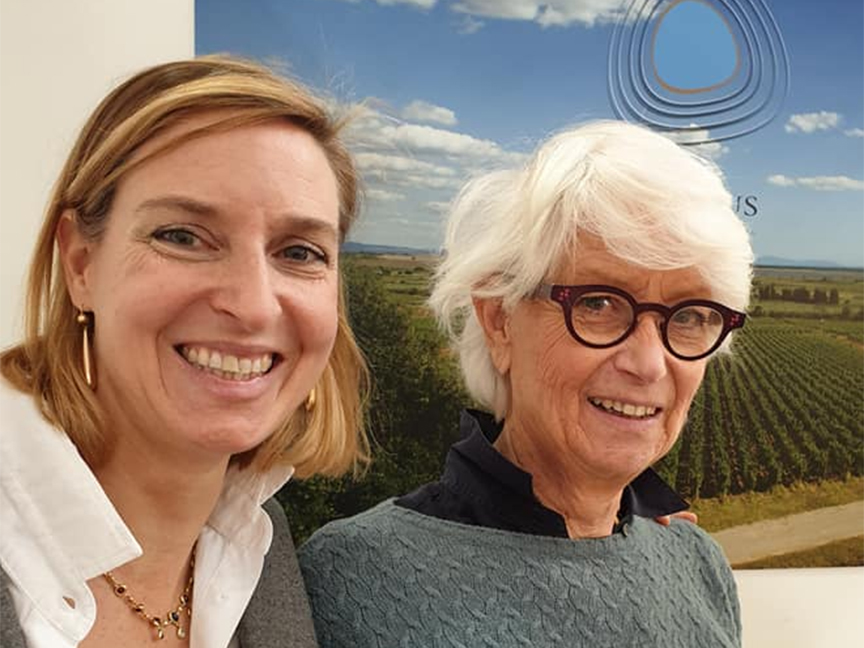
On Thursday night here in Houston, I’ll be co-hosting a guided wine tasting and dinner with a genuine Super Tuscan, Federica Mascheroni Stianti (below, left, with her mother Giovannella Stianti Mascheroni, another Super Tuscan woman) at Roma restaurant (my client). We’ll be tasting her family’s Castello di Volpaia Chianti Classico together with one of their more recent entries, the Prelius Cabernet Sauvignon raised in Grosseto province in Maremma along the Tuscan coast.

Their Cabernet Sauvignon is aged in large cask — not the small French barriques commonly used for the historic Super Tuscan wines. Restrained and lithe on the palate, with classic varietal expression, it’s not “oaky” or “jammy” or “overly extracted.” Is it a Super Tuscan?

As another Super Tuscan, Dante, once wrote, nomina sunt consequentia rerum.

I hope you can join us this week to taste it and join in the conversation!

Here’s the menu and reservation details.

Wine for voter enfranchisement in Texas: Vines for Votes raises money for Texas ACLU.

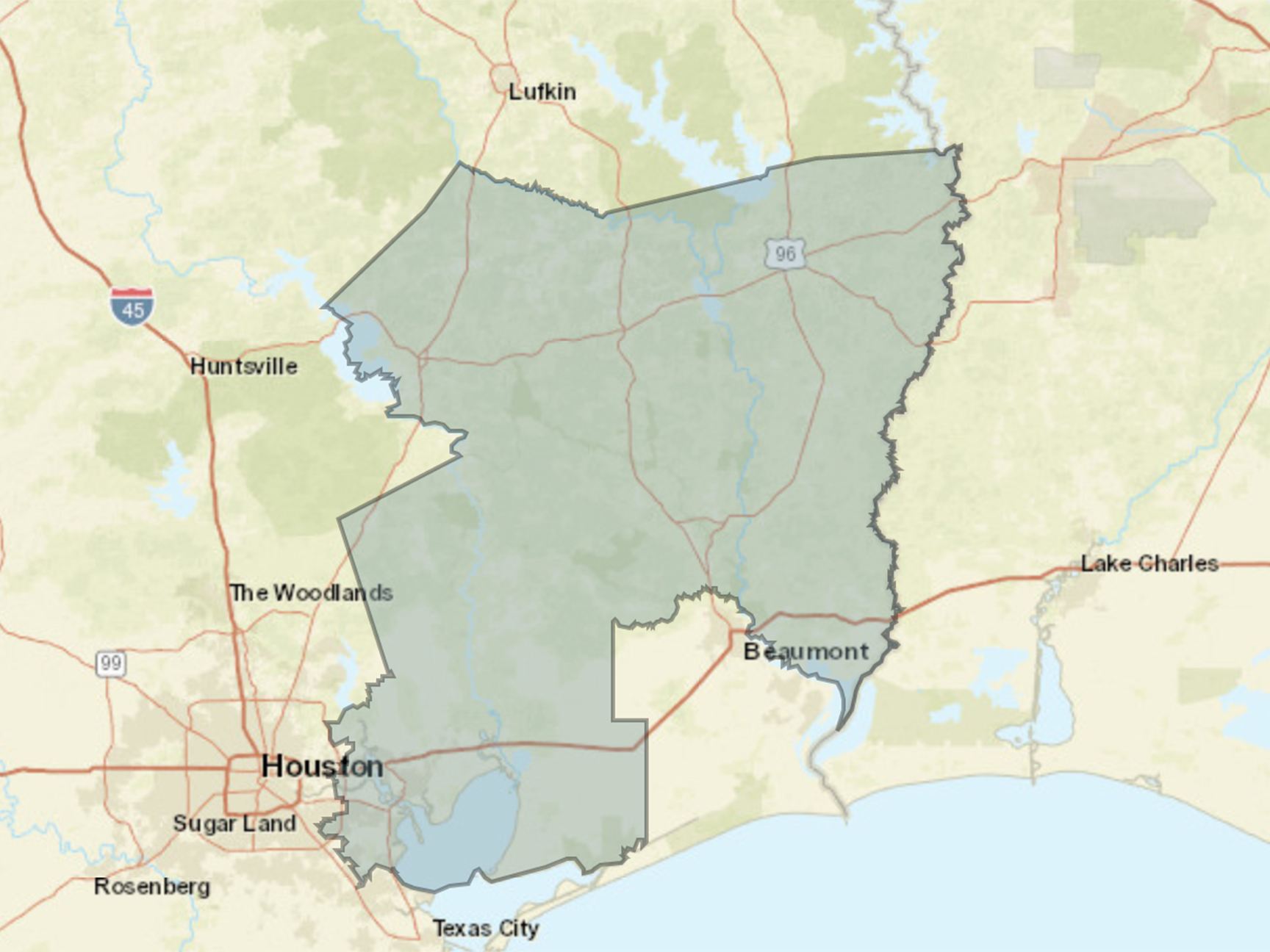
Above: Texas congressional district 36. Source: House.gov.

That’s a map of Texas congressional district 36. It stretches from Orange, Texas on the Louisiana border where Tracie grew up all the way to Clear Lake, Texas, where the Johnson Space Center is located south of Houston, roughly 85 miles away as the crow flies from Tracie’s hometown.

The population of Orange is more than 30 percent black.

The population of Clear Lake is roughly 4 percent black.

And this is a classic example of Texas gerrymandering and voter disenfranchisement.

Thanks to its convoluted layout, Texas congressional district 36 has an overwhelming white ruby red Republican majority that essentially eclipses the black and democratic vote in places like Orange where most of its black residents live.

In June, Tracie and I met with Democratic candidate Rashad Lewis who’s running against the Republican incumbent for the 36th district Brian Babin.

As you might imagine, Lewis advocates for repurposing the district’s neo-Confederate memorials. Babin opposes their repurposing.

A few days ago, a group of wine professionals in New York, including two prominent Texans, launched a campaign to raise money for the Texas ACLU fight for voter enfranchisement in Texas.

It’s called Vines for Votes and if you are reading this, you probably know at least a couple of its members.

Using its website, you can donate directly to Vines for Votes and you can offer wines for auction (proceeds will go to Texas ACLU). And of course, you can also give directly to the ACLU or Texas ACLU.

Wasn’t it Baldo Cappellano who quixotically said “there are some battles in life that you know you will lose and these are sometimes the ones most worth fighting”?

Words to live by in our book of life. Thanks for reading.

Texas wine, food, media professionals: please join me for virtual tastings with Italian producers September 21-22.

Some of the most rewarding work I’ve ever done has been for the Italy-America Chamber of Commerce South Central. Previously covering just Texas but now also Louisiana, Arkansas, and Oklahoma (hence “south central”), the Houston-headquartered IACC is ranked number one among chambers in North America and number eight throughout the world.

Sorry, New York!

The IACC has achieved that status in part by mounting truly compelling events with top wine and food producers from Italy, leading wine and food professionals here in Texas, and high-profile journalists and tastemakers from across the U.S.

In March, the IACC would have presented the sixth annual Taste of Italy trade fair, the largest wine and food gathering in the U.S. devoted exclusively to Italian products and producers. I’m a consultant and emcee for the event. Last year, we hosted more than 100 producers and 500+ attendees.

This year, we’ve moved the event online: on Monday and Tuesday, September 21-22 wine and food professionals across the state of Texas will have the opportunity to attend one-on-one virtual tastings with producers in Italy via Google Meet.

And here’s the even cooler part: once you schedule your tasting appointments, the wines and food products will be delivered to your home or office. It’s that simple.

The other cool thing is that the IACC has partnered with a super groovy new platform called GrapeIn to coordinate the tastings (more on GrapeIn forthcoming).

If you are a wine and food professional or a culinary-focused social media user active in Texas, click here to see a list of participating wine and food producers. Click on the producers you’d like to taste with, indicate the time slot, and the IACC will take care of the rest.

This 100 percent virtual event represents an extraordinary opportunity to connect in real-time with Italian producers as you taste their products.

Please join me in just a few weeks as we explore some great Italian wines and foods. Ping me if you need more info or guidance. But it’s all pretty straightforward.

Austin, San Antonio, Dallas: I’m talking to you, too!

Oh and that photo at the top of this post? I took that in our kitchen. It gives you an idea of what these tastings will look and feel like.

I hope you can join me! Thanks for supporting Italian wine and food and the people who make them (in the comfort of your own home)!

Cloudbursts, wind, extreme weather cause massive vineyard damage in Italy.

Above: weather-damaged Pinot Blanc grapes in Franciacorta at the Arcari + Danesi winery. “We’ve lost 30 percent of our harvest due to extreme weather,” said grower Giovanni Arcari in text message this morning.

Cloudbursts, high winds, and other extreme weather events caused widespread vineyard and property damage and even loss of life across Italy over the weekend.

In one tragic case, two children were killed when a tree, toppled by wind gusts, fell on their campsite along the Tuscan coast on Saturday.

Last weekend’s weather events came on the heels of a series of severe storms that have vexed Italian winemakers and farmers throughout the month of August.

According to mainstream media reports, an intense storm that struck Valpolicella (Verona province, Veneto) on Sunday, August 23 caused an estimated €6 million in vineyard damage.

Over the weekend, Verona province experienced more extreme weather. The video below, posted on the Veneto-based journal Il Dolomiti YouTube, is dated Saturday, August 28, 2020:

In a blog post published yesterday on its website, Coldiretti (Italy’s national agricultural confederation) wrote that:

    A crazy August has been marked by nearly 10 storms each day throughout the [Italian] peninsula, including torrential rain, tornados, cloudbursts, and hailstorms of anomalous proportions…
    In just a few seconds, many farms have lost an entire year of production. But there is also structural damage to fields that won’t be able to produce crops for a long time…
    We are faced with the obvious consequences of climate change. In Italy, the exception has become the rule as weather events are undergoing a tropicalization. This can be seen in the high frequency of violent storms, seasonal shifts, brief but intense rainstorms, rapid changes in weather from sunny skies to inclement weather, [and] remarkable temperature shifts that compromise crops in the field.

Over the last decade, extreme weather events have more than €14 billion in agricultural damage in Italy according to authors of the post.

Count Alberto Tasca joins me for dinner at Roma in Houston this Thursday.

With no small amount of envy, I grabbed the above photo from the Tasca d’Almerita Facebook this morning.

After six months and counting cloistered at home, I have to concede that a little bit of Mediterranean would do a body (including my own) some good!

This Thursday, we’ll enjoy the flavors of the Mediterranean when we host Count Alberto Tasca at our weekly virtual wine dinner at Roma (one of my clients here in Houston).

Click here for the menu, wines, and reservation details.

Alberto and I had dinner last year when I was asked to present his and other leading Italian wineries at the Grandi Marchi tasting here.

I was keen to hear his thoughts on the positive and negative impacts of organic viticulture in Europe. And I found his insights into lutte raisonnée or lotta integrata (what we sometimes call integrated) farming practices as compelling as they were fascinating.

There’s an important different between “sustainable” and “integrated” farming. Technically speaking, “sustainable farming” doesn’t mean making a better product for the consumer. The term actually refers to making food and wine products that have less impact on the environment. The best way forward, in Alberto’s view, is somewhere in the middle between sustainable and organic (the core idea of integrated farming). I know it’s going to be an interesting conversation this Thursday.

If you’re in Houston and have never attended one of our weekly events, I highly recommend it: 3-course dinner for 2 including 3 bottles of wine for $119. It’s a pretty nifty deal. But more importantly, these events have become a wonderful escape for our guests and Tracie and me. We look forward to it each week. I hope you can join us. It’s become our moveable immobile feast.

Support local businesses (including my own) by eating great food, drinking great wine, and having dinner with a Sicilian count!

“Like a war zone.” Houston spared. Orange pummeled but no deaths. Lake Charles “worst hurricane ever.”

Tracie’s parents are safe but rattled after Hurricane Laura, a nearly category 5 storm, made landfall early this morning just east of where they sheltered in place in Orange, Texas on the Texas-Louisiana border.

My sister-in-law and her family and Tracie’s aunt and uncle all evacuated Orange County, Texas yesterday before the storm came. But my in-laws had to stay behind with Tracie’s 99-year-old grandmother.

I’m happy to report that everyone is safe this morning.

In her early-morning text to me, my mother-in-law wrote that “it’s like a war zone.”

Here in Houston, our city officials were still telling us to prepare for the worst as late as yesterday afternoon. But the storm continued to shift eastward. Remarkably, we didn’t even have rain here. As the television meteorologists say, we were on “the cleans side” of the hurricane.

Yesterday morning, news reports were projecting “unsurvivable storm surge” in Galveston about 50 miles south of where we live. But Hurricane Laura made landfall in Cameron, Louisiana, 32 miles southeast of where my in-laws live (roughly 130 miles from where we live).

On the news this morning, a middle-aged woman who had decided to ride out the storm in Lake Charles, Louisiana, said it was the “worst hurricane” she had ever experienced.

Hundreds of thousands of people are without power across the region this morning. It will take weeks before some of them have electricity again (many unfamiliar with hurricanes don’t realize that this is one of the most dangerous and life-threatening aspects of extreme weather events like this).

Texas governor Greg Abbott said this morning that no deaths have been reported in Texas. He ascribed the zero-fatality rate to the fact that the state provided hotel rooms to nearly everyone who had no place to go once evacuated.

We’re all feeling very fortunate this morning. We are praying for our sisters and brothers in southwest Louisiana just across the state line. They are going to need our help and support for weeks to come. Heartfelt thanks to everyone who called and wrote to check in on us. We have been extremely lucky. Had Laura made landfall here, a much more populated area, the devastation could have been a lot worse.

Hunkering down for Hurricane Laura. Parzen family update.

Above: the view from our front yard facing south toward the Gulf of Mexico where Hurricane Laura is currently a category 3 storm. The coast lies about 50 miles due south from where we live in southwest Houston.

At one point, it looked like Hurricane Laura (currently a category 3 event in the Gulf of Mexico) might make landfall in Galveston just south of Houston where we live. But over the last day or so the projections have moved it to the east.

That’s good news for our city. We’re expecting to have high winds and heavy rainfall typical of a tropical storm. Flash flooding is expected. But we’ll be outside the storm’s cone.

But it’s terrible news for my in-laws who live in Orange, Texas, right on the Louisiana border. At one point last night, landfall was projected to happen in Orange. The cone has moved slightly east but Orange is still in the storm’s cross hairs.

As of 8:50 a.m., Laura is expected to be a category 4 hurricane when it makes landfall along the Texas-Louisiana border around midnight tonight.

Traice’s parents, Jane and Randy, will be sheltering in place this evening at Tracie’s grandmother’s house. Tracie’s “memaw” is 99 years old and suffered a stroke earlier this year. She’s at home with 24-hour care but can’t travel.

We’ll be following the storm’s progress carefully and checking in regularly with family in Orange.

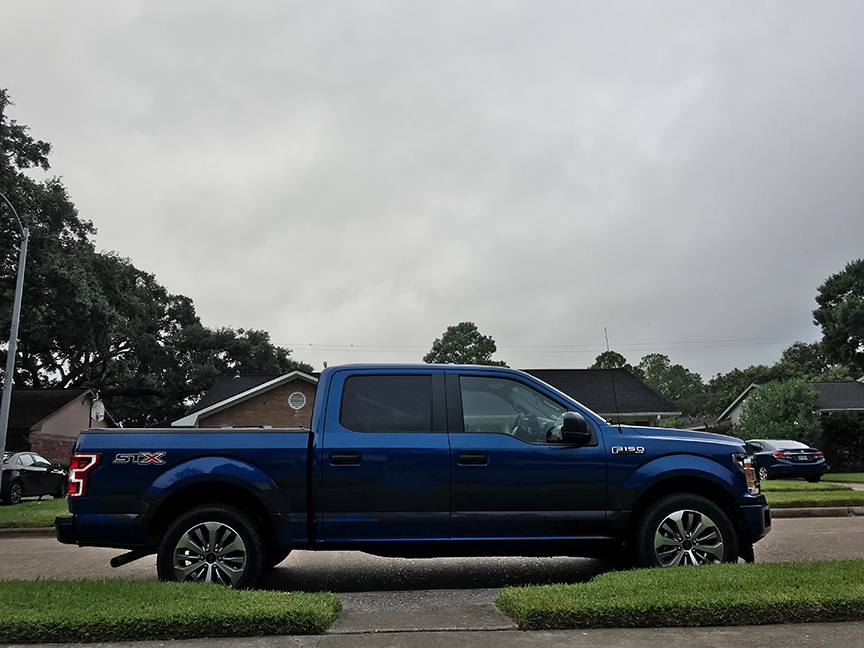
In the meantime, we’ve been hunkering down and securing everything in our yard (so that the wind doesn’t turn patio furniture and our daughter’s playscape etc. into “missiles”). We have plenty of water, food, and batteries. We even have a transistor radio and my truck and Tra’s minivan are all gassed up.

We’ll be praying for our family in Orange and all of our friends across southeast Texas. We’re expecting Houston to be hard hit as well but we’re particularly concerned about Orange.

Thanks to everyone who’s written and called to check in. The thoughts and wishes mean the world to us. We need them right now.

For updates on the storm, see the excellent Space City Weather blog.

A virtual dinner with one of my Italian wine heroes: Brian Larky, industry pioneer and apotheosis of all that’s great about the wine trade.

Please read “California Wildfires and the Wine Community – What You Need to Know,” Beck Hopkins’ post from last week. We are praying for all of our sisters and brothers in my home state.

And here in Houston, we are all holding our breath as we wait for Hurricane Laura to develop. See updates on the excellent Space City Weather blog. Hoping for the best but expecting the worst.

On Thursday, August 27, one of my all-time wine heroes, Brian Larky (above), will be joining me for the weekly virtual wine dinner that I host for Roma here in Houston.

Brian created a new model for Italian wine imports here in the U.S. when he launched his Napa-based company Dalla Terra three decades ago. Since that time, countless wines selected by him have become Italian wine standbys and favorites across our country.

On Thursday, he and I will be pouring and discussing three of those, including the Selvapiana Chianti Rufina, one of our family’s go-to red wines.

In many ways, Brian is the “Steve Jobs” of our industry. For many of the wineries he works with, he has created a “market” where previously there was none. Like Jobs, he introduced American wine lovers to wines they didn’t know they “needed.”

He’s also a winemaker (a Franciacorta alumnus with an enology degree from UC Davis), a brilliant speaker (we’ve presented seminars together in the past), a wonderful dinner companion (I speak from personal experience!), and the apotheosis of everything that’s good about the wine business.

I hope you can join us. Stay tuned for details. And feel free to email me if you’d like me to save you a spot.

As our daughters make their way through the pandemic summer, music is their balm.

Something really magical happened last Sunday at our house.

I was in our home studio, tracking vocals on a new song I was working on (below), when Georgia, age 8, asked if she could sit in on the session. I hooked her up with a pair of headphones and once I was done with my first take, she said, “hey, daddy, I hear a part in my brain. Can I try recording it?”

Next thing I knew, she was laying down her own vocals on the track. A part and arrangement that she came up with herself.

It may not seem like much. But those familiar with the recording arts will recognize what a big step that is in a young person’s evolution as a musician and performer. It was awesome. Check out the track below.

The pandemic summer has been tough on the girls. We and they recognize how fortunate we all are. Tracie and I both worked from home before the crisis took shape and even though I’ve lost a lot of my clients, we still have enough work to keep us afloat.

But the girls still pine for visits with their Texas grandparents, a cancelled trip to California to see their grandmother there, playdates with their friends and Texas cousins, summer afternoons spent at our community pool, Saturday mornings at the bagel place.

They feel their parents’ stress as we fret about money and wonder if even the slightest cough or sneeze is the first symptom of something potentially debilitating or deadly. They sense our sadness and worry as family members, friends, and colleagues have fallen ill with the virus.

It’s a lot for a newly turned 7-year-old and a soon-to-be 9-year-old to absorb.

Their resilience and their positive attitude have been an inspiration to Tracie and me. Their strength is the reason we don’t give up hope, especially on those sleepless nights when we wonder how we’re going to pay the bills, how we are going to guide them through remote learning and keep up with our own work this fall, how and even when we’re going to get to the other side of this national nightmare.

Throughout the pandemic, summer music has been their balm. A place and space where they can feel free to express themselves as they fill our home with sound and joy.

From their “pandemic flash mob street concerts” to their remote piano lessons and our jam sessions, they’ve been nothing less than amazing.

I created the slideshow below (set to the new song) so that we’ll remember these long hot Houston summer days — the pandemic summer.

Thanks for listening and letting us share our blessings.

Protest Song (We Will Survive)
by Parzen Family Singers

People are yelling and running around
Starting to look like a battleground
And I just heard there’s trouble in town
Someone just said they’re burning it down

It’s just another of life’s mysteries
All of this chaos and monstrosity

Don’t tell me we got nothing to lose
So we’re hitting the streets and the avenues
Marching to the beat of a different drum
While old white men are calling us scum

Protests politicians pandemic in addition
Lightning thunder hurricanes’ll put me under
Portland Washington New York Tommy Gun
Feels like the whole world’s coming undone

We’re still alive
We will survive
Into the eyes
Of the Storm

Maybe it’s one of life’s sad ironies
Some people call it the human disease

Leftists Marxists Communists are on your list
Racists fascists supremacists and man they’re pissed
Borders hoarders new world orders
Anarchists and pacifists and oh-my-lorders

Sometimes it’s feels like there’s no end in sight
Sometimes I can’t tell if it’s day or night

Black brown yellow red all the colors round your head
Man child running wild what was that I heard you said
White man has a plan to be born again
That’s why I am running from the ku klux klan