If you can read this blog post, you’re invited to our Hanukkah party (and Open Mic).

I’m super stoked to invite you to the Parzen family Hanukkah party 2021!

If you can read this blog post, you’re invited.

Ping me for details but it’s happening…

Parzen Family Hanukkah Party
and Open Mic

Sunday
December 5
the last night of Hanukkah
@ our house
1-8 p.m.
2 p.m. kids open mic begins
4 p.m. adults open mic begins

Also happening in coming weeks, please join me…

Thanksgiving Wine Tasting
and Italian Wine Sale

@ Roma (where I’m the wine director)

Tuesday
November 23
6 p.m.

FREE TO ALL

No need to register, just show up!

We will be tasting 10+ wines and guests can purchase them if desired.

Yéyé Pop Wine Party
with Vesper Wine
catered by Roma

@ Vesper Wine

Friday
December 10
7:30 p.m.

$45 per person

James Oliver and I will be pouring some of our favorite Italians paired with a menu from Roma. And we’ll be spinning some of my favorite Yéyé Pop songs (French 60s), inspired by my music with Nous Non Plus (my band).

An Italian wine great returns to the U.S.

Aglianico del Vulture’s “top producer,” wrote Sheldon and Pauline Wasserman in their landmark folio Italy’s Noble Red Wines (Macmillan 1985), was Fratelli d’Angelo.

The were referring to the family winery that brothers Donato and Lucio d’Angelo took over in 1973 after their father Rocco passed away.

“Enologist Donato d’Angelo makes the wine…,” wrote the Wassermans after they tasted with him.

    Donato told us that although the wine wasn’t labeled Aglianico del Vulture until 1964, the name was used locally for the wines in the 1940s… In 1971, Aglianico del Vulture was granted official DOC status under Italian wine law. D’Angelo was among the first wineries, if not the first, to export wine from Basilicata to the United States. From 1926 to 1929, they shipped the wines abroad in 55-galloon (2-hectoliter) barrels. Today, Fratelli d’Angelo is to our knowledge the finest producer in Basilicata.

The brothers (fratelli) would eventually split up.

But Donato, the one with the secret sauce, would continue making his extraordinary wines under his new “Donato d’Angelo” label from 2001 onward.

From Salento coast to the foothills of Irpinia, ask any grower and they will tell you the same thing: not only is Donato the greatest producer of Aglianico del Vulture, but he is also the dude who single-handedly put the appellation on the map.

Although the wines aren’t as well known on this side of the great misunderstanding otherwise known as the Atlantic Oceans, leading writerslike Edward Behr (the founder of The Art of Eating) have written glowingly of Donato’s wines (“the finest traditional Aglianico del Vulure as well as one of the few Riservas still made”).

In 2007, Ed McCarthy, whom many would call one of the greatest Italian-focused tasters of his generation, wrote of the winemaker: “Donato d’Angelo has been carrying the Aglianico del Vulture banner practically single-handedly throughout the world’s markets since the 1970s.”

In 2008, top Italian wine writer and educator David Lynch included Donato among his favorite Vulture producers noting that the winemaker “delivers the earthy, ashy flavors that Aglianico purists crave.”

I recently had the opportunity to taste the 2017 vintage of Donato d’Angelo Aglianico del Vulture thanks to my dear friend Filena Ruppi, Donato’s wife, and the couple’s new American importer Marcello Miali.

This wine was classic Aglianico del Vulture, dark and brooding with rich umami character and nuanced layers of slightly underripe black fruit. The flavors were buoyed by the wine’s extraordinary freshness, balance, and “lift,” as the current generation of sommeliers like to say (the wine’s vibrancy).

Tracie and I opened it with her carbonara, a favorite pairing of mine for Aglianico, the wine the Romans drink when they go big (they keep the Super Tuscans around for us Americans, btw).

It’s so wonderful to see these iconic wines back in the U.S. and with an importer who recognizes their Italian wine world legacy (Marcello, whom I’ve met here in Houston when he visited for our Taste of Italy trade fair, is a great guy, a Salento winemaker who’s building an ambitious portfolio and sales team here).

As the interest Aglianico from Irpinia has grown over the last decade, I imagine we’ll see a future wave of Aglianico lovers who shift their gaze east to the wild lands of Vulture. Just as Nebbiolophiles have discovered “alto Piemonte” in recent years, they will be delighted to discover wines like those made by Donato — a true Italian great.

The Italians are back! Photos from Roma’s sold-out dinner with Alicia Lini.

Man, it’s been an insanely busy couple of weeks between work and our girls’ music and school.

But a lot of hard work and many moving parts culminated last night in a sold-out wine dinner with my wonderful friend and longtime client Alicia Lini at Roma in Houston where I serve as wine director.

As far as I know, Alicia is the first Italian winemaker to come back to Houston. Her wines have done extremely well in Texas and the fact that she chose our city as her first wine dinner stop wasn’t lost on me or the crowd yesterday evening.

But more than anything else, it was amazing to feel that energy again. The packed patio of guests was literally abuzz between getting to meet Alicia in person (she had done two virtual wine dinners with us from Italy during the lockdowns at 2:30 a.m. Italy time) and tasting her wines paired with an all seafood menu (which was super fun and delicious, thanks to Chef Sandro).

It reminded me of one of the elements that’s been lacking since trans-Atlantic travel has been attenuated: that precious human contact with the people who make the wines that we love.

So far I haven’t seen a lot of Italians making plans for events in the U.S. between now and the end of the year. But I know a lot of people will start to come back in early 2022.

In the meantime, I’m just glad to be feeling a renewed joy in what I do for a living. What an amazing feeling to watch Alicia working the room as people enjoyed her wines and the food!

Tracie, the girls, and I are all looking forward to some much needed downtime next week for the holiday. But right now I’m just feeling pumped and high from the thrill of sharing my passion with our guests last night.

Thanks to everyone who made it possible through their support and heartfelt thanks to Alicia who made Houston her first stop!

Italian wine world mourns loss of Lorenzo Corino, natural wine pioneer and esteemed scientist.

De humanis illustribus…

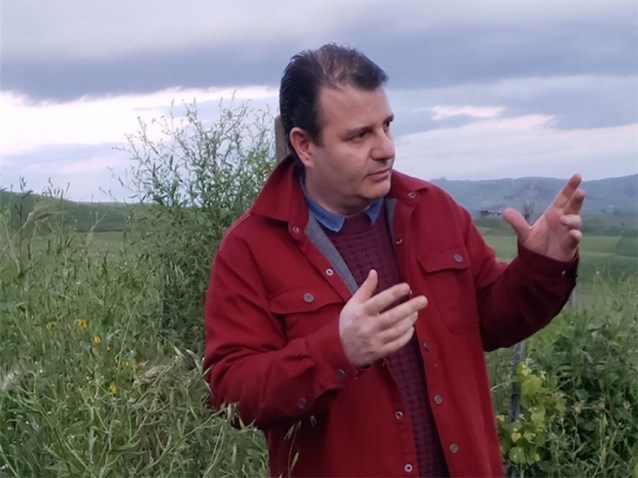
The following obituary by Filippo Larganà has been excerpted and translated from the popular Piedmont-focused wine, food, and agropolitics blog Sapori del Piemonte. The photo comes from the Maliosa winery website. Lorenzo Corino’s Maliosa estate in Maremma, Tuscany, was where he put his theories on natural wine and organic viticulture to work. Corino — a towering figure of Italian viticulture, writer, researcher, and a “fierce advocate” for natural wine — died this week at age 74.

    Lorenzo Corino was born in the hills of Costiglie d’Asti. Immediately after receiving his degree in agriculture, he was hired by [Italy’s prestigious] National Research Council, became a scientist, and then was appointed as director of the Asti campus of the Institute for Viticultural Research at Conegliano Veneto. He was later named director of the Enological Research Center in Asti where he would oversee countless research and viticultural projects. He died after a long illness on November 4, 2021.
    He was one of the leading figures of Piedmontese and Italian wine. Those who knew him often spoke of him a rigorous scientist who loved his work, who loved science and his land… Some called him a dreamer, an indefatigable utopian.
    Corino was a fierce advocate for natural wine. He created a website especially to share his definition of natural wine and he developed a vinification method today known as the “Corino method.”

Leading wine writer and vineyard consultant Maurizio Gily remembered him on his blog as “my maestro.”

Corino, wrote Gily, was “a gentle, passionate, and meticulous man who was generous with his time. He was a Piedmontese through and through and he never wavered from his sense of right and wrong — no matter what the cost… For his entire life, he was guided by his vision for ethical viticulture and farming practices that would have the least impact on the land.”

Never one to shy from controversy, Corino was also an active writer and blogger and he regularly translated his work into English. Visit his English-language blog here.

See also this profile of Corino on the Raw Wine website.

The best place to drink natural wine in Italy? Enoteca Naturale has my vote (for reasons you may not expect).

One of the things that will delight first-time visitors to Enoteca Naturale in Milan is its jaw-droppingly gorgeous setting in the Parco delle Basiliche (Park of the Basilicas). It’s one of the most beautiful plazas in the city, especially at night thanks to the dramatic lighting.

Another element that will surprise them is that it shares its physical space with Emergency, a humanitarian aid foundation that has worked to fulfill its motto nessuno escluso (no one left out) since 1994. Some may remember that its founder Gino Strada died this summer (see his Times obit here).

The sense of moral purpose and civic cause hasn’t been lost on the founders and owners of Enoteca Naturale who set their business up as an “SRL Benefit” when they opened its doors in late 2018. SRL is the Italian equivalent of limited liability company. The term benefit here denotes a for-profit company that receives tax incentives for fostering and supporting community. In the case of Enoteca Naturale, the owners have committed to making their workforce diverse, including numerous hires of immigrants. It’s a program known as integrazione sociale or social integration. Pretty cool, right?

I visited Enoteca Naturale on the very last day of my latest trip to my spiritual homeland in early October.

I was blown away by the depth of the by-the-glass selection. And the level of wine education chops was as thrilling as it was informed and informative.

But the thing that really impressed me about this wonderful natural wine destination was how nice that everyone was there.

That may seem like something banal. But in my experience visiting natural wine bars in the U.S. and Italy, it’s not always the case.

The occasional attitudes of some staff at natural wine venues have often reminded me of my graduate school days when academic one-uppersonship was often what guided human interaction among my peers. Every time I hear someone say something like, well, you must have never tasted Overnoy or Textier, I can’t help be reminded of the time one student mercilessly shamed another into admitting that they had never read Ulysses — in front of the whole class. Yes, that really happened.

Everyone at Enoteca Naturale was so warm and welcoming. They didn’t care where any of the guests were from or where they were going. All they cared about was pouring and sharing good wine with people who were there for that very purpose.

That’s my dissertation advisor and good friend, Luigi Ballerini, in the photo above btw. We had such a lovely visit there.

I’ll never forget the first time that I visited Milan’s other go-to natural wine bar, Champagne Socialist, which I also loved. They recoiled when they learned I was from Texas. Unfortunately, that’s something that happens a lot when I frequent natural wine circles. It took an entire of evening of drinking and bantering (and a couple of jazz cigarettes) to convince them that non tutti i texani vengono per nuocere (just like Fo’s thief).

No, none of that prejudice or presupposition was present at Enoteca Naturale. All I found was great wine and great people ready to share it with me. I can’t recommend it highly enough.

Identify yourself as a wine professional and they will give you a trade discount.

Pierpaolo Piccioli’s Pasolini quote. Protests of Italian senate’s controversial “no” vote on LGBTQ civil rights bill.

In a closed-door vote last week, the Italian senate blocked a bill that would have expanded existing Italian anti-discrimination laws to include the LGBTQ community.

The controversial vote over DDL Zan (named after its author, Alessandro Zan, an Italian LGBTQ rights activist) has sparked protests across the country.

“Thousands of people gathered in Milan and Rome on Thursday,” writes Sandra Salibian for Women’s Wear Daily, “to protest against the decision of Italy’s Senate to block the ‘DDL Zan,’ a bill against homotransphobia, which would have extended passages of the penal code that already punishes discrimination and violence based on racial, ethical and religious beliefs to also include sex, gender, sexual orientation and gender identity, as well as disability.”

In the image from Instagram above, fashion designer Pierpaolo Piccioli poses with “DDL Zan” written on the palm of his hand as a neon sign hovers above him.

The line in neon is from Italian critical theorist and writer Pier Paolo Pasolini (it comes from one of the three sonnets he composed as a post-script to his landmark collection of essays, Lettere luterane, or Lutheran Letters, first published in 1976).

Non vogliamo essere subito già così senza sogni.

Translated slavishly, it reads:

We don’t want to be suddenly, so abruptly, without dreams.

I’ve translated the entire sonnet below. In my “performative” rendering, where I’m trying to maintain the rhythmic and prosodic spirit of the poem, I have translated the line as follows:

We don’t want our dreams so suddenly taken away.

Note the use of Agape (unconditional love for G-d) and Ananke (the personification of destiny) in the first stanza. See the Wiki links I’ve included.

I was honestly stumped by Pasolini’s “Devil of the Angel black” like “Luciano ‘o Sarracino.”

‘o Sarracino is Neapolitan. It means the Saracen. Perhaps a playful allusion to the Renato Carasone song?

Luciano: maybe Luciano Serra, his schoolmate and close friend from his years at the University of Bologna?

In the image below, you’ll see piazzas filled with citizens gathered in protest in the city of Brescia. Photo by my friend Laura Castelletti, an activist and politician there. As far as I can find on the internets, all of Italy’s major cities were backdrops for similar protests.

Here’s the sonnet, translation mine:

Signor Teacher, we have seen the Devil of the Angel
so black like Luciano the Saracen. “Yell long live
Benjamin Spock
” he told us. He’s going to need a cane.
Enough of the Agape. We want the Ananke.

We are tired of becoming serious young adults.
tired of being forced to be happy, criminal or neurotic:
we want to laugh, we want to be innocent, we want to expect
something from life. We want to ask, we want to ignore.

We don’t want so suddenly to feel safe.
We don’t want our dreams so suddenly taken away.
Strike, strike, comrades! For our rights.

Signor Teacher, stop treating us like idiots
for one must never offend, wound,
or touch. Do not fawn over us, for we are men, Signor Teacher!

What is appassimento and how do you pronounce it? VIDEO

Above: grapes being “raisined” for the production of Valpolicella wines.

After a Twitter user tagged me in the tweet below, I immediately sprang to action. There was no time to lose!

As Alexandra, a Florence-focused art historian, noted, grape growers in Italy are drying their grapes — raisining them — right now.

The process is known in Italian as appassimento: the drying or raisining of the grapes.

Drying the grapes concentrates their sugar, their lifeblood. It’s an ancient process that was widely used in Italy from Roman times until the early 20th century. It’s still used in countless appellations, most famously to produce sweet Vin Santo in Tuscany and Amarone (a dry wine) and Recioto (a sweet wine) in Valpolicella, among many others.

The related Italian term passito means raisined– or dried-grape wine. Passito di Pantelleria is arguably the most well known among the passiti or dried-grape wines (plural).

The great 19th-century Italian poet, philologist, and critical theorist Giacomo Leopardi would have loved the terms appassimento and its verb form appassire. Like so many words in Italian, it can have multiple meanings. It’s used with poetic license to mean wilting or even waning (as in, their passion for [something] has waned).

Knowing that time was of the essence, I immediately called my buddy, grape grower and winemaker Angelo Nicolis, in Valpolicella. (His wines are imported to the U.S. by my client Ethica Wines and I visited with him in January 2020 on my last trip to Italy before the lockdowns.)

He swiftly dispatched the above photo and the below video. And as you can see from the crates of grapes being dried behind him, the timing was perfect!

As per Alexandra’s commission, I’ve also updated the Italian-English Wine Glossary to include the term.

Thank you for the nudge, Alexandra! And special thanks to Angelo who turned this around so quickly.

This is what I love the most about wine blogging and social media. How it brings us all together, from different corners of the world, around a passion that will never wane!

Boulder Burgundy Festival delivers delicious surprises and Burgundy’s new star rising, Cellier aux Moines.

Above, from left: Brett Zimmerman, founder of the Boulder Burgundy Festival, and Margot Pascal, one of the owners of Domaine du Cellier aux Moines, one of Burgundy’s oldest wineries and youngest rising stars.

Me to legendary sommelier and wine educator Jay Fletcher: “Hey, Jay! When’s the last time you tasted a flight of six Aligoté?”

Jay to me: “Never!”

Our seemingly banal exchange gives you a sense of how remarkable this year’s Boulder Burgundy Festival was.

Disclosure: the Boulder Burgundy Festival has employed me as a media consultant for more than a decade.

Remarkable because it included the gathering’s first in-person events since the 2019 festival.

Remarkable because wine writer (and my dear friend) Alice Feiring flew in to present a flight of six different expressions of Aligoté, many of which are produced in diminutive amounts and were painstakingly sourced by festival founder Brett Zimmerman.

Remarkable because the brand-spanking-new Coravin sparkling wine preservation system had its in-person debut on the first day of the festival (a wine tool that many agreed is going to be a game-changer for restaurants).

Remarkable because Margot Pascal, co-owner of one of Burgundy’s oldest estates and one of its youngest rising stars, presented two flights of her family’s wines, including a showstopper Givry monopole and two wines made from Chardonnay and Chardonnay Musqué, a rare clone that wowed the roughly 30 collectors and wine professionals who had gathered to taste at the festival’s Sunday seminar.

Above: Brett Zimmerman and Bobby Stuckey, co-owner of Frasca Food and Wine where the event’s marquee dinner was held on Saturday night.

Tasting with Margot, at both her Sunday seminar and the Saturday night marquee dinner at Frasca, was one of the wine highlights of my year.

As Brett pointed out at the Sunday event, her wines are relatively new to the U.S. market and are already highly allocated. We were extremely fortunate to get to taste her family’s bottlings, all raised on her family’s estate, where wine has been continuously made for more than nine centuries.

They purchased the historic but then run-down farm in 2004 and have spent the last decade and a half restoring the iconic property and reviving the grape growing and winemaking there. The farm is organic certified and Margot’s family has employed biodynamic farming practices there for at least four years.

These wines are soon going to be impossibly hard to come by, Brett noted.

And if her Givry premier cru and Givry Clos Pascal monopole weren’t enough to bring the crowd to its feet, Margot’s Montagny Les Combes premier cru, made from Chardonnay and Chardonnay Musqué, would have been a showstopper on its own. It comes from some forgotten rows of the latter clone that Margot’s family discovered when they took over the property.

When’s the last time you tasted two vintages of Montagny Les Combes side-by-side? When’s the last time you tasted a Chardonnay Musqué? Yeah, that’s what I thought.

Above: when’s the last time you tasted six different Aligoté in one sitting? If the answer is “yes,” please stop reading this post!

And if Margot’s flights weren’t enough to bring the house down (they did just that on Saturday night at Frasca, which turns into a French restaurant once a year for the festival), the flight of Aligoté presented by Alice was as utterly eye-opening as it was wholly delicious.

Alice, as the delighted group of tasters learned, has spent a lot of time on the ground in Burgundy tasting and researching Aligoté, a white grape often overlooked because of Chardonnay’s lucrative dominance.

“I love an underdog,” she said.

There was also a moving tribute to her close friend Becky Wasserman, for whom we all raised the first glass of wine that morning. We learned that there will be a tribute bottling of Aligoté produced to honor her legacy, career, and behemoth influence in the wine world. It will be made from vines planted in Becky’s birth year. “She loved Aligoté,” said Alice. “She loved an underdog.”

Gauging from the ooos and aahs emanating from the tasters, the flight seemed to thrill the room with its astounding range of aromas, flavors, and textures. More than one taster, including some top wine professionals who were in attendance, remarked on how these wines over-delivered.

And Alice gave a benchmark talk about her experiences with the wines and the people who make them.

The word remarkable was uttered more than once.

Above: Bobby presents the back of the house at Frasca on the night of the marquee dinner featuring Margot’s wines.

But maybe the most extraordinary thing about the festival was the fact that for most, it was the first in-person wine event they had attended since 2020. Last year’s festival was held entirely online. And it wasn’t clear if an in-person festival was going to be possible this year. What a blessing it was to be there: seeing cherished friends and colleagues after so much time apart was a deeply emotional experience for many, me included.

My heartfelt thanks goes out to Brett, the Boulder Wine Merchant crew, and the greater Boulder wine community for hosting Tracie and me this year. What an incredible experience.

A bollito of my dreams at a favorite restaurant in Emilia.

Above: in Reggio Emilia, they don’t call it “tagliatelle alla bolognese.” They just call it “tagliatelle al ragù.” It’s a subtle but meaningful distinction.

One of the things that people don’t realize about gastronomy in Emilia — the land of Prosciutto di Parma, Culatello, and Parmigiano Reggiano where there are more pigs and Ferraris per capita than anywhere else in the world — is that you have to venture outside of its capital city Bologna to find the best food.

Another crucial element that many people miss is that for great bollito misto, you have to head west from Bologna toward Modena and Reggio Emilia. That’s the true spiritual homeland of bollito misto.

What is bollito misto? It’s meats that have been slowly simmered together. It’s typically made in different parts of northern Italy. But in Modena and Reggio Emilia zampone is used instead of cotechino sausage to give the dish its decadent character.

What is zampone? Meaning literally hoof, zampone (the sausage) is a pig’s trotter that has been filled with head cheese. It’s considered one of Italy’s greatest delicacies (and it’s one of my favorite things in the world to eat!).
Continue reading

The best mortadella I’ve ever had. Here’s where to find it in Bologna.

Above: Dario Barbieri’s take on mortadella blew my mind — and my palate — the weekend before last in Bologna. The mortadella is on the right of the cutting board.

Every time Slow Food U. asks me to come teach in Piedmont, my Italian crew and I plan at least one night of enogastronomic adventure.

For this last stint in early October, we headed to Emilia-Romagna where our first stop was the legendary Dario Barbieri’s wine bar Zampa in the city of Bologna.

Dario, whose wine program features labels from both Paolo Cantele and Giovanni Arcari (my southern and northern Italian bromances, respectively), had asked us to come on the later side that Saturday night so that we could all sit, visit, and discuss the finer points — we later learned — of mortadella.

For anyone not familiar with mortadella and more specifically Mortadella Bologna, it’s a sausage made from finely ground pork and pork fat. See the Wiki entry for some useful background info on mortadella. But see also this excellent post by WebFoodCulture.com. And also the Mortadella Bologna PGI consortium’s not-so-easy-to-find website.

Don’t confuse it with other types of mortadella made in other parts of Italy, sometimes not from pork.

Above: marinated fresh anchovies followed our salumi tasting that evening. Bologna and Emilia in general has some of the best bread I’ve ever had in Italy.

It has been considered one of the greatest delicacies of Europe since the 17th century and beyond. Even French cookery books from the pre-modern era describe with great reverence the then highly advanced techniques for making charcuterie in the city of Bologna (the French also loved and learned a lot from Milanese pastry production).

Mortadella is also the inspiration for a poor imitation that we call “bologna” or “baloney” (as in Oscar Myer; but we will leave Upton Sinclair out of this).

As Dario explained that evening, there are “three or so” classic recipes that are still being used by artisanal mortadella producers in Bologna today. They are all excellent, he told us.

Above: the crunchy oven-fired thyme sprinkled on the pâté took it over the top.

But in order to become their clients, he said, you have to be willing to take only one mortadella at a time. The key, he emphasized with his rich baritone, is to consume the mortadella immediately, within a few days after it was produced. Otherwise, it loses the richness of its flavor and delicacy of its texture.

As someone who has been obsessed with mortadella since I first traveled to Italy in the late 1980s, I am here to tell you, people, this was absolutely the best mortadella I have ever tasted.

With great pride, Dario told us the story of Ennio Pasquini, one of the great mortadella craftspeople of our time. He recently passed away and his family is now arduously defending his legacy from those who would cash in on his namesake. For those who read Italian, click on the image below to read their “open letter” to the world of mortadella lovers. Pasquini was Dario’s “mortadella mentor,” as it were. He had refused to sell Dario his sausages until Dario agreed to take only small quantities each week.

Our literally five-hour tasting with Dario was one of the greatest culinary experiences of 2021 for me. I highly recommend his wonderful wine bar Zampa in Bologna (no website, at least that I can find).