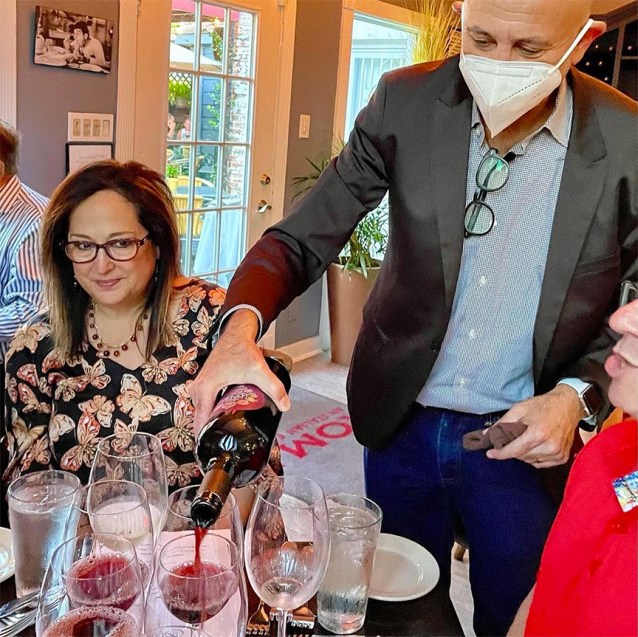
The incredible story of how I met the inimitable Darrell Corti, Italian wine pioneer and gastronomic “treasure.”

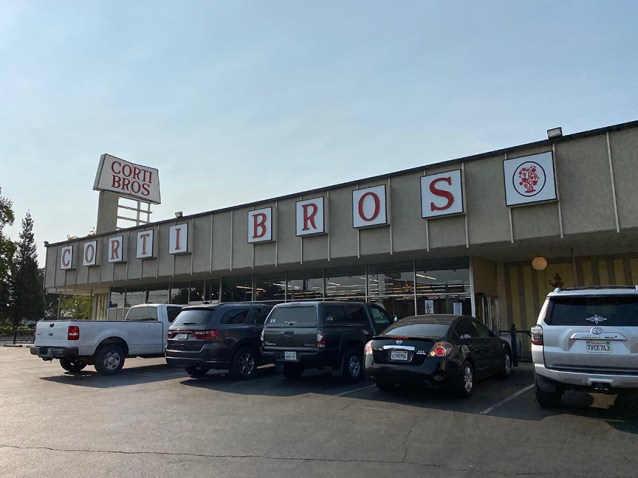
Above: the deceptive facade of Corti Bros. offers little clue as to what treasure lies inside this storied structure.

Those who have never visited Darrell Corti’s legendary Corti Bros. “specialty grocers” in Sacramento, California will be surprised to discover that the store is much, much more than a mere retailer of great food and wine. The shop, they will find, occupies a space that also serves as museum, library, and bookshop.

In many ways, the food and wine at Corti Bros. is actually a “front.” Not in the sense of a criminal operation. But rather by virtue of the fact that the food and wine are a pretext for what 16th-century European humanists would have called a “gallery of memory.”
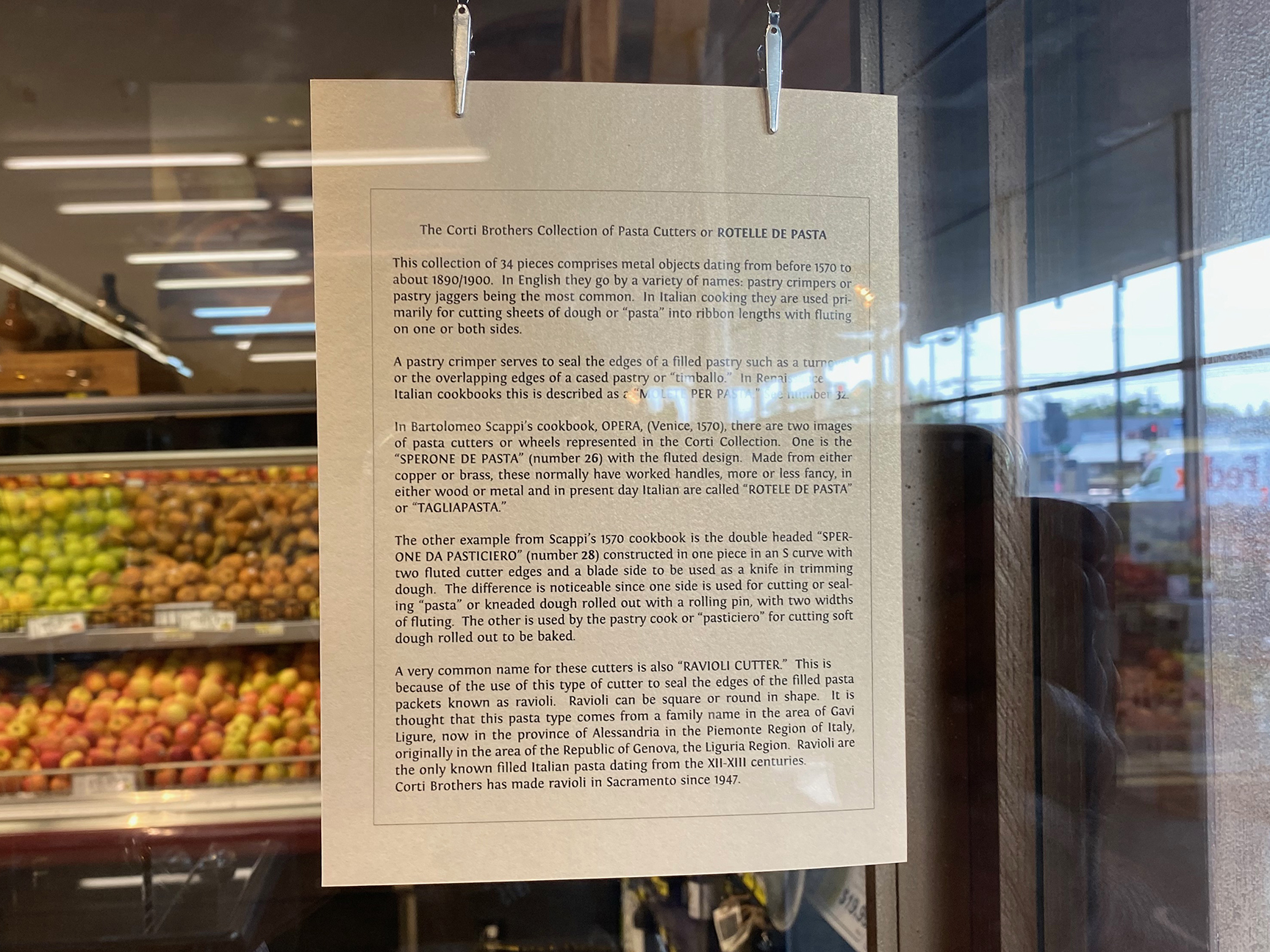
Above: a display of ravioli cutters dating back to the 16th century. Click the image for the “label” as we call it in museumspeak.

In Renaissance (with a capital R) Italy, knowledge was considered a means to power, like weapons or gold. And the key to knowledge, it was believed then, was memory. To bolster memory, humanists would create what Italian scholar Lina Bolzoni has called galleries of memory — physical spaces that helped them to organize and retain knowledge in their memory. They were actual rooms where the walls were covered with paintings, drawings, and writings.

Strolling around Darrell’s shop earlier this year, I couldn’t help but feel like I was traveling through Darrell’s mind, revisiting all the nuggets of knowledge — aesthetic and otherwise — that he has gathered over a lifetime of curiosity and unbridled gastronomic adventure. That space, I concluded, is his gallery of memory.
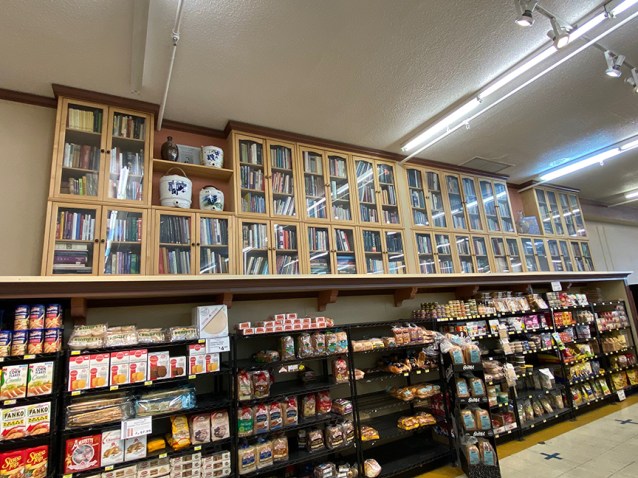
Above: breadcrumbs and books. How many food shops have you visited that double as a library? Darrell’s food and wine-focused collection rivals those found in some of the best libraries in the U.S. No joke. I’ve visited those libraries, too!

The story of how Darrell and I met is as funny as it is indicative of what a mensch – a wonderful human — that he is.

Not long before I visited Sacramento in the mid-aughts to make a record with my band Nous Non Plus there (at the famous Hangar, another great story for another time), I had traveled to Tuscany to meet with Baron Bettino Ricasoli, Francesco Riscasoli’s father. I was searching for a copy of his ancestor’s famous letter wherein he offers a “recipe” for the production of Chianti. It was one of the most memorable visits of my career and Bettino and Francesco were lovely. They pointed me to where I would find the letter and I later translated it for the blog.

During a luncheon of classic Tuscan-style tripe (Bettino’s favorite), the Baron asked me if I had ever met Darrell Corti. No, I told him. He said that if I ever were to visit Sacramento, I must absolutely seek out Darrell. My interest in food and wine history, he told me, reminded him of Darrell’s.

“If you ever do visit him,” he insisted, “please tell me that I sent you.”
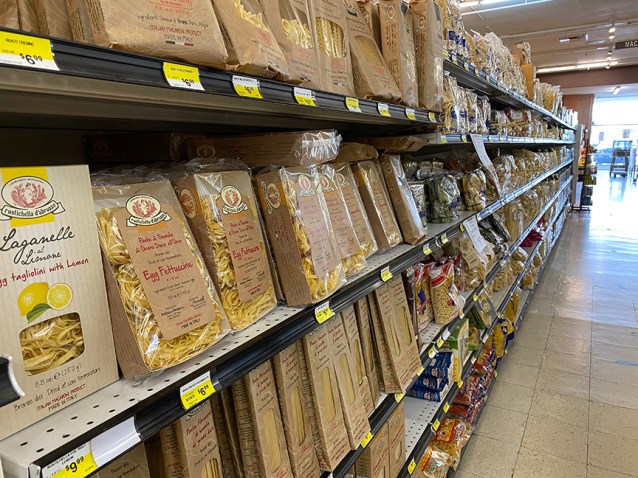
Above: the dried pasta selection at Corti Bros. takes up an entire aisle — a “gallery of [culinary] memory.”

Not long after the band arrived in Sacramento, the keyboard player and I headed to Darrell’s place for supplies (I always cooked and served wine at our recording sessions).

When we arrived at the store, I asked one of the cashiers if Darrell was there. She said she didn’t know but would call the back office to find out.

“Please tell him that Baron Ricasoli sent me,” I told her. She said she would.

But here’s the thing: we were rockers. I had shoulder-length (if already thinning) dyed-sandy-blond hair, mustache and goatee. Ryan, the keys player, also had a mustache and goatee and dreadlocks that literally stretched below his waist.

When Darrell appeared, he was livid!

“Who are you?” he demanded with a tone that barely concealed his understandable annoyance.

“My name is Jeremy Parzen,” I answered, “and Baron Ricasoli has sent me with his regards.”

Darrell suddenly pivoted and began to walk away.

“Stay right there,” he said.

Nonplussed, Ryan and I were convinced that we were about to be expelled from his shop.

But when he reappeared, he had a book in his hands. It was my translation of Maestro Martino’s 15th-century recipe collection, published by UC Press a year or so earlier.

“Would you please sign this?” he asked me. And thus a friendship was born, one that has profoundly shaped my intellectual and professional life over countless conversations, emails, and the occasional meal.

When I saw Darrell earlier this year, he reveled in retelling the story.

“They looked like the kind you have to follow around the shop,” he told one of his employees.
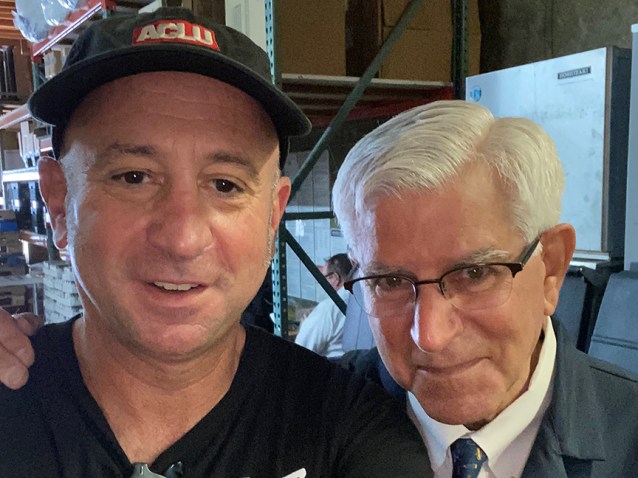
Above: Darrell graciously let me snap this photo of us together, an image that I cherish greatly.

Once when I visited Darrell during the annual California grape growers conference (he was the keynote speaker), one of the attendees pulled me aside and asked me if I knew who he was.

“He’s a national treasure,” she whispered, the hushed timbre of her voice a reflection of her reverence.

I don’t know that my career as a food and wine historian would have been as rich had it not been for the role model that Darrell represented for me. His friendship has been a blessing in more ways that I can count.

Gratias tibi ago magister optime.
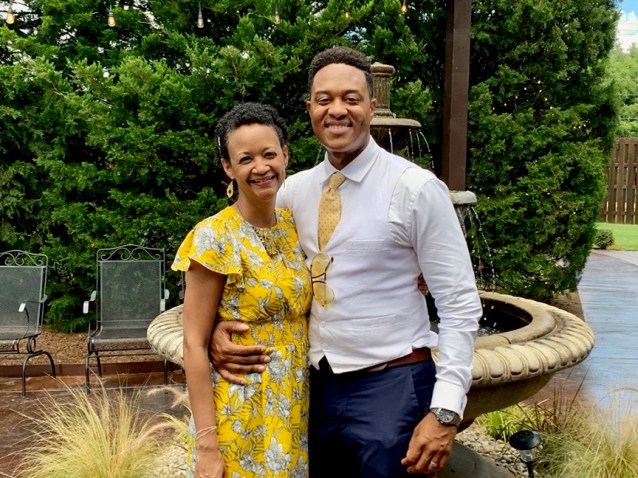
They launched a wine shop during the pandemic and they’re still going strong. Taste with me and two of Houston’s leading wine entrepreneurs this Friday.

Some may remember my post from September of last year, “How to open a wine shop during a pandemic,” about Vesper Wine owners and founders Aisha Savage-Shirley and James Oliver (above) who opened their retail program in Houston at the height of the lockdowns.
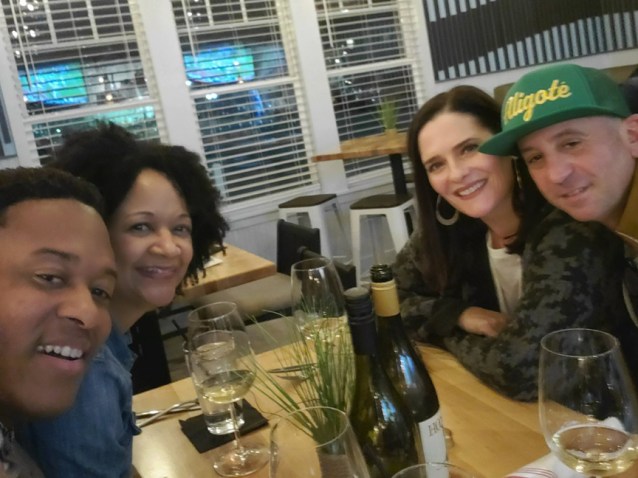
We had all become friends in 2019 after James took part in an Italy-America Chamber of Commerce trip to Vinitaly (I’m a consultant for the chamber).

I’ll never forget the last time we were all together, in the late fall of that year. We connected at another Houston wine shop and wine bar for what turned out to be a holiday party — one of the last before we were all stuck at home.

When I found out that they had decided to move forward with their plans for a new wine shop in an underserved neighborhood of our city, I called James to see if they would be up for a video chat to share on the blog.

You can view our chat on YouTube here. In the video, James explains how they swiftly reimagined their business model to focus on home delivery and curbside fulfillment. More than a year later, Vesper Wine is going strong and has expanded to in-store and off-site tastings as well.

On Friday of this week, James, Aisha, and I will be presenting a flight of three Italian wines paired with a menu from Roma restaurant (where I’m the wine director). We’ll also be spinning some Yé-Yé pop, a throwback to my rock ‘n’ roll days in New York with the French band Nous Non Plus.

It’s going to be a super fun event and tasting. And who knows where the night will lead us!

If you’re in Houston this week, please join us. Click here for details.

After Napa, another favorite “misunderstanding”: Zachary Sussman takes a fresh look at Franciacorta for SevenFiftyDaily.

Above: the Arcari + Danesi flagship vineyard on Mount Orfano on the southern edge of Franciacorta.
It was wonderful to read Zachary Sussman’s fresh take on Franciacorta for SevenFiftyDaily last week, “In Search of the New Franciacorta.”

Zachary, one of the brightest stars in the new generation of English-language wine writers (and a lovely man, btw), is arguably the first to take a closer look at the new wave of Franciacorta producers who have (not so) quietly begun to reshape the appellation. (Interested readers should also check out a series of posts by Walter Speller for JancisRobinson.com, “Franciacorta – are unripe grapes really the key?” published in 2018 and “What’s Wrong with Franciacorta,” 2015.)

“Ever since the 1960s and ’70s,” writes Zachary, “when a well-financed cadre of winemaking estates set up shop in this hilly patch of Lombardy with the goal of transforming it into a powerhouse of premium sparkling wine, Franciacorta’s identity has revolved around a single imperative: to imitate Champagne.”

But “a small but growing cohort of winemakers… have made it their mission to carve out an alternative path…. [T]hey’re asking a simple yet revolutionary question: what would it mean to reimagine Franciacorta not as a ready-made style inspired by somewhere else, but as a singular expression of place?”

Reading Zachary’s excellent piece, it’s nearly impossible not to think of critical theorist Harold Bloom’s 1973 landmark book, The Anxiety of Influence. In his seminal work, the Yale scholar argues that some of the greatest titles of the Western Canon are the result of a reactionary or “antithetical” approach to the creative process. Dante viewed Virgil as his literary model and his allegorical guide while he was writing the Commedia, one could posit. And so his work can be interpreted as a “reaction” to Virgil and even Homer, the author who was the putative source of the Latin author’s “anxiety.”

Bloom calls this a “misreading” or misunderstanding of the text that can produce spectacular results (the term he uses is “poetic misprision”). After all, Dante’s Commedia, a “misreading” of his precursor Virgil, makes for some darn good reading.

It’s also nearly impossible not to think of another historic “favorite mistake” in the annals of western wine: California’s obsession with Burgundy and Bordeaux, two appellations that couldn’t be more climatically different from the Napa Valley where growers felt compelled to plant the same grapes that their favorite wineries grew. Analogously to what’s happening on the ground in Franciacorta today, a new wave of younger California winemakers (most of whom buy their grapes) have been trying to forge a new path for their wines over the last 15 years or so. Like their counterparts in Lombardy, they speak of a new quest to “express place” and “terroir” where their predecessors were blinded by the enodominance of France.

Hegel (via Marx) might have called French wine (in both cases) the “thesis.” The Italians’ and Californians’ “reaction” to the French wine model (their inspiration) could be called “antithesis.” And then, following the Hegelian dialectical model, the wines that result from this misunderstanding could be called the “synthesis.”

As Zachary notes, “this evolution continues to unfold”:

    the contours of an alternative Franciacorta paradigm are now coming into view. And at a time when authenticity has become the most valuable form of currency among the next generation of wine drinkers, the groundbreaking bottles that have emerged from this shift have recently started to claim their rightful place on progressive wine lists and retail shelves across the U.S.

I can’t recommend the article highly enough and not least of all because of Zachary’s superb writing. And beyond his immense and welcomed ability to render the technical nuances of the “classic method” into intelligible and elegant winespeak, he also features the wines and reflections of my close friends Giovanni and Nico of Arcari + Danesi.

As we all gear up for the sparkling onslaught of Christmas and New Year’s, we could all use a fresh take on Franciacorta and the many new wines that are finally making it to the U.S. Check out the article here.

Come jam with me: PARTY at our house this Sunday!

Tracie, Georgia, Lila Jane, and I will be opening our home to anyone who would like to join us this weekend for our Blow Out Hanukkah Party and Open Mic 2021.


There will be wine (bring your favorite bottle or beverage if you like), food (bring your favorite dish), and lots of great music.

For the adult open mic, there will be complete backline, plenty of guitars and keyboards.

And our backing band, wow, our backing band!

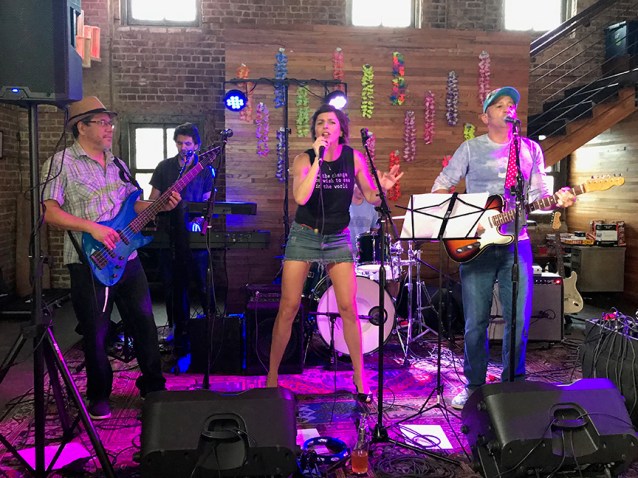
Grammy-award-winning bassist Tim Ruiz will be here (no joke). And Richard Cholakian, one of Houston’s go-to session drummers, will be on my Ludwig kit. And rounding out the lineup, I’ll be playing my beloved Telecaster.

And at some point, Katie White (above, vocals) and Lucky Garcia (bass) will be joining me for a miniset by our 80s cover band Biodynamic.

1 p.m. DOORS
2 p.m. KIDS OPEN MIC (this is something really fun, you’ll see)
4 p.m. ADULTS OPEN MIC
5:30 p.m. FIRST CANDLE LIGHTING

Happy Hanukkah everyone and please ping me for address etc. I hope you will join. ANY AND ALL ARE WELCOME!

Roe v. Wade wasn’t for me. It was for the most vulnerable among us. That’s the thing that conservative judicial activists don’t get.

Image via Adobe Stock.

What a surreal experience this morning at the breakfast table explaining to our daughters, 8 and almost 10, that Roe v. Wade will soon be gone. They’re too young to understand the broader implications of yesterday’s arguments before the Supreme Court. But their lives and the lives of their fellow Americans will be affected by it in ways that, sadly, we all know too well.

But even more surreal was Justice Amy Coney Barrett’s comment yesterday during arguments that “women don’t have to parent if they don’t want to.” In her questions to the lawyers presenting their cases, she suggested that women who don’t want to parent can simply put their children up for adoption, an easy solution — in her mind — to a much more complicated issue than she can evidently imagine.

Was Barrett paying attention when her colleague Justice Sonia Sotomayor asked the following?

    When does the life of a woman and putting her at risk enter the calculus? Meaning, right now, forcing women who are poor — and that’s 75 percent of the population and much higher percentage of those women in Mississippi who elect abortions before viability — they are put at a tremendously greater risk of medical complications and ending their life. [It’s] 14 times greater to give birth to a child full term, than it is to have an abortion before viability.
    And now the state is saying to these women, we can choose not only to physically complicate your existence, put you at medical risk, make you poorer by the choice because we believe, what?

And that’s the thing that people like Barrett just can’t seem to wrap their minds around. Not everyone grew up in a picture-perfect, idealized white-bread world like hers. Not everyone in our country has the resources to ensure their reproductive health rights. Not everyone in our country has the means to allow them to choose not to parent.

Imagine a financially challenged white woman who lives in one of Houston’s depressed neighborhoods and already has children. Today in our state, unless she realized she’s carrying a child before six weeks into an unplanned pregnancy have passed, she would have to travel to another state to obtain an abortion. Given that it’s nearly impossible for her to do that, the natural outcome would be that she would have the baby. Can she simply decide not to parent the child? That’s where Barrett’s pie-in-the-sky argument falls apart. Not only would said American citizen have to risk her own health to deliver a child without the financial resources that Barrett enjoys. But she would also have no other choice than to parent a child for whom she doesn’t have financial resources to support.

Well, Barrett might say, she can simply put the child up for adoption. But think about for a second: is a woman living in poverty going to have the resources and the community support to start that process and take care of the child in the meantime? No, it’s not that simple. Nor is it that easy.

And that’s where Barrett and the anti-reproductive rights activists just don’t get it: not everyone in this country looks and lives like them.

Roe v. Wade wasn’t for people like Tracie and me who grew up with financial and health security. Roe v. Wade wasn’t for people like Tracie and me who have had unfettered access to health care and community support throughout our lives. Roe v. Wade was for the woman living with limited options and choices about how to care for her own body and how to provide for her children.

I was just a child when Roe v. Wade became the law of the land. Tracie wasn’t even born. Throughout the course of our lives, it has ensured reproductive health rights for women from all walks of life — and not just the privileged like Barrett.

I’m not “pro-abortion.” I’m pro-reproductive rights for all women. I pray — I believe in G-d and pray genuinely — that our daughters will never have to face such challenges. And it’s more likely than not, given that they are growing up with privilege, that they won’t.

Roe v. Wade wasn’t for me. It was for the most vulnerable among us. And now it’s gone. That’s an American tragedy.

Taste with me Tuesday 11/30 in Miami, Friday 12/10 in Houston, and virtually with me and actor Edoardo Ballerini on Friday 12/17.

My client, Prosecco grower and producer Villa Sandi, called me at the last minute during Thanksgiving week asking me to cover for their export director at the Gambero Rosso tasting in Miami tomorrow, Tuesday 11/30.
If you happen to be in town, here’s the link. Stop by my stand and taste some bubbles with me!

I’m looking forward to seeing a ton of people I haven’t seen since the last time I was in New York for the Gambero and in Miami for the James Suckling tasting in February and March of 2020.

*****

On Friday, December 10, I’ll be pouring and talking about Italian wine with my good friend and Italian specialist James Oliver at his wine shop and tasting room in northwest Houston.

James wanted to incorporate a musical element from my career as a guitar player and songwriter with the French band Nous Non Plus. And so we will be spinning Yé-Yé pop tracks all night.

Don’t know what Yé-Yé is? Come find out!

Roma is catering the event. $45 per person not including tax. 3 wines, 3 courses. Good deal, right?

Will be a super fun evening. Click here to reserve. Only 10 spots available.

*****

And then on Friday, December 17, I will be joined online by acclaimed New York actor Edoardo Ballerini for a conversation that will benefit Animal Zone International, a “non-profit organization dedicated to saving animals, improving the environment and helping the local community on the Greek island of Amorgos.”

Even if you don’t know Edo’s name, you’ve seen him countless times on television and in major motion pictures. But some of you will also know him from the myriad audio books he’s narrated. In a future post, I’ll write more about Edo, how we met and became friends, and what we’ll be discussing week after next.

In the meantime, here’s the PayPal link to sign up for the event. It’s not a cheap date but it’s tax deductible and for a good cause. I hope you’ll join us.

******

And Houston people, don’t forget that Tracie, the girls, and I are hosting our blow-out open mic and Hanukkah party on the last night of the festival, Sunday, December 5. If you’re reading this, then you are invited! Ping me for details but we will start around 1, open the open mic around 2, light candles around 5:30, and then party and sing until there’s no partying and singing left to do! I hope you can join us. There are always some pretty amazing musicians who play.

Why are Americans so obsessed with the “perfect pairing”? The perfect Thanksgiving pairing is you!

“Why is it,” a leading wine writer asked me rhetorically late last month, “that our genre is the only one where we treat our audience like they know nothing about the subject matter?”

He was referring to the myriad “best wines for Thanksgiving” posts that flood the eno-internets, from the Pioneer Woman to the Reverse Wine Snob. (The Pioneer Woman’s post currently ranks higher than the New York Times in Google search results. What does that say about the power of wine and food blogging?)

As my friend pointed out, “every year, the same thing happens as if it’s never happened before. Why does [a given writer] publish the same article each year before Thanksgiving? It’s not like much has changed since the last time!”

Despite every respectable wine writer’s claim of a “division of church [advertising] and state [editorial content],” the bottom line — and let’s just go ahead and say it out loud, people — is that Thanksgiving wine recommendations are driven by advertising.

Yes, it’s true that the top wine writers of our generation are not directly influenced by the advertisers’ agendas. But there is no denying that especially in the internets era, the topics covered by mainstream wine writers are driven by clicks. Anyone even vaguely familiar with Search Engine Optimization will recognize that even the most editorially lofty wine writer is called on to deliver a Thanksgiving wines piece to align with the timing of Thanksgiving.
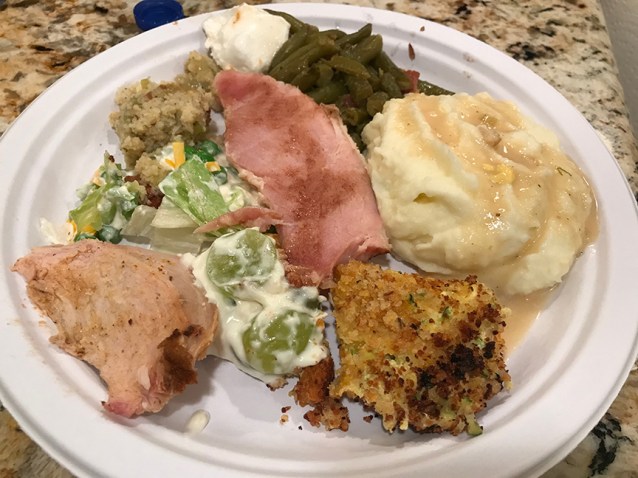
Name me a mainline masthead that doesn’t publish Thanksgiving wine recommendations these days. For that matter, name me a mainline masthead that doesn’t publish a Passover wine recommendations piece every year. It’s always been driven, however indirectly, by advertising dollars.

But in my view, there’s an even more powerful cultural trend that inspires these posts: the wholly and unique American concept that there is one PERFECT wine to go with the Thanksgiving feast. It’s a phenomenon that arises from Americans’ notion of exceptionalism and — I would go as far to say — historical progressionism.

Not progressivism, the socio-political philosophy that vexes today’s conservatives. I’m talking about progressionism, the very 19th-century and some would say Darwinian concept that evolution always makes things better. The ultimate expression of that philosophy, very much shaped by quasi-religious positivism, is that there exists a Platonic or otherwise divine ideal to which we are all striving.

This mode of thinking is also inspired by the erroneous belief that no one who came before us could be smarter than us. The Times has been publishing its Thanksgiving wine column since 2004. I read and enjoy it every year. But has the Thanksgiving menu changed since 2004? Have the world’s wines and their potential pairings changed? Nope, I didn’t think so.

Taking a page from our fellow European wine lovers, what if we threw “the perfect Thanksgiving pairing” to the wind this year and just enjoyed the wine and food? One family likes to serve “unfriendly to wine” artichokes. Another, asparagus. Does that mean that in the former case they can serve no wine at all and in the latter they are forced to serve Gewürztraminer, the only TexSom-sanctioned wine to go with that vegetable?

To my point, let me draw upon an ancient Latin saying: if the Romans were forced to forsake wine when artichokes are served, there would be no Rome. I’m joking about the ancient Latin saying part but can you imagine a Roman serving you delicious carciofi alla giudia or carciofi alla romana without a glass of fresh Frascati or crisp Castelli Romani?

At our family Thanksgiving this year, we’ll be serving Moscato d’Asti (a favorite of nearly half of the roughly 30 people who will be part of our gathering), Lambrusco (another easy winner for our people), some aged Nebbiolo from our cellar (for the red wine lovers), a buttload of Chardonnay and Pinot Grigio (because so many of the celebrants, including me and Tracie, know and love these grapes on any occasion), and a still-to-be-determined but probably sweet wine from Quarts de Chaume (to pair, against every and all rules condoned at TexSom, with the pies).

There won’t be one perfect wine. There will be plenty of wines to choose from. And there will be something for everyone. And that’s because the perfect pairing at Thanksgiving isn’t the wine. It’s the people who love and discover the wines and the way they make the food all the more enjoyable.

Happy Thanksgiving, everyone! I’ll be pouring wine tonight from 6 p.m. onward at Roma in Houston. It’s a free tasting and the wines will be available to purchase for your Thanksgiving meal. (See? It’s ALL about advertising!)

Memaw, Tracie’s grandmother, 100 years old, passed away earlier this month. On Friday, we celebrated her remarkable life.

Many of our friends will remember the story of the first time Tracie brought me home to Orange, Texas to meet her extended family. It was Thanksgiving 2008.

Everyone was a little nervous, including Tracie and me.

“Jeremy, we’re a hugging family,” said memaw, who was already in her mid-80s. “Come here and let me give you a hug.”

If ever there were an icebreaker, that was it.

Violet Lola Branch, née LeBlanc, passed away earlier this month. She was 100 years old. On Friday, we gathered in Orange to celebrate her life.

The photo above was taken in late January 2020. She was 98 years old. That’s our Chihuahua, Paco, whom she adored, in her lap. At the time, she was still putting on her makeup every day. She still drove herself around town and to all our family’s get-togethers. She was a truly remarkable woman who always ate well, stayed in shape, and stayed connected to friends through her love of bridge and her devotion to her church.

And the arc of her life was remarkable as well.

Think how different life was when she was born in 1921! To put it into perspective, Mussolini hadn’t yet seized power in Italy (his “March on Rome” took place the following year). Hitler and Nazism had yet to rise in Europe. Ford had yet to develop the first commercial airliner in the U.S. Telephones and automobiles were still amenities enjoyed by only the privileged.

Her husband Jim “Slats” Branch and she were part of the “Greatest Generation,” as we now call it. They married in 1942 in New Orleans before he deployed to Europe. After his tour of duty was over, they moved to Port Arthur, Texas on the Gulf Coast and would later settle in Orange, Texas where they would raise their two sons, Jim and Randy (Tracie’s father).

Memaw also had a wonderful sense of humor.

Here’s an anecdote that Tracie’s father Randy insisted she retell at her memorial service.

It must have been a few years ago when memaw mentioned that she had received a compliment from a friend.

“Violet,” said the friend, “you don’t look a day over 70!”

To that, memaw responded (in her classic southeast Texan twang): “Well, who the hell wants to look 70?”

Rest in peace, memaw. I’ll never forget how you welcomed me into your family. I enjoyed sharing our dogs and our wine with you over the years. I’ll cherish our conversations, your wonderful deviled eggs, and the joy you took in watching your great grandchildren grow. It was our blessing to have you in our lives.

If you can read this blog post, you’re invited to our Hanukkah party (and Open Mic).

I’m super stoked to invite you to the Parzen family Hanukkah party 2021!
If you can read this blog post, you’re invited.

Ping me for details but it’s happening…

Parzen Family Hanukkah Party
and Open Mic

Sunday
December 5
the last night of Hanukkah
@ our house
1-8 p.m.
2 p.m. kids open mic begins
4 p.m. adults open mic begins

Also happening in coming weeks, please join me…

Thanksgiving Wine Tasting
and Italian Wine Sale

@ Roma (where I’m the wine director)

Tuesday
November 23
6 p.m.

FREE TO ALL

No need to register, just show up!

We will be tasting 10+ wines and guests can purchase them if desired.

Yéyé Pop Wine Party
with Vesper Wine
catered by Roma

@ Vesper Wine

Friday
December 10
7:30 p.m.

$45 per person

James Oliver and I will be pouring some of our favorite Italians paired with a menu from Roma. And we’ll be spinning some of my favorite Yéyé Pop songs (French 60s), inspired by my music with Nous Non Plus (my band).

An Italian wine great returns to the U.S.

Aglianico del Vulture’s “top producer,” wrote Sheldon and Pauline Wasserman in their landmark folio Italy’s Noble Red Wines (Macmillan 1985), was Fratelli d’Angelo.

The were referring to the family winery that brothers Donato and Lucio d’Angelo took over in 1973 after their father Rocco passed away.

“Enologist Donato d’Angelo makes the wine…,” wrote the Wassermans after they tasted with him.

    Donato told us that although the wine wasn’t labeled Aglianico del Vulture until 1964, the name was used locally for the wines in the 1940s… In 1971, Aglianico del Vulture was granted official DOC status under Italian wine law. D’Angelo was among the first wineries, if not the first, to export wine from Basilicata to the United States. From 1926 to 1929, they shipped the wines abroad in 55-galloon (2-hectoliter) barrels. Today, Fratelli d’Angelo is to our knowledge the finest producer in Basilicata.

The brothers (fratelli) would eventually split up.

But Donato, the one with the secret sauce, would continue making his extraordinary wines under his new “Donato d’Angelo” label from 2001 onward.

From Salento coast to the foothills of Irpinia, ask any grower and they will tell you the same thing: not only is Donato the greatest producer of Aglianico del Vulture, but he is also the dude who single-handedly put the appellation on the map.

Although the wines aren’t as well known on this side of the great misunderstanding otherwise known as the Atlantic Oceans, leading writerslike Edward Behr (the founder of The Art of Eating) have written glowingly of Donato’s wines (“the finest traditional Aglianico del Vulure as well as one of the few Riservas still made”).

In 2007, Ed McCarthy, whom many would call one of the greatest Italian-focused tasters of his generation, wrote of the winemaker: “Donato d’Angelo has been carrying the Aglianico del Vulture banner practically single-handedly throughout the world’s markets since the 1970s.”

In 2008, top Italian wine writer and educator David Lynch included Donato among his favorite Vulture producers noting that the winemaker “delivers the earthy, ashy flavors that Aglianico purists crave.”

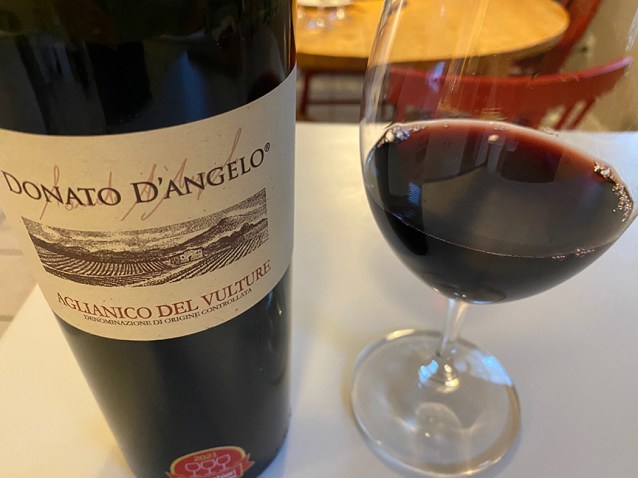
I recently had the opportunity to taste the 2017 vintage of Donato d’Angelo Aglianico del Vulture thanks to my dear friend Filena Ruppi, Donato’s wife, and the couple’s new American importer Marcello Miali.

This wine was classic Aglianico del Vulture, dark and brooding with rich umami character and nuanced layers of slightly underripe black fruit. The flavors were buoyed by the wine’s extraordinary freshness, balance, and “lift,” as the current generation of sommeliers like to say (the wine’s vibrancy).

Tracie and I opened it with her carbonara, a favorite pairing of mine for Aglianico, the wine the Romans drink when they go big (they keep the Super Tuscans around for us Americans, btw).

It’s so wonderful to see these iconic wines back in the U.S. and with an importer who recognizes their Italian wine world legacy (Marcello, whom I’ve met here in Houston when he visited for our Taste of Italy trade fair, is a great guy, a Salento winemaker who’s building an ambitious portfolio and sales team here).

As the interest Aglianico from Irpinia has grown over the last decade, I imagine we’ll see a future wave of Aglianico lovers who shift their gaze east to the wild lands of Vulture. Just as Nebbiolophiles have discovered “alto Piemonte” in recent years, they will be delighted to discover wines like those made by Donato — a true Italian great.