
Please consider giving to Unicef’s Ukraine child refugee fund. This link takes you straight to the donation page.
 My recent trip to Italy to teach at Slow Food U was a whirlwind. My itinerary and schedule had me on the ground for literally four days. Because the timing was so tight (including a day with two back-to-back three-hour seminars), wine country visits and trips to Piedmont’s many great dining destinations were not possible.
So it was that the small city of Bra, where the Slow Food Movement was founded in 1986, was radius of my culinary exploration.
Because of its association with Slow Food, Bra has some really interesting restaurants (including many chain pilot programs; more on that later). My next series of posts will be devoted to my favorite spots to eat and drink (including destinations from previous visits).
The first question that comes up when you mention the name Bra to an English speaker is does Bra, the toponym, have a relation to bra, the intimate apparel?
No, it does not (obviously).
Bra comes from the late Latin braida meaning a field in a suburban area. It’s relatively common across northern Italy. Some will remember the famous Piazza del Bra in Verona.
Bra in Cuneo province (Piedmont) got its name because it was an agricultural hub in Roman times (as was Verona, for that matter).
 Over the seven years of my teaching gig there, one of my favorite first stops has always been Local, the university’s food shop and casual restaurant. It’s expensive, as the students always complain. But the food products there are phenomenally good.
Even though it’s not a regional dish, their porchetta sandwiches are inanely delicious (not always available) and their vitello tonnato is as traditional as it comes. They also do modern and classic interpretations of Bra’s famous veal sausage (more on that later). Our girls loved the cooked salsiccia the year they came with me.
But on this occasion, the classic Piedmontese salt-cured anchovies with salsa verde spoke to me.
 Dissertations could be scribed on this mainstay of Piedmontese gastronomy. In many ways, it represents the basic building blocks of the Roero-Langhe-Monferrato culinary cannon. Vitello tonnato couldn’t exist without those anchovies. Nor could bagna cauda.
It was a thrill for this wine blogger to discover that they were serving a new wine from a favorite Dogliani farm, a Riesling from Cascina Corte, an ante litteram naturalist producer.
The bright acidity and intense fruit of the wine was such a fantastic match for the richly salty fishes and the garlic-heavy flat leaf parsley dressing.
And it all really hit the spot for lunch after a long day of travel from Houston.
Stay tuned for more notes on where to eat and drink in Bra…
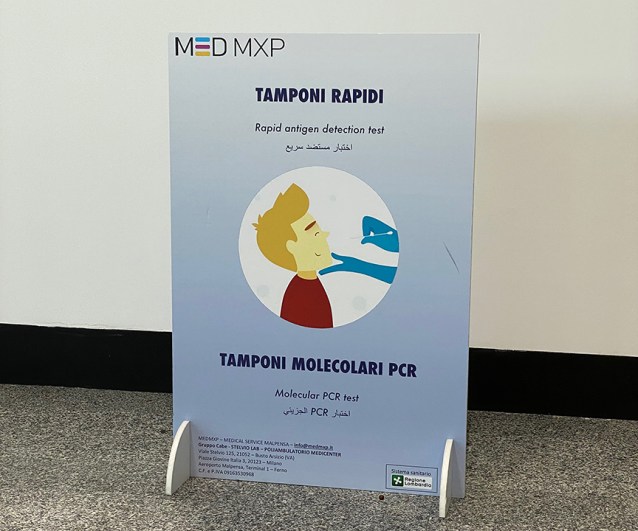 “The requirement to test for Covid before flying to the United States,”
  Stanley Tucci is one of the few issues that brings division to the Parzen family household.
 Above: the list and food at Felix Trattoria in Venice, California blew one Italian wine blogger completely away. Wine director Matthew Rogel has created what is possibly the best Italian list in the country right now. Its depth and thoughtfulness are going to be hard to match.
  Above: a friend treated me to a super bottle last night at the wonderful Ferraro’s Kitchen Restaurant and Wine Bar in North Miami. In terms of its drinking window, that wine was as perfect as it could possibly be. What a bottle! And great menu by chef/owner Igor Ferraro. Even a decade ago, you wouldn’t have expected to find such a gem and such excellent wine service in the U.S. outside of New York.
 Anyone who’s ever spent a significant time around the legendary grape grower and winemaker Aleš Cristančič (above) knows that he loves to talk about sex and sexuality. (I’ll never forget the time my band played a crazy wild gig at his winery, Movia, below. But that’s another story for another time.)
 It’s a conversation that was presaged not so many years ago in an article by Slow Food founder and essayist Carlo Petrini where he bemoaned Piedmontese growers who are grubbing up less lucrative, lesser known grape varieties and replanting their vineyards entirely to more bankable Nebbiolo.
  Happy Mother’s Day, Tracie P!
 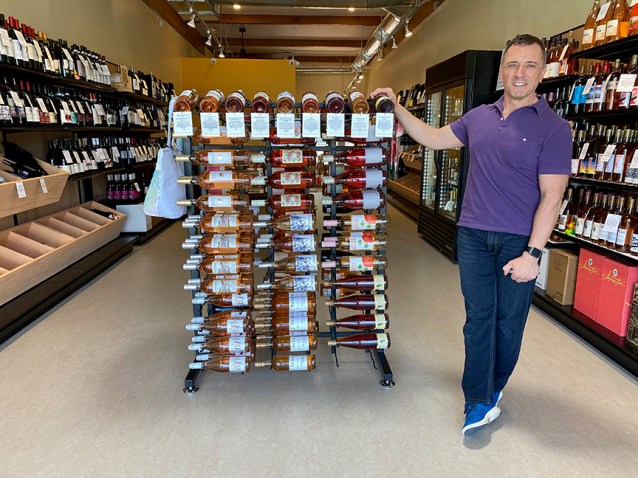 Just had to give a shout-out this week to John Libonati (above) and his awesome natural-focused wine shop
  Guest post by Davide Camoni.
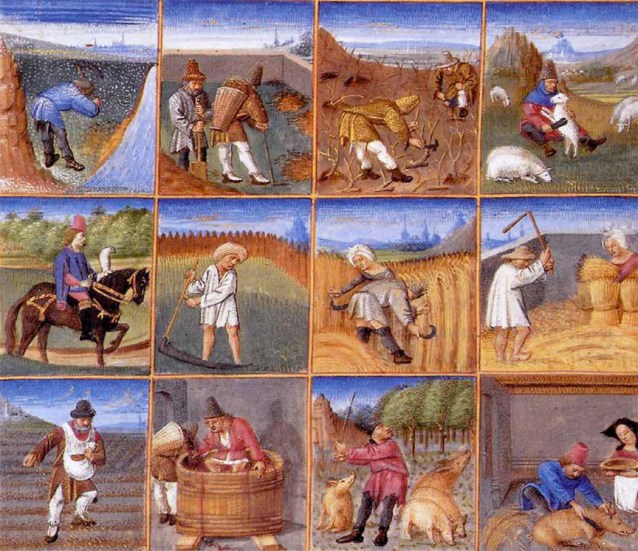 Above: an agricultural calendar from a “painted book” (circa 1309) of Pietro de Crescenzi’s treatise on farming, possibly executed in his lifetime. There numerous extant 13th and 14th century manuscripts of his book Ruralia Commoda and translations of his work became instant best sellers in the 15th and 16th centuries in Europe. Note the October panel where the figure is crushing grapes. Image via
 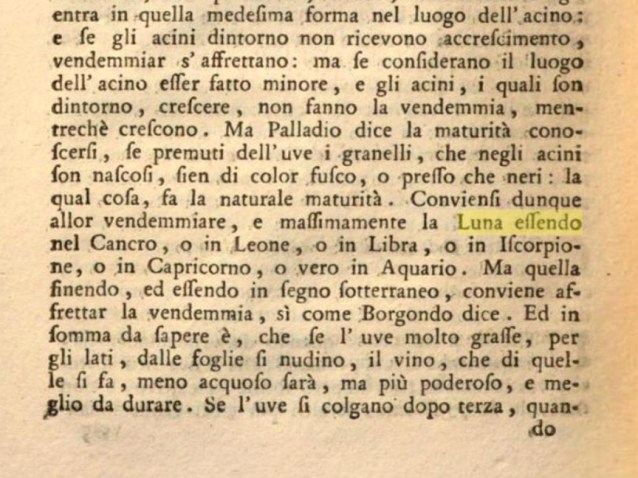 Above: a folio from a 1784 Italian translation of the Ruralia. The work’s popularity only began to wane in the modern era.
 Do Bianchi
