
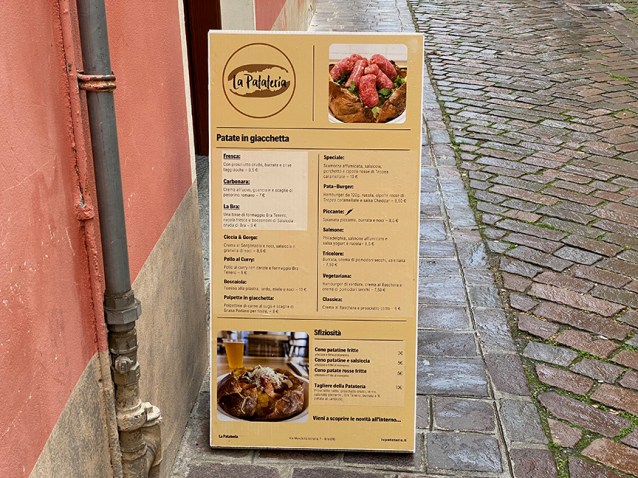
 Today’s post is the fourth in a series on my favorite places to eat in (my) Bra (Cuneo province, Piedmont) where I teach at the Slow Food University of Gastronomic Sciences. The toponym Bra comes from the late Latin braida, meaning a suburban field for farming.
Italians’ obsession with American comfort foods has been one of the things that has puzzled me the most in the last ten years I’ve been traveling through Italy.
But I thought I’d seen it all when I stumbled upon a baked potato fast food shop in my Bra last month.
It’s called the Patateria (the Potato Shop) and it serves only patate in giachetta, literally potatoes in a jacket, the Italian rendering of loaded baked potato.
They even serve baked potatoes topped with my Bra’s famous raw veal sausage (more on that later in this series). I love baked potatoes and we make them every week at our house. But man, this was a bridge too far — even for this gastronaut.
 My Bra seems to be a laboratory for new fast food and casual food concepts. Last year when I visited, a new hamburger place had opened. It’s called OX Burgers.
During my first academic year in Italy in 1987, the only fast food burger we could get was at the Burghy in the Florence trains station. Since that, and really in the last 10 years or so, amburgherie (hamburger restaurants) have popped up all over the country and it’s rare that beer gardens and pubs don’t offer a wide range of American comfort foods. I’ve even had jalapeño poppers in Italy (they weren’t very good.
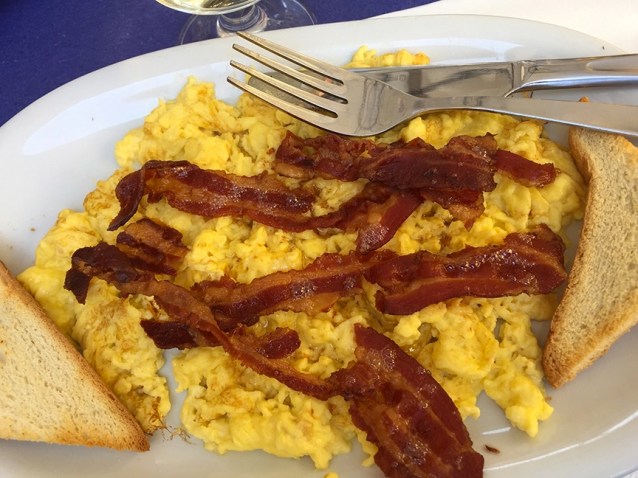 That’s “bacon and eggs” at a writerly café in Milan a few years ago. Not an American in sight but plenty of people eating American breakfast food — for lunch.
As nonplussed as I am by their often misguided fascination with and delight over American comfort food, I’ve thoroughly enjoyed some of the dishes, in part because they are often made with highest-quality ingredients, especially when it comes to the ground beef (and ground pork and ground bacon are almost always blended into the mix in some combination). The same goes for the cured meats, like the ham, turkey, and bacon in the club.
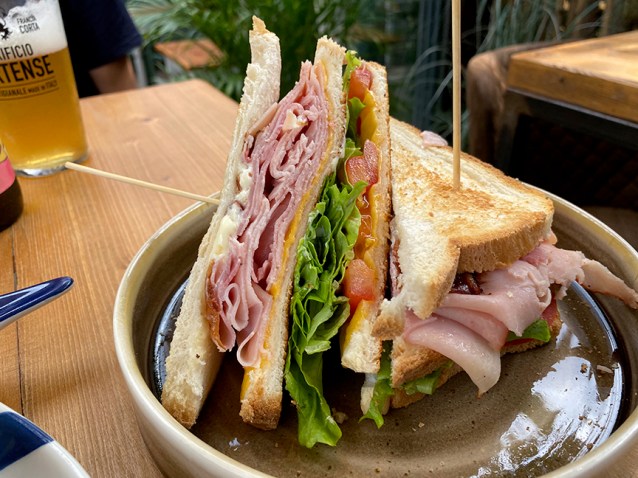 The quality of the bread is also generally much better than in the U.S. Again, thanks to higher quality ingredients in my experience. That’s a club sandwich on Lake Iseo last year. It was fantastic. The Italians generally use homemade mayonnaise, as in this rendering of the American classic diner dish. It’s wonderful.
A glass of Franciacorta, anyone?
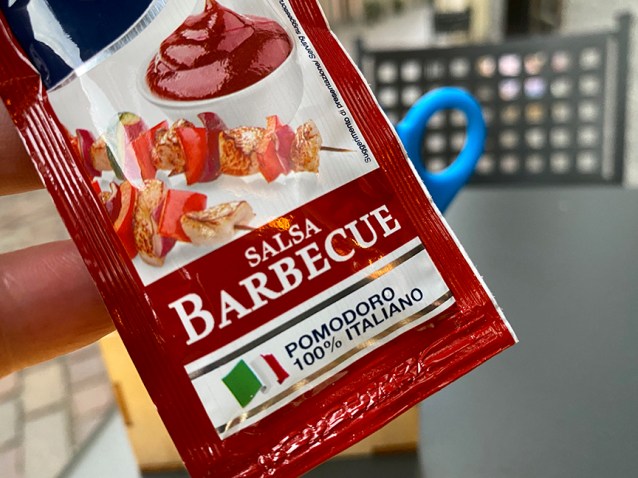 But Italian barbecue sauce made with genuine Italian tomatoes? No, this Texifornian couldn’t do it!
Please consider giving to Unicef’s Ukraine child refugee fund. This link takes you straight to the donation page.
 Today’s post is the third in a series on my favorite places to eat in Bra (Cuneo province, Piedmont) during my seminars at the Slow Food University of Gastronomic Sciences in (my) Bra. The toponym Bra comes from the late Latin braida, meaning a suburban field for farming.
 I know people are freaking out right now that I paired a Barolo with asparagus. But in Italy, people are a lot more chill about shit like that.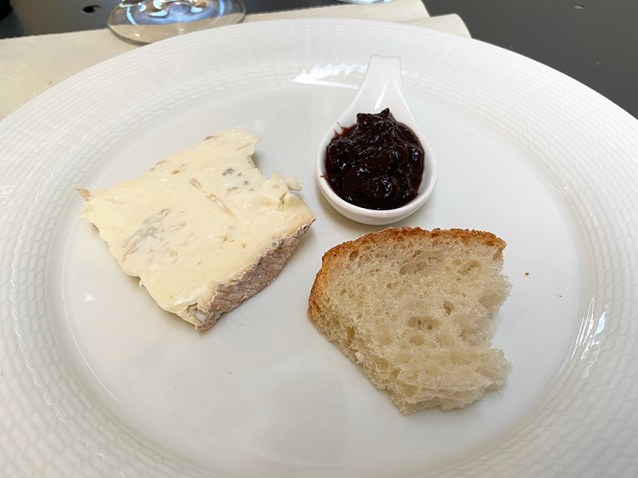
 Above from left, Italian Consul General Federico Ciattaglia, Italian MP for North and Central America Fuscia Nissoli, and Houston Councilwoman Mary Nan Huffman.
 Today’s post is the second in a series on my favorite places to eat in Bra (Cuneo province, Piedmont) during my seminars at the Slow Food University of Gastronomic Sciences in (my) Bra. The toponym Bra comes from the late Latin braida, meaning a suburban field for farming.
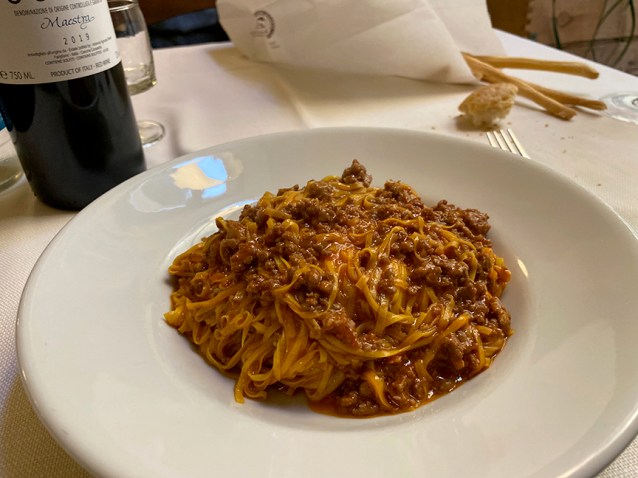 Although not my favorite, Gallinaccia is solid. The staff is friendly. And the interior evokes a between-the-wars ambiance.
  Image via the
  Houston’s light rail seemed the wisest way to get to downtown for Friday’s
  Image via
  My recent trip to Italy to teach at Slow Food U was a whirlwind. My itinerary and schedule had me on the ground for literally four days. Because the timing was so tight (including a day with two back-to-back three-hour seminars), wine country visits and trips to Piedmont’s many great dining destinations were not possible.
  Over the seven years of my teaching gig there, one of my favorite first stops has always been Local, the university’s food shop and casual restaurant. It’s expensive, as the students always complain. But the food products there are phenomenally good.
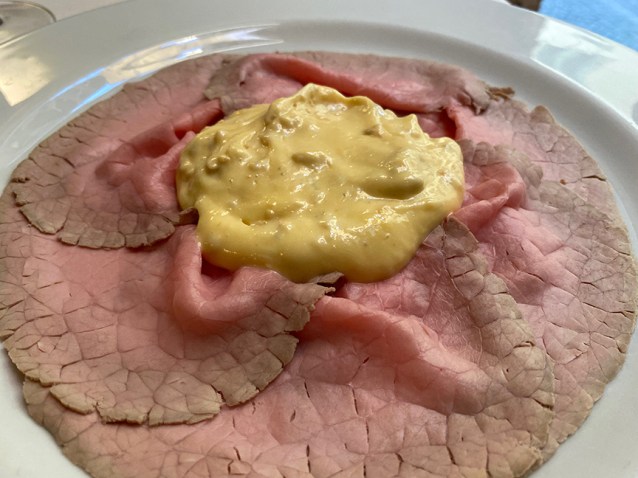
  Dissertations could be scribed on this mainstay of Piedmontese gastronomy. In many ways, it represents the basic building blocks of the Roero-Langhe-Monferrato culinary cannon. Vitello tonnato couldn’t exist without those anchovies. Nor could bagna cauda.
 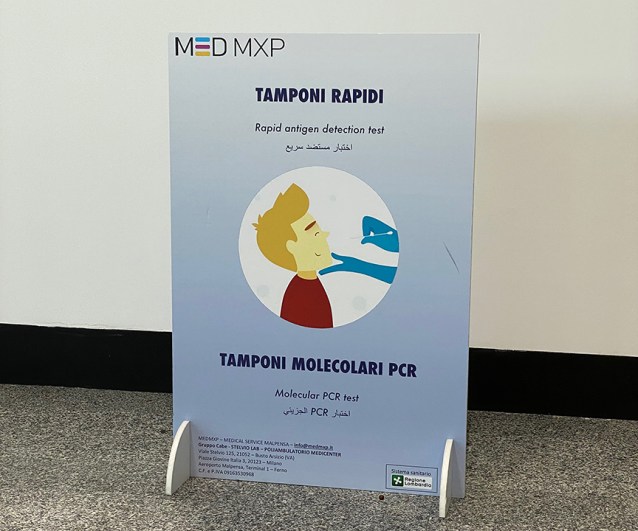 “The requirement to test for Covid before flying to the United States,”
  Do Bianchi