1970 Sassicaia (no, I didn’t drink it)

Above: One of the very few things I miss about living in New York City is the availability of good smoked fish and New York bagels. We get frozen H&H bagels at our local Central Market. Scrambled eggs and bagels and lox have become a happy Sunday habit.

Kermit is coming to town and I’m prepping today (following our now traditional late-morning breakfast of toasted H&H bagels, cream cheese salmon, thinly sliced tomatoes and red onion, salted capers, brined olives, and eggs scrambled with Parmigiano Reggiano and an onion soffritto, a casa della bellissima Tracie B) for my presentation of the wine-industry great and singer-songwriter tomorrow night at Vino Vino in Austin.

I’ve been rereading his most recent book, Inspiring Thirst, an anthology of his newsletters stretching back to the beginnings of his career in the wine industry in the early 1970s (the first newsletter in the collection is dated 1974). In many ways, the gathering of glosses and notes is an excellent primer on how to sell wine. I don’t think its unfair to say that Kermit essentially invented wine blogging with his “little propaganda pieces,” as he called them.

The corpus of his blurbs is also an amazing historical document with fresh tasting notes and observations on now-nearly-forgotten vintages, like his take on 1970 Sassicaia, penned in 1975:

    1970 Sassicaia

    Unlikely, perhaps, but here we have a very impressive Cabernet Sauvignon made in Italy. It shows a pronounced varietal nose, while the effect upon the palate is akin to Bordeaux, explained by the fact that the winemaker is French and is using Bordeaux barrels. Regardless, the wine is extremely well made; to my taste it compares easily with over-$8 California Cabernets. Highly recommended! $5.50 per bottle $59.40 per case

The first commercially released vintage of Sassicaia was 1968. Darrell Corti told me that he sold it at Corti Brothers in Sacramento for $6.99 (Kermit was selling it for more than 20% less!).

Kermit talks a lot about how the 1970s recession led a lot of importers to “advance” their inventory to him. “Pay me when you sell it,” they would tell him, and he would pass the excellent pricing on to his customers. His description of the economic climate sounds a lot like the situation today and his blueprint for selling (and marketing) wine is good advice for anyone involved in the wine industry today — on any level, be it importing, wholesale, on premise, or retail.

Tomorrow night Kermit, Ricky Fataar (his producer), and I will be talking about Kermit’s new record, Man’s Temptation (and the event is already sold out) but I hope to get a chance to ask him about Sassicaia at $5.50 a bottle. The wines sells for $599.00 a bottle today.

In other news…

The fall weather’s been fantastic here in Texas and the sunsets and the Texan sky are amazing, as always. I took this photo yesterday evening before Tracie B and I headed out for the night. Happy Sunday, ya’ll!

Jimmie Vaughan’s Gulf Coast picking and the best steak frites in Austin

From the “life could be worse” department…

louann barton

Last night found me and Tracie B at Austin’s top music destination, Antone’s, for a Doug Sahm tribute (Doug Sahm is considered by many the father of the Central Texas music scene). We were there to see legendary bluesman Jimmie Vaughan. Since I moved to Austin nearly a year ago, I still hadn’t see him play and it was a thrill to hear his Strat from the edge of the stage (one of the things that’s so cool about Austin is how the venues, even Antone’s, which is one of the largest, are just small enough that you can still hear the music directly from the amps on stage instead of through the PA). But the most amazing thing was that our friend Felice’s boyfriend Ronnie James is Jimmie’s go-to bass player and so Tracie B and I got to go back stage and meet Jimmie. Now, I’m all growed up and have met plenty of famous folks but I can’t conceal that I was downright star-struck to shake Jimmie’s hand last night. I couldn’t resist ask him about his right-hand pick-less picking and hammering technique (he’s flat-picking in the photo above with LouAnn Barton on vocals).

“That’s the Gulf Coast style,” Jimmie told me. It was created by Clarence Gatemouth Brown and was also used by Albert Collins (another native Texan and one of my personal favorite bluesmen), he said.

That’s a detail from a photo of Gatemouth, left: you pick using all your fingers on your right hand while you finger and hammer with your left hand. There is just so much great music in this town and you can hear a blues or country great on nearly any given night. Man, I love that Tracie B for bringing me here! Her cooking ain’t bad either…

In other news, the best steak frites this side of Manhattan…

Above: Steak frites at Chez Nous in Austin.

I’m dying to try the new Relais de Venise Entrecôte in New York (as reviewed by Sam Sifton in The New York Times), but there is no dearth of great red meat in Texas.

In what seems to be becoming a bad habit of mine, I played hookey again Friday after being shanghaied for lunch by my friend John. We headed over to Chez Nous with a collector friend/client of his and opened a few interesting bottles that “needed” to be tasted.

Above: The 1994 Trimbach was tighter than I would have expected but it opened up nicely with a little aeration. The pairing with the duck pâté was sublime.

Chez Nous is everything that you wish it would be: quiet, unassuming, and friendly, with solid bistro cuisine that may not win awards but never disappoints. Owner Jacques always delivers classic staples of French cuisine — the pork rillettes and duck pâté always excellent. (I don’t know where Jacques sources his bread but it’s probably the best I’ve had in Austin.)

Above: Duck liver pâté at Chez Nous — highly recommended.

The Gimonnet premier cru Cuis also paired deliciously with the pâté but then again so did the 2006 Les Palliéres Gigondas (which we tasted in honor of Kermit’s visit to Austin on Monday, since Kermit owns the winery together with the Brunier brothers).

Jimmie Vaughan and 94 Trimbach on the same day? Life would be rough if I didn’t have such a beautiful lady in my life. ;-)

tracie branch

A benefit for battered Asian women Nov. 14 and weird Austin painted cars

Above: Austin loves to keep itself weird and even has a website for the sake of weird. I don’t know the phenomenon’s origins but Austinites love to paint their cars. All of the images were taken using my Blackberry, captured as Tracie B and I drive around town.

Support, Advocate, Heal, Empower, Listen, Inform: saheli means friend in Hindi. Linda Phan, the executive director of Saheli Austin, a non-profit group that provides support for battered Asian women, has asked me to speak about wine and wine pairing at the organization’s November 14 fundraiser event.

A week from Saturday, we will be pairing European and Texan wines with Asian food at Saheli’s “Discover Asia Through Wine” benefit for victims of domestic violence.

Riesling and Grüner Veltliner are obvious choices when it comes to pairing wine with the often intensely spicy flavors of Asian cuisine, and both grapes will be well represented, of course.

But I think we’re also going to have fun with some Rhône varieties and — I couldn’t resist — some Sangiovese from Chianti Rufina as well.

Suggested donation is $45 (a great value for all the great food and wine) and the event should be a lot of fun. Click here to RSVP and to donate. Hope to see you there if not before!

Buon weekend ya’ll! (how’s that for fusion?)

The “intense delicacy” of the last of the Mohicans in Texas

heredia

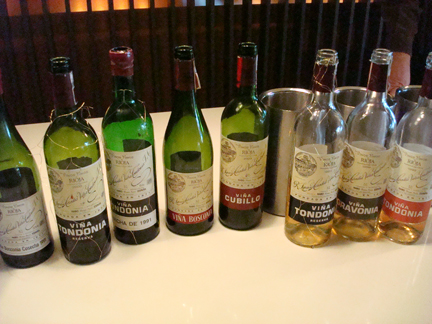
Tasting through the current releases of López de Heredia the other day in Austin made me feel like Big Joe Turner’s Mississippi bullfrog in “Flip, Flop, and Fly”: I’m like a Mississippi bullfrog sittin’ on a hollow stump/I got so many good bottles of wine, I don’t know which way to jump.

I was thrilled to see that the wines have returned to Texas, in the hands of a smaller distributor who seems to be treating the bottlings with the respect and care they deserve.

My friend Alice Feiring put it best when she wrote about the “intense delicacy” of these wines, using a Petrarchesque oxymoron. They are at once intensely aromatic and flavorful but show that unbearable lightness that I find so alluring in great wine.

Some of the most inspired prose in Alice’s The Battle for Wine and Love or How I Saved the World from Parkerization is devoted to the López de Heredia winery. But it was owner Maria José López de Heredia who called the winery the “last of the Mohicans”:

    When López de Heredia buckles — if ever — that style of wine is gone and cannot be replaced. I asked Maria José, “Are you sad about the way things are going right now?” Her answer shocked me. “Wine has been worse in Rioja. It’s not so bad now. There are good wines being made, but we are ‘the last of the Mohicans,'” she said, with tremendous pride. She actually liked being the last one.

I love the wines of López de Heredia and try to taste and enjoy them at any chance I get.

The 1989 Tondonia white was showing beautifully, even if it inspired a lively debate among the wine professionals gathered that day as to whether it was “off” or not. (“The release of a López de Herdia white,” writes Alice, “is always a love-it-or-hate-it affair. No matter what a drinker’s preferences, the wine always gets attention.”) I’ve tasted that wine maybe 10 times over the last year and I think that the bottle we tasted was right on.

I was also really impressed with the entry-level 2003 Cubillo (red), which showed uncommon grace for this wine. The 1991 Tondonia and Bosconia (reds) were simply stunning.

The wines won’t be an easy sell here in Texas (nor are they anywhere, for that matter). Their oxidative nature can be a turn-off for a lot of folks. But I’m so glad that they’ve returned to Texas. Tracie B and I will be drinking them for sure!

In other news…

Austin wine writer Wes Marshall reviewed Kermit’s CD today and previewed his listening party Monday November 9 here in town at Vino Vino (yours truly will be presenting Kermit and his producer Ricky Fataar). I haven’t been playing music professionally since Nous Non Plus’s last show in LA in May: I’ve been having a blast promoting this show and I love that feeling of filling a room. I hear there are just a few seats left! ;-)

Claude Lévi-Strauss and (not so natural) wine

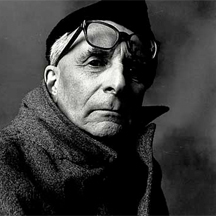
claudeReading over today’s obituary of that looming figure of the twentieth- (and twentieth-first-) century who seemed to watch over every discipline of critical theory, Claude Lévi-Strauss, I couldn’t help but apply my dusty knowledge of his structuralism to the hegemonic culture of wine today. After all, in some ways similar to Freud, Lévi-Strauss, who transpired over the weekend, will be remembered as much for his contribution to literary theory and epistemology as he is for his unapologetic transformation of the field of anthropology.

His fear of and subsequent predictions of a western behemoth “monoculture,” as it came to be known, have certainly taken shape in the evermore homologated contemporary world of wine today. The west, he wrote with words that seem to speak directly to the modern vs. traditional debate in European wine today, could destroy itself by “allowing itself to forget or destroy its own heritage.”

Lévi-Strauss wrote famously about wine: his treatment of the wine culture in southern France in his study The Elementary Structure of Kinship is often cited by scholars. (He also wrote about wine in The Origin of Table Manners.)

But wine, like bread, also held a special place in the lexicon of the great scholar and thinker. Like bread, wine represented for Lévi-Strauss a post-Neolithic technological transformation of the natural. Society (and the universal values that tie every expression of human experience together) is defined, according to Lévi-Strauss’s view, by a “rational” transformation of nature.

As Edward Rothstein wrote so ably in The New York Times today:

    Lévi-Strauss rejected Rousseau’s [historically romantic] idea that humankind’s problems derive from society’s distortions of nature. In Mr. Lévi-Strauss’s view, there is no alternative to such distortions. Each society must shape itself out of nature’s raw material, he believed, with law and reason as the essential tools.

Alas, we’ll never be able to ask Lévi-Strauss where he stands in the overarching dialectic of natural wine (and I can only imagine the ire this post will spark!). My own thought is that Lévi-Strauss and structuralism offer us a tool for understanding wine and its relationship to society. One can argue the finer points of ambient yeast, zero SO2, and minimal intervention vs. manipulation. But there is no denying that wine as an expression of society is shaped out of nature’s raw material by humankind — however minimal the intervention. Society by definition (and is there any wine that exists outside of society?) offers no alternative to the distortion of nature. Fermentation can occur spontaneously in nature. But the rational hand of humankind is what turns fermentation into wine.

What would Lévi-Strauss say? And who really cares? Probably no one but me.

What I can say for sure is that humankind has lost one of its greatest thinkers and one of the voices that helped to shape the very ideological dialectic from which the natural wine movement has culled its roots. If I only had a bottle of zero-SO2 Beaujolais for every night I spent cramming over the writings of Lévi-Strauss for my critical theory exams in grad school!

Lévi-Strauss, old man, you will be sorely missed…

Kermit Lynch rocks Austin and Nashville next week

Above: Kermit debuted his new album last month in San Francisco at the Great American Music Hall, paired with a menu by Alice Waters.

It’s a funny thing about the food and wine world: so many of the folks I know who work as food and wine professionals have at some point in their lives played music professionally and/or have worked in some capacity of the music industry (myself included!).

When Kermit Lynch called me over the summer, asking me to help him put together a listening party here in Austin, I jumped at the chance: as it turns out, Kermit Lynch “rocker interrupted” and I share a lot of the same tastes in rootsy, Amerciana music and when he sent me a copy of his new disk Man’s Temptation I was blown away by the musicianship and the soulful, gravelly voice behind the microphone. (I wrote a review of the CD here.)

I’ll be presenting Kermit, together with his producer Ricky Fataar, and talking to them about Man’s Temptation as we a few of Kermit’s wines on Monday, November 9 at Vino Vino here in Austin (click for details) and Wednesday, November 11 in Nashville at the Basement, where Kermit’s entire band will also be joining us (see Nashville details below).

I know Ricky’s music through his performances with Bonnie Raitt, John Scofield, and Boz Scaggs but, being the Beatlesmaniac that I am, I am most geeked to ask him about The Rutles and the film All You Need Is Cash, the original mockumentary in which he played George’s counterpart.

You may remember how Kermit and I met, like so many cool things in my life, through the blog.

Earlier this year, Kermit left a comment on a post I wrote about tasting Bandol as Tracie B and I watched American Idol and ate Tracie B’s excellent nachos.

Here are details for Nashville:

AN EVENING WITH KERMIT LYNCH

Listening Party and Wine tasting
@ The Basement
1604 8th Avenue South
Nashville, TN
5 p.m. to 8 p.m.
Wednesday, November 11, 2009
$20 (ticket price includes 1 glass of wine)

Click here to reserve.

I hope to see you there!

Check out all the cool cameos in this trailer from All You Need Is Cash

Zombies and 1988 Quintarelli Bianco Amabile

From the department of “unabashed umami blogging”…

Tracie B and I stopped by the Highball last night for an aperitif before the zombies closed up the bowling alley/bar/restaurant/karaoke club for their zombie party. 2009 seems to be the year of the zombie, doesn’t it?

Our friends Juliet and Michael Housewright had invited us to tag along to a Halloween party in the home of some collector friends of theirs. A lot of great wine was opened, some lovely older Gigondas and vintage Gimonnet in magnum, but the wine that blew me away was a Quintarelli 1988 Bianco Amabile.

Tracie B and I have become somewhat obsessed with the show True Blood (Juliet came dressed as Sookie, complete with a Merlotte’s t-shirt!). Between all this talk of zombies and vampires, I’ve been thinking a lot about the living dead and how we talk about the “life” of a wine and how we say a wine “has life” or “is dead” in the glass.

I’ve had the good fortune to taste a lot of Quintarelli over the years, in Italy and here in the U.S., but I’d never tasted his Bianco Amabile. This wine is a trace, a clue to the past, an almost forgotten oxidative style of winemaking that was intended to give the fruit of the vine remarkable longevity. I couldn’t help but think of the Romans’s love of dried-grape wine and their high regard for grapes that could stand up to long-term aging. Valpolicella, where this wine was made, and Soave were known for their production of fine dried-grape wine, acinatius, in antiquity. The wine was very much alive in the glass, a marriage of nutty overtones and apricot and caramel flavors.

I was certainly feeling very much alive last night with the lovely Tracie B on my arm: I revived my deceased character from my faux French rock days, Cal d’Hommage, pencil-thin mustache and all. And Tracie B was my number one groupie!

Thanks for reading, ya’ll. I hope everyone had a fun and safe Halloween! Tracie B and I are off to pick out some dishware… :-)

More Nebbiolo news (and a lil’ guitar porn)

One of the frequent questions that we wine folk get is “what’s your favorite wine?” It’s not an easy one to answer. I always tell people, it depends on where I am, whom I’m with, and what I’m eating. A favorite wine could be a humble bottle of grapey Lambrusco with some belt-busting gnocco fritto and rendered lard or it could be a 40-year-old Giacomo Conterno Barolo Monfortino and a blood-rare porterhouse steak, the genteel noble tannin of the Nebbiolo waltzing with the marbled meat.

But if there ever were ONE wine, one winery that I could point to and say that’s my favorite, it would have to be Produttori del Barbaresco. I love the wines, I have deep respect for the people who grow it and make it, and the ideology and winemaking philosophy that stand behind it. I also love it because I can afford it and because I can afford to “follow” each vintage. And more than anything else, I love how the style of the winery has remained so consistent: whether tasting a ’67, an ’89, or the current release ’05, the style of the “house” steadfastly represents the terroir and the vintage.

And so it was a thrill yesterday to taste the 2008 Langhe Nebbiolo by Produttori del Barbaresco, the cooperative’s entry-level wine, made from the member growers’s younger vines, and vinified with shorter maceration time and aging.

The 2007 was an anomalous vintage for this wine. The bumper crop of noble fruit resulted in a more tannic and richer expression of Nebbiolo than you usually see in this wine (I think this is what BrooklynGuy found to be off-putting when we exchanged notes about it). When I told winemaker Aldo Vacca that as much as I loath the expression “baby Barbaresco,” the ’07 was the one instance when I thought the Langhe Nebbiolo was “Barbaresco-esque.” “Baby Barberesco?” he said to me with a quizzical look. “Baby Barolo!”

With the ’08, the wine has returned to is more classic style: a Nebbiolo lighter in body, with very approachable berry fruit and sour cherry and already mellow tannin. Great for drinking now. Damn, I love this wine. It should retail for around $20, more or less. A great value.

In other news… boys will be boys…

John Roenigk and I played a little hooky yesterday after tasting and some lunch: we went to one of the most amazing guitar stores I have ever visited, Quincy’s here in Austin. (John’s an amazing musician and I’ve been helping him transfer some of his recordings from the 1980s to digital format, one of the other things that GarageBand is great for. That dude can play him some serious geetar.)

I sure wish I had the dough to afford one of these handmade beauties. It’s hard to convey what it’s like to play guitars of this caliber. Their sounds are warm and round, with the bass notes resonating like a train in the distance and the highs sparkling like stars in the sky. That’s a 1999 Gibson SJ200 Custom (Brazilian) in the foreground.

But when you actually play them, the sensation of feeling the sounds emanate from the warm wood pressed up against your belly is purely transcendental. That’s a ’52 Martin D28 above — one of the few vintage guitars owner Pat Skrovan had in the store yesterday.

Feast your eyes on that National Steel Reso-Phonic Delphi Deluxe, above.

Happy halloween ya’ll!

Umami blogging (and Nebbiolo gone wild)

Above: I poured an awesome flight of Nebbiolo on Tuesday night at The Austin Wine Merchant for my class “The De Facto Cru System in Piedmont.”

They say that parenting blogs, so-called “mommy blogging,” are the most lucrative: evidently, folks who write about parenting have no troubles finding advertisers. Among wine bloggers, however, the term “mommy blogging” denotes a sub-genre of posts in which bloggers “write home to mom,” telling her all the great bottles that they have opened. Italian Wine Guy often accuses me of this and I must confess that my mom does read my blog (hi mom!).

Since I am about to indulge in some flagrant, unapologetic mommy blogging, I’d like to propose a new sub-genre of enoblogging for your consideration: “Umami Blogging.”

Umami is one of the “the five generally recognized basic tastes sensed by specialized receptor cells present on the human tongue” and in wine writing, we often use it to denote a class of “savory” descriptors.

Umami, meaty, brothy, savory flavors were on everyone’s palates Tuesday night when I poured 7 bottlings of Nebbiolo from Langa at my weekly Italian wine seminar at The Austin Wine Merchant. Man, what a flight of wines! The de facto cru system of Piedmont was the topic and participants tasted bottlings from the east and west sides of the Barolo-Alba road as well as a Barbaresco and a Langhe Nebbiolo sourced in Barbaresco, where many believe the proximity of the Tanaro river adds another dimension to the appellation’s macro-climate.

Highlights were as follows…

Bruno Giacosa 2001 Barolo Falletto

This wine, from a classic Langa vintage, showed stunningly on Tuesday. Still very tannic in its development but as it opened up over the course of the evening, it performed a symphony of earthy, mushroomy flavors. The Austin Wine Merchant is selling this wine at release price (RUN DON’T WALK).

Brovia 2004 Barolo Rocche

My first encounter with this vintage from traditional producer, Brovia, one of my favorites. Here wild berry fruit ultimately gave way to a wonderful eucalyptus note. The wine is still very tannic, of course, but was suprisingly approachable after just an hour of aeration. I loved the way the fruit and savory flavors played together like a meal in a glass. Great value for the quality of wine.

Marcarini 2005 Barolo Brunate

This wine had a bretty, barnyardy note on the nose that was a turn off for a lot of folks but guest sommelier June Rodil (the current top Texas sommelier title holder) and I really dug this wine, which weighs in at less than $60. I love the rough edges of this rustic style of Barolo and only wish that I had some bollito misto and mostarda to pair with its vegetal, sweaty horse flavors.

Produttori del Barbaresco 2005 Barbaresco

Tracie B, who joined at the end of the class, and I agreed that this wine is beginning to close up. It is entering a tannic phase of its development and its savoriness overpowers its fruit right now. That being said, it still represents the greatest value in Langa today, at under $40. If you read Do Bianchi, you know how much I love the wines of Produttori del Barbaresco: I would recommend opening this wine the morning of the dinner where you’d like to serve it. By the end of the night, the tannin had mellowed and the fruit began to emerge.

To reserve for my Wines of the Veneto class (Nov. 3, a seminar dear to my heart because of my personal connection to the Veneto) or my Italian Wine and Civilization Class (Nov. 10, my personal favorite), please call 512-499-0512‎. On Tuesday, Nov. 10, we’ll all head over to Trio after class for a glass of something great to celebrate. Thanks again, to everyone, for taking part and heartfelt thanks to The Austin Wine Merchant for giving me the opportunity to share my passion for Italian wines with Austin!

In other Nebbiolo news…

My buddy Mark Sayre is pouring Matteo Correggia 2006 Roero Nebbiolo by the glass at the Trio happy hour at the Four Seasons. European wine writers have been paying a lot of attention lately to the red wines of Roero (an appellation better known in this country for its aromatic white Arneis). There isn’t much red Roero available in the U.S. and I was thrilled to see this 100% Nebbiolo in the market. It’s showing beautifully right now and is my new favorite pairing for chef Todd’s fried pork belly — my compulsive obsession — a confit seasoned with the same ingredients used to make Coca Cola.

See, mom? You can sleep peacefully knowing that your son is drinking great Nebbiolo! ;-)

*****

Does anyone remember Tom Lehrer’s “So Long Mom, I’m Off To Drop a Bomb”?

Mr. Zaia goes to Washington (and lets Montalcino down)

smith1

It’s seems like it was just yesterday that I was posting a sigh of relief that the U.S. Alcohol, Tobacco, Tax, and Trade Bureau (TTB) was lifting its requirement of Italian government certification for Brunello di Montalcino imported to this country. Nearly every Italian news agency and feed (ANSA, Yahoo.it, etc.) had reposted agricultural minister Luca Zaia’s press release in which he announced — with cocksure nonchalance, I may add — that the requirement had been lifted following his successful meeting in Washington with TTB bureau head John Manfreda. Even Brunello producers association director Patrizio Cencioni issued a release praising minister Zaia and thanking him for a job well done. (You can read all of the press releases here.)

But it seems that minister Zaia was a little too quick to sing his own praises.

Late yesterday afternoon, another post hit the feed as the Italians were already sleeping: the TTB issued a press release in which stated plainly and clearly that the agricultural minister had falsely represented the agreement negotiated in the minister’s meeting with Manfreda last week. Despite claims otherwise, states the document, Italian government certification is still required. And it will continue to be required, according to the document, until the Italian government presents the Siena prosecutor’s final report on the investigation (the so-called “Operation Mixed Wine” inquiry into the suspected adulteration of Brunello and other Tuscan wines).

smith2

I spoke this morning to Brunello producer Fabrizio Bindocci of Il Poggione in Sant’Angelo in Colle and he told me that he and Il Poggione’s owner Leopoldo Franceschi were left dumbstruck when they read the news of the TTB’s clarification. “Maybe Zaia met with the doorman, not the TTB administrator,” Fabrizio wondered out loud with classic Tuscan wit. (Fabrizio’s son Alessandro has posted the entire series of press releases at his blog Montalcino Report.) “We feel that certification should be required and it should continue to be required,” said Fabrizio, whose wine has been certified by an independent Norwegian risk management firm since 2003, long before the controversy began.

smith3

In his post this morning, Franco published an image of Walt Disney’s Pinocchio and asked: “Just for the sake of clarity, can somebody — in Montalcino, Rome, or Treviso — help us to understand what’s going on?” (Minister Zaia hails from Treviso.) And making reference to Zaia’s bid to become governor of the Veneto (his home region), Franco asks rhetorically, “is it so hard to understand that it’s not possible and it makes no sense to run an electoral campaign in the Veneto using the supposed great success obtained in the [minister’s] campaign in Montalcino?”

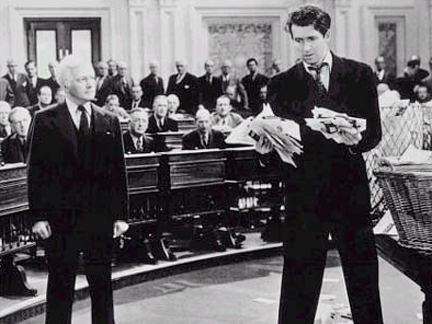
@Mr. Zaia you are no James Stewart: if you need an interpreter the next time you head to Washington, feel free to give me a call!