
 It’s incredible to think how different the wine world when Wine Spectator was launched in 1976, the year of the Bicentennial, in San Diego. When east coast publisher Marvin Shanken purchased the masthead just a few years later, Jimmy Carter was still president.
By the mid- and late-2000s, Wine Spectator (and Robert Parker’s Wine Advocate, founded in 1978) represented the “establishment” in wine writing. Those were also the years of the early enoblogosphere when the magazine, three decades after its founding, became a favorite punching bag for the new wave of Italian-facing enohipsters.
A handful of editors are giving high scores to Italian wines made in an international style from international grape varieties while they’re giving mediocre ratings to traditional-style wines from native grapes. That was the prevailing wisdom among media and social media reactionaries. Those same editors are favoring overly “oaked” and overly “extracted” wines with muscular alcohol and overly bold and sometimes concocted fruit-forwardness. These wines and the editors’ interests do not reflect local and regional viticultural heritage.
Although the claims were often hyperbolic and acerbic, a nugget of truth lay therein.
But what many of us missed at the time (myself included) was that Wine Spectator was turning a whole new American generation on to Italian wine. More significantly, it was deciphering, “translating” a wine world that would have otherwise been impenetrable for anglophones. Remember: this was the era before Pigato and Frappato were on anyone’s radars, let alone by-the-glass at your favorite Hollywood pizzeria.
I would even go as far as to argue that the editors’ focus on Italian Cabernet Sauvignon, Merlot, and later Chardonnay and Syrah ended up having a significantly propaedeutic impact. Before anyone in America could wrap their mind around a Nebbiolo, it made perfect sense to entice my countrypeople with grapes they already knew and loved.
Looking back on it all now, I recognize that many of us wouldn’t have careers in Italian wine if a few forward-looking writers at Wine Spectator hadn’t decided to expand their coverage of Italy during those years.
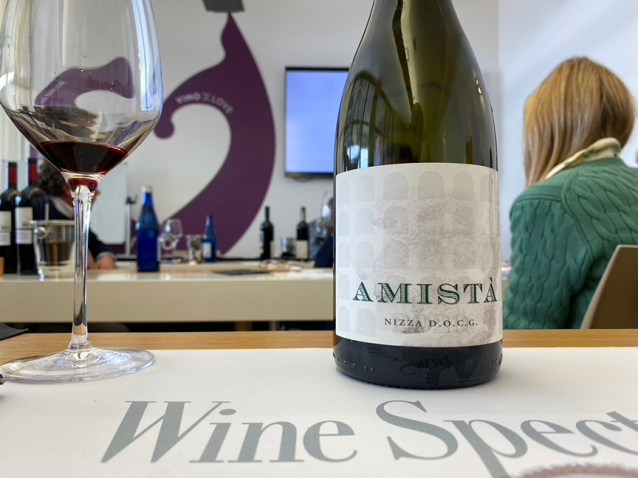
On the second day of my Vinitaly (our annual trade fair in Verona), I had the immense fortune to attend a small seminar led by Bruce Sanderson, senior editor for Italy. He had invited the top producers of the new Nizza DOCG to bring their wines for an informal gathering.
“I’m here to learn more about Nizza,” Bruce told the group. “I want you to teach me.”
It was a remarkable event and a dream flight of the appellation’s best wines (I was there with my client Amistà).
Bruce and his colleague Alison Napjus, also a senior editor for Italy, have been doing these “meet, greet, and taste” sessions since 2011, Bruce told me. It’s just one of the ways that he and his colleagues engage directly with Italian producers.
“We want them to get to know us, too,” he said.
Bravo Wine Spectator! Thank you for everything you have done and continue to do for the world of Italian wine. You’ve taken wine writing from an ivory tower and brought it down to earth where those growers raise those grapes. The community of wine professionals — on both sides of the Atlantic — is only the better for it.
 Days at Vinitaly, the annual Italian wine trade fair in Verona, can be so packed with meetings, impromptu and planned, that you don’t get the opportunity to taste all the wines you had hoped.
 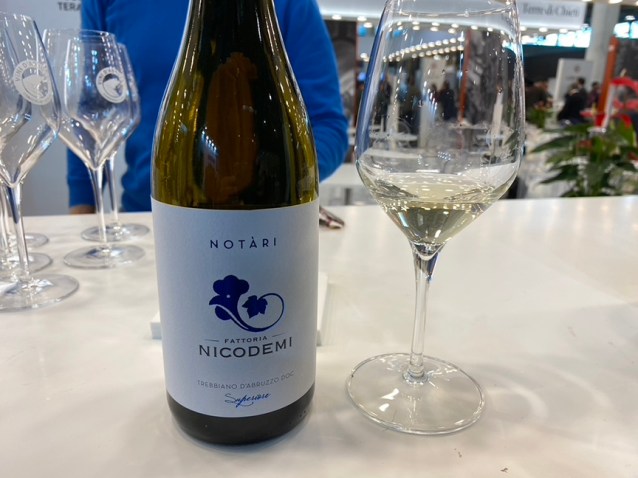 My pervagations also led me to the Abruzzo pavilion where Elena Nicodemi of the Nicodemi farm in Colline Teramane poured me her super Trebbiano d’Abruzzo.
 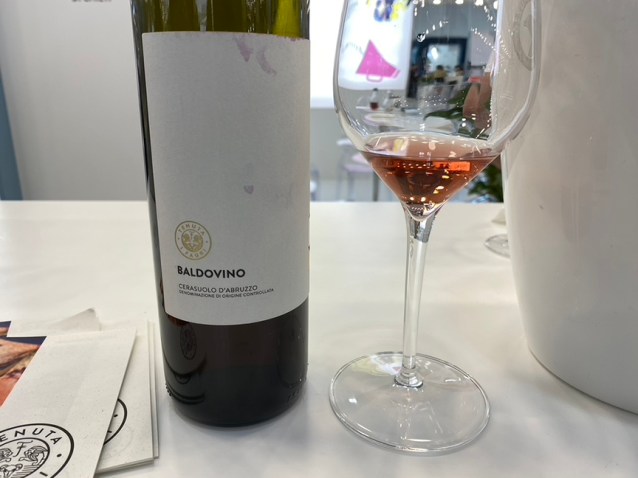 Valentina Di Camillo of the Tenuta I Fauri has become a friend thanks to our shared interest in classical music. She is an accomplished and superbly talented concert pianist. She’s also an extraordinary winemaker.
 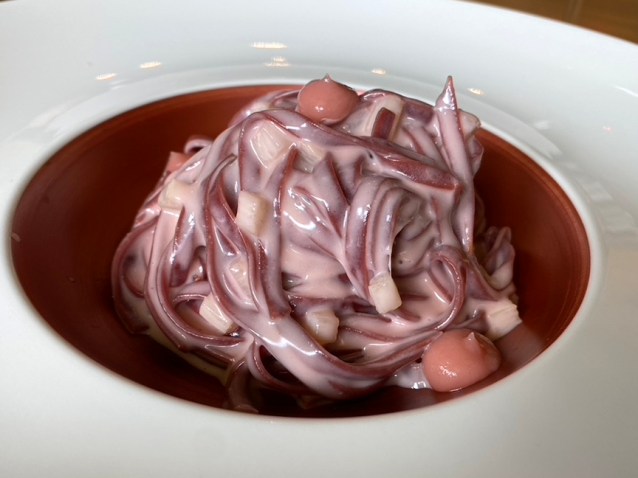 Favorite restaurants are always a long-term commitment, kind of like a romantic relationship. Sometime the rapport is fiery and passion-driven. Sometimes the flame is diminished by the patina of time. But when you really love a restaurant, the rewards of your undying devotion can really pay off.
  The grilled octopus was another standout at our lunch.
  That’s the amuse bouche.
 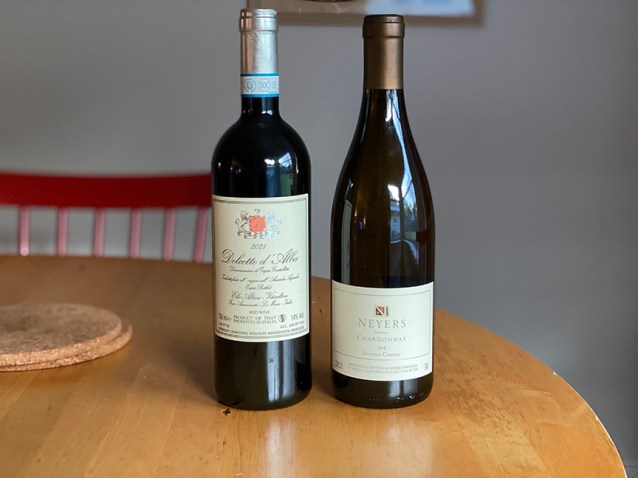 One of the things that we love the most about being “wine” people is checking in on new vintages from favorite producers that we have followed over time.
  That’s Serena Gusmeri with me in the photo at Operawine week before last in Verona. She’s the winemaker behind Vecchie Terre di Montefili in Panzano in the heart of Chianti Classico.
 As the young woman introduced him, her voice bubbled over with the joy of presenting one of her idols.
  My Vinitaly began not in Verona but in Turin, the capital of Piedmont and former capital of Italy, one of Italy’s most beautiful risorgimento cities, with the architecture and urban planning befitting a world touchstone.
 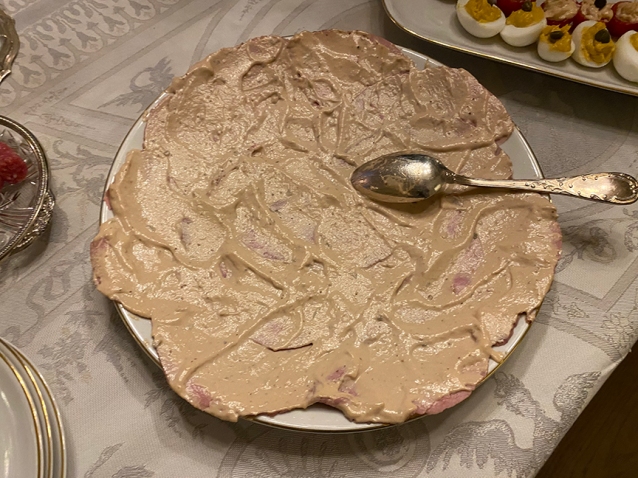 There’s really nothing quite like vitello tonnato when it’s homemade. Thinly sliced veal topped with a sauce made of anchovies, capers, and olive oil-cured tuna. It’s a Jewish boy’s dream.
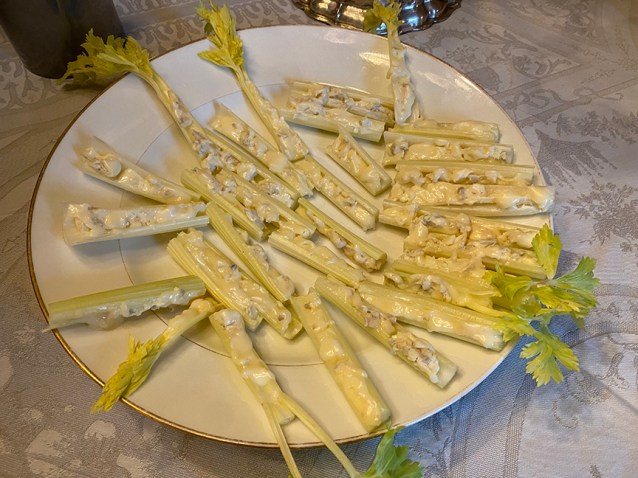 These stalks of Apium graveolens were slathered with creamy gorgonzola. Please try this at home.
 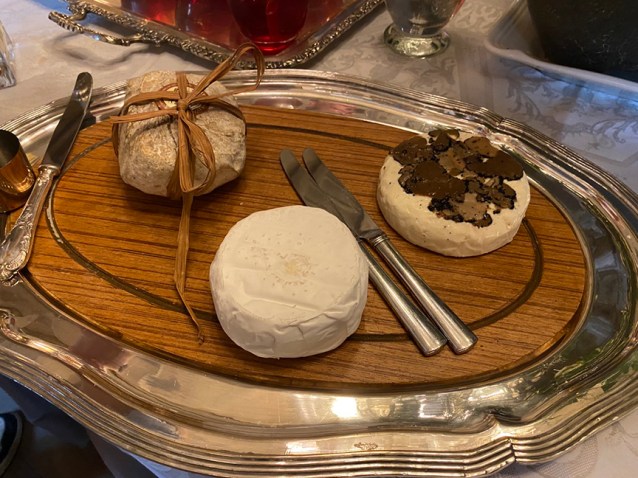 No self-respecting torinese host would end a meal sans fromage. After all, the region is renowned for its pastures, breeds, and traditions.
 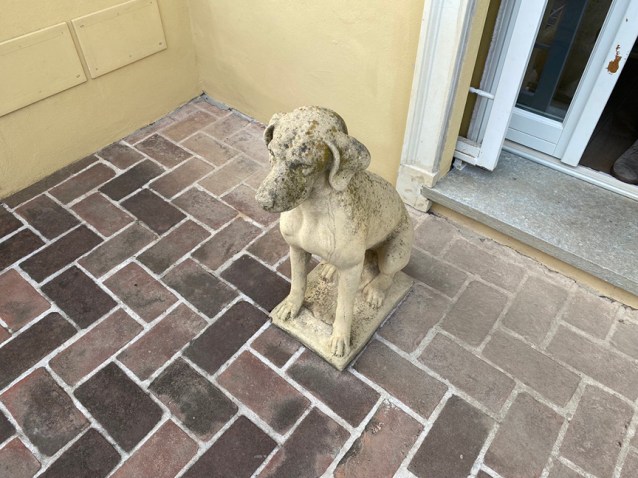 I wish I could reveal more about our host and the reason we were gathered there in the days leading up to the fair.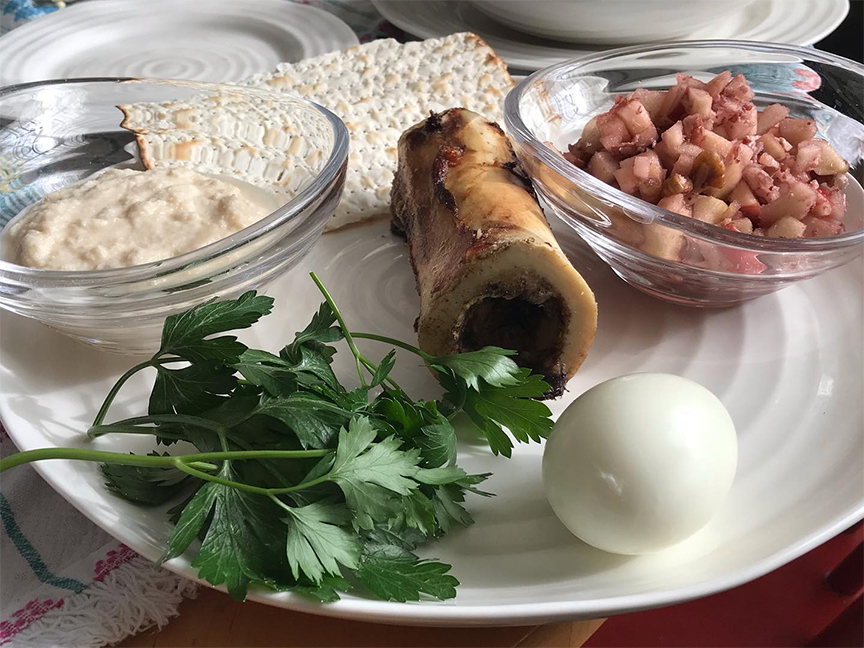
 Dateline Brescia.
 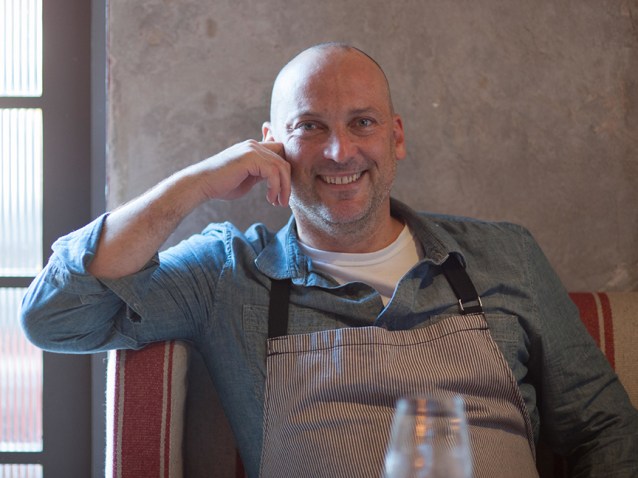 One of the best chapters of my career spanned the seven years that I worked with Chef Steve Samson (above) in Los Angeles.
  Do Bianchi