
1983 Verduzzo di Cialla unbelievable @Hawk_WakaWaka #cof2012
From the department of “dreams do come true”…
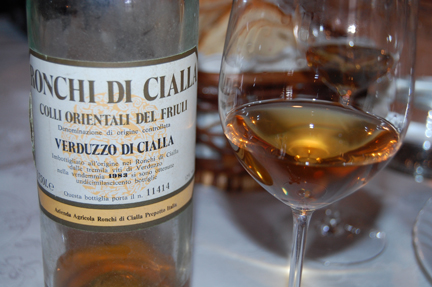
Check out this post by Hawk Wakawaka on on our visit yesterday to Ronchi di Cialla, one of my all-time favorite wineries…
Speed dating in Friuli (my highlight wine from this morning’s tasting) #cof2012
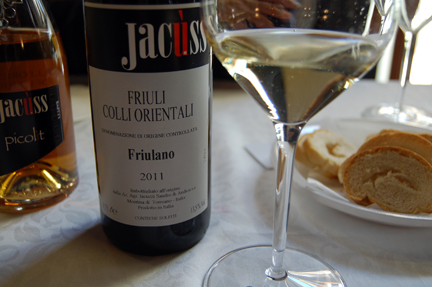
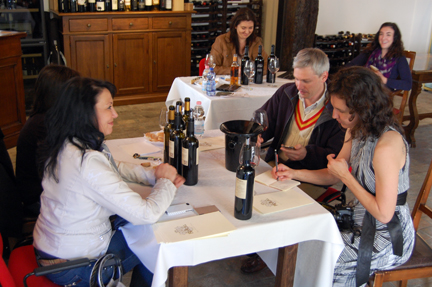
For this year’s COF2012 blogger project, we’re employing a “speed dating” format for the morning tastings so that more producers can have direct contact with the bloggers.
My highlight in this morning’s session was the 2011 (Tocai) Friulano by Jacùss. Even though the wine’s only been in bottle for a few days, I loved its classic, elegant aromatic character and its clean, super fresh nose. White and slightly under-ripe fruit in the mouth, zinging acidity, and delicate yet confident weight. #CouldDrinkThisWineEveryDay
Water rationing in Friuli #COF2012
“Friuli-Venezia Giulia to ration water,” read the headline of the Friuli-Venezia Giulia regional edition of the Italian national daily Il Messaggero on Saturday when I arrived in the region (see below).
“It hasn’t rained for months,” said winemaker Germano Zorzettig when he and I sat down to chat after the COF2012 bloggers went to bed last night (we’re all staying at his gorgeous Corte San Biagio agriturismo in Corno di Rosazza (province of Udine). “We haven’t seen anything like this in years.”
Rain is expected (and hoped for) here on Tuesday but the situation is weighing heavily on grape growers and winemakers here (and throughout Italy).
With the early arrival of warm temperatures, flowers are beginning to bloom and the vegetative cycle of the vines has already been set into motion. The current drought, combined with fears of an late spring frost that could stymie the vegetative cycle (with disastrous results), is causing a loss of sleep among the Friulian winery owners that we’ve spoken to so far.
Fingers crossed for rain on Tuesday! We’ll be here…
Click image below for PDF version.

#COF2012 has begun!

The 2012 Colli Orientali Blogger Project has begun!
Please follow along over at the COF2012.com blog and/or keep up with updates by following #COF2012 over on the Twitter…
Got frico? Come and get it!

Valter Scarbolo’s Frasca, a Friulian sine qua non
Valter Scarbolo makes wines in Grave and so there was no way for me to include him in the Colli Orientali del Friuli 2012 blogger project itinerary. But there was no way that I was coming to Friuli without spending an evening with him at his amazing Frasca. I’ll have to recount our conversation on Pinot Grigio and his 1995 trip — his first — to the U.S. in another post when I have more time. In the meantime, here’s what we ate…
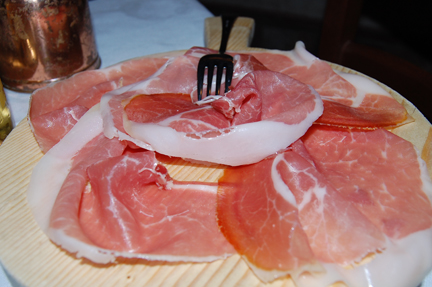
As James Bond would say, “if it’s Prosciutto d’Osvaldo, you must have been expecting me.”
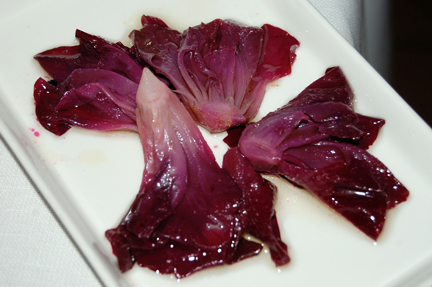
Rosa di Gorizia (Rose of Gorizia), a radicchio cultivar unique to Gorizia that resembles a rose.
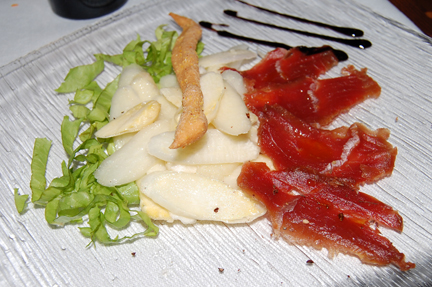
White asparagus is in season. Valter served it raw, thinly sliced, dressed with extra-virgin olive oil and accompanied by delicately marinated goose breast. “It had to be extremely fresh,” he said, “to serve it raw like this.”
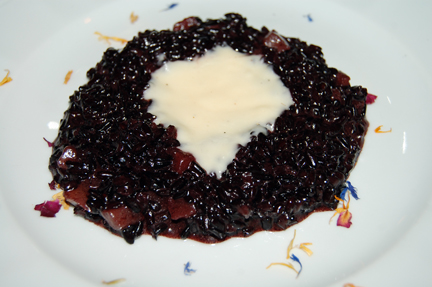
Riso nero Venere (black Venus rice) is a hybrid of Asian and Italian cultivars and, besides being delicious, is purported to have health-enhancing properties. Valter makes his with formadi frant, the truly unique, piquant cheese made from discarded and otherwise imperfect cheese — an ingredient that appears repeatedly in his cooking.
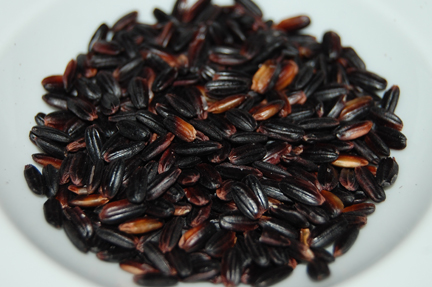
I asked Valter to show me the rice uncooked.
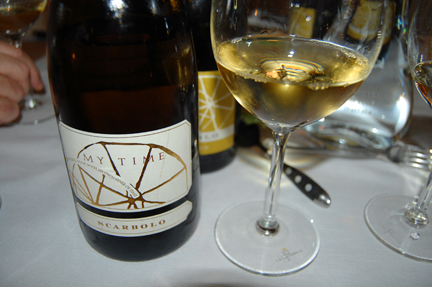
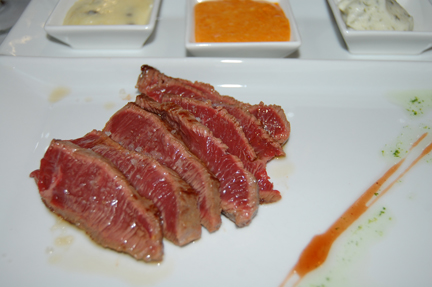
His My Time is always a treat to look forward to. The 2009 was unctuous and richer than previous vintages I’d tasted. And while it will undoubtedly become more elegant with some bottle age, its more muscular expression paired well with blood-rare pan-roasted and thinly sliced Prussian rumpsteak served with herbed formadi frant and montasio cheeses.
I’m posting this from the Colli Orientali del Friuli where the COF2012 trip has just begun… Stay tuned!
Gastronomy as intellectual provocation or “dinner with friends in Siena” (Osteria Le Logge)
Alfonso and I met up in Siena yesterday afternoon and joined good friends Laura and Francesco at Laura’s restaurant Osteria Le Logge for dinner.
As I prepare to head up to Friuli today, there’s not enough time to post properly on the brilliant meal and stunning flight of wines. But here’s a “taste” of the “intellectual provocation”… THANK YOU, again, dear friends, Laura and Francesco, for opening your hearts to two weary Americans traveling along the wine trail in Italy…
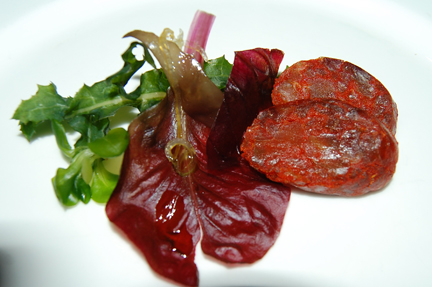
Atlantic croaker sausage with mineral-water-macerated lettuces sous-vide
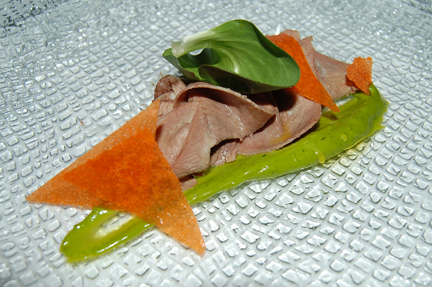
veal tongue Carpaccio in salsa verde
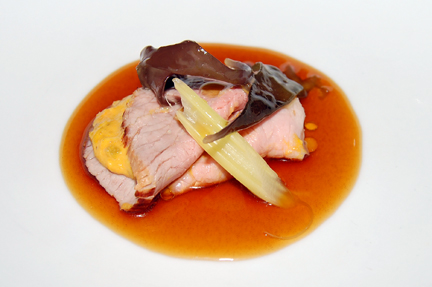
vitello tonnato with seaweed and ポン酢醤油 (ponzu jōyu)
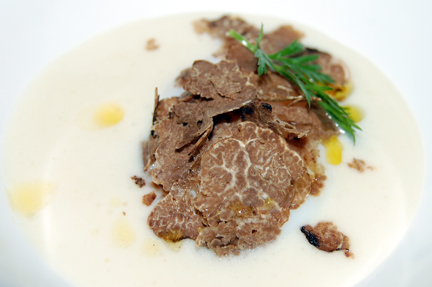
Parisi egg with potato foam and marzolino truffles
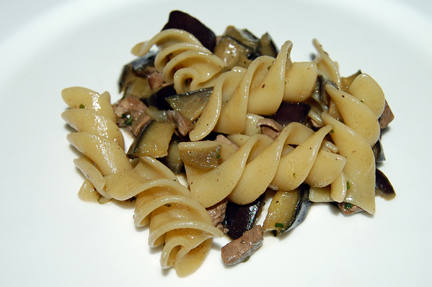
fusilli with chicken livers and eggplant
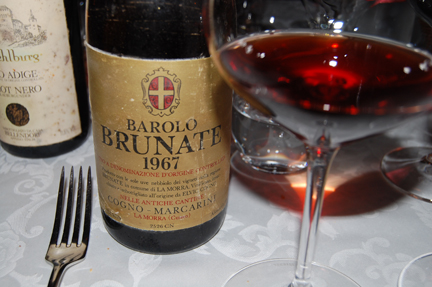
Marcarini 1967 Barolo Brunate
Le mie femminucce

Antica Macelleria (Dario) Cecchini, Panzano in Chianti
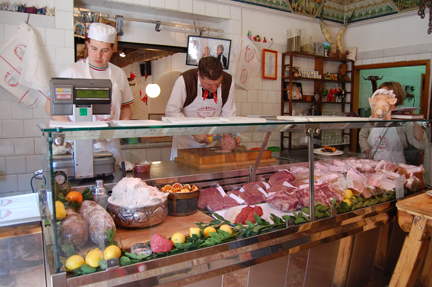
After another meeting this morning, I headed to the village of Panzano in Chianti to pay a visit to famed Tuscan butcher Dario Cecchini.

If you arrive at lunchtime (as I did), they hand you a little glass of red wine and offer you a small slice of bread topped with a spalmata (a schmear) of his spiced lard.

Note his signature boneless Panzanese steaks in the center of the case.
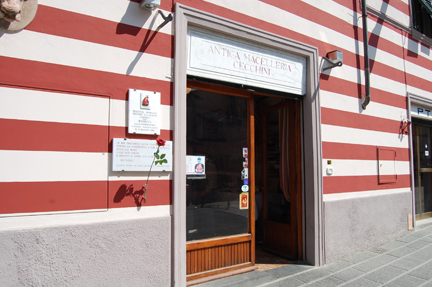
As fabu and glam as Dario is, his place is all old school, all the way.
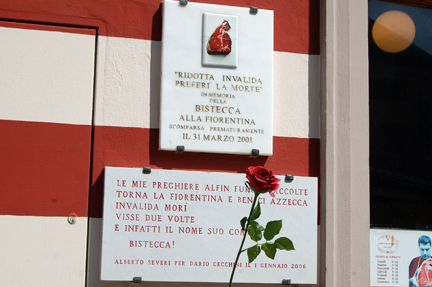
Dario — a poet butcher — famously sang the death of the bistecca alla fiorentina back in 2001 when it was banned at the peak of Mad Cow pandemonium.
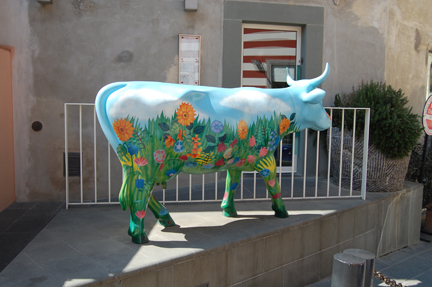
Across the street.
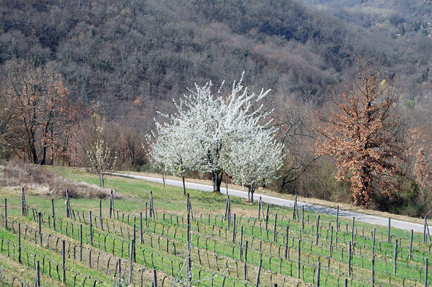
Springtime has come early to Tuscany, not a good sign for the vintage, especially with fears of drought running high this year. When I was out walking in the vineyards, you could hear the insects buzzing and there were lizards everywhere.
April is the cruellest month, breeding
Lilacs out of the dead land, mixing
Memory and desire, stirring
Dull roots with spring rain…
An American in Brescia and “una fiera di merda”

Above: A repast of hard-boiled eggs, piada (savory Lombard flatbread, akin to Emilia’s piadina), housemade gardiniera, and “peperoni bresciani,” brined “peperoni lombardi” that have been tossed with extra-virgin olive oil and freshly grated Grana Padano.
It’s not easy to describe the utter fatigue that comes with Vinitaly — for the exhibitors and fair-goers alike. For folks like me and Alfonso (who’s been coming to the Italian wine trade fair for 30+ years), you make the trans-Atlantic journey and then you hit the ground running as you attempt to fit in as many meetings and tastings as possible from early in the morning through dinner and beyond.
On the eve of the last day of the fair, I headed with my good friend Giovanni (who showed his wines at the fair) to Brescia, where we decompressed over dinner at the Trattoria Gasparo and later back at Giovanni’s place with a bottle of Camossi Franciacorta (vinified and disgorged by him) paired with Francis Lai and Truffaut.
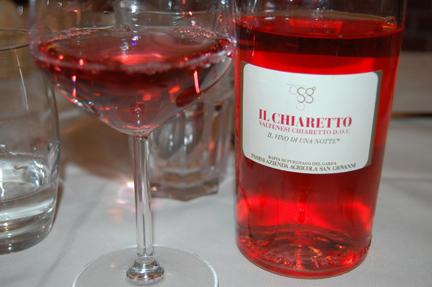
Above: Valtènesi (Garda) Chiaretto was one of the last DOCs to be approved by Italian authorities before the EU’s CMO reforms of the Italian appellation system went into effect. At dinner we drank Giovanni’s brother-in-law Luca Pasini’s Chiaretto, made primarily with Groppello and macerated with skin contact for “one night,” hence the wine’s subtitle, “vino di una notte.”
According to a press release issued by the fair’s organizer VeronaFiere, “Vinitaly won its gamble and earned the satisfaction of exhibitors, with an increase of professional visitors from abroad and especially from the Italian horeca (hotel/restaurant/catering) channel.”
There may be strength in record numbers but the truth is that the execution of the fair was thoroughly disastrous.
On Sunday and Monday, when attendance hit its peak, a mishap with the wifi network at the fair caused fair-goers to lose all cellular service. As a result, you couldn’t call, text, or message in any format.
And because, once again, the organizers failed to address parking and congestion issues, fair-goers and exhibitors spent up to 1.5 hours every night just trying to leave the grounds.
Nearly every producer I visited with told me privately, è stata una fiera di merda (it’s been a shitty fair).
But despite the logistical challenges, my personal Vinitaly was rewarding and I have many tales to tell.
And, thankfully, the aches and weariness of an American in Brescia were soothed by the bubbles and saltiness of Giovanni’s Franciacorta and a tune from the year that Vinitaly and I were born…
Today I’m in Tuscany for a few meetings and Saturday I head to Friuli for the COF2012 blogger project. Stay tuned…

