Amphora-aged Cerasuolo d’Abruzzo, almost as good as sex cc @SottoLA

“Just one look…”

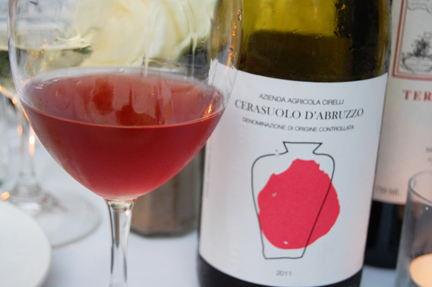
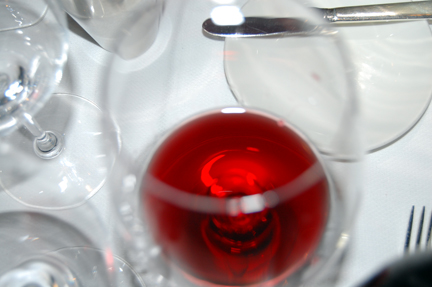
There are certain wines that seduce you from first glance. Their color and visual texture alone are enough to make you horny.

Such was the case yesterday early evening when I opened a bottle of Francesco Cirelli’s amphora-aged Cerasuolo d’Abruzzo for some of our best friends. I’ll never forget the moment when I poured it into the glass and the whole table collectively sighed…

Beyond its hue, Francesco’s wine achieves a benchmark balance of savory and sweet and its mouthfeel and finish are toe-curling.

It could possibly be my favorite wine for 2012, almost as good as sex.

Earlier this year, I asked Francesco to pose for my video camera and pronounce Cerasuolo d’Abruzzo for the Italian Grape Name and Appellation Pronunciation Project (see below). And I’m extremely proud and thrilled that we will be debuting the wine this week on my fall list at Sotto in Los Angeles (I’ll be at the restaurant tonight and tomorrow).

Cultural entrepreneurship on the rise among Italian winemakers

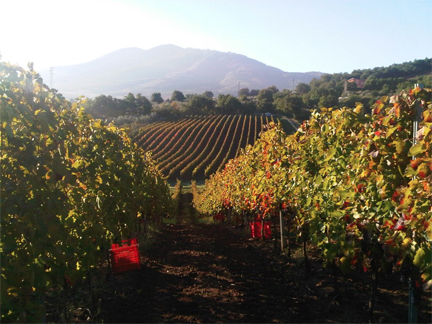
A photo of Vigne del Vulture’s vineyards in Aglianico del Vulture, taken September 20. Image via Gabriele Ladislao Moccia’s Facebook.

While Tracie P, Georgia P, and I were in Melfi (Basilicata) a few weeks ago, we had the chance to meet and taste with a young producer, Gabriele Ladislao Moccia. His winery, Vigne del Vulture, is new on the scene: a native of Vulture and purveyor of fine food products, Gabriele has been using his contacts in the nordic countries to distribute his wines with great success.

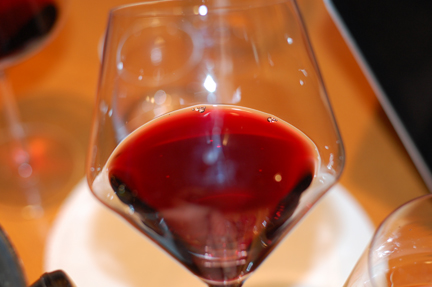
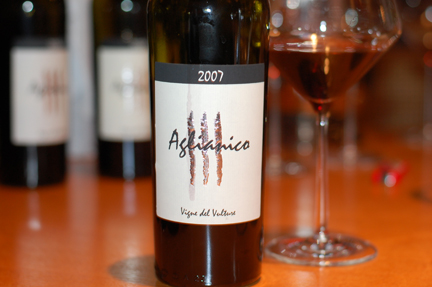
Above: I wouldn’t call Gabriele’s wines classic in style but they are a true expression of the grape variety. Note the dark color and transparency of his 2007, which I liked a lot.

His wines aren’t yet available in the U.S. but I wanted to write a note about them because I believe that Gabriele represents a new trend of young Italian entrepreneurs who recognize the value of authenticity in their wines.

Vigne del Vulture’s wines are a little rough around the edges and they still need to come into focus. But I was impressed by Gabriele’s resolve to make wines that truly reflect the appellation.

A generation ago, many Italian winemakers set out to make wines for the American market: if you follow along here at Do Bianchi, you’ve seen my reportage on wine industry greats like Ezio Rivella who have declared — very publicly — that they were “deliberately adopting a California style.”

Above: I thought that Gabriele’s 2007 showed the best in the flight we tasted. It tended toward modernity but didn’t ever lose its continuity with true varietal expression and the appellation.

As we traveled through Italy on this last trip, I found more and more signs of a new generation of young Italians who are looking to enter the U.S. market with wines that reflect their local traditions, even if they do lean toward modernity.

Of all the winemakers we visited, Gabriele was one of a score of thirty-somethings who embrace authenticity (if not tradition) in their approach to their products.

This trend is the opposite of the generation that came before them. Perhaps they take their inspiration more from a renewed sense of identity and purpose than from old man Mondavi and the Napa Valley revolution.

I liked Gabriele a lot and I’m looking forward to tasting the new releases next year when they arrive.

What wine didn’t Romney drink in Boca Raton?

Click here to read my thoughts on what wine Romney didn’t drink in Boca Raton over at the Houston Press.

@SottoLA new list this week (Aglianico on my mind)

One of the reasons that Tracie P, Georgia P, and I were so geeked to get to Melfi (Basilicata) on our recent trip to Italy and to visit Vulture where Aglianico del Vulture is made is that I have Aglianico del Vulture on my mind.

This week at Sotto in Los Angeles (where I curate the wine list together with my bro Rory Harrington), we’ll be launching our Fall 2012 list, including — what I hope will be — the largest selection of Aglianico del Vulture in the U.S.

That’s Mt. Vulture in the photo above, btw.

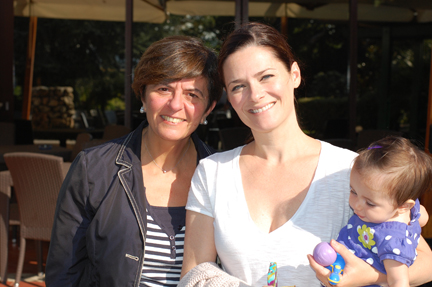
Another reason I was excited to get to Melfi and Vulture was that I was looking forward to seeing my dear, dear friend Filena Ruppi (in the photo above, left, with Tracie P and Georgia P).

Filena and her husband Donato d’Angelo make some of my favorite Aglianico del Vulture and Donato is considered by many to be the “father of Aglianico del Vulture.”

(BTW, if you’re having trouble pronouncing Aglianico del Vulture, click here to hear my good friend and Aglianico del Vulture producer Sara Carbone say it for my camera.)

I’m very proud that we will be featuring Filena and Donato’s wine on our new list. They’ve had some trademark problems lately (a tragedy, really) and I’ll address what happened in a future post. But in the meantime, I’m thrilled to be able to share the wine with our guests at Sotto (and I’m thrilled to get to drink it myself). It’s fantastic…

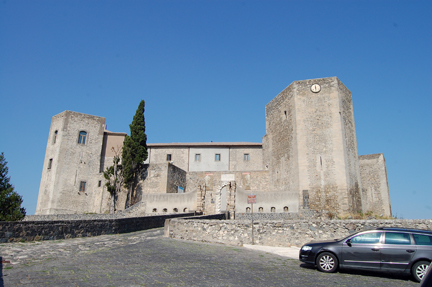
That’s the Castello di Melfi, above.

I’ll be at the restaurant on Wednesday and Thursday nights this week. If you’re in town, please stop by and I’ll pour you some Aglianico del Vulture and tell you about our visit. Sara Carbone’s wine isn’t in yet but it should be in time for my visit in November when I’ll also be hosting a dinner with Frank Cornelissen and Lou Amdur.

urban botanical milan #milanobotanica @LinariaRete @SpigaSt cc @TerraUomoCielo

Those of us who work in the wine business rarely go to Milan. But I try to go every chance I get: not only is Milan where many of my friends from Padua university days live and work (in the publishing industry), it’s also one of the most thrilling European cultural capitals, one of the best places in Italy to eat seafood (surprising but true), and now the subject of a microblog devoted to the city as botanical garden.

The author and curator is one of my oldest and dearest friends in Italy, Stefano Spigariol.

You can follow the microblog via #MilanoBotanica or by visiting the Facebook of Linaria, a Milanese publisher and non-profit environmental activist group.

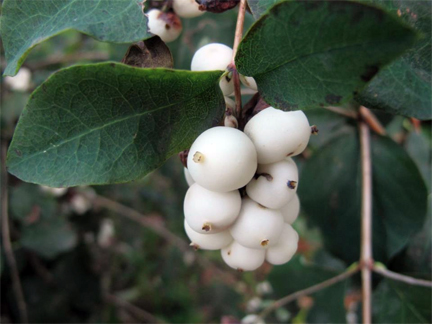
Those are snowberries (Symphoricarpos albus) in the photo above. And the map that will lead you to them below…

Here are some hedge-apples (Maclura pomifera)…

And here’s the map…

The wonderful project has received a lot of attention from both literary and gardening circles in Italy.

What fascinates me about it is how it speaks to a theme that pervades the twentieth-century Italian narrative: the natural alienation (estrangement) of citizens who migrate from rural areas to major urban centers.

While I grew up in a big city and have lived in big cities all of my life, many of my Italian friends — like Stefano — left small towns in rural areas to study in major metropoles. Stefano’s taxonomic “discovery” of urban botanical Milan represents a subversion of such alienation, however fleeting.

It’s a great project and I’m looking forward to following along…

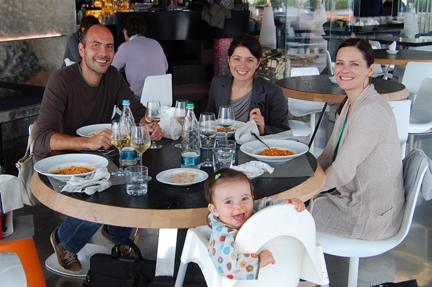
happy babies in Italy at restaurants

Earlier this week, my song-writing partner, who was visiting us in Austin, treated Tracie P, Georgia P, and me to dinner at one of the River City’s most swank and high-profile restaurants.

The food was great as always (if you know the Austin dining scene, you are familiar with the restaurant); the waitstaff sharp, precise, professional, polite, and highly informed; and the wines by-the-glass and sake by-the-glass selection excellent.

There was just one thing missing: the boundless warmth and affection that Georgia P had become accustomed to during our trip to Italy.

No, there were no rolled eyes or mumbled editorials. The staff at said restaurant was professional and thoroughly courteous.

But we couldn’t help but notice that Georgia P was disappointed when she wasn’t greeted with the shower of attention that she received at every restaurant where we dined in Italy.

I took the photo above at the restaurant Lab 52 (no website) on the famous Rotonda a Mare in Senigallia (Ancona), where we shared a meal with our new friends Alessandro (left) and Silvia from the Pievalta winery in nearby Jesi.

One of the highlights of the meal, btw, was crescia, the classic savory flatbread of the Marches (Le Marche) topped with Prosciutto di Carpegna.

Traveling in Italy as a parent was a new and thrilling experience — in many ways.

But the best part was watching Georgia P light up as restaurateurs and patrons made a fuss over her and competed for the reward of her sweet laughter and smiles.

Just look at her face in the photo at the top of this post! You can see how much she enjoyed sitting at the table with us (and, of course, we enjoyed it more, too, because we were never worried that we were disturbing our hosts or fellow patrons, save for a few grouchy Germans)…

In the post-Berlusconi age, Italy and Italians face a number of challenges — some of them touching the very heart of their identity.

But there are some things that, happily, remain unchanged there. Like the pure, unmitigated joy of watching a baby slurp up long noodles tossed with clams and tomato sauce.

For all the obstacles that lie ahead — in Europe and here at home — I, for one, thank goodness for happy babies in Italy at restaurants…

Buon weekend, yall!

The beauty of Sangiovese in Morellino di Scansano

New York-based and Italocentric wine industry publicist Susannah Gold and Morellino di Scansano growers association president Giacomo Pondini led a tasting of seven expressions of Morellino di Scansano yesterday afternoon at Tony’s in Houston. Here are my highlights from the luncheon event.

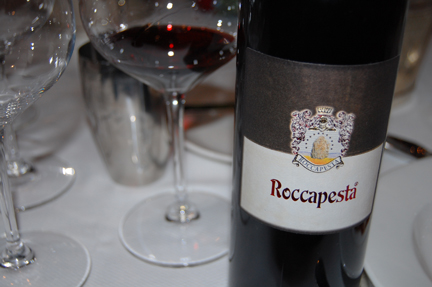
According to its back label, the 2010 Morellino di Scansano by Roccapesta is mostly Sangiovese (Morellino) with a small amount of Ciliegiolo.

I loved the wine (look at the color!). From what Giacomo told me, its a newish winery launched by a Milanese entrepreneur who recently acquired an estate in Scansano. The aging is large cask and cement (music to my ears), he said.

It wasn’t my favorite in the flight (see below), lacking the focus it needs to achieve true greatness. But Roccapesta clearly has the right stuff: the materia prima is there and the attitude and approach are 100% right on. I’m really looking forward to following this winery and winemaker as they evolve.

If you’re pouring Roccapesta, please call me!

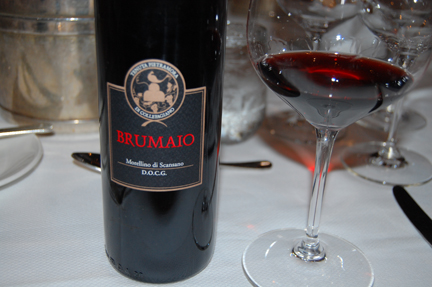
The 2010 Morellino di Scansano Brumaio by Pietramora is 100% Sangiovese and 150% awesome and delicious, one of the best expressions of Morellino that I’ve tasted in recent memory.

Just cast your gaze upon the gorgeous color of this wine!

It really captured what — to me — is the essence of Morellino: extreme freshness and dark berry fruit combined with a gentle gamey quality that evokes the maquisla macchia — of the Maremma.

I can only wonder if the proprietary name of the wine, Brumaio, is an oblique reference to Napoleon, who spent his last years in exile on the island of Elba off the Tuscan coast.

Brumaio, from the Latin bruma, is an ancient word for the winter solstice. But it’s also the name, brumaire in French, of the second month of autumn in the French Republican calendar.

Of course, it could also be an allusion to Karl Marx’s Eighteenth Brumaire of Louis Napoleon.

But I digress…

It probably refers to the bruma (also called brumaio), the morning mist that covers the vineyards of Maremma in the fall as the grapes ripen.

Thanks again, Susannah and Giacomo, for bringing some great Morellino to Texas and for any excuse to revisit one of the greatest works by Marx!

Tufo (tufa) vs. calcareous, expressions of limestone in Italy

Above: Samples of tufaceous (left) and calcareous (right) subsoils from Jesi. Click the image for a high-resolution version.

One of the most exciting winery visits on our recent trip to Italy was with winemakers Alessandro Fenino and Silvia Loschi at the Pievalta winery in the heart of the Castelli di Jesi.

The roughly ten-year-old winery is the first and only Demeter-certified winery in Jesi and the wines are truly stunning in their ability to deliver bright, balanced acidity with a breath-taking range of fruit and minerality.

We loved the wines and we loved Alessandro and Siliva, with whom we became fast friends (more on them later).

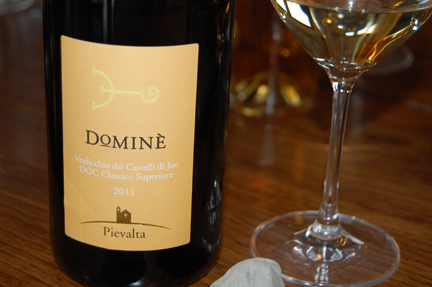
Above: My favorite wine was the entry-level Dominè (named after a local tavern keeper), made from grapes grown in calcareous soils. It was lighter in body and fresher than the more structured San Paolo Riserva, Tracie P’s favorite, grown partly in tufaceous soils, more tannic and unctuous and deeper in its minerality. Both wines were superb.

When you taste the wines with Alessandro and Silvia, Alessandro produces soil samples from their growing sites. I can’t think of a better way to illustrate the differences than the photo I snapped above and in the different expressions of Verdicchio that they bottle. (PLEASE FEEL FREE to grab the high-resolution version of the photo by clicking the image above and post it wherever you like.)

Not to be confused with Loire valley’s tuffeau (according to the Oxford Companion to Wine; in French, the Italian tufo is rendered as tufe or tuffe), “calcareous tufa [or tufo is] ‘a porous or vesicular carbonate of lime, generally deposited near the sources and along the courses of calcareous springs’ (Page Handbk. Geol. Terms, 1865),” according to the Oxford English Dictionary.

Calcareous, on the other hand, comes from calcaire, “French word for limestone, a rock largely made up of calcium carbonate, which may in English be described as calcareous” (Oxford Companion to Wine).

Central and southern Italy are rich in tufo. You’ll find tufo covering the Piazza del Campo of Siena when the Palio is run. Many believe that Tuscan tufo is what gives Vernaccia di San Gimignano its distinctive minerality.

Of course, there’s also the famous (however tiny) village of Tufo in Campania, where Greco di Tufo is grown in tufaceous subsoils.

And these are just a few of the examples of how limestone expresses itself through tufo in Italy.

Note how the tufo in the photo above is friable. You can see the dust it produce just by being handled, however gently. It’s one of the subsoil categories that makes Italy such a unique place to raise wine.

happy new year…

From Brooklyn (above), to Austin, to La Jolla, Tracie P, Georgia P, and I wish you a happy and healthy new year!

Let’s hope it’s a good one, without any fear…

I’ll see you in a few days…

50 Best Italian Wines (?)

It would be pleonastic for me to address the myriad reasons why “top” lists — 10, 50, 100, the number doesn’t matter — are inherently useless in any putatively empirical assessment of wine.

Such indices, even when presented as genuine and well intentioned, serve only the purposes of marketers, advertisers, sellers of advertising space, and those whose lives are driven by a desire to maximize consumer goods.

And just like a schoolchild who aimlessly believes that highlighting a passage in Manzoni’s The Betrothed with a yellow pen will aid her/him in a mnemonic quest, authors of such lists inadvertently delete scores of wines from their ledgers the way said child quickly forgets the unhighlighted passages — not seeing the forest for the trees.

Today the world of Italian wine is reeling from the publication of an Italian-grown “Best Italian Wine Awards,” presented yesterday in Milan by the organizers (click here for a blog post depicting the scene).

The list, which can be viewed here, surprised many Italian observers of the Italian wine industry and I believe it may surprise you as well.

Among the Italian wine bloggers I follow, no one protested Valentini and G. Mascarello in pole position.

But some were puzzled by some glaring omissions, like top Italian wine blogger Franco Ziliani who noted the absence of any of Angelo Gaja’s wines. Now, if you follow Franco’s excellent blog, you know that he’s no fan of Angelo Gaja’s wines. But as he points out (rightly), this could only be considered an “eccentric” oversight.

And beyond Gaja, there are many others missing and many bizarre entries.

With academic interest and for the record, I point you to the list here.

Otherwise devoid of cultural, societal, intellectual, or epistemological value, the list does represent a cross-section of marketing forces in Italy today (as do the “prize” selections).