From the department of “good girls go to heaven and bad girls go to Italy”…
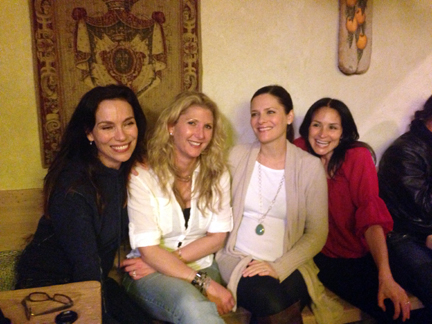
Just had to share this photo, sent by one of my best friends, of the “band wives” on the night of the first of two shows that my band “the Americani” played earlier this month in the village of Cison di Valmarino in the province of Treviso (Veneto).
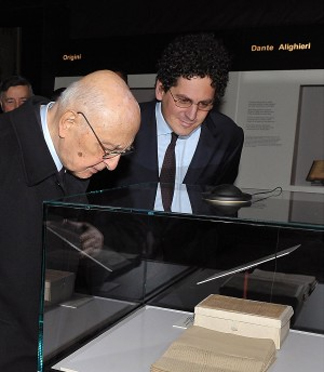
Above: Hamilton 90, the Boccaccio “autograph” manuscript, from the Staatsbibliothek in Berlin. Image via Quirinale.it.
In the world of rare books (a world I used to inhabit in my academic days, when I studied and wrote about Italian incunabula and humanist amanuenses), most “special collection” libraries observe the same protocol when two scholars request the same manuscript or codex on the same day: the librarians give the manuscript to neither.
One of the most notorious anecdotes from my days as a student of scribes was that of two illustrious Italian professors — one Italian, one American — who competed to discover the earliest autographed redaction of Boccaccio’s Decameron, in other words, his first “authorized” version of the work, transcribed in his own hand (a holy grail among philologists and paleographers like myself).
When the one professor discovered that the other was headed to the library in Berlin to request a viewing of the vellum, he raced to arrive before his colleague and he swiftly put in a request to view it as well. As a result, the librarians gave it to neither that day.
Ultimately, the one professor stole the manuscript, took it to Rome, had it x-rayed, and became the first to prove its connection to the fourteenth-century author. He replaced the manuscript before anyone noticed.
Not long after, the other professor killed himself.
That’s a true story.
There’s a saying in academics, the competition is so fierce and the enmity so ferocious because the stakes are so low.
One of the ugliest episodes in the history of oenography has been playing out over recent months, with Montalcino as its backdrop.
If you haven’t been following along, the Brunello consortium announced last week that it was expelling and suing one of its members for defamation. (Here’s a link to my post on the legal action; it includes links to my reporting of events that led up to the consortium’s move).
December 2012: Soldera’s winery is vandalized; six vintages purportedly destroyed.
December 2012: Consortium offers to donate wine to Soldera winery out of solidarity.
March 2013: Soldera accuses consortium of encouraging him to commit fraud when offering to donate wine; announces he’s leaving consortium; announces that he’s recovered a good quantity of wine and that he plans to sell it.
If GramsciPasolini Marx were alive today, he surely see the situation in Montalcino as a text-book example of his theories.
In the 1950s and 60s, Montalcino was still an agrarian economy, with a few patrician families — like Biondi Santi — who served as stewards of its production of fine wine.
In the late 1960s, “big wine” arrived: American-based Banfi set up shop, not to produce Brunello but rather to produce sweet sparkling wine (Moscadello di Montalcino).
In the 1970s, Soldera, a rich Milanese insurance broker, who was unable to acquire property in Piedmont, bought land in Montalcino and started to produce fine wine.
By the 1980s, Banfi had shifted to the production of Brunello and helped to make Montalcino as a brand in the U.S. through high volume and aggressive marketing.
There were many other players in this equation but these two more than any other reshaped the way Brunello was perceived beyond Montalcino’s borders. And in doing so, they changed the way that the Montalcinesi viewed themselves.
On the one hand, Banfi opened up the world’s largest markets to Brunello. In the 1960s, there were only a handful of Brunello bottlers. Today, there are more than 250.
On the other hand, Soldera transformed Brunello into an extreme luxury product, delivering bottles that fetched astronomical sums.
Along the way of this dichotomy, Montalcino passed from de facto feudalism to full-throttle capitalism.
And the tension that has come to a head here is, in many ways, a dialectic held taut by a battle between agrarian and capitalist values, with indigenous growers on the one side and outsider financial interests on the other.
Add to this mix that Soldera is generally considered a carpet-bagger (he is) and that his cantankerous personality and his unbridled egotism have won him few friends there. After years and years of acerbic commentary (public and private) from Soldera, it was only natural that a situation like this would arise (many in Montalcino predicted something like this in 2008, when it was rumored that Soldera had sent a letter to authorities igniting the Brunello adulteration scandal).
Let’s face it (and it’s high time that someone wrote this): when news broke that Soldera’s winery had been vandalized, many observers of the Italian wine world (myself included) couldn’t help but think, to borrow a phrase from Lennon, instant karma’s gonna get you.
Was the consortium right to sue him? It’s not for me to say or pass judgment.
Most on the ground in Montalcino believe that his “resignation” stunt in March was a means to let the world know that he had miraculously recovered wine to sell.
No one can know for certain. But the consortium and its members had to do something. If they didn’t, they’d be allowing the “broker from Treviso,” as the consortium’s lawyer has called him, to exploit their brand in the service of his own personal agenda (this is how many in Montalcino view the situation).
Does any of this matter? Maybe to Marxists like me. The bottom line is that the renewed controversy has only helped to keep Montalcino in the news. And as any public relations veteran will tell you, all news — even bad news — is good news when it comes to raising awareness of your brand.
These political acrobatics (as the New York Times has called recent developments) are remarkable: Letta, center left, has emerged as “bridge builder” from a seemingly intractable deadlock, with the support of the most vitriolic opponents on either side of the aisle.
Only in Italy, some have said, shaking their heads (myself included).
But it’s all part of our my fascination with Italy and the enigmas of its greatness.
In the words of the great Harry Lime, “in Italy, for thirty years under the Borgias, they had warfare, terror, murder and bloodshed, but they produced Michelangelo, Leonardo da Vinci and the Renaissance. In Switzerland, they had brotherly love, they had five hundred years of democracy and peace — and what did that produce? The cuckoo clock.”
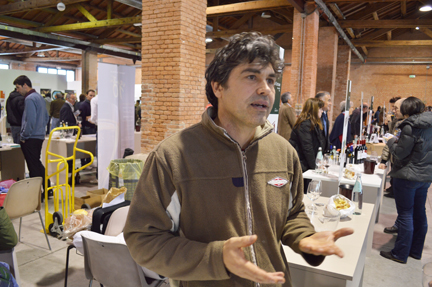
Above: While in Italy in early April, I tasted with my favorite producer of Gaglioppo, Francesco de Franco of ‘A Vita, at the Vini Veri gathering in Cerea. Next week I’ll post my notes from the fair.
After all, our friendship took shape over a glass of Garganega followed by a glass of Gaglioppo a few years ago in Brescia, Italy at the European Wine Blogger conference.
Since we launched our all-southern Italian wine list at Sotto in Los Angeles more than two years ago, my cohort Captain Wine and I have been preaching the virtues of Gaglioppo to our guests. We weren’t surprised that the 1997 Gaglioppo by Ippolito quickly became one of our top sellers.
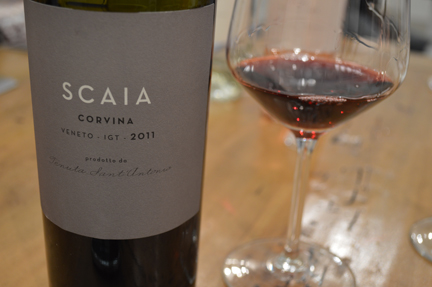
No, it was a wine that should retail for under $15 in the U.S.: a humble, fresh, bright and brilliant expression of Corvina by Tenuta Sant’Antonio (above, one of my favorite Valpolicella producers), vinified in a light, food-friendly quaffable style — the kind of wine you just can’t stop drinking.
Scaia is a dialectal term that appears in the western Veneto and in Lombardy. It denotes gravelly or pebbly, a reference to the diluvial subsoils commonly found in the ancient river valleys of the Valpolicella where this wine is grown and raised.
This wine POPPED!
I’ve been a fan of Tenuta Sant’Antonio since I first tasted the wines in New York back in the late 1990s.
The brothers who make the wines are farmers, children of farmers, and the wines they make stay true to the Valpolicella that I know and love.
Valpolicella is one of those appellations that’s been nearly eclipsed by commercialization. (Did you know that development in the township of Negrar, at the heart of Valpolicella, is so out of control that it has delivered a neologism to the Italian language, Negrarizzazione — Negrarization — meaning unbridled commercial development?)
So much of the Valpolicella and Amarone that floods the American market these days is over-extracted and over-laden with alcohol.
I’m so glad to see (and taste) that the Castagnedi brothers have stayed true to their roots and the great wines they’ve historically produced.
Thanks, again, to Master Sommelier Craig Collins for setting up our appointment at the winery’s Vinitaly stand.
From the department of “it’s a tough job but someone’s got to do it”…
The standout dish of Tony’s California Cult Wine dinner in Houston where I spoke on Tuesday night (yes, about California cult wines) was the above: poached sweetbreads that had been layered into a cylinder, breaded and fried, and then served atop a dollop of Oaxacan black mole.
Chef Grant Gordon obsessively sourced all the ingredients for the dish, which took him more than a week to prepare. He said the chiles chihualces were nearly impossible to find but was able to obtain after calling three stores in Mexico (two were sold out, he said).
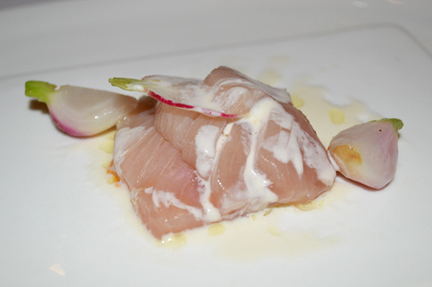
When you lifted the hamachi, you found uni underneath. So decadent, so good…
My first marzolino truffles of the year, served over wholewheat pasta with sorrel mushrooms. Superb dish…
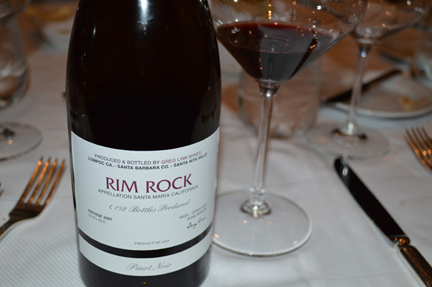
At 13.4% alcohol, I thought this Greg Linn Pinot Noir showed beautifully. Maybe not the earthiness I look for in old world Pinot Noir, but great acidity and wonderful balance. I liked it a lot.
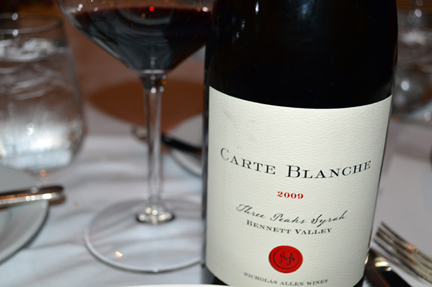
I was also really impressed by Carte Blanche Syrah by Nicholas Allen. It showed a lot of depth for California and I liked how it had been vinified in a lighter style, retaining all the hallmarks of Syrah but also delivering lovely foodfriendliness. It paired brilliantly with the roast lamb.
I can’t say that I would ever reach for any of the wines (and I certainly can’t afford them) but life could be worse…
I’m so lucky to be associated with my good friend Tony and his team (I curate their media and speak at the occasional wine dinner for them). They’re a world-class act…
From the department of “wish you were here” “wish I could be there”…
There’s a new wave of young Langarolo producers who have returned to the old “traditional” style of Nebbiolo (that I prefer): wholesome farming practices, minimal-intervention vinification, and large-cask aging.
Many of them are the children of Barolo’s marquee names. And many of them have diverted their families’ wineries from the path of modernism.
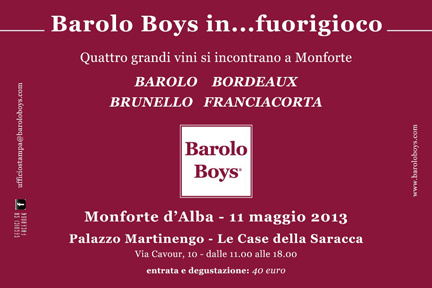
My close friend and Franciacorta winemaker Giovanni Arcari has curated a portfolio of some of his favorite producers in Franciacorta to be presented May 11 together with the Nebbiolo at a mother of all tastings in Monforte d’Alba.
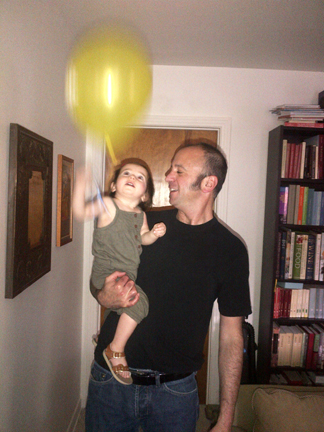
My home office is also my recording studio. And when my bandmates are in town and we’re working, writing, and recording, Georgia P LOVES to come visit with us in the studio…
One of the greatest joys of my life is sharing music with our daughter and living in a home filled with melody and rhythm…
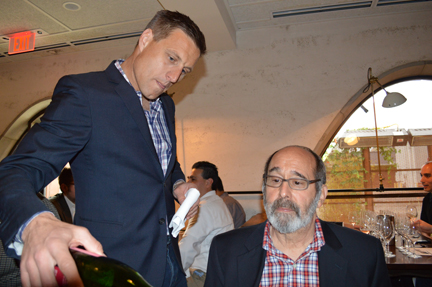
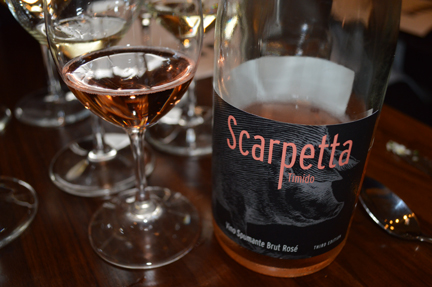
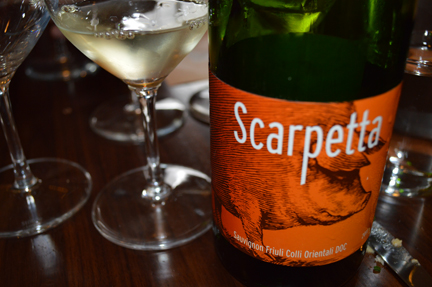
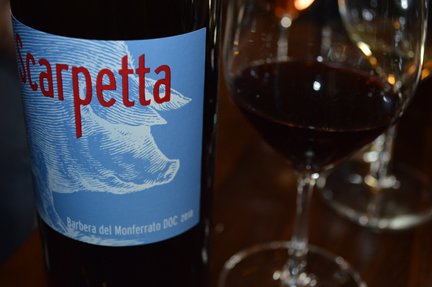
The two are visiting Texas, as they did last year, showing their Scarpetta line of wines.
I’m always geeked to taste and chat with Bobby, whose relationship with Italian wine is as much shaped by his boundless passion as by his encyclopedia knowledge and experience.
Among the many nuggets and insights he offered yesterday, he told the crowd of A-list Houston wine professionals that he believes “the world’s next Dagueneau will come from Friuli.”
When I asked whether he thought such a wine icon would emerge from the Colli Orientali del Friuli or Collio, he said the Colli Orientali had an advantage inasmuch as its slightly cooler climate more readily delivers higher acidity levels in the wine.









 Do Bianchi