
 Posting from the plane on my way to Los Angeles where we will be launching my new wine list at Sotto this week. I’m happy/sad to report that tomorrow night’s preview tasting at the restaurant is sold out.
But I will be at the restaurant all evening on Wednesday: please stop by and let’s drink some Schioppettino and Vitovska and munch on Chef Steve’s awesome Neapolitan-style pizza! Seriously, I’ll be hanging out all evening.
And I have just a few spots left for the guided Franciacorta tasting I’ll be leading in Chicago week after next. It’s free and we already have a great group of wine professionals who will be attending. I literally have 4 seats left so please email at your earliest convenience to ensure availability. Thanks for your support and looking forward to tasting with you!
Franciacorta Real Story Tasting
Monday, June 6, 2016
Perman Wine Selections
802 W Washington Blvd.
Chicago, IL 60607
(312) 666-4417
Monday, June 6, 6:00 p.m.
seated/guided tasting
11 Franciacorta wines
please RSVP by emailing Jeremy: jparzen@gmail.com
limited availability
Taste 11 Franciacorta wines with Jeremy Parzen, Ph.D. author of DoBianchi.com.
Franciacorta is a classic-method sparkling wine produced using Chardonnay, Pinot Noir, and Pinot Blanc in the foothills of the Alps in Brescia province, Italy (about an hour east of Milan by car). Since the 1960s, winemakers there have made some of Italy’s (and the world’s) most coveted sparkling wines thanks to the area’s unique growing conditions, including: The wide variety of morainic, limestone, and clay subsoils of the Franciacorta amphitheater; the maritime influence of Lake Iseo to the north (part of Italy’s beautiful Lake District); and the Alpine climate of their high-lying vineyards. Because Franciacorta growers are able to achieve greater ripeness than their counterparts in other sparkling wine regions and because they have a wider diversity of soil types, their wines stand apart from their transalpine cousins for their remarkable freshness, rich fruit character, and signature minerality (some would call it salinity).
Continue reading
 What a joyous day for this proud daddy yesterday when Georgia P performed in her first big dance recital at the Stafford Centre theater in southwest Houston!
 Man, can you imagine the lump in my throat and the pounding in my chest as we waited patiently in the audience for her big stage debut!
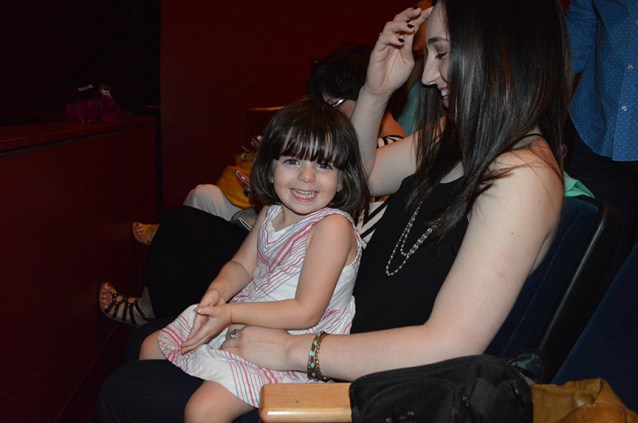 And Lila Jane, you had so much fun cheering your sister on!
 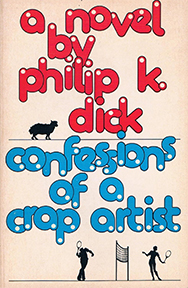 “If this world’s all for the winners, what’s for the losers?”
 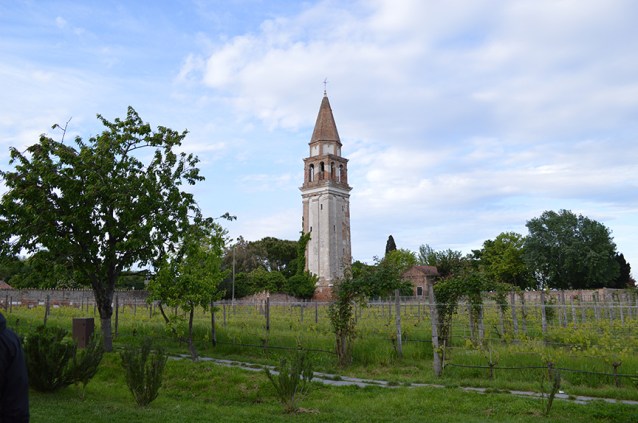 Honestly, despite everything I’ve read about
  Today, the Bisol family uses the same drainage system that has been in place in the vineyards for generations.
 At dinner that night at the Michelin-starred Venissa restaurant, our group of roughly 30 persons had the opportunity to taste the wine.
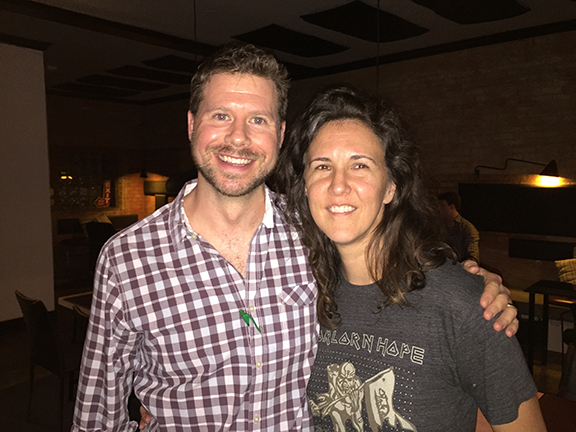 That’s David Keck, left, owner and wine director at Camerata and Houston’s newest Master Sommelier, with Elaine Brown, wine writer and blogger, who visited us earlier this year.
 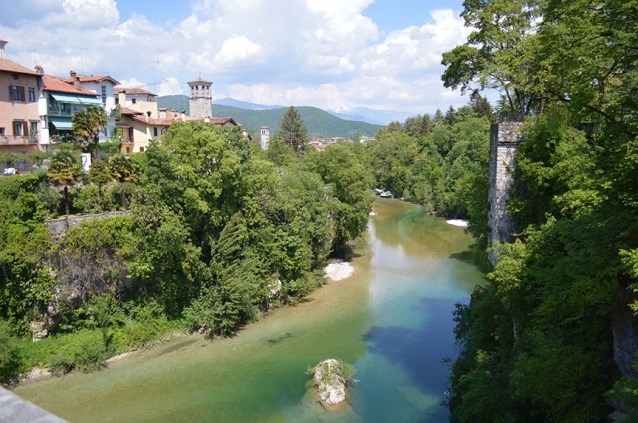 Above: “chiare, fresche, e dolci acque” (“clear, cool, and fresh waters”). Does anyone remember the famous song by my beloved Petrarch? For those who don’t, it’s canzone 126. The view of the Natisone River, above, from the Ponte del Diavolo in Cividale del Friuli, reminded me of the poem when I visited a few weeks ago.
 In Venetian, they call it a bacaro (pronounced BAH-kah-roh, with the tonic syllable in the first position).
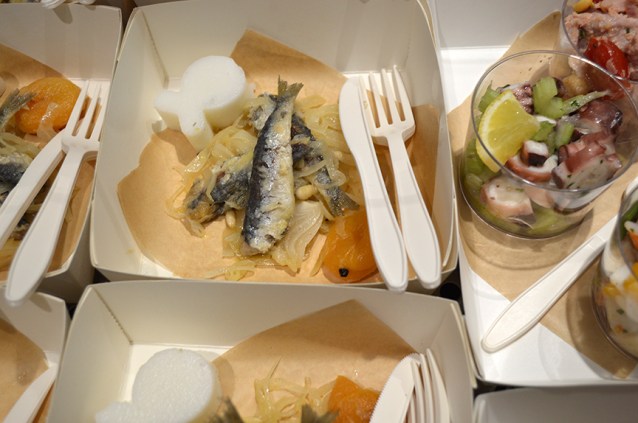 I was so enthralled with the food the night we visited that I forgot to take pictures of the space itself.
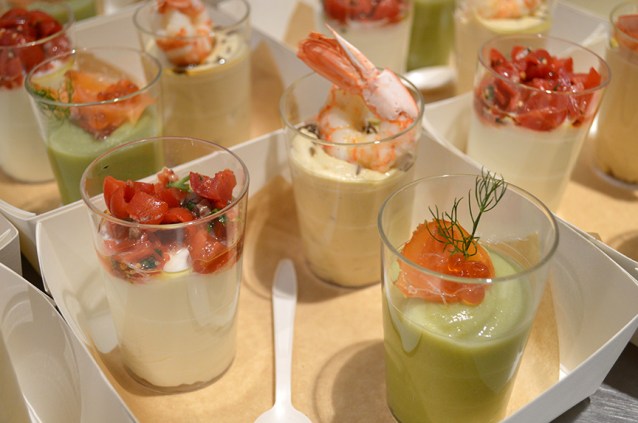 The fact that it’s set on the edge of the picturesque Venetian fish market only sweetens the salty deal.
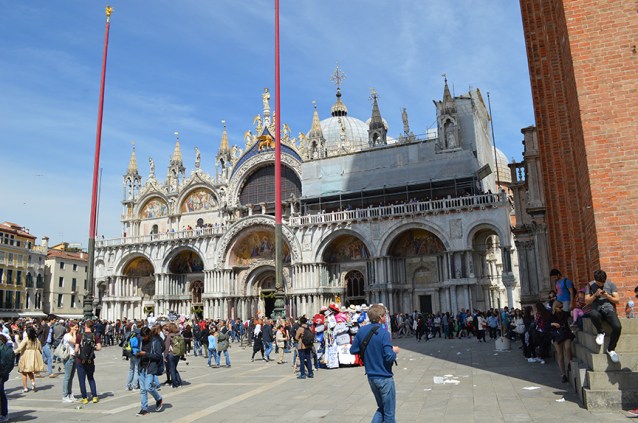 Venice is a tough town for hungry and thirsty food and wine tourists. It’s the ultimate tourist trap, especially when it comes to the dining scene.
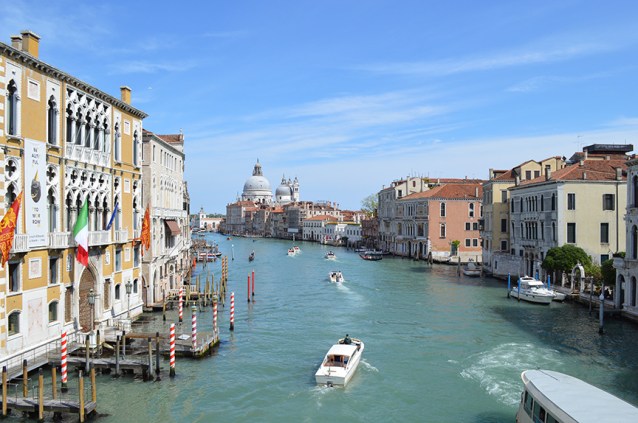 The only way to get great treatment in Venice is to speak Italian with a Veneto accent (which, fortunately, is how I speak Italian). I hate to say it but it’s true. And I write this as a lover of Venice and the Veneto who spent many days studying in Venice (mostly at the Marciana library) and many evenings playing music there back when I was a grad student in Italy.
 The recently opened
  Another place I highly recommend to you is
 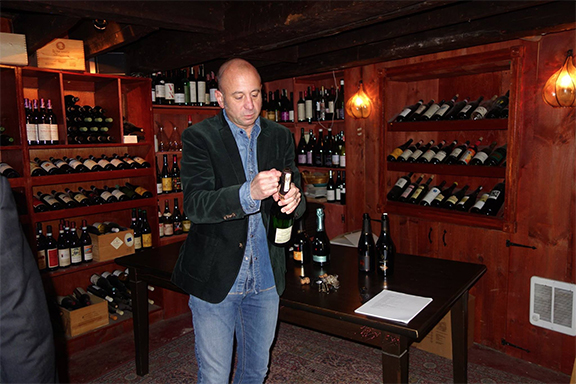 Here are some events that I’m going to be attending or where I’m going to be pouring and speaking about wine in coming weeks. Please join me if you can!
 Above: grapes harvested in August 2015 at Ca’ del Bosco, another one of Franciacorta’s “big three” and another winery experimenting with organic farming practices.
 Do Bianchi