
 Like 65,844,954 of my fellow Americans, I was sickened and horrified by the citronella torch-bearing white supremacists who marched in Charlottesville this weekend waving Nazi and Confederate flags and chanting — among other despicable hate speech — “Jew will not replace us.”
I had never heard the expression before. And so I turned to the internets where a calibrated Google search revealed that it seems not to have appeared in mainstream media before Saturday of last week.
By now most Americans — regardless of their political, ideological, and spiritual leanings — are aware that Jews have been historically targeted by European and American white supremacists. In the minds of certain racists, Jews have corrupted the purity of European and Anglo blood and intellectual thought over the centuries.
In 1938, after Mussolini and Italy’s fascist régime adopted Hitler’s race laws, the Italian government began to publish La difesa della razza (In defense of [our] race), a journal intended to bolster the standing of the Aryan race (to which the Italian supposedly belonged in Hitler’s Europe).
On the cover of each issue, the editors transcribed a quote from Dante’s Comedy, lines 80-81 from the fifth canto of the Paradiso, where Beatrice (Dante’s spiritual guide) encourages the peoples of Europe:
uomini siate, e non pecore matte,
sì che ‘l giudeo di voi tra voi non rida
be men, not maddened sheep, lest the Jew
there in your midst make mock of you
Not surprisingly, the lines were taken out of context. And it’s worth reading Beatrice’s entire exhortation, which she delivers as she guides the pilgrim Dante to spiritual redemption.
Be more grave, Christians, in your endeavors.
Do not resemble feathers in the wind, nor think
all waters have the power to wash you clean.
You have the Testaments, both New and Old,
and the shepherd of the Church to guide you.
Let these suffice for your salvation.
If wicked greed should call you elsewhere,
be men, not maddened sheep, lest the Jew
there in your midst make mock of you.
Be not like the lamb that leaves
its mother’s milk and, silly and wanton,
pretends to battle with itself in play.
Just as I [Dante] am writing, thus did Beatrice speak.
For Dante, the demise of European culture was owed to Christians’ abandonment of the Word of G-d. He saw the growing secular influence of the Holy Roman Empire — as opposed the Church — as the greatest threat to human salvation.
When read in context, Dante’s reference to the Jews should be interpreted as don’t allow the spiritually anchored among you to deride you for your spiritual ambivalence.
Unfortunately (for them), the editors of La difesa della razza weren’t the greatest Dante scholars. Had they read the text they were quoting more carefully, they would have realized that, in fact, Dante was encouraging his readers to turn to G-d for guidance in times of moral and ethical crises. Don’t mindlessly follow G-dless ideology. Don’t be small-brained sheep who lack the moral guide that G-d gave us with his Word — his Testaments, New and Old. Let Christ be your shepherd, he tells his Christian readers.
Whether or not you voted for Donald Trump, whether or not you call yourself a Christian or a Jew, it’s time for all Americans to condemn the Nazi and Confederate symbols and hate speech employed by the white supremacists in Charlottesville over the weekend.
There are too many among us — Christians and Jews — who have tolerated the rise of white nationalism in this country with the excuse that it was a necessary evil in achieving Donald Trump’s victory. No matter where you stand on the issue, white nationalism played a significant role in his election — there’s no denying that, folks.
Someday, when my semi-Semitic children are old enough to read the newspaper and their white mother and their Jewish father have to explain to them that there are people in our country who want to expel Jews from their communities, I will point to the Word:
“When you reap the harvest of your land, you shall not reap to the very edges of your field, or gather the gleanings of your harvest. You shall not strip your vineyard bare, or gather the fallen grapes of your vineyard; you shall leave them for the poor and the alien… you shall love your neighbor as yourself” (Leviticus 19).
I never thought in a million years that my children would have to experience anti-Semitism (as I did growing up). But it’s come to this. And this can and will not stand in the Parzen family.
Image via Alessandro Robecchi’s blog. Translation via the Princeton Dante Project.
 The bunches in the photo above are from the Stolpman winery’s Angeli vineyard, where the family grows one of its top wines, the Ballard Canyon AVA Syrah (Santa Ynez Valley, Santa Barbara County). I captured that image on Tuesday of this week as I walked through the Stolpman family’s organic, dry-farmed vineyard, where sustainable farming (including sustainable employment practices) is central to this historic winery’s mission and vision.
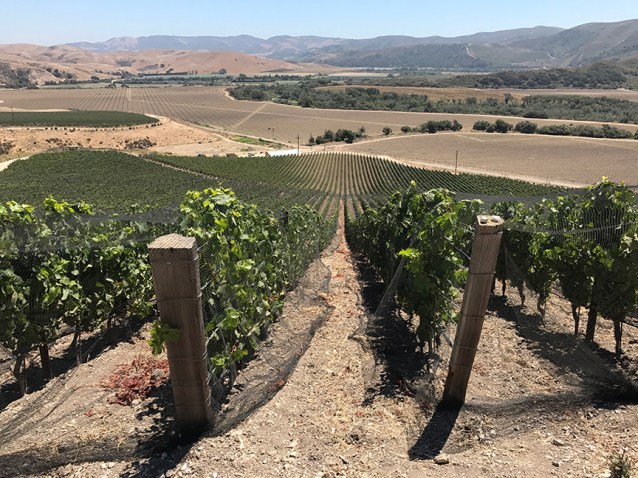 When the publishers of Slow Food guides, magazines, and books asked me to be the co-ordinating editor of their new guide to the wines of California (to be released in early 2018), I wasn’t sure that we would find enough wineries and wines to fill the pages of the book.
 In California wine country, they love to use the expression as the crow flies when talking about distance in the lay of the land (as opposed to as a human drives). I certainly have a lot of crow to eat: like so many europhile wine writers of my generation, I have been sweepingly dismissive of California wine in my nearly 20 years on the job.
 One of the most vivid memories from my childhood in San Diego, CA is my cello teacher showing me an autographed headshot of Glen Campbell. The year was 1975 and I was eight years old. And she had performed the night before in the orchestra with his band on the San Diego date of his tour.
  Emilia’s Prosciutto di Parma and Parmigiano Reggiano are counted among the world’s most renowned and most coveted foods. And they are also one of the world’s greatest examples of terroir, the unique confluence of soil and climate that delivers expression of place. No matter how hard they try (and try they do!), no one beyond the southern banks of the Po River can reproduce the delicate, sweet character of Parma’s Prosciutto and the distinct crumbly texture and gently piquant flavor of Parmigiano Reggiano.
 Last night, thanks to cousins Dana and Neil (who graciously treated us to dinner), Tracie P and I finally made it over to Chef Hugo Ortega’s new(ish) restaurant in downtown Houston,
  Infladita de Conejo — rabbit, black tortilla, raisins, almonds, tomato, and refried beans.
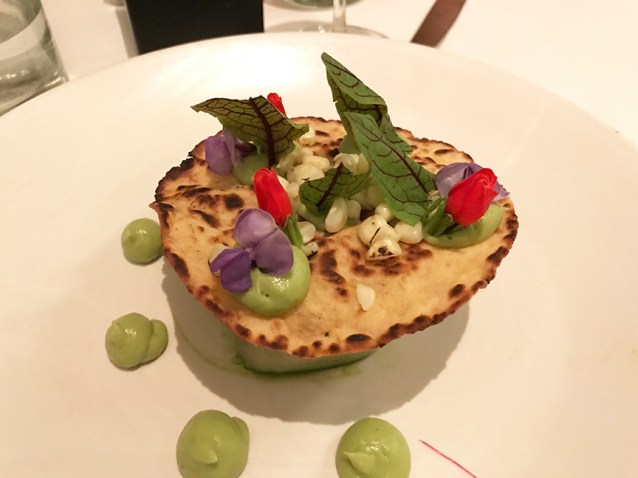 Robalo (sea bass crudo) — aguachile verde (green chile water), cilantro, parsley, lime, orange, avocado, serrano, corn, red onion, cucumber, and plantain tostada.
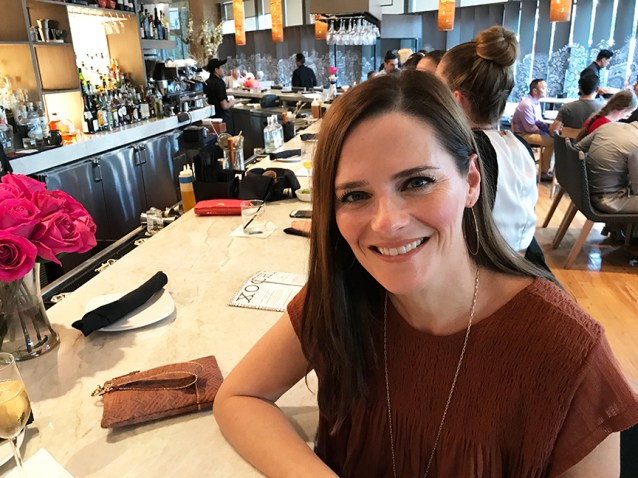 …was having a night out with my beautiful wife.
 Above: some of the labels that Shawn Virene pulled for his VIP debut party last night at Houston’s soon-to-open
  Above: the celebrated 17th-century Italian actor
  Above: image via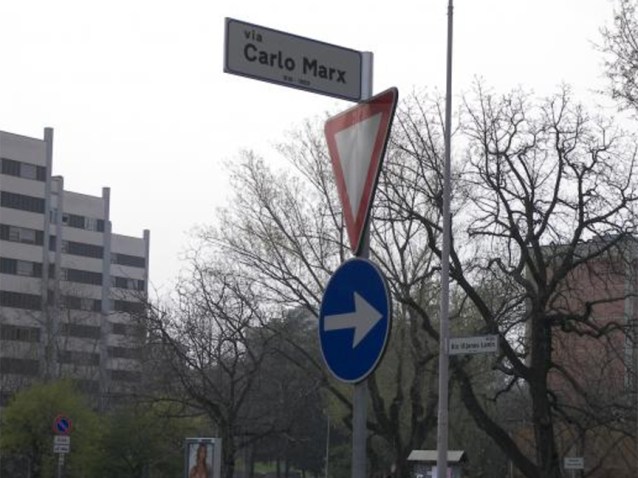
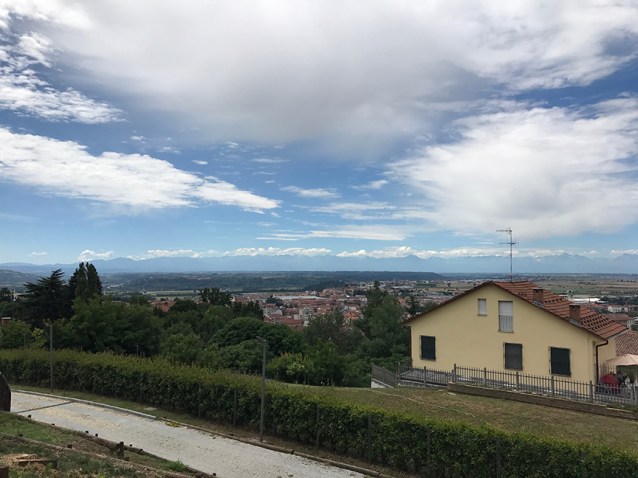 Before the Parzen family headed to southern California for
  I know a lot of people are curious about the toponym Bra (and the homonymic jokes are as predictable as they are forgivable).
 There were so many highlights from our summer vacation this year. But I’ll never forget that magical moment of finally being strapped in aboard a plane bound for California. The folks at Southwest were super nice and everyone was super cool about our car seats on the plane (I can’t say that every airline is like that!).
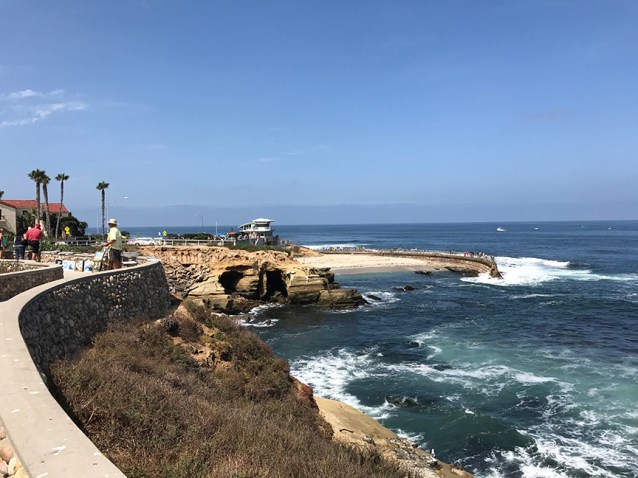 Here’s the view that awaited us on the other side. That’s the La Jolla Children’s Pool (beach), where I used to swim as a kid.
 The Children’s pool has been taken over by the seals in recent years. So I took the girls nearly every morning to search for shells at the nearby La Jolla Cove, where the seals also hang out but still leave enough room for humans.
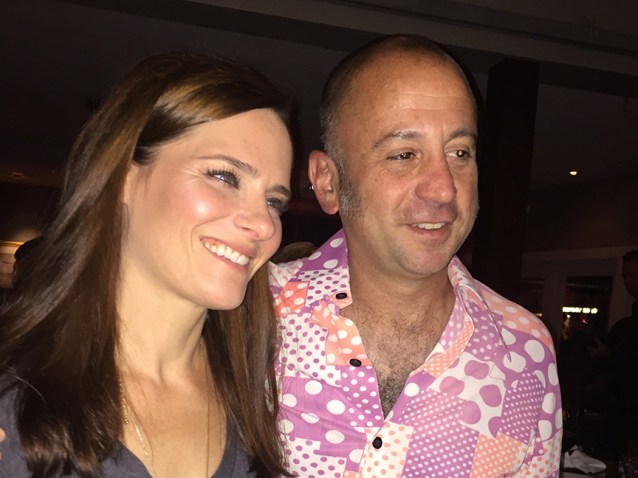 On Friday, July 14, we celebrated my 50th birthday (!!!) with an all-star hometown show at La Jolla’s sole rock club, Beaumont’s.
 Do Bianchi
