
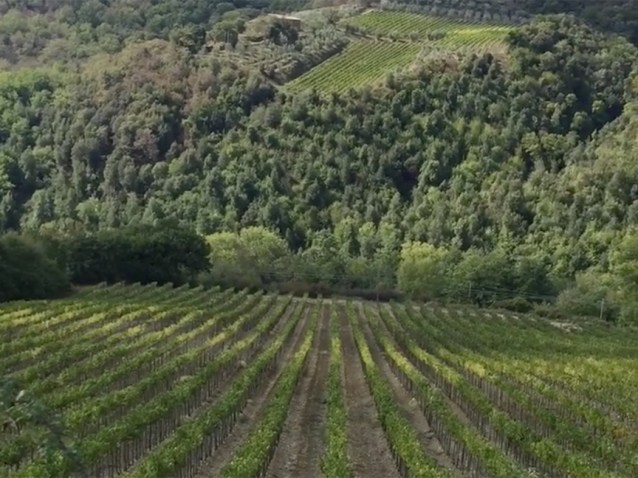
 That’s an image captured this week in Montalcino where the grower completed harvest last Friday.
To the layperson, it may just seem like a picturesque Tuscan vineyard. But to the trained eye, it’s a truly bizarre image, the type that belongs to the “never seen anything like it” category, as one Montalcino farmer put it. The vines should be beginning to shut down now, the natural progression of the vines’ yearly rhythm. Instead, the vines are actually producing more vegetation (the opposite of what typically happens after harvest, wrote the author of the image).
Many Italian growers have remained silent on social media about the immense challenges they face with the 2017 harvest. But privately, I’ve been receiving emails from across the Italic peninsula recounting the pervasive effects of one of the strangest vegetative cycles in recent memory.
“It’s been a Blade Runner vintage,” wrote my friend and client Stefano Cinelli Colombini, who runs his family’s historic farm in Montalcino. “I’ve seen things you people wouldn’t believe.” (He’s referring to the legendary “Tears in Rain” monologue from the movie.)
Stefano’s been one of the few winemakers I know who has openly chronicled this unparalleled and uniquely odd vintage (and I’ve been translating his notes regularly for the winery’s blog).
There’s a famous adage in Italian viticultural apocrypha: there are no bad vintages, there are just vintages where we make less wine. Stefano’s still optimistic about the Brunello his vineyards will deliver this year, even though the yields are extremely low.
Between the early onset of spring and then the disastrous late spring frosts, between the crushing heat of the summer and the late end-of-days rainfall (not to mention that hailstorms that plagued many parts of Italy), one thing is for certain: no one will forget the otherwise unimaginable 2017 vintage.
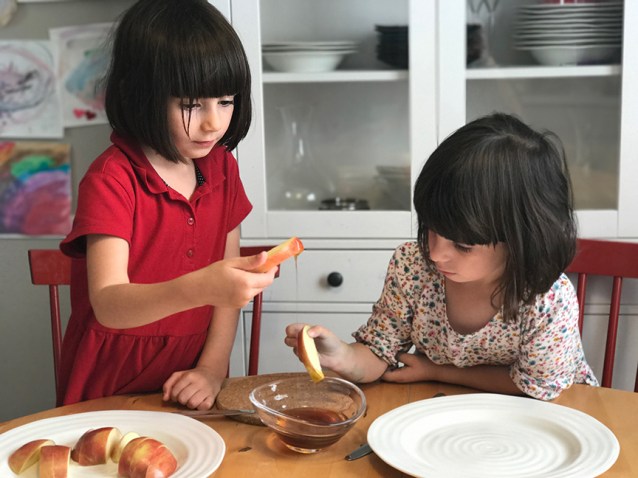 On Rosh Hashanah, the Jewish new year,
  As strange as it seems, it was on a chilly November night in Piedmont — as voting in the 2016 U.S. presidential election was already well under way — that Slow Wine editor-in-chief Giancarlo Gariglio first suggested we create a Slow Wine guide to the wine of California. We sipped sustainably farmed Timorasso, dipped organic torilla chips into organic salsa (just to add a layer of surreality), and by the time we said goodbye, we knew we were on the verge of having a new U.S. president and a new vade-mecum to California viticulture.
 “Everyone’s been affected by the hurricane… everyone,” said Master Sommelier Guy Stout, a wine educator for Southern Glazer’s, when I saw him last night at a Bordeaux event at LeNôtre Culinary Institute in Houston’s Northline neighborhood.
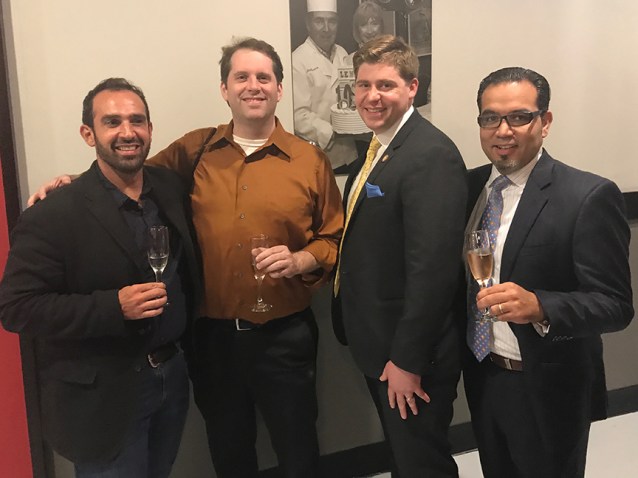 “No hesitation at all,” said Michael when I asked him if he had any reluctance in coming to our city so soon after the storm. “I was just glad when I found out we could get in.”
 Above: I will be presenting winemaker Cesare Barbero of Pertinace (Barbaresco) and a vertical of his wines October 18 at Rossoblu in Los Angeles where I author the wine list. It’s just one of the events where I’ll be pouring and presenting this fall.
 Above: the scene yesterday at the Houston Zoo, where my two daughters — ages 4 and 5 — especially enjoyed the elephants, lemurs, and cotton candy. We were lucky to find a parking place!
 For reasons they decided not to reveal (other than “in the wake of Hurricane Harvey”… what a tone-deaf word choice!), fine wine importer Kobrand’s powers-that-be have decided at the last minute to change the location of their touring Italian tasting, scheduled for Tuesday, September 19, from Houston to Ft. Worth.
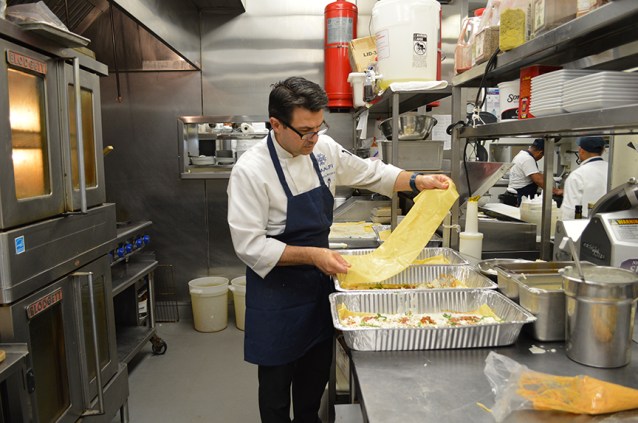 Above: Houston restaurateur Giancarlo Ferrara preparing lasagne for first responders.
 I grabbed the above photo this morning from family friend Glynis’ Facebook.
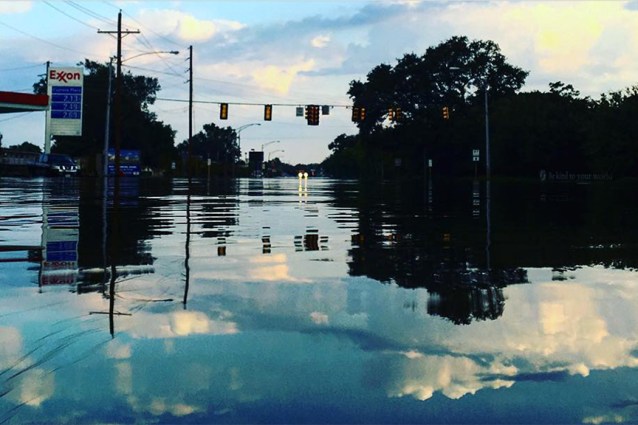 I came across the above photo this morning as I was scanning Instagram hoping to find images of my in-laws’ neighborhood in Orange, Texas on the Louisiana border (
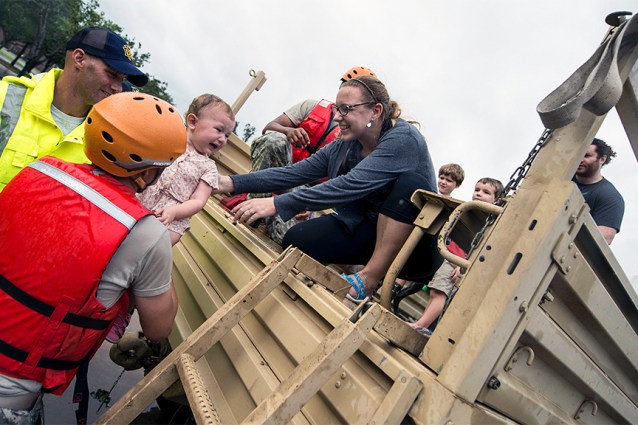 Ever since we were able to travel beyond our block, Tracie and I have been working as hard as we can this week to aid our neighbors and fellow Houstonians: helping with clean-up and gutting houses, babysitting someone’s kids as they deal with insurance, washing flooded families’ laundry, gathering used clothing and purchased goods for shelters and relief distribution centers, etc.
 Do Bianchi