Why doesn’t my blog ever get nominated for any awards? (Believe it or not, it has: #cucinablogaward.)

corriere-della-sera-blog-awards-wine-foodWhen I started wine blogging back in July of 2006, my site was an html-driven journal of my tasting notes and some crude photos (shot on floppy disk!) of memorable dishes and wines. A tour that summer in France with my band Nous Non Plus and the meals that came with it were just the thing to get it all going. And my life as an aspiring food and wine writer in New York provided plenty of materia prima.

Then something remarkable happened: someone Googled me and found my blog. And it just so happened that person who had typed my name into the Google was a writer for the New York Times. The next thing I knew, my name appeared in the paper along with a quote about Lambrusco. It was then that I realized that I had inadvertently joined a vibrant and growing virtual community of food, wine, and spirits bloggers.

Since that time, the blog — which I continue to update 4-5 times a week — has been one of the most rewarding experiences of my life, both personally and professionally.

It’s thanks to the blog that I met Tracie P (we met online by commenting on each other’s blogs). It’s thanks to the blog that I’ve developed a network of friends and colleagues across the U.S., Europe, Australia, and even Asia. But most importantly to me, it’s thanks to the blog that I have kept a detailed diary of my life, my thoughts, my feelings, my fears and hopes, my joys and disappointments, for more than 10 years now.

Over the years, I’ve watched (with envy, I’ll admit) as many of my peers and blogging colleagues have won countless awards and prizes for their writing. But even after more than a decade, I’ve never won anything (I was once nominated for a Wine Blogger badge but that was about as far as I got).

But maybe, just maybe, my luck is about to change: it was with great pride (I won’t deny) that I learned that my blog has been nominated for a Corriere della Sera Cucina Blog Award. If you’re not familiar with the Corriere, it’s one of Italy’s leading national dailies and its food and wine blog is one of Italy’s most popular.

I couldn’t be more thrilled to join such high-profile company: the excellent blogs Punch and Two for the Bar are also nominated in the category.

I’ll be following the selection process closely, as you can imagine. But even if I don’t win, this nomination means the world to me. Beyond documenting my own life in wine, food, and love, my blog’s mission has always been that of giving an English-language voice to the Italian farmers, food producers, winemakers, and food and wine writers whom I follow. The nomination leads me to believe that someone, somewhere out there, is listening to that voice.

Please keep your fingers crossed for me and check out the other nominees here.

All the odds are in my favor
Something’s bound to begin,
It’s got to happen, happen sometime
Maybe this time,
Maybe this time, I’ll win.
Texas lawmaker calls ban on out-of-state wine sales “ridiculously anti-competitive” and a violation of Texans’ rights as consumers

matt-rinaldi-texasFor years, I have argued — here on my blog and in the Houston Press — that the Texas ban on out-of-state wine sales runs counter to Republican and red-state values and ideals.

No one needs me to tell them how Texan Republicans stand for fewer regulations, less government interference, and more liberal free trade policies that make the state a great home for businesses — small and large.

Yet when it comes to how wine is imported, distributed, sold, and shipped in the state of Texas, my state’s government has imposed some of the most restrictive laws in the nation.

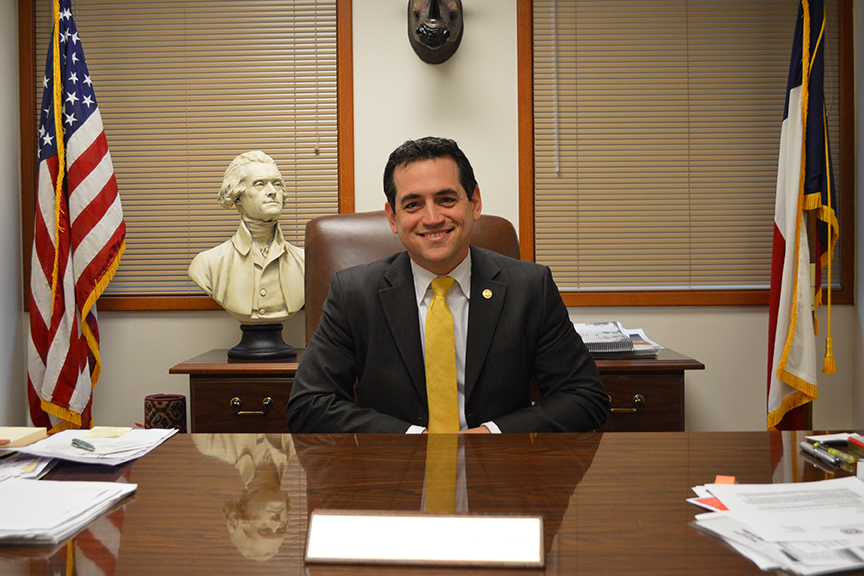
When I read last week about a new bill that would lift the out-of-state ban on industry advocate Tom Wark’s blog last week, I immediately called the office of Texas state representative Matt Rinaldi (above), the author of the bill, and requested an appointment to interview him for my wine column for the Houston Press.

I met with him yesterday in his office in the state capitol: here’s the link to my article this morning for the paper.

It’s still hard for me to wrap my mind around the incongruity between the Texans’ love of freedom and the way wine, beer, and spirits are sold in our state. The bottom line is that the Texas wholesalers lobby has historically shaped shipping and sales regulations to suit their love of profit. Texan wine lovers are among the victims of their greed and their unscrupulous methods in driving out competition. And more importantly, their unbridled love of money continues to stifle wine culture in this state.

I can’t tell you how many times I’ve encountered leading wine professionals — not to mention aspiring wine professionals — who simply don’t have access to some of the world’s most iconic wines because they are unavailable in Texas. I remember meeting two Master Sommelier candidates at the airport in Austin as they were traveling to San Francisco to taste in a liberal wine market (liberal in terms of regulation) where they would have a much wider range of wines available to them. It’s enough to make a Texan eat her hat.

Texans, said Rinaldi when we met yesterday in Austin, “should be given the freedom to do what makes them happy as long as it doesn’t interfere with the rights of anyone else.”

To borrow Wark’s phrase, HALLELUJAH! Click here to read the interview in the Houston Press.

At Jaynes Gastropub in San Diego, great food and great times…

I’m so blessed to have so many good friends in San Diego. Thanks to everyone who came out to taste Giovanni’s wines with us on Saturday and thank you Jaynes for the wonderful spread and the world-class service. I love you guys…

best-franciacorta-natural

potato-croquette-recipe

sea-bass-ceviche-recipe

best-restaurants-san-diego

“Some of my best friends are Jewish” in Trump America

rubenstein-jewish-community-center-houstonAbove: the Evelyn Rubenstein Jewish Community Center of Houston, not far from where we live.

“[Bomb] threats, which turned out to be unfounded, were reported all over the Eastern United States on Monday [January 9, 2017], at as many as 16 Jewish community facilities” (New York Times).

“There were as many as 27 bomb threats on Wednesday [January 18, 2017] at Jewish centers in 17 states, according to the J.C.C. Association of North America” (New York Times).

“Ivanka Trump took to Twitter to call for religious tolerance following the latest wave of bomb threats that were made against 11 Jewish community centers Monday [February 20, 2017]” (FoxNews).

Tracie P and I learned about this third, most recent wave of coordinated bomb threats not from Fox or the New York Times. It came to our attention because Tracie was on the way to the super market where we regularly shop in our southwest Houston neighborhood, which happens to be in one of the city’s heavily Jewish areas, Westbury. The Rubenstein Jewish Community Center is on her route to the store and its members were among the victims of these orchestrated acts of terror.

It was only after his daughter posted her tweet on February 20 that President Trump acknowledged that there has been a rise of anti-Semitic episodes and terror in recent months.

As late as February 15, 2017, when asked to comment on the rise of open anti-Semitism in the U.S. at a joint news conference with Israeli Prime Minister Netanyahu, Trump answered as follows:

“Well, I just want to say that we are very honored by the victory that we had — 306 Electoral College votes. We were not supposed to crack 220. You know that, right? There was no way to 221, but then they said there’s no way to 270. And there’s tremendous enthusiasm out there.”

Don’t believe me? Read a transcript of the conference on WhiteHouse.gov.

As late as February 16, 2017, when asked by a reporter about the rise of open anti-Semitism in the U.S., President Trump told the journalist that it was “an insulting question” and never answered the question. Don’t believe me? Watch the clip from C-Span. (Trump’s insensitivity and evasion of the question were made even more mind-boggling by the fact that the reporter asking the question was an orthodox Jew.)

Then, on Tuesday, February 21, 2017, President Trump addressed the issue directly for the first time when he told NBC News, “I will tell you that anti-Semitism is horrible, and it’s going to stop and it has to stop.”

“This felt like something of a reset,” noted a FoxNews reporter, “for a president who has been battered by negative headlines and management missteps during his first month in office.”

Until the February 21 statement, Trump had repeatedly avoided answering questions about the rise of open anti-Semitism by invoking his Jewish family members and Jewish friends.

In the February 15 news conference, he noted that “as far as people — Jewish people — so many friends, a daughter who happens to be here right now, a son-in-law, and three beautiful grandchildren.”

I don’t think that the president is anti-Semitic in his heart. After all, he’s a New Yorker: he was famously mentored by a gay Jewish man and has many famous Jewish friends, not to mention the fact that his daughter married into one of New York’s leading Jewish families and that she had converted to Judaism before their marriage.

And I am not going to speculate as to why he hasn’t robustly and wholeheartedly condemned anti-Semitism until now.

But I believe that as a role model for all Americans, his insistence on avoiding the question of anti-Semitism in our nation is abominable and dangerous.

I fear that his avoidance of the question might be interpreted by some Americans as acquiescence. And I’m not the only member of the Jewish community in America who is deeply troubled by his seeming reluctance to face the issue and speak out.

Having Jewish business associates, Jewish friends, and Jewish family members doesn’t absolve any honest American — let alone the president! — from standing up and speaking out against hatred.

Some of my best friends are Jews, too. I know they’ll be glad, like me, to see that President Trump is finally doing the right thing. What took you so long, Mr. President? What took you so long, friend?

Asti Secco, AstiSecco, Astisecco, Prosecco: Italian wine heading toward an identity crisis

asti-secco-astiseccoAbove: Gianni Martini, owner of the Sant’Orsola winery group (image via Dario Ujetto and the Eat Piemonte blog).

“A rose is a rose is a rose,” wrote Gertrude Stein famously. It was just one of the many expressions of her fascination with repetition and the way it shaped the “meaning of meaning” as some have put it.

Last Saturday, speaking at a wine industry event hosted by the Mirafiore Foundation in Piedmont, Italy’s agriculture ministry Maurizio Martina told the audience that “it’s very likely that the Asti Secco project will move forward. The ministry’s technical committee has approved the appellation regulations for the new DOC and they will now be presented to [Italy’s] national wine commission.”

He was referring to the creation of Asti Secco (Dry Asti), a dry wine made from Moscato grapes grown in Asti province in Piedmont.

The commission will vote on whether or not to approve the new appellation next month and if approved, production of Asti Secco could begin as early as May of this year according to a report published this week by the Italian national daily La Stampa.

Typically, historically, and traditionally, Moscato d’Asti has been used to make a sweet, gently sparkling wine with low alcohol content. If approved, the new appellation rules would allow producers to make a dry version of Moscato d’Asti (secco means dry in Italian). The break from tradition would represent a radical departure from the way Moscato d’Asti is perceived in world markets.

Some industry observers and Prosecco grower groups have complained that the architects of the new appellation are trying to create confusion in the sparkling wine market place. They contend that the name Asti Secco will confuse Prosecco consumers because of the similarity of the designations.

In a Facebook post this week, UniSG professor of agricultural law Michele Antonio Fino asked his readers: “Can you see the space between Asti and Secco [in the image above]? And more importantly, can you see the good faith?”

Some have alleged that the creation of this new appellation is a brazen attempt to exploit “Italian sounding” branding infringement.

The term “Italian sounding” is used by the Italian government for what is known in the food and beverage industry as “foreign sounding” marketing strategies.

Have you ever had an “Asiago Ranch Chicken Club” from the Wendy’s fast food chain in the U.S.? It’s a textbook example of “foreign sounding” (and misleading) branding.

The Italian government estimates that “Italian sounding” products generate roughly 54 billion euros in sales each year.

Some Italian wine trade observers are alarmed that if approved, the Asti Secco appellation would represent an “Italian sounding” campaign implemented by Italians. The victims, as it were, of this misleading marketing strategy would be their fellow Italians, namely Prosecco producers, they point out.

It’s not yet clear what guidelines would be put in place for how the designation “Asti Secco” will appear in labeling. But it is clear, at least to some, that the potential marketplace confusion would harm the Prosecco “brand.”

Asti Secco is AstiSecco is Astisecco is Prosecco…

I’ll be following developments closely and will report back. And I’ll be covering this issue in my seminars this year for the UniSG Master’s in Wine Culture program.

Thanks for reading and buon weekend!

The Three Musketeers of Franciacorta buck the system and shake the status quo

best-mexican-restaurant-houstonAbove: three of my closest friends and some of the most talented winemakers I know, from left, Andrea Rudelli, Nico Danesi, and Giovanni Arcari. Photo taken in Houston at La Mexicana.

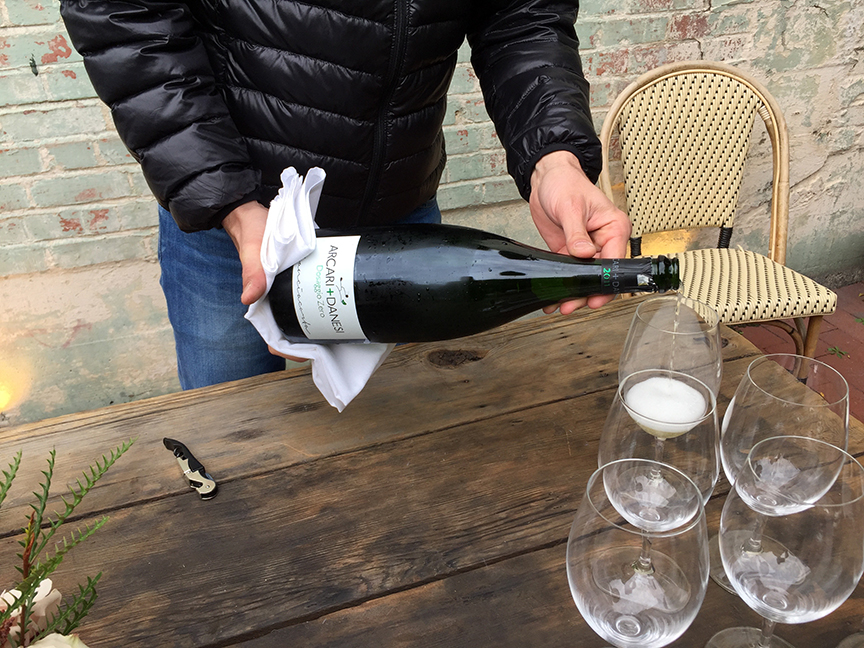
A few weeks ago, I wrote about my cherished friendship with winemakers Giovanni Arcari and Nico Danesi and my new partnership with the Arcari + Danesi winery and the SoloUva (Just Grapes) project. But Giovanni and Nico are just two of Franciacorta’s Three Musketeers: the other is another good friend, winemaker Andrea Rudelli (who shares my passion for guitar playing and rock music).

While Giovanni and Nico manage their group’s vineyard on Montorfano (Mt. Orfano) in the southern edge of the Franciacorta appellation, Andrea oversees the group’s vineyard in Adro township, smack-dab in the center, just below Lake Iseo, the appellation’s defining geographical feature.

While fruit from the Montorfano vineyard is used to produce the Arcari + Danesi line, Andrea’s Chardonnay vines, which are more than 30 years old, are employed in the production of the group’s SoloUva label. The Arcari + Danesi wines are the group’s higher tier, while SoloUva, made from 100 percent Chardonnay, is made in a fresh and approachable style. All the wines are produced today using the SoloUva method, whereby no cane (or beet) sugar is used to provoke the second fermentation or to top the wines off at disgorgement (the dosage). Instead, reserved grape must is used. Hence, the name SoloUva or “just grapes.”

When I call the trio the Three Musketeers of Franciacorta, the metaphor is by no means facile or gratuitous. Together, the three winemakers have bucked the Franciacorta system. And they’ve ruffled more than one feather in the process. They developed the SoloUva method themselves and they were the first in the appellation to make wines using this process. But they also gave birth to the “grower Franciacorta” movement: not only did they encourage other small estates to stop selling their grapes to the négociant houses in Franciacorta when they initially launched their consulting business over a decade ago, but they also led the way by example when they started bottling their own “estate-grown” fruit.

Franciacorta is an appellation shaped primarily by large wineries, owned by a handful of powerful families. For many of those families, grape growing and winemaking aren’t the primary sources of their income. Industry is. Together, Andrea, Giovanni, and Nico have led the new wave of young Franciacorta producers who grow, bottle, and market their wines themselves — as their primary income stream.

That’s not to say that the big wineries don’t make fantastic wine. Many of them do. (Pour me a drink and I’ll tell you my favorites.) But like Dumas’ Musketeers, the SoloUva team has challenged the monarchic status quo. And Giovanni, through his excellent blog, Terra Uomo Cielo (Earth, [Hu]man, Sky), has shed light on the way the current appellation system favors the big gals and — how can I say this gently? — hinders the smaller potatoes.

So if these guys really are the Three Musketeers of Franciacorta, does that make me d’Artagnan? Sorry, Giovanni. I know you wanted to be d’Artagnan. But remember: united, the four of us will face l’Éminence rouge!

If you’re in Southern California this weekend, come taste with me and Giovanni in San Diego on Saturday (details below). And I have great news to share with my fellow Texans: the group will soon have a Texas importer and Giovanni and I will be showing the wines in Austin and Houston next week. Just let me know if you’d like to taste with us.

SoloUva tasting with
winemaker Giovanni Arcari
(and me)
Saturday, February 25
4:00-6:00 p.m.
@ Jaynes Gastropub (San Diego)
$25 per person
includes light bites by Jaynes

Jaynes Gastropub
4677 30th St.
San Diego CA 92116
(619) 563-1011
Google map

Registration not required but please shoot me an RSVP email
to let me know that you are coming so that we can get a headcount.

giovanni-arcari-wine

“Bubbles vs. bullshit” and the saddest form of wine writing

morainic-subsoils-proseccoThis week, I found myself writing a — how else to put it? — lugubrious post for a client of mine in Prosecco country.

My post was a bullet-point summary and overview of a lengthy Italian-language blog post by an Italian writer who specializes in agricultural journalism and marketing. In his post he countered claims that residents of Treviso province have a higher rate of cancer than in other parts of the Veneto region and Italy because of higher exposure to chemicals used in grape growing.

His post was titled “Bolle contro balle: il Prosecco tra allarmismi e verità dei numeri”: “Bubbles vs. Bullshit: Prosecco, alarmism, and truth in numbers.”

Late last year, the tabloid-style news show “Report,” which is produced by one of Italy’s nationalized networks, aired a controversial segment on Prosecco growers and their use of chemical sprays in the vineyards. In the segment, the producers allege that residents of Treviso province are regularly exposed to air-borne pesticides and herbicides because of aggressive spraying by growers. As the market for Prosecco has grown in recent years and more and more farmland has been planted to vine, they claim, cases of cancer have also grown.

Whether or not the claims are true, the show was a textbook example of tabloid journalism. Just have a look at the clip here: even English-language readers will recognize the hallmarks of the tabloid style.

The episode brought to mind the infamous Velenitaly scandal from 2008. (The epithet Velenitaly is a portmanteau of veleno, meaning poison, and Vinitaly, the annual Italian wine trade fair held in Verona.) A writer for the popular Italian magazine L’Espresso falsely claimed that there was widespread use of toxic and highly dangerous chemicals in the production of Italian wine. His allegations were later proved unfounded.

Because of my personal connection to Prosecco country (I lived and worked there for many years), I have followed the grassroots campaign to raise awareness of pesticide and herbicide use in Treviso province for many years now. I subscribe, for example, to Gianluigi Salvador’s email newsletter: he is a World Wide Fund for Nature delegate in the Veneto and he writes regularly about environmental degradation in the province.

From personal experience over many years, I’ve seen the Prosecco landscape change radically as the demand for Prosecco throughout the world has grown significantly (when I first traveled in Prosecco country playing music in the late 1980s, few in America knew what Prosecco was; today it is ubiquitous in my country). There’s no doubt that there is something wrong when people are liberally spraying vineyards that lie adjacent to schools and homes (I’ve seen that, too). But I have yet to see anyone who has hard data to support the claim that there is a higher incidence of cancer in the province because of increased spraying and use of pesticides and herbicides.

By no means am I an expert in the field and I’m not saying that there isn’t a correlation (my gut tells me that there is).

The one thing I know for sure is that “tabloid wine writing” is probably the saddest form of oenography. And it’s one of the topics I’ll be covering in my seminars later this year at UniSG in the Master’s in Wine Culture program.

Thanks for reading…

Whites really thrilled me at Marchesi di Grésy. Reds weren’t bad either…

San Diegans and Southern Californians, please come out and taste with me and Giovanni Arcari at our SoloUva Franciacorta tasting at Jaynes Gastropub this Saturday (February 25) at 4! We have a great crowd coming (be sure to reserve if you plan to stay for dinner afterwards). Here are the details. Thank you for your support. We’ll be pouring exclusively from magnum!

alberto-di-gresy-marchesiThe sun had already set after I braved rush-hour traffic in downtown Alba (worse that you might imagine) and found my way to the Marchesi di Grésy winery late last year after I finished up my teaching duties at the University of Gastronomic Sciences in nearby Pollenzo.

Honestly, the last thing I was expecting when I tasted with Alberto di Grésy (above) was a series of mini-verticals of his extraordinary white wines. But the marquis greeted me with a wonderful tasting of current vintages of his Sauvignon Blanc and Chardonnay side-by-side with wines that stretched back to 1999.

I’ve been extraordinarily lucky in my lifetime to have tasted old vintages of Gaja’s Gaia & Rey Chardonnay on my occasions. The wines selected by Alberto were yet another example, to my mind, of Langa’s breathtaking potential in producing long-lived and extremely nuanced white wines.

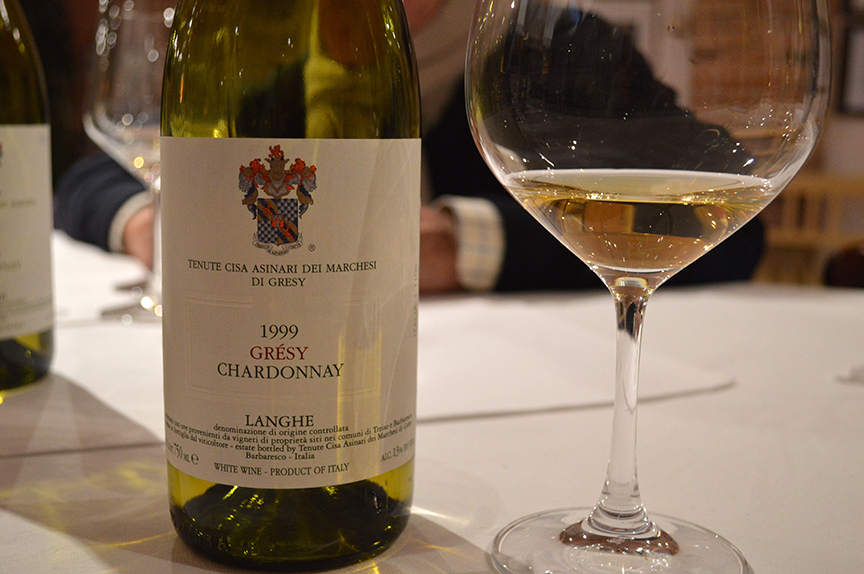
langhe-bianco-gresy1999 Langhe Bianco Chardonnay! Wow, what a wine! Very fresh with just a slight but delightful note of oxidation, rich in texture but lithe on the palate with notes of stone fruit and flowers.

I loved this wine especially. But aside from a faulty bottle, there wasn’t a bad apple in the bunch.

Collectors with the foresight to cellar Alberto’s whites certainly won’t be surprised by my discovery. And from what Alberto told me (and what I’ve been able to verify on WineSearcher), you can find them in the U.S. in certain markets. It’s hard to believe that they land here for around $25.

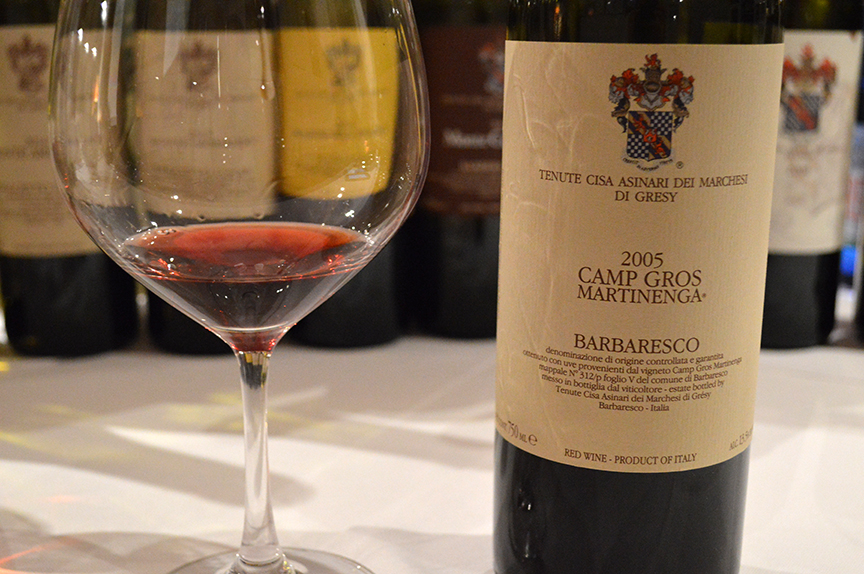
marchesi-di-gresy-barbaresco-camp-grosYou may not be surprised by how much I liked Alberto’s white wines. And anyone who follows Italian wine seriously knows the place that his reds hold in the Pantheon of great wines from Italy.

The 2005 Camp Gros was astounding, still very young in its evolution but already beginning to show its maturity thanks, no doubt, to the ripe vintage. Arguably, it performed the best in the flight of reds but it was just one of the stunning entries in the flight he shared.

winery-marchesi-di-gresyAnd if you follow Italian wine closely, you don’t need me to tell you that the estate produces classic-style wines from one of the best growing sites in Barbaresco. For those who aren’t aware, Martinenga is one “panel” in the Asili-Martinenga-Rabajà triptych, the holy trinity of Barbaresco (for people like me).

But there is one revelation that I can offer here: the Langhetti pronounce Grésy as a French name. In my experience, they say greh-ZEE (and not GREH-zee). In the U.S., the Italianate pronunciation has become the norm. But on the ground in Langa, they say greh-ZEE.

It’s kind of like Quintarelli’s Alzero (pronounced correctly AHL-zeh-roh and not ahl-ZEH-roh) or Tucci’s timpano (properly pronounced TEEM-pah-noh and not teem-PAH-noh). Americans have been pronouncing them erroneously for so long that the pronunciations are now accepted as legitimate, however alternate, scansions.

Quibbling aside, I thoroughly enjoyed visiting with Alberto, a lovely man, and his cellar master, the inimitable Jeffrey Chilcott. Super fun people and exceedingly gifted tasters thanks to their natural abilities and immeasurable experience.

Alberto’s taste in music ain’t half bad either…

The Texasification of America and the passing of Jane Roe

planned-parenthood-texasAbove: a Planned Parenthood clinic in Houston. The health centers offer reproductive health care to economically challenged citizens, including the Parzen family.

Texans are renowned for believing outlandish things.

Back in August 2012, as Texas geared up for the presidential election, the Lubbock County Judge, the Honorable Tom Head, told MyFoxLubbock.com that President Obama:

    “‘[is] going to try to hand over the sovereignty of the United States to the U.N., and what is going to happen when that happens?’ Head asked, according to MyFoxLubbock.com. ‘I’m thinking the worst. Civil unrest, civil disobedience, civil war maybe. And we’re not just talking a few riots here and demonstrations, we’re talking Lexington, Concord, take up arms and get rid of the guy.'”
    “Head went on to predict that if that happens, Obama will ‘send in U.N. troops.'”
    “‘I don’t want ’em in Lubbock County. OK. So I’m going to stand in front of their armored personnel carrier and say ‘you’re not coming in here,’ he said, adding he wants ‘trained, equipped, seasoned veteran officers to back me.'”

Read the post I’m quoting on FoxNews.com.

Back in July 2015, Texas Governor Greg Abbott asked the Texas State Guard to monitor the U.S. military training operation known as “Jade Helm 15.” He was reportedly concerned, like many Texans, that the exercise could be an a veiled effort to disarm state residents and set the stage for a federal or perhaps foreign takeover.

    “‘During the training operation, it is important that Texans know their safety, constitutional rights, private property rights and civil liberties will not be infringed,’ Abbott wrote to Maj. Gen. Gerald Betty, saying he expects ‘regular updates on the progress and safety of the Operation.'”

Read about his reaction to Jade Helm 15 in Texas on the Texas Tribune website.

When Trump America came up in conversation at a dinner party in Houston on Friday night, one of the guests asked rhetorically (and approvingly): “Why should we [taxpayers] be paying for people’s abortions? And why should we be paying for abortions in foreign countries?”

She was referring to Republican efforts to defund Planned Parenthood and to President Trump’s executive order executive order that reinstated “a Republican policy that would ban U.S. aid to groups that provide or promote abortions overseas. Known as the ‘Mexico City policy’ or the ‘global gag rule,’ the measure came one day after the 44th anniversary of the landmark Supreme Court Roe v. Wade case that legalized abortion across the country.”

Read about it on The Daily Caller (as linked to by FoxNews.com, which devoted a scant 60 words to the executive order).

Over the weekend, we learned that Norma McCorvey passed away. She was the “Jane Roe” in “Roe v. Wade,” the landmark Supreme Court case that made abortion legal in the United States.

Few will remember that McCorvey was born in Louisiana but raised in Houston. She was living in Texas in 1973 when the case was decided by the court (it was first argued in 1971). She died on Saturday in Katy, Texas about 30 minutes from where we live. She was 69.

Read about her life in the Wikipedia entry devoted to her. While her case was pending, she had the child (and never had an abortion). Ultimately, she became an anti-abortion activist.

Before I moved to Texas in 2008, I didn’t realize how much of what happens in Texas affects and has historically affected the other states of the union.

Remember when a single (Obama-appointed) federal judge in Texas granted a preliminary injunction that blocked Obama’s overtime eligibility regulation? It feels like a lifetime ago but it actually happened in November 2016 (Politico).

After Obama took office in 2009, the state of Texas “sued his administration at least 48 times, according to a Texas Tribune analysis of state data — a point of pride for the state’s Republican leaders” (Texas Tribune).

Sadly, so much of what happens in Texas doesn’t stay in Texas. And it looks like we are in store for at least four years of Trump America’s Texasification of our nation. The bookends of Norma McCorvey’s life seem unheimlich in the light of our country’s new direction. The tragedy is that some Texans often believe the most darned things…

How do you pronounce Cortese? The latest episode in the Italian Grape Name and Appellation Pronunciation Project

Southern Californians: please come out and taste my favorite Franciacorta with me and my bromance Giovanni on Saturday, February 25 at Jaynes Gastropub in San Diego. And Houstonians, registration for seminars at the Taste of Italy festival March 6 is filling up fast and some seminars are already completely full (when you click the “register” button, you will see the individual seminar registration options). I’ll be leading 4 tastings that day. Please join me!

The Italian Grape Name and Appellation Pronunciation Project was born after I got fed up with hearing self-proclaimed Italian wine experts offer “alternate” performances of ampelonyms.

The idea was to feature native speakers who live and work in the appellations and who grow the grapes. Who better than them to share their indigenous pronunciations? Since its inception, I’ve filmed and posted a number of episodes and many growers and winemakers have submitted videos (I encourage producers to send me videos; just PM me and I’ll give you a few notes on how to shoot them). The more the merrier and creativity and colorful videos are always welcome!

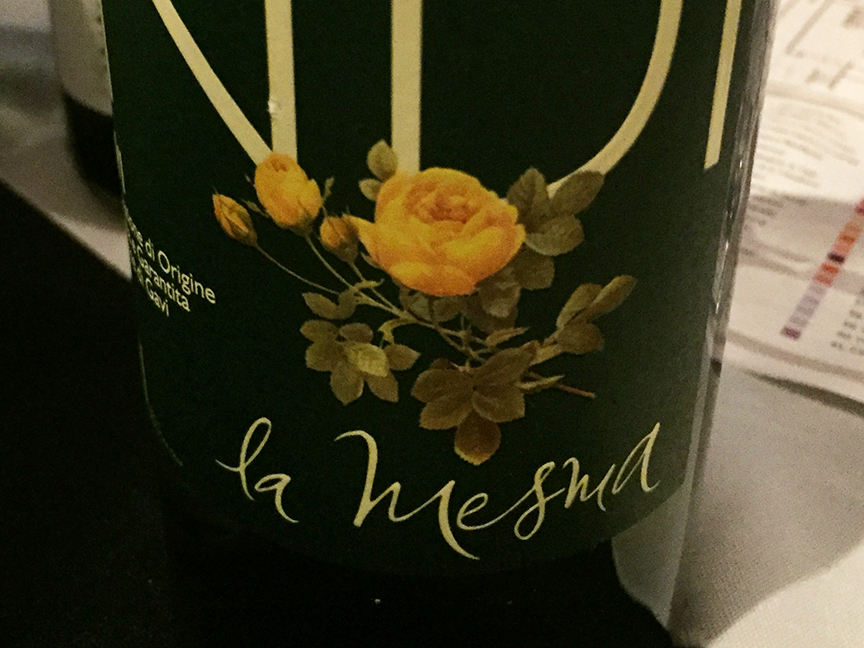
In this latest installment, Gavi grower and producer Paola Rosina of La Mesma offers an indigenous pronunciation of the grape name Cortese. We met up in Austin at the Slow Wine tasting there last month.

Thank you, Paola! And thank you for coming to Texas to share your superb wines!

Buon weekend, yall!

la-mesma-gavi-rosina-paola