
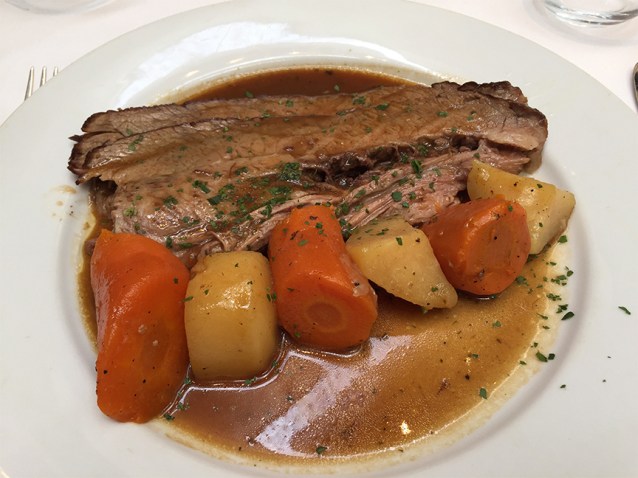
 It’s that time of year again when people begin wondering and asking about wine pairings for Easter and Passover.
The two holidays overlap this year, with Erev Pesach (the first night of the Passover) falling on Good Friday. But even though lamb can be the one common denominator for Easter brunch or lunch and the Passover Seder, the traditional foods for the two holidays don’t have much in common.
At my in-laws’ place, for example, spiral ham is the star of the Easter meal. At my brothers’ Passover Seder, my mother’s brisket (like the one above) will be the main attraction.
Across the internets (and across the years that consumers in America have become more wine savvy), I see countless wine writers recommending “dry” and “bone dry” wines for things like gefilte fish (traditionally served by Ashkenazi Jews on Passover even though, like the brisket, it has nothing to do with the Passover story or the symbolic meal).
Historically, my forbears drank sweet wines with their Passover meal. That’s partly because sweet wines were much more popular in my grandparents’ day. And it’s also because of a cultural continuity with the Austro-Hungarian food hegemony of Mitteleuropa. Can you imagine someone in Vienna or Berlin serving a dry wine with their gefilte fish (quenelles de brochet) in the first decade of the 20th century (when my great-grandparents immigrated to the U.S.)?
(It’s important to remember that people like my grandparents actually didn’t drink wine on a regular basis. But they had to serve wine during the Passover because the Seder meal isn’t complete with out it.)
 Similarly, my wife’s family served and drank sweet wines (when/if they opened wine) at holiday meals. Sweet wine is still very popular in Texas and across the south. And so when we share holiday meal on the Louisiana border where my wife Tracie grew up, I always bring along some German Riesling and the occasional Quarts de Chaume.
The above wines work gloriously with the salty-sweet spiral ham. And frankly, they work great with gefilte fish, too!
This year I won’t be bringing too much sweet wine to the table (although I will bring some). Instead, I’ve decided to abandon the “sweet vs. dry” dialectic and embrace a totally different approach: the number-one criterion for my wine selection will be ripeness. And when I say ripeness, I mean the sweetness of bright ripe fruit flavors in the wine and not the sweetness obtained from residual sugar in wines like German-style Riesling and from the topping off of sparkling wines like Champagne and Prosecco, for example.
And while European wines aren’t excluded from my shopping list, it’s the new world ripeness that I’m looking for. Right now, my top pick for both tables is the Qupé Chardonnay Y-Block from Santa Barbara County. We currently have the 2015 in our market here in Texas: the wine is showing great right now (despite being last year’s release) and the price is perfect for the occasion ($15-20 depending on the market/state you live in).
Whether white or red (and I’m still working on my red pick), ripe fruit character works well across the spectrum of flavors at the Jewish and Christian holidays. And the sweet fruit in the wines works wonderfully with the saltiness of the gefilte fish and the spiral ham (my mouth is watering right now thinking of both!).
It’s important to remember that all wine has residual sugar in it. Even a bottle of Barbaresco, for example, has about two grams of sugar per liter of wine. That sugar doesn’t come from a topping off (a dosage or liqueur d’expédition). That sugar comes from the natural sugar in the grape itself.
Similarly, even a “bone dry” pas dosé or zero dosage Champagne or Franciacorta, for example, can have and probably does have up to three grams of residual sugar. It’s extremely rare to find sparkling wine that doesn’t have any residual sugar at all. And there’s a reason for that: you wouldn’t want to drink it otherwise.
My advice for this year’s selection is abandon the “sweet vs. dry” false narrative and look for ripeness of fruit that will harmonize with the food and have an appeal for a wider range of wine lovers (and not just connoisseurs who think dry is better).
That’s what I’m shooting for this year. We’ll see how it works out!
Looking for Kosher wine for your Seder? Check out this piece on “kosher-for-Passover” wines I wrote last year for the Houston Press.
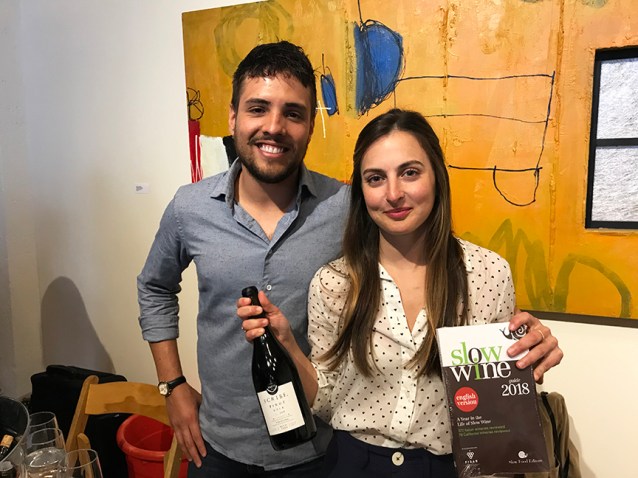 Above: Kelly Mariani (right), whose family owns Scribe in Sonoma, and Antonio Balassone, who works with the winery as well. They were among the estates presenting their wines in San Francisco at the Slow Wine Guide tasting. Both are grads of the Slow Food University of Gastronomic Sciences in Piedmont.
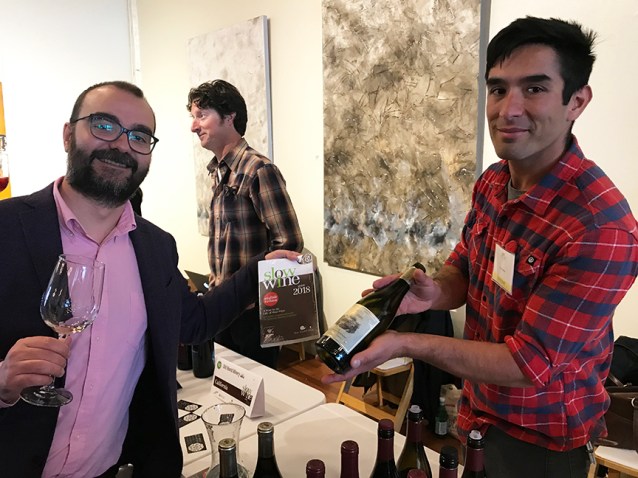 Above: Slow Wine editor-in-chief Giancarlo Gariglio (left) and Littorai’s associate winemaker Dan Estrin at the San Francisco event. What stunning wines!
 Tracie and I both really enjoyed this Vermentino (above) from Troon Vineyard in Oregon.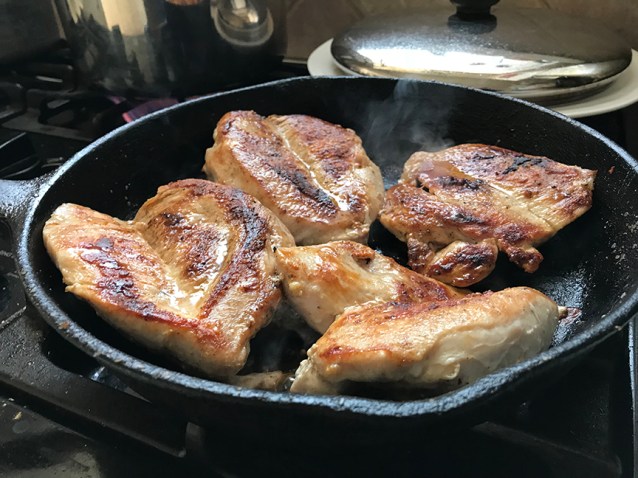
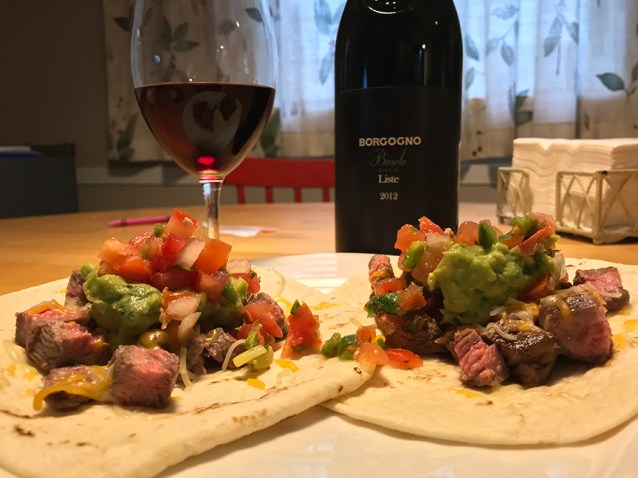 Single-vineyard designate Barolo and steak tacos piled high with spicy guacamole and pico de gallo…
 The world of Italian wine moves so fast these days that we often forget that the mosaic of Italy’s vinous treasure is as endless as it is wondrous.
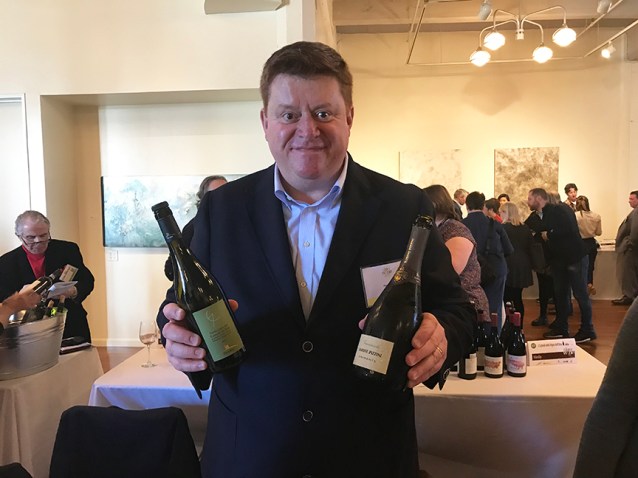 Another highlight for me at the tasting last week was Pievalta’s 2012 Verdicchio dei Castelli di Jesi Riserva San Paolo. I used to do some writing for the Barone Pizzini group, which includes the Pievalta estate. That’s BP COO Silvano Brescianini in the photo above. I’ve followed the wines since the earliest vintages and I really believe this year’s release and next year’s, from the 2013 harvest, are really going to put the little-biodynamic-estate-that-could on the map for good. Great wines.
  Speaking of the 2013 harvest, I was also stoked to taste the new release of G.D. Vajra’s Barolo Bricco delle Viole. What a vintage for this wine!
 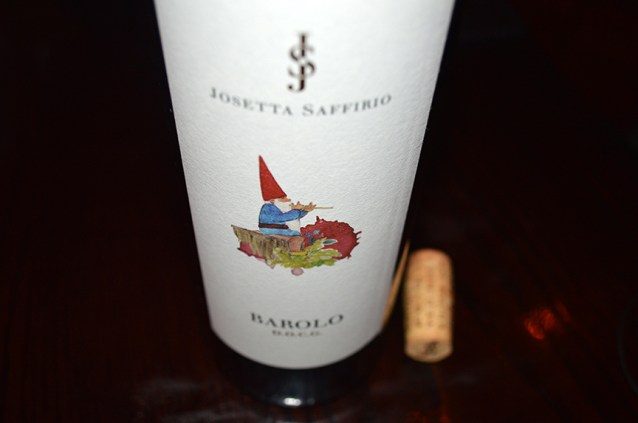 Lunchtime at a bustling Houston-area Tex-Mex restaurant isn’t exactly the ideal place to taste Barolo.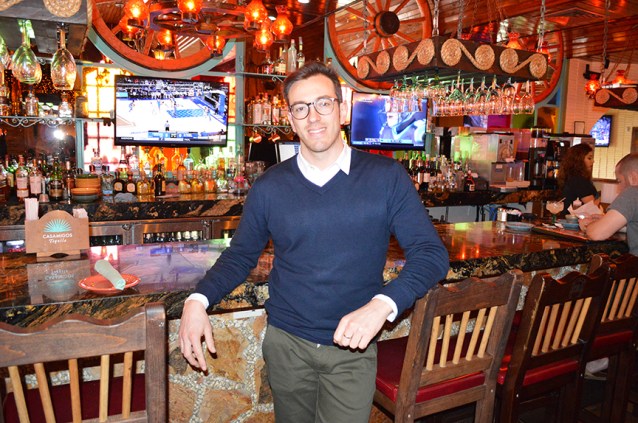
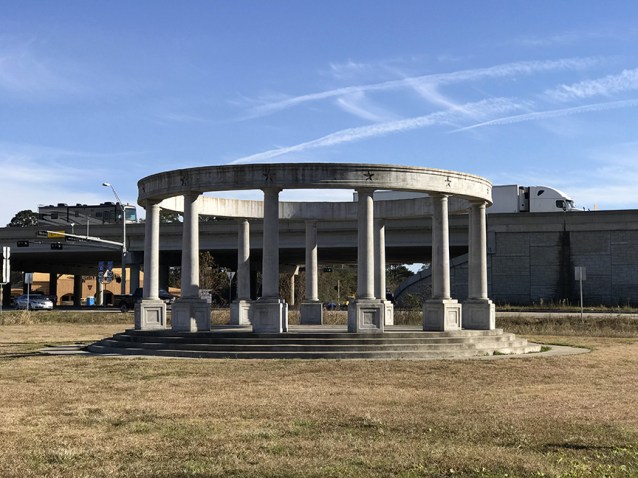 This week, my wife Tracie’s 97-year-old grandmother received an anonymous letter defaming her granddaughter and me. The author claimed to have gone to school at the same California university where I received my doctorate. She/he evidently felt compelled to share slanderous, false information about our lives, including our sex lives and our children.
 When Slow Wine editor-in-chief Giancarlo Gariglio asked me if there was something he shouldn’t miss on the touring team’s drive from New Orleans to Houston, I told him to drive straight through to my adoptive city where I knew he and the group of traveling Slows would enjoy dinner at one of my favorite restaurants in the city, Caracol. They did btw.
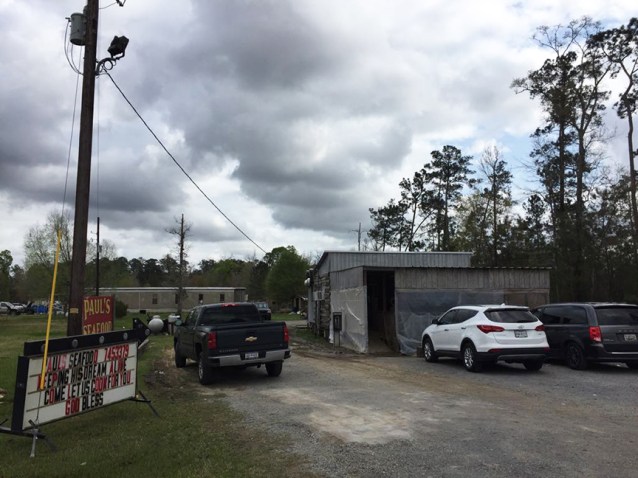 Evidently, Giancarlo’s GPS had informed him of an accident on Interstate 10 and so he took their van off the freeway at the first exit, which just happened to be
  Giancarlo and his team enjoyed the fried shrimp and frogs’ legs. And they said everyone was really nice to them (despite their broken English).
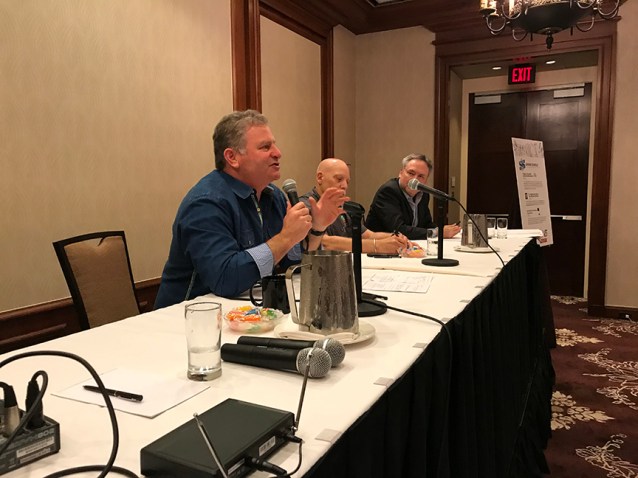 What a thrill for me to share the stage last night here in Houston with Italian wine industry great Brian Larky (foreground), US Foods Corporate Chef Joe Vargyas, and my good friend J.C. Reid, Houston Chronicle food columnist and bbq expert.
  As I prepare my notes for
  Do Bianchi