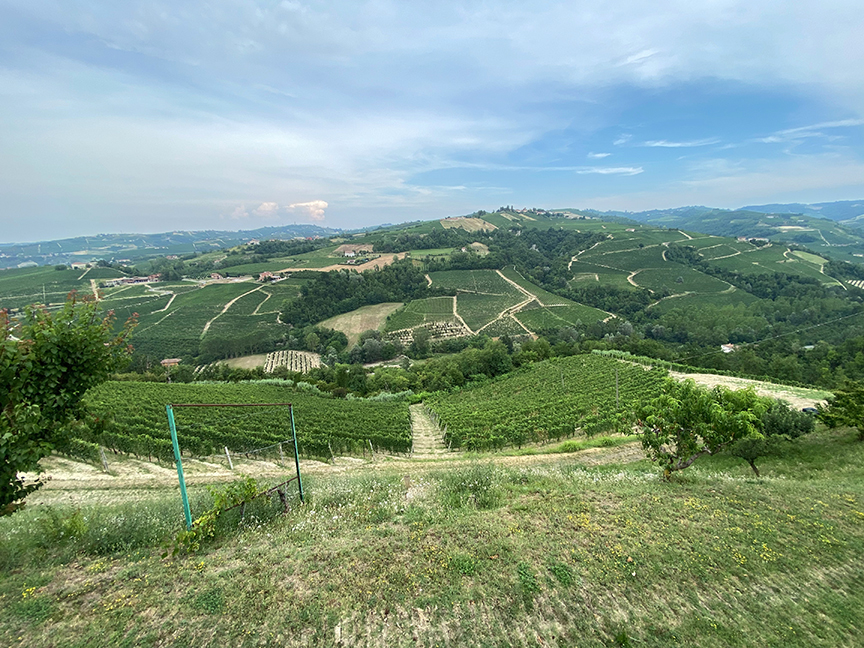
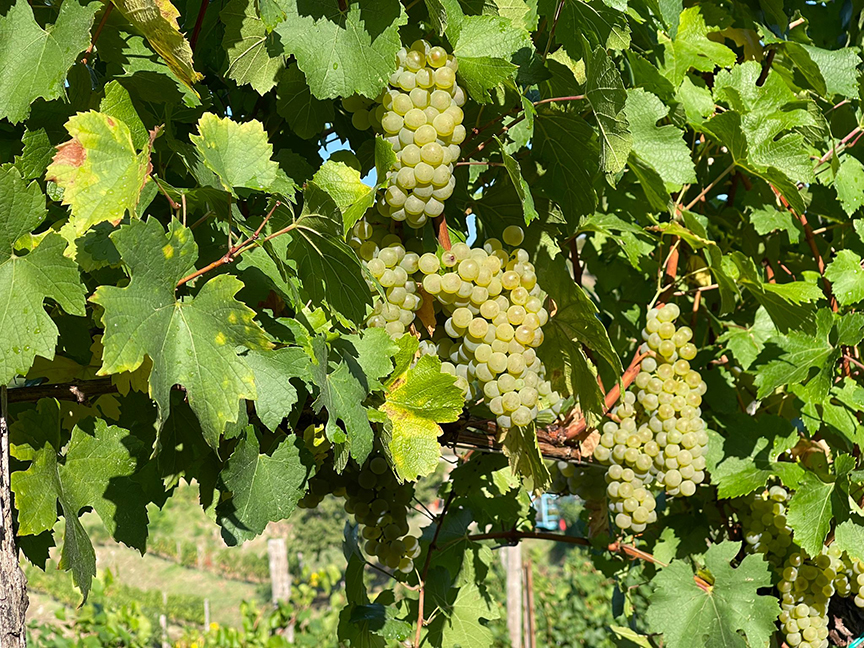
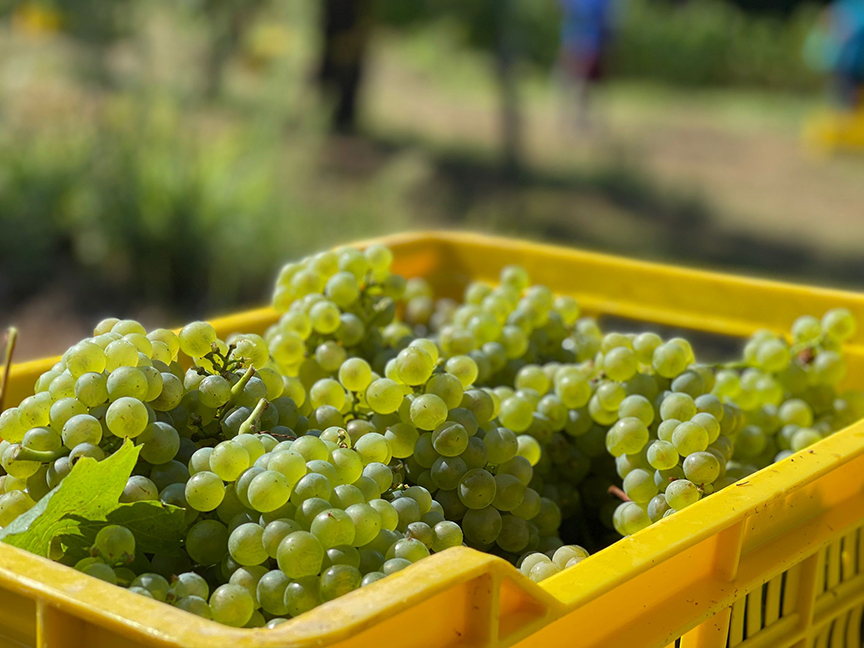
Early images from Italy’s vintage 2021. Chardonnay harvest in Franciacorta.

These images arrived last night from Franciacorta where my friends began harvesting Chardonnay grapes for the production of classic method sparkling wines on Saturday.

Those are grapes from the Arcari + Danesi flagship vineyard on Montorfano (Mount Orfano) in the southern part of the appellation. Photos by Arianna Vianelli, the winery’s media manager.

Grapes for sparkling wine, like those in the photos above and below, are generally the first to be picked in any given harvest. Arcari + Danesi is actually one of the latest to pick in their appellation because they like to go for a more ripe style than many of their neighbors.

Yields are going to be reduced this year because of the many intense weather events that took shape between the spring and through the summer. But the quality of fruit, says my bromance Giovanni Arcari, is promising. He and his business partner Nico, Franciacorta’s golden hand, plan to make less but high-quality wine nonetheless in this challenging vintage.
If you’re interested in tasting Giovanni and Nico’s wines, I’ll be pouring the 2016 Franciacorta Dosaggio Zero next week in Southern California and the following week in Northern California. It’s just one of the wines that’s part of my 2Bianchi.com wholesale portfolio. Seriously hit me up if you’d like to taste. I also need restaurant recommendations!

We also have the 2015 Dosaggio Zero on my list at Roma restaurant here in Houston. It’s made from the same vineyard in the photos.

I’ll be pouring at the restaurant tomorrow evening here in Texas for our Tuesday night FREE tasting. And then I’ll also be moderating our weekly virtual wine dinner, this week on Wednesday, not our usual Thursday.

On Thursday we’re hosting our first in-person dinner with a winemaker from Brunello. It’s sold out but let me know if you’d like to be added to the wait list.

Wishing a buona vendemmia to all our friends and colleagues in Italy. It’s been a rough year for them, on too many levels. But harvest is always a time for hope and for better things to come!
As Italy prepares for harvest, climate change is on everyone’s minds.

Above: if you were in Piedmont, Italy or Southeast Texas, you might think that was a rice field or a crawfish farm. In fact, it’s a flooded vineyard. A heat wave, massive rains, and severe hailstorms dominated the three weeks I was in northern Italy during the second half of July and the first week of August.

Climate change is always a sticky subject to cover when you’re a wine professional leading a guided tasting in Houston. It’s nothing less than inevitable that there will be some oil and gas professionals among the tasters. And especially when it comes to the older (and monied) petroleum crowd, some of those guests will reliably grumble, however amicably, when the topic comes up.

As a rule, I always begin my spiel by saying, we may not agree on its causes, but if you ask a grape grower, even the most conservative grape grower (and grape farmers tend to land on the conservative side, like most farmers), they will invariably tell you that they have observed clearcut shifts in climate over the last 30-40 years and beyond.

To this I always add: Whether or not it’s caused by human activity is a question for another time and place. But there’s no denying that it’s happening. Just ask any grape grower and they will tell you that 1) they harvest their crop much earlier than their grandparents did; and 2) extreme weather events, like violent rainstorms and intense hailstorms, are more frequent and more harmful than they were for past generations.

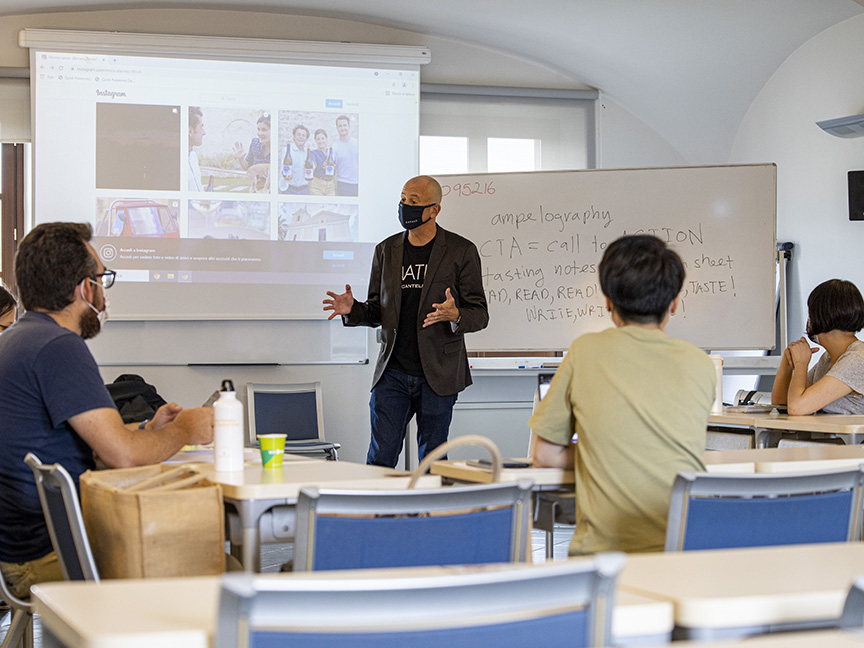
While I was in Italy teaching at the Slow Food University of Gastronomic Sciences during the last two weeks of July and the first week of August, it would have been challenging to find anyone who denied the devastating effects of climate change — or its causes. During the roughly 21 days I was in the country, there were a seemingly never ending heat wave; numerous hailstorms that literally destroyed cars across northern Italy; and concentrated bouts of rain that caused widespread flooding — even in areas, like Como township and lake, where flooding rarely if ever happens.

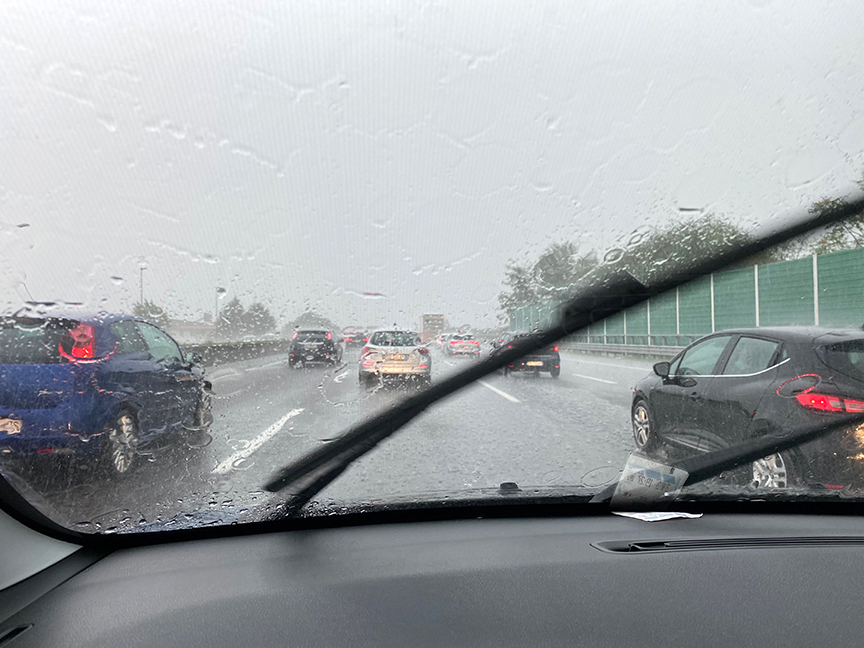
During my recent visit to Italy, my first in more than a year and a half, I took every opportunity I could to travel across wine country. Every day, it seemed, was punctuated by a major weather event that brought traffic to a standstill.

The hailstorms were so intense and the car damage so widespread that drivers on the freeway would pull over and vie for cover under overpasses. In the more than 30 years I’ve been traveling to Italy, I had never seen anything like it.

In the days that followed rainfall, the smell of sulfur being sprayed on the vines was often intense. There was one day when I abandoned my daily run because a grape grower warned me that the fumes could be harmful. (Farmers, even on certified organic farms, use sulfur to contain the spread of vine disease after intense humidity events like heavy rainfall.)

In Lombardy (northern Italy), where some grape farmers have already begun picking fruit for their classic method (sparkling) wines, the regional office of the Italian national farmers union, Coldiretti, has already predicted a 15 percent drop in production for the 2021 vintage. That estimate is surely a conservative one.

As Italy prepares for the general harvest to begin next month, climate change — whatever its causes — is on everyone’s mind.

Houston Chronicle features my new wine director gig at Roma.

Above: I was teaching at the Slow Food University of Gastronomic Sciences in Pollenzo, Italy last month when Houston Chronicle wine writer Dale Robertson called me up and said, “hey, I’m going to drive over from France and take you out to dinner… I want to write a story about your new gig at Roma” (photo by Marcello Marengo for the Università di Scienze Gastronomiche).

Tracie and I couldn’t have been more thrilled to see Houston Chronicle wine columnist Dale Roberton’s article about my new wine director gig in the paper (“Meet Jeremy Parzen, the new wine director at Roma in Rice Village,” August 10).

Our heartfelt thanks goes out to Dale and his editor: beyond the story of how I became the wine director at Roma restaurant, it also traces the arc of our romance, engagement, and family life here in Houston, a city that I’ve loved since I first moved to Texas to be with Tracie in 2008.

Even though I’ve run a wine program or two in the past (including Sotto in Los Angeles, where I served as wine director for nearly eight years), Roma owner Shanon had never considered having me help out with the list until I began hosting virtual wine dinners for the restaurant during the lockdowns (I’ve also been Roma’s media manager for more than three years).

It was in May of this year that we decided it was time for me to step up, roll up my sleeves, and do inventory — that odious chore of any wine director.

And from there, things just blossomed. Not only do I manage the list. But I also host wine tastings, in-person wine dinners, and virtual wine dinners where guests pick up the food and wine and then head home where we all connect on Zoom.

Honestly, we never imagined that the virtual events would continue after the lockdowns ended. But people really seem to enjoy them. And while we don’t have the 80-90 people that we used to host back in late 2020 and early 2021, we still get up to 40 guests on the calls. It’s been an immensely rewarding experience, both professionally and personally thanks to the many lasting friendships Tracie and I have forged through the Zoom meetings.

I was teaching at the Slow Food University of Gastronomic Sciences in Pollenzo, Italy last month when Dale called me up and said, “hey, I’m going to drive over from France and take you out to dinner… I want to write a story about your new gig at Roma.” He treated me to a fantastic dinner at La Piola in the town of Alba — the heart of Piedmont wine country, our shared “spiritual homeland,” as I like to call it. And it was there that he interviewed me for the piece.

The rest is history, as they say. Or should I say, our story.

Again, our heartfelt thanks goes out to Dale and his editor; to the amazing and wonderful Marcello Marengo who did the photography; to the director of the grad program where I teach, Michele Fino, who offered me the teaching gig more than six years ago and who orchestrated the photo shoot on the spur of the moment; to Shanon who has always believed in me and who lovingly gave me a shot “up at bat”; and to all our friends and family who have shared our myriad blessings during our seven years in Houston.

And dulcis in fundo, I want to thank Tracie for believing in all my crazy ideas and always being by my side… in thick and thin, for better and worse. I love you, piccina. We’ve come a long way, haven’t we? I wouldn’t have made it without you. I love you.

Taste with me tonight, tomorrow, and Thursday at Roma in Houston!

Houston wine friends: I’m back in Texas and will be pouring at Roma in Rice Village TONIGHT (FREE tasting), TOMRROW (in-person wine dinner, including black truffles shaved tableside), and THURSDAY (for our weekly virtual wine dinner via Zoom).

Click here for details.

Please come on down or log on and say hello!

I’m looking forward to sharing tales from my Italy trip and opening some bottles of Italian wine with you!

Tonight, I pour at our free tasting at 6. And then I’ll be working the floor of the restaurant all night. Please come by and say hello! Thanks for the support.

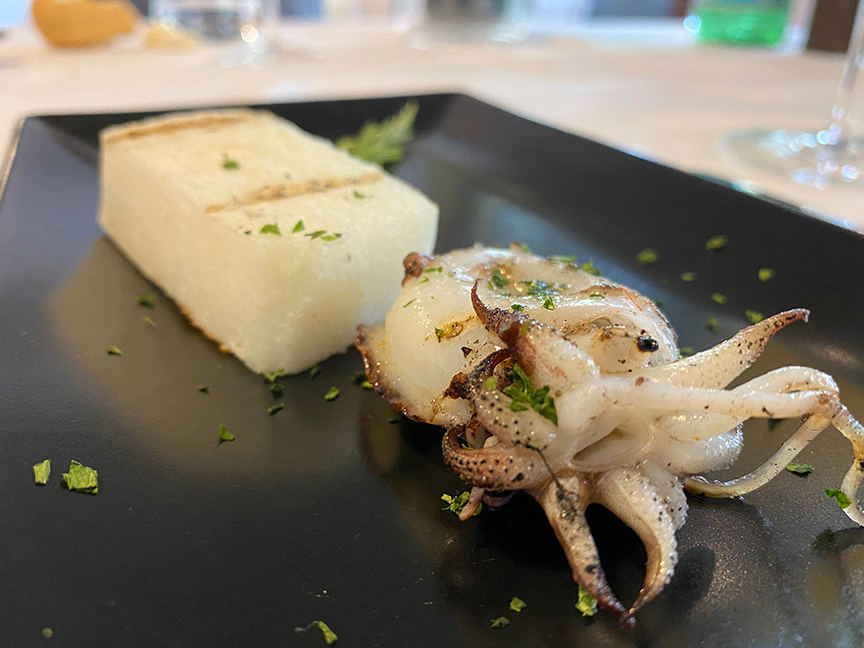
A unicorn (yes, we found one) and impossibly delicate baby cuttlefish at Nalin in mainland Venice.

When Giovanni and I sat down at Trattoria Nalin in mainland Venice on Saturday at around 1:30 p.m., we basically just said please start bringing us crudo and please bring us the wine list.

The super professional staff at this historic seafood destination did just that. But at the end of the crudo flight, the owner offered also us an unusual and entirely unexpected delicacy: flash-grilled baby cuttlefish that only appear for a brief window during this time of year. They are called seppioline di porto or harbor baby cuttlefish because these little cephalopods tend to gravitate toward the banks of the port.

They were impossibly delicate and when you bit into them you were rewarded with a “pop” of their ink. It was undeniably the best thing I’ve eaten this year.

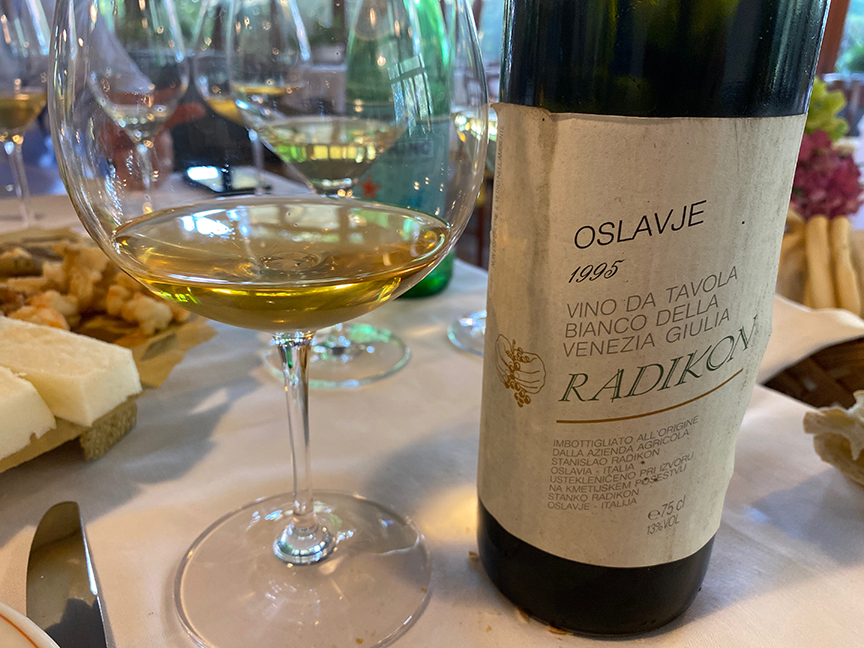
And of course it was only natural, after we ordered a couple of dream whites — a 2013 Friulano by Borgo del Tiglio and a 1999 Pinot Blanc from Vigne di Zamò (see below) — that the gracious and generous owner would reach deep into his cellar for a 1995 Radikon white blend.

Now, if that isn’t a unicorn, then I don’t know what is, folks!

Like a pre-CBS-era Fender amp, Radikon’s pre-maceration-era wines are intensely coveted among Friulian wine lovers. This wine was incredibly fresh, with only gentle notes of nutty oxidation and rich notes of dried stone fruit in the mouth. We lingered for at least an hour over this wine and it never lost its vibrant and very much “alive” character. The decade is young but this wine is going to set a high standard to follow! What an incredible wine.

Here are some snaps of the other things we ate and drank. The cuttlefish julienne and the langoustine (scampi) were highlights among the spectacular crudo lineup. The Pinot Blanc paired magically with the oysters.
Continue reading

Pinot Noir’s spiritual homeland in Italy: the extraordinary wines of Valeria Radici Odero’s Frecciarossa.

Like many American wine professionals, I had only ever tasted the classic method wines of Oltrepò Pavese pioneer Frecciarossa. But that all changed during the lockdowns thanks to a mid-sized importer of Italian wines in Texas.

I had called Doug Skopp, the owner of Dionysus Imports, to ask him if he had any wineries that would like to take part in the virtual wine dinner series I was moderating each week at Roma restaurant in Houston. He was eager to suggest “it kid” Italian flying winemaker Cristiano Garella and the wines of the legendary Oltrepò estate. But when I told him that we didn’t normally use sparkling wines for our weekly events, he was quick to point out that he imports only the winery’s still wines.

Not only was Cristiano one of the most compelling speakers in our series. But the wines, and in particular the Pinot Noir vinified off its skins (as a white wine), really impressed me with their depth, nuance, and originality.

After my first week of teaching at Slow Food U. in Bra, Piedmont (my first time back in Italy after more than a year and a half), I hopped in my rented Fiat 500L and made a beeline to the other side of the Po River in Lombardy (Oltrepò means literally on the other side of the Po [river]; Pavese is a toponym that denotes Pavia province).

Those are the some of the cows (above) that Valeria Radici Odero uses for compost on her organic farm (certified as of the 2020 vintage). She is the granddaughter of Giorgio Odero, the man who first begin making fine wines there. She is also one of the most brilliant winery owners I’ve ever met, a true wine professional with fantastic communications chops and a razor-sharp palate.

She had graciously squeezed me in with a group of young Piedmontese wine lovers who had reserved a tasting and tour with her that day (thank you again, Valeria, you are awesome!).

Her 2016 Pinot Nero dell’Oltrepò Pavese Giorgio Odero floored me with its rich flavor profile and lithe character. What a stunning wine, with great freshness on the nose and incredible lift in the mouth. It made me reflect on Italy’s wildly diverse mosaic of terroir: while I’ve tasted great still Pinot Noir from Trentino, Alto Adige, and Friuli, few wines have moved me the way this one did.

Frecciarossa’s wines remind me of why I keep doing what I do for a living: the endless viticultural adventures and discoveries that Italy shares with us as we explore the country’s myriad natural and human-made treasures.

Valeria, who speaks impeccable English, has promised me that Houston is going to be one of her first stops as soon as Italians are allowed to return to the U.S. I can’t wait to introduce her and share her wines with our guests back in Houston.

Join Paolo Cantele and me this Thursday for a virtual wine dinner in Houston.

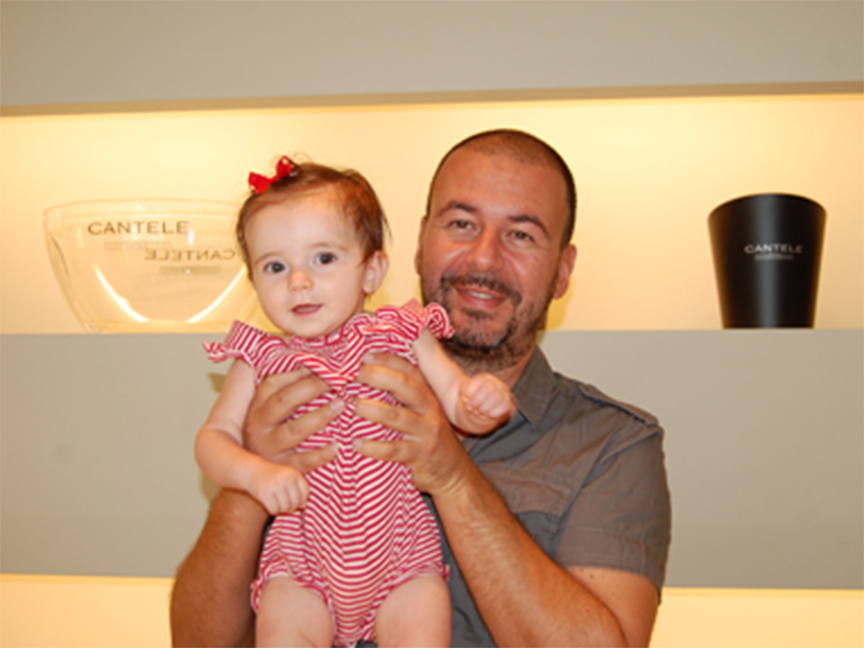
Georgia was about nine months old the first time we took her to Italy. That’s her with Paolo at the Cantele winery outside Lecce.

Paolo Cantele isn’t just one of my best friends in Italy.

He’s one of my best friends, period.

A “road warrior” like me, he and I went on what would turn out to be our last road trip of the year back in February, not long before our countries — his and mine — began to shut down.

We’ve traveled across Italy and the U.S. together, we’ve eaten in some of the best restaurants in the world together, we’ve discussed literature and film (our friendship began with his most amazing story about meeting Ninetto Davoli!), we share a love of music and culture.

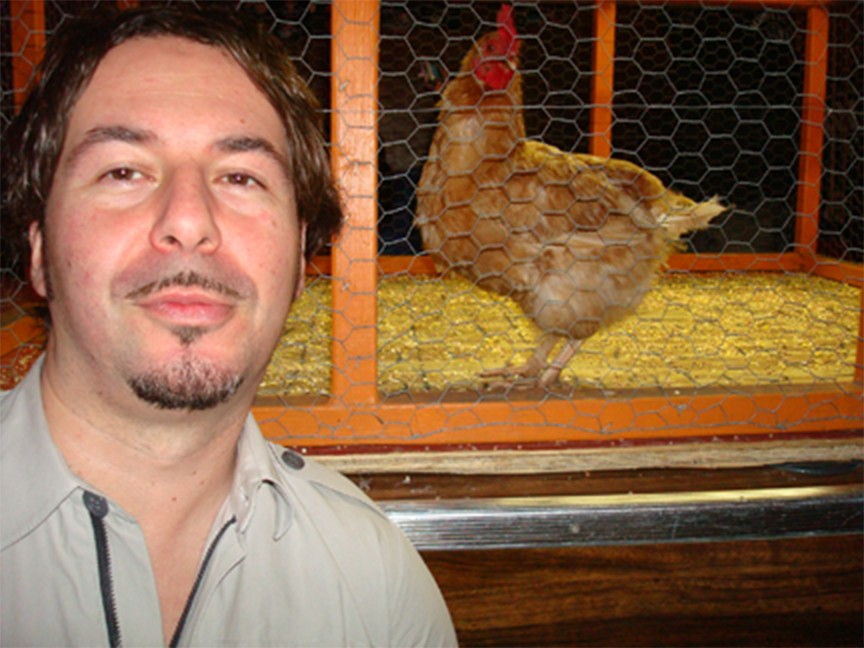
I’ll never forget taking Paolo honky tonking in Austin for the first time. That’s Paolo at Ginny’s Little Longhorn Saloon in 2010 (long before Dale Watson bought the place). We played chicken shit bingo — de rigueur!

In Oklahoma this year, we were even trolled together by a Trump supporter! No shit.

I just love the guy and we’ve had some truly unforgettable experiences together.

Paolo and I also work together: this Thursday he and I will be hosting a virtual wine dinner organized by one of my local clients, ROMA.

Owner Shanon Scott, chef Angelo Cuppone, and I have been doing these since late April and they’ve morphed into a de facto supper club. They are super fun and the regular crowd has developed a bonhomie that’s much needed in these days of attenuated socializing. Tracie and I look forward to them each week.

See the menu and details here. The couples price includes dinner for two and three bottles of wine. It’s a great deal and the week chef outdid himself with the perfect lineup for summer.

Please join us if you can: it’s a great way to support local businesses (including my own) and spend an evening with likeminded food and wine lovers. You won’t regret it.

Call (713) 664-7581 to reserve (these sell out fast so please be sure to snag your spot).

Cascina Baricchi: the best Barbaresco you’ve never tasted.

Only a few savvy insiders in America know the wines raised by the amazing Natale Baricchi on his family’s farm, Cascina Baricchi, on the eastern edge of the Barbaresco appellation.

Partly because of wine but more so because of our shared passion for guitar (he’s got an amazing collection of handmade acoustic guitars, including some Spanish gems), Natale Simonetta, his wife Francesca, and I became good friends two years ago when I was teaching in Piedmont at the Slow Food University of Gastronomic Sciences in Bra.

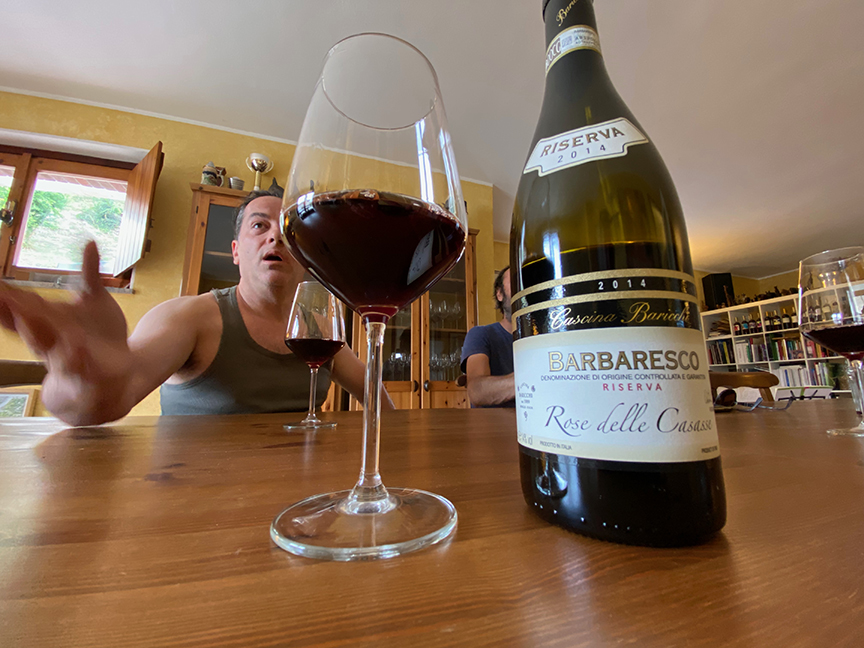
Yesterday, the couple hosted me and my Franciacorta bromances Nico Danesi and Giovanni Arcari for dinner and an informal tasting of their Cascina Baricchi Barbaresco (accompanied by guitar, of course!). That’s Nico, Franciacorta winemaker of acclaim, in the photo above.

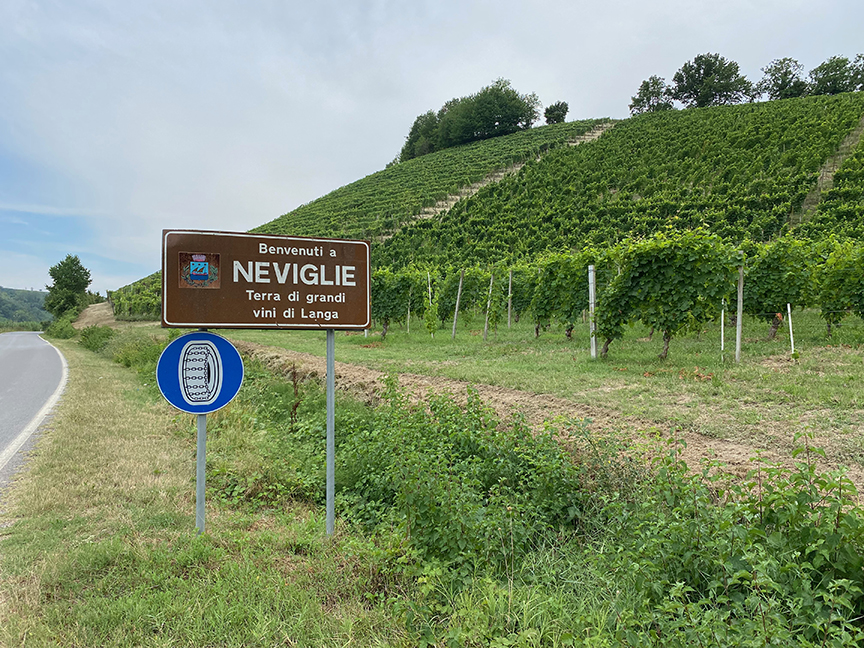
Francesca and Natale live in the commune of Neviglie, just to the east of the Barbaresco appellation. But their vineyards are in the Barbaresco DOCG. Because Natale’s father began making wine there decades ago, they are “grandparented” into the appellation (their case is an exception but for most producers the grapes have to be transformed into wine within the appellation borders). Natale’s dad was super tight buds with Angelo G., who helped him early on when he was first planting Nebbiolo there.

Natale likes to hold his wines back. His current release is Barbaresco 2014 (most producers have already released their 2016). We also tasted the 2004. Both wines were extraordinary. The 04 was one of the best wines I’ve tasted this year, nearly fully evolved and drinking gorgeously.

It was all accompanied by Francesca’s homemade vitello tonnato, a little bit of insalata russa, freshly cut tomatoes, a wedge of farinata, and a slice of crusty bread. Superb!

Natale and Francesca are in the processing of changing U.S. importers. I think a lot of people will be very happy with the results in terms of availability moving forward.

And when I see you in person, I’ll tell you a voce about some of their noteworthy clients. Once you taste the wines, you’ll understand why so many Nebbiolo greats collect these.

Man, it’s great to be back in Italy again. Seeing my friends, tasting new releases and vintages, and remembering what makes my world go around.

Thank you Natale and Francesca! I love you guys! (Thanks also for letting me play you the new song I wrote for Tracie! That meant the world to me.)

Feels like the first time: heading back to Italy after more than a year and a half.

Breakfast with the family this morning brought on an emotion not felt in more than 30 years: this erstwhile Medieval poetry and now wine scribbler is heading back to their spiritual homeland since being away for more than 18 months.

And it feels like the first time.

As the girls were getting ready for summer camp, an old and addled box of photographs found its way to my desk.

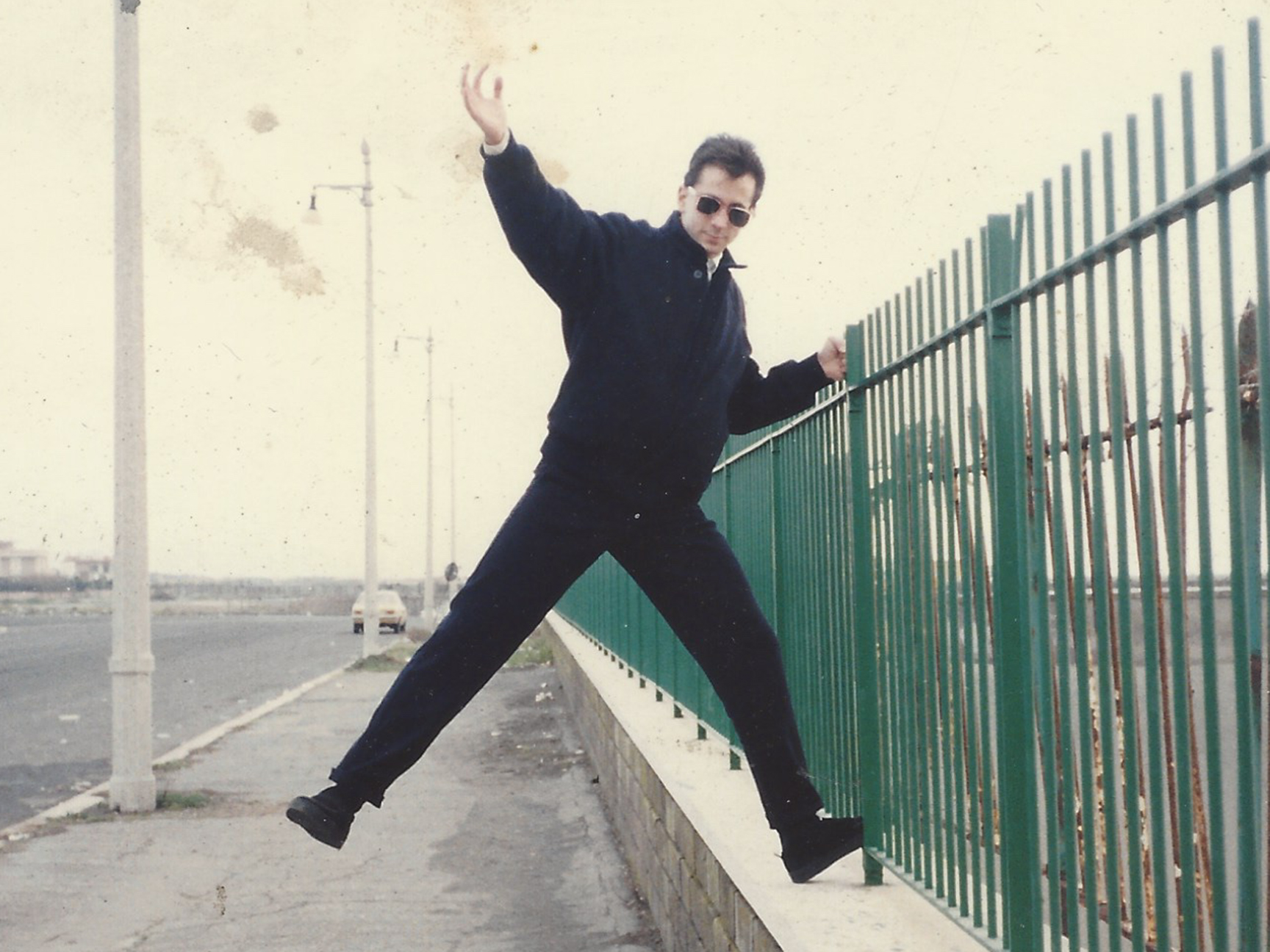
That’s a photo of me, above, in Ostia (the Roman coastal city) in 1987 during my first academic year in Italy on the University of California Education Abroad Program, the only curriculum at the time that allowed students to study side-by-side with Italians — with instruction in Italian.

That experience forever shaped my professional and personal life.

By year’s end, my first piano bar gig came along.

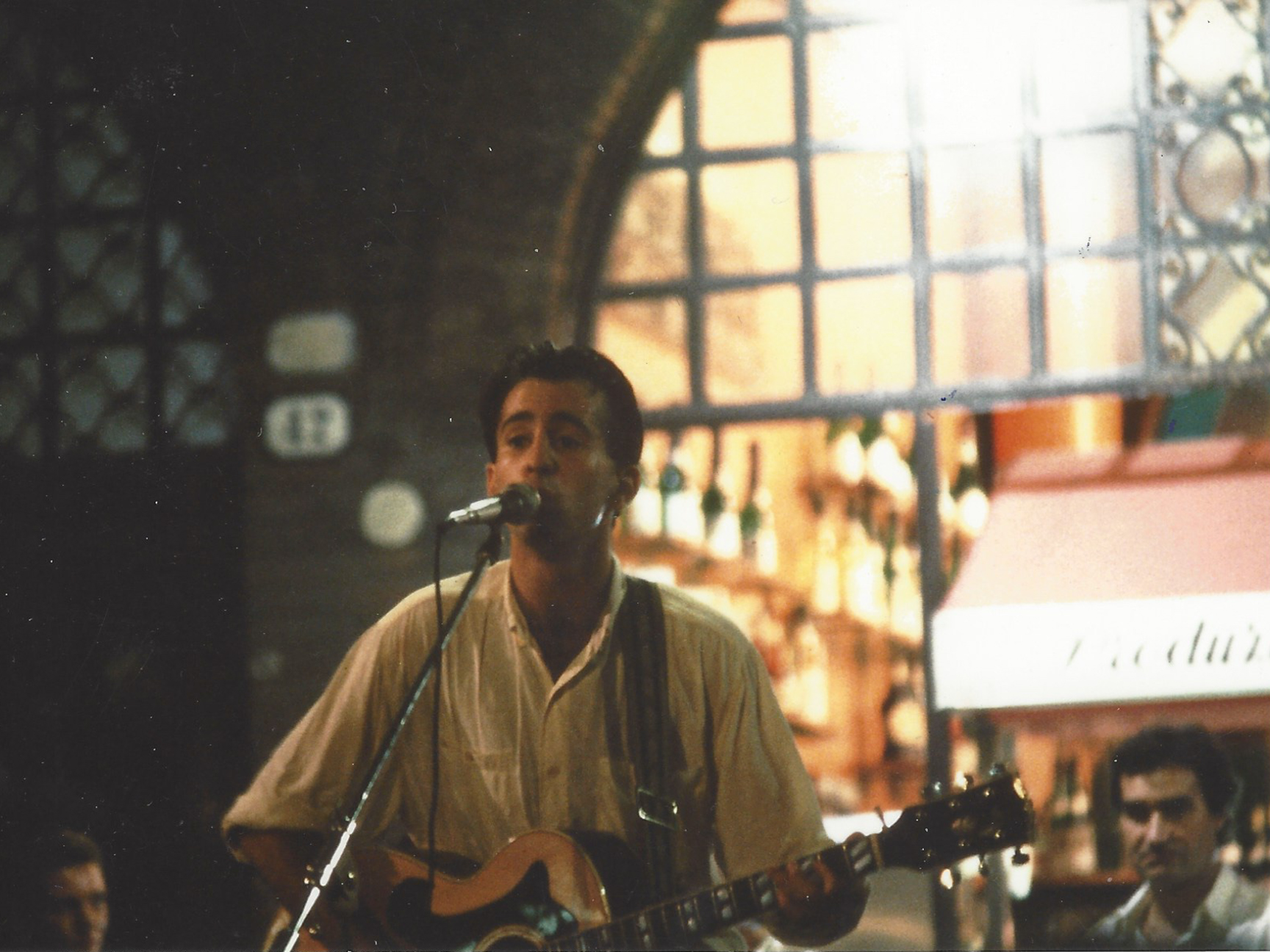
That’s me, above, playing my very first show at the Bar Margherita on Piazza della Frutta in Padua.

The person in the lower right-hand corner is Ruggero Robin, one of Italy’s top jazz guitarists. He would become my first friend in Italy and we would play countless gigs together when music was the income that kept me afloat during my studies.

This guitar player was way out of their league when they they played with Ruggero but the money was always decent and we would always have a blast together. (If you’ve ever been to VinNatur, you might have heard Ruggero play. He’s super tight with the Maule family.)

In normal years, this Italy-bound traveler would go to their spiritual homeland six times a year, between teaching, researching and tasting, trade fairs, and client visits. There was one year when I made nine (!!!) trips to Italy in less than 12 months.

But after being separated so long from my signora, this one feels different. It feels big like that first time, that first contact, that first kiss with the country that would become my lifeblood in so many ways. It even made for the connection between me and my life partner, Tracie, mother to our children.

On Sunday, I leave for three weeks of teaching at the Slow Food University of Gastronomic Sciences in Piedmont. There will be some good eating and drinking, too. And maybe even some music.

Sister Italy, my alma mater, where would I be today without you???!!!

I can’t wait to leap into your arms and feel your embrace!

Wish me luck and wish me speed. See you on the other side…

You say Prosecco, they say Prošek. Croatia unlikely to prevail in trademark claim over world’s most popular wine.

You may have already seen the scandalous headlines in the Italian mainstream media: “Prosecco under attack” and “The latest assault on Prosecco.”

If you’re reading this, it’s more likely that you’ve seen a headline or two in the English-language press: “Croatia and Italy renew feud over Prošek and Prosecco wines.”

“Croatian winemakers have leapt to the defence of their centuries-old dessert wine, Prošek amid a renewed Prosecco identity war,” wrote Angela Giuffrida for the Guardian earlier this month.

    Italy said it would defend Prosecco at all costs after Croatia applied to the European Commission for special recognition of Prošek [a Croatian dried-grape wine].
    It is the second time Croatia has moved to get the trademark recognised after Italy succeeded in blocking a first attempt in 2013, arguing that the name Prošek was too similar to Prosecco. Croatian winemakers agree that the two words sound similar, but they argue that consumers can easily distinguish between the two.

“This request,” wrote the Prosecco DOC consortium in a statement responding to the move by the Croatians, “could undermine the entire appellation system in Europe.”

But the Croatians’ efforts are unlikely to succeed.

As leading Italian wine writer and trade observer Maurizio Gily notes in his newsletter this week, Italian growers of Prosecco were the first to use the trademark Prosecco beyond Italy’s borders. In accordance with EU trademark law, this gives them the “precedent” and the right to use the name commercially.

Perhaps more significantly, Gily writes, Prosecco has come to be recognized as a place name thanks to the Prosecco consortia’s efforts to associate the name with the geographic area where Prosecco is grown and vinified (the recent designation of the Prosecco DOCG as a UNESCO heritage site bolsters the consortia’s claim).

In the light of this, Croatian producers of the dried-grape wine Prošek will most likely be denied the right to use the name commercially. It would only create confusion in the marketplace, lawyers for the Prosecco consortia will argue.

You may remember that in 2007, the European Commission ruled in favor of Hungarian producers of Tokaji who wanted to bar Italian growers from using the name Tocai on the labels of wines to be sold outside Italy. It was the inverse of what will happen in this case, writes Gily. In this instance, the Hungarians could rightly lay claim to the trademark because they were the first to use it in international commerce. This precedent will undoubtedly help the Italians in their claim.

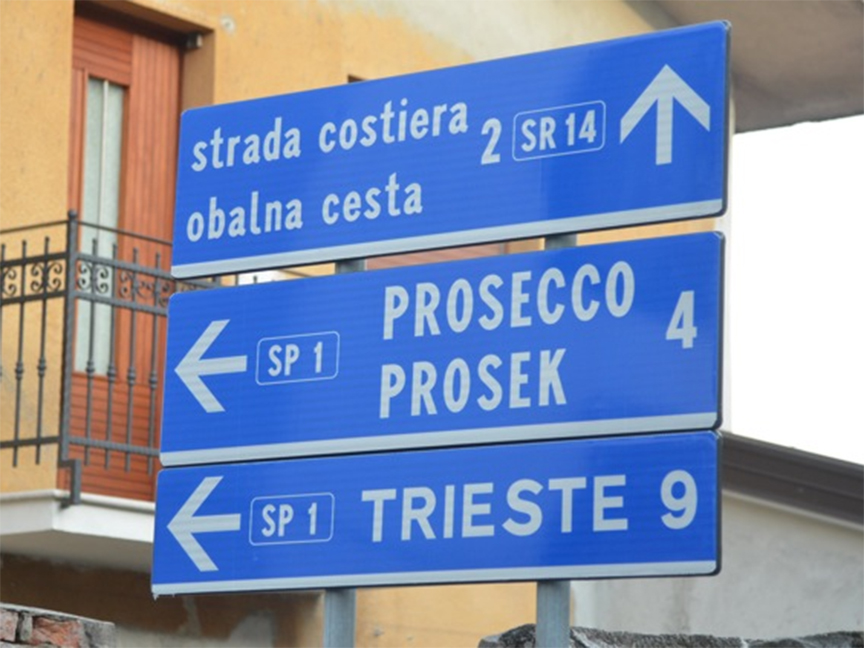
It’s worth pointing out that Prošek is also the Slovenian name for the village of Prosecco in Trieste province. There, in the semi-autonomous region of Friuli, street signs are written in both Italian (“Prosecco”) and Friulian dialect (“Prosek”), as in the image above. It comes from the Slavic prošek meaning clear-felled, in other words, a place cleared of trees. Some believe that the village was once a transit hub. It’s origin as a place for commerce may be the reason, some argue, that the toponym came to be associated with the wine.

In other (unrelated) news…

As Gily notes in his dispatch, the current “Prosecco war” has nothing to do with Putin’s unrelated (absurdist) efforts to claim the name “Champagne” for sparkling wines in Russia.

Image via the Gambero Rosso forum.