
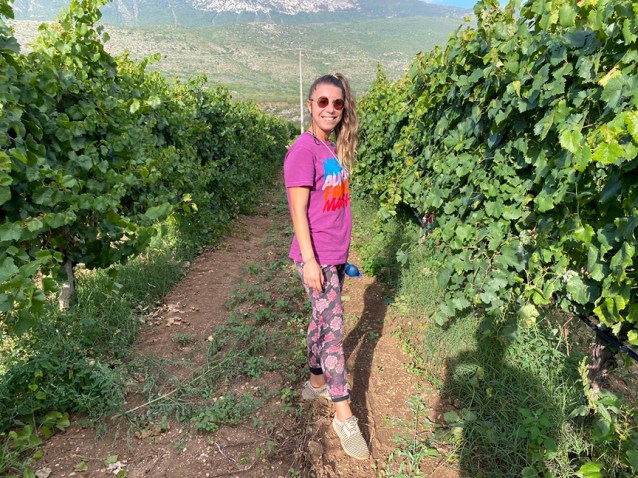
 Above: brilliant, energetic, and super cool, Giulia Cataldi Madonna isn’t the winemaker that most people expect to find when they visit Abruzzo, one of Italy’s most undervalued wine regions. The work people like Giulia are doing there might just hold the key to the future of Italian viticulture.
Last month, I headed to Italy just as the red grape harvest was about to begin in the country’s central and Adriatic wine growing regions.
And thus began my journey in search of the 2022 harvest.
So much has already been written about this vintage: the winter drought that lasted nearly all spring and summer, combined with the record high temperatures in July and August, had a lot of people predicting genuine financial catastrophe. Even where emergency irrigation was allowed this year (and it was allowed throughout the country), there sometimes wasn’t enough water to feed the thirsty plants.
Gentle rainfall in mid-August — deus ex machina — was just enough to save this year’s harvest. But growers are coming to terms with the fact that extreme weather events are going to become more frequent and (excuse the pleonasm) more extreme.
On September 6, I landed in Milan very late, caught some shut eye in a sordid hotel near the train station, and then got on an early high speed train to Rome the next morning. From there, I picked up a rental car and headed straight to Abruzzo.
 Above: Pecorino grapes at Cataldi Moadonna in Ofena commune were healthy and ready to pick despite the hot conditions. Ofena growers like Giulia have been dealing with extreme weather for generations. Their strategies offer clues into how Italian winemakers will need to face the challenges of climate change.
My first stop was Cataldi Madonna where the unstoppable Giulia Cataldi Madonna gave me a great tour of her family’s vineyards.
I’ve enjoyed her family’s wines for years and have often included them on wine lists I’ve managed. Their quality-price ratio can’t be beat.
But I had no idea how soulful and thoughtful this family is and why their wines matter so much — especially today.
And that was the first of many things I got wrong about Abruzzo. Gloriously wrong.
 Above: I’m going to get into trouble for saying this but Giulia told me that she agrees with me 100 percent when I say that Cerasuolo d’Abruzzo is not a rosé wine. It’s a red wine. More on that later.
Maybe because of the way the wine has been marketed in the U.S., it was always my perception that Cataldi Madonna was just another huge producer that made extremely restaurant-friendly wines in large quantities.
What I learned was that Giulia and her family have been pioneers of organic farming and — more importantly in my view — of smart, healthy, sustainable, and forward-looking farming in their region.
The work they are doing with pergola training alone is going to have legacy impact on how Italians grow grapes in future.
Giulia like the other winemakers I met on my trip are forging a new “climate change era” path by showing how canopy management and — as I later learned — solar radiation are going to be two of the keys to dealing with increasingly warm and arid vintages.
Half way into my conversation and tour with Giulia, it was abundantly clear that everything I thought I knew about Abruzzo was wrong.
Over the next few weeks, I’ll be sharing my notes from visits to three different wineries there (and a restaurant note or two). I hope you’ll join me on my journey of discovery. Thanks for being here.
 Next Thursday (10/13) in New York, I’ll be pouring and talking about “a wine for the worst kind of thieves”: Garganega (pictured in photo above, snapped a few weeks ago in Soave).
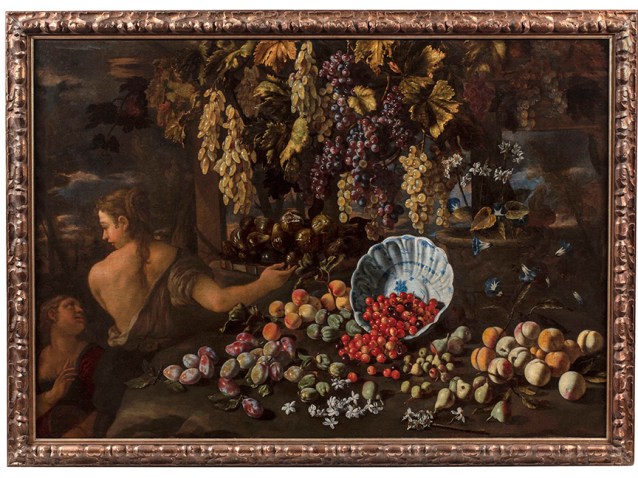 Above:
  Above: Colline Teramane (Abruzzo) grower Bruno Nicodemi built an artificial pond on his family’s property in the 1970s. At the time, it was intended to foster biodiversity. Today, it’s a lifeline.
 Above: Lake Garda as seen from the vineyards of Ca’ dei Frati in Lugana.
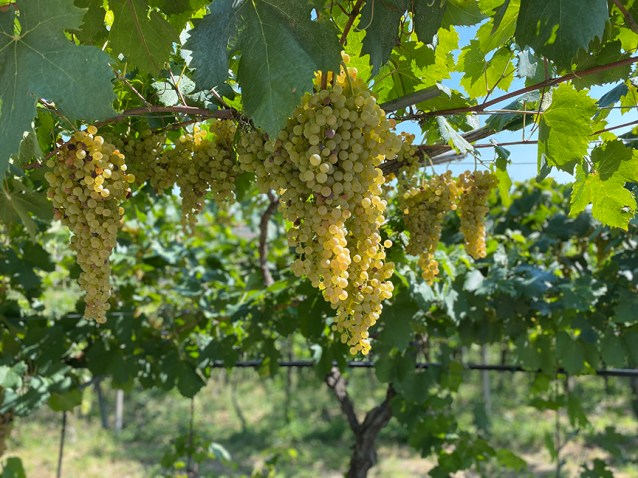 Above: Pergola-trained Garganega clusters in the heart of Soave. Note permanently mounted irrigation hose.
 The above figures come via vineyard consultant, publisher, and writer Maurizio Gily’s excellent online and print journal
 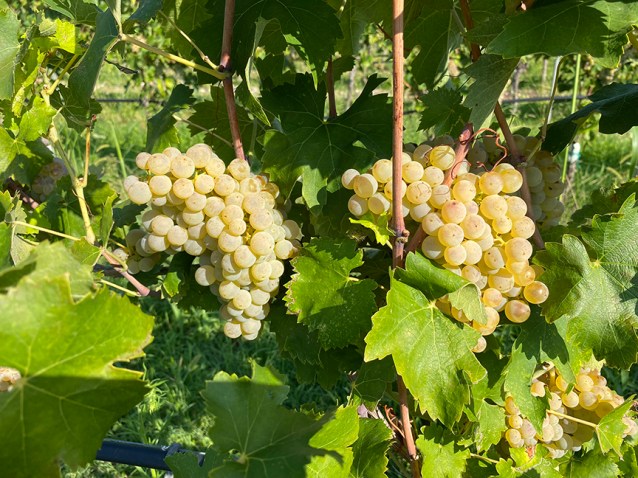 Above: Turbiana grapes photographed last week (September 14) in the Lugana appellation south of Lake Garda. Note the permanently mounted irrigation hose in the bottom of the image. “Emergency irrigation” was allowed across Italy in efforts to counter a drought that began in winter and persisted throughout the summer. Combined with prolonged, extremely high temperatures, it could have represented an existential threat to this year’s crop.
 Please join me next Tuesday at Vinology in Houston as we open three wines from Montalcino and discuss Montalcino subzones, including the classic and the new, and I share notes from my harvest 2022 trip.
 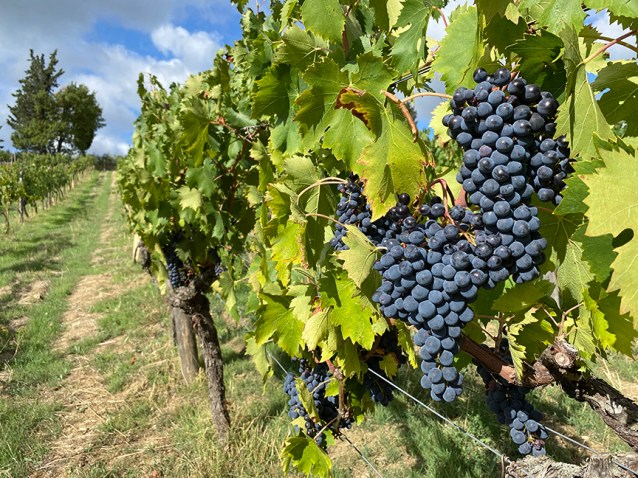 Posting on the fly this early Monday morning in Brescia where I’m staying. Two more days and many more meetings and tastings before I head back to Texas on Wednesday.
 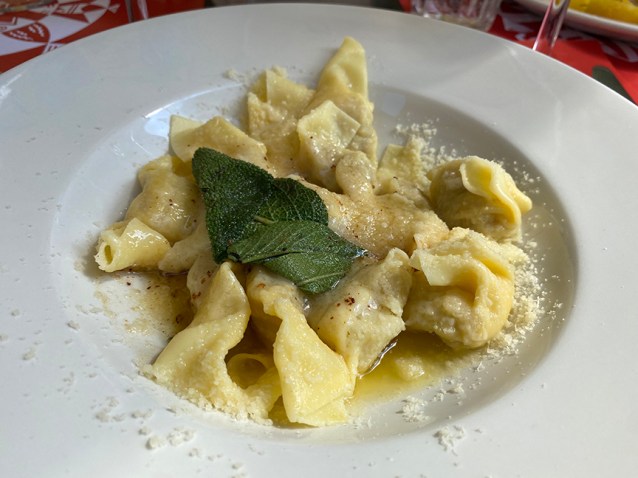 Anyone who’s ever been a working wine trip like this knows what a slog it can be. I’ve been going non-stop.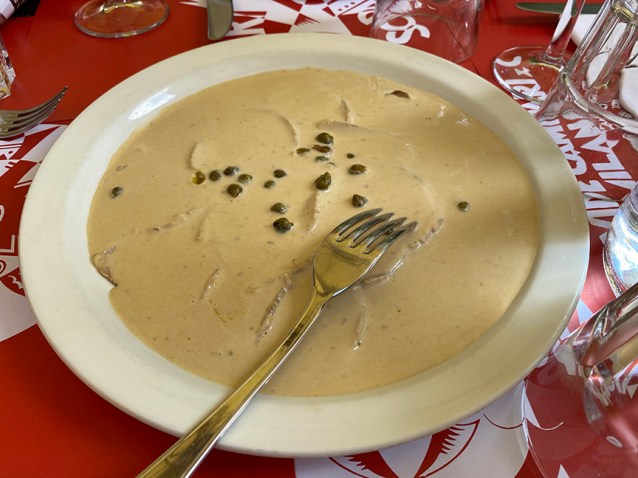
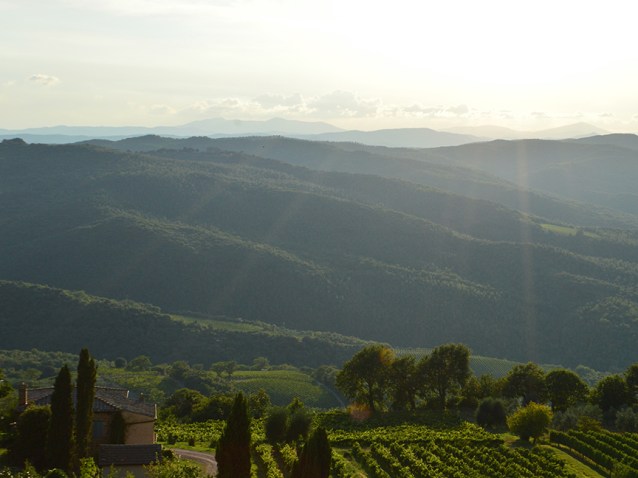 Above: a photo of mine from Montalcino, taken seven years ago (nearly to the day). Wine lovers and not, italophiles will tell you that the Orcia River Valley is — how to say this? — irresistibly delicious to the eyes.
 Above: a bas relief at the Basilica of Sant’Ambrogio in Milan.
 Do Bianchi