
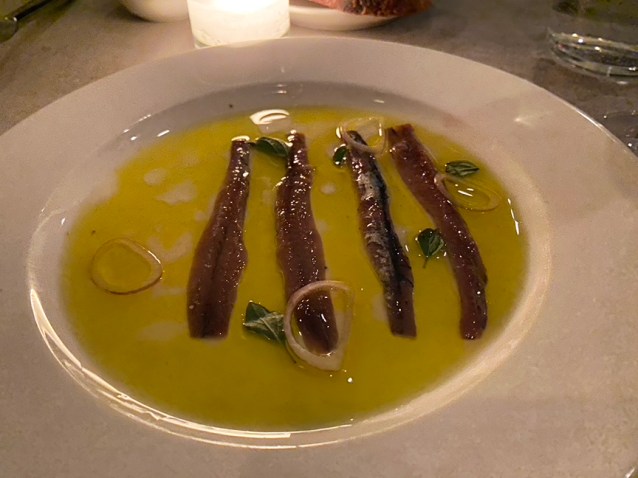
 One of the most exciting stops last week during my time in New York with my client Michele Marsiaj, owner of the Amistà winery in Nizza, was at LaLou in Brooklyn, Joe Campanale and Dave Foss’s French-leaning wine bar.
Those are the anchovies we ordered as an appetizer — minus one. One of the fishes is missing because when you sit down to eat with a bunch of Piedmontese and olive oil-cured anchovies show up, it’s like it vying for latkes with your two brothers at Hanukkah. I was lucky to photograph the last four. And they were excellent.
Crusty bread from the über-hip She Wolf bakery in Brooklyn really took that dish over the top.
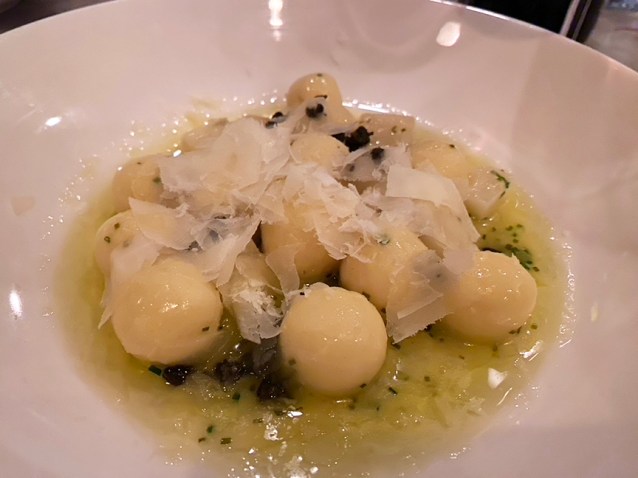 Those are the wonderfully ethereal “Parsian” gnocchi, which were hard not to inhale. Another over-the-top winner dish that we all thoroughly enjoyed.
But the real show stopper at last Wednesday night’s dinner was a 21-year-old Merlot. Or should I say a Merlot-heavy blend with Cabernet Sauvignon and Cabernet.
When you see a wine that old on a wine list at a hip Brooklyn spot, you know that there was someone who believed in and loved it enough to put it out there (they also had the 2000) despite its age and possible fitness issues.
The price was more than reasonable and so we ordered it. And man, this wine, from Edi Simčič in Slovenia, delivered freshness, slightly ripe red fruit, very light but perceptible tannin, and awesome drinkability and food-friendliness.
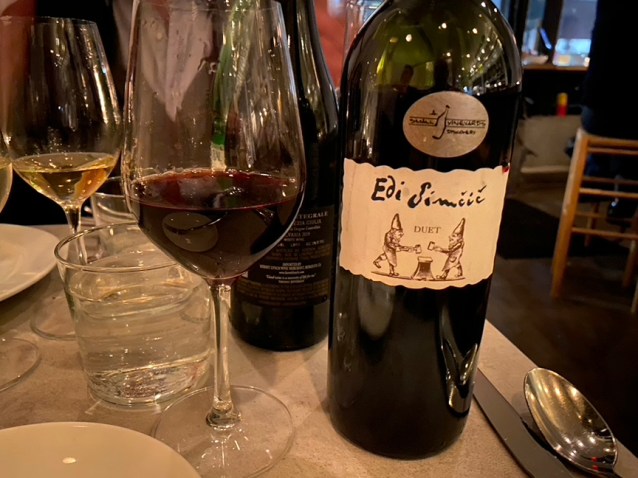 We were floored by how good it was.
We spend so much time paying attention to elegant classic whites and macerated whites from Friuli and Slovenia that we often forget that this transnational region for wine production is arguably the home to the best Merlot in this part of the world.
I’ll never forget drinking 1997 Merlot from Radikon with a group of sommeliers back in 2010 during a trip to Gorizia commune. You’d think that the film Sideways had never even been made! It was that good.
The Duet by Simčič isn’t even the estate’s top red wine. It’s part of their “essential line,” in other words, their entry tier. But man, this wine had it all going on. I can’t wait to get back in May to order the 2000.
I highly recommend the restaurant, the wine list, and, of course, the Merlot!
Joe and Dave, great place, great people, great vibes, and great times. We really enjoyed it.
 Even after all these years, I still hadn’t ever made it to Aldo Sohm’s super wine bar in midtown Manhattan. But that lacuna was rectified when I convened there last night with my client and his crew.
 It were as if Aldo Sohm, arguably the top sommelier in New York and undeniably one of the leading wine professionals in the country, had imparted his grace and knowledge to his team through osmosis (not reverse osmosis, I may add for the the wine-hip crowd).
 One of the things I love the most about my teaching gig at the
  Above: developed by the Italy-America Chamber of Commerce in Houston, the Taste of Italy trade fair and festival, the largest in the U.S. devoted exclusively to Italian food and wine, now has “chapters” in Dallas and Vancouver.
 With the annual wine trade fairs around the corner, wineries across Italy are gearing up by refreshing their “tech sheets” or “fact sheets” — the scheda tecnica in Italian.
 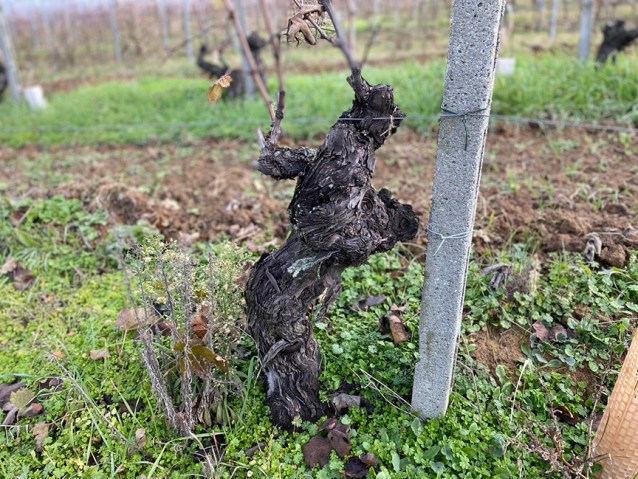 In December of last year, the wine route took me back to Piedmont where I visited vineyards in the heart of the Nizza DOCG.
 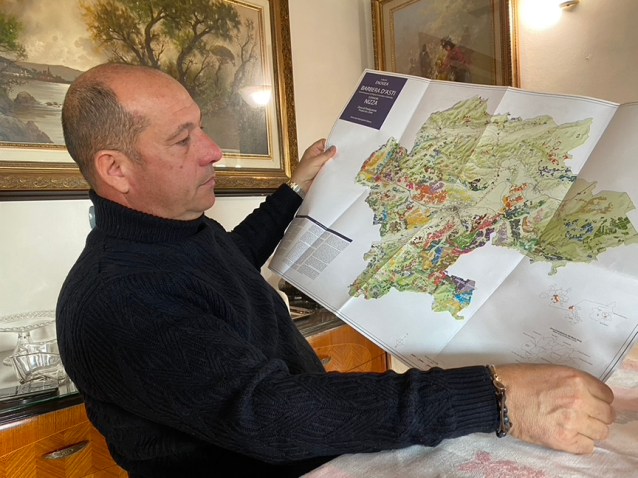 One of the things that set this subzone of Barbera d’Asti apart is the fact that the soils there are identical to the soils found in La Morra, the largest commune for the production of Barolo. The little known Bricco di Nizza, a ridge that runs from the town of Nizza Monferrato to the west toward the village of Moasca, has the same ancient marl (limestone and clay) and clay subsoils that have helped to make Barolo so famous.
 Luckily for me, I arrived not long after the vineyards had been tilled. And the subsoils were easy to spot.
  Note the deep brick color in the first photo and the grey-whitish hue of the second.
  I had first heard of a new Nizza DOCG estate called
  Man, it was so great to be back in NYC last week talking about groovy wines at the UN (no joke) and at a chic downtown Italian dining spot!
 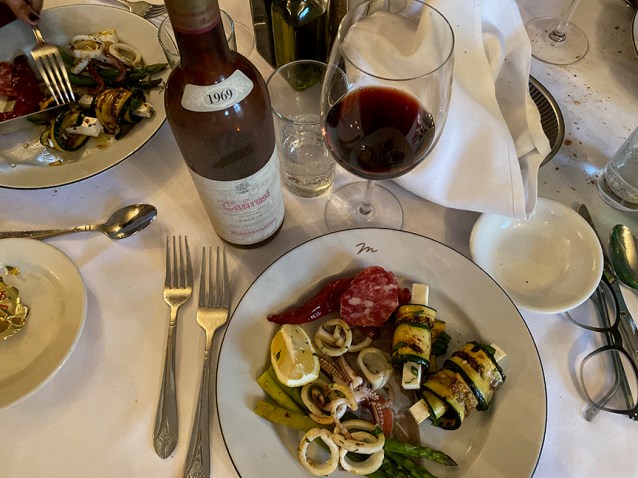 Posting on the fly today from New York where I’ve been working all week for a couple of my clients. But just had to share these photos from an extraordinary lunch yesterday at one of my favorite restaurants in the world —
  Man, 2023 has just begun but this meal is going to be hard to beat.
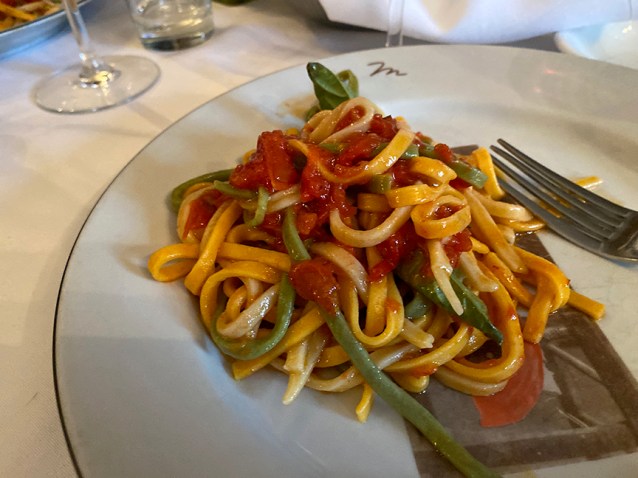 On the restaurant’s
 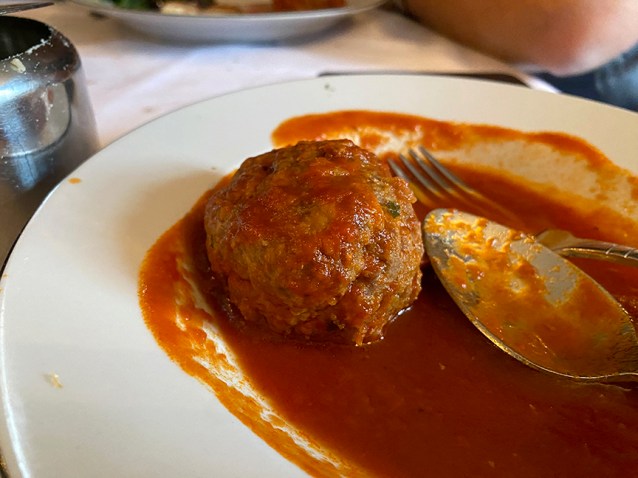 There’s one really important thing about the restaurant that I’m not saying here. New Yorker wine insiders know what I’m talking about.
 It seems that everyone in the Italian wine business loves to tell the story about how Chianti growers used to blend (white) Trebbiano into the (otherwise red) wines. Back then, they’ll tell you, before the “modernization” of Italian viticulture, Chianti was just another “rustic” wine. With a lot of character, yes. But not much refinement. Great for food but not worth the collector’s attention until the district’s post-modern era.
  One of the things that impressed me most during a visit to Pavia wine country a few years ago was the abundance of hazels.
  According to at least
  Do Bianchi