Aldo Sohm’s was everything you could dream of in a wine bar.

Even after all these years, I still hadn’t ever made it to Aldo Sohm’s super wine bar in midtown Manhattan. But that lacuna was rectified when I convened there last night with my client and his crew.

When I say that his joint is everything you could dream of in a wine bar, the reason is plain and simple: as soon as our party of four sat down, I asked our server to pick our first bottle and a round of appetizers and before you knew it, our glasses where full and beautiful food appeared before our hungry eyes.

That may seem like a mundane occurrence. But it’s rare, especially these days when staffing is a major challenge for concept wine destinations, that the servers can deliver food and wine happiness with such confidence and élan.

It were as if Aldo Sohm, arguably the top sommelier in New York and undeniably one of the leading wine professionals in the country, had imparted his grace and knowledge to his team through osmosis (not reverse osmosis, I may add for the the wine-hip crowd).

From the moment we handed our coats to the host (it’s cold in NYC this week!) to the last glass of wine we drank and bite of food we ate, Aldo’s team gently and elegantly guided us through the deliciousness of the list and the menu.

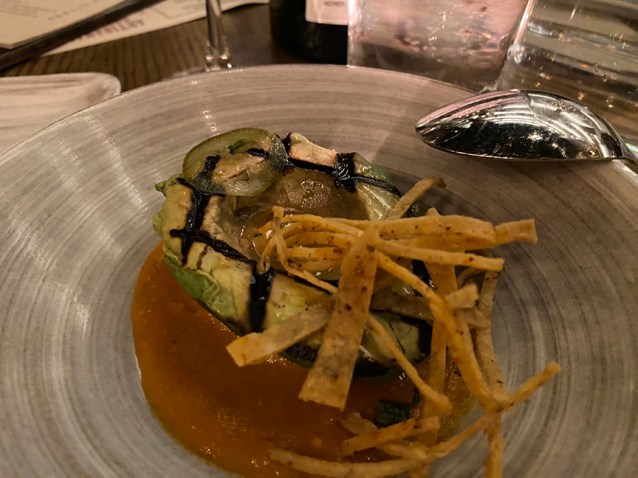
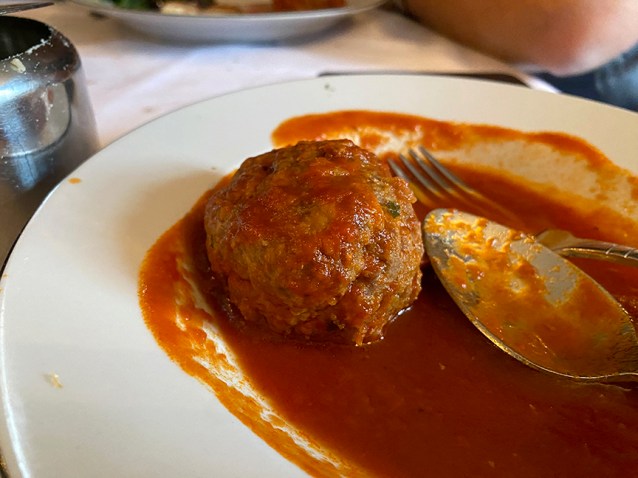
I loved the globally creative dishes and the verve of the mise en place. Grilled avocado and white Burgundy were followed by a beautifully stuffed red pepper (“one of chef Eric and Aldo’s favorites”) and a perfectly executed bánh mì paired with Billecart-Salmon rosé (thank you, Francesca and Michele!).

We couldn’t have enjoyed it more and I highly recommend it, especially to theater goers who will surely agree that’s it’s the perfect pre-show destination. The wine list is the best that you’ll find in this part of town for sure. After all, who needs another martini at Sardi’s?

Thank you Aldo and team! What a perfect way to show off the city to a group of jet-lagged Italians!

Here’s why every aspiring food and wine communicator should have a blog. Congrats to my former student on her new site!

One of the things I love the most about my teaching gig at the Slow Food University of Gastronomic Sciences in Piedmont is that many of my ex-students have carved exciting career paths for themselves after graduating from the school.

But nothing could be more rewarding in my teaching experience than discovering that one of my ex-students has launched a blog.

And that’s what happened last week when a student who took my food and wine communications seminars last year sent me her excellent new site, Sophie Eats (check it out… it’s great!).

Over the years, it’s become clear that a lot of the students want to pursue careers as influencers. For them, social media is the medium where they see a path forward. And one of the things we discuss each year is how social media has reshaped the way we think about food and wine communications. Just think of the restaurant-focused #MeToo movement and the key role social media played in driving the narrative and bringing about social change (it’s always one of the most exciting seminar days when we cover the subject).

But social media, I always point out, doesn’t allow the aspiring food and wine influencer, communicator, writer-for-hire to build an independent space for themselves on the internets. That space is important in part, I tell them, because it helps them to create brand recognition (after all, they are their own brand) and to optimize their search engine results.

But even more significantly, an independent blog serves as their resume and calling card. And this, in my experience, is an essential element for those who want to find work as writers and copywriters. Nearly every young writer I know has at the very least a site where they aggregate links for their recent works and host an about page.

We can argue all day about what exactly a blog is. In my view, a blog is an online journal that is updated regularly. In line with this, I believe that social media is a form of microblogging and thus is also a blogging medium. What is Instagram anyway? A media sharing platform that most users update on a regular basis.

But social media gets to keep the clicks and the search engine optimization for itself. By feeding our feeds with our media, we are working for the social media companies. I don’t think there is anything wrong with using social media to build your brand and brand awareness. But I believe those who plan to forge a career in food media need to have their own space where their own stories can have a long-term impact on their career path.

It’s always a disappointment to my students when I talk to them about how there are a dwindling number of mainstream food and wine writing gigs today. But in an age where every food and wine brand needs high-quality content that will engage readers, it couldn’t be a better time for young writers hungry for work.

I just met with a just-turned-thirty writer in New York who currently has apartments in Paris and New York thanks to the amount of writing gigs she has on both sides of the Atlantic. And she even finds time to write the occasional eno-journalism piece. And yes, she has a website that she updates regularly with links to her recent publications (sounds like a blog, doesn’t it?).

Sophie, congrats on the launch of your big, beautiful, loud, colorful, and wonderful blog. I’m looking forward to following along.

Food industry readers, if you’re looking for a writer to hire, I can’t recommend Sophie — and her blog — highly enough.

Calling all Houston food and wine lovers: Taste of Italy (3/6) registration now open. BBQ/Italian Wine seminar tickets going fast.

Above: developed by the Italy-America Chamber of Commerce in Houston, the Taste of Italy trade fair and festival, the largest in the U.S. devoted exclusively to Italian food and wine, now has “chapters” in Dallas and Vancouver.

What do you get when you put a bunch of Italians, a bunch of great Italian foods and wines, and a bunch of hungry and thirsty gastronomes in a room together in Southeast Texas?

Now in its ninth year, Taste of Italy is back in full swing on Monday, March 6 in Houston. I’ve been involved as one of the organizers and the event’s emcee for eight years now. And the work I’ve done together with the Italy-America Chamber of Commerce, the gathering’s host, is something I am the most proud of. The chamber, which is ranked in the top ten worldwide and the number-one chamber office in North America, genuinely connects Italian and American businesses (see the event’s “Success Stories” here).

On Monday, March 6, we are returning to the swank Omni hotel where more than 50 Italian food and wine companies will be showing their products.

Click here to register for the grand tasting.

And click here to register for the BBQ and Italian wine seminar that I will be leading with Spec’s Italian wine buyer Tom Dobson and celebrity pit master Ara Malekian (this event is close to selling out so please be sure to sign up to ensure availability; see the link for the super cool flight of wines that Tom has chosen).

I’ll also be leading a seminar on Calabrian gastronomy. I’ll share that link as soon as it becomes available.

Thank you for loving Italian food and wine and thank you for supporting the work I do with the Italy-America Chamber of Commerce here in Houston. I hope to see you on Monday, March 6 at the Omni!

Why do we include “suggested serving temperatures” in tech fact sheets? Anachronisms and other questionable practices in superfluity.

With the annual wine trade fairs around the corner, wineries across Italy are gearing up by refreshing their “tech sheets” or “fact sheets” — the scheda tecnica in Italian.

A number of my clients rely on me for the English renderings of this so-called technical data. And the recent rush of requests for new translations and edits has had me scratching my head: why do we insist on including “suggested serving temperatures” as part of the tech sheet canon?

And for that matter, what good will knowing the pH of a certain wine help a sales rep who’s trying to place a wine at a pseudo-Italian restaurant where the buyer is more concerned with pleasing their clientele and making a decent margin for their bottomline?

One of the anachronisms that strikes me as particularly superfluous, especially today, is the entry for “training system.”

Back when Italian wine was still fighting to find a place for itself next to its transalpine counterpart, the note on training system was meant in part to distinguish the old head-trained alberello vines from the more modern cordon- and Guyot-trained vines. It was a sign that the winery in question had made the necessary investment to upgrade its growing practices. As if that would make the difference between a decent wine and a great one. Today, in fact, it’s actually cooler and more progressive in some circles to have head-trained vines!

And don’t get me started on “suggested pairings.” My favorite recent pairing suggestion was evasive. We’re not including suggested pairings, the author wrote, because everyone has their own tastes. It underlined, at least in my mind, the superfluity of recommending foods to eat with a given wine. After all, people who live in New York eat different things than people in Texas. People who live in Asia eat different things that people in Europe. What’s the point of recommending vitello tonnato for a Barolo when the end user might be a vegetarian?

The great 20th-century Italian novelist Carlo Emilio Gadda used to say that pronouns are the lice of thought. My belief is that tech sheets are the lice of our wine times.

When are we going to revisit these antiquated conventions of industry and start writing about wine in a more purposeful and thoughtful way?

Barbera is the grape I’m most excited about. The reason may surprise you.

In December of last year, the wine route took me back to Piedmont where I visited vineyards in the heart of the Nizza DOCG.

Italian wine professionals are (or should be) well aware that Nizza — the commune of Nizza Monferrato and the surrounding villages — officially became its own designation in 2014.

But what they might not know or realize is that historically, this small area in Piedmont wine country has been home to some of Italy’s most iconic wines and wineries for generations.

Over the last few decades, italophile focus in the international wine community has shifted to the Langhe where Barolo and Barbaresco are raised.

But if you dig back through the guides and Italian wine books from the 1980s, you’ll find that a handful of pioneering growers and winemakers had recognized the immense potential of Nizza Monferrato where Barbera — not Nebbiolo — has its spiritual home.
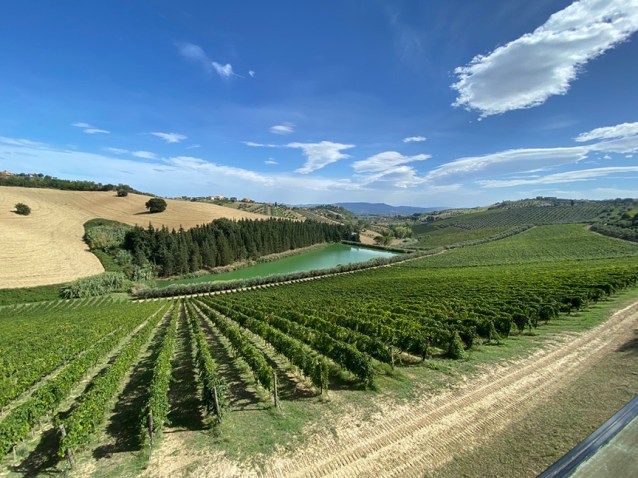
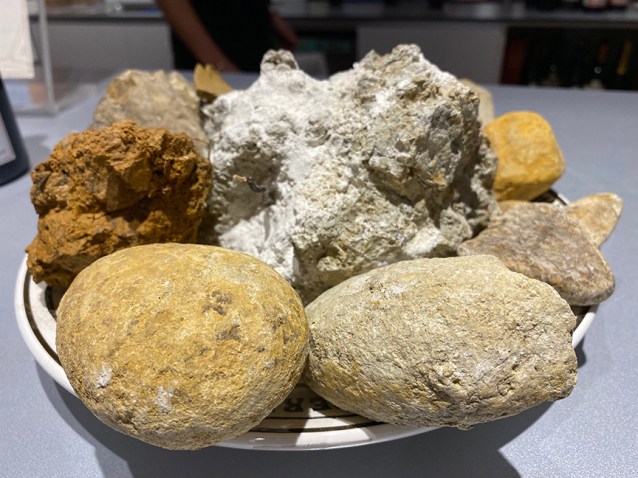
One of the things that set this subzone of Barbera d’Asti apart is the fact that the soils there are identical to the soils found in La Morra, the largest commune for the production of Barolo. The little known Bricco di Nizza, a ridge that runs from the town of Nizza Monferrato to the west toward the village of Moasca, has the same ancient marl (limestone and clay) and clay subsoils that have helped to make Barolo so famous.

And I was there to take pictures of dirt.

Luckily for me, I arrived not long after the vineyards had been tilled. And the subsoils were easy to spot.

Those are clay-rich soils above. And below, you’ll see limestone-rich soils in a newly planted vineyard there.

Note the deep brick color in the first photo and the grey-whitish hue of the second.

People familiar with the vineyards of La Morra and other parts of Barolo could easily mistake them for land in Langa.

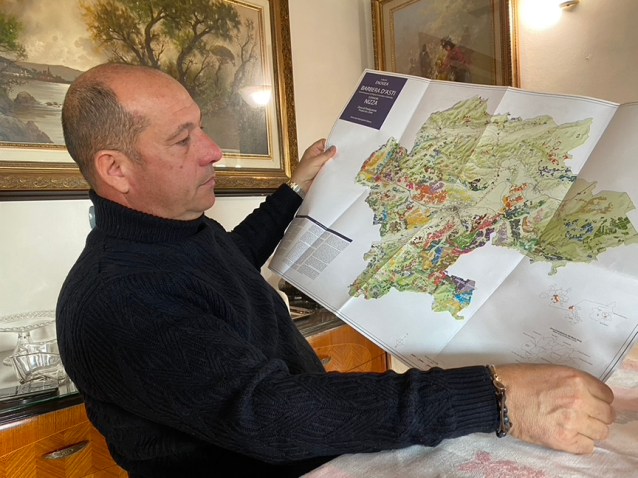
I was also there to speak to Barbera-whisperer Massimiliano Vivalda, the man showing me the Masnaghetti/Enogea map of the Nizza DOCG above.

He metaphorically walked me through all the historic wineries there and their vineyards as we studied the map together.

He talked to me about the gold rush of investment that is sweeping over this appellation as some of the top winemakers in Italy are buying property and building winemaking facilities in around Nizza Monferrato along the Bricco di Nizza.

And we tasted wines that come in part from a farm he and his family have managed for decades.

I had first heard of a new Nizza DOCG estate called Amistà through a client of mine. And when I met the son of the owner, a student at the Slow Food University of Gastronomic Science where I teach every year, he extended an invitation to visit.

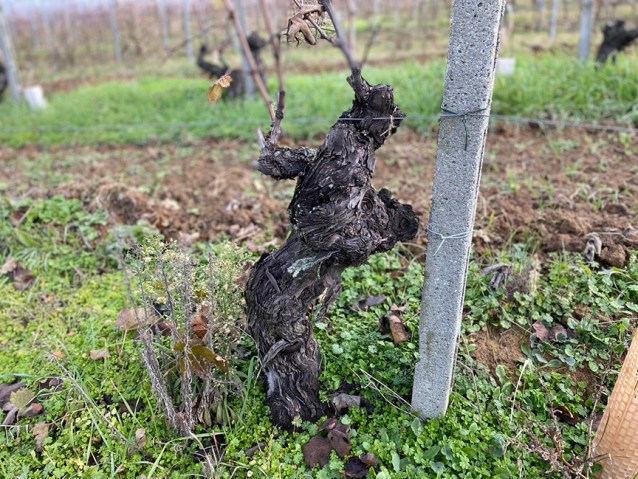
The thing that intrigued me the most about this new but storied property, where some of the vines are 60+ years old (see the gnarled plant above), was that the owner, a lovely gentleman from Turin named Michele Marsiaj, had decided to break with a tradition established by a handful of his famous neighbors.

Instead of aging the wine in French barriques, he had decided to make a Nizza DOCG raised entirely in large cask. When I had tasted the wine on campus (thanks to the student) back in the fall of 2022, I was blown away by its elegance and purity.

Connoisseurs of Piedmont wines will immediately recognize the significance of this stylistic choice. The use of barriques (as opposed to large-format botti) transformed Barolo and Barbaresco in the 1990s as winemakers reached for a “modern” expression of their grapes. Similarly, Nizza growers began “barriquing” their wines as early as the 1980s.

Amistà really impressed me with its clarity and varietal expression. And I’m ever more convinced that you’re going to be hearing a lot about it this year. That’s in part because Michele, a man I admire greatly, has asked me to be Amistà’s U.S. ambassador for 2023. I couldn’t be more thrilled to be working on such a compelling project and I love and am proud to be part of the super team that Michele has assembled.

A new chapter begins! And there’s so much more to tell. Thanks for being here and stay tuned…

Taste Chianti with me this week in Houston. Abruzzo next week in Dallas. And back to Houston for Taste of Italy in early March.

Man, it was so great to be back in NYC last week talking about groovy wines at the UN (no joke) and at a chic downtown Italian dining spot!
I was in town for a couple of new clients of mine (more on that later this week) and it was a blast to be tasting and sharing notes with super wine people.

With Vinitaly around the corner, it feels like everything is falling back into place.

On Thursday of this week, I’ll be pouring and talking about some of my favorite expressions of Chianti at Vinology. It’s always a simpatico group and the staff there put together a phenomenal flight of wines. Thursday evening, February 2. Click here to reserve.

On Wednesday of next week, I’ll be leading three seminars at Eataly Dallas, including Moscato d’Asti (one of my favorite talks I do), Pinot Grigio (I think a lot of folks are going too be surprised by the wines), and Abruzzo (one of the regions I’m the most excited about right now). Wednesday morning, February 8. Click here to reserve.

And dulcis in fundo, Taste of Italy, now in its 9th year, is scheduled for Monday, March 6 at the Omni in Houston. Click here to reserve for the walk-around tasting (see the list of exhibitors here). Click here to reserve your spot at the Italian Wine and Texas BBQ seminar, featuring smoked meats by celebrity pit master Ara Malekian (Harlem Rd. BBQ). That’s just one of the events I’ll be emceeing that day.

I’m so proud of the work we do at Taste of Italy, a project I’ve been involved with since its second year. So many of our exhibitors have made meaningful connections and placements over the years. It’s a great event.

Thanks for your support and solidarity! It’s so great to be back. Hope to see you soon!

Photo above by filmmaker Russell Peborde. Thank you again, man!

1969 Taurasi and great Italian cooking? Falling in love again with Anthony Cerbone’s Manducatis in Queens.

Posting on the fly today from New York where I’ve been working all week for a couple of my clients. But just had to share these photos from an extraordinary lunch yesterday at one of my favorite restaurants in the world — Manducatis in Long Island City, Queens.

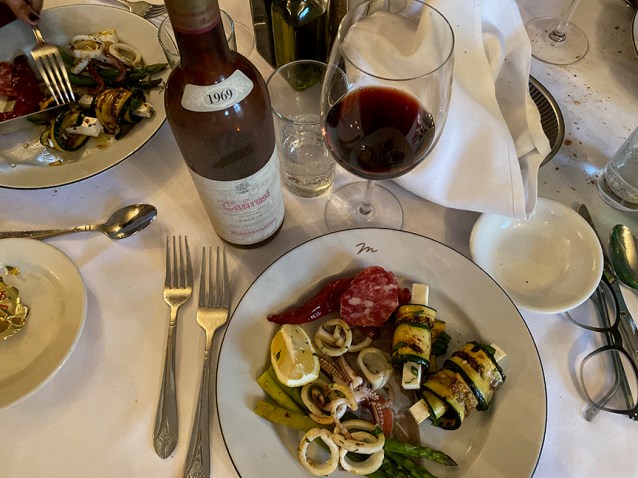
Yes, that’s right: that’s a 1969 Mastroberardino Taurasi in the photo. It came from my friend Anthony Cerbone’s legendary cellar, one of the greatest collections of old Italian wines I know of in the U.S.

It had a little funk on it when first opened. But that quickly blew away. The wine was fresh and vibrant and had all the earthy, mineral, and dark fruit hallmarks of great Taurasi.

What a wine!

Man, 2023 has just begun but this meal is going to be hard to beat.
That’s Anthony in the photo above. He’s one of the warmest and funniest human beings I’ve ever met, with a heart of gold and a symphony conductor’s palate. I adore the guy.

When I lived in New York, I spent many nights there with best friends and colleagues. And along the way, Anthony and I became friends. I really mean it when I say that I feel blessed to call him amico. We have so much in common between Italian food and wine. But he’s also an avid reader of Italian literature and a great guitar player to boot.

On the restaurant’s website, the Cerbone family describes their menu as “old country Italian.”

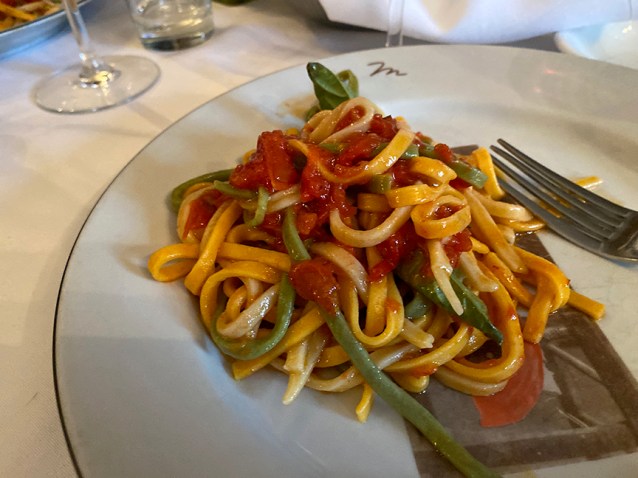
I’ve actually never looked at the menu because whenever I have dined there, I always just let Anthony start bringing out food. And that’s what we did yesterday to the delight of everyone at the table.

There’s one really important thing about the restaurant that I’m not saying here. New Yorker wine insiders know what I’m talking about.

Just go and you’ll find out as soon as you sit down. And you’ll be happy you did.

Manducatis is actually just one subway stop from Manhattan. It’s really easy to get to and well worth the trip. Tell Anthony I sent you.

Grande Anthony! Grazie ancora per un’esperienza indimenticabile. Non vedo l’ora di tornare da te.

Chianti, the epic game changer. Taste history with me in Houston Feb. 2.

It seems that everyone in the Italian wine business loves to tell the story about how Chianti growers used to blend (white) Trebbiano into the (otherwise red) wines. Back then, they’ll tell you, before the “modernization” of Italian viticulture, Chianti was just another “rustic” wine. With a lot of character, yes. But not much refinement. Great for food but not worth the collector’s attention until the district’s post-modern era.
They all point to the famous blending “recipe” penned by Bettino Ricasoli, the Iron Baron and 19th-century Chianti patrician. It included Trebbiano Malvasia, yes, for wines to be consumed in their youth. And later, Chianti producers would use Trebbiano for blending their wines (thank you wine pro Jarkko Peränen for catching my oversight!)

But here’s what they are missing… and man, are they missing out big.

If you actually go back and read Baron Ricasoli’s letters to his friend and research partner, Cesare Studiati, a professor of agricultural sciences at the University of Pisa, you will find that Ricasoli came to two highly important realizations that would forever reshape Italian viticulture far beyond Chiantigiana’s borders.

The first was that acidity was the key to making wines with aging potential and more importantly shipping potential. That was the first big “wow” moment in Ricasoli’s writings. Acidity, he realized, kept the wine from oxidizing and it helped to prevent unwanted bacteria or other microorganisms from forming in the wine.

The second was his realization that Sangiovese grown in Tuscany’s limestone and clay-rich soils delivered the greatest results in terms of acidity levels, aromas, and flavors.

Think of that! At roughly the same time that Pasteur was studying yeast and fermentation (one of the major scientific breakthroughs of the era), Ricasoli was studying the role of acidity in wine.

Especially as young wine professionals prize acidity today, Ricasoli’s findings are literally epic in their scope.

Ricasoli famously grubbed up all other grape varieties at his Brolio farm in Gaiole in Chianti. He was convinced that native grape varieties represented the future for Italian wine. It’s another way that his and Chianti’s shared legacy continues to shape Italian wine today.

This is just one of the themes we will be covering when I lead a small seminar on Chianti at Vinology in Houston on Thursday, February 2.

Click here to register.

We’ll be tasting six wines, including a Vinsanto from Chianti. Those are Trebbiano and Malvasia grapes (above) being dried for the production of Vinsanto del Chianti Classico at Castello di Volpaia (from my September trip to Italy).

I hope you can join us.

Is (Oltrepò) Pavese the next big thing?

One of the things that impressed me most during a visit to Pavia wine country a few years ago was the abundance of hazels.
When asked about it, one producer told me that Piedmontese hazelnut processors had been disappointed in foreign-farmed trees. In search of land suitable for growing the fruit, they had expanded their orchards to Pavia province.

The reason? The soils and growing conditions are similar to those found in Langa where Barolo and Barbaresco are raised.

Pavia wine country lies just south of the Po River in Lombardy, just a stone’s throw from southeastern Piedmont. Its limestone and marl-rich soils are nearly identical to those found in Nebbiolo’s spiritual homeland.

Oltrepò Pavese (rendered in English, the toponym means beyond the Po River) is considered by many to be the top Italian growing region for Pinot Noir. And while many know it for the appellation’s classic method wines, some would argue that still Pinot Noir is what really puts it in world class.

According to at least one soil study I found (commissioned by the Regione Lombardia), Pavia province has a higher concentration of surface area planted to vine than any other place in Lombardy (Franciacorta, I’m looking at you!).

Oltrepò Pavese and the Pavese IGP have been on my mind this week because my friends at Vinarius, the Italian association of wine retailers, just named Pavese as their biennial wine region to watch (here I’ve slavishly translated it as the “Vinarius Territory Prize,” the ninth time the body has recognized an Italian wine-growing district).

According to their press release, more than 13,000 hectares are planted to vine between Oltrepò Pavese and the Provincia di Pavia IGT (Pavia Province). Of those, more than 11,000 are used to make appellation-designated wines.

Oltrepò Pavese has also been on my mind over the last year thanks to the excellent educational campaign run by my friend, colleague, and fellow italophone Susannah Gold.

I’ve also heard chatter that a handful of prominent winemakers from other regions are looking at buying vineyard land there.

Are Oltrepò Pavese and Provincia di Pavese going to be the next big thing? No one can say for certain. But it sure is going to be fun to follow along as we find out.

Images snapped in 2021 at the Frecciarossa farm in Casteggio.

Explore, discover, and taste Abruzzo (and much more) with me in Dallas at Eataly February 8.

Above: the Nicodemi farm and winery in Abruzzo was one of my most compelling visits of 2022. The region is so much more than so many in our industry imagine.

There’s a good reason that wine appeals to the intellectually insatiable: no matter how many wines you’ve tasted, no matter how many appellations you’ve visited, and no matter how many winemakers you’ve interacted with, there is always something new to explore and discover.

That adage was foremost in my mind during my harvest tour of Abruzzo in early September 2022, one of my most compelling central Italian swings of the year.

A deep dive into the dynamics of pergola vs. tendone training and solar radiation in a time of climate change. A discovery of a new but ancient aging vessel for age-worthy wines. Discussing the highly cadenced world of Cerasuolo. Tasting a skin-contact lees-aged Pecorino (that blew my mind).

Perhaps more than any other Italian wine region, Abruzzo is often brushed off as a land of sprawling cooperatives and cheap plonk. Nothing could be farther from the truth.

I couldn’t be more thrilled to be presenting an Abruzzo seminar at one of the first major walk-around tastings of 2023 in Texas.

On Wednesday, February 8, I will be leading three seminars at Eataly Dallas: Moscato d’Asti, Pinot Grigio delle Venezie, and Montepulciano d’Abruzzo.

What a way to start the year off!

Click here to register.

There are also travel funds available for importers, both Texas-based and out-of-state, to help out with gas, airfare, and hotels. Please DM me if you want me to put you in touch with the organizers.

Thank you for the support and hoping to see you next month in Dallas!