The stars came out for Haiti last night at Vino Vino

jeremy parzen

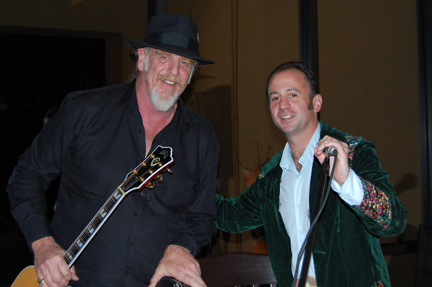
Above: Let me tell you, Ray Benson is tall. As in TEXAS TALL! Photo by Tracie B.

Wow, what a night last night at Vino Vino in Austin, where some of the town’s top musicians donated their time to help raise money and awareness for Partners in Health and the Stand for Haiti project. Check out the highlights as photographed by Tracie B.

A heartfelt thanks to everyone who came out and put up with my Catskills jokes between sets and listened to me talk about why I think Partners in Health is such a great cause. The concept is simple: health care should be free for everyone. Sounds good, no?

Thanks to everyone who donated their time and to everyone who made a contribution. And thanks to all the folks who sent excellent wine my way! We raised a good chunk of money and most importantly we helped to raise awareness of how we can help.

In other news…

There was a lot of love last night in Austin but love has been reaching us from other parts of the world, too. Thanks to everyone for all the thoughts and wishes, emails, comments, and cards. They mean the world to us.

Do Bianchi also got a little blog love from a wonderful wine blog in the Netherlands, Ombre Rosse. The author, like me, is a Venetophile, hence the name ombre rosse. In Venice a glass of wine is called an ombra. In the not-so-distant olden days, you would meet some in the shadow (ombra) of the bell tower in Piazza San Marco in Venice, where the wine vendor would seek refuge from the sun. By metonym, the term came to mean a small glass of wine. Thanks for the shoutout, Pascal! How can do bianchi (two glasses of white) resist a blog named ombre rosse (two glasses of red)??!!

And in New Jersey, blogging colleague Sue Guerra, who’s also become a friend through our bloggy blog connection, wrote this wonderful tribute to the greatest pairing I’ve ever had to pleasure to know: me and Tracie B. ;-)

What an incredible week this has been! And we’re not even married yet!

Ray Benson and me “Stand for Haiti” tonight at Vino Vino

From the “shameless self-promotion” (and “after all, it’s for a good cause”) department…

I wasn’t allowed to announce this until now since it was “top secret” until this morning: Austin music legend Ray Benson (and one of my personal musical heroes) will be appearing tonight at the “Stand for Haiti” benefit at Vino Vino in Austin where I will be emceeing.

I cannot conceal that I am completely and utterly geeked and psyched to be sharing the stage with him and all the other great Austin musicians who are donating their time tonight to help out the folks in Haiti.

If you happen to be in town, Tracie B and I will be there from 6 p.m. onward ’til the end of the night.

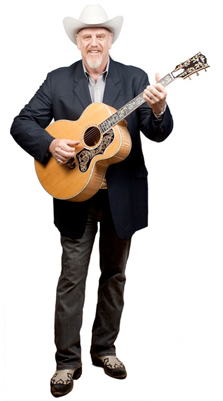
The photo, left, is by Austin music photographer Ed Verosky, who generously donated rights to the photo to help us promote the event. Thanks, Ed!

Do Bianchi Wedding Six-Pack is LIVE!

If you’d like to read about the wines we’ll be drinking at our wedding this weekend, the Do Bianchi Wedding Six-Pack is LIVE at 2bianchi.com (my wine club blog).

Tracie B and I will be leaving soon for San Diego where we’ll be celebrating our union with our friends and families.

And then next week we head out for honeymoon.

It’s been a really special time for us and it’s wonderful to feel the energy within and without us and to receive all the well wishes from everyone around the world.

Thanks, so much, for all the notes and emails. We can’t tell you how much they mean to us! :-)

Black truffle porn and a great wine from Montenegro

truffle porn

Above: Scorched earth, lunar landscape, extraterrestrial poop? No, black truffles from Umbria. The surface reminds me of the cratered earth you see in Tuscany and Umbria when they till the land.

Yesterday, found me “working the market” with colleagues in Houston, pouring and talking about wines, meeting with sommeliers and wine buyers, and being extremely well fed by some of Houstons top restaurateurs. One of the city’s top gourmets let me take this snap of his black truffle booty. I’ll post on the fantastic lunch he prepared for me and cousin Marty on Monday.

montenegro

One of the cool things about what I do for a living is what I like to call the “collegiality” of the wine biz. When I met with one of the top Italian wine buyers in this country, Joseph “Grappa Joe” Kemble, who buys Italian wines for behemoth retailer Specs, he invited me to taste a fantastic wine from Montenegro, made froma grape I’d never tasted nor heard of before, Vranac or Vranec by a winery called Plantaže.

I really dug this juice: it was earthy, with a light goudron note on the nose, balanced alcohol at 12%, and gentle red fruit in the mouth. I’ve never been to Montenegro and I really don’t know much about how the wine is grown or produced, but it had that “original” quality to it, that uniqueness that makes me believe it speaks of the land where it’s made and the people who make it.

Thanks, Grappa Joe! Keep on selling that Italian juice the way you do! (You should hear the guys on his team quote all 12 Calabrian appellations like baseball stats! I only would have got about 6 off the top of my head!)

The smell of money guides the evolution of taste, part 2

barolo

Above: A collection of old large-format bottles at the Bartolo Mascarello winery. I took the photo when I visited and tasted with Maria Teresa Mascarello, Bartolo’s daughter, in April 2008. Those are aging casks in the winery’s cellar, below left.

I received a lot of positive feedback in the wake of my post the other day Bruno Giacosa and Bartolo Mascarello meet for the first time. Thank you to everyone who commented and wrote in for the encouragement and the kind words. And special thanks, again, to Franco, for bringing this wonderful piece of writing to our attention.

One of the most fascinating elements — among many — about the first installment was the note about the weather: 95° at the end of July. How did that heat spike affect the 1964 vintage?

Here’s the second and final installment of the translation of Francarlo Negro’s newsletter, “The Smell of Money Guides the Evolution of Taste.”

Buona lettura!

*****

barolo… The same was true of the Barbaresco [I’ve never heard of a B. Mascarello Barbaresco but evidently he was making Barbaresco at that time; thoughts?]

In the glass, the wine was clear, not dark red, but rather light red with gradations of garnet and an orange-rose rim.

In the mouth, the light flower gave way to the tannic freshness that enveloped the elegance of the wine, an austere but inviting sensation, cleansing the mouth and prompting you to take another sip. The elegance of the nose opened with a velvety impression, dry but never bitter in taste.

The 1961 Barbaresco that Bruno Giacosa had brought for the tasting was more evolved. But it showed characteristics similar to those of the Barolo, although with slightly different tonalities. Light impressions of field flowers, rounder on the palate, definitely more velvety and approachable.

Bruno and Bartolo discussed the fundamental roll of the land, of the surì [i.e., the best rows in top growing sites], the vines, and approaches to growing grapes — without abusing the vine, with asking too much of it.

Quality depended on the harvest. During those years, clear-cut differences were evident between one vintage and another. In more than 40 years since the birth of the Barolo and Barbaresco appellations, the wines have been declassified only once to rosso da tavola [red table wine], and that was no haphazard decision. The year was 1972, when excessive rain and incessant fog caused the grapes to rot.

Thirty years later, the 2002 harvest should have met the same fate. But technology and the interests of the large exporters weren’t about to let that happen. Millions of bottles containing low-quality wines were released on to the market bearing the name Barbaresco and Barolo DOCG.

barolo

Above: Historic aging casks for Nebbiolo, no longer in use, at the Fontanfredda winery, one of the original high-volume producers of Barolo, founded in the 19th-century by the first king of Italy, Victor Emmanuel II.

Subordination to “international” tastes clouds the identity of our wine.

The advent of international demand, which began in the early 1980s, has offered a historic opportunity to the great wines of Langa: to reach the tables of the greater western world, from Europe, to America, to Japan.

This demand is guided by American buyers who want Barolo and Barbaresco to change in order to adapt to the tastes and style of the market in that great country — that gluttonous, powerful, ignorant country.

The greater part of winemakers have adapted their cellars, as sales increase and profits soar. For the most part, the historic enologic culture of our land has been snubbed to make way for new technology in grape-growing, vinification, and aging. The score awarded by U.S. magazines determines the success or failure of sales.

A complex network of relationships has been created between large international merchants, consenting journalists, and willing enologists. A new genre of wine has been born. There are a few exceptions but most wineries have chosen to reshape the identity of the great wines of Langa. These changes have not come about through an exchange of ideas between the old and the new but rather between traditional and modern enology: the wines are the result of an irrational adaptation of enological standards, dominated by the major buying groups and by the multi-national network of the wine industry.

Vanilla, fruity Barolo and Barbaresco.

The “ideal” wine destined for export has changed completely. The color must be darker, as darkly colored as blood, the symbol of power, modeled after Cabernet Sauvignon, the benchmark grape variety for the international market.

Vanilla is desirable in the nose, as are extraneous spicy notes, the fruit of aging in small toasted casks, French barriques, used only if rigorously new, so that they will impart their own aromas and tannins as they corrupt the classic, original traits of our wines.

The taste should be marked by “fruitiness,” notes of ripe red fruit, with intense flavors, enticing and coating, sometimes jammy. When the harvest isn’t the best and the natural alcohol content is only 13%, winemakers resort to the Salasso method: when fermentation begins and the skins form the cap, a certain quantity of must is racked off from the bottom of the cask in order to achieve the desired intensity in color and flavor. The technology behind temperature-controlled concentrators allows the winemaker to avoid cooked-fruit flavors as they reduce the water content and increase the sugar content of the wine.

Fermentation and vinification techniques have undergone a transformation under the aegis of enologic innovation. It’s no secret that the consultation of a certain enologist with ties to the new network of international media and commercial interests is a prerequisite for a good score in the wine guides and the subsequently increased facility to sell the wine at a higher price. The end result is an atypical wine, in cahoots with grape varieties considered “international” because they are the preference of Americans and others unfamiliar with the culture of wine. The uniqueness of the monovarietal wine, made from Nebbiolo, has lost its distinct personality.

Certain media have embraced and supported this production-and-marketing operation: for many years the Gambero Rosso/Slow Food Guide to the Wines of Italy has punished traditional producers by denying them recognition among the Tre Bicchieri winners. Giacosa and Bartolo Mascarello are among those who have penalized. Their wines were considered to “rustic.”

—Francarlo Negro

Postscript

In recent years, regional authorities have allowed growers to plan new vines in growing sites where grape growing [for fine wine production] has never been suitable. Many of these sites have never been deforested nor used for cultivation of any kind since they face northward. These are sites where our elders wouldn’t have even thought of planting hazelnut trees: in 2008, production of Barolo and Barbaresco increased 50% with respect to production levels in 1999.

(translation by Do Bianchi, January, 2010)

Giacosa and Mauro Mascarello spar over 2006

Above: A recent photo of iconic Langa producer Bruno Giacosa.

Over at VinoWire, Franco and I have posted a preview of Franco’s article on Bruno Giacosa’s controversial decision not to bottle his 2006 Barbaresco and Barolo (to appear in the February issue of Decanter Magazine). But you’ll have to click over to VinoWire to get it. It marks the first time that Giacosa has spoken directly to the English-speaking world on the polemic move. You might be surprised by what some of his peers and interlocutors have to say about the vintage.

In other news… from the “just for gastronomic fun” department…

It’s that time of year again when we spacciatori di vino (wine pushers) hit the streets and start showing our wares again. It’s been good to reconnect with a lot of folks I only see when I’m on the road, like my good friend Josh Cross, who always has something fun on the menu at his awesome restaurant Oloroso in San Antonio. Josh and I both worked in the New York restaurant scene during the better part of the last decade and so we have a lot of friends in common.

He’s open for lunch now and so he treated me to one of his lunch specials, a take on “pigs in a blanket” (above): housemade venison sausage, cased in a runza dough kolache bun, served with a fig mustard and piquillo pepper relish.

I really like his sous chef Ernesto Martinez’s take on the German and Czech historical presence in Central Texas. How’s that for fusion?

Today, I’m on my way from Dallas to Houston, where I’ll be speaking at a wine tasting tonight. In less than a week, my beautiful Tracie B and I will be leaving for San Diego and the final preparations for our wedding. I wish ya’ll could see the grin on my face as I write this from a Starbucks in Ennis, Texas! :-)

Suckling and Soldera on the Tuscan wine scandals

case basse

Above: One of the great maestri of Brunello Gianfranco Soldera and I tasted his wines together in September 2008 at his winery Case Basse in Montalcino (before Tracie B convinced me to go back to my au naturel hair style!). Photo by Ben Shapiro.

In an hour-long documentary on the Orcia River Valley, recently aired on the national-television Sunday show Linea Verde (it’s worth watching the show, even if you don’t understand Italian, if only for the cinematic beauty of the Val d’Orcia), the presenter asked Brunello maestro Gianfranco Soldera to share his impressions of the recent controversy in Montalcino regarding producers who allegedly added disallowed grape varieties to their Brunello (which, by law, must be made with 100% Sangiovese grapes).

“Luckily,” Soldera said, “the [Italian] treasury, the magistrate, and the anti-adulteration department did a great job in their investigation and they found some big problems. Millions of liters of wine were declassified in order to protect consumers and those producers who have always used only Sangiovese, as required by law, because this is what needed to be done.” Even though the quantity of wine declassified was significant, he noted, “only a handful of wineries” were implicated in the investigation. (The segment on Soldera appears at the end of the show and it is the only occasion that I know where the general public has been allowed to view Soldera’s “secret garden.” Definitely worth viewing.)

wine spectator

Above: The clairvoyant Swami shared his wine predictions for 2010, including a real whopper for Tuscany.

A week or so earlier, one of America’s premier wine writers, a world-renowned expert on Italian wine, and a resident and champion of Tuscany and its wines, the inimitable James Suckling published his predictions for the year in wine 2010 on his blog, including, this ominous premonition for Tuscany: “Tuscany will be embroiled in another wine witch hunt with the magistrate of Siena along the lines of a similar debacle in Montalcino over the past two years.”

This morning, I couldn’t help but share Franco’s indignation at Suckling’s admittedly “less than earth-shattering” prediction, expressed in a post entitled, American Wine Writers: Luckily they’re not all like James Suckling.

However ugly the recent controversy in Tuscany, it “needed to be done,” as Soldera pointed out. Everyone I’ve spoken to there (except for those implicated in the investigation) seems to share Soldera’s opinion.

Of all the things to predict for Tuscany in 2010 (eclipsing the rest of Italy, btw), how about something like this?

1) The Val d’Orcia DOC will emerge as one of the coolest new expressions of Sangiovese.

2) Tastings of the 2007 harvest will reveal that Tuscany was blessed with one of the better vintages in recent memory.

3) The high-cost of barrique and the emerging trend against oak-laden, concentrated wines will lead more and more producers to make traditional-style wines using large-cask aging and less manipulation in the cellar.

4) Thanks to more flexibility in labeling, the recently implemented EU Common Market Organisation reforms will allow Tuscan producers to regionally “brand” their international-style wines without encroaching on the Brunello and Chianti de facto trademarks.

5) Tracie B and Jeremy P will win the lottery and finally be able to move into the Ripa d’Orcia castle as their “vacation home.” (There are some beautiful shots of the castle in the Linea Verde show, btw.)

Thanks for reading. Tracie B and I will soon be heading to Montalcino on our honeymoon, where we’ll have our “nose in a glass” and our “ears to the ground.” Stay tuned…

Stand with Haiti at Vino Vino in Austin Tues. Jan. 26

If you happen to be in Austin a week from tomorrow, come hang out with me and Tracie B at Vino Vino, where local musician Kat Edmonson will be playing and owner Jeff Courington will be donating 50% of all retail sales to Partners in Health. Jeff has asked me to emcee at the event and I’m trying to get some interesting folks to out and share their experiences. Hope to see you there! Thanks for reading…

Photo by The New York Times.

Please join Vino Vino and local musicians on Tuesday, January 26, 7 p.m. to raise money for victims of the recent tragedy in Haiti.

Austinite Kat Edmonson will be joined by some of our town’s top local musicians for a special evening of songs, remembrances, and hopes for the victims of the earthquake and reconstruction.

On the night of the event, VINO VINO WILL DONATE 50% OF ALL RETAIL SALES TO PARTNERS IN HEALTH.

KAT EDMONSON AND FRIENDS
BENEFIT FOR HAITI
TUESDAY, JANUARY 26
7 P.M. – 10 P.M.
VINO VINO
4119 Guadalupe Street
Austin, TX 78751-4222
(512) 465-9282

Stand With Haiti

Brother, can you spare a bottle for Haiti?

Brother can you spare a bottle and Palate Press have joined forces to raise money for Haiti by asking collectors to donate rare bottles. Click on either link to find out more and how you can help.

Wine Book Girl, who works as editor for UC Press, also recommends Partners in Health (she’s worked closely with its founder, Paul Farmer, a UC Press author, who’s already left for Haiti).

That’s a depiction of “Roman Charity,” above, by 18th-century Venetian painter Giovanni Antonio Pellegrini.

The best seared foie gras ever (and an interesting discussion of Boccioni)

woodlands

Above: The best seared foie gras I’ve ever had, last night at Tesar’s in the Woodlands (Houston). Chef Tesar sears it so aggressively that the outside is charred while the inside becomes gelatinous. Before searing it, he studs it with a vanilla bean. Paired with Château Les Justices 2005 Sauternes, served by the glass by my friend Scott Barber, top sommelier AND art historian.

My line of work brings me into contact with some pretty interesting folks.

Yesterday afternoon, I headed down from Dallas toward Houston and met cousins Joanne and Marty at the relatively new and much-talked-about Tesar’s Modern Steak and Seafood in the Woodlands. Chef John Tesar is one of those young buck celebrity chefs who’s done it all: New York, Vegas, the Mansion on Turtle Creek in Dallas (the most ostentatious city in the world)… And now he’s branched out on his own with a high-end namesake restaurant.

My friend sommelier Scott Barber had been raving about the food and man, I gotta say (and ya’ll know I don’t say this lightly), the food was kick-ass good.

woodlands

Above: Mediterranean-style octopus can be harder to prepare than it looks. Scott agreed that the secret (after tenderization) is patience: it simply takes a long time to achieve the desired tenderness. It was off-the-charts good, I gotta say.

But the star of the evening last night was Umberto Boccioni. Before getting into wine, Scott studied art history in Italy. The funny thing: neither of us were into wine at the time, but we both lived and studied in Italy during the same period (literature and paleography in my case). He has seen my post the other day where I incorporated one of my favorite Boccioni paintings, “La rissa in galleria” (“The Riot in the Galleria”).

woodlands

Above: The fetishization of beef. One of the signature dishes at Tesar’s is “side-by-side” where you taste grain-fed and grass-fed beef side-by-side. One could argue until one is black and blue in the face about which is better!

Boccioni is such an interesting painter and his work is fraught with tension — historical and aesthetic. I was THRILLED that someone appreciated the reference and why I made it. Our conversation drifted to the significance, cultural and sociological, of the painting’s backdrop, the Galleria of Milan, the famed 19th-century domed arcade of the Lombard capital. Marty pointed out that the Galleria lent its name and its arched dome to Houston’s consumerist mecca, the Houston Galleria.

But I digress… Food and wine are just a pretext to discuss aesthetics, no?

Tesar’s is not cheap but it really delivered: would you like a little Boccioni with your Fixin?

woodlands

Above: The 2004 Fixin by Mortet showed gorgeous, unexpected acidity and paired swimmingly well with house-made garganelli tossed with Parmigiano Reggiano and grated black truffles.

Thanks again, Joanne and Marty, for a wonderful dinner. And thanks again, Scott, for the Boccioni and the Fixin!

In other news…

The best news is that today I’m headed home to that super fine lady of mine… This lonely heart’s been away two days too long!

Yesterday, driving in the rain from Dallas to Houston, “Heard it in a Love Song” by Marshall Tucker Band came on. Man, what an awesome song. Can’t be wrong…