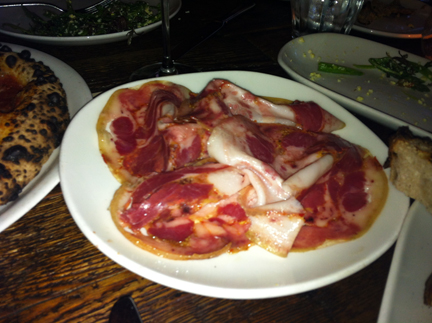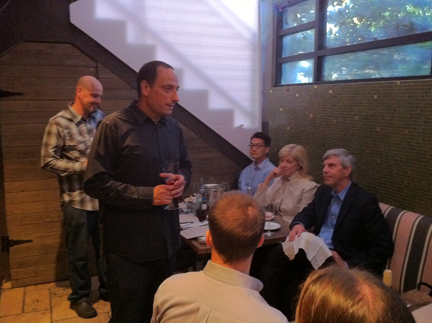
Oblong Table & Bible Study w/ @LouAmdur @SottoLA Tues. Aug. 14

The “Oblong Table” series that we’ve been doing with Lou at Sotto has been so popular and so much fun that we’ve decided to do one more before fall.

Tuesday, August 14, Lou and I will be leading a guided tasting of some of our favorite Natural wines from Southern Italy (including the Fatalone, white and red, from Puglia).

At the July event, it was fascinating to hear Lou compare the current debate over Natural wine (and whether or not the category really exists) to the dietary laws in Leviticus.

It was such a brilliant analogy: the current dichotomy between the Natural wine purists, on the one hand, and their abjuration of the industrial complex, and the conventional winemakers, on the other, and their disdain for a category they believe doesn’t even exist, is nothing less than biblical in the breadth of acrimony it has generated.

In essence, the laws of kashrut divide the animal world into “clean” that you can consume and “unclean” that you cannot. During the conversation (and btw, it’s an informal setting where wine professionals and lovers chime in with observations and questions), it occurred to me that both parties in this logomachy (a fight over words more than wines) apply the terms clean and unclean. The Natural purists say the conventional winemakers’ wines are unclean because they’ve been manipulated with additives while the conventional winemakers say the Natural wines are unclean because they have unwanted bacteria and “off” aromas and flavors.

At one point, I brought up Eric the Red’s recent The New York Times article “Wines Worth a Taste, but Not the Vitriol” and the Italian authorities’ recent crackdown on the use of the term Natural in advertising.

“Is this a line in the sand?” I asked Lou. “Is this the end of the beginning or the beginning of the end?” I queried in chiasmus.

Lou’s answered simply that he didn’t care. Enjoying the aroma of the Cornelissen (arguably the most extreme expression of Natural wine today), he talked about how much he enjoyed the way was changing in the glass and how he would continue to call it Natural because it’s a term that captures the spirit of these wines (“like obscenity, I can’t tell you exactly what it is but I know it when I see it”). And he said that he agreed with our mutual friend Ceri Smith who recently proposed that the category be defined by “those winemakers who tell you what they put in the wine and those who don’t.”

The conversation at our Oblong Tables is always fascinating and you’ll always find some of the top wine professionals in LA there with us. I hope you can join us!

Here are event and reservation details.

Zanotto Prosecco Col Fondo is here! (and my band circa 1993)

Above: Zanotto Prosecco Col Fondo is the Prosecco that I tasted back in the early 1990s when I was living in the Veneto. Bottle fermented, lees aged, unfiltered, salty, crunchy Prosecco made from 100% Glera. That’s the traditional glass, btw, for real Prosecco. No flutes please!

The story of how Zanotto Prosecco Col Fondo got to the U.S. stretches back to the early 1990s when I was the band leader of a cover band touring the Veneto during my summers off from graduate school.

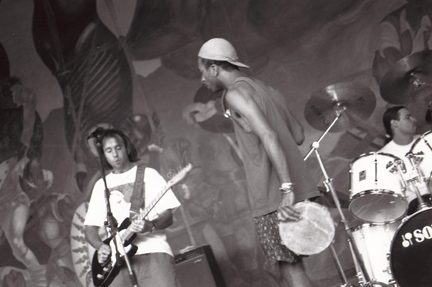
Above, from left: me, Shawn Amos, and Charlie George circa 1993 in the village of Pedavena (Feltre).

After I found success doing a piano bar act in the many pubs and beer houses that line the Piave river, the owner of one of the venues, Renato Dal Piva (who later became one of my best friends in Italy), asked me if I’d be interested in doing a summer residency at the historic Pedavena beer garden just outside of Feltre.

Above, from left: My super good friend and amazing guitar player and all-around musician Gabriele “Elvis” Inglesi and the rest of us at the façade of the Siena duomo. We also played a one-night stand in Montalcino in the village of Bagno Vignoni, a night of fried wild-boar liver and Sangiovese.

That was an amazing and unforgettable time in my life. I was in my twenties, studying Italian philology and cinema, living on the many scholarships I won (including a Fulbright), and playing in a cover band at beer festivals (many of them celebrating unpasteurized beer) throughout the Veneto during the summers.

Above: I believe that this article was published in Il Mattino di Padova. If you really want to read it (in Italian), click the image for a PDF (very large file!).

Fast forward to 2010: I get a Facebook message from Riccardo Zanotto who used to come every summer to see us play and drink many, many beers with us.

In early 2011, on the occasion of my trip to Italy with Tracie P, he organizes a tasting of a small group of brave young producers who are making REAL Prosecco, the wines that I used to drink during my years there in an era before the consumerist hegemony of yeasted, banana-candy large-vat fermented Prosecco (you know the brands).

Here’s the link to our tasting notes.

Riccardo’s Prosecco Col Fondo is bottle fermented, lees aged, unfiltered, and unsulfured.

It’s being brought to California by a Los Angeles importer: I’m making it available for sale retail through my wine club and we’re doing a public tasting of the wine in San Francisco at Ceri Smith’s excellent shop Biondivino on Friday, August 17, 6-8 p.m.

I couldn’t be more thrilled… if only because we love these wines and we want to drink them!

And some story, huh? See, mom? All those years of rock ‘n’ roll actually delivered some great rewards… and they just keep on giving…

Thanks for reading, yall!

Utterly self-absorbed & absolutely delicious Friulano by Di Lenardo

Hey, I’m the first one to tell you that wine blogging is all about the vanity. The best advice that anyone ever gave me about wine blogging was 1) remember that all blogs are vanity blogs (so true); and 2) write what you feel (as William James once famously said, truth is what works).

“I may not be perfect but it scares me how close to it I am,” reads the message that greets you when you visit the Di Lenardo winery website.

Honestly, I’d never heard of Massimo Di Lenardo and his unrivaled self-absorption and narcissism. And when a friend poured me his Friulano by the glass last night in Houston, I wasn’t expecting much: usually, low-end wine with packaging like “Max’s” delivers yeasted and overly sulfured quaffing wine at best.

It’s a good thing that I had never seen his website before tasting his wine because I don’t think I’d be able to palate it if I had (“take your time, relax and… fly into my world!” he writes).

But when top Houston sommelier Sean Beck poured it for me last night at the Backstreet Café, I was blown away by how fresh, varietally correct, and utterly delicious it was. It had this crazy spearmint note that put it up there with some of the best Friulano I’ve ever tasted (and I’ve tasted A LOT of Friulano). Sean’s pouring it for $7.50 a glass and a quick look at WineSearcher reveals that it generally retails for under $15 in the U.S. I loved everything about this wine.

And the vanity? Max, bring it on!

Above: Caravaggio’s Narcissus. “We watch in reverence, as Narcissus is turned to a flower.” (Can anyone tell me where this lyric comes from? Hint: 1970s prog rock.)

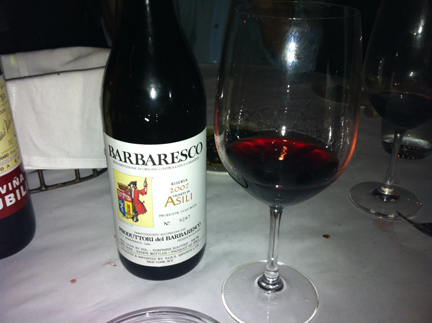
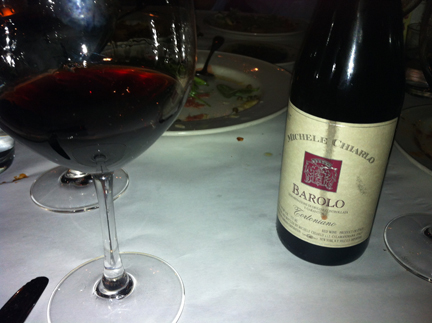
Ready or not: 07 Produttori del Barbaresco Asili vs. 07 Chiarlo Tortoniano

Unfortunately, it happens all the time: you find yourself at dinner with a good friend (in this case, a best childhood friend) who is new to the wine world and who insists on tasting you on a wine that they’ve discovered with no regard for your personal tastes or palate (how could she or he know?).

It’s exactly what happened when Yele and I visited a restaurant in La Jolla the other night with a close high school friend of ours (a Hebrew school friend for me; that’s how far we go back). I had a bottle of 2007 Produttori del Barbaresco Asili in my bag: however young in its evolution, I wanted to taste a bottle from my allocation just to check in with the wine, see where it’s at in its development, and indulge in one of my favorite wines of all time.

Said friend, who had eaten at said restaurant a few nights earlier, wouldn’t listen to our gentle admonitions and he insisted that he allow him to buy our table a bottle of Chiarlo 2007 Barolo Tortoniano in 375ml.

The 2007 Asili was extreme in its tannic expression and frugal with its fruit. California, where I maintain my cellar, gets a smaller allocation of Produttori del Barbaresco crus and I’m thrilled that I was able to get a case of this wine. I probably won’t revisit it for another few years but there’s no doubt in my mind that it’s going to become one of the gems of my collection. The practically winterless 2007 vintage in Langa has delivered some of the most muscular, opulent expressions of Barbaresco that I have ever tasted (remember when Tracie P and I tasted the 07 Asili with Bruno Giacosa on our honeymoon?).

My experience with Langaroli wines from 2007 was a stark counterpoint to the bright cherry cough-syrup fruit of the 2007 Tortoniano by Chiarlo. There’s no doubt that this is a well made wine but it’s just “not my speed,” as I like to tell folks when I politely decline to taste a given wine. The tannin was well-balanced in the wine but I just couldn’t get past its yeasted quality and its softness. It wasn’t bad (in fact it was very elegant). But it simply didn’t reflect the appellation or the vintage. It tasted more like a high-end Russian River Pinot Noir than it did Langa Nebbiolo — at least to me.

Having grown up in San Diego, I often find that my peers took paths in life widely divergent from mine — in wine tastes and ideology. Actually, I should say the opposite: I spent my entire adolescence leaving Las Vegas La Jolla, heading to Mexico, to Italy, to New York, and now Texas.

It’s often hard to taste wine with them. But ready or not, I love them just the same.

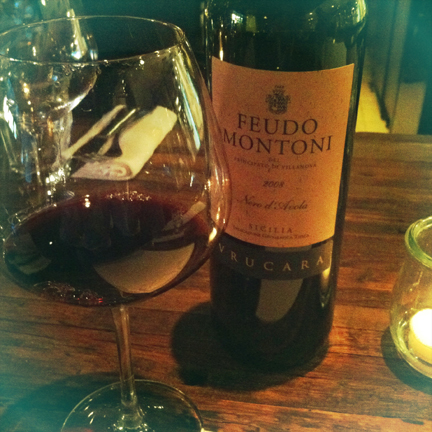
Sub Camerata generosa vites optimis vinis: Feudo Montoni

Myriad wine bloggers erroneously report that sixteenth-century Italian philosopher, doctor, and naturalist Andrea Bacci mentions Feudo Montoni in his landmark De naturali vinorum historia (On the Natural History of Wines, 1595).

Many also wrongly call Bacci “the pope’s sommelier.”

In fact, Bacci lavishes praise not on Feudo Montoni but on the wines raised in (the modern township of) Cammarata, where Feudo Montoni grows its grapes today (though the winery did not exist in Bacci’s time).

In fact, Bacci was Pope Sixtus V’s archiater (i.e., his personal physician).

After I tasted Feudo Montoni’s superb 2008 Nero d’Avola Vrucara this week, I couldn’t resist the urge to look up the reference and report it here.

Bacci does laud the wines of Cammarata with high tones, noting that in the province of Cammarata “noble vines” deliver wines superior in quality. They are powerful, he observes, and rich in red color, two indices that seem insignificant to us today but remarkable in an era when it was difficult to obtain high alcohol content and deep color in wine. He also takes note of their excellent aromas and their ability to age.

Needless to say, I was thoroughly impressed by the 2008 by Feudo Montoni. This, to me, is classic Nero d’Avola and it stands apart from the crowd of wines, often thin and without much backbone, shipped by younger wineries who want to exploit American’s blind love of anything labeled indigenous.

I loved the meatiness of this nuanced expression of Nero d’Avola and the way it played with the dark fruit and life-giving acidic vein in the wine. Truly gorgeous and such a great value.

It was a great excuse to revisit Bacci and the time I spent this morning with his wondrous book delivered an observation on the application of word natural.

In a time before Pasteur, grape growing and winemaking belonged to the realm of nature — not to science. By the end of the nineteenth century, European writers readily spoke of the “science” of winemaking. But in Bacci’s day, wine was described as a purely natural element. The title of his book is, after all, De naturali vinorum historia.

As we continue to grapple with epistemological and ontological implications of the term natural and how it applies to wine and winemaking, it’s important to keep in mind that there was a time — before the modern era — when all wine was natural. By natural I don’t mean the loosely codified aesthetic of the current Natural wine trend. I mean simply that wine belonged to the natural (as opposed to technical) world in the pre-industrial age.

Wine for thought…

Georgia P takes her first meeting (and so many great wines this week)

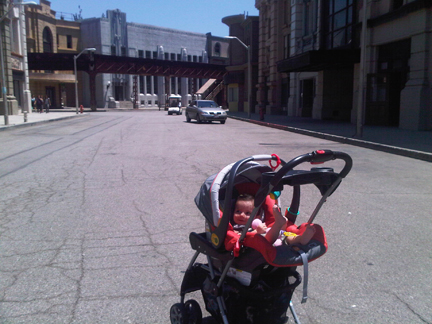
Georgia P took her first meeting at a major studio yesterday. That’s her on the backlot. As her manager (and a budding stage father), I can’t reveal which studio because we’re still in negotiations. But rest assured, her next project is going to be a blockbuster.

In other news…

I’ve tasted so many great wines this week in California and our event with Lou at Sotto last night was a blast (we’re planning to do another “oblong table” in August when I’m back).

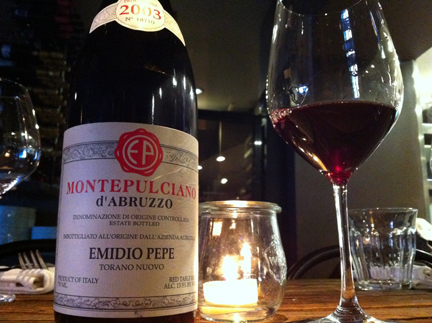
I’ll be posting on the wines and the event as soon as I get a chance next week. Emidio Pepe 2003 Montepulciano d’Abruzzo was one of the highlights.

Stay tuned…

Natural wine: Italian government crackdown

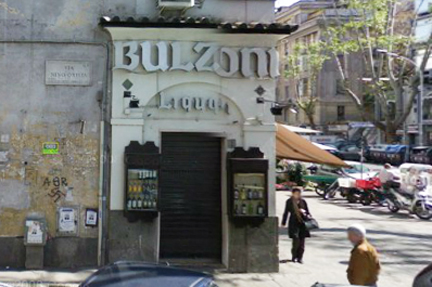
Above: In late June, Italian authorities visited the Enoteca Bulzoni (one of the city’s oldest and most respected wine retailers) and cited the owner for the display of a sign that read “natural wines.” Many in Italy believe that the Italian government is poised to crack down on the use of the expression “natural wine” in the sale and marketing of wine (image via Google Maps).

While most in the U.S. took the last week off from blogging (myself included), a small news story in Italy exploded into a major controversy.

On June 25, Marco Bolasco (editorial director for Slow Food publishing) posted the follow story on his personal blog:

    A few days ago I received this email from [Alessandro] Bulzoni, an important Roman wine shop on Viale Parioli.

    “I’m writing you to let you know about what happened to me last week: two agriculture ministry officials came [to my shop] to notify me that the sale of ‘Natural’ wines on my shelves was illegal. They wrote me up and they will be fining me. They might even charge me with a crime. The issue was advertising the sale of wines without certification.”

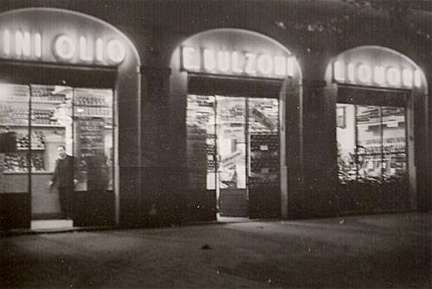
Above: The fact that authorities chose to penalize Enoteca Bulzoni — a Roman institution since 1929 — has led to speculation that officials wanted to make an “example” of a high-profile retailer (photo via the shop’s website).

In the days that followed, myriad posts appeared, including pieces by high-profile blogs Intravino, Millevigne, InternetGourmet, and Terra Uomo Cielo, a blog co-authored by Giovanni Arcari, who brought l’affaire Bulzoni to my attention.

“If advertising a wine as ‘natural’ is a crime, I want to be arrested, too,” wrote blogger Fabrizio Penna in a post on Enotime.

It’s not clear whether or not this episode will mark the beginning of a new crackdown by government officials or whether it will be a singular incident.

But as Maurizio Gily points out on his blog MilleVigne, the fact that the officials didn’t hesitate to fine Bulzoni appears to indicate that they will be taking an aggressive approach. A request to remove the sign and a warning would have been more in line with current attitudes and trends, noted Maurizio.

In his post, Maurizio also reminds us that the use of the word natural in the labeling and sale of wines is not permitted by Italian wine industry regulation. Technically, Bulzoni was in fact guilty of having committed “consumer fraud,” a crime that Italy’s agriculture ministry and inspectorate take very seriously (consumer fraud is what spawned the Brunello controversy of 2008).

The production, labeling, and marketing of wine are highly regulated in Italy and the wine industry lobby is one of the agricultural sector’s most powerful.

And as Natural wine continues to emerge as a commercially viable category (the fact that a retailer like Bulzoni was advertising “Natual” wines is indicative of this trend), there are many powers-that-be who would like to curb its application.

I can’t help but be reminded by another analogous instance in the history of Italian vinography: in the 1980s, when Sassicaia and Ornellaia (among others) were still being labeled and sold as vini da tavola because they were not “authorized” by Italian appellation regulations, the English-language media — deux ex machina — coined the phrase Super Tuscan.

The origins of the expression Natural wine are surely French but the term has been popularized (read vulgarized) by the American wine media. And many would point to the vibrant interest in Natural wines in the U.S. as one of the factors that has prompted Italian winemakers, marketers, and retailers to embrace the epithet.

But the thought of Italian officials entering a beloved shop and fining the owner for the use of the term natural evokes images from an era when fascist linguistic “purists” (as they called themselves) tried to ban foreign terms in commerce (the word tramezzino for sandwich is a famous historical example of this).

Above: Umberto D.

Italians don’t enjoy the same freedoms of speech that we do in the U.S. but this move by the Italian government seems excessive (and is being closely followed by industry observers).

At a time when the financial crisis has led to an overarching reset in the Italian wine industry and when small producers and retailers continue to struggle to stay afloat, is there really any harm in a little sign on Viale Parioli?

Evidently, in the eyes of the Italian agriculture ministry, there is…