Gil-Scott Heron in a bottle: Dario Prinčič 2009 Ribolla Gialla

From the department of “problems come and go but the sunshine seems to stay”…
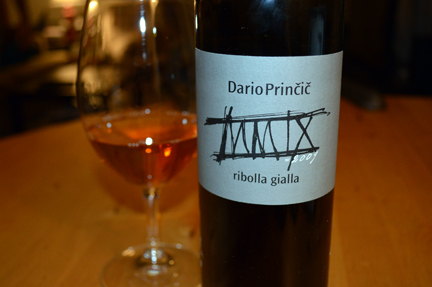
best ribolla gialla princic

You can’t imagine my joy when an old friend from New York, Kevin Russell, wrote me a few weeks ago to let me know that the company he works for, Vine Collective, is importing the wines of Dario Prinčič.

I’m a huge fan of the wines and try to taste them every time I go to Italy (here are some posts on the wines).

As far as I know, the wines had never been available in the U.S. before. Back in 2008, when I asked Dario if he planned to sell the American market, he said that his Japanese importer was already buying up his entire export allocation. I’m not sure why that’s changed but I’m entirely geeked to know that I’ll be able to find them in our country’s more liberal wine markets.

The wines are not available in Texas and, as you know if you follow my blog at the Houston Press, it’s illegal for New York retailers to ship wines to end users in the state where I live.

So Kevin kindly offered to ship me a few sample bottles (along with a few other labels that I’ll review in coming weeks).

I’d never tasted Dario’s Ribolla Gialla and I was thrilled to discover how light in body it was and how low in alcohol (12.5%).

As much as I am fan of the other Oslavia (Oslavje) producers of skin-contact wine, I’ve found that the wines can been intensely tannic and often too muscular in their youth.

This wine was moderately tannic but its lightness and its balance of astringent flavors and ripe stone fruit seemed to capture my mood and the vibrations I was feeling. It made me think of the Gil-Scott Heron song, “A Lovely Day.”

Yesterday was such a lovely, cool day here in Austin and after I finished doing the taxes (an unavoidable and tedious chore that I loathe), Georgia P, Tracie P, and I spent the afternoon playing and just doing silly stuff.

After we put Georgia to bed, we opened the bottle of Ribolla and its balance of fruit, savory, sweetness, and tannin made me think of a line from the song that I love so much… the problems come and go/but the sunshine seems to stay…

baby you can drive my car

It’s such a special time in our lives (Tracie P is about twenty weeks) and whenever those shadows dark and gloomy come a-calling, I can hear the vibrations saying, “Hold on, brother, just you be strong”.

The flowers woke up bloomin’
And put on a color show just for me
The shadows dark and gloomy
I told them all to keep the hell away from me
Because I don’t feel like believin’ everything I do gon’ turn out wrong
When vibrations I’m receiving say
“Hold on, brother, just you be strong”

Yes and all I really wanna say
Is that the problems come and go,
But the sunshine seems to stay

You can read about Dario Prinčič here and here.

Thanks for reading and buona giornata a tutti, happy Monday yall!
Killing me softly, Venica 2011 Collio Sauvignon Ronco delle Mele

giampaolo venica

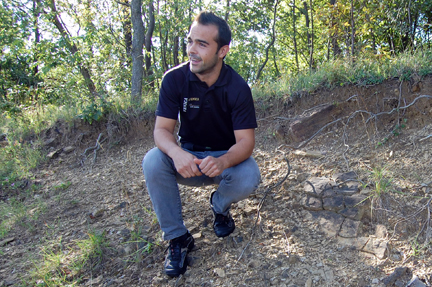
Giampaolo Venica and I first met back in September 2010 when I snapped this photo atop the Ronco delle Mele, one of his family’s top growing sites on their estate in Dolegna del Collio (in the province of Gorizia, Friuli).

He’s on his way to Texas as I write this: in anticipation of his visit, we opened a bottle of his family’s 2011 Collio Sauvignon Ronco delle Mele on Friday evening.

ronco delle mele

At first sip, the wine was so intensely aromatic and muscular that I decided to recork it and give it a night of rest.

By the time we revisited the wine yesterday evening (Tracie P is not drinking these days, of course, but she does always taste), it had come into brilliant focus, its power balanced by luscious white and stone fruit and electric acidity. Tracie P noted that it had this wonderful viscousness, an ethereal mouthfeel that made it one of the most moreish wines I’ve tasted this year, killing me softly…

We’re going to connect with Giampaolo later this week… In the meantime, buona domenica, happy Sunday, yall…

Heated response to the Gambero Rosso (Red Lobster) controversy

gambero rosso

Above: Gamberoni in Castiglioncello, Tuscany, at Nonna Isola.

Few remember that the Gambero Rosso monthly magazine and publishing brand take its name from the “Osteria del Gambero Rosso” or the “Inn of the Red Lobster” in The Adventures of Pinocchio, which originally appeared in the Italian in the early 1880s.

Here’s a transcription of the scene in the book where the Cat and the Fox first take Pinocchio to eat there (from a 1904 English translation):

    They walked and walked and walked until they arrived at the Red Lobster Inn, tired to death.

    “Let us stop a little here,” said the Fox, “just long enough to get something to eat and rest ourselves. At midnight we can start again and to-morrow morning we shall arrive at the Field of Miracles.”

    They entered the Inn and seated themselves at the table, but none of them were hungry. The poor Cat felt very much indisposed and could only thirty-five mullets with tomato sauce and four portions of tripe; and because the trip did not taste just right he called three times for butter and cheese to put on it.

    The Fox would willingly have ordered something, but as the doctor had told him to diet, he had to be contented with a nice fresh rabbit dressed with the biglets of chicken. After the rabbit he ordered, as a finish to his meal, some partridges, some pheasants, some frogs, some lizards, and some bird of paradise eggs; and then he did not wish any more. He had such nausea for food, he said, that he could not eat another mouthful.

    Pinocchio ate the least of all. He asked for a piece of meat and some bread, but he left everything on his plate. He could think of nothing but the Field of Miracles.

Some believe that the fictional osteria is based on the Trattoria da Burde near Florence where author Carlo Collodi (Lorenzini) dined regularly.

italian crawfish emilia

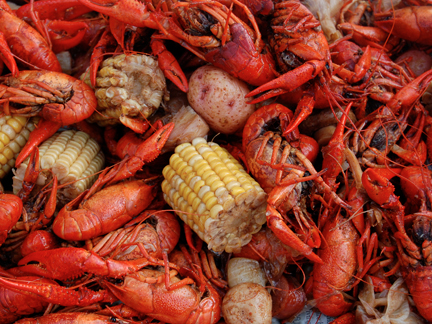
Above: An image from my first “crawfish boll,” which took place not long after I moved to Texas to be with Tracie P.

Gambero rosso is also a designation used by Italians for the common American crayfish, the “Gambero Rosso della Louisiana.” Its introduction to Italy in the mid-1800s led to a series of crayfish plagues in Europe.

Collodi was certainly aware of the crayfish calamity of his era and the very name — gambero rosso — surely instilled biblical fear in the minds of his readers.

In the light of this, the choice of gambero rosso for the title of a magazine devoted to Italian gastronomy may seem infelicitous to some.

gambero rosso trash

Above: The Gambero Rosso brand has often been the center of controversy and its editors have often been accused (however informally) of conflict of interest. I’ve written about the brand on many occasions.

On Monday, when I posted my translation of an open letter by a confederation of Italian winemakers to the editors of the magazine, I didn’t imagine the heated reactions that the post would generate (just look at the comment thread and you will find the comments and links to other bloggers who posted view points often diametrically opposed to one another).

For my part, I was just trying to provide a public service by rendering the text of the letter into English.

O, and one last thing…

Down here in Texas, you know what they call the gambero rosso?

They call the little critters mud bugs.

Tomorrow, I’ll get back to the business of posting about the wines we’ve been tasting and some of the interesting wine professionals I’ve had the chance to interview recently. Thanks for reading…

Natural winemakers respond to Gambero Rosso

natural wine

Above: Frank Cornelissen, who produces wine on Mt. Etna, is one of the signatories of the following open letter. On Saturday, Italian journalist and wine industry observer Jacopo Cossater noted on his personal blog that the editors of the Gambero Rosso has managed to do what no one could until now: they have united the often discordant field of Natural winemakers in Italy.

On Friday, the popular Italian-language wine blog Intravino published the following “open letter” undersigned by a confederation of “natural” winemakers in response to a series of negative (and some would say blindly and wildly pompous, misinformed, and misguided) editorials on Natural wine published by the Gambero Rosso in its January issue (click the link for my excerpted translation).

The author of the Intravino post, Jacopo Cossater, notes that the editors of the Gambero Rosso have no intention of publishing the rebuttal.

I have translated the letter in its entirety below.

*****

Open Letter to the Gambero Rosso
February 1, 2013

Dear Sirs,

We write to you in the name of hundreds of wineries — both affiliated with appellation associations and consortiums and indepedent — that produce natural wine. We were dismayed to read the editorial by Eleonora Guerini (“The Natural Obsession”) and the observations by Bettane and Desseauve (“Have We Got Natural Wine For You!”) published in the January issue of your magazine.

To be honest, we have the distinct impression that you are not really up to speed with what has been happening, for years now, in the wine world. Your tout court accusation that “natural” winemakers produce only defective, oxidized, stinky wines is absurd. Your magazine regularly reviews and often rewards wines produced by wineries widely accepted as members of the natural wine orbit.

The technical part of your argument is wholly indefensible. What are the “new, ‘natural,’ and innovative” methods utilized to stabilize natural wines? Extended lees aging (a practice used for centuries, from Mt. Etna to the Loire Valley)? In Bettane and Desseauve’s article, the authors state that with natural vinification, “all of their grape varieties and terroirs end up resembling one another because the nasty native yeasts with which they are made — yeasts that greedily cannibalize the good yeasts if the vinifier allows them to do so — are the same yeasts that you find all over the planet”! From the implicit thesis of this singular affirmation, it would follow that a “selection” of yeasts — or rather, a small part of the entire population of the yeasts themselves — generates a “variety” with greater effects. You’ll have to excuse the irony, but this would mean that we need to eliminate all the black keys from the piano (those which have been “altered”) in order to compose more complex musical pieces…

And let’s not talk about the vineyards, where — as you yourself write — the will to greatly limit or entirely exclude herbicides, pesticides, and fertilizers is a simple act of common sense.

We are the first to acknowledge that there is no wine that is completely and exclusively “natural” and that wine is a product of culture, the fruit of interaction between man and nature. Perhaps the term “artisanal” is better suited to our ideas: wine should be the fruit of choices made by those who work in the vineyards and those who transform the grapes into wine.

But we also believe that it is sensible, even fundamental, to discuss the greater or lesser “naturalness” of a given wine because the law allows winemakers to add a daunting number of substances — dozens and dozens — to wine must. If it were possible to list additives to wine labels (or even the substances that a given producer decides not to use), everyone would have all the tools necessary to effectively evaluate whether or not a wine is natural.

But guess what? This is not allowed. And no one ever mentions it.

And yet, the more substances that are added, the less the wine is spontaneous and digestible. This is what’s happening today: many wine drinkers and lovers — perhaps tired of the “obssession with the best wine there is” and the “obsession with the best vintage of the century” — shift away from the most manipulated wines and move instead toward more spontaneous products that don’t give you a headache, wines easier to digest and more food friendly.

Continue reading

Sincere wine in SF & the best show of the NN+ tour

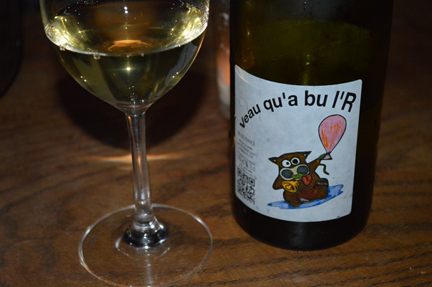
veau qu'a bu l'r

Honestly, I don’t get the joke or paronomasia behind the label of the Veau qu’a bu l’r (the calf who drank the r). Maybe it has something to do with the Israelites’ golden calf?

What I can tell you is that — at least according to the internets — is a carbonic maceration old-vine Marsanne from some folks in southern France who have a groovy winemaking operation called Domaine de l’Ancestra

michael housewright san francisco

Photo by my buddy Michael Housewright. Thanks, dude, for coming out to the show!

I can also tell you with certainty that it’s delicious: we drank it before the Nous Non Plus show on Friday in San Francisco at Terroir (not where we played but where we drank).

I gladly paid a mere $40 for it basing my selection solely on my trust of the wine merchants at Selection Massale, Cory Cartwright and Guilhaume Gerard, and their superlative palates and mission to bring Natural “sincere” wines to the U.S. from France (“sincere” is my new term for what used to be called “Natural” wine).

Great wine, great value.

bardot a go go

If you get to the party early enough, they’ll do your hair up go-go stye.

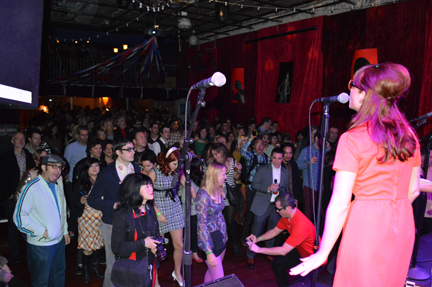
Our tour was so much freakin’ fun and the last night in SF at the Bardot a Go Go party was over the top.

joachim cooder

So much fun to play with Joachim Cooder on drums (right). He is so amazing, with such nuance and grooviness in his playing and personality.

nous non plus rick shaw

I’m super glad to be back at home with my girls but, man, there is something to be said for gettin’ yer ya-yas out.

Thanks to all who came out to rock out with us!

Buona domenica, yall! Happy Sunday…

A stunning Russian River Chardonnay from Lioco & chat with Kevin O’Connor

kevin o'connor

Above: A new American gothic? Kevin O’Connor from Lioco.

Conversation with Lioco’s Kevin O’Connor last night over dinner at Sotto (where I co-curate the wine list) in Los Angeles spanned the heady days of his tenure as wine director at Spago and his years prior in New York when the current renaissance began to explode.

It was truly moving to hear him speak of the legendary Los Angeles sommelier Michael Bonaccorsi, one of his mentors and a rising star on the U.S. wine scene when he succumbed to a heart attack at 43 in 2004.

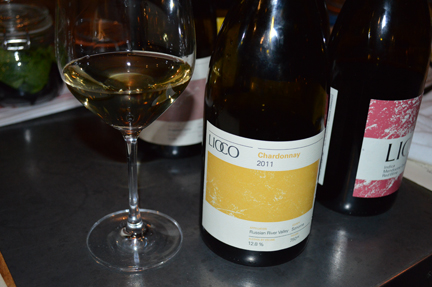
russian river chardonnay

We’ve worked with a lot of Kevin’s wines at Sotto since the restaurant opened. And while we included the winery’s entry-tier Chardonnay on our inaugural list, I had always found it to fall on the softer side of the Chardonnay spectrum.

After I tasted his 2011 vintage, we talked about the shift Lioco’s winemaker has made toward a more muscular and acidity-driven wine. He talked about how they are now balancing large-format cask fermentation with stainless steel and how all the wines continue to be aged in stainless steel (and some cement, he said).

I was blown away by his 2011 Russian River (one of the higher tier in the Chardonnay line). It was rich in the mouth but retained that lightness of body that I look for in fine wine and its acidity sang out over a rhythm of white and stone fruit.

A Russian River Valley Chardonnay that I loved? I bet you never thought you’d hear me say that!

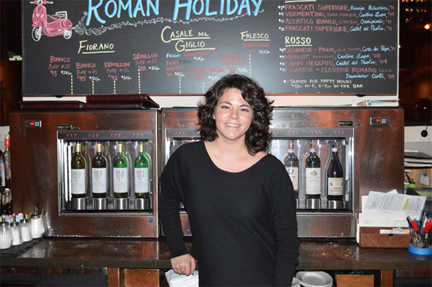
Thank goodness for Liz Nicholson wine director @Maialino_NYC

liz nicholson maialino wine

It’s no wonder that Eric the Red includes Maialino wine director Liz Nicholson (above) in the Times tasting panels devoted to Italian wine: she’s got one of the most ambitious Italian wine lists this country has seen in more than a decade. (The other Italophile wine professional he always includes is the inimitable Levi Dalton; check out his great post today in Eater on the evolution of the contemporary wine list.)

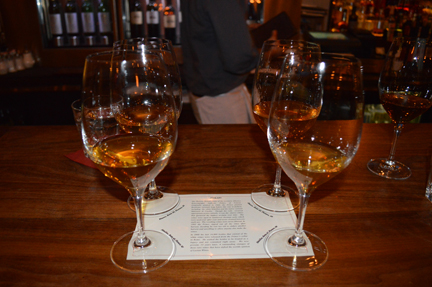
My last day in New York (earlier this month), I visited the bar at Maialino on Gramercy Park because I wanted to check out her new Fiorano (whites) tasting flight, reaching back to the 1988 vintage of the prince Buoncompagni’s Sémillon and costing only $50 for a half pour of four of the wines (check out Eric the Red’s post on the wines from way back in 2004).

Liz got the last allocation of these storied wines, which captured the imagination of the New York wine scene in the mid-2000s.

fiorano white wine

Oxidative, orange, and in some cases tending toward brown, these wines are not for everyone (and I had to ask the bartender to replace one of the younger wines because it had turned to Marsala).

I’m also not convinced that the Enomatic cruvinet is the best vessel to store these old, delicate wines.

But I love that Liz is sharing their last gasp with people like me, who have followed the wine with great interest since they first landed in NYC nearly ten years ago.

Her wine list has a great selection of Langa Nebbiolo and a good balance between traditional and modern styles.

But she also has a fantastic Franciacorta list, my favorite Lambrusco (Rinaldini), and all kinds of cool stuff (Dessimus by the glass, sparkling Valtellina by the glass, etc.).

It’s the kind of list that I love to just leaf through as I sip the 1992 Sémillon (which, in my tasting, showed best in the flight of the Fiorano).

Chapeau bas, Liz! I’m so looking forward to following your career and your lists to come!

Where the cheap wine is the best: dinner at NoMad NYC

olga raffault

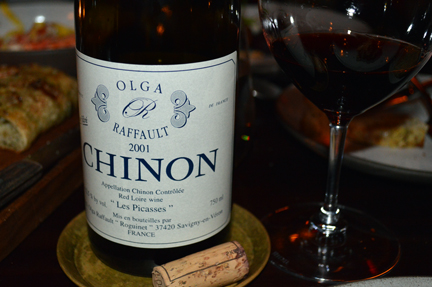
Above: Olga Raffault 2001 Chinon Les Picasses, one of my favorite wines and only $65 (yes!) at NoMad in NYC.

It was the night of two dinners.

“Order any wine you want,” said restaurateur Tony, my friend and client who was treating me to dinner.

We were at NoMad, a newish and very hot NYC restaurant that Tony’s chef Grant had recommended. We were eating our way through New York and Tony, who’s always overly generous with me when it comes to the wine selection, told me that “the sky’s the limit.”

roast chicken nomad

Above: The famous roast chicken at NoMad, as presented before service.

The wine list at NoMad is phenomenal and the European selections are stuff of dreams for me (we started with Alfred Gratien rosé by the glass).

I was tempted to take Tony up on his offer. I believe that both Bartolo Mascarello 1997 Barolo at $375 or Produttori del Barbaresco 1970 Barbaresco (classic) at $400 would have drunk brilliantly (and look, I wasn’t going to do Giacomo Conterno 1971 Barolo Monfortino at $3,200, however much I would LOVE to drink that wine).

But I also knew we were going to be tasting at least half of the menu and so I craved something extremely food friendly that wouldn’t be overwhelmed by the myriad flavors.

Twelve years in its evolution, the 2001 Chinon Les Picasses at $65 (!!!) was ideal (the 1989 at $125 would have been great, too, but I wanted to go with a younger wine that would have the versatility to stand up to the flavors that were heading in my palate’s direction).

chicken plated

Above: The the roast chicken mise-en-place.

Schmuck! I hear you say.

I know, I know… After all, I do a great job for Tony and we’ve become close friends. Back home in Texas, he’s opened more than one bottle of Quintarelli 1990 Bandito and 1990 Recioto for me (among other crazy labels).

But the 2001 Picasses was just right for the speed of the evening and the truly perfect pairing for the restaurant’s famous roast chicken.

tony vallone houston

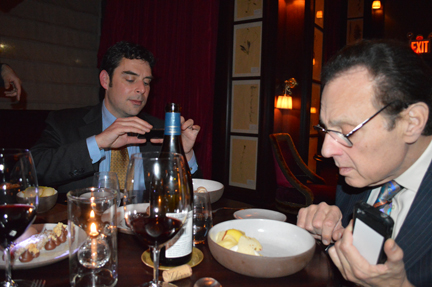
Above: Tony (right) uses his phone to take pictures of dishes he likes. Between Doug (left), Tony, and me, we were tweeting up a storm.

We were joined that evening by my new bromance Doug Cook (my fellow Italophile and oenophile and super cool and brilliant dude).

“Bring anyone you like to dinner,” Tony had said, his largesse rivaled only by the amount of fun we were having the two evenings we spent dining our way through the city.

We ended up staying to close the place and I had a blast chatting with the sommeliers about their list (they proudly showed me emptied bottles of old B. Masarello and Soldera that had been brought in by a mutual friend and one of the top Italian collectors in the city and they treated us to 1996 Oddero Barolo by the glass).

The best news is that that bottle of Produttori del Barbaresco 1970 Barbaresco Pora at $450 will probably still be there when I return east in the fall.