Wherefore art thou Romeo? Ask @RomeDigest (& a fav Chianti)

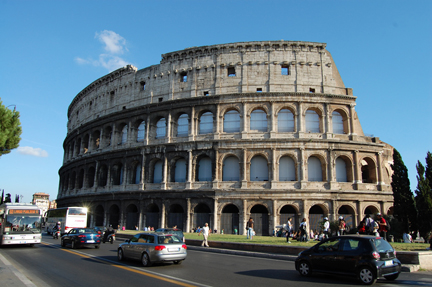
colosseum

One of the questions I get asked more than any other is where should I/we eat and drink in Rome?

Of course, I have my favorite haunts (from my year studying at the Vatican library as a Fulbright scholar) and my many visits in the years since.

But as the Romans used to say, ubi maior, minor cessat: there’s a new resource for dining, drinking, and touring in Rome and it’s called The Rome Digest.

For some years now, I’ve been pointing romei to the inimitable Katie Parla and her ParlaFood. And when I go to Rome, she’s the person I try to have dinner with!

She’s now teamed up with some of the top Anglophone food and wine professionals in the Eternal City to bring us the digest, which I highly recommend.

Btw, a romeo (pl. romei) is a pilgrim heading to the city on the Tiber. (And this peregrinatory word is pronounced roh-MEH-oh.)

Check out their new site. They rock.

In other news…

selvapiana best chianti

When I cozied up to Tracie P on the coach last night after we put Georgia P to bed, she asked: “What wine are you drinking? It smells like Chianti!”

I had popped a bottle of 2010 Chianti Rufina by all-time fav Selvapiana. So right on, with great acidity and fresh red fruit and gentle earthiness, and just the right amount of tannin to tame a piquant aged pecorino. I love LOVE this wine.

Did I say that I love this wine?

Thanks for reading… may you drink well this weekend! Buon weekend, yall…

Soldera update: 4-year prison term for vandal, 6 requested by prosecutor

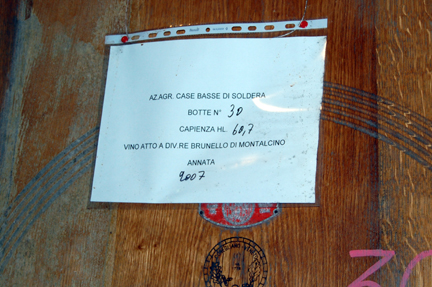
brunello scandal soldera

Above: One of the casks of Soldera’s wine that was destroyed by a vandal in December 2012.

The news that the Soldera vandal has been sentenced to four years in prison arrives via Franco Ziliani’s blog, Vino al Vino, today.

(The sentence was originally reported by MontalcinoNews.com.)

According to the report, judge Monica Gaggelli gave the vandal, Andrea Di Gisi, two years less than requested by the prosecutor.

Natural wine… don’t ask, don’t tell (@DonkeyandGoat dinner @VinoVinoWine)

best natural wine california

Above: Tracey Brandt of Donkey and Goat (Berkeley, California) was in Austin last night for a dinner at Vino Vino.

You might say that, second only to Produttori del Barbaresco, Donkey and Goat is the “official Parzen family wine.”

We drink it regularly at home (Stone Crusher in fridge? Check!), my parents-in-law Rev. and Mrs. B drink it regularly (hey, Rev. B, did you drink that Helluva Pinot Noir without me?), and it’s been a by-the-glass favorite on our list at Sotto in Los Angeles (where I co-curate the carta dei vini with @CaptainWine) since the restaurant’s inception more than two years ago.

Tracie P and I are thrilled that the wines are finally (legally) available here in Texas and these days we buy them regularly at the Austin Wine Merchant and the Houston Wine Merchant (two of the dwindling number of independent retail operations in our state).

I was geeked to sit down, taste, and chat last night with Donkey and Goat’s better half, Tracey Brandt (above) at the best little wine bar in Austin, Vino Vino, where owner (my client and friend) Jeff Courington had organized a dinner in her honor.

Last year, when I sat down with her husband Jared at Sotto, he told me: “I don’t like labels and I don’t consider myself a Natural winemaker… I think of it more as ‘unmanipulative’ winemaking. But that’s not as fun to say.”

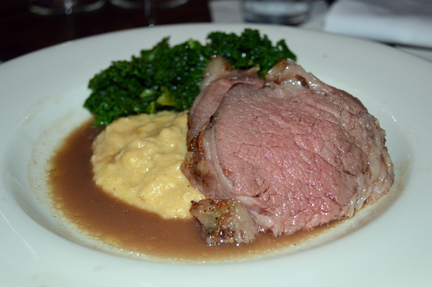
roast beef texas austin

Above: Vino Vino chef Jesse Marco’s rib roast with polenta and kale was as delicious as it looked.

In our conversation over dinner last night, Tracey noted that “we were already making wine in this style before we had even heard the term Natural wine.”

Does she call her wine “Natural”? I asked.

“Here’s what I say to people,” she told me, “our wines are often referred to as ‘Natural’ wines.”

She said that she first hear the term when she and Jared presented at VinNatur in Italy in 2008. By that time, they were already into their fourth vintage.

There are three basic tenets of their winemaking philosophy, she said:

“First, the wine should be food-friendly. Second, the wine should be ‘honest’; it should taste like the place where it was grown. And [lastly] the wine should taste like the varietal. In other words, if it says Pinot [Noir] on the label, it should taste like Pinot.”

There’s been such a fuss about the use and misuse of the term Natural over the course of the last eighteen or so months.

Does it really matter what the winemakers, wine pundits, or wine lovers call it?

My thought is… don’t ask, don’t tell… just drink it (if you like it)…

Trinchero skin-contact Malvasia & scampi @CiaoBelloHou by @BobbyMatos

trinchero malvasia orange wine

Above: Chef Bobby Matos‘ cooking has never been better and the seafood never fresher and more tasty at Tony’s Ciao Bello restaurant in Houston.

Thanks to our constipated wine distribution and impacted-bowel wine importing regulation here in Texas, it’s rare that we have the opportunity to (legally obtain and) enjoy European wines that are not available in other states (with more liberal regulation like California and New York).

Last night, when I spoke at a wine and seafood pairing dinner at my friend and client Tony’s Ciao Bello restaurant in Houston, I had the good fortune to taste the Trinchero skin-contact Malvasia, which, to my knowledge, is only available in my adoptive state.

bucatini crabs legs

Above: The bucatini had been tossed in a sauce made of stock from the crab shell, white wine, bay leaf, and a touch of cream. They were then topped with breaded and fried crab legs.

It’s brought in by maverick “against all odds” importer Doug Skopp, a colleague whose become a friend.

I’ve followed Trinchero — a Vini Veri producer in Asti — for nearly ten years and I am huge fan of their Barbera, especially the Vigna del Noce cru, arguably one of the best expressions of Barbera available commercially today.

(Polaner brings the wines into the rest of the U.S. but not the Malvasia.)

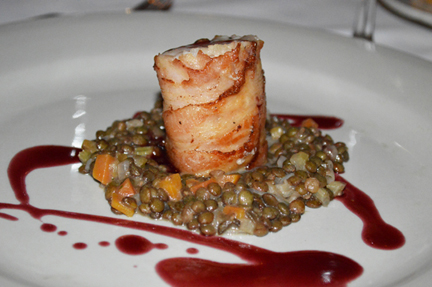
monkfish prosciutto

Above: Tracie P and I generally don’t eat seafood in Texas beyond Tony’s restaurants. It’s just never as good as in my home state California.

The skin-contact Malvasia was tannic and dense although more delicate on the palate than I expected. The scampi were delicious but slightly overpowered by the wine, however satisfying. (I might have done the Trinchero with the phallic prosciutto-wrapped monkfish and lentils above.)

Remarkably fresh, it really began to show its muscle and nuance as it opened up, with layers of nutty and dried stone fruit flavors.

Thank you, Doug, for bringing in this groovy wine! And thanks, Bobby for the fantastic dinner last night. Your cooking has never been better. Great dinner…

Read the Wine Spectator on Giacosa and Foradori

wine spectator

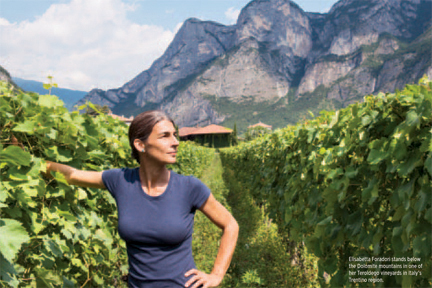
Over the weekend, friend Mitch Frank, associate editor at Wine Spectator, generously sent me a preview of the April issue of the magazine and his superb profiles of Elisabetta Foradori (above) and Bruno Giacosa.

So much has been written about the wines of Bruno Giacosa but little ink has been devoted to his life, his family, and his legacy as a winemaker whose career has spanned the worst and best of times in Langa. In his article, Mitch elegantly weaves cultural context and perspective in a biography that stands apart as much for its insights as for its nitty-gritty account of the family’s recent vicissitudes.

On Foradori and her wines, Mitch travels a path seldom taken by Spectator editors, who tend to favor the wine world’s greatest hits over its in fieri evolution and revolution. I loved the way he coaxed her into speaking of the personal challenges and professional setbacks she’s faced. Where many writers have relished a glamorization of Elisabetta, he portrays her as human, all too human. His narrative invests the wines — which I love and have followed for many years now — with an intimacy that you rarely see in the boastful oenography so popular today.

As I read the stories over my early morning tea, I couldn’t help but think that both stories were about fathers and daughters. In Elisabetta’s case, a father who expired when she was still a child. In Bruna Giacosa’s case, a father whose legend still casts a long shadow across the Langa hills.

Then I set about thinking of the Italian daughters who have inherited or will inherit the vinous legacy of their fathers: Maria Teresa Mascarello, Marta Rinaldi, Gaia Gaja, the Pepe sisters, Elena Pantaleoni… They are the Atalantas of Italian wine, princesses who bear a heavy load as they tread the footsteps of kings.

Chapeau bas, Mitch! Great work…

Tasting Mourvèdre with Michael Christian of Los Pilares, San Diego

michael christian pilares

As fate would have it, San Diego winemaker Michael Chirstian (above) and I met for the first time in February 2012, just a week or so after Alice wrote up his wine on her blog.

A few short weeks later, his Los Pilares label went from relative obscurity to the commercial limelight when Jon Rimmerman of the Garagiste asked very loudly: “Is this the future of California wine? … This is the most exciting wine I’ve tasted from the Golden State in many years. It is actually alive… with a fire that I simply cannot (and have not) found in anything from California in so long.”

By the end of the year, Jon Bonné included Los Pilares in The San Francisco Chronicle “top 100 wines in the west” list.

Michael and I have stayed in touch over the last year as his star has risen to heights that I don’t think he imagined when he first sent a sample of his wine to Alice.

On Friday evening last week, he stopped by Jaynes Gastropub where I was pouring wine and playing music. Conversation ranged from Montaigne to Pasolini to the immense success of his wines and the way that they have resonated among California wine enthusiasts.

The celebrity and attention certainly haven’t gone to his head as he’s continued on his quest to make food-friendly, wholesome, and delicious wine in San Diego (the most unlikely of appellations). The problem is that, these days, you can’t find his wine because it’s all snatched up on release.

He tasted us on his “personal-consumption” Mourvèdre (bright and fresh, meaty but not too heavy in the mouth) and told us about a new project for a carbonic-macerated Syrah.

Check out this interview that he did with Alice about a year ago. His attitudes and approach to winemaking haven’t changed a bit. And the wines have only gotten better and better.

I’m very excited to see (and taste) what he’ll do next. And you should be, too…

Best Falanghina I’ve ever tasted in the U.S.

I’ll be at Jaynes Gastropub in San Diego tonight, pouring wine from 5:30 p.m. and playing a telecaster from 10 p.m. If you happen to be in America’s Finest City, please come on down and we’ll taste together.

best falanghina los angeles

@CaptainWine and I debuted our new spring wine list at Sotto in Los Angeles last night, including roughly 20 new labels.

As I tasted with friends, wine pros, and media last night (thanks, everyone for coming out!), I couldn’t help but reflect and remark on how blessed are the wine lovers of California: thanks to the Golden State’s liberal distribution and importing regulations, wine directors have such a wide range of labels available to them (unlike my adoptive state of Texas where so many wonderful Italian wines, present in the California and New York markets, are off limits to buyers).

From the Cenatiempo Ischia Bianco to the Sibilla Piedirosso (Oliver McCrum, CA) to the Monte di Grazia Tintone (an extremely rare grape variety from Campania; Wine Emporium, NY), to an awesome Salvatore Tintilia del Molise (Giammario Villa, CA), there are so many fantastic wines flowing in the California market these days (all new labels on our list).

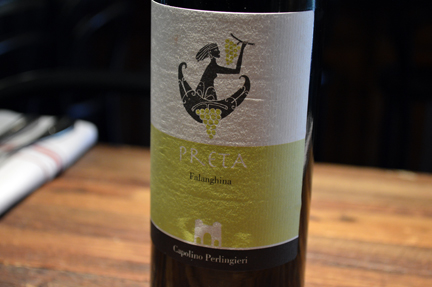
But the wine that I kept thinking about all night (and the wine that I called in the morning) was the Capolino Perlingieri Falanghina Preta (above, Terravino, CA).

There’s a lot of great Falanghina in the U.S. but this one just has that marcia in più, that extra something special. Its acidity and citrus flavors were zinging last night (paired with burrata). But it was its intense minerality that really made it stand apart in my mind. I LOVE this wine.

By far, the best Falanghina that I’ve ever tasted in this country (and I’ve tasted a lot) and a wine that I just can’t stop thinking about.

best pizza california

Thanks to everyone who came out last night to taste with me (especially Tricerapops)! That was a blast.

I’ll be taking a break from my California trips as the countdown to Parzen family expansion revs up (coming to theaters this July!). But I’ll see you again in September when we visit my home state again.

Buon weekend, yall!

Italy concert update, tomorrow @SottoLA, Friday @JaynesGastroPub in SD

From the department of “it was twenty years ago today”…

shawn amos

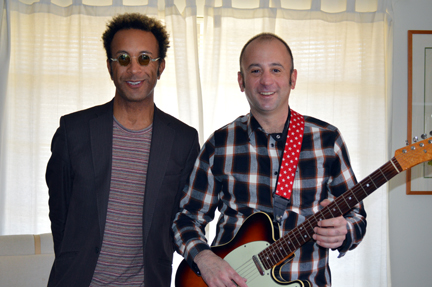
My old friend and bandmate Shawn Amos (left) and I will be fronting our band “the Americani” Friday and Saturday April 5 and 6 at the Villa Marcello Marinelli in the heart of Proseccoland.

Both shows will take place at the Villa and showtime is 10 p.m. both nights.

We’ve got a wonderful set of americana lined up (think Howlin’ Wolf and Neil Young).

If you’re attending Vinitaly this year, come up and rock out with us before the fair (a ton of my winemaker friends are planning to come as are wine folks from the U.S.).

Tomorrow night (March 14) I’ll be working the floor at Sotto in Los Angeles, where we’re launching our new spring wine list (Tintilia del Molise, anyone?).

And Friday night (March 15), I’ll be pouring wine all evening and then, on the later side, appearing with my San Diego-based band, the Grapes (think Doug Sahm and Gram Parsons), at Jaynes Gastropub in San Diego.

Caveman wine & wild vines in Italy & Eric the Red’s excellent article on Valle d’Aosta

valle d'aosta wines eric asimov

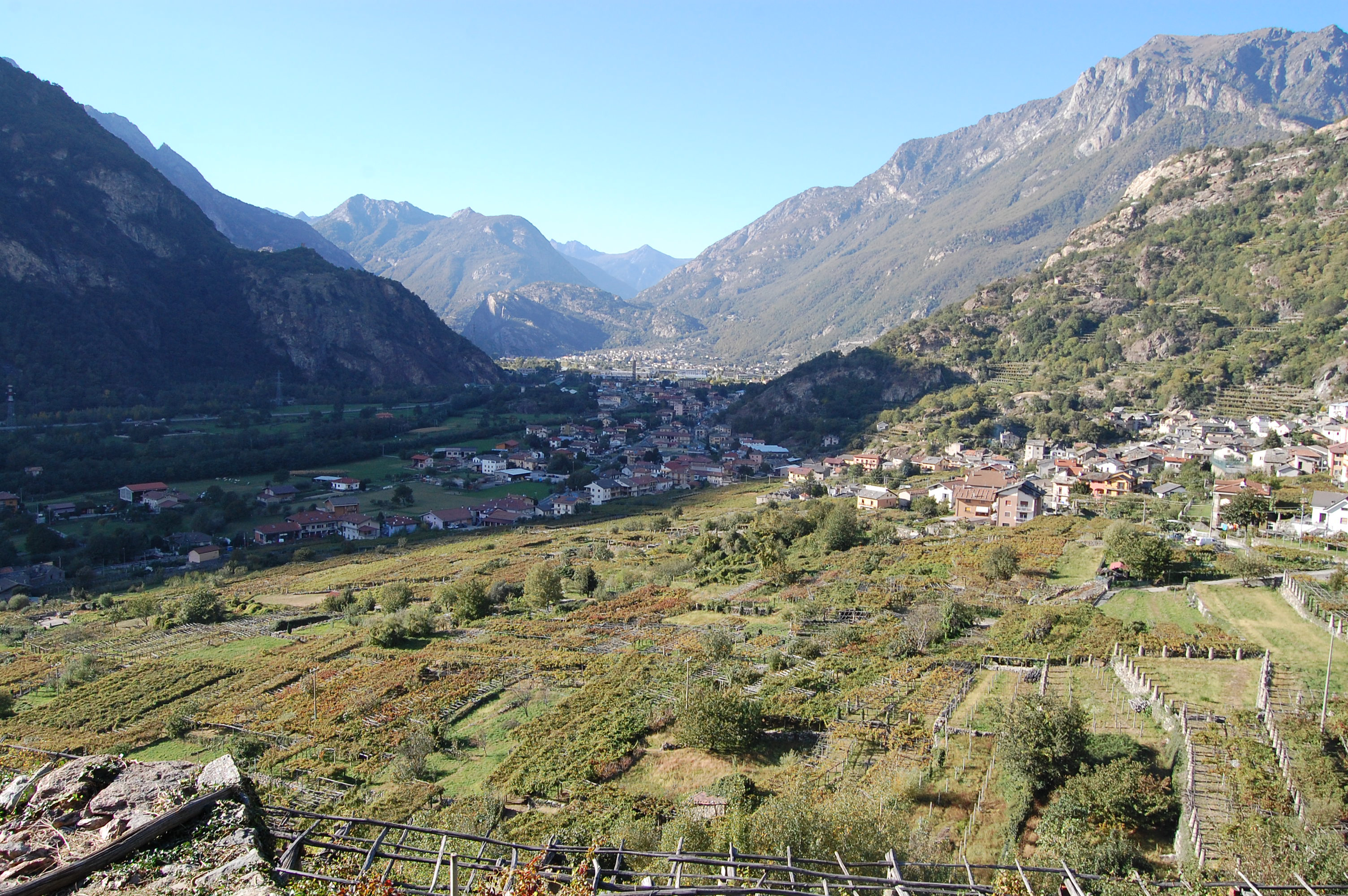
Above: That’s the village of Donnas, Valle d’Aosta, in the distance (photo taken from the village of Carema). Click the image for a high-res version.

Eric the Red’s excellent article and tasting notes on the Valle d’Aosta last week reminded me that I have neglected to repost the video below by my friend, wine writer, publisher, and winery consultant Maurizio Gily.

In it, Maurizio visits Mt. Fenera Park (not far from Donnas in the Valle d’Aosta) where he and his colleagues inspect wild pre-phylloxera vines and ancient cave dwellings where they believe pre-historic viticulture may have emerged.

The discoveries are significant, in part because they offer evidence that the Etruscans and early Greek settlers may have not been the first to make wine on the Italic peninsula. And ampelographically speaking, the plants may offer clues as to the truly indigenous (and genetically pure) origins of Italian grape varieties.

The video is in Italian but it’s easy to follow (and the images are what is most important).

“Asolo is fully entitled to be part of the DOCG” says Prosecco Cons. Prez

giancarlo vettorello

When Prosecco DOCG Consortium director Giancarlo Vettorello’s February visit to Texas came to my attention, I immediately wrote to the consortium’s publicist to request an audience.

He and I had spoken before via telephone, in the wake of a post I wrote about the Prosecco DOCG. And I was eager to sit down and share do bianchi with him.

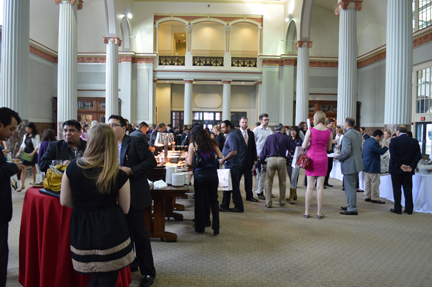
Giancarlo (above), his assistant (make that tre bianchi), and I ended up meeting at Tony’s in Houston last month when they were in town for the Gambero Rosso road show tasting of Prosecco and Vino Nobile producers (see image below).

Our meeting was friendly and fun, of course, but we did cover some thorny subjects like the creation of the Prosecco DOCG in 2010.

Many have contended — myself included — that the creation of the Prosecco DOCG was an unwarranted and politically motivated move by Italy’s then agriculture minister Luca Zaia, who later went on to become president (governor) of the Veneto (where Prosecco is most famously produced, although not exclusively).

After all, as many observers of the Italian wine industry noted at the time, it seemed a stretch to elevate the stature of Prosecco to that of Barolo, Taurasi, or Brunello — historic fine wines with immense aging potential.

The newly created DOCG also seemed to be tainted by the flood of new and politically charged DOCG applications that came in the final days of Rome’s sovereignty in granting rubber-stamping them (in 2009, EU reforms shifted that power to Brussels).
gambero rosso tasting houston

When I asked Giancarlo to elaborate on what he already told me via phone (that in his view and the view of his associates, the seemingly boundless commercial success of Prosecco warranted this elevated status), he said something so brilliant that it thrilled me just as much as it convinced me that he was in the right.

“Consider the Venetian playwright Goldoni,” he commanded gently, unaware that I was an avid reader and translator of the eighteenth-century Italian writer. “Some would say that he’s a mere comediographer, a writer of [trivial] comedies. Yet he is widely considered to be one of the greatest writers in Italian [literary] history.”

“Prosecco is like Goldoni. Even though his subject matter may have been light in nature, his legacy cannot be overestimated.”

The analogy is just so spot on. And, of course, given Prosecco’s sine qua non relationship with Venice and its conviviality (a favorite subject of Goldoni, who loved to parody the emerging bourgeois culture of his era), I couldn’t help but admire Giancarlo’s masterful oratory.

The other subject I wanted to cover with him was the inclusion of Asolo in the 2010 Prosecco DOCG.

“Asolo is fully entitled to be part of the DOCG,” he told me with utmost authority in his voice. “It is a legitimate member of our consortium because of the high quality of the wines produced there and its affinity in terms of the production zone and terroir.”

I’ve written about that today for the Bele Casel blog.

Tracie P and I plan to meet and taste with Giancarlo when we visit Proseccoland early next month.

Stay tuned!