Nicolas Joly and Angelo Gaja to face-off in “natural vs. unnatural wine” debate

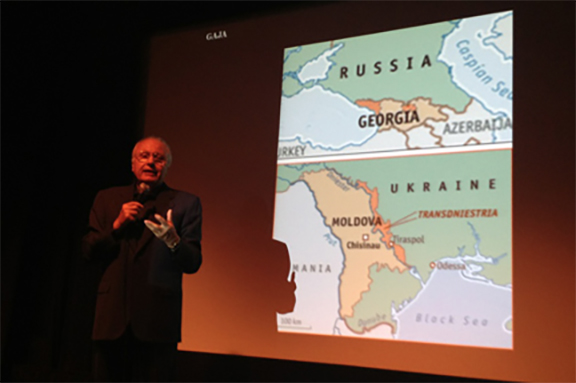
angelo gaja barbarescoAbove: Piedmontese grape grower and winemaker Angeleo Gaja in New York in 2012.

Biodynamic pioneer Nicolas Joly and trailblazing winemaker Angelo Gaja are to face-off in a roundtable discussion entitled “Around the table with Natural Wine… and Unnatural Wine,” to be held on July 12 at the Italy pavilion of EXPO in Milan.

The event has been organized by gastronomic entrepreneur and Eataly founder Oscar Farinetti and it will also include spirits and natural wine importer and distributor Luca Gargano, Italian Federation of Independent Grape Growers co-founder Walter Massa, Merano Wine Festival founder Helmut Koecher, and enology professor Vincenzo Gerbi from the University of Turin.

A preview of the gathering was posted yesterday on the Italian food blog Cronache del Gusto.

More than two years after the editors of Gambero Rosso published a controversial op-ed by French wine writer Michel Bettane in which he railed against “an invasion of so-called ‘natural’ wines,” the debate over the merits of natural winemaking continues to command the attention of the Italian wine world.

But many Italian wine trade observers also seem to have grown tired of the discussion.

“I’d rather attend an evening gathering devoted to household cleaners,” wrote enologist and publisher Maurizio Gily on his Facebook today.

“Not only is this an idiotic debate,” opined Montalcino winemaker Stefano Cinelli Colombini in the comment thread to Gily’s post, “it’s outdated and stale. Wouldn’t it be better if there were a discussion of the real issues instead of terms and definitions?” he asked.

How do you say “fruit set” in Italian? Italian wine glossary updated

PLEASE CLICK HERE FOR THE UPDATED GLOSSARY (April 2018).

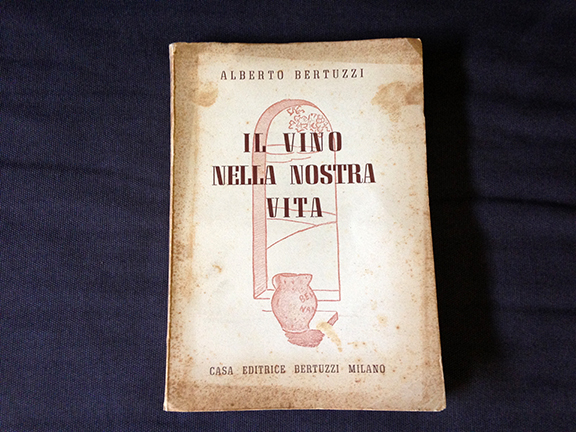
best italian wine bookAbove: Alberto Bertuzzi’s 1942 “Wine in our Lives,” a fascist-era “how to” book on wine’s application in a healthy lifestyle.

With every trip to Italy and the many posts, fact sheets, and technical descriptions I translate for my clients, I always come across Italian wine terms to add to my growing Italian wine term glossary (below).

This week’s update includes allegagione, spollonatura, and scacchiatura, among others.

If you have terms that you’d like to suggest, please leave a comment below. I’ll be happy to add them.

Thanks for speaking Italian wine!

ITALIAN ENGLISH
a giropoggio east-west row orientation
a ritocchino north-south row orientation
acciaio [inossidabile] stainless-steel [vat/tank]
affinamento aging
alberello head-trained [vines]
allegagione fruit set
allevamento training
argilla clay
arresto di fermentazione stuck fermentation
assemblaggio blend
azoto nitrogen
barbatella grafted cutting
barrique barrique [small French oak cask]
bâtonnage stirring on the lees
biodinamica biodynamics/biodynamic
biologico organic
botte traditional large cask
bucce skins
Cabernet [Sauvignon] Cabernet Sauvignon
Cabernet Franc Cabernet Franc
calcare/calcareo limestone/calcareous [limestone-rich]
cappello sommerso submerged cap maceration
chioma canopy
cordone speronato cordon-trained spur-pruned [vines]
cru vineyard designation/single vineyard
cuvée blend
délestage rack and return
deraspare/deraspatrice de-stemm/de-stemmer
diradamento pruning/thinning grapes/dropping fruit
DOC DOC [designation of controlled origin]
DOCG DOCG [designation of controlled and guaranteed origin]
DOP PDO [Protected Designation of Origin]
doppio capovolto double-arched cane [training]
esca esca [alt.: black dead arm or black measles]
escursione termica [diurnal] temperature variation
fementazione arrestata stuck fermentation
femminella lateral shoot
follatura punching down
galestro galestro [a marl- and limestone-rich subsoil unique to Tuscany]
giropoggio east-west row orientation
grappa grappa
grappolo cluster/bunch
Guyot Guyot
IGP PGI [Protected Geographical Indication]
IGT IGT [typical geographical indication]
leccio holm oak
lievito naturale native/ambient/indigenous/wild yeast
lievito selezionato cultured yeast
limo silt
macchia mediterranea Mediterranean maquis [shrubland]
maestrale (vento di maestrale) north-westerly wind
malolattica malolactic fermentation
marna/marne marl
millerandage millerandage [alt.: shot berries, hens and chicks, or pumpkins and peas]
monovitigno single-grape variety [wine]
mosto must
oidio oidium [powdery mildew]
peronospora peronospora [downy mildew]
pied de cuve pied de cuve [native yeast starter]
pigiatura pressing
portinnesto rootstock
quercia oak
rimontaggio pumping over
ritocchino north-south row orientation
sabbia/sabbioso sand/sandy [sandy soil]
Sauvignon [Blanc] Sauvignon Blanc
scacchiatura disbudding
siccità/stress idrico hydric stress
sistema di allevamento training
sottosuolo subsoil
sovescio cover crop/green manure
spollonatura disbudding
stralciatura deshooting
stress idrico/siccità hydric stress
sulle bucce skin contact [macerated on the skins]
sulle fecce nobili lees aged [aged on its lees]
sur lie lees aged [aged on its lees]
terreno/terreni soil
tignola della vite vine moth [Eupoecilia ambiguella]
tralcio shoot/cane
tramoggia hopper/feeder
tufo tufaceous subsoil [porous limestone]
vasca vat/tank
vento di maestrale north-westerly wind
vigna/vigne vine/vineyards
vigneto vineyard
vinaccia/vinacce pomace
vite vine
vitigno grape variety

Aspen Food & Wine: our celebrity-splashed weekend

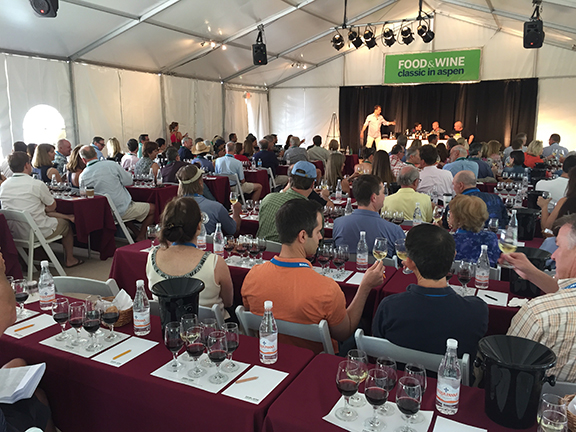
rick bayless cooking showWhat a thrill for me to be invited to participate in a panel on Italian wines at the swank Aspen Food & Wine festival this year!

Tracie P and I decided to make it a romantic vacation (our first time away from Georgia P and Lila Jane for more than one night!).

But after Tracie P spotted Rick Bayless (above) at my first panel on Friday morning, she swooned and said, “ok, we can go now… I just saw Rick Bayless!”

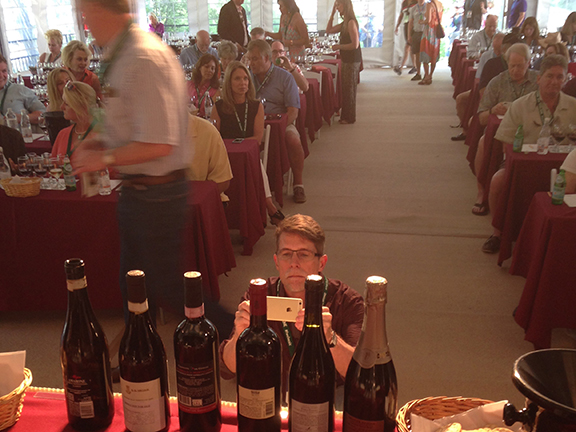
That’s Rick taking a shot of the flight of wines poured at our seminars.

jacques pepinAfter the first seminar Friday morning, we headed up to the main tasting tent for some A-list celeb watching.

Tracie P had her heart set on seeing Jacques Pépin and the paparazzi gods delivered right out of the box.

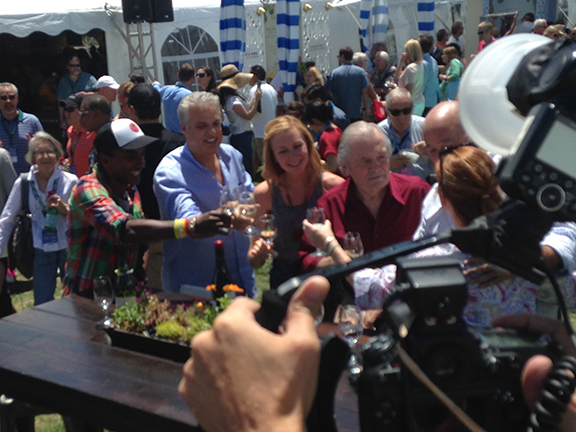
As soon as we entered the tent, there they were (from left, above): Marcus Samuelsson, Eric Ripert, Claudine Pépin, Jacques, and Tom Colicchio.

gaja 1988 san lorenzoOf course, it wouldn’t be a true Aspen experience if we didn’t get invited to some insane party where ridiculous wines were being poured.

My highlight wine, liberally poured in a suite in the Residences at the Little Knell, was the 1988 Gaja Barbaresco San Lorenzo.

So many look to 82 and 85 as great vintages from the decade in Italy. And of course, 1989 was one of the best in Piedmont in the last 30 years.

The 1988 was no 89, but, as Angelo once told me, it was a “good quality” vintage. And man, it showed gorgeously on Friday. A beautiful expression of Nebbiolo…

franciacorta toastBut the biggest thrill for me was pouring and speaking about a Franciacorta wine in the company of bona fide marquee-name Italians like Tignanello and Vajra’s Barolo Bricco delle Viole, among other “big and bold” labels as the seminar’s title promised.

At our first tasting on Friday, I asked the roughly 120 guests if any of them had ever tasted a Franciacorta. Only one person in the audience raised a hand.

We poured a Satèn by one of the appellation’s historic and most respected estates. And by all accounts, it was enjoyed by all present.

My heartfelt thanks go to seminar organizer Shayn Bjornholm, master sommelier and brilliant speaker and educator, for inviting a rock ‘n’ roller me and allowing me to present an “outside-the-box” wine.

Thanks also to fellow panelists Joe Campanale, NYC celeb restaurateur and Food Network star, and master sommelier and Aspen veteran Rob Bigelow. I felt like a nanus gigantum humeris insidens.

Thanks also go to our lovely friend and super wine pro Melanie Kaman who got us on the guest list for the fancy party.

And thanks, most of all, to my beautiful wife Tracie P, for believing in me and my crazy career as an Italian wine scribe. That was one of the most fun weekends of my life, thanks to you, beautiful lady! It was tough to be away from the girls for so long but I’m so glad we did that.

You’ll always be my number-one food celeb…

jeremy parzenw wife

Franciacorta tastings with me in July: NYC, SF, LA & SD (ALL FREE)

I’m now nearly six months into my campaign as an English-language blogger and U.S. trade ambassador for the Franciacorta Consortium. It’s been a fantastic and immensely rewarding experience to dive so deep into an appellation that I love so much. Please support our campaign by coming out to taste with me in July. There is no charge to attend and these will be — by far — the biggest gatherings of Franciacorta wines to ever have been poured in one event in the U.S. Looking forward to tasting with you!

jeremy parzen italian wineI am thrilled to announce that St. Vincent restaurant in San Francisco (one of my favorite restaurants on the West Coast) has just agreed to host our July 15 Franciacorta tasting (see link below).

At each of our California and New York tastings, we will be pouring no fewer than 24 different labels, all of which are available (via one channel or another) in the U.S.

And I’ll be giving a short talk on the appellation, its history, its future, and why it stands apart in the world of sparkling wine.

To RSVP for any and all of them, please shoot me an email by clicking here.

The tastings are open to all but I do need to get a rough headcount. So please do send me a message if you’d like to attend.

Looking forward to tasting Franciacorta with you!

New York
I Trulli
Monday, July 6
11 a.m.

San Francisco
St. Vincent
Wednesday, July 15
11 a.m.

Los Angeles
Sotto
Friday, July 17
11 a.m.

San Diego
Jaynes Gastropub
Saturday, July 18
11 a.m.

Please vote for Do Bianchi @WineBlogAwards!

Tropical Storm Bill update: the heavy rain and winds have already begun to hit the coast about an hour from our house. So far, where we live in southwest Houston, things are pretty calm. There have been a few tornado alerts but nothing for our area yet… We’re hunkered down at home with plenty of drinking water in case we lose water or can’t get out of our neighborhood tomorrow.

I have to admit it: deep down inside, I’ve always been kinda sad about the fact that I had never been nominated for a Wine Blog Award.

Well, this year, it seems, my luck has changed and I’ve been nominated for “best single subject” wine blog.

Thank you to everyone who nominated me! It’s a great feeling to have made the cut this year (for real)!

Check out the other nominees here and if inclined, please vote for Do Bianchi!

best wine blog america

Racial tension continues to plague Italian wine world as refugee crisis grows

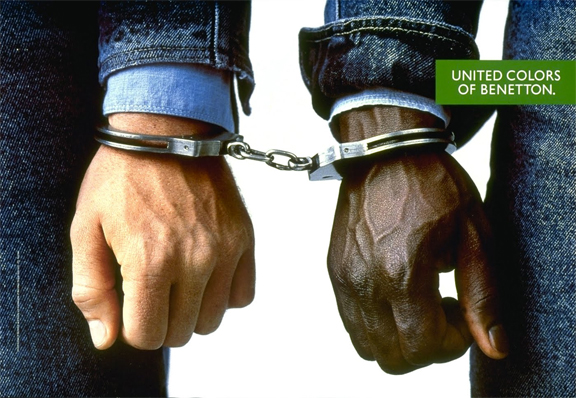
benetton handcuffs adAbove: an image from Oliviero Toscani’s 1989 United Colors of Benetton campaign (via the Benetton corporate website).

Last week, a heated and racially charged exchange on social media between a winemaker and a high-profile wine writer consumed the attention of wine lovers and professionals in the Italian wine world.

I was still in Italy last Friday when I began receiving screenshots of the thread (these days, social media users circulate screen-grabs so as to avoid clicking on the pages of the persons involved and raising their results in search engines).

When a popular grower and producer posted a note of sympathy for a tide of disenfranchised African migrants who remain stranded at the Italy-France border after French officials refused to let them enter their country, the writer commented that “we should send them back to Africa!”

(Here’s a link to a photo album of migrants camped out on the Italian shore.)

The producer asked the writer to refrain from posting racially charged comments in the thread.

The writer responded: “I won’t write another line on the wines of a producer who feels so close to the invaders of our our country… Goodbye!” (translation mine)

Racial tensions are coming to a boil in the country as the Italian government and citizens face a growing immigration crisis.

Every day countless migrants hazard the Mediterranean crossing from North Africa, many of them shipwrecked along the way as they search for a better life in Europe. Italy is their main point of entry. Many of them have perished before reaching European soil.

Last week, French officials began refusing entry to migrants who were making their way north.

And even within Italy, as the New York Times reports, “Governors in the prosperous regions of Lombardy and Veneto, both [separatist] Northern League strongholds, have resisted transfers of refugees from overcrowded reception centers in the south.”

The wine writer is from Lombardy and lives and works there.

The grape grower lives and works in Liguria, along the coast, not far from the French border where the migrants have become refugees.

It’s never pretty when racial tensions spill over into the world of wine. And this ugly episode, the most recent in a string of racially charged exchanges and the subsequent online shaming, reflects the nation’s extremely taut mood with regard to the browning of Europe, to borrow the American phrase.

When the African-American poet Langston Hughes traveled to Italy in the 1920s, the townspeople of his host’s city (Desenzano in Lombardy) had never seen a black man before.

In 1989 (the year that the image above was first published), I was a second-year student at the University of Padua (in Veneto). I remember how a good friend announced — with equal pride and trepidation — that the trucking company he worked for had hired an African for the first time.

At that time, the EU was not yet in place and Africans were first making their way to Italy in significant numbers. My friend and I discussed race relations nearly every day.

Today, the mounting, looming immigration and refugee crisis makes the subject of race and race relations impossible to avoid. I’ve spend three weeks in Italy over the last two months: not a day passed that the topics didn’t come up in conversation with my friends, colleagues, and hosts.

After scores of social media users posted notes of solidarity on the producer’s social platform, the winemaker asked friends and colleagues “to turn the page” and move on.

As an envoi to the episode, the grape grower posted the following lines from the 1991 novel Vento Largo (Large Wind) by twentieth-century Ligurian writer Francesco Biamonti. The title of the book is inspired by the sailing term large wind.

The book’s themes address human loneliness and how it pushes us to extremes as we seek to escape it.

At one point, the central character, a ferry pilot who seeks to aid clandestine migrants, remembers the lines of a song sung by his young would-be lover.

My father departed
for other lands.
He left to search
the highest peaks
of his dreams.

Even if we live all of our years in the same place, we are all migrants as we pass through life. Our souls are constantly searching the highest peaks of our dreams in hope of finding meaning, fulfillment, and peace on our journey on the earth.

As the Europeans face what often seems to be an insurmountable issue, let’s hope that they and we can all remember the humanity of our refugee sisters and brothers and the humanity that resides within us.

Thank you for reading…

Prosciutto steak at my new favorite restaurant in Emilia: “La Grande”

From the department of “vado alla grande”…

pork steakWriting on the fly this morning as my three-day tour of Lambruscoland has come to an end and I head back to Milan to get on a Texas-bound flight.

I just had to share these images from lunch yesterday and my new favorite restaurant in Emilia, Trattoria “La Grande” da Silvano in Lagrande, a hamlet in Nonantola township in Modena province.

tagliatelle bolognese recipe emiliaWe went to so many fantastic, iconic restaurants on this trip (and I have much more to tell and post).

But Trattoria “La Grande” had everything going for it: Silvano, the classic “inn keeper,” the homemade vinegars (balsamic and red wine), a self-serve vegetable bar, and that “prosciutto steak,” as he called it, in the photo above, and the best tagliatelle al ragù I had on the trip, in the second photo.

I loved LOVED this place!

Ok, gotta run… see you on the other side… and please wish me speed! Thanks for following along…

In battle for fried dough supremacy, Faenza appears to emerge winner

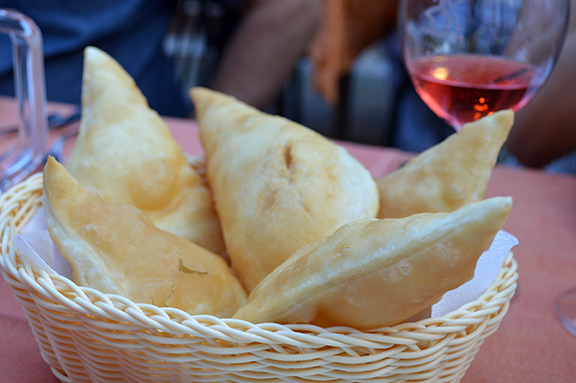
pizza frittaIn Parma, they call it torta fritta (fried pie).

In Reggio Emilia, gnocco fritto (fried dumpling).

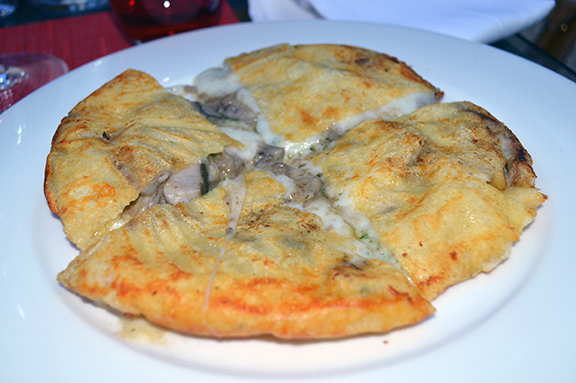
In Faenza (in Romagna, to the west of Emilia in the region of Emilia-Romagna), they call it pizza fritta (above).

squacqueroneLast night, we were served what was arguably the best meal of a week of best meals at the Trattoria Manuèli outside Faenza proper.

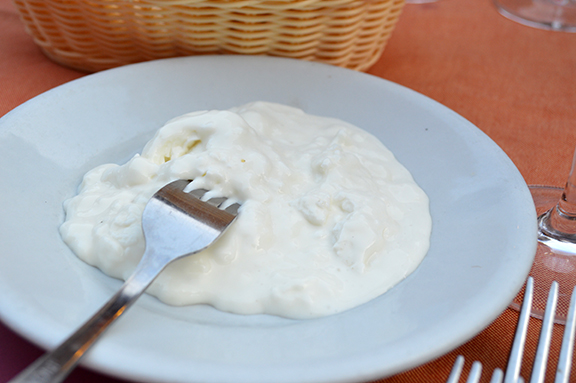
Here they didn’t serve us the fried dough with prosciutto or other salumi. Instead it was accompanied by squacquerone (below), a creamy cow’s milk cheese.

Even though Hosteria Giusti in Modena (where we ate for lunch yesterday) had some of the best gnocco fritto I’ve ever eaten, it was Manuèli who emerged supreme in the end with its pizza fritta.

tortellini romagnoliManuèli’s cappelletti served with ragù were also among the best things I’ve eaten on this trip — a total immersion into the enogastronomy of Emilia-Romagna.

I’d never been to Faenza before. Wholeheartedly, I recommend it to you.

Now it’s onward and upward: we’re heading out shortly to Modena and then Bologna province this evening. Stay tuned…

Tosone, the fresh expression of Parmigiano Reggiano

tosone what is parmigiano reggianoAfter being stuck for the night at Malpensa airport outside of Milan on Monday, chef Steve made his way Tuesday via rail to Parma where I picked him up and we headed out for a day of winery visits and overeating.

Our last visit of the day was with Alicia Lini, a good friend of mine and producer of some of my favorite Lambrusco. She graciously treated us to dinner at Gioco dell’Oca (Game of the Goose), one of her local standbys, a stone’s throw from the winery.

The salumi and gnocco fritto were impeccable, of course. But the dish that really captivated our table was tosone con funghi porcini (above).

The word tosone comes from the Latin tondeo meaning to shear, clip, or shave.

In northern Italy, a tosa or a toso is a girl or a boy, names owed to the fact that in another era, girls were expected to keep their hair short before marriage and boys weren’t expected to grow beards until manhood. A tosa or toso is someone who is shorn or tonsured.

In Emilia, tosone (the augmentative form of toso) refers to Parmigiano Reggiano trimmings. As the newly made cheese is shaped into the familiar wheel (forma), the rubbery excess is reserved and consumed as a fresh cheese.

Some cheesemakers sell it (see here, for example). And traditionally, it was given to children to munch on.

Last night at Gioco dell’Oca, the chef fired tosone in a hot pan together with sautéed porcini. The resulting dish (above) resembled Friuli’s frico.

It was outstanding… the hit of the night among other delights.

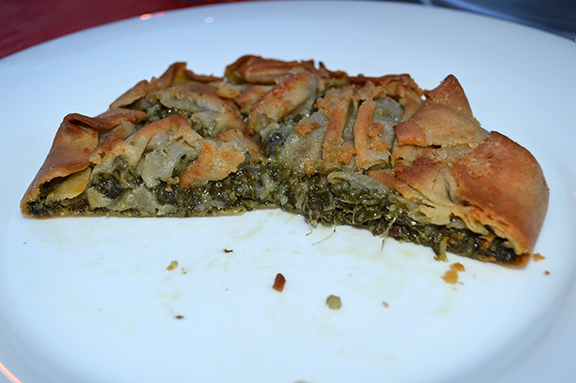
erbazzone erbette recipe emiliaAnother favorite of the evening was the erbazzone, the savory Swiss chard and Parmigiano Reggiano pie of Emilia, where the leafy green is known as erbette.

Although chef Steve and I have been working together at his restaurant Sotto in LA for more than four years now, he and I haven’t been back to Italy together for more than two decades.

We’re only one day into the trip and it’s already been a blast to return to Emilia together as grown-up food and wine professionals.

Last night, we were joined also by our mutual friend Dindo (whom Steve has known since childhood and I’ve known since our college years).

That’s Dindo (below, left) with chef Steve and Alicia in the Lini balsamic vinegar aging room at the winery.

Thanks to everyone for all the wishes for Steve’s new downtown LA restaurant and the new wine program we will be launching there this fall.

Stay tuned: chef and I are about to hit the Lambrusco and overeating trail again today, including visits to two Emilian landmark restaurants…

alicia lini

In Emilia, a new adventure and a new wine list begin

From the department of “nice work if you can get it”…

cappelletti recipe reggio emilia“G-d made Lambrusco,” wrote the great nineteenth-century poet and essayist Giosuè Carducci (the first Italian to win the Nobel Prize), “to wash down the animal so dear to Anthony the Great,” the early Christian saint who was often depicted with a pig by his side in medieval iconography.

This morning finds me in the land of Lambrusco and pigs: Emilia, where a bounty of the world’s greatest food products — prosciutto, culatello, zampone, Parmigiano Reggiano, traditional balsamic vinegar of Modena, and Lambrusco, just to name a few — makes the region a global capital of gastronomic wonder.

In many ways, Emilia is a fantastic illustration of terroir. No matter how hard they try, for example, cheesemakers who work beyond Emilia’s borders have never been able to reproduce the singular crumbliness of Parmigiano Reggiano. Just think of Grana Padano, which is made just on the other side of the Po River: it, too, is a prized food product but it can’t replicate Parmigiano Reggiano’s unique texture.

It can only be produced here in Emilia, with its unmistakable combination of humidity and the sweet smell of pig shit.

They say that in Emilia, one of Italy’s richest regions, there is the highest concentration of pigs per capita in the world. It’s not a stretch to believe it: the Emilians live and literally breath pork.

I’ve traveled to Emilia this week in search of Lambrusco. Over the next three days, chef Steve Samson, a friend from my college days and the owner of the restaurant Sotto in Los Angeles (where I am wine director) will be tasting scores of Lambrusco as we eat our way through Emilia.

This fall, chef Steve and his team will be opening a new restaurant: a Lambruscheria (Lambrusco garden) in downtown LA where we plan to offer an extensive list of Lambrusco and where Steve will prepare dishes inspired by his Emilian origins (his mother was born in Bologna and he spent summers there as a kid).

Steve ended up stuck at Milan’s Malpensa airport last night after a delayed flight. And so I dined alone in Correggio at the Albergo dei Medaglioni in the township center.

The modest and lovely four-star hotel’s restaurant is by no means a famous dining destination. But between expertly and lovingly sliced Prosciutto di Parma PDO, gnocco fritto (fried dough, below), superb cappelletti in brodo (above), and a glass of Lini Lambrusco di Sorbara (one of my all-time favs), I nursed my loneliness and assuaged my homesickness.

Today, we set out on our tasting and dining itinerary. Stay tuned…

gnocco fritto recipe bologna