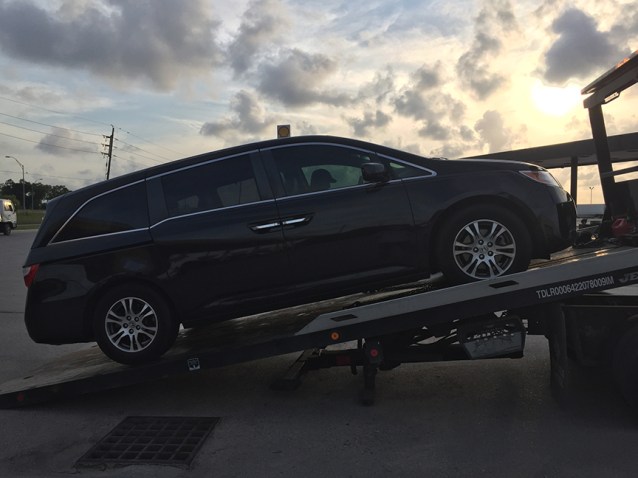
 “I love you, man” were the first words I heard Tim utter when he finally reached me at the Shell I-10 Travel Plaza in Cove, Texas, a few miles west of Old River Lake, roughly an hour east of Houston where we live.
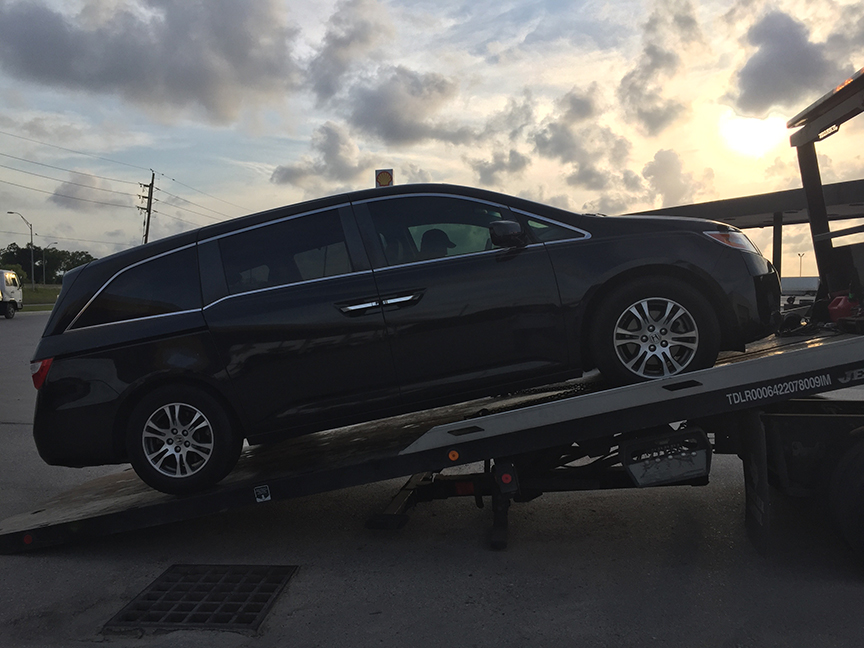
Tracie P, our girls, and I were in two cars caravanning back from our Easter with her family in Orange, Texas on the Louisiana border, when a faulty piston in our Honda minivan unexpectedly forced Tra to pull off the road at the first opportunity.
Luckily, it happened not far from the truck stop. We switched the girls’ car seats to my Hyundai sedan and their mother and they were delayed just a half hour before getting back on the road for home.
But I had to wait for Tim, the tow-truck man, for more than 3 hours at the Travel Plaza: an unexpectedly busy Easter Sunday had found him working his stretch of the interstate on his own and he had two jobs ahead of mine.
“Thanks for working with me on this,” he said with the unmistakable mellifluous drawl that you only hear in southeast Texas, where people eat and speak more like Louisianans than Texans.
“I had two tows that were emergencies and I knew you were already safe. I appreciate it, man!”
He held out his hand, blackened by the soot of the highway, and shook mine warmly.
After he secured the van on his truck’s bed, I climbed in the cabin with him. I was his last tow of the day and he was in a talkative mood. We had a nearly hour-long drive ahead of us back to southwest Houston.
“Where were you coming from?” he asked.
“Orange,” I said. “We had Easter with my wife’s family. She’s from there.”
“Orange, huh?” he asked, raising an eyebrow. “That’s not far from Vidor,” the notorious southeast Texas town that lies a stone’s throw from where my wife grew up in Orange, one of the strident holdouts of Jim Crow-era attitudes and a historic happy place for the Klan.
“Some of my guys won’t let me send them out there,” said Tim, taking a puff off of one of his Marlboro reds. “And I’m not just talking about black guys. Not even my Mexican guys will go out there for a tow.”
And then he said something that really blew my mind, something I never expected he would say.
“I used to be a racist,” he said almost proudly but earnestly and honestly, with an emphasis on used, so as to prompt my inference that he no longer was one.
Wow, I thought.
“But racism’s got to go!” he declared looking over at me from behind the wheel as we headed toward the Sidney Sherman Bridge where we would span the Houston Ship Channel.
His wife is originally from southern California and she’s an ex-service member, he explained. Her experience in the diverse workforce of the U.S. military had shaped her own attitudes about race and racism. And she wouldn’t stand for his racist beliefs and values in their marriage. And so he changed his ways.
“I used to be a racist. But racism has just got to go,” he kept on saying.
Though I gauged he may not meet an ACLU acid test for what racism is or isn’t, I believed him.
We talked for the entire trip, 47 miles to be exact. Historic racism in southeast Texas, contemporary politics (he’s an avid Trump supporter), and his love of the movie “Hidden Figures” were among the myriad topics. He highly encouraged me to see the film.
At one point, he told me that he often stops and helps stranded motorists even when he’s not on the clock.
“My wife says I’ve got to stop doing that,” he lamented. “She’s says ‘you get paid for this now.'”
“I just like to help people, that’s all,” he said. “The world would sure be a better place if we all helped each other.”
As we crossed over the ship channel, he pointed out the yard where he drops off his scrap cars. I was his last tow of the night and he was my last chance to escape the forgotten bayous of Old River Lake and make it home to my girls.
I think that he enjoying seeing Georgia and Lila Jane as much as they marveled at watching him unload our Honda Odyssey in front of our house.
“They are so damn cute,” he said. “Are they spoiled rotten?”
The sun was also setting over southeast Texas as Tim headed back to the Sidney Sherman Bridge and Tracie and I put them to bed.
Thanks for reading…
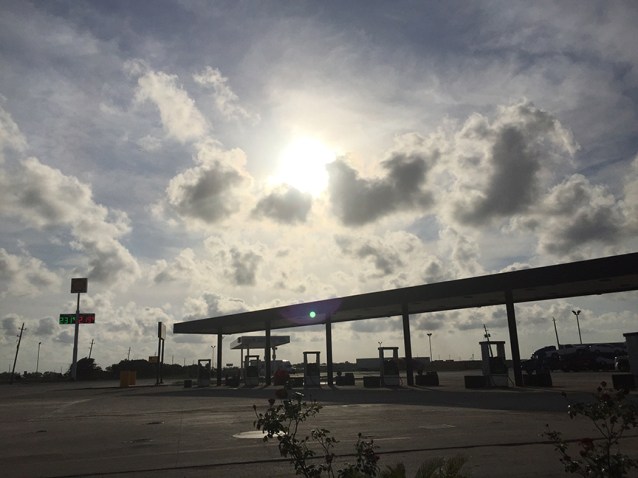

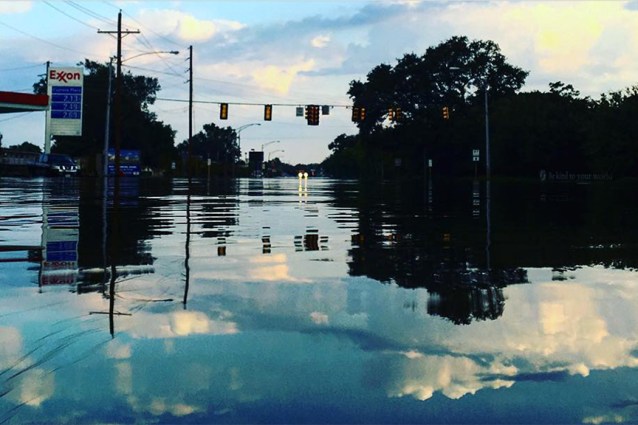 I came across the above photo this morning as I was scanning Instagram hoping to find images of my in-laws’ neighborhood in Orange, Texas on the Louisiana border (Google map).
 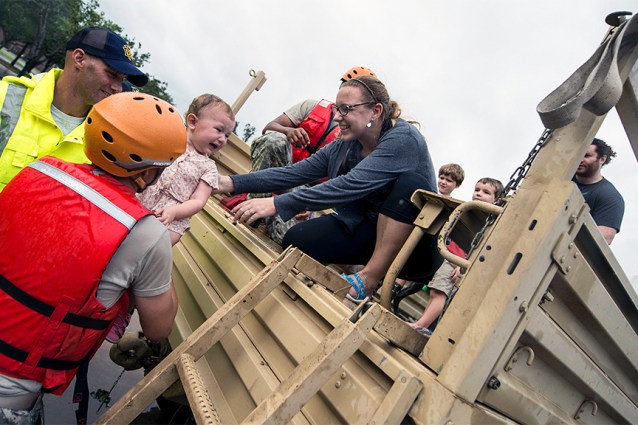 Ever since we were able to travel beyond our block, Tracie and I have been working as hard as we can this week to aid our neighbors and fellow Houstonians: helping with clean-up and gutting houses, babysitting someone’s kids as they deal with insurance, washing flooded families’ laundry, gathering used clothing and purchased goods for shelters and relief distribution centers, etc.
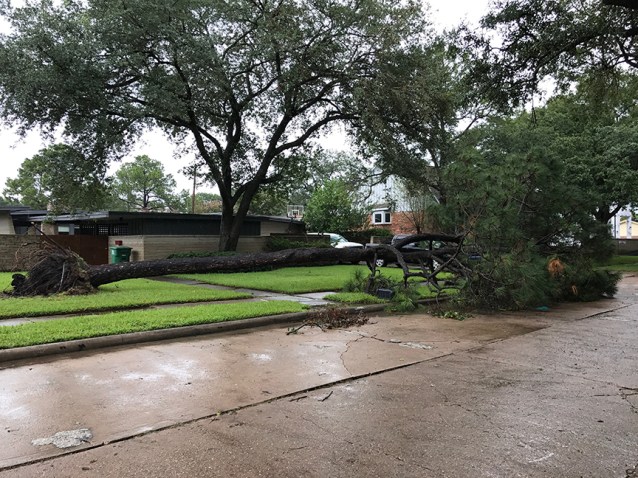 Just a quick update today to let everyone know that we are doing fine. Thanks for all the notes of solidarity and concern. The thoughts, wishes, and prayers really made and make a difference. They really do. Thank you…
 From the solar eclipse “path of [partial] totality” to Hurricane Harvey’s “cone of uncertainty” in less than a week. It’s felt a little bit like the end of times here in Houston.
 On Sunday morning, we could see that the main thoroughfare closest to us was already under a foot of water and it was creeping up our street. At the same time, water was splashing up against our sliding-door window in the back.
 It’s been drizzling on and off this morning since Lila Jane, age 4, woke us up at around 5 a.m.
  Could there be a more apt allegory for America’s damaged psyche than a dark-as-the-thick-of-night, hundred-mile-wide shadow that will literally slice the nation in half today at midday?
  My wife Tracie and I have attended Black Lives Matter rallies here in Houston in the past. We even took our children to one of the marches.




 Do Bianchi