“The shield of the Alps between us and the Teutonic rage”

dolomite alps treviso

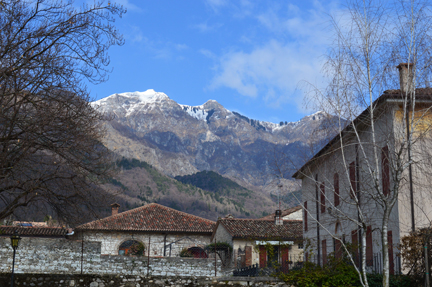
That’s the view, above, that greets us every morning when we leave our apartment at the Villa Marcello Marinelli in Cison di Valmarino (province of Treviso).

In the shadow of such rich natural beauty, I can’t help but be reminded of the following lines from Canzone 128 of Petrarch’s songbook, Italia mia, ben che’l parlar sia indarno a le piaghe mortali (My Italy, although speech does not aid those immortal wounds):

    Ben provide Natura al nostro stato,
    quando de l’Alpi schermo
    pose fra noi et la tedesca rabbia;
    ma ‘l desir cieco, e ‘ncontr’al suo ben fermo,
    s’è poi tanto ingegnato,
    ch’al corpo sano à procurato scabbia.

    Nature provided well for our safety when she put the shield of the Alps between us and the Teutonic rage; but our blind desire, strong against our own good, has contrived to make this healthy body sick.

    (Translation by Robert Durling.)

dolomite alps

We’ve been having a great time here at the villa and the band has begun to arrive (we’ll be performing on Friday and Saturday nights).

But my old and very good friend Renato Dal Piva, the villa’s manager, and I have also had some heavy heart-to-heart chats about what it’s like to live and work in Italy these days.

Yesterday, The New York Times reported that “Unemployment in Euro Zone Reaches a Record 12%” (in October 2012, the paper reported that “Unemployment in Euro Zone at Record High” [at 11.4 percent]).

Petrarch’s verses were composed in the mid-fourteenth century. They scan as though they, too, were written yesterday…

Sexy hotel Franciacorta (WARNING: CONTAINS GRAPHIC IMAGES)

helmut newton

Tracie P, Georgia P, and I landed early yesterday morning in Milan and made our way in our Alfa Romeo Giulietta to Erbusco (Franciacorta).

We had reserved a room for one night in Franciacorta because we wanted to eat at Vittorio Fusari’s amazing Dispensa Pani e Vini (more on that later).

hotel iris erbusco

The closest hotel I could find (that we could afford) was the Hotel Iris.

It’s a great place to stay: very clean, with all the amenities, and good internet, very affordable for the quality of the room and service.

We were a bit nonplussed by the fact that every room has its own private elevator from the parking garage. A nice security feature but a bit extravagant (see below).

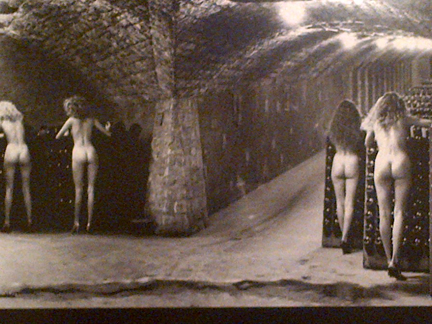
We were even more surprised tickled by the sexy image that greeted us in our room (above).

private elevator hotel italy

The lobby hosts a poster featuring an image (top) from a 1980s photo shoot by Helmut Newton at the Ca’ del Bosco estate, which lies just up the road.

We’ve already eaten at the Dispensa twice and are about to head there again (it’s that good… stay tuned for my posts next week).

And the hotel worked out great (they had a very nice camping cradle for Georgia P). Highly recommended for the value… And hey, a little spice never hurt, right? ;)

Dante’s crazy sheep and the Jew

Dante sheep italy

Image via comprock’s Flckr.

“Francesco Maiorca, 36, an actor, was hustling to catch a train for a job in Paris. He compared Italy to a country filled with millions of white sheep that somehow are duped into following a few black sheep, namely the politicians. He said he was embarrassed by the political situation and frustrated that Italians did not demand better of their leaders.”

The New York Times, March 8, 2013.

If wicked greed should call you elsewhere,
be men, not maddened sheep, lest the Jew
there in your midst make mock of you.

Dante Alighieri, Paradiso, 5, 79-81.

Yesterday’s NY Times coverage of the crisis in Italy brought to mind these lines from Dante’s Commedia.

This terzina was co-opted famously and erroneously by the fascists who used it as the motto of their propagandistic magazine, Difesa della Razza (Defense of the Race), a screed against “deviant” twentieth-century art in Europe.

anti semitism italy

Image via Luciano Zappella. Click the image for high-res version.

In fact, the Jew was viewed as a wise man among fools in Dante and Boccaccio (see this summary of tales in Boccaccio’s Decameron, “Tale of Abraham,” day 1, tale 2, the second tale in the narrative corpus).

Even today, many Italian intellectuals readily express their fascination with and admiration for Jewish culture and thought, a tradition that stretches back to Dante’s era.

Considering the parallels between Dante’s issues and the situation in Italy today — a crisis and clash among spiritual power brokers and failed temporal/secular governance — this tercet leapt into my mind when I read the Times at breakfast this morning.

Please read (but disregard the condescension in) yesterday’s article on the Italian crisis.

I hate to be Italy’s Jeremiah, but…

Back to Bunga Bunga? Berlusconi trails by less than half point

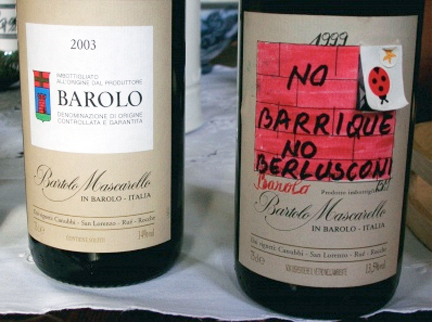
no barrique no berlusconi

The exit polls (here and here) that I’ve been watching show Berlusconi (center right) trailing Bersani (center left) by less than half of a point.

It’s been frightening to watch my Italian friends’ and colleagues’ reactions on Facebook, a mixture of horror and disgust.

The major news outlets are saying it’s too close to call. The only true winner is the maverick entertainer Beppe Grillo (who probably took votes away from Bersani).

Monti is the clear loser.

There’s still hope that we won’t awake tomorrow to discover that Berlusconi has once again been elected prime minister.

The only thing worse that I can imagine is Nebbiolo aged in barrique…

Heated response to the Gambero Rosso (Red Lobster) controversy

gambero rosso

Above: Gamberoni in Castiglioncello, Tuscany, at Nonna Isola.

Few remember that the Gambero Rosso monthly magazine and publishing brand take its name from the “Osteria del Gambero Rosso” or the “Inn of the Red Lobster” in The Adventures of Pinocchio, which originally appeared in the Italian in the early 1880s.

Here’s a transcription of the scene in the book where the Cat and the Fox first take Pinocchio to eat there (from a 1904 English translation):

    They walked and walked and walked until they arrived at the Red Lobster Inn, tired to death.

    “Let us stop a little here,” said the Fox, “just long enough to get something to eat and rest ourselves. At midnight we can start again and to-morrow morning we shall arrive at the Field of Miracles.”

    They entered the Inn and seated themselves at the table, but none of them were hungry. The poor Cat felt very much indisposed and could only thirty-five mullets with tomato sauce and four portions of tripe; and because the trip did not taste just right he called three times for butter and cheese to put on it.

    The Fox would willingly have ordered something, but as the doctor had told him to diet, he had to be contented with a nice fresh rabbit dressed with the biglets of chicken. After the rabbit he ordered, as a finish to his meal, some partridges, some pheasants, some frogs, some lizards, and some bird of paradise eggs; and then he did not wish any more. He had such nausea for food, he said, that he could not eat another mouthful.

    Pinocchio ate the least of all. He asked for a piece of meat and some bread, but he left everything on his plate. He could think of nothing but the Field of Miracles.

Some believe that the fictional osteria is based on the Trattoria da Burde near Florence where author Carlo Collodi (Lorenzini) dined regularly.

italian crawfish emilia

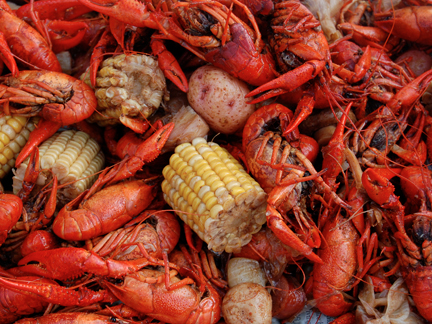
Above: An image from my first “crawfish boll,” which took place not long after I moved to Texas to be with Tracie P.

Gambero rosso is also a designation used by Italians for the common American crayfish, the “Gambero Rosso della Louisiana.” Its introduction to Italy in the mid-1800s led to a series of crayfish plagues in Europe.

Collodi was certainly aware of the crayfish calamity of his era and the very name — gambero rosso — surely instilled biblical fear in the minds of his readers.

In the light of this, the choice of gambero rosso for the title of a magazine devoted to Italian gastronomy may seem infelicitous to some.

gambero rosso trash

Above: The Gambero Rosso brand has often been the center of controversy and its editors have often been accused (however informally) of conflict of interest. I’ve written about the brand on many occasions.

On Monday, when I posted my translation of an open letter by a confederation of Italian winemakers to the editors of the magazine, I didn’t imagine the heated reactions that the post would generate (just look at the comment thread and you will find the comments and links to other bloggers who posted view points often diametrically opposed to one another).

For my part, I was just trying to provide a public service by rendering the text of the letter into English.

O, and one last thing…

Down here in Texas, you know what they call the gambero rosso?

They call the little critters mud bugs.

Tomorrow, I’ll get back to the business of posting about the wines we’ve been tasting and some of the interesting wine professionals I’ve had the chance to interview recently. Thanks for reading…

Lunch at home with Maria Teresa Mascarello

italian gardiniera

One of the highlights of my November trip to Italy was a lunchtime visit Giovanni and I made to the home of Maria Teresa Mascarello in the village of Barolo.

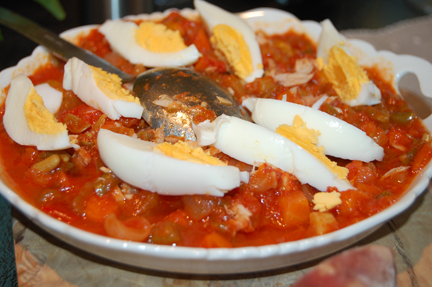
That’s the gardiniera (above) her cousin made her. It was topped with hard-boiled egg wedges and crumbled olive oil-cured tuna. The combination of textures was wonderful, one of the best things I ate on this trip.

salame cacciatora

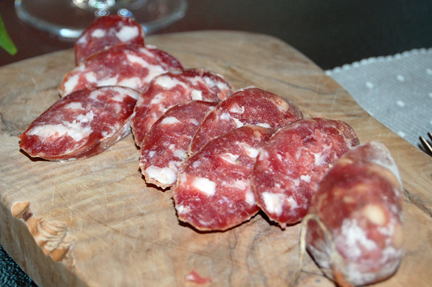
The butcher who makes this cacciatora is di sinistra, noted Maria Teresa, on the left side of the political aisle. And that was one of the reasons it was so tasty.

In the U.S., we rarely discuss the ideology of people whose food we eat. In many homes in Italy, such gastronomic scrutiny is de rigueur.

barolo vinegar mascarello

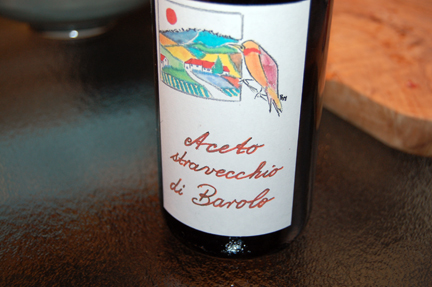
Of course, Bartolo Mascarello aged vinegar was offered to guests to dress their lettuces.

Conversation was dominated by the center-left primary elections (which would take place the following day). Maria Teresa was one of the polling organizers.

But it soon turned to the sticky subject of Natural wine.

Maria Teresa expressed her frustration with the Natural wine movement, noting that she doesn’t consider her wine a Natural wine by any means.

The obsession with “zero sulfur,” she lamented, was misguided.

luigi oddero

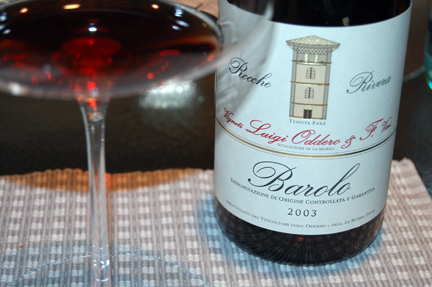
Maria Teresa’s partner David was geeked for us to taste a Barolo — the Luigi Oddero Rocche Rivera — that he’s keen on.

Traditional in style, this wine showed uncommon balance for a 2003. Its earth and tar prevailed over its fruit but its acidity delivered unexpected brilliance in the mouth. Gorgeous wine.

Conversation also touched upon the recent and ongoing Cannubi controversy.

Political discussion and cultural engagement at the dinner table are considered a responsibility in the homes of many Italians.

In the Mascarello home, of course, the di sinistra ideological legacy of Maria Teresa’s father Bartolo still resides warmly.

And in my experience, there is nothing that pairs better with great Nebbiolo…

another journey to italy comes to an end

I know, it’s insane. But I had to make a short trip to italy this weekend for a new client. I was super bummed to miss thanksgiving with our family but there are hungry mouths to feed back in texas. :)

This photo is a preview of one of the meals shared with giovanni.

I’m heading home today and have some important news to share with lovers of nebbiolo. Will do asap.

The trip back to texas is always tough but there’s a sweet reward waiting for me at the end of this road. I can’t wait to get back to my girls.

Stay tuned!

Posted with WordPress for BlackBerry.

Georgia P lands in Venice

I can’t begin to describe the wave of emotion that Tracie P felt as we landed in Venice with Georgia P… Her first trip to Italy!

Revisiting my research on Vinsanto (Greek) vs. Vin Santo (Italian)

I’m taking a break from blogging for the next couple of days and so I thought I’d revisit my research on the etymologies of the enonyms Vinsanto (Greek) and Vin Santo (Italian) and their philological relationship (for anyone who missed it the first time around or for anyone who’s only recently started following here).

Here’s a link to the thread.

Happy reading, everyone! I hope you drink something great for the holiday and have a safe and fun Fourth of July!

Biondi Santi a cooperative winery?

biondi santi

Alfonso weighed in yesterday with another earth-scorching post devoted to wines made “Under the Tuscan Scum” (and I highly recommend it to you, especially if you’re a sommelier working with Italian wine).

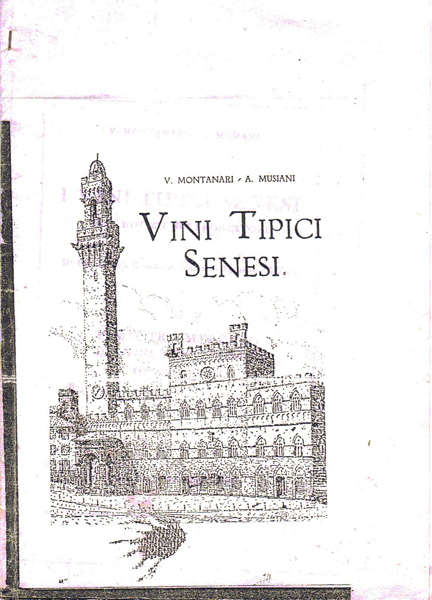
But the post I can’t stop thinking about this morning is another fantastic document culled from the archives of Il Poggione’s library. In this case, the entry for the “Cooperative Cellars of Biondi-Santi & Co.” in the 1933 handbook of wines from the province of Siena, published by the department of the agriculture at the university of Siena (frontispiece, above).

Many will be surprised to learn that the early modern incarnation of the Biondi Santi winery was as a cooperative cellar. But the document is rich with clues from and traces of another era in Italian and Tuscan winemaking that help us to understand better the origins of Italy’s wine industry today. I’ve taken the liberty of reproducing Alessandro Bindocci’s translation here so that I can comment each paragraph. You’ll find the original text in Italian on Ale’s blog.

*****

The cooperative winery Biondi Santi & Co. was established in Montalcino in 1926 thanks to the praiseworthy efforts of a group of [land] owners who were wine producers. They understood the necessity and importance of promoting two of Tuscany’s classic wines: Brunello and Moscadello from Montalcino.

Today, few remember that Moscadello was nearly as important as Brunello in those early years. When the Mariani family (Banfi) went to Montalcino in the 90s, it’s great hope was to produce sparkling wines from Moscadello that could rival Moscato d’Asti (that’s why they brought down Ezio Rivella from Asti).

1926 is the same year that Luigi Pirandello published one of his most popular novels (Uno, nessuno e centomila). He would win the Nobel prize for literature in 1934, the year after the wines of Siena handbook was published (can you name any contemporary Italian writer today?) 

The farming companies who lead the cooperative winery are the following: Biondi-Santi, Cocchi Brothers, Padelletti, and Tamanti. Together, these farms have 1,200 hectares [planted to vine].

I was able to find this information about the Padelletti family, one of Montalcino’s oldest clans. And I discovered this document on the Tamanti legacy. As per my previous post on Brunello, the founding fathers of Brunello weren’t farmers who had raised wine for generations. They were rich land owners who saw business opportunity in the production of fine wine. I wasn’t able to find anything on Cocchi (in the short time I could devote to this).

Thanks to the topographic position and the geological nature of its soils, the hill of Montalcino produces grapes with exquisite flavor from which delicious wines are made — wines that have been known as such for centuries. The cooperative winery is located in Montalcino, 40 kilometers from Siena. The nearly railway station is in Torrenieri (on the Siena-Grosseto line), 9 kilometers from Siena.

In 1933, eleven years into Mussolini’s rule, the notion of italianità was in vogue in Italy: national pride in Italy’s natural, industrial, and commercial resources.

Today, many cite 1888 as the year that Brunello was “invented” and bottled as such. But this document reveals that it was famous even before Biondi Santi’s 1888 bottling. Today, Torrenieri is covered with vineyards planted to Sangiovese. In 1933, it was a railroad stop: shipping posed great challenges for wineries in that era (can you imagine a wine guide noting the location of the nearest port or railway station today?).

The cooperative winery produces more than 1,000 quintals of wine annually and it places its coveted products easily and lucratively in Italy and abroad.

The winery is endowed with highly modern equipment and well suited facilities. The technical director of the winery is Dr. Tancredi Biondi-Santi.

Perhaps the most interesting thing here is how Biondi Santi provided a new working model for Montalcino (and Tuscany in general): modern equipment, easy access to a supply chain, and a cooperative system that allowed grape growers to combine their resources.

Think how different things would be had Mussolini not come to power in Italy. Of course, Germany would have devastated Italy regardless. But, either way, the renaissance in wine described here wouldn’t have been interrupted by the conflict that followed the rise of fascism.

Ale, thank you for this fantastic document and wonderful post!