Is marijuana the new wine? and a little raw sausage porn teaser

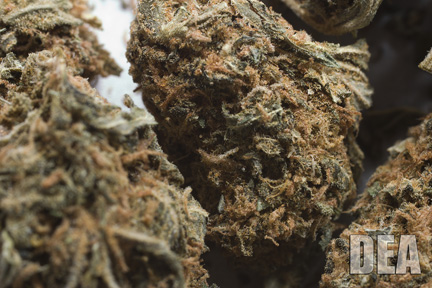
Above: A little marijuana porn, anyone? Click here for the big kahuna over at the U.S. DEA website.

It’s hard to believe that this is happening in my lifetime but it’s true. I had to pull over to the side of the road the other as I was driving home and heard a radio story on American Public Media Marketplace: the spokesperson for NORMAL was talking about the recent initiative to legalize recreational marijuana use in California and — get this! — turn Humboldt and Mendocino into Napa Valley-inspired marijuana tourism destinations.

I’m certainly not the only or the first to write about this is in the enoblogosphere: check out this post by Wolfgang, who asks wryly, “have I smoked too much Cabernet?”

As I head out (tomorrow) to my homestate of California, to speak about Piedmontese wines at Jaynes Gastropub on Saturday Sunday and to celebrate the Passover with my family on Monday night, I have to admit that I never thought legalized pot would happen in my lifetime (even though pot is woven deeply into the cultural fabric of my beloved California). But is weed the new wine? Humboldt County tasting rooms? Unbelievable!

In other news…

Above: I love the raw pork sausage that you typically eat as an appetizer in Piedmont. You eat it just like that, completely raw. We were served this excellent victual when we dined in the home of Giovanna Rizzolio.

I been showered by numerous requests to hurry up and post about the amazing private tastings that were organized for Tracie P and me by venerable Italian wine pundit Mr. Franzo Ziliani in Barolo and Barbaresco during our February trip there. One zealous fan of my blog writes of his “burning disappointment” that I still haven’t posted on our tastings at Vajra, G. Rinaldi, G. Mascarello, and Cascina delle Rose, “our lady of the deaf river,” as I will call the inimitable Giovanna Rizzolio, producer of one of Mr. Ziliani’s favorite Barbarescos and his close friend.

Frankly, I’m flattered by all the messages I’ve received and I promise to devote next week’s posts to my notes and impressions of these amazing wines and the truly amazing people who make them. And I can only reiterate my heartfelt thanks to Mr. Ziliani, as I wrote on Valentine’s day, in a post published not long after Tracie P and I returned from Italy: noble is the host… (the line comes from a stanza of an ode by 18th-century Italian poet Parini that I translated and dedicated to Mr. Ziliani).

Tuscan Rooms with Views

One of the highlights of our honeymoon was the Tenuta Il Poggione farm house where we stayed on our first two nights of our trip. The old farm house, located in the middle of the estate, surrounded by olive groves and vineyards, has seven guest rooms, all with air conditioning, heating, and kitchen. We stayed in the room called “Pero,” the pear tree.

farm house

This amazing olive tree is about 50 yards from the farm house. Il Poggione is one of my favorite wineries and I’ve been friends with the Bindocci family, who runs the estate, for many years now. Winemaker Fabrizio Bindocci told me that some of the trees in this grove are nearly 200 years old.

farm house

Can you see why I love her so much? :-)

farm house

This is the view from the farm house, looking northward. That’s Sant’Angelo in Colle (where we ate at Trattoria Il Pozzo).

farm house

That’s the view from the farm house looking south. There are few signs of modernity here. Just looking at this photo, the mimetic desire kicks in and I can still smell the dolce aere tosco, the sweet Tuscan air that Petrarch reminisced about and longed for in his Rerum vulgarium fragmenta, his Fragments of Vernacular Things (194.6).

farm house

The farm house seen from the south. The property also includes an Olympic-sized swimming pool (that was covered, of course, when we were there). The rooms are cozy and each one has a kitchen. I’m hoping that one of these days we can make a family trip there.

farm house

Even an amateur photographer like me feels like a Rembrandt in this immensely photogenic land. To get to the farmhouse, you have to drive about 10 minutes from the town of Sant’Angelo on a dirt road through woods, vineyards, and olive groves. And when you get there, you feel like you’re in a 19-century grand tour landscape… that’s some room with a view… I highly recommend it!

For more information and booking, email the estate at agriturismo@ilpoggione.it.

tracie parzen

Happy Friday, ya’ll!

Italy meal 1: Trattoria il Pozzo, Sant’Angelo in Colle (Montalcino)

Just like people, restaurants have “good days” and “bad days.” The night we went to Trattoria il Pozzo in Sant’Angelo in Colle (Montalcino), it was one of those off-the-charts good days (and not every meal we had in Italy was worth writing home about, believe me). I’ve been going there since 1989 when I first began to “frequent” Montalcino (the fons origo of my passion for Italian wine). Paola (in the kitchen) and Franca (front of the house) Binarelli have owned and run Trattoria il Pozzo since 2001 and honestly, the food there has never been better. It was just one of those magical culinary nights, when everything came together just perfectly. I’ll let Tracie P’s superb photos do the talking…

tuscan cuisine

Salt-less bread crostini topped with liver and spleen (the chestnut-colored spread, classic Tuscan), chopped mushrooms, and tomato (not so traditional but now part of the pan-Italian culinary lexicon).

tuscan cuisine

Salt-less bread soup, drizzled (rigorously) with extra-virgin olive oil by Il Poggione (more on Il Poggione later).

tuscan cuisine

Pici (long, hand-rolled noodles) with sausage, mushroom, and tomato (this was UNBELIEVABLY good).

tuscan cuisine

Pici with wild boar ragù (the boar meat was so tender and flavorful and the combination of textures and flavors was sublime).

tuscan cuisine

We had to sneak a peak in the kitchen since they were still rolling out the pici that evening.

tuscan cuisine

One of the sine qua non elements of the bistecca fiorentina is that it must be charred on top — to heat the meat on the bone without cooking it through.

tuscan cuisine

Need I say more? To look at the meat you’d think it was over cooked. But the secret is that the beast is slaughtered young. Older than a calf but still relatively young and so the meat has a pink rather than blood-red color.

tuscan cuisine

Fried artichokes. Franca told me that Italian celebrity chef Gianfranco Vissani once complained that they had served these with lemon wedges. So no more lemon wedges!

tuscan cuisine

The chicory was at once bitter like Tuscan dirt and sweet like Tuscan heaven.

gianni brunelli

The 2004 Brunello di Montalcino by the dearly departed Gianni Brunelli, one of the great Tuscan restaurateurs of our lifetime. Beautiful acidity, gorgeous fruit, and man, the combination of the red fruit flavors of the wine and its acidity against the fat and flesh of the steak was better than… well, actually, it wasn’t better than… it was our honeymoon after all! ;-)

Ristorante Il Pozzo
53024 Montalcino (SI) – Piazza Del Pozzo, 2
tel: 0577 844015

closed Tuesdays

You shall learn how salt is the taste/of another man’s bread… Cacciaguida to Dante, Paradiso 17, 58-9.

Sunday poetry: a Parini among wine writers

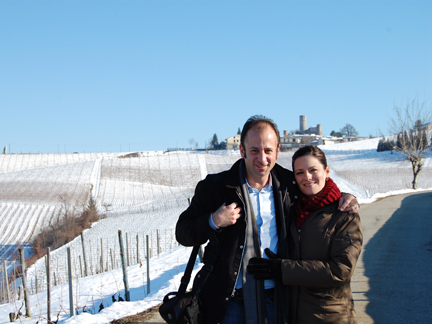
Above: I took this photo of Franco a week ago, today, as Tracie P, he, and I sat in the Bruno Giacosa tasting room and tasted with Bruno Giacosa, on a beautiful winter morning in the hills of Langa.

Carneades! Who was he now?” famously asks Don Abbondio in the opening lines of chapter 8 of Lombard novelist, poet, and dramatist Alessandro Manzoni’s I promessi sposi (The Betrothed, first published 1827).

Some of you may ask the same of poet and moralist Giuseppe Parini (1729-1799), another literary great of Lombardy, the generation before Manzoni.

I’ve been thinking of Parini on this Valentine’s Day morning: the Enlightened (with a capital E) Lombard, author of erudite (at times pungent, at times hilarious) satire and master of Italian 19th-century prosody, reminds me of another Lombard writer, Franco Ziliani, a wine writer whose blog has inspired and informed my own, whose work ethic and ethical work have served as model for my own modest scribblings, and whose fraternal (and at times avuncular) friendship and collegiality have often guided me through the selva oscura, the dark wood (pun intended) of the world of Italian wine.

Anyone who’s been following my blog knows that Franco organized an extraordinary series of tastings for Tracie P and me (the sposi, no longer betrothed but already conjugated!) last Saturday and Sunday in Langa (they will be the subject of many posts in the next few weeks).

This morning, in Franco’s honor, I have translated a vinous stanza from Parini’s ode, “La laurea” (“The Diploma”).

    Quell’ospite è gentil, che tiene ascoso
    Ai molti bevitori
    Entro ai dogli paterni il vino annoso
    Frutto de’ suoi sudori;
    E liberale allora
    Sul desco il reca di bei fiori adorno,
    Quando i Lari di lui ridenti intorno
    Degno straniere onora:
    E versata in cristalli empie la stanza
    Insolita di Bacco alma fragranza.

    Noble is the host who keeps hidden
    from the many imbibers
    the old wine in his father’s puncheons,
    the fruit of his labors.
    Then, generously, he brings it
    to the dinner table, adorned with flowers,
    and as the Lares* smile upon him
    he honors the worthy stranger.
    And poured into crystal, Bacchus’s extraordinary,
    life-giving fragrance fills the room.

* The Roman household deities, hence, the household.

Jeremy Parzen

Above: Franco took this picture of us later that afternoon, as we drove around the vineyards of Barolo.

Thank you, again, Franco, for an unforgettable visit to Langa. You are a Parini among wine writers.

Noble is the host…

An orange, natural wine from the Veneto (and my very own mimetic desire)

Above: One of my favorite places in the world, a scene from Petrarch’s house in the hilltop town of Arquà in the heart of the Colli Eugenei (the Euganean Hills) in the province of Padua. One of my mentors, Professor Vittore Branca, believed that Petrarch spoke with a northern cadence, even though he was born to Tuscan parents in Arezzo. Petrarch spent most of his life in southern France, Milan, and Arquà. (Photo courtesy Padova Cultura.)

Nearly every Italian who’s ever heard me speak Italian will remark that I speak Italian with a simpatico Veneto accent. Some will place it in Padua, others (when I’ve got a belly full of wine) in Treviso (non è vero, Briciole?). But the many years I spent of study and touring with my Italian-based band in the Veneto profoundly informed and shaped my “Italian” identity.

When I saw that Franco had posted about what must be a truly wonderful orange, natural wine from my beloved Euganean Hills outside Padua, I couldn’t resist the mimetic desire it stirred in me.

Were they not the site of countless Sunday evenings spent with friends eating roast pollastro and patatine fritte, accompanied by side-splitting joke-telling in Veneto dialect and carafes of Malvasia and Cabernet Franc! Were they not the home to some of the most unique, distinct, and distinctive wines produced in the Veneto! Did they not abound with a dolce aura, a sweet air, and immense beauty!

The Euganean Hills would still hold a special place in my heart for it is there that my beloved Petrarch spent the last years of his life, under the protection of the Carraresi family, the lords of medieval Padua, and it is there he finished the final notes of the transcription of his autograph and idiograph version of the Rerum vulgarium fragmenta (Fragments of Vernacular Things), his song book, his 366 poems devoted to the blond-haired and fair Laura (a laical breviary, with a poem for every day of the year and a proemium). Today, that beautiful book — singular also for its humanist script and the unusual binding format — resides in the Vatican Library (Codex Vaticanus 3195). It was the subject of my doctoral thesis: I have examined it myself, I have held it in my hands and run my fingers across its vellum leaves and scrutinized their pores, and I have felt its aura.

O to see those hills again! Someday, I’ll take Tracie B to visit them and and breath in their dolce aura, to see Petrarch’s house, and to taste the wines.

And I will tell my sweet Tracie B (my Laura and my dolce aura, with her fair skin as white as ivory, her eyes as blue as the fresh, clear water that flows in the streams of trans-Alpine lands)… I will tell her the same thing the vecchiette, the little old ladies, in Monselice at the foot of the Colli Euganei say as you begin your ascent to Arquà: non dimenticare di salutare la gatta del Petrarcadon’t forget to say hello to Petrarch’s cat

Above: The famous “gatta del Petrarca,” Petrarch’s female feline, who, as Modenese poet Alessandro Tassoni wrote in the 17th-century epic poem, The Rape of the Bucket, still bars the tops from crossing the dotta soglia, the erudite threshold. (Photo by Arquà Petrarca.)

Someday Tracie B will see it, too. In the meantime we can only dream of natural skin-contact Garganega and roast poissons.

Click here to read my translation of Franco’s post.

Buona domenica a tutti!

How her life Italian became mine (and our very first wine)

Above: The first wine we ever tasted together was Moncontour sparkling Vouvray. Tracie B had a bottle waiting for me in my hotel room the first time I came to Austin to visit. “Champagne,” I said. “No,” she corrected me. “It’s Vouvray.” I guess you could say that she had me at “hello.”

Stranger things have happened. When I got on a plane to come visit Tracie B in Austin, Texas in August last year, she and I weren’t strangers but we had never met in person nor had we ever spoken on the phone. We had been emailing probably ten times a day since our first exchange on July 15, the day after my birthday, one year ago today.

Above: This photo was taken the second time I visited and the first time we went to my now favorite (and Tracie B’s all-time favorite) Austin honky tonk, Ginny’s Little Longhorn. I was most definitely in the “pesce lesso” or “boiled fish” stage, as Franco used to tease me happily. That’s an Italian expression for “you’re so in love that the expression on your face looks like that of a boiled fish” (more or less). Franco’s family agreed with his assessment.

When my beautiful Tracie B and I became friends on Facebook a year ago today and began emailing and messaging furiously, I had known of her existence for some time: I had learned about her blog in early 2008 when I read her comments at Italian Wine Guy’s blog and started reading about “her life Italian.” IWG (aka Alfonso) and I had become friends through blogging, as had he and Tracie B. I really liked her “sassy” comments, as she likes to say, and when I started reading her blog, I was immediately enchanted by her honest writing style, with its Texan- and Neapolitan-inflected twang, and her funny insights into her life as an “ex pat” in Italy. But what impressed me the most was her sharp palate and her immense talent for describing wine. I was already a fan, but from a distance.

Above: In October, I surprised Tracie B for her birthday with Willie Nelson tickets. Back then, we had a long-distance relationship and I would come to visit with her in Austin about once a month. We hadn’t started talking yet about me moving here but the Texas flag in the background was a certain sign of things to come!

After Tracie B and I had been emailing, Facebooking, and otherwise messaging for about a month, IWG serendipitously suggested that I come out for Tex Som, the annual Texas sommelier conference, held in Austin last year (this year in Dallas). I couldn’t make it on those dates and so I asked Tracie B if I could come visit her anyway. She said yes and so the San Diego Kid booked himself a room at a B&B not far from where she lives.

Above: That’s us on New Year’s 2009 in Austin, just a few weeks after I drove out to Texas in my beat-up old Volvo from San Diego where I had been living.

We never spoke in realtime or in real life until that very first day she came to pick me up at the Austin airport back in August. In the months that followed, I must have come to visit Tracie B three or four times. In a lot of ways, our courtship was very old-fashioned: we would write each other every day, describing our daily lives and our lives past and our hoped-for lives future. I would send her mixed CDs of my favorite music, mostly country, and lots of dedications of songs that expressed what I was feeling for her.

Above: In February, Tracie B accompanied me on tour in France with my band Nous Non Plus. We had one of the most memorable meals of my life, lunch at the Tour d’Argent. It was a beautiful, clear winter day in Paris and I’ll never forget the way the sunlight shone on Tracie B’s face, reflecting up from the Seine.

In November, Tracie B made her first trip westward, to see where I lived and to meet my family and friends. By then, we were already deeply connected and the pangs of love that came with every goodbye were too much to bear and it was during her visit that we first talked about me moving to Austin. Later that month, I met her family for the first time when Tracie B took me home with her for Thanksgiving in Orange, Texas where she grew up.

Above: In March, Tracie B surprised me with Merle Haggard tickets. We’re both huge country music fans. That night was one of the most fun ever.

You see, when I met Tracie B, my whole life changed (you may remember the post I did, not too long ago, Just some of the reasons I’m so smitten). I’ll never forget when I first told Jayne and Jon about Tracie B and how I was going to visit her for the first time. “She’s an amazing writer,” I told them, “she loves food and wine, she has a fantastic palate, she loves country music, she’s beautiful, and she can cook like nobody’s business…” And Jon turned me and said, “AND she can speak Italian?” (Sometimes Tracie B and I speak in Italian, her with her Neapolitan accent, me with my Veneto accent! It’s hilarious.) By December, we had decided that I would move to Austin and I packed up my car and headed east and rented myself an apartment here. It was the smartest thing I have ever done (not that I am known for doing smart things).

Above: In April we went to the Texas Hill Country Food and Wine festival gala in Austin. I don’t know how a guy could be prouder than having a beautiful lady like Tracie B on his arm.

You see, Tracie B is simply the most lovely creature on this God’s earth that I have ever seen. And her cover-girl beauty is matched by the immense generosity of her heart and her bright spirit. Through her love and her affection, her devotion and her tenderness she has brought once unimaginable joy in to my life. I’ve fallen madly in love with her and just can’t imagine my life without her. She is my “Phantom of Delight”:

A perfect Woman, nobly planned,
To warm, to comfort, and command;
And yet a Spirit still, and bright,
With something of angelic light.

And so her life Italian has become mine.

Above: In May, I gave Tracie B this 1930s diamond and blue sapphire ring and asked her if she would marry me and she said yes! We are getting married in January 2010 in La Jolla and then we’re going to celebrate with friends and family at Jaynes Gastropub. I would venture to say that we’ll probably blog it, too! ;-)

When people ask us how we met, we tell them the story of how we learned of each other’s existence through our blogs and then were introduced online by a mutual and virtual friend whom we had both met through blogging. We courted, sending each other secret messages through our blog posts: remember the kiss I blew from the stage in Germany last September? Sometimes, on Saturday and Sunday mornings, we sit around her living room drinking coffee, blogging and reading blogs, sending each other messages on Facebook and emailing each other. Ours is a bloggy blog world and we love it.

It’s our life Italian now and I love her. I love her thoroughly, completely, absolutely, immeasurably, undeniably, undyingly, ceaselessly, tirelessly, unflaggingly… I thank goodness for the day I started my blog way back in 2006, just to keep a journal of good things I drank and ate. Blogging has delivered more rewards — personally and professionally — than I could have ever imagined. (Click here to read her version of our story).

Coda: We’ll be serving that same sparkling Vouvray by Moncontour to our wedding guests as they arrive next January.

*****

She Was a Phantom of Delight
—William Wordsworth

She was a phantom of delight
When first she gleamed upon my sight;
A lovely Apparition, sent
To be a moment’s ornament;
Her eyes as stars of Twilight fair;
Like Twilight’s, too, her dusky hair;
But all things else about her drawn
From May-time and the cheerful Dawn;
A dancing Shape, an Image gay,
To haunt, to startle, and way-lay.

I saw her upon a nearer view,
A Spirit, yet a Woman too!
Her household motions light and free,
And steps of virgin liberty;
A countenance in which did meet
Sweet records, promises as sweet;
A Creature not too bright or good
For human nature’s daily food;
For transient sorrows, simple wiles,
Praise, blame, love, kisses, tears and smiles.

And now I see with eye serene
The very pulse of the machine;
A Being breathing thoughtful breath,
A Traveler between life and death;
The reason firm, the temperate will,
Endurance, foresight, strength, and skill;
A perfect Woman, nobly planned,
To warm, to comfort, and command;
And yet a Spirit still, and bright,
With something of angelic light.

Sunday Poetry on Friday and a painting too: Parmigianino and Ashbery

Tracie B and I are headed out to spend the weekend with her family at Canyon Lake — for swimming, relaxing, visiting, and playing Mexican Train. I’m really looking forward to going offline for the next few days and so I thought I’d post Sunday Poetry today (next week, btw, I’ve got a great post on deck on Petrarch’s “generous wine”).

The reflection in the spoon in the photo of the panna cotta in yesterday’s post made me think of the great American poet John Ashbery’s poem “Self-Portrait in a Convex Mirror,” in which he writes — ut pictura poësis — about Italian Renaissance master Parmigianino’s wonderful oil on wood. When I was studying poetry as a graduate student at U.C.L.A. and in Italy, I was fascinated by both works and every time I read the poem, I discover a new layer of meaning and semiosis — the “secret knowledge” that a distorted image can often reveal.

From “Self-Portrait in a Convex Mirror”
by John Ashbery

As Parmigianino did it, the right hand
Bigger than the head, thrust at the viewer
And swerving easily away, as though to protect
What it advertises. A few leaded panes, old beams,
Fur, pleated muslin, a coral ring run together
In a movement supporting the face, which swims
Toward and away like the hand
Except that it is in repose. It is what is
Sequestered. Vasari says, “Francesco one day set himself
To take his own portrait, looking at himself from that purpose
In a convex mirror, such as is used by barbers . . .
He accordingly caused a ball of wood to be made
By a turner, and having divided it in half and
Brought it to the size of the mirror, he set himself
With great art to copy all that he saw in the glass,”
Chiefly his reflection, of which the portrait
Is the reflection, of which the portrait
Is the reflection once removed.
The glass chose to reflect only what he saw
Which was enough for his purpose: his image
Glazed, embalmed, projected at a 180-degree angle.
The time of day or the density of the light
Adhering to the face keeps it
Lively and intact in a recurring wave
Of arrival. The soul establishes itself.
But how far can it swim out through the eyes
And still return safely to its nest? The surface
Of the mirror being convex, the distance increases
Significantly; that is, enough to make the point
That the soul is a captive, treated humanely, kept
In suspension, unable to advance much farther
Than your look as it intercepts the picture.
Pope Clement and his court were “stupefied”
By it, according to Vasari, and promised a commission
That never materialized. The soul has to stay where it is,
Even though restless, hearing raindrops at the pane,
The sighing of autumn leaves thrashed by the wind,
Longing to be free, outside, but it must stay
Posing in this place. It must move
As little as possible. This is what the portrait says.

Read the poem in its entirety here.

Eating for Beginners once interviewed John Ashbery. I’m really looking forward to her upcoming posts on her passage on the Queen Mary 2 back from Europe with the German Professor and the Cheese Hater.

Thanks for reading and have a great weekend y’all!

Sunday poetry: For You, O Democracy (red, white, and rosé)

Above: We spent the Fourth of July in Orange, Texas, along the Louisiana border where Tracie B grew up.

Had you told me a year ago that I was going to fall in love with a gorgeous Texana and move to Austin, I would have told you you were crazy. But, then again, stranger things have happened. I can’t complain: for all of its surprises, life certainly has been good to me so far. Yesterday, Tracie B and I celebrated the birth of our nation with her beautiful family in Orange, Texas, along the Louisiana border (pronounced LUZ-ee-AH-nah), where Tracie B grew up.

Above: Tracie B’s Uncle Tim — an outstanding cook — used his grill as a smoker. He stuffs his bacon-wrapped jalapeños with cream cheese and chicken (or duck when he has it).

Living in the South has been an interesting experience for the San Diego Kid. There’s perhaps no other place I’ve lived in the U.S. where people feel such a strong tie to culinary place and culinary tradition. And I can’t imagine a warmer welcome anywhere in the world.

Above: “Low and slow.” That’s the mantra of Texas Barbecue. The centerpiece and litmus test of any Texas barbecue is the smoked, dry-rubbed brisket, smoked for 10-12 hours at 200-225° F. The “depth” and evenness of the pink “smoke ring” are two of the criteria used to judge Texas barbecue.

Yesterday, we were the guests of Tracie B’s Aunt Ida and Uncle Tim who were also celebrating their return to their home: flooding and storm damage following hurricane Ike had forced them out last September. What a difference a year makes…

Above: Tracie B’s Mee Maw’s deviled eggs paired beautifully with the Bisson Golfo del Tigullio Ciliegiolo, which has become my new favorite barbecue wine and probably my favorite rosé for the summer of 2009. It was the hit of the flight that Tracie B and I brought to the party.

Tim, an excellent cook (his gumbo is off-the-charts good), made barbecue and Tracie B and I opened a bottle of Inama Soave, Bisson Golfo del Tigullio Ciliegiolo, and Villa di Vetrice Chianti Rufina — a tricolor summertime triptych.

Above: Ida and Tim live on a bayou. They only recently moved back into their home. The backlog of reconstruction in the area kept some people out of their homes for nearly a year.

Yesterday’s celebration made me think of this poem by Walt Whitman.

from Leaves of Grass, 1855

For You, O Democracy

Come, I will make the continent indissoluble,
I will make the most splendid race the sun ever shone upon,
I will make divine magnetic lands,
With the love of comrades,
With the life-long love of comrades.

I will plant companionship thick as trees along all the rivers of America,
and along the shores of the great lakes, and all over the prairies,
I will make inseparable cities with their arms about each other’s necks,
By the love of comrades,
By the manly love of comrades.

For you these from me, O Democracy, to serve you ma femme!
For you, for you I am trilling these songs.

Above: At the end of the night, the glow of the DuPont plant down the road lit up Cow Bayou. The image reminded me of the first part of the Pirates of the Caribbean ride at the original Disneyland in Anaheim.

Happy Fourth of July, y’all! Thanks Ida and Tim and thanks Mrs. B and Rev. B for having me!

Sunday poetry: Dante and wine

Of the entire corpus of Dante’s writings, his Inferno — the first canticle of his Commedia, with its gallery of eternally damned, their sordid tales, and their punishments — is indisputably the most popular (in part because of its inherently cinematic and more immediately accessible content). The other two canticles are much more dense and more difficult to penetrate but they are equally — and in many cases more — inspired, as Dante travels up toward heaven through Purgatorio (see the terraces of Purgatory left) toward Beatrice in Paradiso.

The word vino or wine appears twice in the Commedia, both times in the Purgatorio. In the first instance (Purg. 15, 123), Dante refers to his fatigue, “like a man overcome by wine or sleep.”

In the second, wine plays a much less mundane role. In Purg. 25, 76-78, the Latin poet Statius compares the miracle of winemaking (natural winemaking, I might add) to how God creates life:

    E perché meno ammiri la parola
    guarda il calor del sol che si fa vino,
    giunto a l’omor che de la vite cola.

    And, that you may be less bewildered by my words,
    consider the sun’s heat, which, blended with the sap [must]
    pressed from the vine, turns into wine.

(You can read the tercet in context at the Princeton Dante Project here and I’ve included the Princeton Dante Project commentary to Statius’s lecture on embryology, the physiology of the spirit, and the formation of the aerial body below, together with a link to the entire commentary.)

I had been thinking about this tercet after I posted in Saignée’s 31 Days of Natural Wine Series on the “miracle” of winemaking. (The series continues through July 18 and is definitely worth checking out.)

This passage from Dante is a great example of how Western thinkers and poets saw winemaking as a divine act. I find it beautiful how Dante (in the voice of Statius) uses the example of winemaking to illustrate how life is formed — a concept not easy for the mortal to grasp. As the heat of the sun starts fermentation, so the miracle of grape juice being turned into wine begins. Juice for thought, no?

Thanks for reading and buona domenica! Tracie B and I are off to the movies now…

From the Princeton Dante Project, a great tool for reading, browsing, and studying Dante’s Commedia:

Statius’s lecture on embryology may be paraphrased as follows. He is willing to deal with Dante’s desire to know how the aerial body is formed ([Purg XXV 34-36]): (1) After the ‘perfect blood’ is ‘digested’ (the fourth digestion) in the heart, having now the power to inform all the parts of body, it is ‘digested’ once again and descends into the testicles; (2) it now falls upon the ‘perfect blood’ in the vagina; it is ‘active,’ the latter ‘passive’; (3) the male blood now informs the soul of the new being in the female; (4) but how this soul becomes a human being is not yet clear ([Purg XXV 37-66]). Once the fetal brain is formed, God, delighted with Nature’s work, breathes into it the (rational) soul, which blends with the already existent souls (vegetative and sensitive) and makes a single entity, as wine is made by the sun ([Purg XXV 67-78]). At the moment of death the soul leaves the body but carries with it the potential for both states, the bodily one ‘mute,’ the rational one more acute than in life, and falls to Acheron (if damned) or Tiber (if saved), where it takes on its ‘airy body,’ which, inseparable as flame from fire, follows it wherever it goes; insofar as this new being ‘remembers’ its former shape, it takes on all its former organs of sense and becomes a ‘shade’ ([Purg XXV 79-108]). This ‘lecture’ is put to the task of justifying Dante’s presentation of spiritual beings as still possessing, for the purposes of purgation, their bodily senses even though they have no bodies. Souls in Heaven, we will discover, have no such ‘aerial bodies,’ but are present as pure spirit.

Sunday Poetry: Love is like red, red wine

Above: I snapped this pic with my Blackberry as I drove across Arkansas, on my way back to Little Rock from Texarkana. I like the way the phone’s camera makes the trees look two-dimensional.

There were a lot of things about my recent sales trip to Arkansas that made me think about one of my favorite poets, Langston Hughes.

The beautiful trees that line Interstate 30 were one of them. They made me think of his poem “Daybreak in Alabama”:

    When I get to be a composer
    I’m gonna write me some music about
    Daybreak in Alabama
    And I’m gonna put the purtiest songs in it
    Rising out of the ground like a swamp mist
    And falling out of heaven like soft dew.
    I’m gonna put some tall tall trees in it

Above: In Arkansas, they’re very proud of their tomatoes. For lunch, I ate Tomato Aspic — tomato jello stuffed with mayonnaise.

Wine appears more than once in Hughes’s poetry. As a child I was fascinated by his poem “Lament over Love,” which I read over and over and set to music:

    I hope my child’ll
    Never love a man.
    I say I hope my child’ll
    Never love a man.
    Love can hurt you
    Mo’n anything else can.

    I’m goin’ down to the river
    An’ I ain’t goin’ there to swim.
    My true love’s left me
    And I’m goin’ there to think about him.

    Love is like whiskey,
    Love is like red, red wine.
    Love is like whiskey,
    Like sweet red wine.
    If you want to be happy
    You got to love all the time.

    I’m goin’ up in a tower
    Tall as a tree is tall,
    Up in a tower
    Tall as a tree is tall.
    Gonna think about my man
    And let my fool-self fall.

Above: Turnip greens in Arkansas were also really tasty.

Many of Hughes’s poems were adaptations of blues songs. As a teenager, I was also fascinated by his autobiography, The Big Sea, which I read over and over again. The chapters devoted to his time in Europe were heavily dogeared in my paperback copy (I wrote about his visit to Desenzano here).

Above: In North Little Rock where I spoke at a wine dinner, I slept at the Baker House, a Victorian home listed in the National Registry of Historic Places. The man who built it was not allowed to live there because of his color.

Life in Arkansas is certainly different than New York, California, or Austin. I’d never been there before this year. People were very nice to me and I had a lot of fun pouring and talking about wine. I certainly can’t complain.


    Though you may hear me holler,
    And you may see me cry
    I’ll be dogged, sweet baby,
    If you gonna see me die.

    Life is fine! Fine as wine! Life is fine!

    (from “Life is Fine”)

Above: I sold Barolo and Barbaresco to Tom’s Jug Shop in Texarkana. You can buy beer and liquor there at a drive-through window. They give you a cup of ice with your order, if you want. You wouldn’t think it from the sign and facade but they know their wine there.

Life is certainly never boring and as much as I miss Tracie B when I’m away from Austin, I love the travel and the new places I get to visit (Louisiana is next). As Langston Hughes wrote in the epigraph of The Big Sea:

Life is a big sea full of many fish. I let down my nets and pull.