A need for joy as the world falls to pieces.

As a 19-year-old student of Italian, I was obsessed with Neorealist cinema.

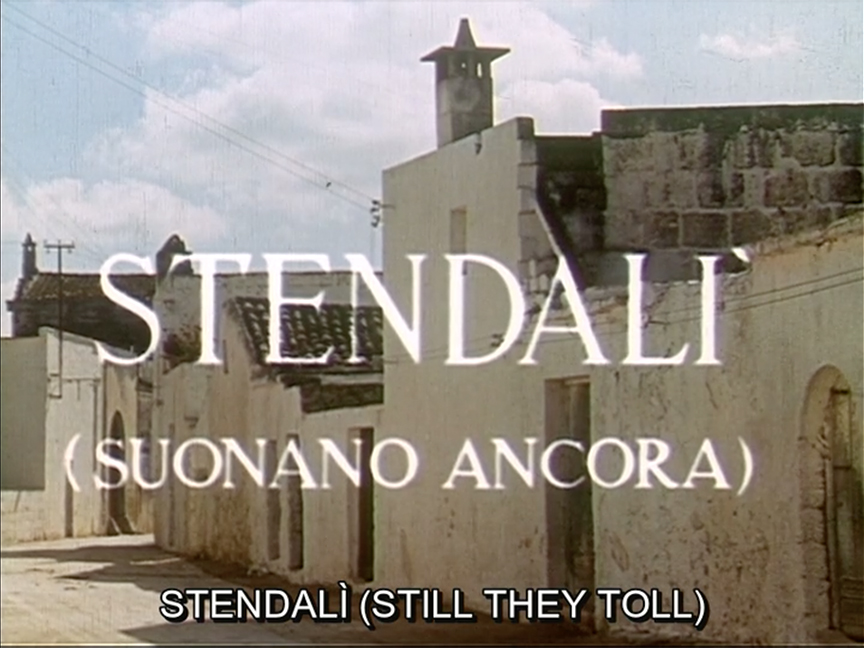
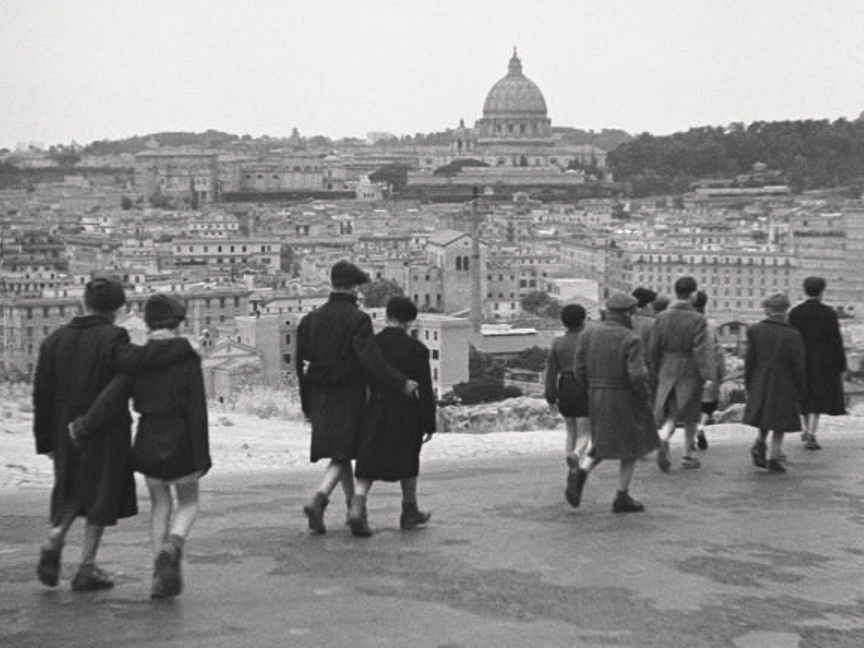
That’s a shot from the closing scene of “Rome Open City,” Roberto Rossellini’s iconic 1945 film, one of the most famous works made during the war era.

Watching those movies — “Paison,” “Bitter Rice,” “Bicycle Thieves”… — as a young adult was a life-changing experience for me. Their characters were superhumans in my mind, capable of facing the worst that life could deal them: war, persecution, hunger, loss of liberty, death. It helped me to understand the hardship endured by my paternal great-grandparents, who were born into deep poverty in Russia (they fled the Cossacks in the first decade of the last century).

Yet those characters, often real people who had been recruited from the street, were also all too human. Italian filmmakers’ brilliant work brought their suffering to the screen in a (neo) real way that the world had never seen before.

I dreamed that I could be as strong when confronted by the life-and-death decisions that people in war are forced to make. I hoped that I could be as graceful were I ever to find myself in the bellic worst-case-scenario like those victims of imperialist war.

Today, Tracie, the girls, and I watch scenes on TV that seem plucked from a Neorealist film: the raids targeting brown people in our country, protesters being shot by federal agents, the concentration camps where brown people are treated like animals (see Pontecorvo’s “Kapò”), the imperial wars in Iran and Ukraine, the plight of Palestinian children…

Sometimes I wonder if we are just another bourgeois family in 1933 quietly pretending that the world isn’t falling apart. Actually, it’s more like 1939 at this point.

At our dinner table, we talk every night about the tragedies unfolding across our planet.

But like those Neorealist characters, we also try to find beauty and joy in the world around us, in the mundane as it were, in each other. If we didn’t, all would be lost. Maybe it was those characters’ fleeting joy, however ephemeral, that gave them the courage to withstand the unthinkable. I hope so.
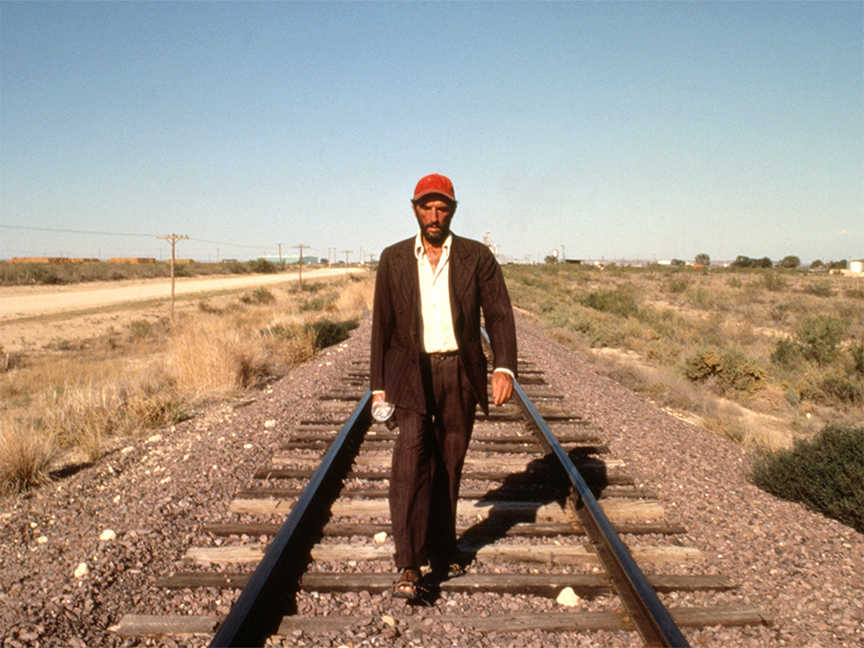

Wim Wenders’ “Paris Texas” restoration had us swooning yesterday at Houston’s Museum of Fine Arts.

Tracie, the girls, and I had the immense pleasure yesterday of attending a screening of a newly restored version of Wim Wenders’ iconic 1984 full-length movie, Paris Texas. The movie was shown at the Museum of Fine Arts Houston, in the same theater where Wenders would view the dailies during shooting.

Read about the film on Wenders’ website here.

It’s hard to explain the outsized role the film has played and continues to play in my life.

I was a junior in high school when it was released and did not see it then.

But by the time I was in grad school at U.C.L.A., it had become required viewing for all aspiring critical theorists on campus. (Yesterday, I learned that the movie had a U.C.L.A. connection by way of production assistant Allison Anders, who also attended U.C.L.A. while I was there although I did not know her.)

One of my professors, a famous Italian philosopher, devoted an entire lecture to the film.

During my grad years when I was living in Hollywood, I shared a water hole — the notorious Coach and Horses on Sunset — with Harry Dean Stanton and would see him there often. A band I played with opened for his band at the Roxbury one time. Man, what a Hollywood night that was!

During those same years, I often saw Ry Cooder, who created the unique score, at a club we used to play and hang out in, Fais Do Do. It was there that I first met his son Joachim, who, years later, thanks to a totally different connection, would make an album with my band Nous Non Plus and tour with us.

And just to make it a truly cosmic connection, Tracie’s long-time hairdresser not only appeared with her band Mydolls in the film. But she and her band also worked as part of the crew. Much of the film was made in Houston and other parts of Southeast Texas where we live.

The film has had such a huge impact on my intellectual arc. The story, the cinematography, the music… It was wonderful to see the gorgeously restored print and hear Mydolls, on hand for the occasion, share their anecdotes and insights into the production.

And this morning as I kissed Tracie before the work day began, it occurred to me: I followed a woman to Texas just like Harry Dean Stanton did. And she led me to Houston…

Check out the film, coming to a Texas town near you soon.

Cecilia Mangini’s lost films resonate powerfully today. Don’t miss the opportunity to stream them.

Above: Italian filmmaker Cecilia Mangini in Rome in 2020. She died in January of this year. Her films are now being rediscovered by a new generation of cinephiles (image via Wikipedia Creative Commons).

Honestly, until my good friend Ben Shapiro (a noted filmmaker himself) brought them to my attention, I was unaware of Italian director Cecilia Mangini’s wonderful pseudo-documentaries, which have recently been rediscovered, restored, and are now being streamed for free by Another Screen.

Her oneiric and highly lyrical depiction of the Italian proletariat (omg, did I just out myself as a Marxist?) in the 1950s and 1960s resonates powerfully today as the pandemic has drawn a stark line and divide between the world’s disenfranchised and the management class.

(A few days ago, a Galveston woman had to be escorted out of a bank after she refused to wear a mask despite the business’ requirement that patrons wear a mask. A police officer was tasked with getting her out of the bank in what became a tragicomic scene. Some will see a parallel between the police officer and the southern Italian Carabinieri who had to face off with bourgeois protesters in 1960s Italy. Pasolini, a Mangini collaborator, wrote extensively about them at the time.)

I highly recommend checking out the link on the Other Screen site. It makes for great viewing and I believe it’s free only until Monday (I also encourage you to donate to Another Screen to support their efforts in preserving film archives).

See this Times profile of Mangini from last year (how did I miss this?).

Buona visione. Enjoy the films. You won’t regret it.

Imagine a world without restaurants: an Italian filmmaker did just that.

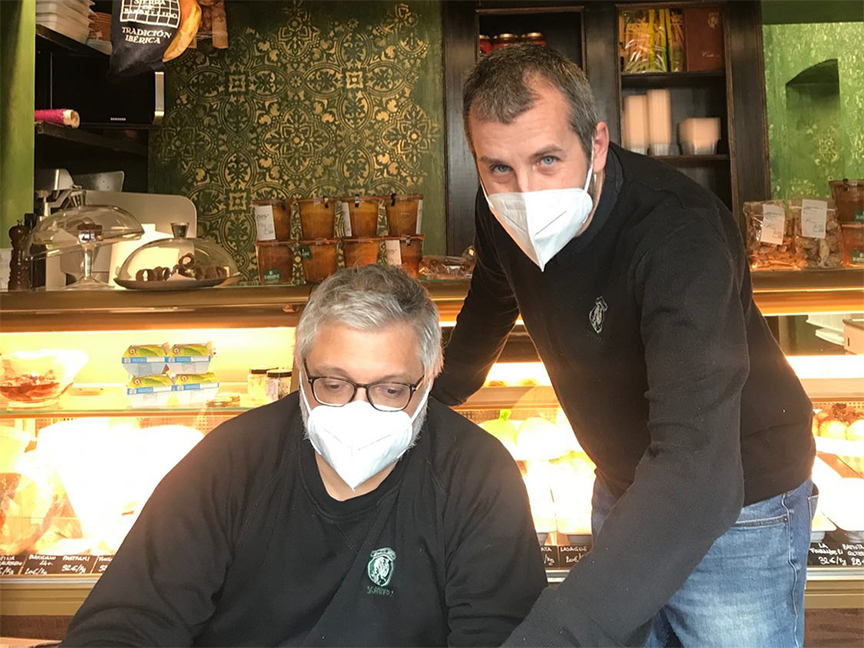
Above, from left: Scannabue’s co-owner and chef Paolo Fantini and co-owner and front-of-the-house Gianluigi Desana (image via the Scannabue Facebook).

In a brilliant video shared on social media last week, a pair of Torinese restaurateurs imagine a world where restaurants are just a figment of the past.

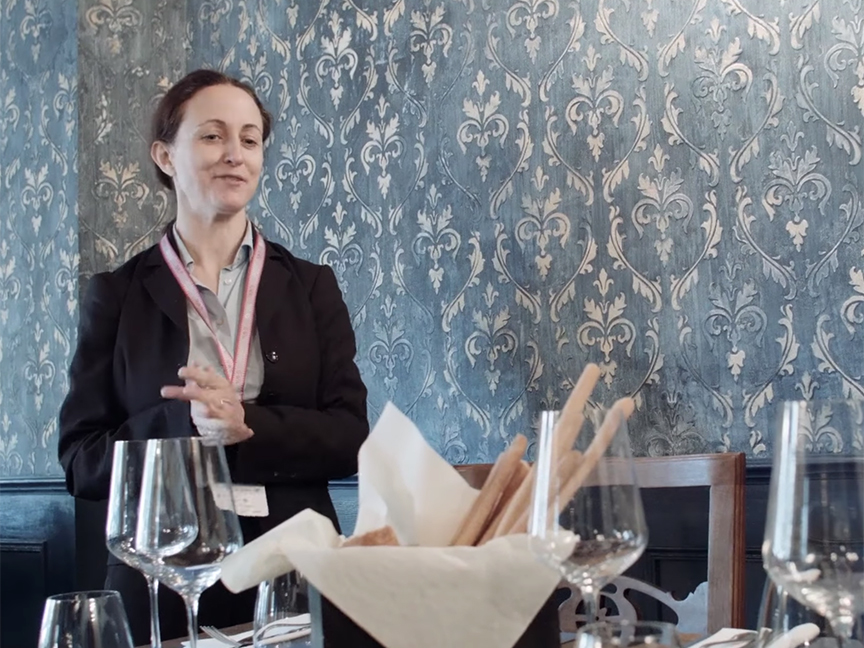
In the short film directed by Stefano Cravero and produced by chef Paolo Fantini and Gianluigi Desana, owners of Scannabue Caffè, Restaurant, e Gastronomia, a museum docent (with lanyard and all, played wonderfully by Italian actor Francesca Bracchino) leads a group of Italian and foreign tourists on a tour of the “restaurant museum.”

“Just think,” she says to her tour group, “they used to all sit around the same table and share the bread in the middle!”

“That’s disgusting!” blurts out one of the Italians in the group.

“Yes, I know,” commiserates the docent as she notes that “we need to remember: that was more than a year ago!”

There’s even a quip about American dining.

Above: a screenshot from the short film.

After one of the tourists asks the docent whether or not there were restaurants in other parts of the world like America, she doesn’t miss a beat before answering: “Oh, yes, they had restaurants in America as well. But let’s just say they were ‘faster.'”

The cortometraggio has really touched a nerve in Italy.

As of this posting, the video had been shared more than 400 times on Facebook. And it’s been featured in the Italian mainstream media.

The rituals of dining and gastrocentric socializing are key to the Italian identity. So many of my Italian friends have told me about how restaurant closures have weighed on their souls (not to mention winemaker friends who previously depended on independent restaurants like Scannabue for much of their sales).

You don’t need to understand Italian to follow along (although it’s even more funny if you can pick up on some of the nuance of Bracchino’s delivery).

Watch the video here.

The hilarious yet poignant video came to my attention via one of my favorite food and wine blogs, Sapori del Piemonte, edited by one of the most talented people in the trade and a great friend, Filippo Larganà.

Letter to my daughters on my birthday.

Lila Jane and Georgia, thank you for my birthday wishes and a morning full of cards, hugs, and laughter! You two and your mother are the loves of my life!

Ever since you saw the animated movie “Hercules” a few weeks ago, you’ve been fascinated with Greek mythology. Inspired by all your questions about the gods of the ancient Greeks, your mother ordered us a National Geographic “ancient mythologies for children” book. When it arrived over the weekend, you literally couldn’t wait to dive in and learn more about the deities, demigods, and their stories.

At one point, you landed on the page that tells the story of Cronus, the leader of the Titans who swallowed his children. His story was accompanied by the famous painting by the late 18th-century Spanish artist Goya, “Saturn Devouring his Son” (Saturn is another name for Cronus.)

You were terrified! You were so scared by the gruesome image that I had to stay in your room that evening until both of you fell asleep. We agreed that we would talk about it in the morning and figure out why Cronus ate (!!!) his children.

The next morning we dusted off our dog-eared copy of the Dictionary of Classical Mythology and discovered that Cronus had actually swallowed his children whole (he didn’t rip them limb from limb as depicted in the painting). We also learned that all of them survived after the youngest, Zeus, vanquished his father.

What a relief! We were all glad to find that the story had a happy ending.

The world is such a scary place right now. In all of my 53 years, I have lived through some pretty frightening stuff but never anything like this. You, your mother, and I are all living through and navigating a time when none of us — not one of us — knows what to expect or what will happen next. But we are getting through it together.

The same way we used that book to shed light on the unknown, on something that made us scared, we are using knowledge and learning to guide our family ship across these uncharted waters.

You’ve both been extremely brave this year. And your mother and I are immensely proud of you for your grace. We’re also proud of you for empathy and the way you care for each other, your parents, and your friends.

When you finally fell asleep the other night, I remembered how scared I am — how scared we all are — right now. I know that I couldn’t make it through these troubled and troubling times if it weren’t for your love, for the light you cast into the world, for your music and for your laughter, for your tears, fears, and your hugs, hopes, and dreams.

Your mother and I have way too many blessings to count. But the greatest of those is you. I love you, we love you with all our hearts. Every birthday is a great one when we know that you are in and of this world.

The Confederate flag is a symbol of hate. Don’t believe me? Ask your black friends.

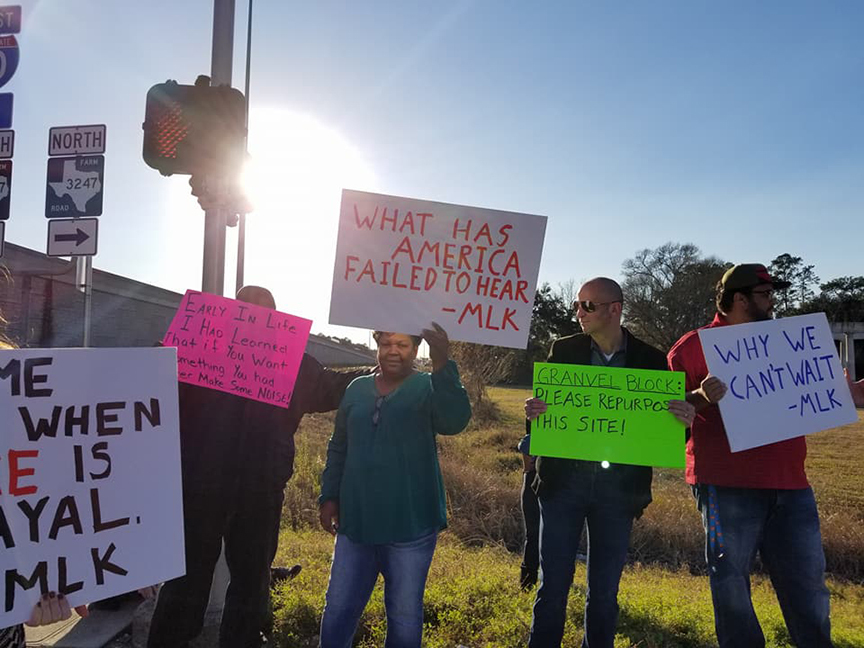
Above: A protest of the Confederate Memorial of the Wind in Orange, Texas, where the Sons of Confederate Veterans have erected a monument celebrating Confederate battle flags. The conspicuously displayed banners include the “Confederate Flag” that Nikki Haley has praised as a symbol of pride and heritage. The monument stands on the corner of Martin Luther King, Jr. Dr. and Interstate 10 in a city where an ongoing legacy of racial violence has stained the community for generations. See the Sons’ rendering of the site below.

Rising Republican star Nikki Haley’s recent claim that the Confederate flag is not a symbol of white supremacy is as egregious as it is dangerous.

Egregious because — I’m sorry to break it to whitewashed, “snowflake” Republicans — the Confederate flag is a symbol of the white supremacist movement in our country.

Don’t believe me? Just ask your black friends how they feel about conspicuous displays of the Confederate flag. And ask them about their own experiences with the Confederate flag and the people who wave it.

Your white friends who belong to the Sons of Confederate Veterans will tell you that it’s symbol of “pride” and “heritage.” And they are right: it’s an expression of their pride in white supremacy and their ancestors’ belief in and support of apartheid in this country — otherwise known as poll tax, Jim Crow, and the “Southern Strategy” of the 20th-century Republican party.

Just have a look at the flier (below) that the Sons of Confederate veterans circulated as they gathered money to erect their “Memorial of the Wind,” a celebration of Confederate battle flags including the Confederate flag, in Orange, Texas where half the population is black and where there is a searing legacy of racial violence and Jim Crow.

Her assertion is dangerous because it’s the latest example of the Republican party’s defense, validation, and propagation of the flag itself.

Just as the leader of her party and her close political ally Trump claimed that there were “some very fine people” carrying tiki torches and chanting “Jews will not replace us” in Charlottesville, Haley contends that the flag is conspicuously displayed by a mere handful of bad actors.

Evidently, she hasn’t visited the South lately. Here in Southeast Texas, the Confederate Memorial of the Wind (depicted in the flier below) stands at the corner of Martin Luther King, Jr. Dr. and Interstate 10. And all you have to do is meander through the residential streets of southeast Texas and you’ll find Confederate flags displayed conspicuously on houses and cars.

In our own neighborhood in Houston, I’ve spotted a Dodge Charger with a Confederate flag painted on it.

But in recent years, I’ve also seen countless Confederate flags displayed in my hometown of San Diego, California. I even saw more than one prominently displayed Confederate flag when I visited Oregon wine country earlier this year.

To embolden white supremacists with morally bankrupt rhetoric like Haley’s is to euphemize a growing and increasingly violent group of hatemongers who embrace the Republicans’ historic and well-documented subjugation of people who don’t look like (or vote for) them.

Don’t believe me? Just ask my friend in Orange, Texas who drives down Martin Luther King, Jr. Dr. every day, traveling beneath the Interstate 10 overpass to take her daughter to elementary school.

One of the more remarkable things I saw in Italy: the Villa Collazzi

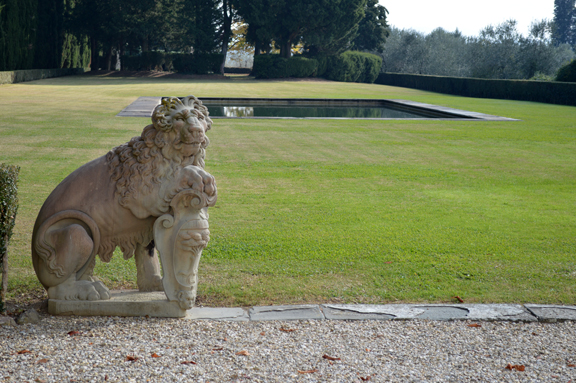
pietro porcinai architettoAbove: the pool at the Villa Collazzi designed by Pietro Porcinai, a pioneering landscape architect, active in Italy from the 1930s through the 1960s.

Enogastronomy has become my professional focus over the last fifteen years or so.

But every time I return to Italy, I am reminded by what first drew me there: the Italians’ rich cultural and artistic legacy and the country’s many extraordinary works of art and immense natural beauty.

During my November trip, I took a break from the wine and food trail to visit the remarkable Villa Collazzi just outside of Florence.

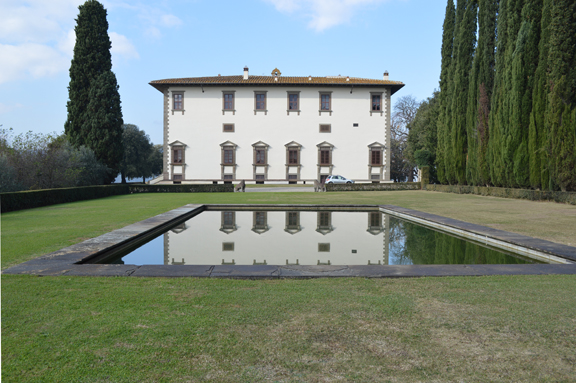
villa collazzi florentine rentalAbove: a shot of the pool with the villa in the background. Note how the villa façade is reflected with perfect symmetry in the body of water.

Continue reading

Scenes from the “Pasolini in Rome” show at the Cinémathèque Française

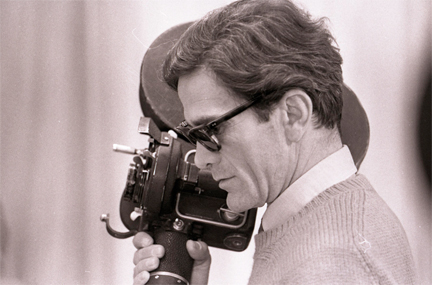
Comrade Howard graciously sent me these images from the current “Pasolini in Rome” exhibition at the Cinémathèque Française where he toured the show last week with the museum’s director.

It runs through January 26.

La poésie, la politique, le sexe, l’amitié, le cinéma… The stuff that life is made of.

The track “Pasolini” in the slideshow comes from my band Nous Non Plus’ release Le sexe et la politique (Terrible Kids Music 2012).

pasolini

Happy International Workers’ Day (May Day)!

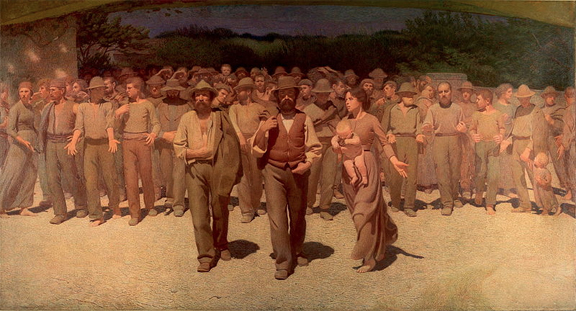
fourth state avanti popoloAbove: “The Fourth Estate” by Pellizza da Volpedo (1901).

Marx is not a four-letter word at our house.

Happy International Worker’s Day, everyone!

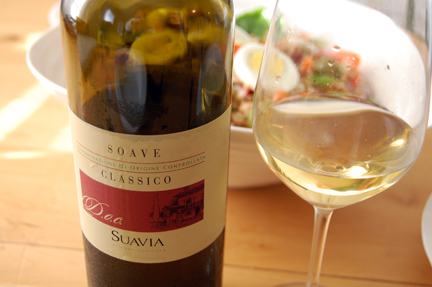
Soave and summer farro salad make a bleak world seem brighter

Tracie P really outdid herself yesterday night for our dinner, making a gorgeous summer farro salad with fresh and lightly blanched vegetables and fruits and hard-boiled egg. It’s a good thing she did because by the time dinner rolled around at our house, I was depressed.

After reading the dismal news about Italy, the economy, the fall of Western Civilization, and the riots and looting in London (one of my favorite cities on earth), I couldn’t help but think about the last market crash in 2008 and the days that followed the tragedy of the Twin Towers in 2001. Those were tough times for the wine (and restaurant) industry and I hope they are not returning in the wake of the current crisis.

But as Tracie P reminded me, no matter what happens, we’ll have each other and we’ll have Baby P when she arrives later this year. And for the first time in my life, as bleak as the world seems right now, my anxiety about the future is assuaged by Tracie P’s wonderful smile and her warm embrace — and a little girl growing inside her.

And as bad as things may look, we all found joy and solace in some of the simplest pleasure in life: a bright summer dish and a bright, fresh bottling of Garganega by Suavia.

We were also joined last night by Alfonso, who was in Austin on business. And it was great to be together, just the three four of us…

After dinner, we settled into the living room and watched Pasolini’s Decameron on Netflix streaming. And I think all of us thanked our lucky stars for the small pleasures that life delivers…

Here’s one of the most beautiful sequences from the film… Buona visione