a boysenberry jam frat party shit storm

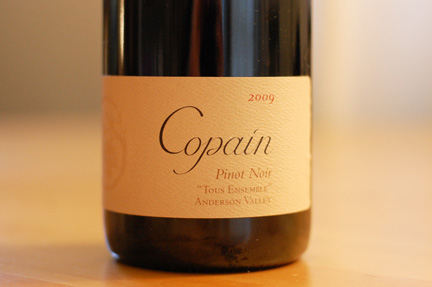
Above: I included the Copain Pinot Noir Tous Ensembles in my recommendations for the Houston Press today. The alcohol content — 12.9% (YES!) — is reported in lettering so small and faint that you’d think the winemaker was embarrassed by it.

I never thought in a million years that I’d find myself writing regularly about American wines.

But then again, I never imagined in a million years that I’d have an editor that would allow me to write things like “a boysenberry jam frat party shit storm” (thank you, Cathy! you rock!).

I didn’t write the line in reference to the Copain Pinot Noir (above). It was inspired by a sales rep that tried to hard sell a wine to Darrell Corti one day when I was visiting him in his store (Darrell is one of the people in the world I admire most and whose friendship I cherish most dearly).

When Darrell courteously asked the gentleman to leave the bottle for his weekly staff tasting, he responded saying, “you’ve got to taste this wine: it tastes like boysenberry jam!” After he left, Darrell showed me the label, pointing to the 16 percent alcohol. He just shook his head, as if to say they’ll never learn.

A few months later (I was in Sacramento on that occasion making a record at The Hangar), the earth-shaking story about Darrell prohibiting 14.5 percent Zinfandel broke in the blogosphere.

The editors at the Houston Press have been very supportive in my efforts to write about American wines with candor and honesty and in keeping with my steadfast belief that wines with high acidity, low alcohol, and wholesome (as opposed to chemically manipulated) flavors and aromas are the key to healthy and happy enjoyment of wine (and good pooping)… And while I can’t say that Tracie P and I serve the wines regularly in our home (where Italian prevails, pervades, and precludes, and French and Natural Californian appear more than occasionally), I can say that I only review wines that I’ve actually tasted and wines that I genuinely respect (and of course, I’m limited to wines that are available in the Houston market).

Click here for my “Top 5 All-American Red” recommendations today in the Houston Press.

Best summer wines, Anywhere, USA

Readers (and editors) love lists: today, the Houston Press posted my top five picks for under-$25 wines for the Texas summer.

It’s been really rewarding for me to share my palate with readers over there. I always keep it real, writing honestly and openly about wines we actually buy and drink and reviewing wines that I wouldn’t normally reach for.

The greatest reward comes when people either write me or stop me in a Houston restaurant to say, “now that I’m on to the low-alcohol and high acidity thing, I just can’t go back!”

Thanks, everyone, for reading and keeping up with it all.

Here’s the link to the post.

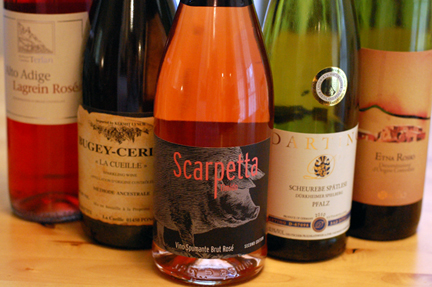
I can’t wait for Mrs. B. to taste the Darting Pfalz Scheurebe Spätlese Dürkheimer Spielberg!

“You can’t get a bad meal in Napa” and my favorite Napa wine blog

Above: The burger and fries at Grace’s Table in downtown Napa. The thing that took it over the top was the superb quality of the bun.

“You can’t get a bad meal in Napa these days,” said the waiter at Grace’s Table downtown as she insisted that I taste the baguette that the restaurant sources from a bakery down the street.

I hadn’t been to Napa for three years or so: there’s been an explosion of restaurants in the town and while competition is high, I was told, there’s plenty of high-quality materia prima to go around. Say what you will about the Napa style of wine, but there’s nowhere in the U.S. that can beat the quality of the produce that the farms here deliver. And the culture that once corralled the best restaurants in the villages to the north has now graciously populated its namesake township. Gauging from a stroll in the town center, there are many affordable options for dining: my “Hand Formed Burger, Meyers Ranch Chuck, House Made Pickles, Chili d’Espellette-Parmesan Fries” was just $12.

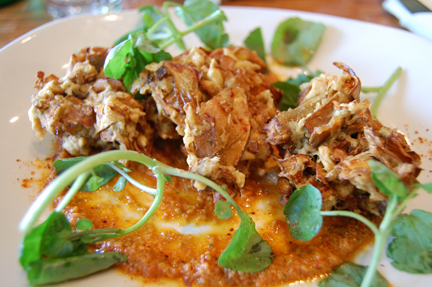
Above: Artichoke fritters at Grace’s were delicious.

After Giovanni and I finished an early repast in town, we headed back up north to Yountville to meet the author of my favorite Napa wine blog, Vinsanity, Vinogirl.

She was pouring wine at an exclusive private event but she managed to sneak Giovanni and me through the back of the venue so that we could taste her wine and chat with her and husband Vinomaker.

Above: In Yountville, Giovanni and I were impressed by this “transgenic” sage plant, as he called it. Note the size of the plant’s leaves.

On her excellent blog, Vinogirl chronicles the vegetative cycle of Napa with wonderful photographs and occasional scouser humor (she Liverpudlian). Her posts are peppered with viticultural knowledge and insights into what’s happening “on the ground,” including the recent cooling trend that has vexed growers here.

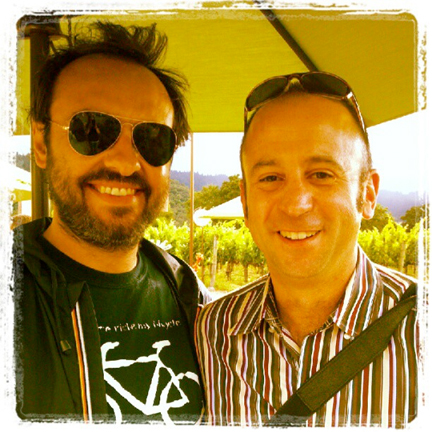
Above: “Did you know,” writes Vinogirl on her blog today, “that there’s no Italian word for ‘bromance’?” She snapped this photo of Giovanni and me, four days into the California leg of his visit to the U.S.

Why were Giovanni and I in Napa? You’ll be surprised to know the reason and I’ll explain all next week… stay tuned…

In the meantime… Thanks again, Vinogirl, for the photo! It was so great to finally meet you!

Ezio Rivella, contrapasso, and the Triumph of Time (fugacity)

From the department of “I read the news today o boy”…

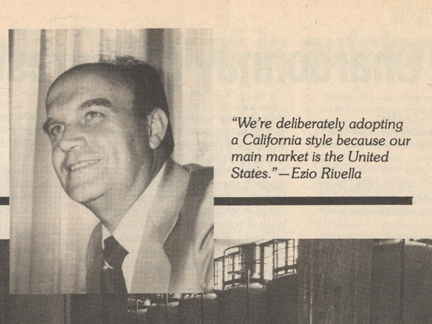
Above: Rivella in a 1982 profile by Wine Spectator.

Not a bad PR move, eh? Announce your long-awaited resignation on a Friday at the beginning of summer.

On Friday, the controversial and much loathed toad of Montalcino, Ezio Rivella, resigned from his position as president of the Brunello producers association. The news was announced by WineNews.it, in its weekly PDF (the fact that it still sends out PDFs is indicative of the great minds behind this pseudo-journal, an advertorial affair produced by a PR machine that serves as Montalcino’s in-house media outlet).

According to the press release — and yes, let’s call it what it is and stop pretending that WineNews.it represents any form of serious, self-respecting editorial coverage — Rivella resigned solely because of personal reasons pertaining to family.

In the end, Rivella did not succeed in gerrymandering changes in Brunello appellation regulations. At every step, he campaigned tirelessly in his quest to allow international grape varieties. And at every turn, even when he called votes at the peak of harvest when he knew the hardship it would cause for producers, the popular voice of Brunello growers managed to drown his.

In reading the news, I couldn’t help but think of Rivella’s Dantean contrapasso: I can see him cast in the fourth circle (greed), forced to drink endless amounts of chemical tannin and tartaric acid.

But in the end, it wasn’t the Commedia that came to mind but rather another cycle of Italian poems written in terza rima, Petrarch’s Trionfi (Triumphs). In it, Petrarch envisions triumphal processions of the forces that inform and ultimately vanquish the human condition: Love, Chastity, Death, Fame, Time, Eternity.

From what I’ve been told by industry insiders, Rivella sought to lay claim to Brunello’s throne (the regal metaphor is his not mine) in an attempt to refashion a legacy that was sullied when Banfi dismissed him (against his wishes) in 1999 after a career that spanned more than three decades. Rivella may have curated Brunello’s meteoric rise in fame but the spoils of the battle were denied him. And in a last flourish, he had hoped to beat time by once again redefining (literally) what Brunello was and could be.

But fame and time were greater forces than he.

Historically (as we have seen in recent weeks here), winemaking in Brunello has always been shaped by big business interests. And it will continue to be so (now more than ever, sadly).

Over the last two decades, those interests have moved farther and farther away from the ideals that informed Brunello’s pioneers (massal selection of a Sangiovese clone, excellent growing sites, and easy railway access). Instead, they have shifted their approach to appeal to globalized tastes and they have over-cropped their farms to deliver the quantities demanded by a globalized market.

We can only hope that Brunello’s new captain will guide its ship back to Tuscan shores and hear the ancient cadence of Tuscany’s great poets.

In other (sadder) news…

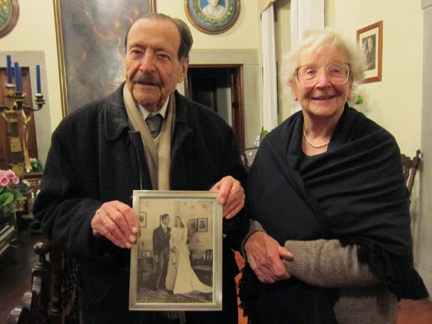
In an uncanny twist of fate, Rivella’s retirement eclipsed the sad news that Count Bonacossi, historic producer of Carmignano (above with his wife Lisa), transpired on May 24, 2012. Bonacossi’s farm produced superb Cabernet Sauvignon long before Tenuta San Guido ever released its Sassicaia. He and his wines were Super Tuscans ante litteram. A press release, issued by the winery, follows…

Continue reading

Biondi Santi a cooperative winery?

biondi santi

Alfonso weighed in yesterday with another earth-scorching post devoted to wines made “Under the Tuscan Scum” (and I highly recommend it to you, especially if you’re a sommelier working with Italian wine).

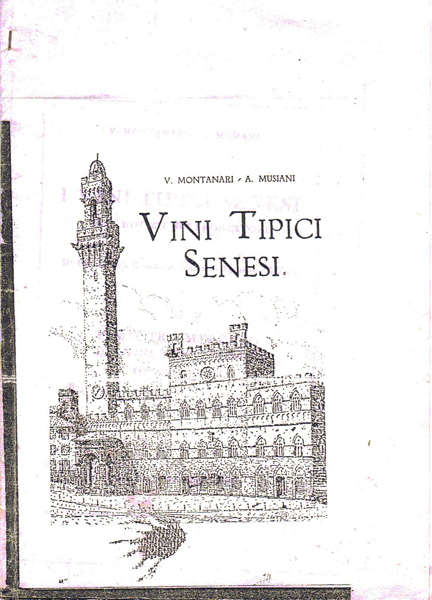
But the post I can’t stop thinking about this morning is another fantastic document culled from the archives of Il Poggione’s library. In this case, the entry for the “Cooperative Cellars of Biondi-Santi & Co.” in the 1933 handbook of wines from the province of Siena, published by the department of the agriculture at the university of Siena (frontispiece, above).

Many will be surprised to learn that the early modern incarnation of the Biondi Santi winery was as a cooperative cellar. But the document is rich with clues from and traces of another era in Italian and Tuscan winemaking that help us to understand better the origins of Italy’s wine industry today. I’ve taken the liberty of reproducing Alessandro Bindocci’s translation here so that I can comment each paragraph. You’ll find the original text in Italian on Ale’s blog.

*****

The cooperative winery Biondi Santi & Co. was established in Montalcino in 1926 thanks to the praiseworthy efforts of a group of [land] owners who were wine producers. They understood the necessity and importance of promoting two of Tuscany’s classic wines: Brunello and Moscadello from Montalcino.

Today, few remember that Moscadello was nearly as important as Brunello in those early years. When the Mariani family (Banfi) went to Montalcino in the 90s, it’s great hope was to produce sparkling wines from Moscadello that could rival Moscato d’Asti (that’s why they brought down Ezio Rivella from Asti).

1926 is the same year that Luigi Pirandello published one of his most popular novels (Uno, nessuno e centomila). He would win the Nobel prize for literature in 1934, the year after the wines of Siena handbook was published (can you name any contemporary Italian writer today?) 

The farming companies who lead the cooperative winery are the following: Biondi-Santi, Cocchi Brothers, Padelletti, and Tamanti. Together, these farms have 1,200 hectares [planted to vine].

I was able to find this information about the Padelletti family, one of Montalcino’s oldest clans. And I discovered this document on the Tamanti legacy. As per my previous post on Brunello, the founding fathers of Brunello weren’t farmers who had raised wine for generations. They were rich land owners who saw business opportunity in the production of fine wine. I wasn’t able to find anything on Cocchi (in the short time I could devote to this).

Thanks to the topographic position and the geological nature of its soils, the hill of Montalcino produces grapes with exquisite flavor from which delicious wines are made — wines that have been known as such for centuries. The cooperative winery is located in Montalcino, 40 kilometers from Siena. The nearly railway station is in Torrenieri (on the Siena-Grosseto line), 9 kilometers from Siena.

In 1933, eleven years into Mussolini’s rule, the notion of italianità was in vogue in Italy: national pride in Italy’s natural, industrial, and commercial resources.

Today, many cite 1888 as the year that Brunello was “invented” and bottled as such. But this document reveals that it was famous even before Biondi Santi’s 1888 bottling. Today, Torrenieri is covered with vineyards planted to Sangiovese. In 1933, it was a railroad stop: shipping posed great challenges for wineries in that era (can you imagine a wine guide noting the location of the nearest port or railway station today?).

The cooperative winery produces more than 1,000 quintals of wine annually and it places its coveted products easily and lucratively in Italy and abroad.

The winery is endowed with highly modern equipment and well suited facilities. The technical director of the winery is Dr. Tancredi Biondi-Santi.

Perhaps the most interesting thing here is how Biondi Santi provided a new working model for Montalcino (and Tuscany in general): modern equipment, easy access to a supply chain, and a cooperative system that allowed grape growers to combine their resources.

Think how different things would be had Mussolini not come to power in Italy. Of course, Germany would have devastated Italy regardless. But, either way, the renaissance in wine described here wouldn’t have been interrupted by the conflict that followed the rise of fascism.

Ale, thank you for this fantastic document and wonderful post!

Aldo Conterno, remembrances and my visit to Bussia

Above: One of Barolo’s most beloved winemakers and last defenders of its historic identity Aldo Conterno has died at 81 (photo via La Stampa).

Myriad English-language tributes to the great Barolista Aldo Conterno have appeared in the enoblogosphere between yesterday and today since news of his passing first broke: Walter Speller, Monica Larner, and — one of the most touching — by S. Irene Virbila.

Franco Ziliani reminds us (in Italian) that together with great winemakers like Giovanni Conterno (Aldo’s borther), Bartolo Mascarello, Teobaldo Cappellano, Beppe Rinaldi, and Mauro Mascarello, Aldo was a “steadfast defender in a battle for the respect of Barolo’s personality in the heady years when some were trying to make the wine become something different.”

And La Stampa wine writer Sergio Miravalle remembers fondly that “for decades, he signed some of the most stunning wines of Italy but his fame never distanced him from the concrete, simple way of life of farmers in Langa.”

I had the great fortune of meeting him once at his home and winery in the village of Bussia (in the township of Monforte d’Alba).

The year was 2000 and I had met his son Franco Conterno earlier in the year at the presentation of the A. Conterno 1996 crus in New York and Franco had invited me to visit their cellars in Langa.

The release of the 1996 vintage from Langa was a pivotal moment in the new wave of Nebbiolo mania in the U.S. Then rising wine star Joe Bastianich, owner and founder of the retail crew at Italian Wine Merchants, had decided to throw his weight behind the vintage and the producer and the hype that 1996 would be “the vintage of the century” was thick. (Of course, even though there’s no doubt in my mind that 96 was the superior vintage, it was eclipsed by the American wine media’s love affair with 1997.)

When I was received by Aldo, we spoke in Italian only because I was accompanied by an Italian friend of mine but he greeted me in perfect English (see S. Irene Virbila’s wonderful remembrance for Aldo’s years in California and his service in the U.S. military).

I was just starting my career as a wine writer then and our meeting had a profound effect on me. I realized, for the first time, that certain women and men — persons of truly great character — make wines that will outlive them. In other words, he grew, bottled, and raised a wine — in this case the epic 1996 vintage — whose ultimate expression would occur only after his passing. My personal realization was even more powerful given that so many winemakers in Langa at that time were trying to make wines more approachable in their youth.

I’ll never forget his gentle voice, nor will I forget the taste of bittersweet Barolo Chinato at the end of the flight.

Carissime Alde, sit tibi terra alba levis…

Brunello, for better or worse (or how I learned to love the fruit bomb)

Above: I recently asked legendary Tuscan enologist Carlo Ferrini (and historic consultant at Casanova di Neri) what he considered his great contribution to Italian wine. “I took the traditional role of the Tuscan enologist from the cellar to the vineyard,” he told me.

My brother-in-arms and close friend flying winemaker Giovanni Arcari often asks rhetorically: “How many of the winemakers in Franciacorta actually make their living — their main source of income — from growing grapes and making wine?”

I’ve been thinking about Giovanni and his bleeding heart this morning after reading Alfonso’s superb post on Brunello di Montalcino wherein the latter applies his more than three decades of experience, observation, and wisdom to the situation on the ground in the ilcinese.

Even spanning back to Brunello’s ante litteram era, we discover that even for its founding father Biondi Santi, winemaking was not the primary source of income. In fact, Ferruccio Biondi Santi — Brunello’s nineteenth-century “inventor” — was the scion of a noble family with vast land holdings and immense financial resources. His ground-breaking experimentation in massal selection redefined the appellation. But, in turn, that appellation was defined by a handful of landowners who began to produce a “fine” as opposed to “table” wine following in his footsteps.

It wasn’t until the late 1970s that wealthy northern Italians began to buy property there (and they probably wouldn’t have seen Montalcino as such a choice spot had the British not planted roots there and “manicured” the Tuscan countryside, giving it its idyllic patina that we know today; just ask anyone old enough to remember the second world war what it was like in Montalcino from 1945 through the 1960s when the British began to arrive).
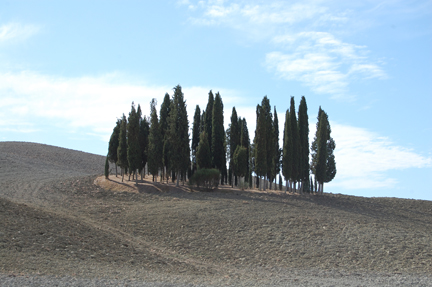
Above: Ask any ilcinese over 50 and they will tell you that it was the British who planted the cypress trees in Tuscany in the 1960s.

Today, just scan the names that define the arc of contemporary Montalcino winemaking: Soldera, an insurance magnate originally from the Veneto via Milan; Illy (Mastrojanni), a coffee mogul from Friuli; Parsons (Il Palazzone), U.S. CEO extraordinaire… and of course, Mariani (Banfi), one of the leading importers of fine wine in the U.S. who went to Montalcino in the hope of creating a sparkling wine legacy and ultimately turned Brunello di Montalcino into a super market brand.

Where there were less than 20 bottlers of Brunello in the 1960s, today there are more than 250 members of the Brunello bottlers association.

To Giacomo Neri’s credit — whether you like the style of wine or not — his family started out with humble farm that Giacomo took over when he returned from his mandatory military service. I know this because I met Giacomo for the first time in 1989 on my second visit to Montalcino, when his wines tasted a lot different from the way they do today. Since his collaboration with enologist Carlo Ferrini began in 1993, his Casanova di Neri label has become one of the most sought-after wines in the world, winning impossibly perfect scores from some of our country’s greatest wine writers (what do Nadia Comăneci, Bo Derek, Ann Colgin, and Giacomo Neri have in common? Hint: it’s not their good looks).

I recently met Carlo Ferrini for the first time in Los Angeles, where he and I spoke on a panel together. I asked him what he felt, over the arc of his career, was his greatest contribution to winemaking in Tuscany.

“Before I began working as a consulting enologist,” he said, “enologists were traditionally tasters.”

“Like Gambelli?” I asked.

“Yes,” he answered. “I was among the first to convince growers to replant their vineyards and to adopt more contemporary farming practices.”

And on the subject of Brunellogate?

“I’ve never believed that Merlot or any other grape should be added to Brunello,” he told me. “In Chianti, I’ve followed a Bordeaux model, using different grapes, grown in different sites, to create blends in line with modern tastes. In Montalcino, the wines have always been 100% Sangiovese. It’s my work in the vineyard that has made the difference. Not in the cellar.”

Whatever Ferrini claims and whatever we believe (and for the record, looking Ferrini in the eye, I believed him), the predominate and guiding style of Brunello has changed in Alfonso’s lifetime and my lifetime.

In the beginning, was the style of Brunello guided by a handful of wealthy families who saw big business opportunities in producing wines that could rival their French counterparts? Is it guided today by a small group of wealthy families who see financial opportunity (and tax-shelter vacation homes) in America’s thirst for wines in the global style?

The answer to these questions lies somewhere in between an alpha, an omega, and a brief window (1975-1993?) when Italy’s cultural prosperity delivered an optimism and fostered a belief that even luxury products should be the expression of the land where they were grown and the people who made them. It just so happens that that’s when Alfonso and I had our first contact with the wines.

If you following along here at Do Bianchi, you already know the Brunello that I like to drink (Il Poggione, Brunelli, Soldera are my top three, whether I can afford them or not). And there will be plenty of time to write and discuss the wines that we love at our house…

Instead, please read Alfonso’s post: The Battle for Brunello. I’m just adding my two cents here…

In other news…
Today, Italian wine blogger Andrea Petrini, author of Percorsi di Vino, reposted this offer from Albana di Romagna producer Gabriele Succi (left): if you make a donation to one of the officially sanctioned channels for donations for Emilia-Romagna earthquake victims, you can send him a scan of the receipt via email and he will ship you the same value’s worth of his wine. He sweetens the deal by discounting each of his labels by Euro 1 ex cantina. He’s not giving a portion of proceeds to earthquake victims; he’s giving you the wine for donating.

Click here for the offer (in Italian) and links to official donation sites.

Prosecco polemic: Alan Tardi Responds

From the department of “par condicio”…

Last week I received the following message from Alan Tardi, one of the Italocentric wine writers I admire most. He was responding — however serotinely (no paronomasia with his name intended but if ever there were a case for the Latin adage nomina sunt consquentia rerum, this could be it) — to my post Prosecco, lies, and videotape: the real story behind the new wave Prosecco (published January 11, 2012) wherein I cited his New York Times article “Prosecco Growers Act to Guard Its Pedigree,” published that day. I have posted his message in its entirety below and recommend it to you….

*****

About a month ago I came across your piece about my article in the Times and wrote you a note but I’m afraid you might not have received it (I seem to have been having some trouble with one of my email accounts lately). Here it is:

Hi Jeremy,

Thanks for taking the time to read and comment on my article in the New York Times. I believe you posted your blog just after the article was published on January 11th but I didn’t see it until the other day when somebody sent me a copy of it. Otherwise I would have responded sooner.

One of the things I love most about wine is that there is always something to learn and discover, plus it’s always changing. With all this stuff in motion, it’s totally possible for someone to “get something wrong.” However, in this case it didn’t happen.

Continue reading

Why Restaurants Matter (the bourgeois social compact) @EatingOurWords

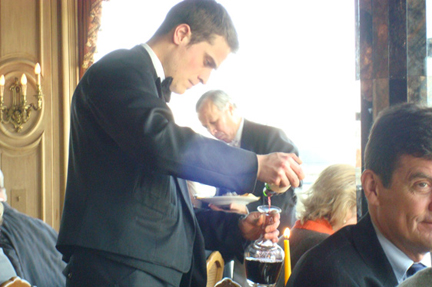
Above: I spent an obscene amount of money taking Tracie P out to dinner at the Tour d’Argent in Paris three years ago. But when you consider the fact that we still talk about it and how much fun we had, there’s no doubt that it was worth every penny — one of the most memorable meals of our lives. Here’s the link to my post on the lunch.

When I was an undergrad at U.C.L.A. in the late 1980s, my great uncle Ted, a Beverly Hills commercial developer (motels were his thing), loved to take me to his favorite “continental cuisine” dining spot. The only catch was that we had to finish dining by 6 p.m. so that we could take advantage of the “early bird special” (think beef Stroganoff and baked Napoleon). I’ll never forget his anxiety when the bill arrived: did the server already include the gratuity? did he charge us the correct amount? had he cheated us for a dish that didn’t arrive? I was too young at the time to drink legally but there was no way that uncle Ted was going to spend money on a bottle of wine. The prices for wine were “highway robbery,” I remember him saying to grandma Jean (his sister).

I loved uncle Ted a lot, especially for his humor and his loud snorts when we would eat at his favorite Chinese restaurant. “The mustard really helps to clear your sinuses,” he would say to my delight as he wiped the sweat from his brow.

He was from a generation that believed — across the board — that the restaurateur was going to try to swindle their patrons.

It’s important to remember that he was the child of people who never went to restaurants: he was born in the first decade of the twentieth-century in New York to Jews who had fled antisemitism in Austria (and the limited opportunities of their station in society). Even when they landed in the U.S., the thought of spending money in a restaurant was abhorrent in their view.

Today, the culinary landscape has changed drastically. When, in the late 1990s, our enogastronomic culture shifted from Julia Child and James Beard to Molto Mario, Lidia’s Italy, Kitchen Confidential, and Bobby Flay, our food “writers” and taste-makers had become themselves restaurateurs. And a new restaurant culture was born in our country: instead of being taught what we could make at home, they began to teach us how to make the dishes that they made in their restaurants. And they also opened a window on to the inner workings of restaurants.

For my generation (and for yours as well if you’re reading this), the thought of not going to restaurants would be abhorrent. Just contemplate what Sex and the City would have been without restaurants as a backdrop for the soap opera (where a diner was the backdrop for Seinfeld. a show that ended in 1998, the same year that Babbo opened).

This is just one of the reasons that I’ve been surprised and frankly upset by the reaction to my recent post on Corkage, a Privilege not a Right for the Houston Press.

Today, I followed up with a post on Why Restaurants Matter (and Why You Should Tip Generously). One of the things that occurred to me as I wrote it was that for the first time in history, the patrons and servers in the social compact of restaurateurship are social equals and intellectual peers. In other words, where the servers were once proletariat and the patrons bourgeoisie, today both are members of the bourgeoisie.

Here’s the link to the post, which includes some notes on how the Industrial Revolution shaped the restaurant experience as we know it today.

In other news…

Our hearts and prayers go out to the victims of Sunday’s earthquake in Emilia-Romagna, which had its epicenter in Finale Emilia (above).

Here’s the NY Times coverage.

As I was looking around the internets this morning looking for information about the tragedy, I was reminded of the terrible 1976 earthquake in Friuli and I found this chilling YouTube video.

In it, a young man, who was taping a Pink Floyd album using a microphone, captures the terror of his family as they react to the shaking of the earth.

Love balls & unicorns in the Groover’s Paradise @emmajanzen

“Enchiladas and barbeque, oh baby whatcha gonna do?” sang the legendary father of Tex-Mex music Doug Sahm. The line comes from the title track of his 1974 release, “Groover’s Paradise,” an ode to the River City — Austin, Texas.

Today, in keeping with a long-running tradition of musician-friendly victuals, Austin has become the sui generis trailer park eatery capital of the world.

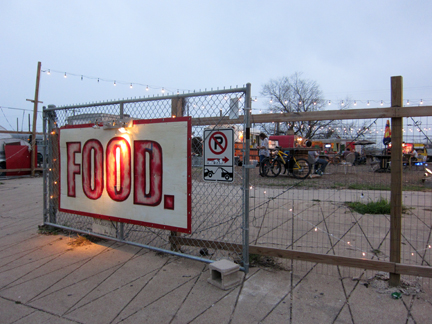
A few months ago, I visited the East Side Drive-In park (above) with liquid editor for our city’s paper of record, The Austin American-Statesman, Emma Janzen and her beau Zach Rose.

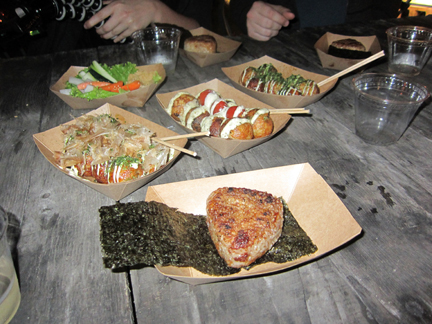
She posted this account of a wine tasting and pairing that I conducted for them.

What do loved balls and unicorns have to do with all of this? Watch the video and you’ll see…

Thanks again Emma and Zach! :)