Native American sparkler from Los Pilares

Taste with me this week in Texas (Dallas, Houston, San Antonio).
Click here for details.
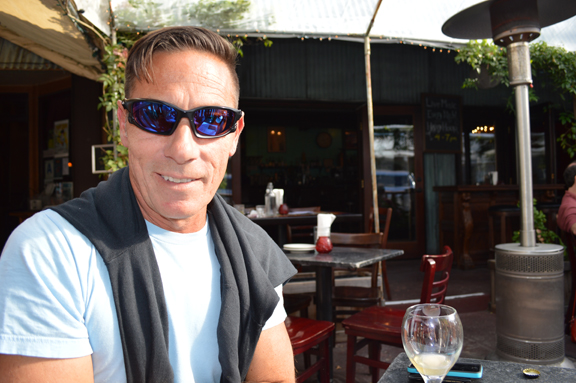
michael christian pilares san diegoIt’s always a treat for me to catch up and taste with Michael Christian (above), founder of Los Pilares in San Diego.

In 2012, the winery made a big splash on the American wine scene when top wine writers like Alice Feiring embraced it as the new voice of Southern Californian viticulture.

Until Michael began making wine in Southern California (where I grew up), consumption was almost entirely local and few bottles shipped beyond San Diego county. Today, Michael’s wines can be found as far north as San Francisco, where competition in the domestic market is fierce.
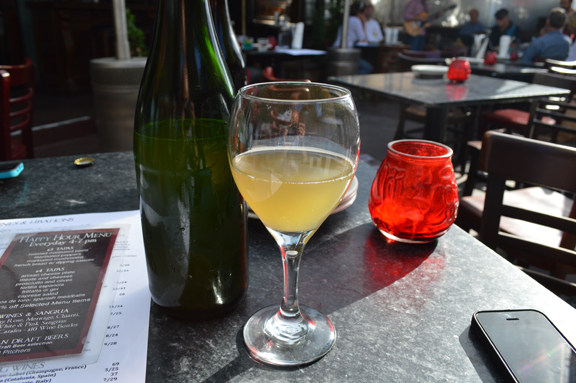
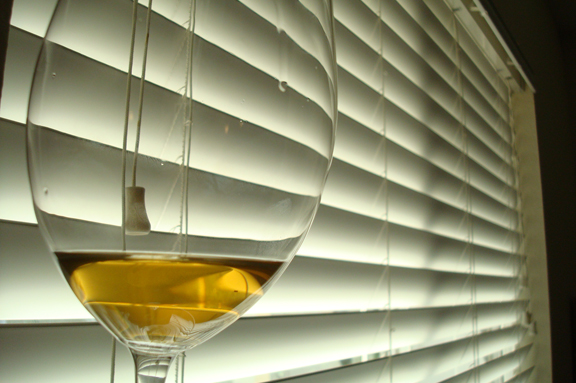
sparkling wine pilares ladonaWeekend before last, when I was visiting San Diego (my hometown), Michael reached out and asked if I’d like to taste his new wine, a méthode ancestrale made from Muscat Blanc grapes grown on the Rincon Indian Reservation in San Diego County, where the Rincon Band of Luiseño Indians live and thrive today.

There is a long tradition of growing Muscat Blanc in this far corner of the U.S. and he wanted to make a wine (a new one in his portfolio), he said, that would be an expression of historical viticulture there.

I liked the wine a lot. It was fresh and bright on the nose, with notes of herbs and dried stone fruit, and in the mouth it had a wonderful and delicate bitterness that offset the ripeness of the citrus notes. He said that some of the clusters had been crushed whole and he ascribed this balance to the fact that not all the fruit was destemmed.

There’s no doubt in my mind that this wine, when released, will become another hit among the Californian wine cognoscenti. The wine will be called Los Pilares LaDona 2013 San Diego County Sparkling Muscat, a homage to local radio personality LaDona Harvey.

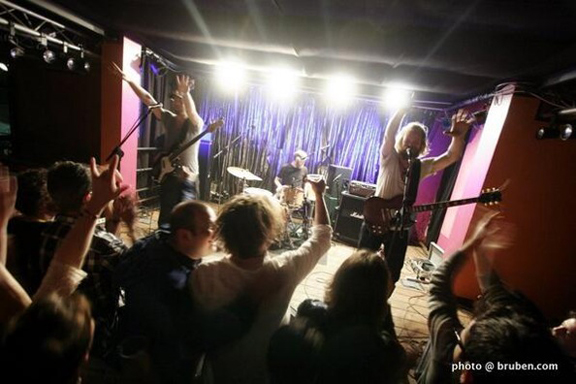
(That’s my older brother Tad, btw, in the background of the photo, playing guitar with his jazz quartet, Sounds like 4, at the Café-Bar Europa in Pacific Beach, where Michael and I met. They sounded great.)

pilares grenacheI also liked Michael’s new 2012 red, which is made from 100% Grenache. In that vintage, he had some issues with his Carignan, he said, and so this release is monovarietal.

As with the LaDona, the thing that struck me about this wine was its freshness on the nose. And in the mouth, the wine was vibrantly delicious, with notes of ripe dark red fruit and a wonderful lightness in body that made the wine very food friendly and very “drinkable,” as the Italians like to say.

I thoroughly enjoy Michael’s wines and I love that he’s spearheaded a new wave of Southern Californian viticulture. It’s taken too long for the wave of the “new Californian” wines to take root in San Diego, where a heavy metal approach to winemaking still prevails.

Thanks again, Michael, for the wine and for taking the time to connect.

May you feast on fat things full of marrow and wines on the lees well refined!

Taste with me this month in Texas & California @CanteleWines @SottoLA @CaptainWine

jeremy parzen canteleI’ll be pouring Cantele wines at Central Market locations in Dallas (Southlake) Weds. May 7, Houston Fri. May 9, and San Antonio Sat. May 10.

Please click here for details.

And I’ll be pouring some of my favorite Southern Italian and Californian rosés when Rory and I lead our rosati tasting at Sotto (where he and I co-author the wine list) in Los Angeles on Tues. May 20 (details to follow).

Buon weekend, yall!

New York USA America’s coolest wine city

dave foss wineAbove: Dave Foss uses the Coravin on a Cirelli 2011 amphora Cerasuolo d’Abruzzo at Joe Campanale’s Anfora. Depending on the guest, Dave gracefully and seamlessly switches gears from über wine nerd to “you like Cab? I’ve got just the thing for you.”

Some years ago now, when Milanese poet Luigi Ballerini (my dissertation advisor) invited me to contribute an Italian essay to his Perché New York? (Why New York?, Scritture, Piacenza, 2007), he asked me to write about city’s virtues as one of the great gastronomic destinations of the world.

I was eager to write something. But it was New York, a mecca for wine, that I wanted to describe. Luigi thought it was a great idea. And so I wrote about a legendary showdown between two of the most colorful characters in the Italian wine scene there (you’ll have to track down the book to find out who).

ed mcarthy wineAbove, from left: Ed McCarthy (the Studs Terkel of wine writing and one of America’s foremost experts on Champagne), Mary Ewing-Mulligan (the first woman in America to become a Master of Wine and leading US wine educator and writer), and Charles Scicolone (Italian wine maven and the man who taught me to love traditional Nebbiolo and Sangiovese). Ed treated us to 1995 Pol Roger Champagne Rosé on Monday night.

I lived between Brooklyn and Manhattan for ten years (1997-2007) and during that decade I watched the Italian wine scene explode there.

Between Nicola Marzovilla’s all-Italian list at I Trulli and Joe Bastianich’s all-Italian list at Babbo, both launched in the late 1990s, the New York restaurant scene provided the backdrop and epicenter for the Italian wine renaissance throughout the world.

And while Italian wines arguably made the biggest splash during my early years there, that period also saw an explosion of so many other wine categories that have been embraced by wine professionals and wine lovers across the U.S.

pascaline lepeltier wineAbove: on my trip to the City this week, I finally met Pascaline Lepeltier, one of the hippest sommeliers working in the U.S. today. She poured me the super groovy Champagne Bulles de comptoir by Charles Dufour.

Would San Diegans and Angelinos know Savennières and Anjou today if it weren’t for New Yorkers like grumpy Joe Dressner (may he rest in peace) and fiery Alice Feiring? (Alice, whom I met early on, became one of my most cherished mentors.)

As I hopped from tasting to tasting, wine shop to wine shop, wine bar to wine bar, and wine list to wine list on Monday and Tuesday, I fell in love with this wine city all over again.

Take me out, any evening, for wine in Rome, Paris, or London. They are among the great wine destinations in the world today.

But there’s just no place like New York USA.

Del Posto a night at the opera

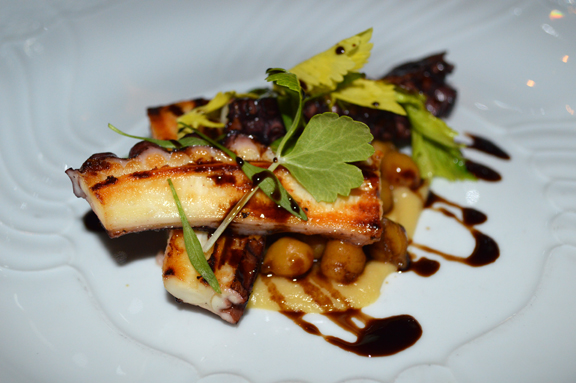
del posto octopus new yorkAbove: Charred Octopus with Umbrian garbanzo, celery hearts, and 25-year Aceto Balsamico Tradizionale.

Paolo, Adam, Zachary, and I had an epic night Tuesday at Del Posto in Manhattan.

From Jewish boy stomach to A.J. Liebling, to Lady Chatterley’s Lover, the conversation was as wild as the food and wine.

I posted images and notes (including our celebrity sighting) today over at the Boulder Wine Merchant blog

Thanks again, Paolo!

Cune Rioja a revelation for me

cune spain wineAbove: I was so fortunate to be invited to a fantastic vertical of Cune with Victor Urrutia Ybarra, who led one of the most thoughtful tastings I’ve attended this year.

Four cities, three time zones, one gig, and five days spent crisscrossing the U.S… I’ve tasted so many memorable and interesting wines — from Californian to French, Spanish, and Italian — over the last week.

But the experience that continues to urge in my mind was a vertical tasting of the wines of Cune, stretching back to 1962, with the winery’s director, Victor Urrutia Ybarra.

Because of my focus on Italian wines, I’m rarely invited to taste older and fully mature Spanish and I was thrilled that my friend and media consultant extraordinaire Donna White invited me to attend the intimate gathering in the wine cellar at The Fourth in Manhattan.

Victor, whose elegance is rivaled only by his thoughtful and earnest approach in presenting his family’s wines, led a small group of leading Manhattan wine professionals through three mini-verticals, covering the winery’s current releases, the 1980s, and 1970s. The oldest wine was the 1962 Viña Real Gran Reserva.

old wine corksAbove: none of the wines, which arrived from the winery’s cellar in Rioja, had been re-corked or reconditioned. The Fourth’s able sommelier Jhonel Faelnar did a superb job of serving the wines.

The freshness, vibrant fruit and acidity, and lithe yet muscular body of these wines were a revelation for me. In particular, the 1976 Imperial Gran Reserva struck me as an expression of the unbearable lightness that makes the great wines of the world stand apart from the rest.

And it was remarkable to see how little the style of the wines has changed over the arc of our lifetime.

Victor spoke about how his family hadn’t followed the bigger-bolder trend of Spanish wines that gripped the nation in the years of its eno-renaissance.

And as Master Sommelier Roger Dagorn observed, all of the wines — from the current releases to the oldest lot — had a wonderful “vinous” quality, a red thread that ran through them, illustrating their immense aging potential.

Even the 1962, which Victor felt had passed its prime, was delicious, with lovely, however delicate, notes of fruit and herbs.

But as much as I loved the 62, the 1981 Viña Real Gran Reserva and the 1976 Imperial Gran Reserva were standouts for me.

Thank you, Donna, for inviting me to this extraordinary event.

And thank you, Victor, for one of the most thoughtful tastings I’ve attended this year. I loved the wines.

It doesn’t get more orange than this #Georgia @AnforaNYC

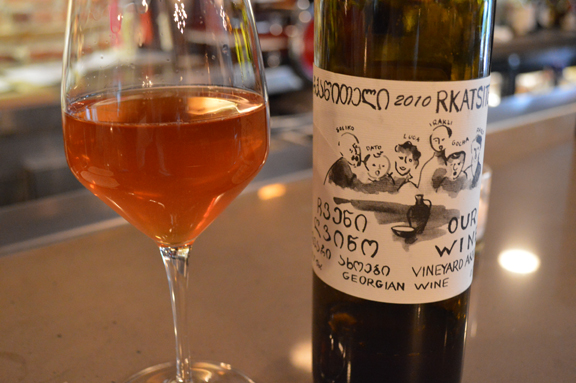
georgian orange winePosting in a hurry this morning as I head out from the Upper West Side to yet another meeting and another tasting.

But wanted to share this glass of Our Wine 2010 Rkatsiteli (Georgia) that I had as an aperitif yesterday early evening at one of my favorite wine bars in the city, Anfora (conceived by one of the coolest dudes in our business, Joe Campanale).

There’s probably no better place to drink amphora-vinified wines than Joe’s place.

Although intense (and maybe not for everyone), the wine was delicious and its oxidative note made it reminiscent of a Sherry, a perfect aperitif.

So much to tell and so many wines to share…

Is Czech wine the next big thing? @BrothersPontiak weigh in

pontiak italy musicThe following post is culled, verbatim, from an email sent to me by my friend Jennings Carney, bass player and one of the three Carney brothers in the über cool rock band Pontiak. He and I try to connect whenever our travels align and we’re always trading emails and notes on wines we like. He and his brothers are touring Europe right now (that’s them in the image above, at the their recent show in Turin; they’re really big in Italy, btw). I rarely publish guest posts here on the blog but I just had to share Jennings’s insights and exhilaration.

Yeah, totally dude. We just got done with a six show run through Czech Republic, Slovakia and Austria. Traveled through Burgundland and the land of Blau Frankisch, Riesling and Gruner among countless other crazy native red and white varietals that have such weird names and spellings in czech that I cannot even right them here. Nor pronounce them for that matter.

… To start though in Italy, after we left Conegliano we headed to Brescia where a very good friend of mine who is a sommelier (and who put on our first Italian show) came with three bottles: two white and one red. The whites were a sparkling white, wild fermented Spergola w/Moscato Giallo from Emilia-Romagna called L’Artiglio. Insane. It was the color of coors light! Revelatory, blue cheese and forest floor notes with good acidity and boy was it funky. So cool. The other white was a biodynamic Chardonnay from Jura in France with 0 sulfites added. Made by En Chalasse it was the best Chardonnay I have ever tasted. Ever. So good. So good. As for the red – I am drinking that tonight in Liepzig. It’s a very small run Amarone. And I’ll tell you all about it after the last drop.

As for the subject of the email – we went wine tasting in Southern Moravia after our show in Breclav (pronounced Bra-jitszlav) with a Pontiak fan who married into a winery called Hrdina & Dcera which roughly translates to Hero and Daughter (hero is the last name).

Continue reading

Great country music & tacos @JaynesGastroPub #SanDiego

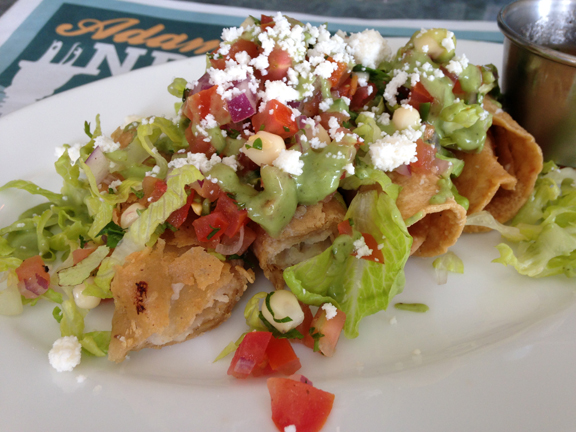
potato tacosAbove: Fried tacos stuffed with potato purée paired beautifully with the Tempier Bandol Rosé yesterday at Jaynes.

What a thrill for me to get to play the country jams with some of my best friends and country guitar great Dave Gleason yesterday at Jaynes Gastropub in San Diego.

With a weekend sandwiched between trips to LA and NYC, it made the most sense to stay over in Southern California and so Jaynes co-owner Jon scheduled an afternoon set for our Americana/country project, The Grapes (named after the legendary pub in Liverpool where the Beatles used to drink).

jeremy parzen musicAbove: that’s Dave next to me stage right. High school best friend John Yelenosky played his Les Paul Jr. and Jon Erickson played his Fender Jazz Bass.

Our set was part of the 2014 Adams Avenue Unplugged Festival, featuring live music along this bustling boulevard in San Diego’s university district.

aj croceAbove: I can’t reveal his name for contractual reasons but San Diego music insiders will recognize the celeb who sat in on keys with Dave’s band (foreground).

Music used to be such a big part of my life and it’s such a joy for me to get the chance to rock out with people I love.

The place was packed and our set was really well received, especially our cover of Tony Joe White’s “Polk Salad Annie.”

Dave’s set brought the house down. He’s such an incredible, expressive country player and the breadth of his tone is amazing. He has a b-bender on his Tele and the only effect he uses is the reverb in his Fender Deluxe amp. He’s the real deal: just a great guitar plugged directly into a great amp (he doesn’t even use a tuner).

sunset californiaAbove: they say it never rains in Southern California.

At the end of the day, I headed up north to reconnect with another high school best friend, Charlie. We popped some Bele Casel Prosecco and watched the sunset from the cliffs above the beach. Stunning…

Now I’ve got to get myself onboard an east-bound 747. See you on the other side…

Through a glass darkly: on critics, princes, and poets

cool wine photo

“G-d is dead,” wrote Nietzsche (The Gay Science 1882).

“The author is dead,” wrote Barthes (“The Death of the Author” 1967).

“G-d is dead, Marx is dead, and I don’t feel too good either,” wrote the students on the walls of the 1968 revolution in Europe (quoted by Ionesco in 1979).

In the demotic age of wine blogging, is the wine writer dead?

I really loved Eric “the Red” Asimov’s column this week on the nature of oenography, “A Wine Critic’s Realm Isn’t a Democracy.”

Calling himself not an “impartial arbiter” but rather “a guide,” he politely argues that personal preference is fundamental in wine writing.

The back story is that for many years, there’s been an ongoing behind-the-scenes feud between the editors of points-based publications and “narrative” wine writers, where the former hold that their evaluations are superior because they are the fruit of an empirical, impersonal system for critiquing wine.

I would take Eric’s argument a step further. Echoing the Gertrude Stein of The Autobiography of Alice B. Toklas, I contend that all writing is purely subjective — including point-based wine reviews. That is the nature of writing. And that is, above all, the nature of wine.

From St. Augustine, to Stein, to Barthes, to Derrida… critical theorists have considered the issues of subjectivity in discourse and perception for thousands of years. Who are we, now, to lay arrogant claim to a new and purely objective means of observation?

Why not embrace our humanity and our human shortcomings in wine writing?

After all, we see through a glass darkly.

I wrote about Eric’s piece yesterday for the Boulder Wine Merchant.

Also for your consideration…

My friend Katie Parla, a Rome-based food, wine, and travel writer, wrote this superb article for Punch on the Antinori-Boncompagni feud over the legacy of the Fiorano wines. In it, you’ll find an excerpt from my translation of an interview that Prince Boncompagni gave to Luigi Veronelli before he died. It’s a great piece.

Lastly, the most lyrical of wine bloggers, my friend Levi Dalton, delivered one of his most brilliant essays with his post this week for EaterNY, “As Wine Culture Gets Older, the Sommeliers Get Younger.”

Everyone in the trade has been talking about Levi’s insights into the evolution of wine connoisseurship in this country.

Buona lettura e buon weekend, yall. I’ve gotta hop on a plane…