Prosecco growers under fire in aftermath of tragic flash flood

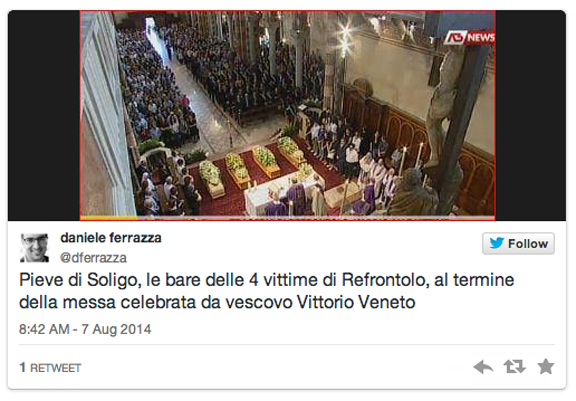
refrontolo funeralIt was heartbreaking to follow the funeral procession of the four victims of the tragic flash flood that occurred last Saturday evening in the heart of Proseccoland.

Yesterday, a number of social media users from the area posted images in quasi-realtime.

Even before the four men were laid to rest, local activists and politicians began to sling accusations at grape growers.

“The soils have been rendered more fragile,” said Paolo Spagna, president of the Veneto Order of Geologists, in an interview published by La Tribuna di Treviso earlier this week, “by the intensive actions of man, who, in order to grow his coveted Prosecco, intervenes massively with excavations to build new vineyards. The danger for those who live in the area has become a certainty.”

Giuseppe Della Colletta, who owns and runs La Cappuccina/L’Agreste, a farm and popular farmhouse tavern in the village of Refrontolo where the tragedy occurred, was also interviewed in the same article.

“We know all the poor men who lost their lives,” he said. “Saturday evening, I would have gone to the [Croda] watermill [where the flash flood took place] with my children. We have always known that our land is fragile. If you look at a document [preserved] in our parish, dated 1756, you’ll find that it talks about our area and calls it Livina granda, the great landslide. I honestly believe that the vineyards have nothing to do with it… We started to farm here in 1924 and we know that working here is not easy. The ‘crust’ of our land becomes sand under the hot sun and it slips on the hard clay that lies beneath. We know what to do to stop it. All you have to do is to look at our vineyards. True landslides? I’ve seen plenty at the watermill but I’ve also seen them in the woods.”

(Translations mine.)

When he says that he has seen landslides in the woods as well, Della Colletta is referring to the claims that deforestation is what led to the tragedy.

My wife Tracie and I have eaten at L’Agreste. I’ve shaken Mr. Della Colletta’s hand.

I can tell you as a matter of fact that the people who live there are acutely aware of the dangers of hillside life.

The steep slopes, formed by ancient melting glaciers, are part of what makes Prosecco’s topography unique.

It’s true that Prosecco has been overcropped by aggressively business-minded growers. But that’s not where the problem lies.

As I wrote in my own post earlier this week, citing Corriere della Sera wine writer Luciano Ferraro, heavy migration toward urban centers has left Proseccoland a deeply depressed area, where vineyard owners continue to get rich while unemployment continues to grow.

Since the 1990s — for more than twenty years now — I’ve frequented Proseccoland and I’ve watched as Prosecco has become one of the most lucrative appellations in the world and the overwhelming majority of residents has grown poorer and poorer.

There is a sense on the ground that “big business” Prosecco is to blame for this. But there is also a greater awareness that local infrastructure and government services have virtually abandoned the locals. I can tell you this from my own personal experience and my many ties to the community there.

The bottomline is that everyone knew that the Croda watermill was a dangerous place to gather during such a rainy season. But municipal authorities did nothing to stop the event or make the area safe for such gatherings.

Italian readers, please see this subsequent editorial by Luciano Ferraro. And see also this coverage by Slow Food.

Le fol amant du vin à Houston au Texas

Savennieres Chateau EpireWine-bar hopping with a colleague last night reminded me of what an awesome time it is to be a fol amant du vin in the Bayou City.

A visit to my favorite wine bar in town, Camerata, delivered 2004 Savennières by Chateau d’Epiré. We tend to drink classic Chenin Blanc too early in its evolution and I was so geeked to dive into the nutty, “stinky cheese” flavors of this groovy wine.

costa di la prosecco col fondoNext came the current vintages of Mauro Lorenzon’s Costa di là vineyard-designated Prosecco Col Fondo at Dolce Vita, where my good buddy Nathan Smith runs the show.

These wines, which tend toward the radical, polarized some of the other wine professionals who were sipping and munching there last night. The higher altitude wine showed better imho.

But more than anything else, I was stoked to see that these very funky wines are making it Texas.

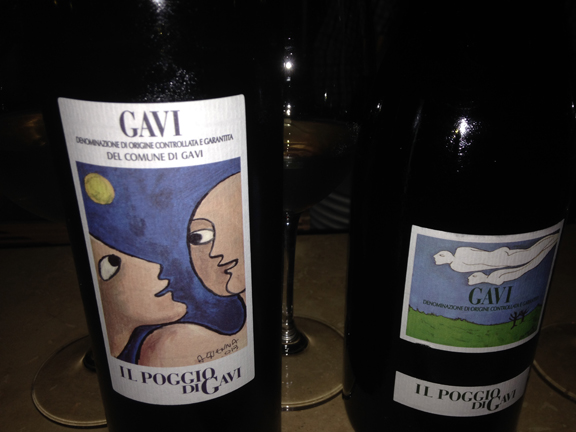
poggio di gaviNext, Nathan poured us these expression of Gavi by Poggio di Gavi, a winery I’d never tasted before.

I actually liked the entry-tier wine better: it was rounder and its fruit more present while the Gavi di Gavi was more angular and more mineral-driven. They were both excellent.

More and more, national importers are finding ways to get their wines to Texas and the number of small, independent Texas-based importers and distributors continues to expand. When I first got here back in 2008, the situation was much different.

In other Houston wine news…

Seven of the twenty-five Texas wine pros competing in the “best sommelier in Texas” event, to be held at the yearly frat party otherwise known as Texsom in Dallas this weekend, are Houstonians. I wrote a short post about them today for the Houston Press.

Panerai, Gambero Rosso’s purported “silent” partner & top winner of Tre Bicchieri awards

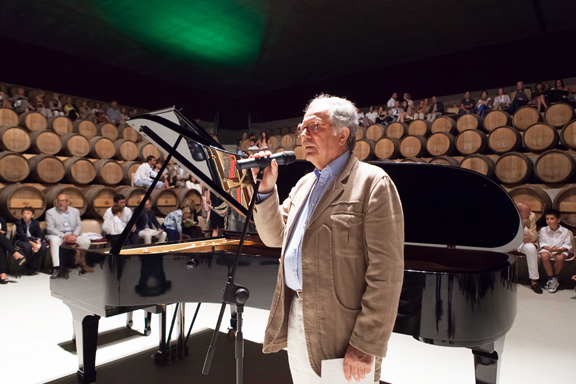
paolo paneraiAbove: publishing mogul Paolo Panerai at his Rocca di Frassinello winery in Tuscany earlier this year (image via Melodia del Vino’s Flickr, Creative Commons).

To this day, Italian publishing mogul Paolo Panerai — the “Bloomberg of Italy” — contends that he is not the owner of the Gambero Rosso, publisher of Italy’s most influential wine guide, including the coveted (and highly lucrative) “Tre Bicchieri” or “Three Glass” award.

In 2008, Gambero Rosso editor-in-chief and founder Stefano Bonilli (who died last week) was abruptly and wrongfully fired by the publication. In 2011, after winning a law suit that he brought against Gambero Rosso for wrongful termination, Bonilli revealed Panerai’s financial relationship with the publication in an interview with the Italian online magazine Il fatto quotidiano. As early as 2006, it had been rumored that Panerai had acquired the Gambero Rosso. Panerai, according to the 2011 article, denied that he was financially involved with the Gambero Rosso.

Even Daniele Cernilli, who took Bonilli’s position as editor-in-chief after Bonilli was fired, conceded in a subsequent interview that Panerai’s publishing group, Class Editori, had bailed out the masthead in 2006. Otherwise, he claimed ignorance, noting that — despite the fact that he was then editor-in-chief — he did not have knowledge of the masthead’s financial dealings.

In October 2013, in its preview of the 2014 Gambero Rosso Guide to the Wines of Italy, WineNews.it reported that Panerai’s winery group won more Tre Bicchieri awards than any other.

Angelo Gaja, whose family owns three of Italy’s most prestigious wineries, was awarded just one Tre Bicchieri award in the 2014 guide.

Italian readers should not miss honorary Slow Food president Roberto Burdese’s profile of Bonilli, published earlier this week by Il fatto quotidiano (Burdese writes that Bonilli was born in 1945 and thus was 69 when he died last week; mainstream media had previously reported that he was 67).

And for Italo- and Anglophones, be sure to watch this YouTube (below), also posted this week. In the short clip, Bonilli tells the story of the birth of the Gambero Rosso and the enogastronomic ethos of the time (the late 1980s) in Italy. He will be sorely missed.

Tragedy in Prosecco: flash floods senselessly claim four lives

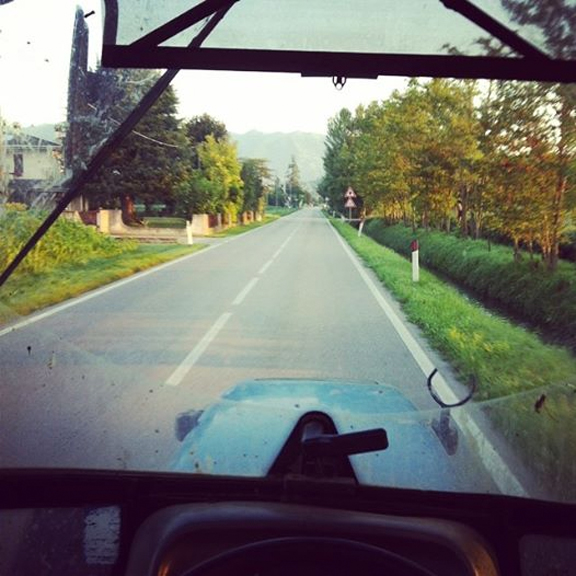
vineyard tractor italy proseccoAbove: a view from a Proseccoland tractor by my client, Prosecco grower and winemaker Luca Ferraro.

On Saturday night, four men lost their lives in the village of Refrontolo in the heart of Proseccoland.

While celebrating the “festa degli omeni” (“men’s fest”), an annual festival and dinner held at the picturesque Croda watermill, a group of roughly 100 persons was taken by surprise by a flash flood.

By all accounts in mainstream and virtual media, the festival had not been authorized by local officials and the site was known to be susceptible to flash flooding.

“We’ll remember July as the most rainy month of the year [2014],” wrote my client and Prosecco grower and winemaker Luca Ferraro in an email this morning. “It appears that 370 mm of rain fell [over the course of the month], with continuous rains that were interrupted by forty-eight hour intervals at the most.”

There were a number of flash floods in the area and in some cases, entire vineyards of Glera grapes (destined to become Prosecco) were washed away.

I wrote about the tragedy for Luca’s blog here.

The tragedy resonates deeply within me, in part because it happened in the part of Italy that I call “home.” I’m not Italian, of course, but I spent three summers playing music in pubs and beer halls in the area back in the 1990s when I was a graduate student at the University of Padua.

The flash-flood area spanned a stretch of vineyard-land marked by the townships of Refrontolo and Cison di Valmarino (Treviso province), where we held a reunion concert with my bandmates in April 2013. I have many friends there and many ties to the community (see the map on my post for Luca’s blog here).

One of the men who died was forty-eight years old and had just started a family. I didn’t know him but as a forty-seven-year-old father of a toddler and a one-year-old, my heart sank when I read his bio in the online edition of one of Treviso’s local papers.

Some have laid blame with Prosecco growers: deforestation and expansion of vineyard sites, they say, have made the area more prone to flash floods and mudslides.

But the fact of the matter is that this area is so depressed that its infrastructure has been virtually abandoned.

Yesterday on his blog, one of Italy’s most esteemed wine writers, Maurizio Gily, posted an op-ed in which he refutes the notion that vineyard expansion is to blame. The bottom line, he writes, is that the authorities should have banned events at the site. The rain has been intense over the last four weeks (as per Luca’s note above) and there had already been episodes of flooding at the watermill.

And on Saturday, Corriere della Sera wine writer Luciano Ferraro (no relation to Luca) posits that Italians’ migration to urban centers has left areas like Proseccoland with fewer resources to safeguard their hillside villages (you can read my excerpted translation of his piece here).

When I toured in the area with my cover band back in the 1990s, there were literally scores of pubs and beer halls for us to play. Today, they are nearly all gone (one of my favorites has become a strip club and another a brothel). The vibrant youth culture that I knew has vanished.

The news of the catastrophe really hits home for me (that’s a photo of me and Tracie at the Croda watermill in February 2011, about a month before she became pregnant with our first daughter Georgia).

Thanks for reading and for sharing my grief.

molinetto di croda refrontolo

Stefano Bonilli, founder of Gambero Rosso & inspiration to a generation, dies at 67 69

stefano bonilli mortoAcross the internet today, Italian food and wine bloggers are mourning the passing of Stefano Bonilli, founder of the popular food culture magazine Gambero Rosso and pioneering food writer and blogger.

According to mainstream reports, he was 67 (his friend and colleague, Luciano Pignataro, Neapolitan journalist and editor of one of Italy’s most popular food and wine blogs, writes that he was 69). The cause was a heart attack.

[A profile of Bonilli, published on August 4 by Il fatto quotidiano, reports that he was 69 at the time of his death.]

When he first published the “Gambero Rosso” as a supplement to the leftist newspaper Il Manifesto in 1986, Bonilli established a new category of food writing that would become a model for a generation of Italian gastronomes and food and wine writers.

As Pignataro writes today on his blog, “he was the child of a generation that made politics part of everyday life. His generation knew prosperity but also remembered hunger. Born right after the war, his generation questioned the very pillars of its own education as it dreamed of a better world for everyone.”

When he was abruptly fired by the then new owner of the Gambero Rosso masthead in 2008, Bonilli turned to virtual media and the blogosphere as the main outlets for his writing and causes.

When he founded his blog, Papero Giallo, in 2004, he was among the earliest mainstream food writers in Italy to embrace the new medium.

His online magazine devoted to Italian food culture, Gazzetta Gastronomica, was launched in 2011.

Since its founding, the Papero Giallo has been one of Italy’s most beloved and colorful food blogs.

It was rivaled in popularity by Bonilli’s Twitter, where he masterfully shared his insights and musings.

In his last Tweet, posted on June 29 (on the day of the festival of St. Peter and St. Paul, Rome’s patron saints), he wrote (translation mine):

desert and sun
city of Rome
St. Peter’s festival
the sea is far away
I drift home
reading in the shadows
I call to you via Twitter
an echo responds

At the time of his passing, Bonilli was in the process of organizing a food writers conference to be held in Bologna next month. It was billed as an international dialog on the “new food publishing.”

Myriad testimonials to his life and work, published today across the internet, are testament to his overarching legacy and the immense influence that he had a on a generation of food and wine writers and lovers.

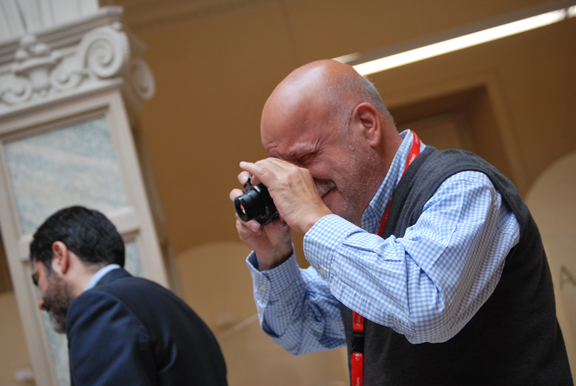
stefano bonilli gambero rosso deadImages via International Journalism Festival’s Flickr (Creative Commons).

Double-digit growth in exports says Franciacorta Consortium panel

best franciacorta“Exports grew by 17.4 percent with respect to the first half of 2013,” write the authors of a press release issued today by the Franciacorta Consortium, “resulting in an overall increase in the number of bottles sold of 12.6 percent.”

“Once again, Japan is the top foreign market for Franciacorta, followed by the United States, Switzerland, Germany, and Belgium. Growth continues in the United Kingdom where sales have grown notably (100.4 percent) thanks to marketing efforts that began there last year and heightened brand visibility.”

You can read my translation of the entire release over at the Barone Pizzini blog.

My post on Franciacorta yesterday here on Do Bianchi generated a lot of positive feedback. I am a huge fan of the wines and I’m thrilled to learn that the appellation continues to build its market presence abroad.

Thanks for reading. Buon weekend!

Image via FranciacortaBlog.com.

The “other” Roagna, a lovely Nebbiolo d’Alba by Roagna Igino

roagna igino barbera nebbioloThere are actually a handful of wine-producing estates named Roagna in Piedmont. But the one we all know is Roagna “I Paglieri,” producer of one of the greatest expressions (imho) of Barbaresco.

But of all the Roagna (pronounced roh-AHN-yah) who make wine in Piedmont, there’s a little and little-known farm run by the Igino Roagna family in the village of Priocca in Cuneo province (the male name Igino, ee-GEE-noh, is akin to Hyginus in English).

I can’t find any website or notice of the winery beyond its listing in the Cuneo chamber of commerce site.

But you can drink the wine in Houston. Some years back, my friend Houston Chronicle sports and wine writer Dale Robertson “discovered” the wine on a trip to Langa. After he introduced it to local importer Doug Skopp of Dionysus Imports (based in Houston), Doug picked up the wines.

As far as I know, Texas is the only state where you’ll find it.

best steak house houstonWhen Tony’s sommelier Scott Banks poured the Roagna Igino 2011 Nebbiolo d’Alba for me and cousin Marty during our birthday week earlier this month, I couldn’t help but think about how we often overlook this wonderfully approachable expression of my favorite red grape.

All too often, Barbaresco and Barolo elide our impressions of the grape’s more humble incarnations. And it’s a pity because young, fresh Nebbiolo — like this one — is so delightful at the dinner table.

It paired beautifully with aged steak and morels on a Tuesday night at Tony’s, the flagship restaurant of my good friend and client Tony Vallone.

The wine was lithe in the glass and its acidity and gentle touch of tannin danced marvelously with the rich steak and the earthy flavors of the mushrooms.

During my birthday week, I tasted current vintage of two of my all-time favorite wines, the 2008 Bartolo Mascarello Barolo and the 2010 Produttori del Barbaresco (classic) Barbaresco, each a legacy expression of Langa in its own right.

But the little-known Roagna Igino was just right for steak with cousin Marty on a Tuesday night. It was great to be reminded that Nebbiolo doesn’t need to be “the best” or “the greatest” to hit the spot.

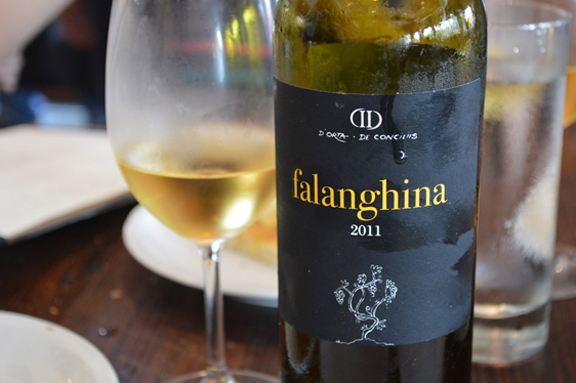
D’Orta-De Conciliis 2011 Falanghina SUPER! @ColtivareHTX

orta conciliisWhen I first spied a bottle of 2011 Falanaghina [sic] by “Conciliis” on the wine list at the hipster Italianate concept Coltivare in Houston’s Heights neighborhood last night, I was nonplussed.

Did Bruno de Conciliis make a Falanghina? I had never seen one.

Was this an old, tired vintage of Falanghina that had been forgotten or pawned off on an unwittingly wine buyer by an unscrupulous distributor?

I ordered it, of course.

With just enough skin contact to give it a deeper color and a gentle dose of oxidation, this wine sang in the glass, with notes of ripe stone fruit and fantastic minerality.

Our party loved it so much and the price was so good that we ordered a second bottle for our table of six. Fantastic wine, one of my favorites of 2014.

It turns out that the label is a joint biodynamic project shared by Bruno, his siblings, and his German-speaking cousin “Vinny.” So glad to see a lot like this in Houston.

I handicapped the wine list at Coltivare today for the Houston Press.

Franciacorta and the “C-word”

arcari danesi saten franciacortaOne of the great travesties of the Italian wine world is the way that Franciacorta has been incessantly compared to… no, I’m not going to use the C-word here.

Just Google “Italy’s answer to …” in quotes and you’ll find that a great number of the most revered English-language mastheads have published articles with this abhorrent title.

But I don’t blame their editors or contributors for this.

If there is blame to assign, it lies with those historically responsible for marketing Franciacorta in the U.S. and U.K.

Sadly, the powers-that-be have always positioned Franciacorta as a “luxury” brand akin to its more famous counterpart on the other side of the Alps.

The fact of the matter is that Franciacorta is radically different from its transalpine Doppelgänger.

And the main difference is the fact that Franciacorta growers can allow their grapes to ripen fully before harvest (in France, classic-method sparkling wines are made from underripe fruit that has been picked with overly high acidity and relatively low sugar).

Did you know, for example, that Franciacorta producers rarely need to provoke the first fermentation with the addition of cane sugar?

This is because the berries already have enough sugar to enable fermentation.

On the other side of the Alps, the practice is de rigueur.

The richer ripeness of the fruit expresses itself in even the most commercial Franciacorta bottlings, giving the wines greater depth of flavor.

But the thing that strikes me the most about Franciacorta (and we drink a lot of Franciacorta in our home) is its wonderful vinous character. The greatest expressions of Franciacorta, in my experience, share a kinship with my favorite still wines inasmuch as they have a wonderful food-friendly quality about them.

We drink a lot of French sparkling wine as well (made mostly from Pinot Noir). Bollinger Rosé — our all-time favorite — and rare steak, for example, has made for an unforgettable pairing at our dinner table. But the French astringency and more tannic nature often limits the breadth of dishes we’ll pair with the wines.

Great Franciacorta, made mostly from Chardonnay, tends to have a rounder and richer fruit component that makes it pair exceedingly well with a wider variety of savory dishes.

On the night of my birthday, when the B. Mascarello 2008 Barolo turned out to be too tight for pairing with the main dish, the Arcari-Danesi 2009 Satén, 100 percent Chardonnay, with its profound white fruit and gently nutty flavors, was ideal with Tracie P’s fried chicken.

It’s one of the wines that my close friend Giovanni Arcari and his partner have created without the use of any sugar whatsoever: they use frozen grape must, reserved at harvest, for the tirage and dosage of this wine (I wrote about their revolutionary method here).

I count many Frenchpeople as good friends. I play in a French rock band and have performed many times in France. I love Bollinger so much that my writing partners and I wrote a song about it.

But when it comes to talking about and enjoying my favorite expressions of Franciacorta, you’ll never hear me use the C-word.