Remembering our wedding day at Jaynes

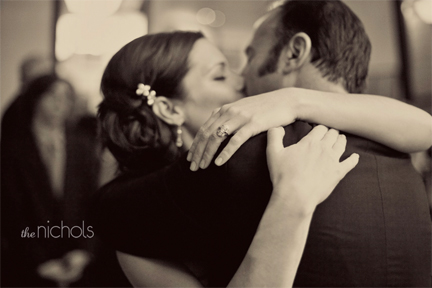
After picking up Tracie P at the airport (on what was a no less than “Top Gun” gorgeous San Diego day), we headed to Jaynes for dinner: we hadn’t been at Jaynes together since our wedding day in January and so it was so fun to remember all the great moments! Tracie P had a Campari and soda to start (possibly her fav cocktail).

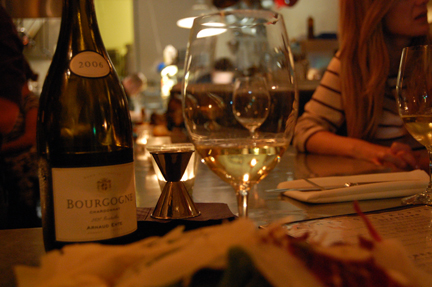
We opened some great bottles last night but one of the most fun was this bottle of 2006 Arnaud Ente Bourgogne Blanc, drinking so beautifully right now, a guilty-pleasure wine that Jayne and Jon carry on their menu and that we served, among others, at our wedding reception there. It’s one of those wines that prompts the question: why does new oak seem to work so perfectly in Burgundy when it fails so miserably in other wine-making regions we love? (With its wax seal, deep punt, and heavy glass, this wine has a very “naughty bottle” as Jancis Robinson might say.)

Thanks again, Jayne and Jon: you couldn’t have created a more perfect wedding reception for Tracie P and me.

And thank you Tracie P, for being such a beautiful bride, such a loving wife, and such a gorgeous and generous soul. What a wonderful memory and what an amazing day that was. You couldn’t make this adoptive Texas boy more happy. I love you…

Happy mother’s day, ya’ll!

Slinging and hauling wine in San Diego today

Been slinging and hauling wine today in San Diego, getting ready for the tasting tomorrow at Jaynes. Tracie P will be here in a few hours and everything’ll be set and I’ll take her for an evening on the town. :-)

In the meantime, I’m sure the folks back home would have approved of the song I taught the band when we took a little break this afternoon for some music. After all, it’s kinda my story ain’t it? ;-)

I was born in lousiana down on the ol bouyo
rasied on shrimps and catfish mame’s good gumbo
I got the ramblin’ fever said goodby to ma and pa
crossed that ol red river and this is what I saw

I saw miles and miles of texas all the stars up in the sky
I saw miles and miles of texas gonna live here till I die

(instrumental)

I rode up in to austin the craddle of the west
just ask any cowboy he’ll tell you it’s the best
I met a texas bueaty I got friendly with her pa
I looked in to her big blue eyes this is what I saw

I saw miles and miles of texas all the stars up in the sky
I saw miles and miles of texas gonna live here till I die

(instrumental)

I started tamin’ bronko’s I made every rodeo
until I met a tuff one you know his name was devil joe
I grabb’d hold of his bridle just to ride this ol’ outlaw
he threw me from the saddle and this is what I saw

I saw miles and miles of texas all the stars up in the sky
I saw miles and miles of texas gonna live here till I die

A new Paolo Bea is born!

and I mean that quite literally…

giampiero bea

At last night’s sold-out Paolo Bea dinner at Catalan in Houston (with more than 50 lucky souls in attendance), Giampiero Bea shared a photo of his six-month-old son Paolo using his mobile device. However natural the wines, when the winemaker is on the road, away from his newborn, technology sure is good for something, ain’t it? ;-)

Mazel tov to Giampiero and his family!

I’m also on the road today and so am posting in a hurry today but I had a fascinating conversation with Giampiero last night over dinner. You might be surprised by what he had to say about the role of technology in the production of natural wine. Stay tuned…

And this just in from the semiotics department…

A wine label is a text.

I was thrilled with the response to yesterday’s post on Italian winery designations. Thank you, everyone, for reading and sharing. I plan to expand the post, using the many queries and suggestions I received. Next week I’ll also try to do an initial post on vineyard designations and their meanings (bricco, surì, ronco, vigneto, vigna, et cetera), dialectal and otherwise.

And lastly, just had to share this…

Jeremy Parzen

Tracie P and I caught Jim Stringer’s set at Ginny’s Little Longhorn Saloon in Austin on Tuesday night. Man, that cat can sure play him some geetar.

A note on Italian winery designations: azienda, cascina, fattoria, podere, et cetera

This post originally went live on May 5. Please continue to send me your suggestions, queries, corrections by leaving comments below. Most recently added: ca’, cantina, casa, vignaiolo (May 18).
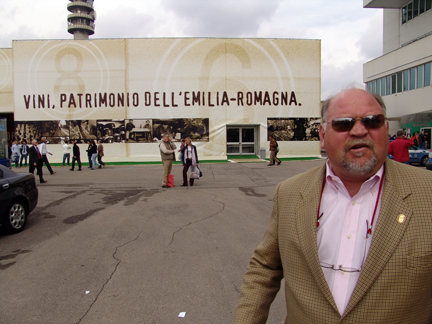
Yesterday, while I was attending a tasting with one of the leading wine professionals in the country, Texan Master Sommelier Guy Stout (above, at Vinitaly), he asked about the meaning and origin of the term podere. Guy is a true mensch, a wonderful character, and a beloved figure in the Texas and U.S. wine scene. He has mentored a generation (literally) of wine professionals studying for their Master Sommelier exams. Getting to taste with him is always a pleasure and an enlightening experience. A lot of people ask me to explain the meanings and origins of Italian winery designations. So I decided to write a hand-list of terms used commonly in the names of wineries in Italy. I hope it will be helpful to Master Sommelier candidate and anyone who shares my passion for Italian wine. I’ve included etymologies (studies of their origins) because believe that the etymon (origin) helps to shed light on the meanings of the designations. This post is dedicated fondly to Guy. (Photos by Alfonso Cevola, his friend and colleague.)

azienda, landed property, estate, domestic work, from the Spanish hacienda, from the Latin facienda meaning things to be done from facere, to do.

The term azienda means business and is used to denote a company or firm in Italian. An azienda agricola is a farming business; an azienda vinicola is a winery (a wine business).

ca’, see entry for casa.

cantina, literally cellar or cool place to store perishable goods and by extension tavern, probably from the Italian canto meaning angle or corner from the Greek kampthos, bend or angle.

The word cantina has a wide variety of applications in Italy (often used for restaurants and food stores, as well as wineries) and can be found across Italy to denote wine cellar.

casa, literally, a building, house, or habitation, from the Latin casa, a small house, cottage, hut, cabin, shed.

The term casa is used throughout Italy as a winery designation and is often abbreviated as ca’, as in Ca’ del Bosco (it’s important to note that it’s often erroneously abbreviated as Cà [using the accent grave diacritic], when in fact the inverted comma [‘] denotes the elision of the final two letters, often derived from a dialectal locution). A casa vinicola (pronounced KAH-sah vee-NEE-koh-lah) is a winery/négociant.

cascina, farm house or other structure used to house livestock or farm tools, from the late Latin capsia meaning case or receptacle.

It can also denote a structure used to store cheese and other dairy products. The term is used primarily northern Italy and especially in Piedmont to denote a farmhouse or winery or dairy farm.

fattoria, farm, from the Latin factore, literally maker, from facere meaning to do.

You find usage of fattoria generally in Tuscany where it can denote a winery or a farm, keeping in mind that most wine-producing estates in Tuscany also grow olives and other crops.

Guy Stout

podere, country estate with farm house (according to the Zingarelli dictionary), akin to the Italian potere, meaning can or to have the ability to do, from the late Latin, potere, from the Latin possum, meaning to be able, have power.

The term is used today primarily in Tuscany where it denotes, literally, a seat of [agricultural] power, hence the late Latin origin of the word, potere, literally power or possession (who also share kinship with the Latin etymon). According to the Cortelazzo etymological dictionary, the word first appears in the Middle Ages in northern Italy.

poggio, hill, from the Latin podium, meaning an elevated place, a height.

As Virgil wrote famously, Bacchus amat colles, Bacchus loves hills. The usage of poggio in Tuscany is documented dating back to the thirteenth century and the term appears in Dante. There are many related words like poggiolo, poggiuolo, and in the case of one of my favorite wineries, poggione. Guy and I were tasting yesterday with the nice folks from Banfi: Poggio alle Mura and Poggio all’Oro (the hill at the village walls and the gold hill, respectively) were among the wines in the flight.

ronco, literally a growing site on a hill used for farming, from the Latin runco, meaning to weed out, root up; to weed, clear of weeds, akin to the Friulian dialectal term ronc.

To my knowledge, ronco is used exclusively in Friuli. Akin to the Italian roncola or pruning hook, it probably comes from the past participle of the Friulian runcar (to clear of weeds, runcà, in other words, a site cleared for planting.

tenuta, a [land] holding or property, past participle of the Italian tenere, from the Latin teneo, meaning to hold, have, or keep.

Tenuta is a term that you see applied across northern and central Italy. Its relation to the pre-industrial age, when land ownership denoted nobility, is clear.

vignaiolo (plural vignaioli), vine tender or grape grower, derived from the Italian vigna, meaning vine, from the Latin vinea, vineyard, from the Latin vinum, wine.

Pronounced VEEN-y’eye-OH-loh (plural VEEN-y’eye-OH-lee), vignaiolo is used to denote a winery that uses estate-grown fruit in the production of its wines.

I hope this post is helpful to wine professionals and laypersons alike! If I forgot a term and/or if you have other terms you’d like me to write about and explain, please leave a comment. Thanks for reading!

The monkey drinks the wine and gets dessert.

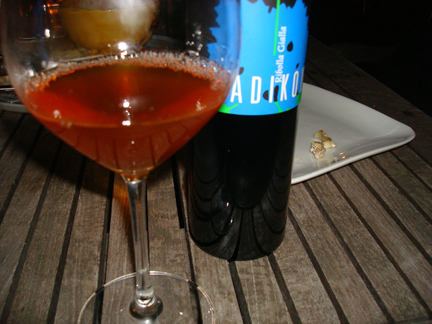
Above: I FINALLY got to taste one of the Cornelissen wines from Mt. Aetna in the home of total strangers, the lovely Lars and Kelly of Chicago, the other night! That’s the Susucaru, a field blend, as it were, of red and white grapes. Utterly delicious… Bibulously Yours brought that bottle.

Your probably wondering about the title of today’s post. It comes from a promise. A promise made in Chicago to Lars and Kelly’s sleeping twins.

I promised them that I would use their translation of the anisette poster (left) that resides in their bathroom as the title of this post: “The monkey drinks the wine and gets dessert.” As an accomplished translator of Italian with a doctorate in Italian and a few university press titles under my belt, I wholly endorse their rendering of the text into English.
Let me explain.

You see, wine blogging — despite all of the haters’s attempts to ruin it for everyone else — is really about bringing like-minded, nice folks together. And that’s exactly what happened the other day when Bibulously Yours (a Chicago wine blogger and wine lover whom I’d never met and with whom I trade emails and notes occasionally) wrote me the other day saying, “Welcome [to Chicago], and congrats on the new gig. Hope you’re having a nice trip. I’m sure you’re busy with work, but please let me know if you have any spare time while you’re here. I would love to meet up for a drink.”

Above: 1998 Valpolicella by Quintarelli. Lars got it on a close out and it showed splendidly. Do you ever say no to Quintarelli?

Since Bibulously’s son was ill that evening, we ended up in the home of his lovely friends Lars and Kelly who so graciously invited me to their home and so generously opened fantastic bottles of wine for me to taste with them. As it turns out, Lars and Kelly and I have a great deal in common since we have all been involved in the indy music scene and Lars even saw my old band play once in Detroit!

Above: This 500 ml bottle of 2002 Radikon Ribolla was opened at what might have been the perfect moment in its evolution, although I would guess it still has many years ahead of it. Brilliant wine. Simply brilliant.

Honestly, I was so thrashed from 3 days of eating way too much food and way too many tastings and meetings that I was entirely stoked to just hang out with the coolest folks, drink awesome wine, nibble on cheese and salame, and just shoot the shit and laugh my ass off.

As Anthony said the other day, I wish folks would stop drinking the “hatorade.” THIS IS WHAT WINE BLOGGING SHOULD BE ABOUT. Sharing wines, sharing experiences, learning and giving, having fun, and fueling our curiosity and minds with interesting wines and enriching our hearts with generosity and kindness.

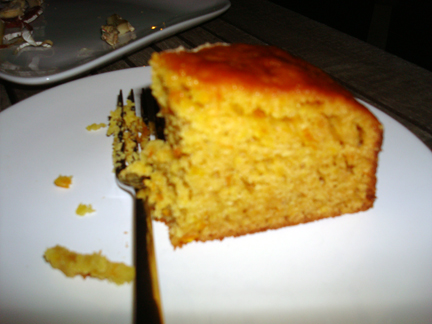
Above: Bibulously’s wife stayed home with their kid. But she sent over this excellent savory cake. She said “the cake was plain and simple,” Bibulously wrote me the day after, “olive oil and preserved oranges.” It was off-the-charts delicious.

Everyone who knows me knows that I rarely eat desert. I was chubby as a kid and so I only eat desert when I REALLY LOVE it.

That night in Chicago, the monkey drank the wine and he got desert, too!

Thanks again, Nathan, Lars, and Kelly. You guys R O C K! And thanks for reminding me what it’s all about

Tasted: Gaja 64, 78, 89, 97, 00, 04

barbaresco

Above: An enviable flight, if I do say so myself. The 64 was simply stunning and the 89 gorgeous.

As a good friend and admired colleague of mine says, “whether you like the wines or not, tasting Gaja is always an interesting experience.”

Over the weekend, I had the opportunity to attend an impressive tasting with Gaia Gaja, who was also in Chicago (it was a trade tasting organized by her importer and I managed to snag a spot, the fly on the wall, so to speak).

I’ve actually tasted quite a bit of Gaja recently: the Barbera 7 and I visited Gaja while were in Piedmont in March (Fredric recently published his account of our visit over at Palate Press.)

barbaresco

Above: It was remarkable to see the evolution of the Gaja brand, the labels, and the transformation of bottle shape. From a classic Albese interpretation of the Burgundian bottle shape to a Burgundian bottle with a Bordeaux neck to accommodate a longer cork. Note also the slight changes in color and composition of the labels.

I’m writing in a hurry today because traveling and will write more on what I learned about Gaja the brand and my visit with Gaia the lady in future. And I think that some of you will be surprised by what I learned. I know I was surprised.

In the meantime, here are some quick tasting and winemaking notes.

Barbaresco 1964

“Longer fermentation and maceration” during this period in the winery’s history. Two to three weeks maceration and some slight oxidation because of winemaking practices at the time that gave the wine an orange hint early on. The winery had not implemented its current vineyard management (green harvest and “short pruning”) and the grapes were picked all at once, resulting in some of the fruit not being entirely ripe.

Drinking old Nebbiolo is not for everyone and so some might have disagreed with my take on the wine but I was completely blown away by how good and how alive this wine (older than me) was. Gorgeous brick and orange color, unbelievably seductive tar and earth on the nose, solid acidity and gentle, noble red fruit in the mouth. The mouthfeel of the wine was truly divine.

1978 Barbaresco

The last year with the short cork and the first year that Gaja began to age in barrique The winery had also begun to employ a green harvest at this point, although not “systematically” at this early stage. I’d actually tasted this wine before, a few years ago in NYC: I think this bottle might have been “off,” because it didn’t show as well as I had expected. It had a strong, menthol and Eucalyptus nose and it took a while for the fruit to emerge after I revisited it during the hour or so we spent tasted (the wines had been opened a few hours before the tasting but not decanted). It was almost Baroloesque in its power and showed some spicy notes in the mouth.

Barbaresco 1989

This wine was pure beauty. Great (in my opinion one of the top 3 of my lifetime) vintage, classic and balanced, with “four seasons,” so to speak. Incredible bottle of wine, showing beautifully, and with many, many more years ahead of it. This was one of Italy’s great producers at its best. An incredible elegant lightness and beauty and simultaneous power and tannic structure — the seemingly contradictory essence of Barbaresco, an experience that always brings equine metaphors to mind. Gaia told a great story about this wine. At the end of a school year spent abroad to learn English and studying acting (!) among other interests in San Francisco, she tasted this wine in 2004 at a family friend’s dinner party. “I could smell the perfume of my house in this wine,” she said and so she decided, after all, to return home and rejoin her family’s business. A truly life-changing wine, in her case.

Barbaresco 1997

I wasn’t expecting to like this vintage but was really impressed by its drinkability and its balance. “The heat of the vintage shows” but the wine is drinking fantastically well at this moment. It has begun to attain that orange hue of old Nebbiolo and I won’t conceal that I didn’t spit this wine. I thought it showed beautifully. Of all the wines we tasted, this would have been the one I would have most liked to have enjoyed at dinner (while the 89 and 64, my favorites, would have been special occasion wines, meditation wines). Drink it now if you got it.

Barbaresco 2000

This wine is going through a very closed phase of its evolution, very tannic and very tight as we say in our parlance. Like 1997, this was a very warm vintage and I was actually surprised by how reluctant the wine was to reveal its fruit. I really wish I would have had more time with this wine but the time constraints of this tasting (a trade tasting) didn’t allow me to revisit it.

Barbaresco 2004

I’ve tasted this wine on numerous occasions and you’d be surprised by the name of at least one wine writer who revealed very publicly that he enjoyed this wine in a blind tasting. The wine is still very young and very tannic but you can easily imagine the balance that it is going to reveal with aging. As we look back at 2004 with a few years distance, it’s becoming clearer and clearer that the vintage is very similar to 1989, very balanced, very classic, and with extreme promise. If I could afford to buy Gaja, this is the wine I’d put in my cellar for long-term aging. A good bet if you’re the betting type.

barbaresco

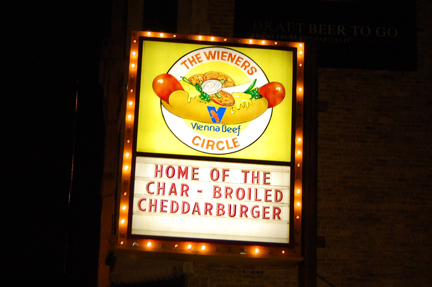
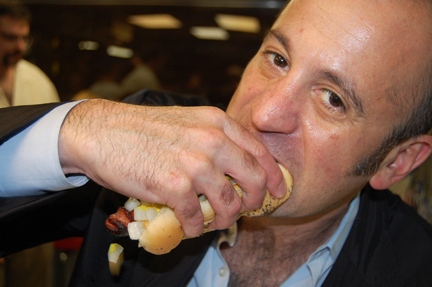
Above: Gaia and I had a charbroiled cheddardog at Wieners Circle.

After I told Gaia and another a colleague about my adventure at the Wiener Circle (where the proprietors famously berate their customers), our colleague mentioned that Robert Parker had listed it one year as one of his “top ten meals” of the year, she expressed her desire to taste a Chicago red hot.

Impossible wine pairing? Gaja and Chicago red hot? I don’t think I’m gonna touch that one!

barbaresco

Thanks again, Gaia, for inviting me to such an incredible tasting! And thanks for the cheddardog!

The wine world mourns the loss of Alfredo Currado, one the “great elders” of Langa

Above: Alfredo Currado (left) and Bartolo Mascarello. Photo courtesy Weimax.

My friend Michele Scicolone sent me a Facebook message yesterday to let me know that one of the most beloved figures of Italian wine, Alfredo Currado, has sadly passed away. He will be remembered for his “pioneering” work in crafting cru Barolo and Barbaresco, for his revival of Arneis, his winery’s single-vineyard expressions of Barbera, and his legacy as a true humanist winemaker. Mr. Franco Ziliani and I have published an obituary this morning at VinoWire.

More on Produttori del Barbaresco’s decision not to bottle their 2006 crus

Thor, a wine writer and blogger whom I greatly admire and an all-around mensch, wrote the other day to winemaker Aldo Vacca (left) inquiring about his decision not to bottle his 2006 crus. Thor was kind enough to share Aldo’s response and Aldo was kind enough to allow me to post it here.

Technical reason: 2006 is a very good vintage, but warm and ripe, lacking a little bit of the finesse and complexity to make a truly great S[ingle]V[ineyard wine] and yet preserve excellent quality in the regular bottling. We think 2005, lighter in body, has more fruit and balance, at least in Barbaresco and at least for Produttori.

Marketing: with the current economy we thought it more appropriate to produce a larger quantity of solid, extremely good 2006 Barbaresco avoiding a flooding of the market with too many SV wines, since 2007, 2008, 2009 will all be produced. Had 2007 or 2008 been bad vintages, we would have released 2006 SV, but since we have so many great ones, we felt we could skip one and stay on the safe side of the fence.

—Aldo Vacca

Joe Dressner and I have made our peace

I don’t know why but eating dinner at the Wieners Circle in Chicago made me feel at piece with my sometimes antagonist Joe Dressner.

I don’t know if he’s ever been there (he’s from Long Island, from what I understand) but I’m sure he would love it.

It’s one of those sine qua non Chicago places. (There are men who know what sine qua non means and others who have to look it up.)

Seriously, the truly lovey ladies at Wieners Circle are SUPER NICE ladies and we had so much fun talking last night after they served me up a killer charbroiled cheddardog with all the Chicago fixins after me and Pat grabbed a beer by Wrigley Field. Highly recommended for peacemaking. Man, Obama, you listening? These ladies could make peace in the Middle East, they are SO FINE!