A bygone wine: 1991 Chianti Montalbano by Capezzana

capezzana

Tuesday morning finds me on the road and on a secret mission, ferrying precious cargo, and so I cannot reveal my location. But I can share my impressions of one of the most amazing wines I’ve tasted in a long time, a truly bygone bottle (to borrow Eric’s phrase from his bygone blog The Pour, requiescat in pace): 1991 Chianti Montalbano by Capezzana.

The Montalbano subzone of Chianti is one of the growing areas that enjoyed great celebrity in a bygone era, eclipsing the fame of appellations that enjoy household brand status today (like Chianti Classico and Brunello di Montalcino). On another day, when I have more time and access to my library at home, I’ll have to look up what Edmondo de Amicis said famously of this appellation, which, according to legend, he enjoyed immensely despite his abstinence.

Today, only a handful of wineries produce Chianti Montalbano and I don’t have time to figure out when the regal Capezzana estate, famed producer of Carmignano, bottled its last Montalbano.

The 1991 harvest was a good although not great vintage in Tuscany but this wine was very, very much alive, with bright fruit and acidity. Old-school Sangiovese, probably with a kiss of Canaiolo to lend some color and mouthfeel.

capezzana

My companions and I expected it to “fall away,” shortly after being opened but over the roughly 45 minutes it took us to consume the bottle, it remained vibrant and beautiful — one of the greatest wines I’ve tasted in some time (and I must say that I have the good fortune to taste a lot of good ones!).

To anyone who can share info about this bottle, please do so!

In other news…

I’m writing in hurry today because on the road but I’m happy to report that one of the upshots of the current volcanic crisis in Europe is that American wine professionals and European winemakers alike are stuck in Europe. As a result, I’m hearing reports that lots of folks are getting together to taste and to visit wineries. When life gives you lemons, the saying goes…

More later… and thanks for reading…

More chestnut-flour polenta and pork facial glands

polenta

Wow, thanks, everyone, for all the wonderful comments and emails about yesterday’s post on dinner in the home of the lovely Bindocci family in Sant’Angelo in Colle (Montalcino, Siena). I thought I’d post a few more photos from the dinner. And thanks, especially, to Stefania and Fabrizio, who so graciously welcomed us into their home. That’s Stefania, above, slicing the chestnut-flour polenta with a string.

polenta

The incredible sensual experience of the chestnut-flour polenta is its combination of its sweet, chestnut flavor combined with its inimitable texture. The night we were invited, Fabrizio’s niece was there with her husband. They had just returned from Libya, where they had been living (they’re agricultural engineers and they work to create sustainable farming in the third world). To celebrate their return, Stefania had created this traditional Mt. Amiata menu (she was born in the mountains, while Fabrizio was born on the Orcia River Valley floor).

polenta

@BrooklynGuy the delicate but firm-to-the-bite texture of the pork facial glands (almost like candy), which have imparted their flavor to their cooking liquid, combined with the pillowy softness of the polenta was an unforgettable sensorial event in our mouths. The porousness of the polenta proved an ideal receptacle and medium for the rich jus of the offal. The two worked in concert, in a dynamic dialectic that rewarded the senses with its seamless ingenuity.

polenta

In another era, the slaughter of a pig was an important event in the familial and societal rhythm of life. While most of the pork was “put up,” as they say here in Texas, in the form of cured thigh and sausage, the offal was consumed in celebration of the good fortune of avere le bestie, as they say in Italian, of having beasts (i.e., livestock) on your estate. One of the coolest things about Il Poggione is that it is a working, integrated farm, where livestock is raised and sent to pasture in fields adjacent to the vineyards and olive groves. The integrated approach, says Fabrizio, is an important element in creating the terroir-driven wines for which their winery is so famous. We paired the 2006 “owner-selection” Rosso di Montalcino with the chesnut-flour polenta and pork facial glands (we served the 07 Rosso di Montalcino by Il Poggione at our wedding reception).

polenta

Some of the most memorable meals I’ve had in Tuscany have been centered around pig and boar liver. It’s so important to experience the wines of Montalcino (and Sangiovese in general) in the context of food and pairing. The 2001 Brunello by Il Poggione was such a fantastic wine — a great vintage from a great producer. But the greatest treat was to taste it in the context and flavor “economy” of traditional pairings. The tannin, red fruit, and acidity of Il Poggione’s Brunello, paired with nearly impenetrable richness and deep flavor of the liver, assumed a new ontographical significance, by which, I mean our ability to describe the nature and essence of things.

We ate liver again on the next day of our trip in Bologna… and there was an important reason for that. More on that later…

Please stay tuned and thanks, again, for reading and for the thoughtful comments… :-)

Suckling and Soldera on the Tuscan wine scandals

case basse

Above: One of the great maestri of Brunello Gianfranco Soldera and I tasted his wines together in September 2008 at his winery Case Basse in Montalcino (before Tracie B convinced me to go back to my au naturel hair style!). Photo by Ben Shapiro.

In an hour-long documentary on the Orcia River Valley, recently aired on the national-television Sunday show Linea Verde (it’s worth watching the show, even if you don’t understand Italian, if only for the cinematic beauty of the Val d’Orcia), the presenter asked Brunello maestro Gianfranco Soldera to share his impressions of the recent controversy in Montalcino regarding producers who allegedly added disallowed grape varieties to their Brunello (which, by law, must be made with 100% Sangiovese grapes).

“Luckily,” Soldera said, “the [Italian] treasury, the magistrate, and the anti-adulteration department did a great job in their investigation and they found some big problems. Millions of liters of wine were declassified in order to protect consumers and those producers who have always used only Sangiovese, as required by law, because this is what needed to be done.” Even though the quantity of wine declassified was significant, he noted, “only a handful of wineries” were implicated in the investigation. (The segment on Soldera appears at the end of the show and it is the only occasion that I know where the general public has been allowed to view Soldera’s “secret garden.” Definitely worth viewing.)

wine spectator

Above: The clairvoyant Swami shared his wine predictions for 2010, including a real whopper for Tuscany.

A week or so earlier, one of America’s premier wine writers, a world-renowned expert on Italian wine, and a resident and champion of Tuscany and its wines, the inimitable James Suckling published his predictions for the year in wine 2010 on his blog, including, this ominous premonition for Tuscany: “Tuscany will be embroiled in another wine witch hunt with the magistrate of Siena along the lines of a similar debacle in Montalcino over the past two years.”

This morning, I couldn’t help but share Franco’s indignation at Suckling’s admittedly “less than earth-shattering” prediction, expressed in a post entitled, American Wine Writers: Luckily they’re not all like James Suckling.

However ugly the recent controversy in Tuscany, it “needed to be done,” as Soldera pointed out. Everyone I’ve spoken to there (except for those implicated in the investigation) seems to share Soldera’s opinion.

Of all the things to predict for Tuscany in 2010 (eclipsing the rest of Italy, btw), how about something like this?

1) The Val d’Orcia DOC will emerge as one of the coolest new expressions of Sangiovese.

2) Tastings of the 2007 harvest will reveal that Tuscany was blessed with one of the better vintages in recent memory.

3) The high-cost of barrique and the emerging trend against oak-laden, concentrated wines will lead more and more producers to make traditional-style wines using large-cask aging and less manipulation in the cellar.

4) Thanks to more flexibility in labeling, the recently implemented EU Common Market Organisation reforms will allow Tuscan producers to regionally “brand” their international-style wines without encroaching on the Brunello and Chianti de facto trademarks.

5) Tracie B and Jeremy P will win the lottery and finally be able to move into the Ripa d’Orcia castle as their “vacation home.” (There are some beautiful shots of the castle in the Linea Verde show, btw.)

Thanks for reading. Tracie B and I will soon be heading to Montalcino on our honeymoon, where we’ll have our “nose in a glass” and our “ears to the ground.” Stay tuned…

Mikey likes it: Brunello 2004 by Il Poggione

From the “on any given Sunday” department…

poggione

Above: Just to be on the safeside, we opened 2004 Brunello di Montalcino by Il Poggione last night at Trio in Austin. Photos by Tracie B.

Tracie B and I were both concerned when, the other day, we read that the 2004 Brunello di Montalcino by Il Poggione had been eliminated from the top-ten wines in The New York Times recent blind tasting panel of 04 Brunello.

Blind tasting can be such a tricky business and in many ways, it removes wine from the terrestrial context in which we consume it (and the way it was intended to be consumed). In blind tasting, our experience becomes metaphysical, in other words, beyond the physical inasmuch as it treats wine as an abstraction. The intention is noble: blind tasting is intended to remove as many “extraneous” variables as possible and force the taster(s) to evaluate the wine purely on its sensorial attributes as an empirical expression of its intrinsic value. But wine, by its very (human) nature, cannot be reduced to pure science.

Even Eric, whose palate I admire greatly, was surprised that Il Poggione didn’t make the top-ten cut. “Some very well-known brunellos,” he wrote, “missed the cut in our blind tasting, including one of my perennial favorites, Il Poggione… A cautionary note about blind tastings: they are snapshots of a wine at a particular moment. I would never say no to a bottle of Il Poggione, even if I did reject it here.”

Never ones to say no to a bottle of Il Poggione, Tracie B and I went to Trio in Austin last night and asked our friend sommelier Mark Sayre to open a bottle of the 2004. Above and beyond our friendship, I turn to Mark when I want the proverbial “second opinion” (and his wine program offers the ideal setting for tasting fine wine in Austin).

Tracie B, Mark, and I all agreed that the wine is going through a very tannic moment in its evolution. We opened the bottle, decanted it immediately, and then tasted it immediately. Then, we put it aside and let it aerate for about 45 minutes.

tocai

Above: We also tasted Scarpetta 2007 Tocai Friuliano (bottled by Master Sommelier Bobby Stuckey) with the shrimp croquettes. This old-school wine is one of those “not-for-everyone” wines but just right for me and Tracie B!

At first sip, the wine was overwhelmed by its tannin, but when we returned to it, it had begun to open up beautifully, showing that magical balance of tannin, fruit, and acidity that makes Montalcino (in my view) one of the greatest appellations in the world.

Not everyone made great wine in 2004. As much as the Tuscan wine industry would like us to believe that 2004 was a 5-star vintage, it simply was not: summer heat spikes plagued growers whose vineyards lie at lower elevations.

But, as father-and-son winemaking team Fabrizio and Alessandro Bindocci will tell you, Il Poggione’s vineyards lie at some of the highest elevations in the entire appellation, reaching 400 meters a.s.l. and thus keeping summer temperatures cooler during warm summer months.

I don’t think 2004 will be remembered as a great vintage in Montalcino but I do think a handful of producers made superb wines and Il Poggione was one of them. The wine has many, many years ahead of it in the bottle and will only get better with age. It’s a young buck right now and just needs some patience and aeration to temper the power of its youth.

The je-ne-sais-quoi moment came when Mark insisted that we pair the fried pork belly with the wine: the classic plum notes of the wine and its tannin attained an ethereal nobility when blended with gelatinous fat and caramelized flavors of the dish.

What happened with the bottle that Eric and the panel tasted in New York? We’ll never know: on any given Sunday, even in a laboratory environment, a bottle of wine can be affected by innumerable variables (including how it was handled by the many actors who “touch” it before it reaches the end user).

Our evaluation? In the words of Tracie B, “Mikey likes it!”

Emergency post: Tignanello, there’s nothing wrong with liking it

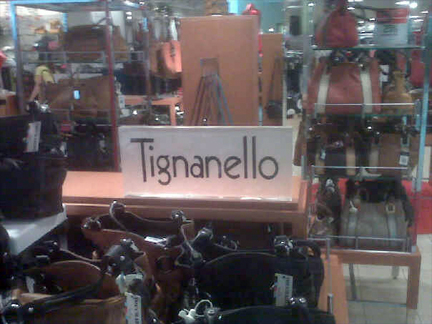
Above: As if by some sort of cosmic connection, Tignanello was on my mind this weekend after I learned about a hand bag line called Tignanello while shopping with Tracie B at a local mall in Austin. (I guess the hand bag line has been around for a while but I just learned about it this weekend.)

It’s been a crazy Monday (after the holiday weekend) and I really don’t have time to post today but extreme situations call for drastic measures!

In his post yesterday, one of my all-time favorite wine bloggers and palates and all-around good guy, BrooklynGuy, asked his readers: “Does my Favorite Thanksgiving Wine make me a Bad Person?” The wine in question was a bottle of 1990 Tignanello, one of Italy’s (and Tuscany’s) most famous labels and vineyards and one of the original Super Tuscans — in fact, a Super Tuscan ante litteram. Evidently, his friend brought the bottle to BrooklynFamily’s Thanksgiving celebration and in the words of BrooklynGuy, “Yes, I drank a Super-Tuscan, and I loved it. And I love the fact that I loved it.”

Of course, there’s nothing wrong with liking that wine or wines like it (do you like my chiasmus?): especially when the new wood has integrated with the other components of the wine, as I imagine was the case in this nearly twenty-year-old bottling, these wines can be the source of immense pleasure. In another lifetime, when I lived in New York and worked at the top of the Italian wine circuit, I had the opportunity to taste a number of older vintages of the historic Super Tuscans, like Sassicaia (notably, 1985) and Tignanello (notably, 1990, 1995, and 1997). The wines can be very, very good.

I can’t say that I like the wines but I certainly don’t think there’s anything wrong with liking them. In fact, I showed 2005 Tignanello in my recent seminar on Tuscan wines (participants loved it, btw).

Why don’t I like them? And more importantly, why don’t I like the categorically? In the case of Tignanello, it’s not that I don’t like it but rather that there are so many other wines I’d rather drink — wines that, in my view, are more indicative of the place and the people who make wine there.

Having said that, I bet that the 1990 Tignanello — first produced in 1971 as Tignanello and the first Sangiovese to be aged in new French oak, according to the producer — showed gorgeously that night (and my deep respect for BrooklynGuy’s palate leads me to believe that it did, indeed, show well).
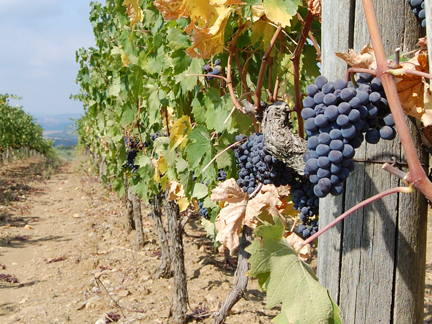
Above: To barrique or not to barrique? The answer is almost categorically “no” on my palate, especially when it comes to noble expressions of Sangiovese.

Frankly, I feel like I owe BrooklynGuy an apology and I feel terrible that he felt obligated to apologize — however jokingly — for liking a wine that is not a “hipster wine,” as he put it. After all, I have been known to patently dismiss barriqued Italian wines and Super Tuscans in general. The truth is I would have loved to try that wine myself!

It’s important to note that the designation Super Tuscan is generally not used by Italians. I’ve read that James Suckling claims he coined the term but I believe that Nicolas Belfrage actually created it in the 1980s. (Coincidentally, I’m reading Belfrage’s new book, The Finest Wines of Tuscany, and will review it soon. He doesn’t discuss his relation to the term although he does hyphenate it.) It’s also important to note that, whatever its origins, the designation is used purely in an marketing capacity and has no official weight or significance.

And while Tignanello is often called “one of the original Super Tuscans” (together with Sassicaia and Ornellaia), it’s important to note that its creators did not call it a Super Tuscan. In 1971, they declassified the wine from Chianti Classico with the vineyard designation to simply Tignanello, the vineyard designation. Why did they do this? Probably because they’re marketing sense led them to believe — rightly — that by shedding the then-tarnished Chianti label, they could command higher prices for the wine.

Lastly, it’s important to note that the declassification wasn’t the only element that Antinori and the “father of Tignanello,” Renzo Cotarella, introduced in its effort to conquer a greater piece of the foreign market: they introduced new-French-oak-small-cask aging, lower-than-required yields, and — I would imagine — Californian practices in the cellar (I don’t know but am guessing they began using cultured yeasts and other forms of manipulation through technology).

The most interesting tidbit of BrooklynGuy’s post, in my view, is the fact that he points out (and in many ways he’s right on): “Antinori’s Tignanello was a big part of the beginning of the Super-Tuscan craze that ultimately ended with the huge Brunello scandal.” Tignanello has always been made mostly from Sangiovese with smaller amounts of Cabernet Sauvignon and Cabernet Franc (to give color, weight, and tannin). The oaky, beefy (as it were) style of wine ultimately conquered the American market in what is surely to be remembered as one of the greatest coups in the history of wine marketing.

BrooklynGuy asks:

Is this wine partly to blame for the bastardization of Tuscan wine?

No, it’s not the wine. The blame lies with winemakers who have abandoned the flavors and aromas of their land for the sake of avarice.

Is Tignanello bad? And if it is bad, can it still taste good?

Tignanello isn’t bad. But there are so many other, greater expressions of Sangiovese that achieve much, much more at a much lower price point.

The 1990 tasted great, that much I can tell you.

I would have loved to taste it with you, BrooklynGuy! But then again, I know that it’s always a great experience to taste any wine with you!

Chapeau bas, for keeping it real in Brooklyn.

An East Texas Thanksgiving (a marriage of Sangiovese and down-home fixings)

jeremy parzen

Way back when, in the late 19th century, did the “Iron Baron” Bettino Ricasoli know that Sangiovese would make for such a great Thanksgiving wine?

thanksgiving

Uncle Tim’s brined and roasted turkey. Brining is the secret to keeping the breast and dark meat moist and flavorful when roasted. Aunt Ida Jean and Uncle Tim hosted all 31 of us!

jeremy parzen

Uncle Tim’s cornbread dressing, including chopped hard-boiled eggs.

thanksgiving

Aunt Gladys’s homemade biscuits.

thanksgiving

Aunt Ida Jean’s sweet potato pie (I was surprised at how well the Chianti Rufina paired with this dish).

thanksgiving

Mrs. B’s eight layer salad. (For those of ya’ll who don’t know what an eight layer salad is, have a look at this Wikipedia entry.)

thanksgiving

Tracie B’s green beans sautéed with onion and garlic and seasoned with nutmeg.

Thank you, Family B, for making me and Mama Judy part of your Thanksgiving celebration! :-)

Banfi 2004 Brunello, I cannot tell a lie (and other notes and posts on 04 Brunello)

Tracie B snapped the above pic of me using my Blackberry the other night, when she came home with an open bottle of Banfi 2004 Brunello di Montalcino in her wine bag (when not otherwise occupied being knock-out gorgeous, Tracie B works as a sale representative for a behemoth mid-west and southeastern U.S. wine and spirits distributor).

The moment of truth had arrived: it was time for me to taste the wine with my dinner of Central Market rotisserie chicken, salad, and potatoes that Tracie B had roasted in her grandmother’s iron skillet.

The wine was clear and bright in the glass and had bright acidity and honest fruit flavor. The tannin, while present, was not out of balance and the wine had a slightly herbaceous note in the finish that might not please lovers of modern-style wines but that I enjoy. If ever there were a wine made with 100% Sangiovese grapes, I would say this were one — tasted covertly or overtly.

According to WineSearcher.com, the average retail price for this wine in the U.S. is $65. I can’t honestly say that I recommend the wine: it’s not a wine that I personally look for at that price point. I did not find this to be a great or original or terroir-driven wine but I will say that it is an honest expression of Sangiovese from Montalcino.

Anyone who reads my blog (or follows news from the world of Italian wine), knows that Banfi has been the subject of much controversy over the last year and a half. But fair is fair and rules are rules and I cannot conceal that I enjoyed the 04 Brunello by Banfi. (Btw, Italian Wine Guy, who is Glazer’s Italian Wine Director, recently posted on 04 Brunello, including a YouTube of Banfi media director Lars Leight speaking on the winery’s current releases at a wine dinner in Dallas.)

Above: Facing south from Il Poggione’s vineyards below Sant’Angelo in Colle, looking toward Mt. Amiata.

Despite the will of some marketers to make us think otherwise, 2004 was not an across-the-board great vintage in Montalcino. In my experience with the wines so far, only those with the best growing sites were able to make great wines in the classic style of Montalcino and wines that really taste like Montalcino.

Btw, in all fairness, it’s important to note that the Banfi vineyards lie — to my knowledge — primarily in the southwest subzone of the appellation, one of the historic growing areas for great Sangiovese. When you drive south from Sant’Angelo in Colle, you see signs for the Banfi vineyards on the right. Earlier this year, my friend Ale over at Montalcino Report posted this excellent series on understanding the terroir of Montalcino using Google Earth. It’s one of the best illustrations of why the wines from that part of the appellation are always among the best, even in difficult years. (Ale’s killer Il Poggione 04 Brunello, which I tasted for the first time at Vinitaly in April, received such glowing praise from one of the world’s greatest wine writers that it caused near pandemonium in the market, prompting wine sales guru Jon Rimmerman to write that it “may be the most offered/reacted to wine I’ve ever witnessed post-Wine Advocate review.”)

Above: Facing north in Il Poggione’s vineyards, looking at the village of Sant’Angelo in Colle (literally, Sant’Angelo “on the hill”).

Franco recently tasted 93 bottlings of 04 Brunello at the offices of The World of Fine Wine in London and wrote of his disappointment with the wines delivered by even some of the top producers. Here are Franco’s top picks and straight-from-the-hip notes, posted at VinoWire.

In other news…

One of the greatest moments of personal fulfillment in my life was when my band NN+’s debut album reached #6 in the college radio charts so I guess that stranger things have happened: a colleague in Italy emailed me last week to let me know that my blog Do Bianchi was ranked #9 in the official (?) list of “top wine blogs.” Who knew?

Thanks, everyone, for taking the time to read Do Bianchi. The blog has been such a rewarding experience for me and it means so much to me that there are people out there who enjoy it.

Super Texans: tasting Texas with the Austin Dream Team

Above: The Austin Dream Team. From left, Craig Collins (Central Texas Sales Manager for Prestige Cellars), Devon Broglie (Southwest Regional Wine Buyer for Whole Foods Markets, which was founded in Austin), and June Rodil (recently crowned “best sommelier in Texas,” sommelier at Uchi in Austin, a world-class and cutting-edge Japanese restaurant in land-locked central Texas).

This was no run-of-the-mill focus group. It was an Austin Texas USA dream-team of young sommeliers gathered by the PR firm that reps the Texas Department of Agriculture to taste some Texan wines blind.

Folks in Texas are serious about their wine (Texans love to drink locally) and when it comes to marketing of local products, they don’t kid around: these top young somms had been asked to give their honest no-holds-barred opinions of the wines (each flight included a ringer, not from Texas) to help gauge which wines to present to food and wine writers and pundits etc.

Frankly, I haven’t taken Texan wines very seriously since I moved here nearly 10 months ago but — as Franco rightly reminds me — rules are rules: when you taste blind and you taste something you like, you have to admit it (even when you weren’t expecting to like it) and frankly, I tasted more than one wine I liked in yesterday’s degustation.

And there was another surprise as well.

I had never heard the term Super Texan before and when I wondered out loud why so many Texan wineries are Italophilic as opposed to Francophilic (like their Californian counterparts), one of the more interesting theories was proposed by June, who noted that Texas is a predominantly Republican state and has a historic distaste for Francomania.

Above: Also in attendance was wine writer David Furer who came to town especially for the tasting and who was lucky enough to taste Tracie B’s farro salad the other day at our impromptu Labor Day picnic.

In the first flight of red, we tasted a number of wines made with Sangiovese (monovarietal or blended) and varietal expression was clearly evident. The wine that impressed me the most was the Llano Estate Newsome Vineyards High Plains Viviano, a “Super Texan” blend of Cabernet Sauvignon and Sangiovese. The wine was real, it was elegant, it had natural acidity, honest fruit, and genuine freshness (although I’m not sure I would reach for it at $40 a bottle).

In the same flight, however, was a wine that the panel didn’t seem to like because of a green, herbaceous quality. When asked my opinion (and frankly, I was out-classed by these top somms in their superior ability to taste and describe blind, ubi major minor cessat), I asked the other participants “to cut it some slack,” as it was also one of my favorites in the flight. Anyone who knows me wouldn’t be surprised at the laughter in the room (Devon and Craig and I have tasted a bunch of times together) when it was revealed that my ugly duckling was Italian.

But to my great surprise, it was a wine that I never would have thought I’d like, 2006 Chianti Classico by Badia a Coltibuono, a high-volume winery that has enjoyed wide success in the U.S. thanks to aggressive, intelligent marketing. According to the website, 170,000 bottles of this wine are produced every year, but, frankly, I could really taste place in this wine: it had that characteristic Sangiovese plum note and I liked its food-friendly herbaceousness. For $25, I like it. There you go: rules are rules and there’s a lot to be said for tasting locally.

In other news, another taste of Texas…

Tracie B snapped this slice of Texan life last night outside the Broken Spoke where I played a gig. I gotta say that I love living in Austin… not that the lovely Tracie B has anything to do with it… ;-)

Soldera Rosso 91 backstage at Diana Krall

From the “Good wine bloggers go to heaven, bad ones go back stage” department…

Franco is not the only one who gets to go see Diana Krall thanks to his connections in the wine world.

Most of the folks who visit my blog know that blogging has been an incredibly rewarding experience for me, professionally and personally, bringing me into contact with a wide range of people, from all walks of life, whom I wouldn’t have met otherwise.

I probably would have met Anthony Wilson — wine dude and jazz master (I’m not kidding) at one point or another: as it turns out he and I have a ton of friends in common (including my old friend John Mastro who manages our band Nous Non Plus). We met “virtually” after Anthony stumbled upon a post of mine on López de Heredia, one of our shared enophilic passions, and we made the connection of all the folks we knew in common.

Above: Pre-show dinner with the gang at Pt. Loma Seafood, around the corner from Humphrey’s by the Bay where Anthony played with Diana Krall. The name of the venue is SO 70s!

On Monday, Tracie B and I picked up Anthony (second from right) and took him to dinner at Pt. Loma Seafood, where we drank 2007 Soave Classico by Suavia and Lini Lambrusco Cerasa Rosé with our dinner (no corkage!). Pt. Loma Seafood is a San Diego classic and the freshness of the materia prima is second to none — highly recommended. That’s our friend Frank Sciuto, owner of Tio Leo’s, sitting next to Jon and Jayne, center. When I mentioned to Frank that we were going to see Diana Krall, his mouth dropped to the floor and his wife Violet said, “Diana Krall is Frank’s freebie.” So we just had to take him along.

Above: Soave Classico 07 by Suavia and crab louie paired like the warm tones of Anthony’s Clark amplifier and the tender notes of his custom Monteleone archtop guitar.

I have to confess that I hadn’t really done my due diligence. I knew that Anthony was a wildly talented musician but it wasn’t until I ordered some of his disks from Amazon and started listening to his music that I realized he is one of the jazz greats of our country (and the son of legendary band leader Gerald Wilson).

Above: Jon said it was the most “rock ‘n’ roll” label he had ever seen, hence the headbanger’s homage.

I really wanted to thank Anthony for being so generous with tickets and passes and so we smuggled in a bottle of 1991 Soldera Rosso Intistieti. I couldn’t figure out the origin of the name Intistieti and so I asked Franco to write to Gianfranco Soldera, who answered that Intistieti is a highly localized dialectal form that means terra tra i sassi or literally land among the stones. The soil is stony and poor and thus unsuited for growing crops other than grapes destined for fine wines. I had never tasted one of Soldera’s declassified wines, i.e., a wine that he felt didn’t rise to the quality of his Brunello di Montalcino, but a wine he felt should be released nonetheless. He is one of Italy’s most exacting winemakers and I knew this would be great. The Pegasus on the label was inspired by the notion that his wines rise above mediocrity — and indeed, they do. This wine showed gorgeously and was shining example of how Sangiovese can age gloriously when made in traditional manner (I’ll do a post on my mind-blowing visit to Soldera last year and his unique approach to winemaking.)

Above: I brought a bottle of Lini Lambrusco Labrusca Rosso for Anthony to take on the buss with him that night for a night cap. That’s him, left, with bassist Robert Hurst (also, a super nice guy). Lambrusco, so low in alcohol, light, and refreshing, is a great end-of-the-night wine.

Thanks again, Anthony, for a truly unforgettable night and a great way to celebrate the success of the San Diego Natural Wine Summit on Sunday. And thanks to Winnie, who was the first connection that Anthony and I made, and who suggested that I write a blog so many moons ago! I am amazed, over and over again, how wonderful surprises continue to emerge from the world of blogging. As the virtual world grows smaller, so the real one seems to be richer every day.

Keeping the world safe for Italian wine

Above: Franco Ziliani and I tasted some fantastic Franciacorta together last September in Erbusco (before Tracie B convinced me to shave my mustache). Franco has been a great friend, a mentor, and an inspiration. I am proud to be his partner at VinoWire. Photo by Ben Shapiro.

Just keeping the world safe for Italian wine… that’s what we do around here.

It was one helluva way to wake up this morning in sleepy La Jolla — where Botox trumps micro ox — to find that the editors at Decanter.com had decided to publish our post on recent developments in Montalcino and subsequent reports by the Italian media.

I’m glad we got a chance to set the record straight and that I can drink my Vino Nobile tonight with Tracie B at Jaynes knowing that the world is safe for Sangiovese (or maybe we’ll drink the 2007 Selvapiana Chianti Rufina, which is showing gorgeously right now).

In other news…

If you’re planning on attending the San Diego Natural Wine Summit this Sunday at Jaynes, please email the restaurant to reserve. We’re almost at capacity and we’ll have to turn people away if they don’t have tickets. Click here for details and to reserve.