Numbers point to Cinelli Colombini, while pundits stump for Bindocci in Montalcino president race

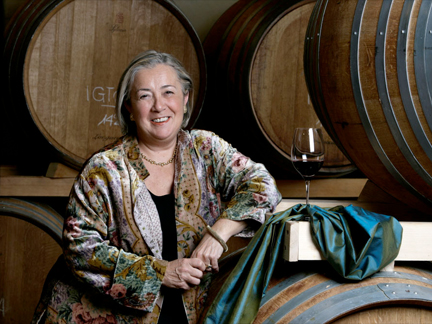
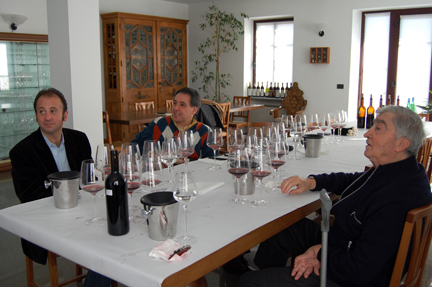
Above: Art historian and Siena native, Brunello producer Donatella Cinelli Colombini is one of Italy’s leading women winemakers and she has been endorsed by a number of high-profile producers in her bid to become Brunello consortium president. She also received the greatest number of votes in the general election for the body’s advisory council (which we reported today at VinoWire). Photo courtesy Susanna Cenni.

Why am I so obsessed with the election of the Brunello producers association’s new president? The answer is simple: the Brunello appellation has become the front line for the battle of traditionalist champions of indigenous Italian grapes vs. progressive proponents of “modern trends” and international grape varieties. What has happened over the last two years in Montalcino and what will happen in the wake of tomorrow’s election will surely inform the direction, objectives, and ideals of Italian winemaking in the next decade.

Many have considered technocrat winemaker, architect of Brunello giant Banfi, Ezio Rivella, to be a shoe-in. But at least one high-profile actor on the ground told me this morning that Donatella Cinelli Colombini (above) is the leading candidate, and, in fact, she received the greatest number of votes in the body’s general assembly (while Rivella fell near the bottom of the list of top-vote-getting advisory council members).

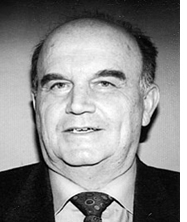
Above: Winemaker Fabrizio Bindocci of Tenuta Il Poggione, a homegrown candidate from Sant’Angelo in Colle (and my friend), student of Brunello legend Piero Talenti and teacher to his own son Alessandro Bindocci, who will ultimately take his place when he retires. Photo courtesy Montalcino Report.

I’m not the only one to be watching the election so closely: today, Italian wine blogger Alessandro Morichetti, contributor to the popular site Intravino, launched an appeal: “We want Fabrizio Bindocci [above] to be president of something, right away!” My partner in VinoWire, Mr. Franco Ziliani, author of Italy’s top wine blog, Vino al Vino, quickly signed on to and reposted Morichetti’s endorsement (and Mr. Ziliani has often pointed to Bindocci as an excellent candidate).

Me? I’m just an extracomunitario, an extracommunitarian, an alien (to Italy) as it were. As such, I can, however, with good conscience observe that among the three most talked-about candidates, two are from Montalcino and one is from Asti, Piedmont (guess which one). Local trumps alien in my book when it comes to wines that speak of the place where they are made and the people that made them.

A ray of hope in Montalcino (election results expected tomorrow)

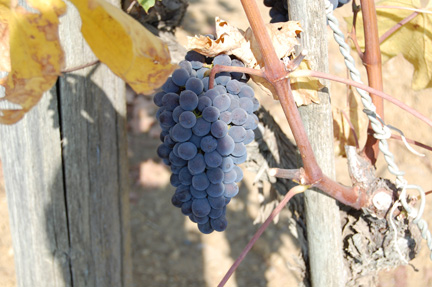
Above: I photographed this pristine bunch of Sangiovese grapes in the southwestern subzone of the Brunello appellation in September 2008, just a few days before harvest began.

So many amazing bottles of wine (Italian and otherwise) have been opened for me and Tracie P over the last few weeks and I have a lot to post about, but today Montalcino is on my mind: tomorrow Thursday, if all goes as expected, the Brunello producers association will announce the name of its new president.

The good news is that presidential front-runner Ezio Rivella, who previously proposed a change in appellation regulations that would allow for grapes other than Sangiovese to be used, has publicly pledged NOT to change the rules.

My colleague Mr. Franco Ziliani, author of Italy’s most popular wine blog, Vino al Vino, reported the story last week, and this morning, he and I have posted my translation of Rivella’s interview with the Corriere di Siena over at VinoWire.

Above: Neither my friend Ben Shapiro (in the photo), who accompanied me on the trip, nor I will forget that beautiful fall day in Montalcino, our last in the appellation before we headed over to Maremma.

His words come as a relief, to me and to many observers of Montalcino and actors on the ground. The thought of Brunello with even just 5% of Syrah in it… well… makes me want to heave…

I imagine that the backroom compromise went something like this: after being elected to the consortium’s advisory council (who in turn will elect a president, to be announced tomorrow), Rivella vowed not to change appellation regulations to allow grapes other than Sangiovese in exchange for support for his presidency and a willingness to revise the Rosso di Montalcino and Sant’Antimo appellations to allow higher percentages of international grape varieties.

The fact is that most producers — at least from what I hear directly — want Brunello to continue to be produced using 100% Sangiovese grapes.

Fyi, Rivella has teamed with viticultural giant Masi to produce Brunello on the Pian di Rota estate in Castiglione d’Orcia (not far from the estate where Masi is growing grapes for its Bello Ovile project). To my knowledge, no Brunello has been produced there yet…

Stay tuned…

Manufacturing consent (again) in Montalcino

Above: Could the results of elections in Montalcino yesterday lead to changes in appellation regulations for Brunello? For many years, the now elected advisory council member and front-runner for association president has advocated a change that would allow up to 15% of grapes other than Sangiovese (above).

The results of much-talked-about Brunello advisory council election came my way early this morning via my friend Ale’s feed. But as soon as they hit the Brunello producers association website, they were immediately blasted across the internets by observers of the Italian wine industry. I have posted the results at VinoWire together with the newly elected members’s professional affiliations (I cannot but applaud the Brunello producers association for posting the highly anticipated news promptly… for once!).

Above: Has a metaphorical hail storm crippled the sacred primacy of Sangiovese? Many, like top Italian wine blogger Mr. Franco Ziliani fear it has.

ezio rivellaMany believe that ex-director and eno-architect of behemoth Banfi, Ezio Rivella (left), will be the next president of the body (to be announced in the next three weeks).

For years, Rivella has advocated a change in appellation regulations that would allow up to 15% of grapes other than Sangiovese in Brunello di Montalcino.

In a genuine act of sixteenth-century “self fashioning,” ex-director of behemoth producer Banfi and the self-proclaimed architect of the Montalcino renaissance is about to publish an English translation of his memoir: Montalcino, Brunello, and I: the Prince of Wines’ True Story [sic and sick].

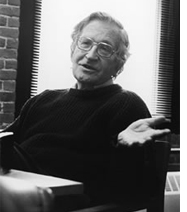
noam chomskyI’ll take the lead from my colleague Mr. Ziliani (who posted “no comment” this morning on his blog) and will leave you instead with the words of one of my linguistic and ideologic heroes, Noam Chomsky (left):

“The most effective way to restrict democracy is to transfer decision-making from the public arena to unaccountable institutions: kings and princes, priestly castes, military juntas, party dictatorships, or modern corporations.”

Montalcino MADNESS! If Pirandello were a winemaker…

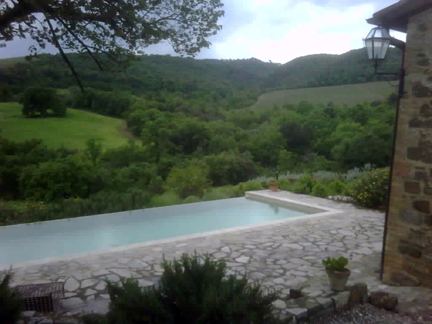
Above: Alfonso is on the wine trail in Italy today. He sent me this photo, taken with his blackberry, of his digs in Montalcino where he arrived this afternoon. Montalcino and the Orcia River Valley are among the most beautiful places I’ve ever been.

Life is full of infinite absurdities, which, strangely enough, do not even need to appear plausible, since they are true.
—Luigi Pirandello

Is it a enoic parable scribed by Karl Marx? Is it a dialectic on vinous hegemony by Antonio Gramsci? Are these winemaking characters searching for an author like Luigi Pirandello? Is this an engagé film made by Pietro Germi in the 1960s?

UGH! I’ve been tearing out what little hair I have left as I watch the MADNESS unfold in Montalcino from afar!!!

Yesterday, as I painfully stitched together this post on the pending election of a new administrative council and a new president of the Brunello di Montalcino producers association, I couldn’t help but think to myself that Giovanni Verga couldn’t have written it better!

Election procedures are secret and only certain candidates have revealed themselves. One presidential candidate is an aristocrat, Jacopo Biondi Santi the dashing and dandy son of traditionalist Franco Biondi Santi (the “father of Brunello”). Jacopo broke from his father and his father’s legacy many years ago only to stamp the family name on his international-style wines (from what I hear, father and son don’t speak).

One is an odious technocrat and bureaucrat, Ezio Rivella, who once produced “22 million bottles of wine a year” at the helm of Montalcino’s largest estate, according to his biography in his “order of the knights of Italian industry” bio.

Another is a lawyer, Bernardo Losappio, who represents flying enologist Carlo Ferrini (“Mr. Merlot,” as he is known locally) and Wine Spectator darling winery Casanova di Neri. Losappio wrote to Italy’s top wine blogger Mr. Franco Ziliani, assuring him that “My commitment will be focused on promotion of the appellation in all of its expressions, a broadening of media relations, preservation of Brunello’s typicity, and a rethinking of the Rosso [del Montalcino appellation].” He probably has some property in Brooklyn he wants to sell me, too.
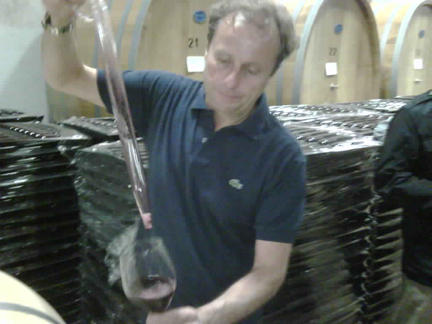
Above: Literally as I write this, Alfonso is tasting 2009 Brunello with a producer.

The backdrop for all of the above is the fact that of the 17 persons charged by authorities in the wake of the Brunello scandal (when producers were accused of adulterating their wines), 11 took plea bargains and 6 have now been indicted.

And as if it were a short story by Edmondo de Amicis, an absolutely heinous “anonymous letter” has been circulated, defaming some of the more notable candidates.

AND as if it were a novel by Giuseppe Tomasi di Lampedusa, the Piedmontese winemaker Angelo Gaja issued a statement two days ago admonishing the residents of Montalcino that tourism is the main issue they should be considering (not transparency or appellation regulation).

Reflecting on Gaja’s communiqué, another one of Italy’s top winebloggers, Antonio Tomacelli, observed: “There’s no question that tourists play their part, for goodness’s sake, but they come to shake hands with Brunello producers — a difficult operation, especially when they’re wearing handcuffs.”
There is one candidate whom I believe could really make a difference as the new president of the producers association. He’s a friend and he was born and bred in Montalcino. His wife grew up in the foothills of Mt. Amiata. He makes great wine… honest wine, true wine, and real wine. On the eve of the election, he — I believe — is Montalcino’s greatest hope.

I love Montalcino. I love Sangiovese Grosso. I love Brunello di Montalcino. It was there, more than 20 years ago now, that I first discovered my passion for wine. I remember meeting Giacomo Neri (of Casanova di Neri) in 1989. He had just finished his military service and he had just begun making wine on his father’s estate. Back then, he didn’t use Carlo Ferrini as his enologist. He just vinified the grapes grown in his families vineyards. He hadn’t yet built his state-of-the-art winery. He hadn’t yet received the top scores. His wines weren’t even available on the U.S. market. The wines were bright, light, and delicious, not opaque, dense, and woody. Back then, Brunello had yet to become a household word in the U.S.

The saga of Brunello is a Marxist parable: the socially enlightened ideals, mores, and ethos of post-war, “red state” Tuscany have been grubbed up and replaced by the insidious roots of capitalist greed. Tuesday’s election will undoubtedly determine the new trajectory of the wine, the land, the tradition, and the people. I hope that the members of the Brunello producers association will remember that that the legacy of Brunello di Montalcino belongs not only to them but also to the people of Tuscany, the people of Italy and of Europe and of the world.

I am a force of the Past.
My love lies only in tradition.
I come from the ruins, the churches,
the altarpieces, the villages
abandoned in the Appennines or foothills
of the Alps where my brothers once lived.

—Pier Paolo Pasolini

Together again, naturally

breg

Above: Nothing to Breg about, to borrow Alfonso’s pun. Last night, he, Tracie P, and I shared a bowl of her slow-cooker cannellini beans and escarole in our home in Austin. Decanted and with a few hours of aeration, the 2000 Breg by Gravner bowled me over, in every sense of the word. Thanks, Alfonso!

Natural wine has been on my mind (again) lately. In part because of a recent appeal posted on the Slowine website (and brought to my attention by Italy’s top wine blogger, Mr. Franco Ziliani) calling for Italy’s “natural wine” fairs (namely, Vini Veri and VinNatur) to be incorporated into the annual Italian wine industry mega-fair Vinitaly. I stayed home this year and didn’t attend but when I posted event details for Vini Veri, a number of folks — including some high-profile industry types — weighed in on the side of consolidation.

slowcooker

Above: There’s just no other way to put this. Tracie P’s legumes were divine last night. Every bean was perfectly whole but then melted in the mouth. Did I mention that the beautiful lady behind the lens also has a natural gift for photography? She snapped the above.

Natural wine has also been on my mind because I’ve been following Alice’s truly excellent posts on the nature — semantic, metaphysical, and sensorial — of natural wine, the winemakers and movement(s) that support and profess it, and the new space it occupies in the language and the perceptions of the mainstream. The latest post, entitled “What is Natural Wine?”, may be the best, but I highly recommend the previous two posts (here and here) and the Washington Post article that prompted the series, “Natural Isn’t Perfect” by Dave McIntyre.

bacon

Above: Not only did Alfonso bring the Gravner last night, he also brought some awesome bacon from Robertson’s in Salado, Texas. @BrooklynGuy, you would love this stuff.

In other natural wine news, the excellent Italian wine blog Intravino posted a profile of natural wine trailblazer Joe Dressner and the blog devoted to his truly heroic battle with brain cancer (also brought to my attention by Mr. Ziliani and btw here’s a link to Joe’s blog).

In an email I received yesterday from Étienne de Montille, the famous winemaker wrote that “I should have left for Tokyo Sunday but… Nature has decided otherwise.”

Volcano or no volcano, the transatlantic dialogue moves forward as “natural wine,” however it is conceived or perceived, indelibly enters into the collective vinous consciousness. Only good can come of it.

FRANCO ZILIANI ARRESTED FOR DRUNK DRIVING!

well, not really… but he’d like to be arrested… read on…

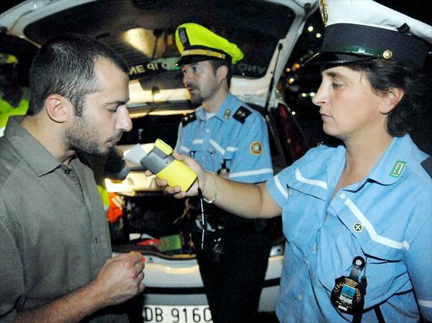
Above: Unidentified man is subjected to a random breathalyzer test somewhere in the Province of Como. Photo courtesy of La Provincia di Como.

According to a blog post published Sunday by Italy’s preeminent wine blogger and re-posted by numerous wine websites and blogs, including the LaVINIum blog and InternetGourmet, said blogger Mr. Franco Ziliani wants to be arrested for drunk driving. More precisely, he wants his alcohol blood content to be tested as he leaves the gates of the annual Italian wine fair — along with that of thousands of other attendees — before he ever gets behind the wheel of his car.

At issue is Italy’s newly instated (quasi-)zero tolerance drunk driving law, enacted in August 2009, whereby a .05-gram-per-liter-of-blood alcohol level is considered intoxication by police. (I found the most up-to-date text of the new Italian legislation at this breathalyzer sales site and for background and for general info on the legal limits allowed across the world, see the Wiki. Most states in the U.S. consider .08 grams the legal limit.)

The legislation was intended to curb excessive alcohol consumption and a rash of drunk driving incidents, mainly involving young people leaving discotheques on Friday and Saturday nights. The new laws require local police to set up random check points and subject drivers to breathalyzer tests, even when said drivers exhibit no outward signs of intoxication.

As a result (and I’ve heard of myriad cases of this during my recent trips to Italy), a number of individuals have lost their driver’s licenses even after only moderate alcohol consumption.

The bottom line: even one glass of wine at dinner can put you over the legal limit, depending on the wine and your body weight at mass etc.

The new laws have been widely criticized — even by Italy’s now former agriculture minister, Luca Zaia — as excessive. Many, including respected wine journalists, have called them a form of neo-prohibition and even neo-fascism applied through the use of unreliable devices by unprepared law officers. The legislation was intended to curb drunk driving among young discotheque-goers, not wine professionals attending tastings or average folks enjoying a bottle of wine at a country trattoria.

Italian wine writer

Here’s where it gets really interesting: Italy’s annual wine trade fair, Vinitaly, begins Thursday in Verona. If you’ve ever been to the fair, you can see what’s coming: of the thousands of people who attend each day, most are wine and restaurant professionals who taste in moderation, spitting, but tasting (as I do) up to 80 wines a day. This is the first Vinitaly since the new legislation has been enacted.

Mr. Ziliani is asking like-minded attendees to gather — in the thousands, he hopes — and march (or be bussed) down to the local police station, where he and his followers will “turn themselves in” and ask to have their alcohol blood levels tested without ever getting behind the wheel. He hopes that the overwhelming number of tests to be administered will demonstrate the absurdity and infeasibility of the law.

Mr. Ziliani’s protest may have “arrived a little too late,” notes the author of the LaVINIum post. But you can email Ziliani here to get protest details.

Me? I decided to sit this Vinitaly (and Vini Veri) out: I’ve got better things to do. ;-)

TTB lifts certification requirement for Brunello

The U.S. Alcohol, Tobacco, Tax, and Trade Bureau (TTB) has officially lifted its requirement that importers of Brunello obtain an Italian government declaration stating that the wine has been made in accordance with appellation regulations.

You can read the statement by the TTB here.

As a self-anointed semiotician, I can’t help but note what an interesting instance of wine writing this document represents. A close reading of the text reveals that that the TTB will ultimately be remembered as the author who “wrote the book,” so to speak, on the Brunello controversy. A winery, as of this week not yet implicated, also emerges in the document.

It’s at once the grimmest form of wine writing and the happiest: I hope it truly marks the end of the controversy known as Brunellopoli (Brunellogate).

I believe that Mr. Franco Ziliani was the first to publish the news in Italian and my friend Ale, author of Montalcino Report, was the first to publish the story in English.

Brunello, you were always on my mind

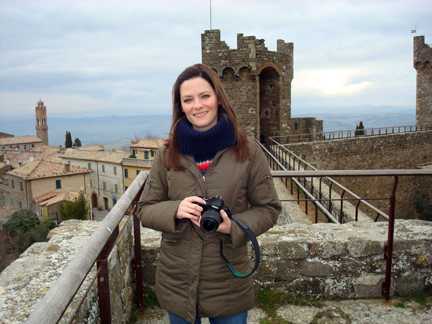
It’s hard to believe that we were in Montalcino just a few short weeks ago! That’s Tracie P, above, atop the Fortezza in the historical center of the town, where Benvenuto Brunello begins today — the appellation’s annual grand tasting, where producers present their new vintages, this year, the 2004 2005 Brunello di Montalcino, the 2003 Brunello di Montalcino riserva, the 2008 Rosso di Montalcino, and the Moscadello di Montalcino (which I’ve never seen in the U.S.).

Tracie P and I tasted some great 2004 Brunello (not an easy vintage and certainly not a spectacular vintage for those not blessed with superior growing sites) and one phenomenal 2003 riserva.

I don’t have time to pen a decent post today: we’re busy moving into a little house we rented, our first home together! But I will post on the wines we tasted and the different terroirs of Montalcino next week.

Even though I love wines from many different regions of Italy, Brunello will always be my first romance: my enophilia grew out of my first visit to Bagno Vignoni, just south of Montalcino, when a friend and student of mine lent me the keys to his apartment there in 1989.

Brunello, you were always on my mind…

My writing partner Franco Ziliani is attending Benvenuto Brunello (where, unfortunately, it’s next-to-impossible to get online!) and we’ll be posting his impressions next week over at VinoWire.

One last note on Giacosa Asili 07 from Antonio Galloni (and the complete wedding album online)

From the department of “wine geekery”…

Above: I wish words could convey Bruno’s bright smile that day and the pleasure he seemed to take in tasting and talking about his wines with Franco, Tracie P, and me. Photo by my better half.

One last note that I wanted to share, for the record, culled from emails I traded yesterday with one of the wine writers I admire most and one of the greatest English-language authorities on the wines and winemakers of Piedmont, Antonio Galloni (who also happens to be an extremely nice guy).

His comments speak to Bruno’s observation that you could “smell Asili” in the 2007 Asili white label bottling (even in the light of the fact that the wine was made predominantly from grapes sourced from a parcel previously classified as Rabajà).

“Because of the freakish growing season in 2007 that you describe,” i.e., with an extremely mild winter and consequently anticipated vegetative cycle, wrote Antonio, “the 2007 Asili white label does actually reflect a lot of that vineyard’s characteristics, even if it is 80% juice from Rabajà.”

He also pointed me to this passage, lifted from his October 2009 tasting notes: “Curiously, the 2007 Asili is a very soft wine, considering it is made mostly from vines that informed such majestic Rabajas as the 2001 and 2004.”

All of us present at the tasting a week ago Sunday were impressed with how approachable the wine was. And Bruno’s observation, “you can smell Asili in this wine,” was significant, indeed, especially in the light of the unusual vintage and the reclassification of the Barbaresco cru system. Antonio noted that in the wake of the reclassification, “you will soon see a host of new, single-vineyard bottlings from places you probably never knew existed.”

Food — or grapes, as the case may be — for thought.

Thanks again to Ken for asking me to look more carefully at Bruno’s observation and thanks to Antonio for his truly invaluable insights.

In other news…

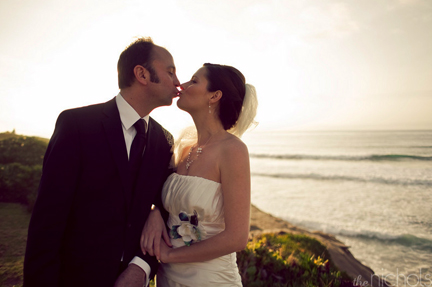
It will remain one of the great mysteries in the history of humankind: how did a schlub like me end up with a beauty like Tracie P née B?

The complete wedding album is online here. Thanks again to Jennifer and CJ for an amazing job!

And thanks to my gorgeous bride Tracie P: words could never express the happiness and joy that you have brought into my life, an endless Valentine, every night when I kiss your sweet lips good night and when they greet me in the morning. I love you so very much… What a miracle you are!

Sunday poetry: a Parini among wine writers

Above: I took this photo of Franco a week ago, today, as Tracie P, he, and I sat in the Bruno Giacosa tasting room and tasted with Bruno Giacosa, on a beautiful winter morning in the hills of Langa.

Carneades! Who was he now?” famously asks Don Abbondio in the opening lines of chapter 8 of Lombard novelist, poet, and dramatist Alessandro Manzoni’s I promessi sposi (The Betrothed, first published 1827).

Some of you may ask the same of poet and moralist Giuseppe Parini (1729-1799), another literary great of Lombardy, the generation before Manzoni.

I’ve been thinking of Parini on this Valentine’s Day morning: the Enlightened (with a capital E) Lombard, author of erudite (at times pungent, at times hilarious) satire and master of Italian 19th-century prosody, reminds me of another Lombard writer, Franco Ziliani, a wine writer whose blog has inspired and informed my own, whose work ethic and ethical work have served as model for my own modest scribblings, and whose fraternal (and at times avuncular) friendship and collegiality have often guided me through the selva oscura, the dark wood (pun intended) of the world of Italian wine.

Anyone who’s been following my blog knows that Franco organized an extraordinary series of tastings for Tracie P and me (the sposi, no longer betrothed but already conjugated!) last Saturday and Sunday in Langa (they will be the subject of many posts in the next few weeks).

This morning, in Franco’s honor, I have translated a vinous stanza from Parini’s ode, “La laurea” (“The Diploma”).

    Quell’ospite è gentil, che tiene ascoso
    Ai molti bevitori
    Entro ai dogli paterni il vino annoso
    Frutto de’ suoi sudori;
    E liberale allora
    Sul desco il reca di bei fiori adorno,
    Quando i Lari di lui ridenti intorno
    Degno straniere onora:
    E versata in cristalli empie la stanza
    Insolita di Bacco alma fragranza.

    Noble is the host who keeps hidden
    from the many imbibers
    the old wine in his father’s puncheons,
    the fruit of his labors.
    Then, generously, he brings it
    to the dinner table, adorned with flowers,
    and as the Lares* smile upon him
    he honors the worthy stranger.
    And poured into crystal, Bacchus’s extraordinary,
    life-giving fragrance fills the room.

* The Roman household deities, hence, the household.

Jeremy Parzen

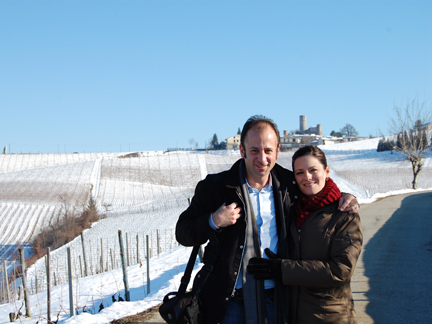
Above: Franco took this picture of us later that afternoon, as we drove around the vineyards of Barolo.

Thank you, again, Franco, for an unforgettable visit to Langa. You are a Parini among wine writers.

Noble is the host…