Suckling and Soldera on the Tuscan wine scandals

case basse

Above: One of the great maestri of Brunello Gianfranco Soldera and I tasted his wines together in September 2008 at his winery Case Basse in Montalcino (before Tracie B convinced me to go back to my au naturel hair style!). Photo by Ben Shapiro.

In an hour-long documentary on the Orcia River Valley, recently aired on the national-television Sunday show Linea Verde (it’s worth watching the show, even if you don’t understand Italian, if only for the cinematic beauty of the Val d’Orcia), the presenter asked Brunello maestro Gianfranco Soldera to share his impressions of the recent controversy in Montalcino regarding producers who allegedly added disallowed grape varieties to their Brunello (which, by law, must be made with 100% Sangiovese grapes).

“Luckily,” Soldera said, “the [Italian] treasury, the magistrate, and the anti-adulteration department did a great job in their investigation and they found some big problems. Millions of liters of wine were declassified in order to protect consumers and those producers who have always used only Sangiovese, as required by law, because this is what needed to be done.” Even though the quantity of wine declassified was significant, he noted, “only a handful of wineries” were implicated in the investigation. (The segment on Soldera appears at the end of the show and it is the only occasion that I know where the general public has been allowed to view Soldera’s “secret garden.” Definitely worth viewing.)

wine spectator

Above: The clairvoyant Swami shared his wine predictions for 2010, including a real whopper for Tuscany.

A week or so earlier, one of America’s premier wine writers, a world-renowned expert on Italian wine, and a resident and champion of Tuscany and its wines, the inimitable James Suckling published his predictions for the year in wine 2010 on his blog, including, this ominous premonition for Tuscany: “Tuscany will be embroiled in another wine witch hunt with the magistrate of Siena along the lines of a similar debacle in Montalcino over the past two years.”

This morning, I couldn’t help but share Franco’s indignation at Suckling’s admittedly “less than earth-shattering” prediction, expressed in a post entitled, American Wine Writers: Luckily they’re not all like James Suckling.

However ugly the recent controversy in Tuscany, it “needed to be done,” as Soldera pointed out. Everyone I’ve spoken to there (except for those implicated in the investigation) seems to share Soldera’s opinion.

Of all the things to predict for Tuscany in 2010 (eclipsing the rest of Italy, btw), how about something like this?

1) The Val d’Orcia DOC will emerge as one of the coolest new expressions of Sangiovese.

2) Tastings of the 2007 harvest will reveal that Tuscany was blessed with one of the better vintages in recent memory.

3) The high-cost of barrique and the emerging trend against oak-laden, concentrated wines will lead more and more producers to make traditional-style wines using large-cask aging and less manipulation in the cellar.

4) Thanks to more flexibility in labeling, the recently implemented EU Common Market Organisation reforms will allow Tuscan producers to regionally “brand” their international-style wines without encroaching on the Brunello and Chianti de facto trademarks.

5) Tracie B and Jeremy P will win the lottery and finally be able to move into the Ripa d’Orcia castle as their “vacation home.” (There are some beautiful shots of the castle in the Linea Verde show, btw.)

Thanks for reading. Tracie B and I will soon be heading to Montalcino on our honeymoon, where we’ll have our “nose in a glass” and our “ears to the ground.” Stay tuned…

Mikey likes it: Brunello 2004 by Il Poggione

From the “on any given Sunday” department…

poggione

Above: Just to be on the safeside, we opened 2004 Brunello di Montalcino by Il Poggione last night at Trio in Austin. Photos by Tracie B.

Tracie B and I were both concerned when, the other day, we read that the 2004 Brunello di Montalcino by Il Poggione had been eliminated from the top-ten wines in The New York Times recent blind tasting panel of 04 Brunello.

Blind tasting can be such a tricky business and in many ways, it removes wine from the terrestrial context in which we consume it (and the way it was intended to be consumed). In blind tasting, our experience becomes metaphysical, in other words, beyond the physical inasmuch as it treats wine as an abstraction. The intention is noble: blind tasting is intended to remove as many “extraneous” variables as possible and force the taster(s) to evaluate the wine purely on its sensorial attributes as an empirical expression of its intrinsic value. But wine, by its very (human) nature, cannot be reduced to pure science.

Even Eric, whose palate I admire greatly, was surprised that Il Poggione didn’t make the top-ten cut. “Some very well-known brunellos,” he wrote, “missed the cut in our blind tasting, including one of my perennial favorites, Il Poggione… A cautionary note about blind tastings: they are snapshots of a wine at a particular moment. I would never say no to a bottle of Il Poggione, even if I did reject it here.”

Never ones to say no to a bottle of Il Poggione, Tracie B and I went to Trio in Austin last night and asked our friend sommelier Mark Sayre to open a bottle of the 2004. Above and beyond our friendship, I turn to Mark when I want the proverbial “second opinion” (and his wine program offers the ideal setting for tasting fine wine in Austin).

Tracie B, Mark, and I all agreed that the wine is going through a very tannic moment in its evolution. We opened the bottle, decanted it immediately, and then tasted it immediately. Then, we put it aside and let it aerate for about 45 minutes.

tocai

Above: We also tasted Scarpetta 2007 Tocai Friuliano (bottled by Master Sommelier Bobby Stuckey) with the shrimp croquettes. This old-school wine is one of those “not-for-everyone” wines but just right for me and Tracie B!

At first sip, the wine was overwhelmed by its tannin, but when we returned to it, it had begun to open up beautifully, showing that magical balance of tannin, fruit, and acidity that makes Montalcino (in my view) one of the greatest appellations in the world.

Not everyone made great wine in 2004. As much as the Tuscan wine industry would like us to believe that 2004 was a 5-star vintage, it simply was not: summer heat spikes plagued growers whose vineyards lie at lower elevations.

But, as father-and-son winemaking team Fabrizio and Alessandro Bindocci will tell you, Il Poggione’s vineyards lie at some of the highest elevations in the entire appellation, reaching 400 meters a.s.l. and thus keeping summer temperatures cooler during warm summer months.

I don’t think 2004 will be remembered as a great vintage in Montalcino but I do think a handful of producers made superb wines and Il Poggione was one of them. The wine has many, many years ahead of it in the bottle and will only get better with age. It’s a young buck right now and just needs some patience and aeration to temper the power of its youth.

The je-ne-sais-quoi moment came when Mark insisted that we pair the fried pork belly with the wine: the classic plum notes of the wine and its tannin attained an ethereal nobility when blended with gelatinous fat and caramelized flavors of the dish.

What happened with the bottle that Eric and the panel tasted in New York? We’ll never know: on any given Sunday, even in a laboratory environment, a bottle of wine can be affected by innumerable variables (including how it was handled by the many actors who “touch” it before it reaches the end user).

Our evaluation? In the words of Tracie B, “Mikey likes it!”

Mad World 2000 Brunello

il poggione

Above: The 2000 Brunello di Montalcino by Il Poggione rocked my world last night at Jaynes Gastropub in San Diego.

It’s been a mad, mad week already, between travel, wedding planning, business meetings with a California client, and catching up with old friends.

Last night, to celebrate Jaynes Gastropub family-member Nicholas George’s successful level 2 sommelier certification exam, Jayne and Jon treated the extended-family crew assembled at the bar to a bottle of 2000 Brunello di Montalcino by one of my favorite (and one of Tom Hyland’s favorite) producers, Il Poggione. 2000 was such a warm vintage in Tuscany (and throughout Italy) and many of the wines have that stewed tomato thing going on. But not this bottling: it was powerfully tannic and it rocked with bright acidity and plum and cherry fruit. I’m sure that winemakers Fabrizio and his son Alessandro Bindocci would tell me that their higher elevation in Sant’Angelo in Colle and their 40-plus-year-old vines allowed them to make great wine in a not-so classic vintage.

Congratulations, Nicholas! Chapeau bas!

mad world

Above: The famous upright piano featured in my buddy Mike’s version of “Mad World.”

Earlier in the day, I took time out to catch up with my good friend Mike Andrews and to visit his studio in Glendale. He loves to tease me that I was voted “most likely to have a successful career in music” by our high school graduating class: since launching his career as a film composer in 1999, Mike has scored countless hit movies. Mike let me take the above photo of the piano he used on his 2003 British number-one-Christmas-hit single version of Tears for Fears’s “Mad World.” He swore me to secrecy: I cannot reveal the technique he used to achieve the instrument’s unique sound on the recording (and had to photograph it obliquely). But it was a thrill to feel its aura, as Walter Benjamin might have said.

Check it out… The opening lines still give me goosebumps!

Today is another mad schedule of work and travel… More later on the California adventures of Tracie B and Jeremy P. Stay tuned…

Mr. Zaia goes to Washington (and lets Montalcino down)

smith1

It’s seems like it was just yesterday that I was posting a sigh of relief that the U.S. Alcohol, Tobacco, Tax, and Trade Bureau (TTB) was lifting its requirement of Italian government certification for Brunello di Montalcino imported to this country. Nearly every Italian news agency and feed (ANSA, Yahoo.it, etc.) had reposted agricultural minister Luca Zaia’s press release in which he announced — with cocksure nonchalance, I may add — that the requirement had been lifted following his successful meeting in Washington with TTB bureau head John Manfreda. Even Brunello producers association director Patrizio Cencioni issued a release praising minister Zaia and thanking him for a job well done. (You can read all of the press releases here.)

But it seems that minister Zaia was a little too quick to sing his own praises.

Late yesterday afternoon, another post hit the feed as the Italians were already sleeping: the TTB issued a press release in which stated plainly and clearly that the agricultural minister had falsely represented the agreement negotiated in the minister’s meeting with Manfreda last week. Despite claims otherwise, states the document, Italian government certification is still required. And it will continue to be required, according to the document, until the Italian government presents the Siena prosecutor’s final report on the investigation (the so-called “Operation Mixed Wine” inquiry into the suspected adulteration of Brunello and other Tuscan wines).

smith2

I spoke this morning to Brunello producer Fabrizio Bindocci of Il Poggione in Sant’Angelo in Colle and he told me that he and Il Poggione’s owner Leopoldo Franceschi were left dumbstruck when they read the news of the TTB’s clarification. “Maybe Zaia met with the doorman, not the TTB administrator,” Fabrizio wondered out loud with classic Tuscan wit. (Fabrizio’s son Alessandro has posted the entire series of press releases at his blog Montalcino Report.) “We feel that certification should be required and it should continue to be required,” said Fabrizio, whose wine has been certified by an independent Norwegian risk management firm since 2003, long before the controversy began.

smith3

In his post this morning, Franco published an image of Walt Disney’s Pinocchio and asked: “Just for the sake of clarity, can somebody — in Montalcino, Rome, or Treviso — help us to understand what’s going on?” (Minister Zaia hails from Treviso.) And making reference to Zaia’s bid to become governor of the Veneto (his home region), Franco asks rhetorically, “is it so hard to understand that it’s not possible and it makes no sense to run an electoral campaign in the Veneto using the supposed great success obtained in the [minister’s] campaign in Montalcino?”

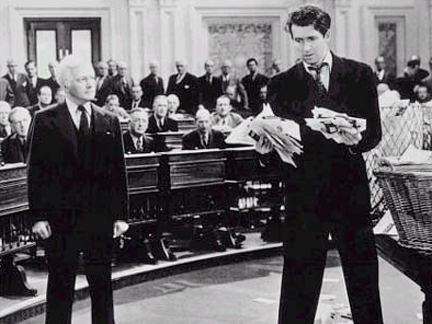
@Mr. Zaia you are no James Stewart: if you need an interpreter the next time you head to Washington, feel free to give me a call!

Looking back at Brunello

On Friday, Franco and I posted the news that the U.S. Alcohol, Tobacco, Tax, and Trade Bureau (TTB) has lifted the requirement of Italian government certification for Brunello di Montalcino imported to the U.S. The lift was agreed after Italian agricultural minister Luca Zaia met with bureau administrator John Manfreda last week.

I am happy to observe that despite the hail of the controversy (like the early-fall hail of 2008, that damaged but did not destroy the harvest; see above), Brunello and its producers — large and small — have emerged intact and healthy.

Looking back at the Brunello affair, in the glow of the Montalcino sunset, I am convinced of two things: that the controversy was a healthy wake-up call for producers (and that, ironically, it helped to raise positive awareness of the appellation abroad); and that, in many ways, it shed light on the importance and strength of the Italian appellation system.

At the same time, I believe the TTB’s response to the controversy was a trans-Atlantic misunderstanding: as the dearly departed Teobaldo Cappellano pointed out in the Brunello debate a year ago, the DOC/G system was created to protect the producers and the territory, not the consumer. And as much as I loath the thought of a Brunello producer “cutting” his Sangiovese with another grape variety, the transgression is a victimless crime as it relates to the consumer. If the consumer likes the wine and is satisfied with the perceived price-quality ratio, s/he is not molested by this misdeed.

The real victims were those producers who remained and continue to remain true to the territory and the territory itself. If unscrupulous enologists and calculating landowners did indeed adulterate their wines, and in doing so, co-opted and misappropriated an appellation tied to the land and the people who created it, therein lies the injury inflicted on their compatriots.

The saddest legacy of the Brunello controversy is the ill will it has created in the microcosm of Italian wine. On the same day that the Italian agricultural ministry issued a statement announcing the requirement for certification had been lifted, Franco (above, right; mentor, friend, and my partner in VinoWire) posted about a “cease and desist” letter he received from a lawyer representing a commercial winery. (For the record, Franco expunged any reference to the winery and wine in his post and I am merely speculating that the winery in question produces Brunello.) But the letter did not refer to something Franco had written: it referred to comments made by his readers! In one of the comments in question, a reader had made a remark about the unusual dark color of the wine by said winery. Has it really come to this? Do behemoth, commercial producers of Brunello really feel so threatened by a comment thread on a blog? Has it really come to this? Must a blogger feel threatened for merely allowing his readers to express their opinions in the comment thread of a blog?

Today, few who reside beyond Montalcino remember that Montalcino and its environs were one of the Germans’s last battlegrounds as they retreated in the face of the Allied advance in the last year of the Second World War. Even before the war, Montalcino and Tuscany were centers of the “red” resistance to fascist rule. Looking back on the whole Brunello affair, I was reminded of a little red book given to me by the mother of three brothers in Montalcino, whom I’ve known well since 1989. The locally published tome is by political activist, later partisan, and then local politician Carlo Sorbellini (above): Le mie memorie (My Memories). His descriptions of the years leading up to the war and the sacrifices made by him and his compatriot partisans during the German occupation are among the most humbly written and most moving narratives I have ever read. Many people shed their blood and gave their lives to protect this unique place: the same mountainous geography that made it a German stronghold also made it a great place to make fine wine after the war. And this Unesco-protected valley is among the most beautiful places in the world.

One thing I know to be true: I heart Brunello and I heart the people that lived, loved, and died to make it what it is today.

Vin Santo: an overlooked “orange” wine? (and a more likely explanation of its name)

vin santo

Above: Ale posted photos of grapes (Trebbiano and Malvasia) being laid out to dry on reed mats for the Vin Santo that he and his father are making this year.

Scanning my Google Reader feed this morning, I came across these posts by my friend Ale in Sant’Angelo in Colle. He and his father grow Sangiovese and make Brunello di Montalcino for one of the oldest — and one of my favorite — producers in the appellation, Il Poggione.

vin santo

Above: The mats are then hung in the vinsantaia, an attic used especially for the drying of the grapes. Windows on either side of the space allow for ventilation that helps to limit humidity during drying.

Reading his descriptions of harvesting and drying grapes for the production of Vin Santo, it occurred to me that Vin Santo is an “orange” wine. There is no canonical definition of “orange wine,” even though a new “orange wine” movement has clearly emerged among European winemakers, mainstream wine writers, fringe wine bloggers (like me), enthusiasts, and lovers. Vin Santo is generally not made using skin contact during fermentation (one of the fundamental techniques employed in the production of orange wine). But there is no denying that Vin Santo is orange in color.

The rich orange color of Vin Santo is created by the drying of the grapes and by intentional oxidation of the wine.

vin santo

Above: Specially sized caratelli (literally, “small casks”) are used for aging. Many believe that the size of the barrels is one of the keys to the unique flavors and aromas of Vin Santo.

The earliest documented printed reference to Vin Santo is found in Giovanni Cosimo Villifranchi’s Oenologia Toscana (1773). In 1605, Sir Robert Dallington mentions a wine called Zibibbo, which was “dried for Lent” and could possibly be a reference to Vin Santo (see his entire description of grape growing and winemaking in Tuscany here).

Many claim that the name Vin Santo (literally, “holy wine”) was coined in the 15th century when Greek humanist Basilios Bessarion tasted the wine and compared it to the wines of Xantos (see also this entry on Bessarion in the New Advent Catholic Encyclopedia). Supporters of the theory maintain that he liked it so much, he exclaimed “Xantos!” and those present understood him to say “Santo!” But I doubt this is the case.

I’ve heard some say that the name is inspired by the fact that Vin Santo can go through a second fermentation in the spring when temperatures rise in the vinsantaia. Like Christ, the wine “rises again.” I doubt this is the case but Dallington’s reference to Lent leads me to believe that dried grape wines were associated directly or indirectly with Easter in his time.

In 1773, Villifranchi writes: “The name that is given by us today to this ‘Vino di Santo’ is believed by some to be owed to Ancoret saints* and the Monks of Soria [Spain] who originally made wine in this manner.” He adds that “others believe that this name derives from the fact that the grapes are typically pressed during the period of the Christmas holidays.”

Whether you call Vin Santo an orange wine or not, it would seem to pass muster with the natural wine dogmatists. Using a “mother” yeast to start fermentation is a sine qua non of Vin Santo production: after pressing, sediment is scraped from a cask from a previous vintage and then added to the newly pressed juice to initiate fermentation. That’s how they’ve been making Vin Santo for centuries (or at least since Villifranchi first described methods of vinification employed in his day).

The only difference is that in Italy, they don’t call it “natural wine.” They just call it wine.

Look for more on Sir Robert in upcoming posts and check out this cool video posted by Ale on his blog today:

* “The recluses of the East in the early Christian centuries” (OED).

Banfi 2004 Brunello, I cannot tell a lie (and other notes and posts on 04 Brunello)

Tracie B snapped the above pic of me using my Blackberry the other night, when she came home with an open bottle of Banfi 2004 Brunello di Montalcino in her wine bag (when not otherwise occupied being knock-out gorgeous, Tracie B works as a sale representative for a behemoth mid-west and southeastern U.S. wine and spirits distributor).

The moment of truth had arrived: it was time for me to taste the wine with my dinner of Central Market rotisserie chicken, salad, and potatoes that Tracie B had roasted in her grandmother’s iron skillet.

The wine was clear and bright in the glass and had bright acidity and honest fruit flavor. The tannin, while present, was not out of balance and the wine had a slightly herbaceous note in the finish that might not please lovers of modern-style wines but that I enjoy. If ever there were a wine made with 100% Sangiovese grapes, I would say this were one — tasted covertly or overtly.

According to WineSearcher.com, the average retail price for this wine in the U.S. is $65. I can’t honestly say that I recommend the wine: it’s not a wine that I personally look for at that price point. I did not find this to be a great or original or terroir-driven wine but I will say that it is an honest expression of Sangiovese from Montalcino.

Anyone who reads my blog (or follows news from the world of Italian wine), knows that Banfi has been the subject of much controversy over the last year and a half. But fair is fair and rules are rules and I cannot conceal that I enjoyed the 04 Brunello by Banfi. (Btw, Italian Wine Guy, who is Glazer’s Italian Wine Director, recently posted on 04 Brunello, including a YouTube of Banfi media director Lars Leight speaking on the winery’s current releases at a wine dinner in Dallas.)

Above: Facing south from Il Poggione’s vineyards below Sant’Angelo in Colle, looking toward Mt. Amiata.

Despite the will of some marketers to make us think otherwise, 2004 was not an across-the-board great vintage in Montalcino. In my experience with the wines so far, only those with the best growing sites were able to make great wines in the classic style of Montalcino and wines that really taste like Montalcino.

Btw, in all fairness, it’s important to note that the Banfi vineyards lie — to my knowledge — primarily in the southwest subzone of the appellation, one of the historic growing areas for great Sangiovese. When you drive south from Sant’Angelo in Colle, you see signs for the Banfi vineyards on the right. Earlier this year, my friend Ale over at Montalcino Report posted this excellent series on understanding the terroir of Montalcino using Google Earth. It’s one of the best illustrations of why the wines from that part of the appellation are always among the best, even in difficult years. (Ale’s killer Il Poggione 04 Brunello, which I tasted for the first time at Vinitaly in April, received such glowing praise from one of the world’s greatest wine writers that it caused near pandemonium in the market, prompting wine sales guru Jon Rimmerman to write that it “may be the most offered/reacted to wine I’ve ever witnessed post-Wine Advocate review.”)

Above: Facing north in Il Poggione’s vineyards, looking at the village of Sant’Angelo in Colle (literally, Sant’Angelo “on the hill”).

Franco recently tasted 93 bottlings of 04 Brunello at the offices of The World of Fine Wine in London and wrote of his disappointment with the wines delivered by even some of the top producers. Here are Franco’s top picks and straight-from-the-hip notes, posted at VinoWire.

In other news…

One of the greatest moments of personal fulfillment in my life was when my band NN+’s debut album reached #6 in the college radio charts so I guess that stranger things have happened: a colleague in Italy emailed me last week to let me know that my blog Do Bianchi was ranked #9 in the official (?) list of “top wine blogs.” Who knew?

Thanks, everyone, for taking the time to read Do Bianchi. The blog has been such a rewarding experience for me and it means so much to me that there are people out there who enjoy it.

Mexican porn: Bahia adds tortilla soup to its menu

Above: Bahia Don Bravo’s new Tortilla Soup was too sexy to resist. No trip home to La Jolla where I grew up is complete without a visit to Bahia.

Tracie B and I returned late last night to Austin from San Diego where we met a lot of great people, poured and tasted a lot of great wine at the SD Natural Wine Summit, and caught up with mama Judy, the German Professor, and the Cheese Hater’s mom over dinner at Jaynes Gastropub (yes, even on my night off, I ate there, that’s how much I love it).

Above: Owner Carlos Bravo aka Don Bravo was in the kitchen on Monday when we stopped in with mama Judy for lunch. The carnitas were particularly delicate and tasty, moist and rich on the tongue.

I’ve got a lot of really cool posts on deck, including more from the Natural Wine Summit, a wonderful toasty vintage grower’s champagne shared by a dear friend, and some old and very special traditional-style Sangiovese from one of the most famous producers of Brunello di Montalcino.

Above: Who ever thought beans could be so seductive?

It’s 8 a.m. and I’ve already been at my computer since 6:30, trying to catch up. So I’ll make this post a quickie.

On deck for tomorrow: “Good wine lovers go to heaven, bad wine lovers go back stage.”

In other news…

Excerpts of an interview with Franco — on recent developments in Montalcino — appeared in The New York Times today — cartaceous version. Read it while it’s hot! (And you can read the entire interview here.)

Keeping the world safe for Italian wine

Above: Franco Ziliani and I tasted some fantastic Franciacorta together last September in Erbusco (before Tracie B convinced me to shave my mustache). Franco has been a great friend, a mentor, and an inspiration. I am proud to be his partner at VinoWire. Photo by Ben Shapiro.

Just keeping the world safe for Italian wine… that’s what we do around here.

It was one helluva way to wake up this morning in sleepy La Jolla — where Botox trumps micro ox — to find that the editors at Decanter.com had decided to publish our post on recent developments in Montalcino and subsequent reports by the Italian media.

I’m glad we got a chance to set the record straight and that I can drink my Vino Nobile tonight with Tracie B at Jaynes knowing that the world is safe for Sangiovese (or maybe we’ll drink the 2007 Selvapiana Chianti Rufina, which is showing gorgeously right now).

In other news…

If you’re planning on attending the San Diego Natural Wine Summit this Sunday at Jaynes, please email the restaurant to reserve. We’re almost at capacity and we’ll have to turn people away if they don’t have tickets. Click here for details and to reserve.

Deep Throat speaks from Montalcino

As in Plato’s Allegory of the Cave, the shadows cast upon the walls of a wine cellar outline not reality but the truths of those who live them. Little clarity has emerged from Montalcino, even in the light of Italian officials’s findings in their investigation of adulterated wine there. As outside observers, we see only shadows of reality cast upon the walls of Brunello’s caves.

The following interview was conducted last week via email with a young winemaker in Montalcino who works with and for a small family-run estate. S/he has asked me not to reveal her/his name and so I will simply call her/him Deep Throat. Her/his English-language ability allowed her/him to answer the questions in her/his second language. For the sake of immediacy, I have not made any edits whatsoever to the answers. Read them below as I received them at the end of last week. I doubt we’ll ever know the truth about what really happened in Montalcino but I hope this point-of-view (however factual or speculative it may or may not be) helps us to understand the disparity between what we have been told by the wine media and the perceptions and sentiments “on the ground,” as we used to say when I worked at the U.N. Read and digest it for what it’s worth…

*****

Why did the investigation happen in the first place?

The whole bomb came officially out about 16 months ago. Strategically… just few days prior to Vinitaly 2008. You can imagine what kind of backlash this gave to everybody in the appellation. The Brunello collective stand at the fair was like a war zone… Why did it come out? Likely because it was no longer possible to hide the lack of controls by the Consortium or, maybe better, the lack of actions by the Consortium after finding vineyards, cellars and/or wines not conforming to the Brunello production rules.

Was it because banks were checking on vineyards supposedly planted to Sangiovese and used as collateral in loan applications?

Let’s say that this could surely be a factor… many illegal vineyards were planted with big loans or (even worse) with EU funds. Just to give an example: a hectar of Brunello is worth about 500.000 Euros while an IGT one could be around 100-150.000. Do it yourself: this is very simple math! Only the producers were blaimed for the illegal vineyards and/or wines but those very same wines were tasted and passed at the Tasting Commission (official and external). The vineyards were supposedly checked and obviously passed by Officials form the Consortium, from the “Comune”, from the “Provincia” and I ask myself why nobody there was then involved in the investigation…

Now newcomers to Montalcino (Gaja, Frescobaldi, Folonari) are asking for “relaxed” rules and a more flexible set of rules. Screw you! Did you arrive to Montalcino for the idea of producing Brunello or for the value of the land? Be clear and make a choice. Or be nice and… get the hell out of here!

Or was it because “anonymous letters” were sent to the Siena prosecutor by disgruntled Brunello producers?

I have very good reasons to think that The Letter was clearly sent. This is going on a personal level: it is a very personal “faida” between some of the top managers of thee most visible estate in Montalcino (especially on the US market) and one of thee most radical and straight forward producers. Is David hitting Goliath. But I must say that little David was hitting the wrong enemy this time: is not Goliath’s fault if David’s wines are usually NOT conforming to the mandatory analysis due prior to the tasting at the Official Tasting Commission. The wines must conform to the parameters. Period. If they are out, they are out and you should adjust your winemaking method instead of complaining with the rules if they are not according your personal taste. Orelse… go your way without labelling your wine as a Brunello… but like this… the value of David’s bottles is going dramatically down. And David is already in deep shit with sales.

PS Last minute news: David’s estate is now for sale. But he’s asking way too much.

Has your winery been inspected by Treasury officials? What do they do when they inspect the estate? What technical tools do they use? How often do they visit? What are they looking for?

I cannot talk for other people but our tiny estate was checked several times by several different authorities especially in the last 2 years. I don’t know how much other people has been inspected. We ALWAYS conformed and they ALWAYS came back for more. We had: Tresury officials, Consortium inspectors, Ministry of Labour officials, etc. To make it short: you name it… they came! To check everything… I wonder what they have been checking at the other places. There was no way to get out of it with something out of the line. Of course it makes a big difference if you go and inspect a vineyard to check for the different varietals in July or in December… we got checked last week too for the countless time.

Was the issue yields or was the issue Merlot? Is it true that some were using grapes from Apulia?

The issues were several, being the non-Sangiovese grapes the most important one and the yeald per hectar another one. By the beginning of the investigation, I have personally seen a 4 hectars vineyard (supposedly Brunello) litterally destroyed with a Caterpillar by the owner from a day to another; and another one grafted with a new and different varietal (Sangiovese, this time?) in late June (???). I know a very influential Consulting Wine Wizard that, in order to come and make the wine for the estate of one of the past President of the Consortium, strongly demanded (as a condition to accept the job) to plant some ALICANTE grapes for the color. Come and drive around Montalcino in October and look at the leaves… You’ll have fun!

Wines in bulk were a point too. But we must say that: it is absolutely not illegal to buy wine in tanks from somewhere else. Illegal could be the use of it in some certain ways in the cellar. We must also say that: some of this wine could have been (and IT WAS) used illegally, out of the DOC and DOCG rules. You know… quality and quantity rarely match. Following the Brunello rules, you should not exceed 7 tons of grapes per hectar. Let me tell you that, to have a great juice (as Brunello should demand) it’s hard to go over 4-4,5 tons. Figure it out yourself!

As a small producer of traditional-style Brunello, how do you feel you have been treated in a sea of commercial producers?

As a small producer, we have been treated like we had nothing to say. We felt absolutely NOT represented by the Consortium, neither protected. DOCG means that our Appellation of Origin is Controlled and Guaranteed. This was the only supposed role of the Consortium. None of this things was provided by them: oviously NOT the controls, NOT the guarantee and, sometimes, NOT even the origin. So I am asking myself what is the reason of the Consortium to be. Right now, the Consortium is just a cost for a small producer, and it’s giving no advantages at all. Many people will soon leave, I am sure. We asked them how to act to protect ourselves from this situation, we were told to shut up! The big guys are messing around… and we suffer the real damage, being all commonly treated as cheaters. Our reputation is on the line and they could not care less. It’s hard to accept this, especially when they ask you to shut up, I feel I want to raise my voice from the top of the mountain. They have even payed (BIG MONEY) an very high-ended external press office from Milan to… shut up. With our money too… How pathetic!

You are a litterate person: write a few lines about the origin and the history of the word “Consortium” and you will find very little similarity with the recent image of the Consortium of Brunello.

PS. Is there any other kind of Brunello apart traditional? Don’t think so!

Would weather conditions in the dismal 2002 and 2003 vintages have had such an impact on wineries if growing sites were limited to the south and southwest subzones Sant’Angelo in Colle and Castelnuovo dell’Abate and the Montalcino township subzone?

The problem is that many people planted vineyards only for the sake of investement more than for the love of wine and the respect of a tradition. A lot of people arrived to harvest and bottle the wine with no idea on how and where actually sell that wine. This was the main reason for the price drop: fear and unprofessionalism!

Right after the 2002 harvest, everybody apparently agreed on the fact that the vintage was absolutely not good and not suitable for producing Brunello. You could go around and ask producers and they all would tell you that they were not going to release any 2002 Brunello. The fact is that very few people hold to that word: probably 98% of the producers actually released a 2002 and a single real genius (or a magician… previously President of the Consortium but not the one I was telling about before) even released a 2002 Riserva. Come on! Be serious and give me a break… We are talking about integrity here. Or, at least, we are trying… some of us is trying harder than others!

2003 was hard too and this was surely not helping in this moment as the beginning of the scandal hit Montalcino right after the official release of the vintage. so many importers and/or distributors took the chanche to invest -in moment of great financial crisis- in other (cheaper) appellations while waiting for the great 2004 vintage to come out. We must also thank the Consortium for the dangerous overrating of recent vintages that have been generously given too many stars…

About sub-zones, I am a fervent believer! But you, as owner of a vineyard in Torrenieri, would want this to be written on your label? And you, as a regular but somehow skilled customer, would prefer to buy a Brunello from the sub-zone of Castelnuovo dell’Abate or Sant’Angelo, or one from the lowest vineyards in Torrenieri? You already know the answer: that’s why sub-zones of Brunello are never gonna happen.

What is the future of Montalcino? Will other grapes be allowed?

The future of Montalcino is unwritten. I personally hope for the sudden death of the Consortium and the birth of a free association of producers with total dedication to PR and promotion and absolutely no role in the controls. I would like the controls to be completely made by State offices with less bureaucracy and very fast times of reaction to needs and/or infraction.

Allowing other grapes would mean to betray Mr. Biondi Santi original vision and dream. Dream that became reality and privilege for all of us. Allowing zelig grapes would kill the reality of a truly blessed terroir. We are always filling our mouth with the words “tradition” and “heritage”. It’s now time to stand tall behind our words. I have been doing this since forever. Like this they were doing at my estate before me. Like this they will do at my estate after me. The password is only one. Sangiovese! That’s the true reason why this land is so valuable. Why are they all so blinded by other less important things?