The Slow Wine Guide 2019 tour begins on Monday, March 4 in San Francisco and then moves on to Portland (Oregon), Denver, New York, and Boston. Click here for tasting and registration details.
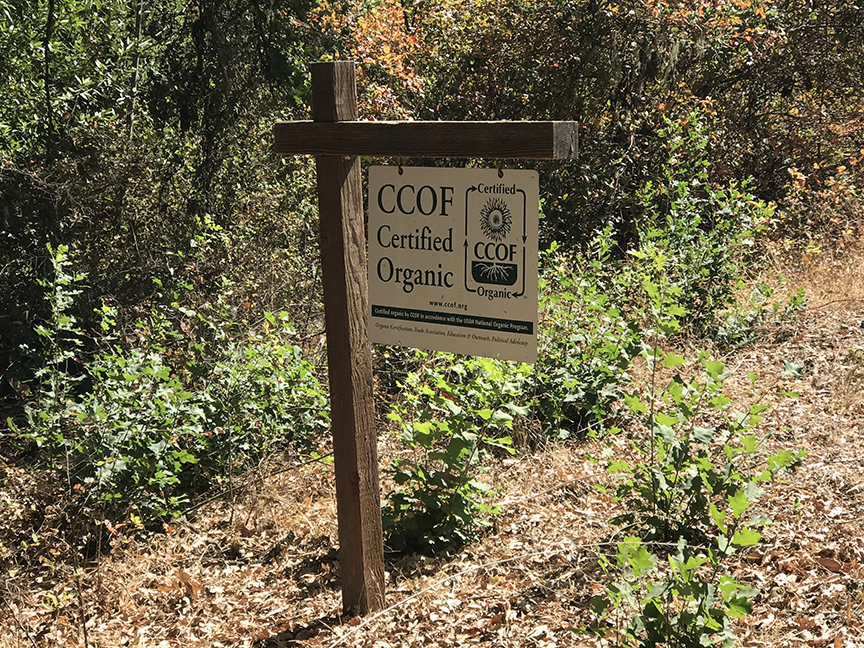
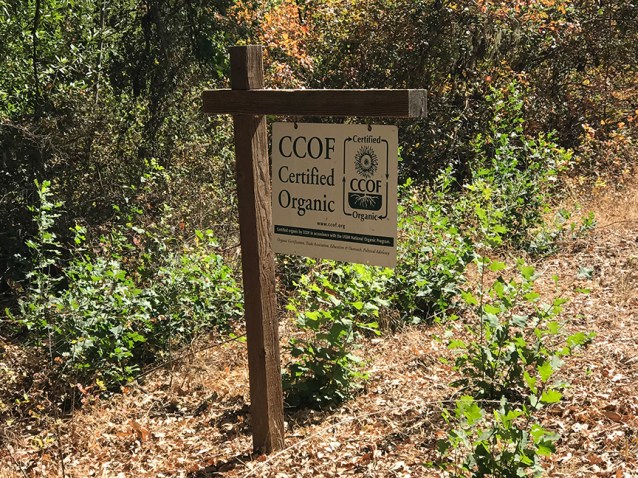 One of the things that flummoxed the editors of the 2018 Slow Wine Guide to the wines of California was how to treat the often thorny subject of who is and who is not a genuine organic grape grower.
On the one hand, organic viticulture is widespread in California where extremely dry conditions make it easier to farm without the application of fungicides commonly used to combat peronospora (downy mildew).
On the other hand, there are myriad legacy growers in the Golden State who have no interest in obtaining organic certification even though they have employed organic practices for decades, often since the first planting of their vineyards.
Add to this mix the fact that exorbitant land prices in California make it nearly impossible for smaller-scale winemakers to own the vineyards where they source fruit for their wines. Throughout the state, the cost of acreage in wine country is driven by “weekender” owners whose primary income isn’t derived from viticulture. As a result, the California wine industry — especially as relates to producers who embrace the Slow Wine ethos — is highly parcellized.
Even in “lower rent” districts like the Sierra Foothills AVA, it’s challenging for low-volume winemakers to grow their own fruit.
Take Hank Beckmeyer’s La Clarine Farm, for example, one of my favorite wineries in the U.S. and a shoo-in for inclusion in the Slow Wine Guide.
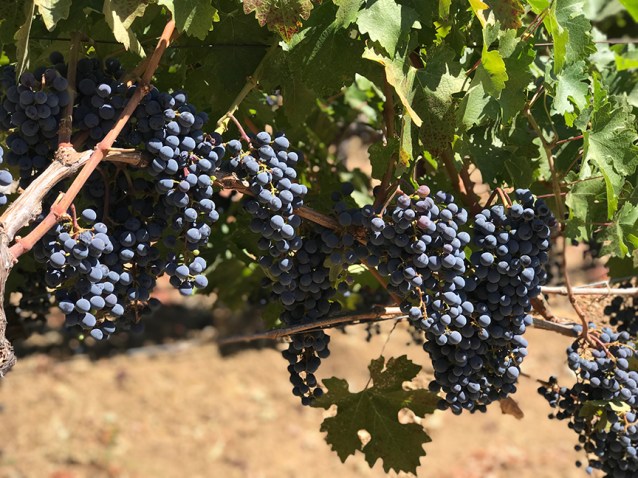 Above: organically certified Cabernet Sauvignon vines at Volker Eisele, one of my favorite Napa Valley growers. The vineyards there have been farmed organically since they were planted in the 1960s. And the owner was among the first to certify a Napa Valley grape farm.
Hank — one of the most respected, beloved, and emblematic producers in California’s progressive movement — sources 100 percent of his fruit. And although all of those growers employ organic practices in their vineyards, none of them are organic certified.
If organic certification were the sine qua non baseline for being profiled in the guide, our team of editors reasoned, we would have hardly had enough winemakers to fill the pages of the book.
For the 2018 edition, we didn’t include certification status for every winery.
But with the current 2019 guide, not only did we specify whether or not producers were certified organic, we also listed the number of acres owned by the winery. In many cases, as for La Clarine farm, that figure was zero acres owned and certification entry was annotated with “n/a” (not applicable).
Unless a given estate is 100 percent certified organic (or biodyanmic as the case may be), its certification status is listed in the book as n/a. Editors were encouraged to quote growers and winemakers directly when it came to accounts of organic growing practices employed. And in many instances, they have specified that although organic farming is employed in the vineyards, the estate is not organic certified. But in order to be profiled as an “organic winemaker,” the estate had to be 100 percent certified and/or sourced fruit had to be 100 percent organic certified.
This year’s California guide, the second edition, has nearly doubled the number of wineries profiled. And the debut edition of the Oregon guide profiles 50 wineries.
The Italian editors of the guide are currently posting all the profiles on the Slow Food blog here — free for all.
I’ll be attending the Slow Wine tastings in San Francisco next Monday and Portland, Oregon next Tuesday. I hope you’ll join me!

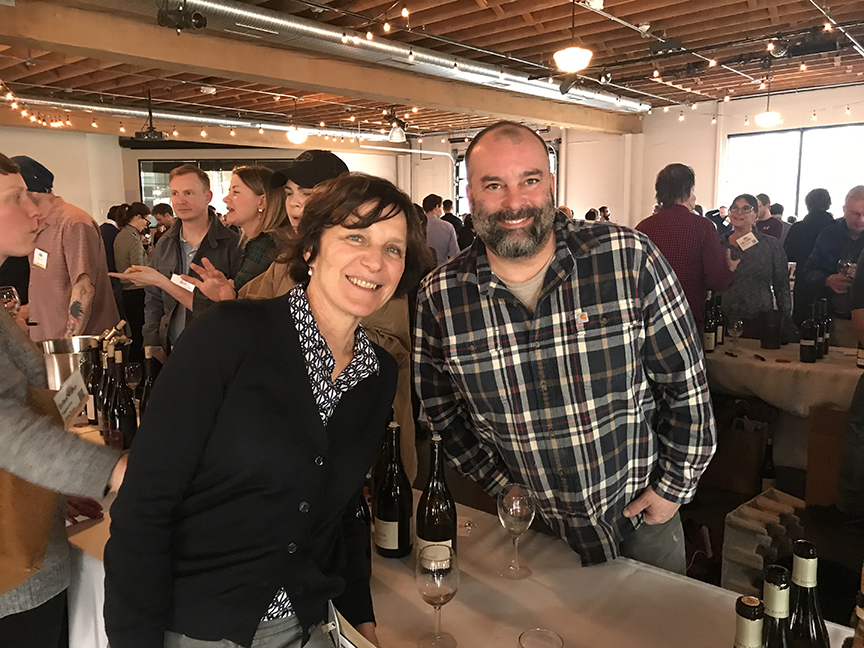 That’s a whole lotta wine right there! Matile Poggi of Le Fraghe (left, one of my wine heroes, for her FIVI leadership) and Andrew Beckham of Beckham Estate Vineyard in Oregon’s Chehalem Mountains.
 Slow Wine editor-in-chief Giancarlo Gariglio (left) with California wine legend Robert Sinskey. I have to confess to being a bit starstruck when meeting Robert, whose wines were among the first Californians I swooned over as an adolescent wine lover.
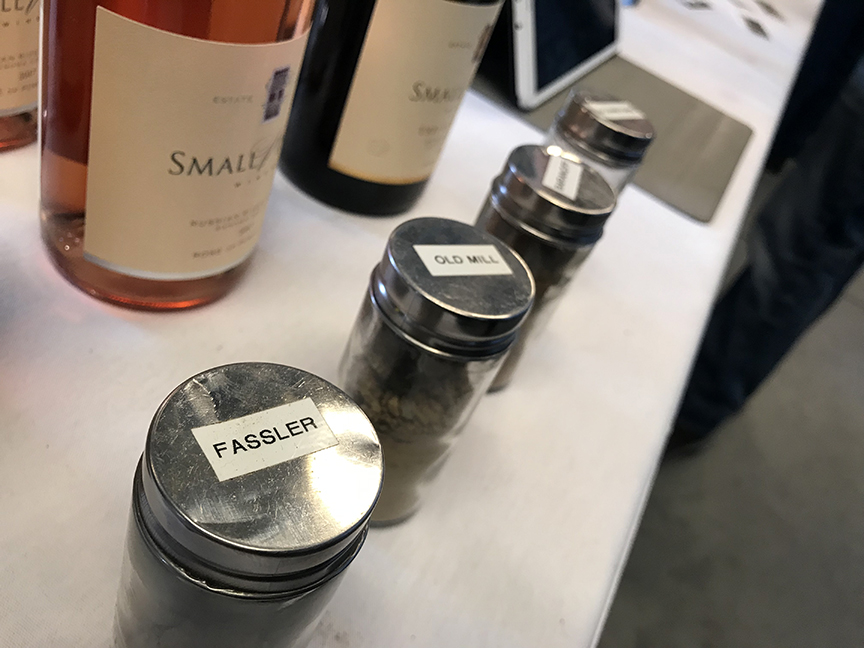 Soil samples from the Russian River Valley at the Small Vines table. Slinging dirt is a great way to teach people about your wines, remarked winemaker Paul Sloan.
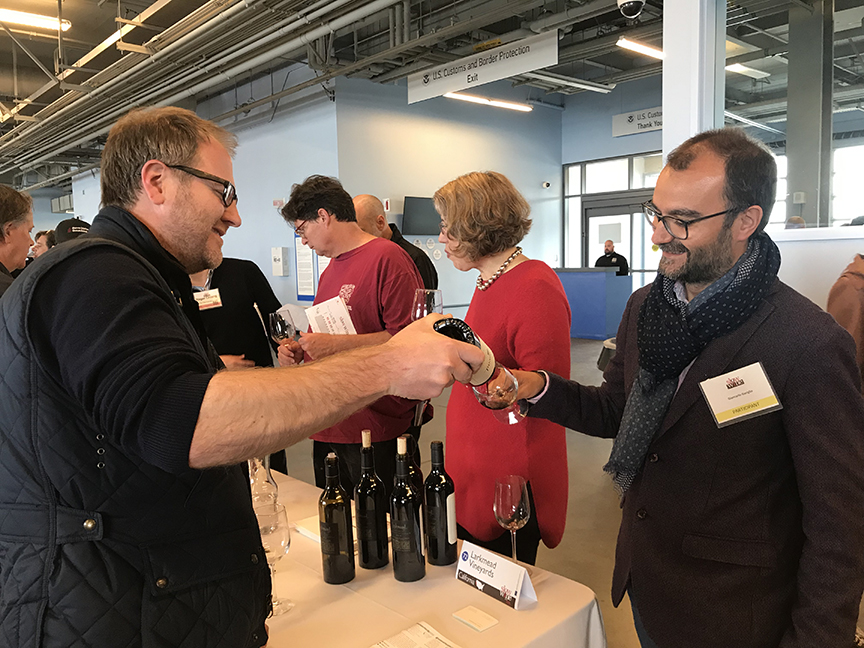 Mitico! Dan Petroski (left) poured Larkmead Vineyards for Giancarlo. Dan’s Massican wines were also in the guide this year.