Please consider giving to Unicef’s Ukraine child refugee fund. This link takes you straight to the donation page. G-d bless our Ukrainian sisters and brothers. Thank you.
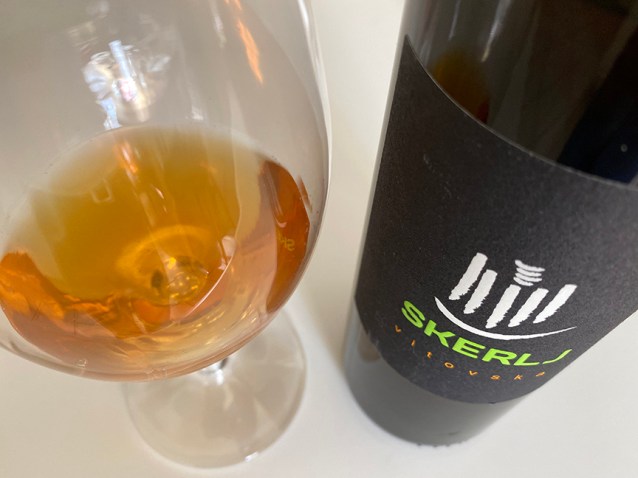 Above: last night, Tracie and I treated ourselves to one of our favorite macerated white wines from Friuli, the Vitovska by Skerlj. I’m now more convinced than ever that the most highly prized wines in the Italian Renaissance were “orange” like this one.
It hit me like a brick of bio char: vin greco (Greek wine) in the Renaissance was neither red or white according to a then best-selling author. It was golden brown, like a lion’s mane noted Cesare Crivellati, a medical doctor and wine writer from Viterbo whose Trattato dell’uso et modo di dare il vino nelle malattie acute, contra il costume de nostri tempi (Treatise on the Use and Mode of Treating Acute Illness with Wine, [a Guide] Counter to the Customs of our Time) was published in Rome in the second half of the 1500s.
On white wines that are not quite “white” but definitely not “red” he writes, “si deve intendere di colore fulvo o flavo come è quello della malvasia, del greco, e simili.”
“They should be considered fulvous or flavous in color, as is the case with Malvasia and Greco and similar [wines].”
The descriptor fulvo is from the Latin fulvus (fulvous in English), a term generally translated as “deep yellow, reddish yellow, gold-colored, tawny” (Lewis and Short).
Similarly, flavo from the Latin flavus meaning “golden yellow, reddish yellow, flaxen-colored” (Lewis and Short).
The word fulvus was used in antiquity to denote the color of a lion’s mane, to put it in context.
The discovery was part of my ongoing research on wines in Italian literature from 1300-1600. In and of itself, the quote is highly significant in our contemporary understanding of wine during the late Italian Middle Ages and Renaissance.
But there’s also an extremely important observation to be made here based on my extensive readings of primary texts from that era.
At the time, the term vin greco (Greek wine) referred not to the modern-era grape variety Greco or family of white grapes known as Greco, Grechetto, Grecanico, etc. Instead, it denoted a style of wine that often arrived by ship via Greece but was also produced in significant quantities, particularly in Naples where it was famously grown and vinified on the slopes of Mt. Vesuvius.
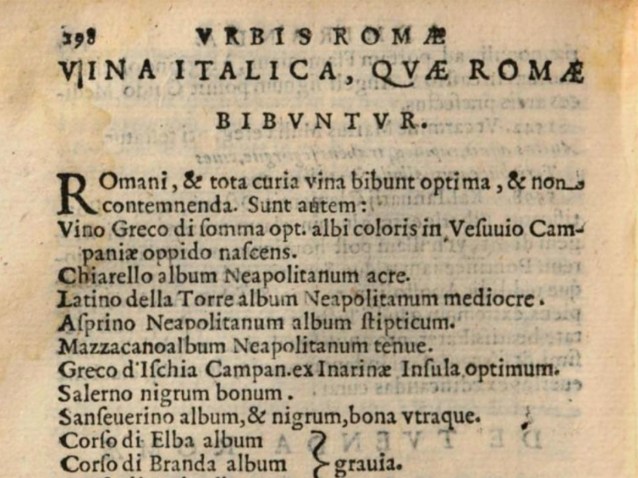 Above: a folio from Itinerarium regionum urbium et oppidum nobiliorum Italiae (Itineraries Through the Noble Regions, Cities, and Towns of Italy), a travel log published by Flemish jurist Franz Schott on the occasion of the 1600 Jubilee declared by Pope Clement VIII.
By 1600, when Franz Schott (1548-1622) published his travel guide to Italy (above), Rome was already an important “wine destination,” as we would call it today. And the number-one wine in Rome, as Schott notes, was vino greco (see the image above):
“The Romans and the entire [Papal] court,” he writes, “indisputably drink the best wines [in Italy]. They are as follows. The best is white in color, Vino Greco from Somma, which is grown in the town of Vesuvius in Campania…”
He calls it white. But as noted in the Crivellati quote above, it was common to call tawny-colored wines “white” at the time. The confusion about tawny wines like Malvasia (a style, not a grape) and Vin greco (again, a style, not a grape) was such that Crivellati felt compelled to address it.
So the fact that Schott calls it albus doesn’t mean it wasn’t fulvus.
A few decades later, Francesco Redi, the Italian scientist and poet, would refer to the “amber” color of wines made in Crete (in Greece) and the Neapolitan coast and islands, not far from Vesuvius.
In his poem “Bacco in Toscana” (“Bacchus in Tuscany”), he refers to the “preziosa… ambra liquida cretense” (“precious amber liquid from Crete”) and in another instance, to the “noble wines” of [the island of] Ischia and the town of Posilippo on the Gulf of Naples.
The last however extremely important piece of evidence that leads me to believe that vin greco was an orange wine comes from the Trattato della coltivazione delle viti (Treatise on the Cultivation of Vines) composed at the end of the 1500s by Giovanvettorio Soderini (see one of my posts on Soderini here). In his work, he describes a practice of vinifying wines on the solids from previously vinified vin greco. This would seem to indicate that vin greco was made by fermenting the must on its skins. As any observer of the contemporary Italian wine scene knows, orange wine gets its amber color through the fermentation of white grapes on their skins.
My research is part of a bigger project slated for academic publication on the literary implications of wine in Boccaccio. As I publish more of my work, it will become clear that vin greco and wine in general play a greater role in the Decameron than previous scholars have imagined.
I hope you enjoy reading about it as much as I enjoyed putting it together! More to come… Thanks for being here.

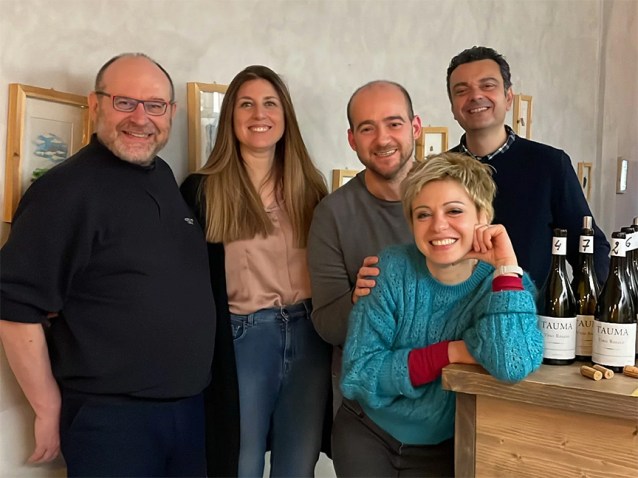 Above, far left: Sandro Sangiorgi, one of the authors of the recently published Vini Veri manifesto that squarely criticizes a new wave of natural producers who consider “technical ability an obstacle” to making their wines. A top wine writer and taster, Sangiorgi is widely considered one of Italy’s leading experts on and advocates for natural wine (image via the Porthos website).
 This year as we prepare to celebrate the Passover, our family knows how fortunate we are to enjoy good health and security. With everything going on in the world today, we take time each and every day to tell each other that we love each other and to let each other know that we support one another.
 Georgia and Lila Jane have both been doing well in school. And we all enjoy their music.
  Georgia plays violin and piano and is in advanced choir at school. Lila Jane plays cello and piano and is in beginning choir.
  Tracie’s work is going really well (poo poo poo!). And now that the wine business is back in full swing, my work is also going well.
  We are much closer to our financial goals than we could have ever imagined in 2022. The light is appearing at the end of the tunnel, which is great.
  Tracie has done an amazing job and there’s not a day that goes by that I don’t remind her that she makes our lives whole.
 The sun shone through the trees on an unusually warm Sonoma valley early evening as kids played in the park and tourists milled about the shops and tasting rooms.
 Since the late 1980s, Italian cuisine in the U.S. has been shaped by a tension between traditional- and creative-leaning forces.
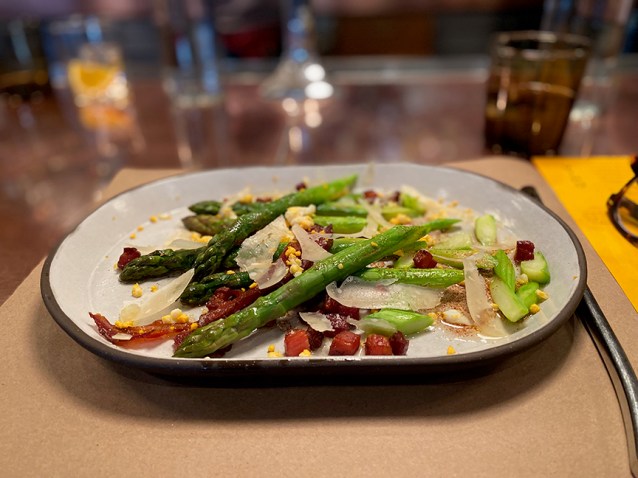 Making my way over to Cotogna from my hotel in San Francisco the other night, I couldn’t help but remember a chilly winter evening in the late 80s when I stopped a man on the street and asked him if he knew the way to a certain “trattoria,” a name for pseudo-Italian restaurants that had become popular in the second half of the decade.
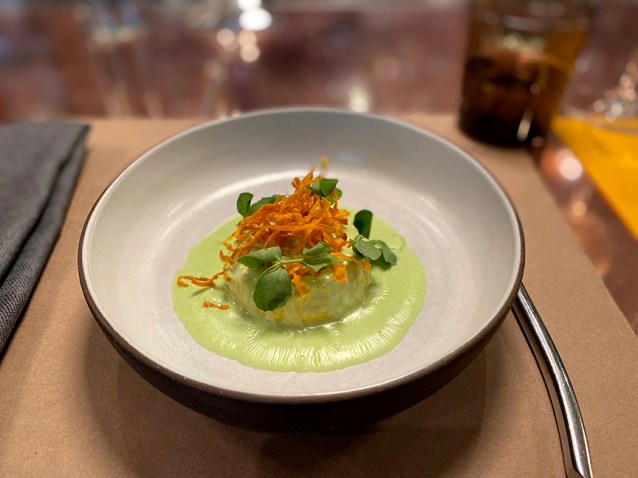
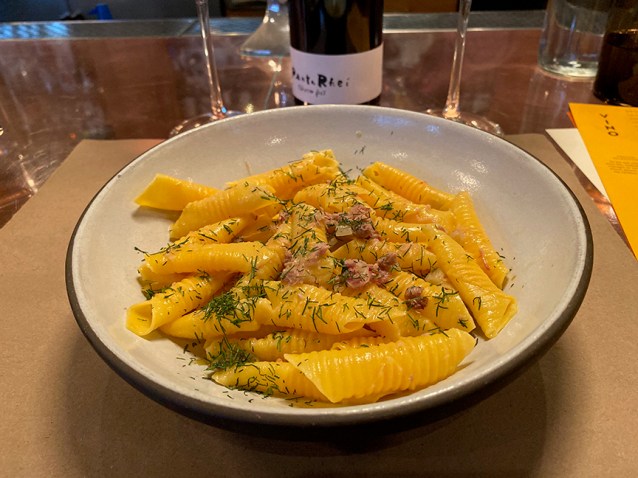 The carrot sformato (first photo) blew me away with its ethereal texture and subtle dance of bold but elegant flavors. Sformato — properly called a savory custard in English — is all about the texture. It should be firm but light, rich but buoyant. I know already from my Instagram that people agree with me: this dish was nothing short of show-stopping. I loved it.
 Image via
  Every year at my Vinitaly, there’s a first-day toast organized by a loosely knit group of Italian wine bloggers and social media users at the Abruzzo region stand.
 Above: in November of last year, I presented a sold-out dinner at Roma in Houston featuring the wines of Alicia Lini (standing).
 This just in from the department of lexicography…
 The first thing that struck me is that somm is not included as an accepted abbreviation or alternate spelling.
