1989 Produttori del Barbaresco for Easter

produttori del barbaresco

Above: The 1989 Produttori del Barbaresco Barbaresco was truly brilliant yesterday afternoon. We paired with roast leg of lamb and sat outside in the gorgeous weather. Ubi major minor cessat: check out Tom’s excellent profile of Produttori del Barbaresco here. I visited the winery during my March trip to Piedmont and will post on my tasting there in the next few weeks.

Posting in a hurry this afternoon because slammed with work and getting ready for tonight’s Orange Wine dinner at Vino Vino, where I’ll be pouring and talking about some amazing wines. We posted the wines and the menu earlier today. (There are still a few spots open: the wines are great, chef Esteban is pulling all the stops, and in true Austinite fashion, the dinner will be followed by Gary Clark Jr.’s first performance at Vino Vino.)

produttori del barbaresco

We shared our Easter feast with another couple, close friends of ours. I roasted a leg of lamb yesterday afternoon, seasoned with rosemary from our garden. My beautiful Tracie P made all the fixins. :-)

produttori del barbaresco

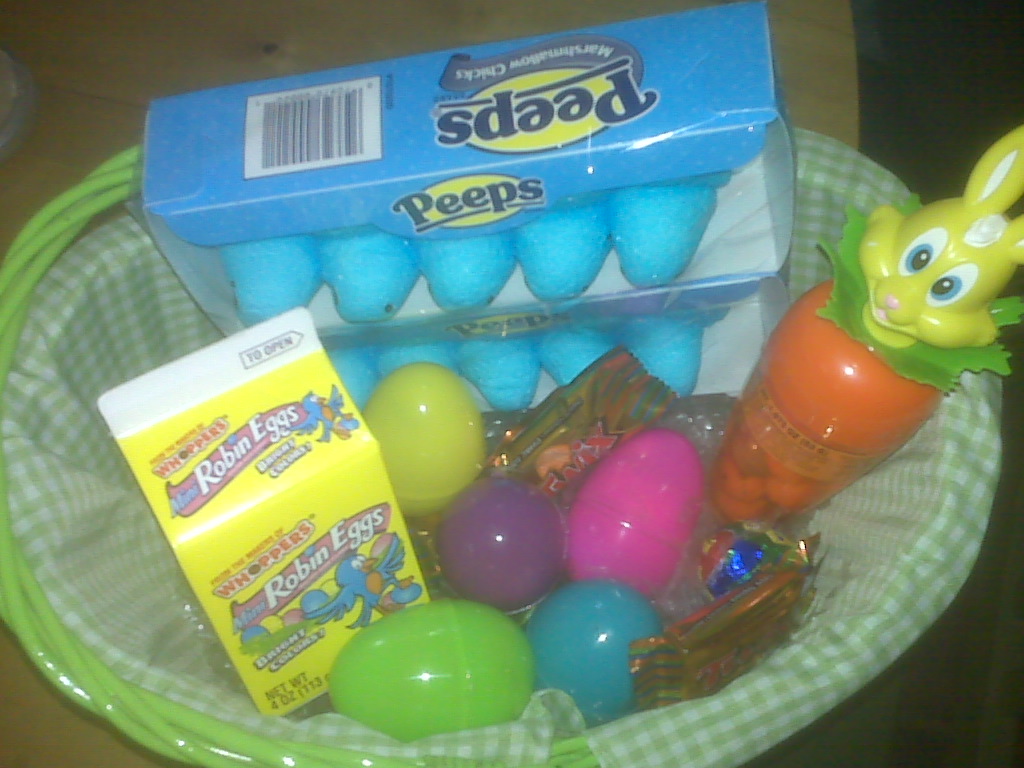
Tracie P had also dyed some Easter eggs. Our new home is so wonderful. Words just cannot say how much I love her…

In other news…

Alfonso aka Italian Wine Guy has been making his way from Bordeaux down to Italy. I’ve really be enjoying his posts and his travels… Definitely worth checking out…

More tomorrow…

Beppe Rinaldi doesn’t care much for Americans (and he makes truly awesome wines)

citrico

Above: They call Giuseppe “Beppe” Rinaldi the “Citrico” (CHEE-tree-koh), the “citric one.” Photos by Tracie P.

When Italian actor Franco Citti told his mentor Pier Paolo Pasolini that he was headed to the U.S. to make a film with Coppola (The Godfather), the director and poet admonished famously: “Go to America but don’t learn how to speak American.”

I couldn’t help but be reminded of that famous however apocryphal quote when esteemed Italian wine scrabbler Mr. Franco Ziliani took Tracie P and me to visit and taste with Beppe Rinaldi in Barolo.

citrico

Above: We didn’t taste but rather drank 1982 Barolo Brunate and 2005 Barolo Brunate-Le Coste in Beppe’s living room, accompanied by some excellent cheeses that Beppe sliced for us personally and his ubiquitous Toscano, the spicy “Tuscan” cigar favored by many Italians. The 1982 was one of the greatest wines I’ve ever had the privilege to drink — brilliant fruit and exquisite tannin. Beppe spilled a drop on Tracie P’s jeans as he poured. She still hasn’t washed them.

Beppe doesn’t care much for Americans or America, a sentiment not uncommon in a region of Italy that was once dominated (although no longer) by far-left politics, where the cultural hegemony of Americana was seen as a destructive force that could sweep away the genuine traditions and values of life in post-war Italy. He told of us of a trip he made in the 1980s to Davis, California, when he was still working as a veterinarian. Unlike other Italian winemakers who traveled to Napa during that decade, Beppe wasn’t impressed by the squeaky-clean wineries and winemakers of his antipodal counterparts. Nor was he impressed by the purveyors of Italian wine.

giuseppe rinaldi

Above: The Rinaldi cellar, which lies underneath the Rinaldi 18th-century villa, is old-school all the way. The house is truly one of the most beautiful in the town of Barolo. I regret that we didn’t take a picture of the exterior.

We were thrilled, of course, to get to taste with Beppe and we are forever grateful to Mr. Ziliani for such high-level access. To my palate, his wines are among the greatest produced in Barolo and the style has remained entirely unchanged for at least two generations (i.e, the current and that of Beppe’s father, also Giuseppe).

giuseppe rinaldi

Above: Among other wines, Rinaldi makes a blend of fruit sourced from Cannubi, San Lorenzo, and Ravera as well as what is considered his flagship wine, Barolo sourced from Brunate and Le Coste. His expressions of Cannubi and Brunate, in particular, are considered two of Barolo’s historical benchmark wines. To my palate, these are two sine qua non wines, essential to an understanding and appreciation of the greatness of Barolo.

Of all the winemakers we talked to in February in Barolo and Barbaresco (and we asked the very same question during each visit), Beppe was the only one who said he doesn’t use selected, cultured yeasts. “I don’t have problems staring fermentation in my cellar,” he said. On a few extremely rare occasions, he told us, he has used cultured yeast when for whatever reason fermentation needed a nudge, so to speak. When you tour the cellar with him and negotiate the labyrinth of his cluttered laboratory, you cannot help but think that the terroir is not only in the vineyards but also there in the cellar, which has remained unchanged for two generations. It is as if the terroir is “growing” on the sides of the enormous Slavonian casks he uses to age his wines. One of the most fascinating vessels is an enormous fermentation cask built by his father so that he could vinify his entire holding of Brunate in one vat. When you visit this cellar, clean, of course, but not immaculate, you can “smell” the terroir.

giuseppe rinaldi

Above: Playing in a French rock band sure comes in handy sometimes.

Beppe may not be so fond of America and Americans but the “citric one” was an excessively generous host. Maybe he found me slightly more simpatico when Mr. Ziliani told him that I perform and write songs with a French rock band. At the end of our visit, Beppe gave me an unlabeled bottle of 2005 Barolo Brunate-Le Coste.

barolo brunate le coste

Above: I probably hate blind tasting as much as Guilhuame does. But I couldn’t resist “tasting my friends blind on this wine,” as we say in the biz. Of course, they could easily surmise what the wine was because they knew where Tracie P and I went on our honeymoon!

Last night, Tracie P and I shared the bottle with our good friend Mark Sayre and the gang at Trio in Austin (the happy hour there has become our “Mel’s Diner”). What a thrill to share this gorgeous wine with a group of wine professionals here in Austin! It was powerful, with gorgeous fruit and an immensely vibrant acidity (no pun intended!), definitely one of the top 3 examples of 2005 Nebbiolo I’ve tasted.

Beppe Rinaldi is a true iconoclast and his wines are truly iconic expressions of Barolo, sine qua non interpretations of one of the greatest wine producing regions of the world, Langa. Like the man, the wines represent an essential continuity with the past and a hope for the future. Whether you prefer modern- or traditional-style Langa wines, thank your lucky stars for a man who remained true to his people and his land, when others were perhaps seduced by the dollar signs that flashed before them in the 1990s. In the field of trophy wines, Beppe’s bottlings remain more than fairly priced. I cannot recommend them to you enough.

And to be honest, I’m only half-kidding when I say that Beppe doesn’t like Americans. ;-)

barolo brunate le coste

TTB lifts certification requirement for Brunello

The U.S. Alcohol, Tobacco, Tax, and Trade Bureau (TTB) has officially lifted its requirement that importers of Brunello obtain an Italian government declaration stating that the wine has been made in accordance with appellation regulations.

You can read the statement by the TTB here.

As a self-anointed semiotician, I can’t help but note what an interesting instance of wine writing this document represents. A close reading of the text reveals that that the TTB will ultimately be remembered as the author who “wrote the book,” so to speak, on the Brunello controversy. A winery, as of this week not yet implicated, also emerges in the document.

It’s at once the grimmest form of wine writing and the happiest: I hope it truly marks the end of the controversy known as Brunellopoli (Brunellogate).

I believe that Mr. Franco Ziliani was the first to publish the news in Italian and my friend Ale, author of Montalcino Report, was the first to publish the story in English.

Recipe: Giovanna’s Spinach Casserole (and I know my chickens)

Many years ago, I worked as an editor at an Italian food magazine where I must have translated thousands of recipes. I had fun this morning translating Giovanna’s recipe below.

Giovanna’s Spinach Casserole

An old, simple, and tasty recipe.

Wash the spinach well and then wilt in a pan with a pinch of salt. Squeeze and then use a sieve to purge the spinach of its water. Sauté in a pan with a little bit of butter.

Make a béchamel and seasons with salt and pepper to taste and a dash of nutmeg. Fold the béchamel into the spinach and add freshly grated Parmigiano Reggiano, 2 whole eggs, and 1 egg yolk. Whisk the remaining egg white until it forms peaks and then carefully fold it into the spinach mixture.

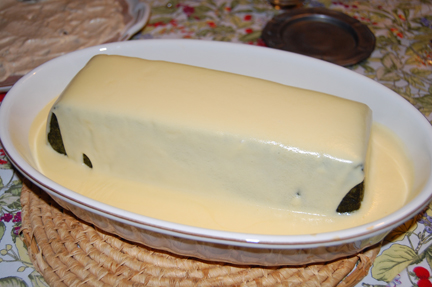
Grease a loaf pan (or a bundt cake pan) with butter and then coat with a thin layer of flour before transferring the spinach mixture to the pan. Heat the oven to 375°, arrange the pan in a bain-marie and bake for 40-45 minutes. Remove the loaf from the oven and let it cool for a few minutes before turning it out on to a serving platter.

Serve with a fondue, with mushrooms, or chicken livers.

*****

Tracie P’s comment reminded me that I had neglected to post about Giovanna’s rooster and chickens!

franco ziliani

There’s a wonderful expression in Italian, a phrase you might hear a mother or a grandmother utter when she can predict a child’s desire or request: conosoco i miei polli (I know my chickens). If you ever get to stay in an Italian farmhouse estate like Giovanna’s, you’ll notice that the chickens (like Giovanna’s) have very distinct and often peculiar preferences about their daily routine and pecking order, as it were. Hence the familiar, affectionate expression…

Thanks again, Giovanna, for sharing your recipe!

And for my fan of the “burning disappointment,” please don’t despair! Next on deck: Beppe Rinaldi on natural yeast… Stay tuned!

Barbaresco Rio Sordo: Giovanna, cry me a silent river

barbaresco

Above: Giovanna Rizzolio is a delightful woman, wholly committed to terroir-expression wines and the traditions of her beloved Barbaresco. She presents her wines every April as part of the Vini Veri tasting.

The inestimable Italian wine raconteur Mr. Franco Ziliani certainly never promised me a rose garden but he most definitely delivered a bunch of roses when he o so generously introduced Tracie P and me to his dear, dear friend Giovanna Rizzolio (above), who runs a wonderful bed and breakfast on the cozy Cascina della Rose (literally, rose farm) estate, owned by her family for two generations, atop one of my favorite vineyards in the world, Rio Sordo, with a view upon Rabajà and Asili (the latter two considered by many the greatest expressions of Barbaresco).

Mr. Ziliani (arguably one of Italy’s greatest wine experts) is a huge fan of Giovanna and her wines and an even bigger fan of her estate, where we all stayed the night of our tasting and dinner, as Giovanna and her significant other Italo’s guests.

barbaresco

Above: I just had to take this photo. It’s the view from the bathroom of the guest room where Tracie P and I stayed, looking northward (Rabajà and Asili to the right, out of frame). One of the coolest things about being in Langa with snow on the ground is that you can see where the “snow melts first.” In the olden days, everyone will tell you, grape growers planted Nebbiolo where “the snow melts first” because the melting of the snow reveals the growing sites with the best exposure.

A home-grown Piedmontese, Giovanna is as true to her land as her wines are: she makes some Barbera and Dolcetto but her best rows, situated at the top of the Rio Sordo cru, are devoted to her beloved Nebbiolo (even before she made wine, when she was still working in the schmatta trade, she told me, she drank Barbaresco almost exclusively).

barbaresco

Above: One of the coolest things about tasting with Giovanna in her cellar is seeing the exposed subsoil, a cross-section as it were, where you can see the white calcareous marl that makes Barbaresco and Rio Sordo such unique expressions of Nebbiolo.

The top of the Rio Sordo vineyard, which literally means deaf or silent river, runs parallel to the Tanaro river (just to the northwest). It’s essentially an underground river: as they search for the water below, the roots of the vines are forced to dig through the calcareous marl and in turn render the rich fruit necessary to make fine wine.

barbaresco

Above: Giovanna showed me this tear drop, a product of the silent underground river. Photo by Tracie P.

The wines of Rio Sordo are softer than the more potent wines on the northside of the valley. Rio Sordo doesn’t enjoy the ideal exposure of Rabajà and Asili. But it’s for this very reason that I have always loved this cru: the wines don’t take as long to “come around,” as we say. As with Pora, the fruit emerges at an earlier moment in the wines development and what gorgeous fruit it is! I thought Giovanna’s wines were great, especially the 2006 Barbaresco Rio Sordo.

barbaresco

Above: Giovanna loves cats, as is evidenced by the image on her label.

But the thing I love the most about Giovanna is her attitude toward wine and life in Piedmont. Whether it was tales of dealing with unscrupulous wine pundits or the INCREDIBLE spinach casserole she served at dinner, she speaks with an honesty and integrity uncommon in the supremely competitive world of Langa wines. Her house atop Rio Sordo came to her long before the renaissance of Italian wine began and her love of Langa shines through in her personality and her wines.

barbaresco

Above: Giovanna’s wines are available in a few American markets.

I’m not the only one who digs Giovanna and her farmhouse bed and breakfast. Doug Cook, of AbleGrape.com, and his wife Rachel are frequent visitors. I highly recommend staying there: I can’t think of a better way to be in touch with Langa and the folks who live and make wine there.

Giovanna, you can cry me a river, anytime you like, honey! Thanks again for a wonderful stay and tasting…

Here’s Diana Krall singing “Cry Me a River” with our friend Anthony on guitar….

Vini Veri participating producer list (public service announcement)

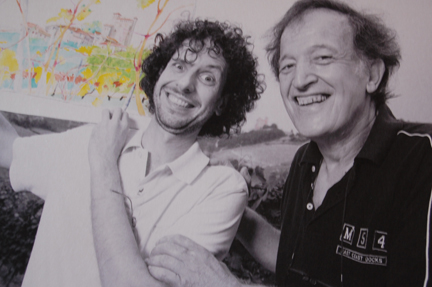
Above: The dearly departed Baldo Cappellano (right), one of the founders of the Vini Veri movement, with his son Augusto, who now manages their family’s historic winery.

In the wake of my post on the Vini Veri tasting details for April 2010, a lot of folks have written me asking where they can find a list of participating producers.

My good friend Marisa Huff, one of the organizers of this year’s event, has graciously shared the recently published link.

I wish I could be there: it is my favorite tasting of the season. But I’ve just been on the road too much already this year and there are more travels ahead.

Buona lettura e buona degustazione!