Eating, drinking, and loving well…

at Jaynes Gastropub in San Diego…

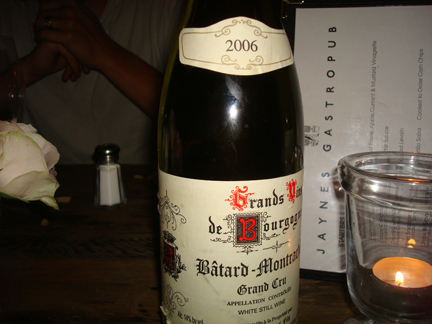
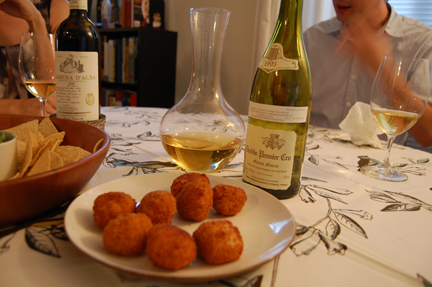
Many great bottles opened last night over a 5-hour dinner at Jaynes Gastropub last night, including this 2006 Bâtard-Montrachet by Pernot, unctuous and rich, rocks and fruit. THANK YOU ROBIN! :-)

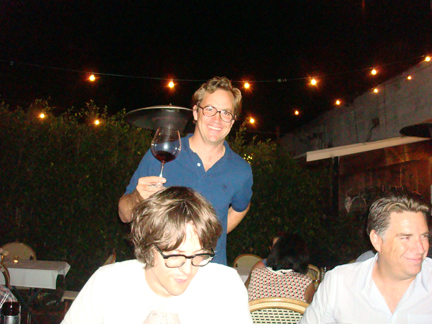
Cory (left) was in town to visit his best friend who’s pursuing a graduate degree in communications at UCSD. A vibrant dialogue on Gramsci and his significance in the age of the internet undulated over the din of our munching. That’s Jon (of Jaynes) at the top of the frame and Yele (John Yelenosky) to the right.

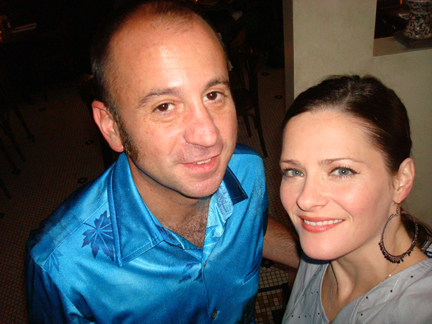
How a schlub like me always gets to go home with the prettiest girl in the joint will always remain a mystery to me.

Post scriptum

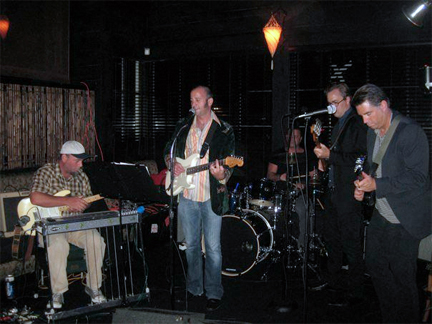
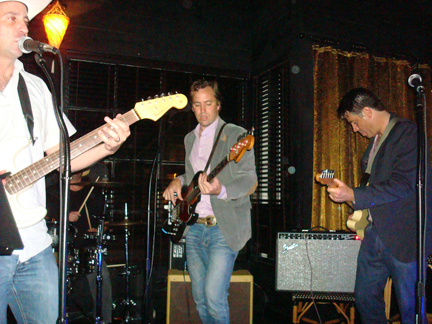
Only because TWG has been objecting to my sartorial choices of late, I thought I’d include this photo from the gig the previous night at Zenbu (La Jolla).

95 Raveneau Monts Mains (!) and my guacamole recipe

From the department of “dreams do come true”…

Our new friends Sonia and Steven came over for a school-night dinner last night and what a school-night it was! We were utterly floored by the bottle they brought over: 1995 Raveneau Monts Mains 1er Cru.

“I thought you might enjoy this,” said Steven wryly.

My goodness, what a bottle of wine! Such a nuanced nose of fruit and herbs, so steely and rich in the mouth. At 12.5% alcohol (according to the label), one of the most balanced and complete wine. Simply stunning. (Those are Tracie P’s rice balls in the photo btw.)

With Labor Day imminent, I’ve been wearing my Seersucker jacket all week and indulging in the foods of summer, including my guacamole (of which, I will admit it, I am extremely proud). The trick is to purge the tomato of its water before assembly. Check out the recipe below.

Steven’s from Texas originally and has recently returned to Austin: he and Sonia have a lot of big plans, culinary and otherwise… More on that later.

In the meantime, seems that Tracie P and me aren’t the only ones eating and drinking well this summer. Pastrami mia: I guess Alfonso gave up on his health kick when tempted with the pastrami of Shapiro’s in Indianapolis. I think I feel an acute case of pastrami envy coming on!

Happy Labor Day ya’ll!

Jar’s Guacamole*

American Spanish guacamole, adaptation of Nahuatl ahuacamolli, from ahuacatl avocado + molli sauce (OED online edition).

1 medium-sized tomato
1 bunch cilantro
½ white onion
1 jalapeño pepper
1 clove garlic
2 ripe avocados
2 limes
kosher salt
freshly ground pepper
chili flakes

Finely dice the tomato and transfer to a colander. Sprinkle lightly with kosher salt and allow the tomato to purge its water for about 30 minutes.

In the meantime, rinse the cilantro, dry well, and finely chop. Peel and mince the white onion. Deseed and finely chop the jalapeño. Peel and mince the garlic and combine all of the above ingredients, including the tomato (water purged), in a mixing bowl. Peel and finely dice the avocado and fold into the mixing bowl. Squeeze and strain the limes directly into the guacamole. Season with kosher salt and freshly ground pepper to taste. Add chili flakes to obtain desired heat (and/or use some of the discarded seeds from the jalapeño).

* Jar, my nickname from childhood, still used by my rock ‘n’ roll friends.

A fav guitar: Fender ’62 reissue blonde olympic white Stratocaster

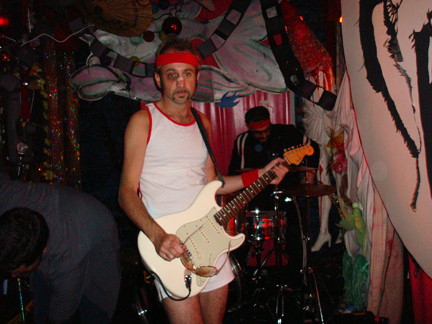
That’s my Fender ’62 reissue blonde olympic white strat with mint-green pick guard, one of my favorite guitars. The photo was taken a few years ago when I was playing with NN+ in New York. And yes, that’s a fake black-eye: we all dressed as injured tennis players for that particular Halloween show. ;-)

I’ll be playing that axe tomorrow night with my new Americana group the Grapes at Zenbu in La Jolla through my brother’s Fender Twin.

Owned by my highschool friends the Rimels, Zenbu is one of me and Tracie P’s all-time fav places for sushi. Hope to see you there! Should be a fun time. We start around 9 p.m…

Eataly and Vinitaly in New York

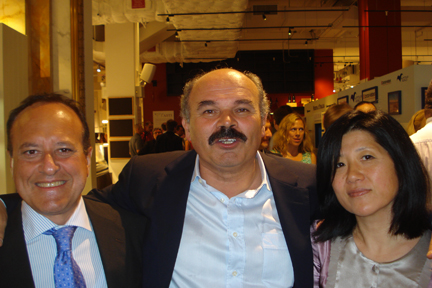
Above: Giovanni Mantovani (CEO VeronaFiere and Vinitaly), Oscar Farinetti (Italian retail, food, and wine tycoon, creator of Eataly), and Stevie Kim (senior adviser to Mr. Mantovani) yesterday at the opening of Bastianchi-Batali-Farinetti brainchild Eataly in New York.

Yesterday, mere moments after Mr. Franco Ziliani and I posted about the Italian agricultural minister’s claim that there is no crisis in the Italian wine industry, I spoke to Stevie Kim (above, right), senior adviser to Vinitaly’s CEO. She and her boss were attending the opening of the latest conquest in the ever-expanding Batali-Bastianich empire, Eataly, the “über-supermarket” conceived by retail tycoon Oscar Farinetti.

“As you know,” said Stevie, “production of Italian wines has increased dramatically in recent years and the Italian market is saturated. And so the international market has become more important for all producers.”

The Italian government, she told me, has asked her and her boss to “revamp” the Vinitaly road show, which has been coming to the U.S. for a decade (fyi Vinitaly is the top Italian wine industry annual trade fair, held each year in Verona in April). They plan to reconfigure the tasting this year, to be held at Eataly New York October 25, to accommodate trade and consumers.

“In the past, the presentation has been very fragmented. This year, we plan to restyle the tasting by transforming Eataly [New York] into Vinitaly,” said Stevie, who speaks impeccable Italian and has lived in Italy for more than 20 years. 50 producers will be attending this year’s road show, the maximum number Eataly New York can accommodate.

To Stevie I say, in bocca al lupo…
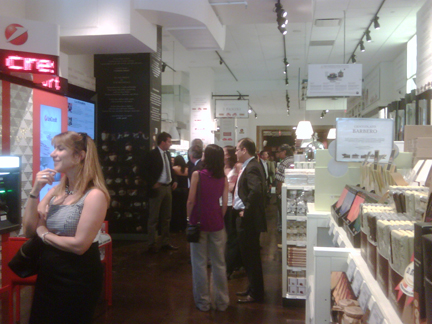
I’m not sure how I feel about Eataly (photo by Stevie). It seems to make more sense in New York than it does in Turin, where it started. It’s a sort of Disneyland for Italian food: a hyper-realistic food court, a recreation of an Italian food and wine street shopping scene. Surprisingly, in Piedmont, where “Italian food” is known simply as “food,” Eataly has been well received. At least, that’s my impression from talking to the Piedmontese. I’ve never visited Eataly, although Tracie P and I stopped once at the Eataly satellite on the road that leads from Alessandria to Asti.

There are Eataly franchises in Turin, Asti, Bologna, Milan, Tokyo, and now New York. Future expansion includes Genoa and Rome. Eataly enjoys the support of the SlowFood movement and its founder Carlo Petrini (however much the organization’s ethos would otherwise opposed globalization).

One thing you can say for certain about Eataly’s creator Mr. Farinetti: he’s no farniente!

Pomodoro crisis

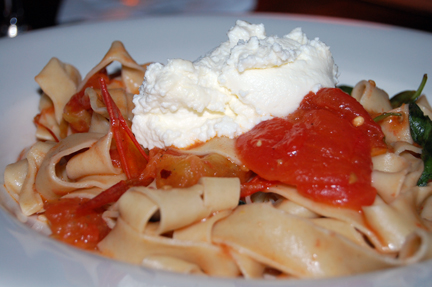
Above: Tracie P and I have been thoroughly enjoying Chef Esteban’s housemade Tagliatelle with tomato sauce and housemade ricotta at Vino Vino in Austin. I think that Esteban could go a little lighter on the heat in the sauce (my only lament) but this is Texas after all.

Although Italy’s recently installed agricultural minister Giancarlo Galan (from Padua) claims there’s no crisis in the Italian wine industry (see his comments in our post today at VinoWire via Mr. Franco Ziliani’s blog), he is planning to convene a “task force” to address Italy’s tomato crisis — yes, tomato crisis.

The issue is not the sale of tomatoes in Italy (go figure) but rather fraud and counterfeit of Italian-grown tomatoes. The so-called “agropiracy” vehemently battled by Galan’s predecessor Luca Zaia.

Contemplating the Italian tomato crisis as I drank my tea early this morning, Aldo Cazzullo’s 2009 L’Italia di noantri. Come siamo diventati tutti meridionali (The Italy We [Southerners] Remember: How We All Became Southerners, Mondadori) came to mind.*

In it, he writes: Today, “Italians all eat the same things. Two generations ago in Piedmont, they used meat or butter to dress their food. Today, tomato is found in every sauce… The tomato has become a national symbol. If an Italian has a spot on his shirt, it’s a tomato spot.” (p. 43)

Leaving the racist and separatist (and even futurist) implications aside, I do think it’s interesting to note (probably to the surprise of many) that tomatoes were not widely consumed in Italy until the 1960s. I found hard proof of this when I researched my post on the origins of the name puttanesca.

There’s much to be said on this topic but, alas, my work duties call… I’ll leave you today with one of my all-time favorite scenes by one of my all-time favorite Italian actors, Alberto Sordi, in Un americano a Roma (An American in Rome, 1954). In the scene, he plays an Italian-American who claims that the food in America is better and better for you, drinking milk instead of wine. But in the end, you can imagine what happens. Note that the “macaroni” are NOT dressed with tomato. The year is 1954.

* The title of the book plays on the fact that the Roman inflection noantri for the first person plural has been commonly absorbed by the northern dialects (in the Piedmontese of the author’s grandparents, he writes, the first person plural was nuiautri).

One last note on Produttori del Barbaresco current release (and Tracie P’s fried green tomatoes)

On Friday, Tracie P brought home an open bottle of Produttori del Barbaresco 2008 Langhe Nebbiolo that she had been showing to her accounts that day. The wine had been open for the better part of the afternoon in her wine bag.

As much I have enjoyed drinking this vintage (2008, not nearly as great as 07 for this wine) since its release, I think the wine has entered a period of particular grace.

When we drank it at our wedding in January, it was light and bright, with happy black and red berry fruit.

But I got a taste of what was to come when I drank a glass at Jaynes Gastropub in San Diego last month (where they serve it by the glass): on Friday, the gentle savory notes I enjoyed in July had evolved into rich, earthy, muddy flavors, balancing the bright fruit in a lover’s embrace. I think that in the arc of its evolution, this wine has reached its moment of plenary expression (read: complete and utter yummyness).

In other news…

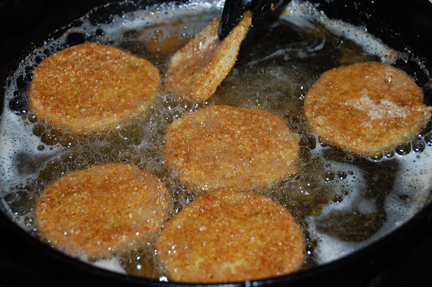
I just had to share this photo of Tracie P’s fried green tomatoes (from Sunday night), which she makes in her grandmother’s cast iron skillet. They were like savory candy: salty on the outside and sweet, tart and gelatinous on the inside. Paired resplendently with a bottle of Laurent Tribut 2008 Chablis (12.5% alcohol! yes!) and the 2010 vintage of True Blood.

Ain’t you glad we ain’t all California girls
Ain’t you glad there’s still a few of us left,
who know how to rock your world
Ain’t afraid to eat fried chicken and dirty dance to Merle
Ain’t you glad we ain’t all California girls

In other other news…

Seems I’m not the only one with Langhe Nebbiolo and summer tomatoes on the brain: Gary, watch out for that cucuzz’!

Life after barrique: “I started to love my wines again”

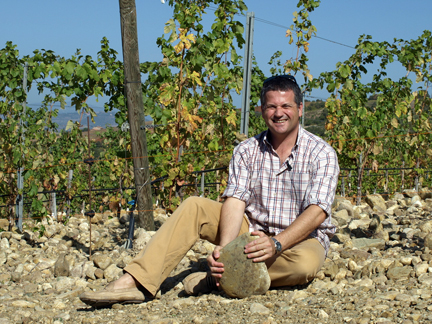
Here’s what winemaker Gianpaolo Paglia (below) had to say about my post on his decision not to age his wines in barriques anymore.

Thank you very much Jeremy for translating part of Ziliani’s post on my decision. I’m very glad to see that this has stirred an interesting conversation on Italian blogs about the current state of the art of Italian wines and their future. I think that we are now in the position to devote our efforts to a better knowledge of our land, our vineyards, our techniques of production, or in other words, our terroir. For the last decade I’ve been on a learning curve, of which barriques and a certain style of wine were part, now I feel I have to move further to find the true expression of my land in my wines.

It’s going to take time, because nothing is fast when it comes to agriculture, but I’m sure I’m on the right path. How do I know it? Simply because I started to love my wines again.

Barolo confessions

It was delicious…

Above: I was cold, I was hungry, I was tired… and, yes, damn it, I sat in my lonely hotel room on a damp, cold evening in Asti and watched TV, ate takeout pizza, and drank a bottle of 2005 Barolo Ravera by Elvio Cogno.

Forgive me, readers, for I have sinned. I can already hear the E-Bobs and WineBerserkers wailing, “infanticide!” It was a very lonely evening for me in the heart of winter in Piedmont: the Barbera 7 had abandoned me in my hotel, just as Jeremiah’s lovers had “forgotten him.”

My only companion was a bottle of 2005 Barolo Ravera given to me by Valter Fissore of Elvio Cogno. I was cold, I was hungry, I was tired. So I ordered takeout pizza, popped the cork, and watched TV.

I don’t know where food maven Arthur Schwartz said this, but Italian cookery queen Michele Scicolone often repeats his chiasmatic adage regarding pizza: if you can’t be with the pizza you love, love the pizza you’re with. Well, honey, I loved me some pizza and Barolo that night and I lived to tell about it!

Thanks for letting me get this off my chest… Buon weekend, ya’ll!

The basil of Salerno and Lisabetta’s tears

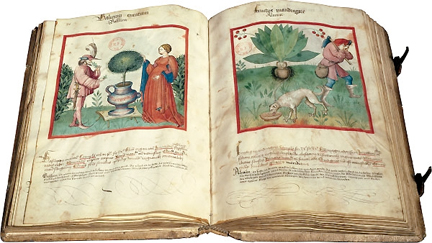
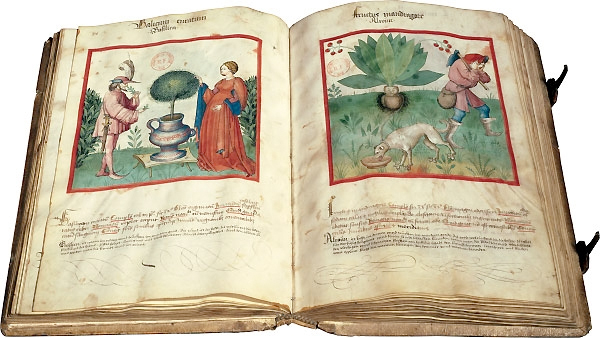
Above: Basil was prized for its healing properties for external wounds in the Middle Ages. The image of basil (note the presence of a woman and man) on the verso (left) is taken from the Tacuinum Sanitatis, in this case Codex Latinus 9333 from the Bibliothèque de France in Paris (click here to view a larger version). It was also a symbol of hate (read on).

I never imagined that my post the other day on Fake Pesto would lead to such a long comment thread here at the blog and over in the Facebook feed.

Here at the blog, Hande pointed out rightly that pesto, literally pestle, denotes the dressing for pasta made of ground basil, cheese, pine nuts, garlic, and olive oil. I was surprised to learn that the Genoese Pesto Consortium’s officially sanctioned recipe allows for walnuts (as a substitute for pine nuts) and Parmigiano Reggiano along with (the more traditional, in my view) Pecorino. As per Hande’s comment, when I wrote that pesto is traditionally served with boiled potatoes and green beans, I should have noted that the dish is properly called pesto avvantaggiato, literally, enriched pesto, whereby trenette or trofie (noodles) are tossed with the pesto, the boiled potatoes and green beans, and some of the cooking water from the vegetables. Thanks again, Hande, for keeping me on my toes!

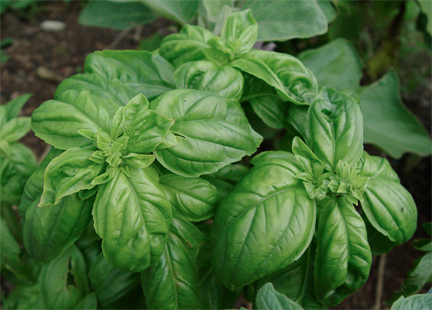
Image via SchoolGardenWeekly.

But when friend Leslie noted (over in the Facebook thread of the post) that basil is an anti-depressant, I began to think about one of my favorite novelle from Boccaccio’s Decameron, the Tale of Lisabetta da Messina.

    Lisabetta’s brothers slay her lover: he appears to her in a dream, and shews her where he is buried: she privily disinters the head, and sets it in a pot of basil, whereon she daily weeps a great while. The pot being taken from her by her brothers, she dies not long after.

    And so, saddest of women, knowing that she might not bewail him there, she would gladly, if she could, have carried away the body and given it more honourable sepulture elsewhere; but as she might not so do, she took a knife, and, as best she could, severed the head from the trunk, and wrapped it in a napkin and laid it in the lap of her maid; and having covered the rest of the corpse with earth, she left the spot, having been seen by none, and went home. There she shut herself up in her room with the head, and kissed it a thousand times in every part, and wept long and bitterly over it, till she had bathed it in her tears. She then wrapped it in a piece of fine cloth, and set it in a large and beautiful pot of the sort in which marjoram or basil is planted, and covered it with earth, and therein planted some roots of the goodliest basil of Salerno, and drenched them only with her tears, or water perfumed with roses or orange-blossoms. And ’twas her wont ever to sit beside this pot, and, all her soul one yearning, to pore upon it, as that which enshrined her Lorenzo, and when long time she had so done, she would bend over it, and weep a great while, until the basil was quite bathed in her tears.

    Fostered with such constant, unremitting care, and nourished by the richness given to the soil by the decaying head that lay therein, the basil burgeoned out in exceeding great beauty and fragrance.

There is so much I’d love to share about this truly fascinating (at least to me) story and the role that basil plays in it. Boccaccio’s Decameron has so many wonderful references to food and wine in it. (Read the entire tale in English here.) But, ahimè, professional duties call… I hope you enjoy it as much as I do.

In the meantime, here’s a scene from Pasolini’s version of the tale: