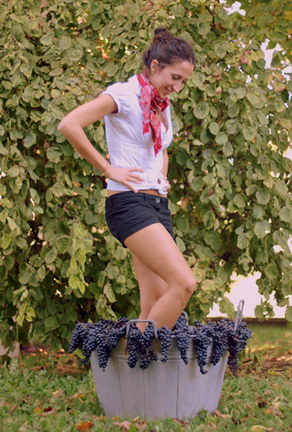
The most talked about wine in Texas

ca dei zago

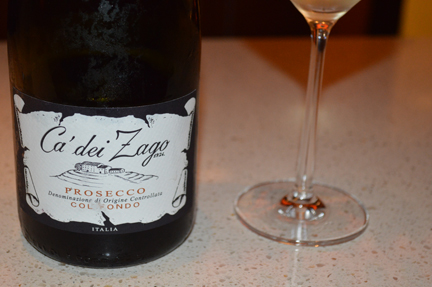
Posting on the fly and from the road today but just wanted to share my note on this Prosecco Col Fondo, the Ca’ dei Zago, the first to make it to Texas.

Everyone — EVERYONE — in Texas seems to be talking about it: sommeliers and wine buyers from Houston to Austin have been asking me about it via text and on the Facebook etc.

I had the chance to taste it last night with one of the most dynamic wine bloggers I’ve ever met (more on him and our meeting later) and we were both thrilled by the wine.

The first tasting descriptor that came to mind was one that Italians like to use for wines like this: sapido, meaning sapid or flavorful. The wine had that great saltiness that lees aging can impart to Glera grapes and it was balanced by the classic sour green note that Prosecco has when it’s made in a traditional and transparent style.

There’s no doubt in my mind that Prosecco Col Fondo — doubled-fermented-in-bottle, lees-aged, and undisgorged Prosecco — is going to be the next big thing in Italian wine. And I’m thrilled to see that a Col Fondo has finally made it to Texas.

Alfonso wrote a great post on his recent visit to Proseccoland, including notes from his tasting at Ca’ dei Zago.

And here’s a link to a Col Fondo tasting that was organized for Tracie P and me a few years ago in the village of Rolle by my friend Riccardo Zanotto.

Okay, gotta run now! More later!

“The essence of wine is the person”—Angelo Peretti (@internetgourmet)

amphitheater vineyard

I feel compelled to post this translation (mine) of Italian wine and food writer Angelo Peretti’s post, published today on his Internet Gourmet.

“The Essence of Wine is the Person.”
September 10, 2013

Over the last few days, I’ve read the many ideologisms scribbled in the margins of the deplorable story of a winemaker who keeps company with verbal vulgarity and racial epithets.

There have been calls by certain commentators, including some leading experts, for the wine to be evaluated on its own, irrespective of who made it.

Has the world of Italian wine come to this?

Perhaps it’s a romantic ideal but I remain convinced that the essence of wine is terroir and the essence of terroir is the person.

If we insist on judging the wine regardless of the person, the wine becomes a commodity — a mere product of consumption.

At that point, we might as well devote ourselves to carbonated soft drinks. At least we know that they are all technically identical.

This is wine criticism’s “betrayal”: when it casts wine’s humanistic roots into darkness and negates its spirit of place in the name of an Enlightenment-age ideal of the presumed objectivity of “taste.”

Please let us take a step back. Let us return to our roots and to the essence of being.

If wine proves unable to express this essence, we will have succumbed to the levelling embrace of global industry.

Angelo Peretti
author of Internet Gourmet

Image by my friend Giovanni Arcari, taken Sunday at dawn in his vineyard in Franciacorta. “The harvest is roughly 20-25 later than in recent years,” he writes.

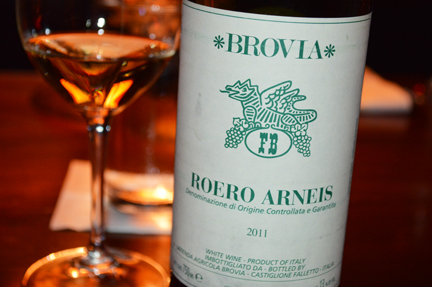
Electric Arneis in a bottle of Roero by Brovia (not a bad band name @ablegrape?)

brovia arneis

In oenography, synaesthesia — “the use of metaphors in which terms relating to one kind of sense-impression are used to describe sense-impressions of other kinds; the production of synæsthetic effect in writing or an instance of this” (Oxford English Dictionary) — is owed to our human inability to describe wine.

Without spending too much time on the epistemological implications of oenophilia, it’s worth noting that when we describe wine we don’t actually describe the wine. In fact, we describe what it tastes like.

And there are those among us would-be wine writers who rise above the facile simile and reach for the metaphor.

When my friend Bubba and I shared a bottle of Roero Arneis by Brovia last night, it wasn’t like drinking electricity in a glass. It was electricity in the glass.

The wine was electric. It was alive… ALIVE!

You don’t see a lot of the Brovia Arneis in this country but looking back on my visit with Giacinto Brovia a few years ago, I remember that we did indeed taste it then.

There’s very little of it in Texas. But my friend and client Jeff at Vino Vino in Austin was able to snag some.

There’s so much great Arneis out there. It’s one of those grapes that’s pretty hard to screw up.

But this one is the one

My score on a scale of 1-100? Run don’t walk…

Black wine for a black man in Desenzano circa 1922

When, as a boy, fourteenth-century Italian humanist Francis Petrarch first obtained a manuscript of a work by Latin writer Cicero, he noted that he was enchanted by the sounds of the words even though he couldn’t understand their meaning.

I’ll never forget reading the poems of Langston Hughes for the first time when I was in junior high school. I didn’t understand what they meant at the time. But I knew that they were meaningful. And his works continue to inform me and shape my intellectual life today.

In high school, I read his autobiography, The Big Sea, over and over and over again. And I dreamed about following his footsteps through New York to Europe in the early 1920s.

A passage from that book came to mind (again) today as insults continue to be hurled across the English Channel and Atlantic Ocean. (Yes, they’ve started to call me names, too.)

In the excerpt below, the author recalls his first visit to Italy. He and his friend Romeo traveled to Romeo’s home, Desenzano, on the shores of Lake Garda.

In the wake of the unfortunate episode of a few weeks ago, the poet’s account of his visit give the reader remarkable insight of how Italy’s attitudes about race have changed since the rise of fascism there.

    The night we arrived was Sunday and the whole village had gone to the movies. There was no one home at Romeo’s house and he had no key, so we left our baggage piled in the doorway and went to the movies, too. It was one of those theaters where the screen is at the front of the house beside the front door, so you come in facing the audience Just as we came in, the house lights went on between reels, as they were changing the film. The place was crowded, but as we entered and the people saw us, the whole crowd arose and began to make for the doorway. Soon they became a shouting, pushing mass. I didn’t know what they were saying, for they were speaking Italian, of course, and I didn’t understand Italian. But Romeo and I were swept into the street and surrounded by curious but amiable men, women, and children. Finally, Romeo’s mother got him through the crowd and threw her arms about his neck. I gather that almost all of the people of the village were Romeo’s friends, but I didn’t know why so many of them clung to me and shook my hands, while a crowd of young boys and men pulled and pushed until they had me in the midst of them in a wine shop, with a dozen big glasses of wine in front of me.
    Later that night Romeo explained to me that never in Desenzano, so far as he knew, had there been a Negro before, so naturally everybody wanted to look at me at close hand, and touch me, and treat me to a glass of vino nero. Romeo said they were all his friends, but hardly would the whole theater have rushed into the street between reels had it not been for me, a Negro, being with him.

On August 30, 2013, the online magazine Qui Brescia published an article about a dispute between a Northern League (Separatist) township council member, Rino Polloni, and Desenzano’s mayor, Rosa Leso, a member of Italy’s Democratic Party (they are both bloggers btw). According to the report, the council member has accused the mayor of not protecting the citizenry from African men who frequent the beach there. She has responded by saying that they have every right to be there — like everyone else — as long as they abide by the rule of law. The police department’s current monitoring of the beaches, she maintains, is sufficient to ensure public safety.

Please also read Alfonso’s beautiful and heart-wrenching post from yesterday about Little Tony of Italy.

Taste with me in So Cal @JaynesGastropub & @SottoLA Sept 17 & 19

jeremy parzen wine

TUES. SEPT. 17 ITALIAN WINE DINNER @ JAYNES (SAN DIEGO)
THURS. SEPT. 19 ON THE FLOOR @ SOTTO (LOS ANGELES)

It’s hard to believe: I haven’t been on a plane since my last trip to NYC in May 2013.

Paternity leave has been so awesome but the time has come to hit the road again and bring home some of that bacon.

I’m thrilled to share the news that I’ll be speaking at a dinner at Jaynes Gastropub in San Diego on Tuesday, September 17.

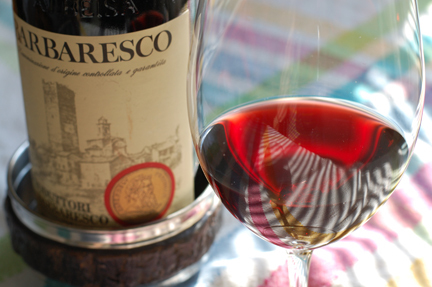
We’ll be pouring some of my favorite wines, including Cantele, Venica, and Produttori del Barbaresco. And I will be digging into my cellar for some 2001 Produttori del Barbaresco crus to share that evening as well.

Click here for details and reservations.

It’s always a night to remember at Jaynes, one of our favorite restaurants in the States and our home-away-from-home (Tracie P and I had our wedding reception there in 2010).

produttori 2007

Then on Thursday of that week, I’ll be working the floor at Sotto in Los Angeles, where my bromance Rory Harrington and I write the wine list.

The best way to reserve is OpenTable.

You never know who you’ll bump into at Sotto (I’ll never forgot pouring Anne Hathawy a glass of Cantele 2009 Salice Salentino! For reals!) and it’s so much fun when I visit: a lot of “wine folks” come out and we always crack open something incredible (we’ll be debuting our secret stash of Luigi Tecce that night, btw).

If you happen to be in Southern California that week, please come out and say hello and taste… I’d love to taste with you.

As the great Italian wine writer Marco Arturi says, wine is a pretext for us to be together and for us to say “we”

L’shanah tovah

shofar rosh hashanah

Image via the Contemporary Jewish Museuem (San Francisco) Flickr.

L’shanah tovah! Happy new year, everyone!

May your year be filled with joy and good health.

Tracie P and I have so much to be thankful for this year.

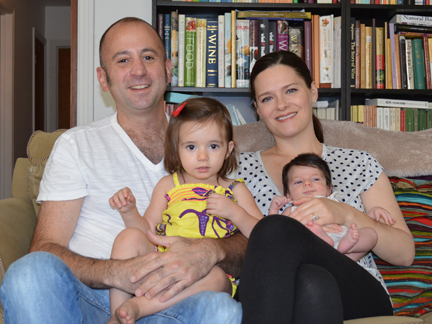
My goodness… Every time I feel stressed about money, work, or any of the headaches of life, I look at beautiful Tracie P and the gorgeous little girls she’s given our family and my heart bursts with immeasurable joy.

And I ask myself, borrowing a line from a favorite Kris Kristofferson song,

Why me Lord?
what have I ever done
to deserve even one
of the pleasures I’ve known?
Tell me Lord
what did I ever do
that was worth loving you
or the kindness you’ve shown?

jeremy parzen family

My life’s journey has been such a trip… Sometimes I don’t really know how I got here but, man, I have so much to be grateful for and I love my family so very much…

Happy new year, everyone. Thanks for all the support and warm wishes and thoughts for our family this year.

Bless you all.

I’ll see you after the holiday…

Does a “bacon fat” note make a kosher Syrah treif?

kosher wine texas rosh hashanah

As I was writing my kosher wine cheat sheet for the Houston Press, the thought occurred to me: if I get a classic bacon fat aroma on a kosher Syrah from Israel, does it make the wine treif?

On Sunday, when I headed to the kosher section at the supermarket, I was surprised by the breadth of wines and the low prices I found there.

And after picking four wines randomly, basing my selections solely on the information reported on the labels, I was also surprised by how drinkable the wines were — at least two of them.

That was the good news.

The bad news is that so many of the wines had elevated alcohol levels.

Jews aren’t known for being big drinkers (present company aside). And so many bourgeois Jews in this country only drink fine wine on Jewish holidays and during Jewish festivals.

Wouldn’t it make more sense to give them low-alcohol wines? And come to think of it, wouldn’t it make more sense to give everyone low-alcohol wines?

Ummm… where have I heard that before?

Here’s my post, including my “Temple Beth Israel circa 1978” descriptor.

L’shanah tovah, yall!

Fogarina a song for making love & picking grapes

Because, ultimately, wine is a pretext for us to get closer to the earth, to uncover stories, to discover the land, and to grow. And, above all, it’s a pretext for us to be together, for us to say, “we.”

Marco Arturi (quoted by Maurizio Gily today on the Facebook)

uva fogarina

Above: “Settembre e l’uva fogarina” (“September and l’Uva Fogarina”) by Italian photographer Linda Borciani, who wrote to me today from Fabbrico (Reggio Emilia province) giving me the green light to use the image on my blog.

There were so many bad vibes out there in the enoblogosphere last week (and yall know what I’m talking about) that I decided to take a break from wine blogging over the holiday weekend and “head back into the studio” to record one of my favorite Italian folk songs: “L’uva Fogarina.”

Purported to be a favorite of pioneering Italian wine writer Luigi Veronelli, the legendary Fogarina grape was cultivated in Reggio Emilia province until the close of the 1960s.

No one seems to know why it disappeared, although many point to the fact that it faced bureaucratic challenges after being omitted from the official register of “authorized grape varieties” (the Veneto’s Fragolino is an analogous case).

Here’s an excerpt from the entry for Fogarina in the landmark work of ampelography, Wine Grapes (Ecco 2012) by Jancis Robinson, Julia Harding, and José Vouillamoz:

    “Fogarina was one of the most widely planted varieties in the province of Reggio Emilia in northern Italy at the beginning of the twentieth century, especially in the commune of Gualtieri… It is even the subject of a popular Italian folk song.”

    “DNA profiling” has demonstrated that “Fogarina could be closely related to Lambrusco Marani” and “has also suggested a possible parent-offspring relationship with Raboso Piave.”

    (Fogarina is omitted from Calò et alia’s 2006 Vitigni d’Italia [Grape Varieties of Italy].)

The wildly popular Italian folksong, “L’uva fogarina,” tells the story of “the beautiful Fogarina grape” and the “pleasure of picking it.”

That same pleasure, says the singer, is also found in “making love with my lover in the middle of the fields.”

Teresina, recounts the singer, “doesn’t want to weave and she doesn’t know how to sew.”

The country sun is bad for her, she claims.

I’ll leave the rest of the story to your imagination.

Above: My tejano-style recording of “L’uva Fogarina” (Baby P Studios, Austin, Texas) set to a collection of harvest images from previous years in Italy. And yes, that IS Yngwie Malmsteen on accordion.

Recorded by scores of Italian artists, it’s one of those songs that every Italian knows and loves: it captures the spirit of harvest time, when a year’s work in the vineyard comes to fruition. It reminds us of how humanity must return to the earth to reap its fruits… and to procreate…

As my friend and colleague, Italian wine writer Maurizio Gily, reminded me this morning, with a post culled from the work of another friend and colleague, Marco Arturi, wine is “a pretext for us to be together, for us to say, ‘we.'”

In the wake of the ill will that was hurled across the enointernets last week, it felt like a song about picking grapes and making love was in tall order. It pairs well with a buona dose (healthy dose) of humanity…

Thanks for reading and listening…

In other news…

venica butterfly

A photo of a butterfly, above, taken yesterday in the vineyards by my good friend, Collio grape grower and winemaker, Giampaolo Venica. Our daughter, Georgia P, started pre-school today. She LOVES butterflies.

Ribot the horse that united Italy & gave the world Sassicaia

Looking forward to Piero Incisa della Rocchetta’s visit to Austin in a few weeks, I was reminded of the night that he and I had dinner in New York back in 2007, not long after I launched my blog.

To this day, Piero calls me “Dr. Bianchi” (he’s a super cool dude, btw).

Here’s the post on our dinner and conversation and a remembrance of the great thoroughbred Ribot, a horse who — for a brief moment — united post-war Italy in its cheers for his triumph. I’ll see you after the Labor Day holiday…
sassicaia super tuscan

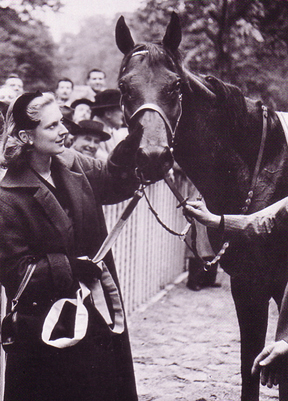
Above: “Orietta Incisa Hunyady with Ribot, after his second victory in the Arc de Triomphe, 1956.” (Sassicaia, the Original Super Tuscan, Firenze, Centro Di, 2000, p. 32)

Piero Incisa della Rocchetta is at once everything you would and would not expect him to be. On the one hand, he is the scion of one of Italy’s most historically significant families, an Italian noble, the face of one of Italy’s most important wines, and one of his country’s leading “cultural ambassadors,” as it were. On the other, he is a thirty-something Italian, extremely hard-working yet very easy-going and personable, self-deprecating and sensitive to the people around him, keenly aware of his station in life yet down-to-earth, funny, and fun to be around. When we sat down for dinner the other night at Babbo, I wasn’t sure if he’d be interested in talking to someone like me — especially in the light of the fact that his family’s wine is the most famous barriqued wine in Italy and that I am an outspoken (however unimportant) critic of the use of new oak in Italy.

I believe we were both surprised by the other: he, to meet an Italophone American who knew so much about other aspects of his family’s history beyond the famous wine; I, to discover a winemaker acutely conscious of the role his family’s wine has played in Italian wine history but also a wine lover who despises the overblown, overly concentrated, and extracted style of some of his would-be peers.

“My grandfather [Mario] planted Cabernet,” Piero told me, “because he grew up drinking wines from Bordeaux and he wanted a wine to pair with the rich French and Piedmontese food he was accustomed to eating.” People always think of his family as being Tuscan, and, of course it is in part, he explained, but the male line comes from Rocchetta Tanaro in Piedmont (historically, Piedmont, once ruled by the house of Savoy, has always been Francophone and Francophile). So it was only natural his grandfather would plant Cabernet and experiment with making a Bordeaux-style wine (Mario Incisa della Rocchetta began to manage the now legendary estate in Tuscany after he married Florentine Clarice della Gherardesca, whose family once ruled the Tuscan coastline).

When we touched upon the thorny issue of new oak, he flatly told me that he can’t stand the jammy, concentrated, highly alcoholic style of most Super Tuscans and he pointed out that only in 2003 did Sassicaia’s alcohol content creep above 13.5%. The figure, he told me, represented the warm vintage and not anything they had done differently in the cellar. We agreed that many of the overblown Super Tuscans are impossible to drink with food and he remarked that Sassicaia was conceived as a wine to be consumed at the table.

Sassicaia is a misunderstood wine, he said, especially in the United States. “Most Americans consider 1985 and 1997 [in which warm temperatures prevailed] to be among of the greatest vintages for Sassicaia,” he told me. “But years like ’88 and ’98 really brought out the delicate bouquet in the wine.” In fact, he revealed, his grandfather hoped to achieve superior bouquet and not the forward fruit that other Super Tuscans have become so famous for.

Piero’s eyes lit up when I asked him about Ribot, his family’s legendary race horse, trained on their estates in Piedmont and Tuscany, arguably the most famous race horse in history. “Most people don’t realize,” he said, “that winemaking is just one small part of what my family does.” During the 1950s, when a still war-torn Italy was trying to put itself back together (literally and figuratively), Ribot and his triumphs were a point of pride that all Italians could share.

Piero divulged that trainer Federico Tesio never thought that Ribot would be a winner. “He didn’t believe that Ribot was handsome enough,” he said. It was his grandmother, Clarice, who knew that the stallion would be a champion.

Just as Ribot bolstered Italian pride at a very delicate moment in the country’s history, Sassicaia laid the groundwork for the current Italian wine renaissance by showing the international community that Italy could produce world-class wines. In 1968, when it was first released commercially, Americans thought of Italy as a land of straw-flask and fizzy quaffing wines. Today, Italian wines have nearly eclipsed French dominance in the American market. I can’t say that I am big fan of Sassicaia (those of you who read my blog know I prefer the indigenous grapes of Italy and that I don’t like barriqued wine). But my little brush with history that evening revealed that the people who make it care deeply about their wine… and their country.

Two extraordinary expressions of Sémillon in Houston & baby lobster with hazelnut sauce @TonyVallone

From the department of “there are worse jobs in the world”…

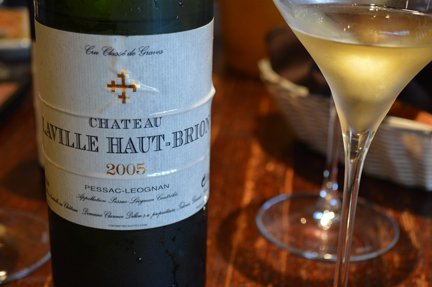
chateau lavilla haut brion

On Tuesday night, thanks to the generosity of a Houston collector and wine writer, I had the opportunity to taste one of the most extraordinary white wines I’ve ever had, the 2005 Château Laville Haut Brion blanc.

So many collectors generously taste me on their Italian lots but few bring out the French for me.

I was impressed by the delicate oxidative note on this wine, which was more pronounced when first opened but lingered gently as the wine opened up and revealed its stone fruit and sublime minerality.

What a thrilling bottle of wine!

brokenwood semillon

From the sacred to the profane…

After dinner, I headed to my favorite Houston wine bar, Camerata, where David Keck poured me another expression of Sémillion, this one from Hunter Valley, Australia.

I don’t remember where Jancis Robinson said that Sémillon is Australia’s great gift to the wine world but her observation leapt to mind as I tasted this fresh, bright, mineral-driven wine. And the even better news is that I can afford it!

David changes the btg list at Camerata on a daily basis but this is what he was pouring on Tuesday when I dropped by.

Camerata has swiftly become the Houston wine scene’s flash point for its renewal of learning. And I had a blast swapping stories with another one of my favorite Houston wine professionals, Sean Beck, whose lists at Back Street Café and Hugo’s are always winners for me (Hugo’s, btw, is one of the best Mexican restaurants in the country and Sean’s superb wine list there takes it from A to A+ for me; Champagne and ceviche, anyone?).

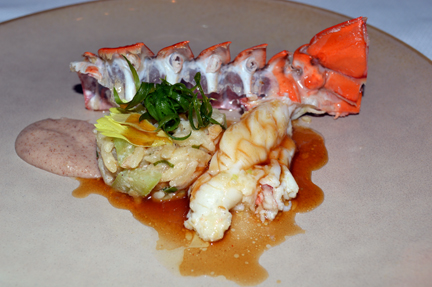
best lobster houston

Wednesday morning found me at Tony’s, meeting with my good friend and client Tony Vallone, who insisted that I try a new dish that he was debuting that evening: garlic basted baby lobster tail with orzo, creamed hazelnut, and an antelope jus.

The the combination of ingredients in this dish was as surprising as it was stunningly delicious.

The thought of hazelnut and seafood evoked Piedmont, where Ligurian and Langarola flavors often mingle.

Tony and his team are doing such cutting-edge work and I’ve had so many incredible, unforgettable meals there (and I say this as someone who dines regularly in New York, Los Angeles, and Italy).

And Tony’s encyclopedic knowledge of Italian cuisine always puts my own to the test (literally!). Our weekly kibitz is always a highlight for me.

tony vallone houston

The dude is a national gastronomic treasure, up there with Alice Waters, Darrell Corti, Danny Meyer, and Sirio Maccioni.

Why the local media there penalizes him for having been around so long (since 1965) and for his immeasurable success is a mystery to me.

But hey, what do I know?

Tony, I have the deepest respect for your gastronomic knowledge and I cherish our friendship… I love you, man.