When G-d decided to become a food writer: life without yeast and the Passover narrative

I wrote the following post last week for the University of Gastronomic Sciences in Piedmont, Italy where I’ll be teaching a seminar for its Master’s in Food Culture later this year.

When G-d instructed us to live without one of His miracles— yeast — for a week each year as we remember and retell the Exodus the story, He was and is reminding us of what He did for us when He redeemed us from bondage.

Christians and Jews, G-d did what He did for us so that we would follow His example and not turn our backs and cast our shadows on those who are suffering and those who are in need. The Hebrews of ancient Egypt were immigrants who suffered at the hands of a powerful tyrant. And G-d delivered them (and us) to safety and freedom. Please remember that this Passover and Easter season.

Chag sameach, yall! Happy Passover! The Passover begins tonight.

Above: Some of the classic foods that American Jews eat for the Passover. Matzah (unleavened bread) is described explicitly in the Bible. Gefilte fish, a type of ground fish loaf, actually has nothing to do with the holiday but it is a tradition for Jews of Central European descent to serve it with the Passover meal. Horse radish is meant to symbolize the bitterness and suffering and is also descried in Exodus.

For those of you not familiar with the Passover, it’s a holiday when Jews across the world tell the story of the Exodus through a symbolic meal (the Seder) where each of the foods and each of the courses, including wine service, represent an element in the narrative. It’s such a popular and powerful festival in the Jewish liturgic calendar that even secular and non-observant Jews take time out from their lives to partake in the ritual. And even though it tells a story full of pain and suffering, the outcome of the narrative arc is a happy one: G-d delivers the Hebrews from the Pharaoh and bondage. And the meal itself and the storytelling make Passover one of the most fun and most beloved holidays for Jews everywhere in the world.

You can read more about the Passover and the Seder plate and foods in this excellent Wikipedia entry. Be sure to click through to the Passover Seder plate entry as well.

The central food of the meal is the matzah (pane azzimo in Italian), unleavened bread.

Before the week of the Passover begins, observant Jews carefully remove any leavened foods from their homes and eat only unleavened foods, including matzah, because it reminds of the Jews’ haste in fleeing Egypt: They were in such a hurry to leave that they didn’t have time to let their bread rise. That’s true. But it’s only part of the story.

In the passage from the Book of Exodus where G-d instructs the Jews to observe the Passover ritual, He actually tells the Jews to eat matzah before they leave. In his instructions, He simultaneously gives them culinary direction; gives them a preview of what is about to happen (i.e., the Exodus); and he tells that them that they must commemorate the Passover and the story of the Exodus once every year for perpetuity.

It’s really fascinating (imho) to read the original text where the Passover is described. I’ve copied and pasted it below. And I encourage to read the entire story. It’s one of the most moving and compelling stories from the Bible and it continues to inspire literary and figurative art works: The Jews’ deliverance from bondage resonates not only as an analogy for subjugated peoples of the 19th, 20th, and 21st centuries but it’s also an allegory for personal redemption and resurgence. What a powerful archetype!

Here’s the passage where matzah is described and where G-d instructs the Jews how the holiday will be observed. Personally, I find it to be an amazing piece of writing. The conative component alone is brilliant: G-d is at once speaking to the Jews in the story and the Jews reading the story. Here it is… enjoy and chag sameach, happy festival!

“‘This will be a day for you to remember and celebrate as a festival to Adonai [G-d]; from generation to generation you are to celebrate it by a perpetual regulation.

“‘For seven days you are to eat matzah — on the first day remove the leaven from your houses. For whoever eats [c]hametz [leavened bread] from the first to the seventh day is to be cut off from Isra’el. On the first and seventh days, you are to have an assembly set aside for God. On these days no work is to be done, except what each must do to prepare his food; you may do only that. You are to observe the festival of matzah, for on this very day I brought your divisions out of the land of Egypt. Therefore, you are to observe this day from generation to generation by a perpetual regulation. From the evening of the fourteenth day of the first month until the evening of the twenty-first day, you are to eat matzah. During those seven days, no leaven is to be found in your houses. Whoever eats food with hametz in it is to be cut off from the community of Isra’el — it doesn’t matter whether he is a foreigner or a citizen of the land. Eat nothing with hametz in it. Wherever you live, eat matzah.'”

Learn more about the UniSG Master’s in Food Culture here.

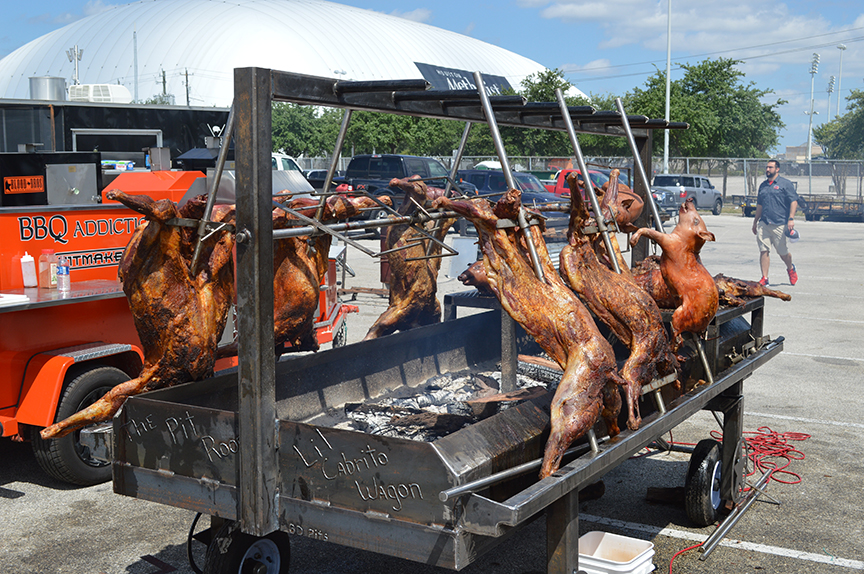
Scenes from the Houston BBQ Festival 2017

Congrats to the organizers of the Houston BBQ Festival on another sold-out show.

A money shot for the Pit Room.

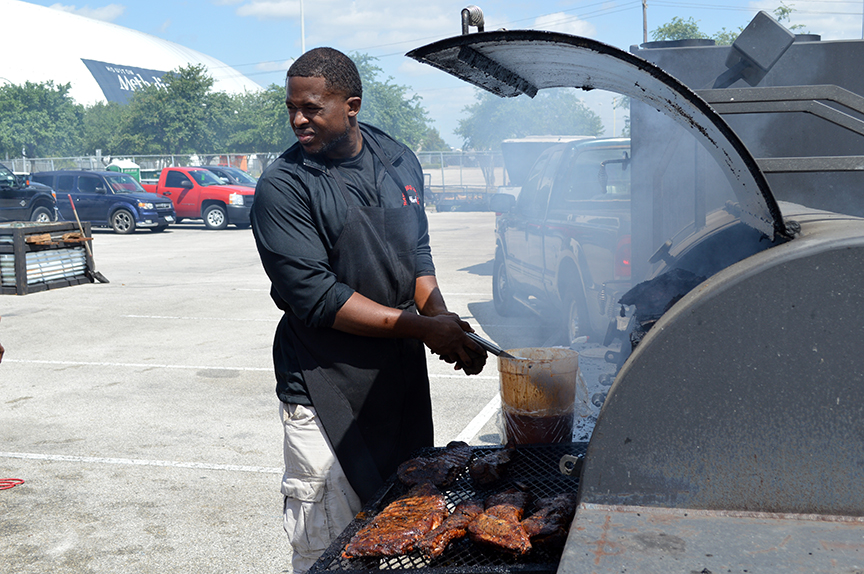
As a pit master once told, there are no smiles in bbq. That’s one of Ray’s BBQ Shack’s smokers.

The Houston bbq A-lister, Killen’s. I’ve never been. The line for this was insane as soon as the fair opened.

Didn’t get to taste but they let me photograph it at Killen’s stand.

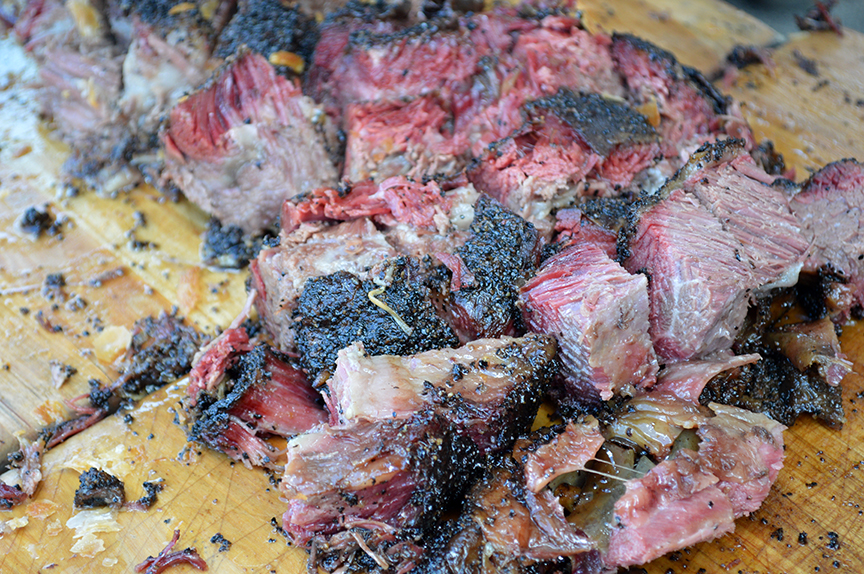
Louie Mueller was my own personal money shot. That’s some Texas brisket beef rib right there, folks, let me tell you.

BBQ on a croissant, it’s what’s for breakfast in Houston.

Great show!

Texas Wine Freedom: how Texans and all Americans can help end anti-competitive, un-American shipping policies

Above: the statue of Stephen Austin, founder and “father” of Texas, in the Texas state capitol. Below: the cupola as seen from below. I took both photos in February when I visited the state capital to interview representative Matt Rinaldi in February.

For years, here on my blog and in the Houston Press, I have written about the Texas government’s anti-competitive and un-American retail wine shipping policies. Despite our nation’s Interstate Commerce Act of 1887, Texas still prohibits the shipment of wines to consumers from out of state.

It took a redder-than-red Texas state representative, Matt Rinaldi, Republican from the Dallas area, to have the courage to stand up to the Texas wholesalers lobby and propose a bill in the current legislative session that would right this wrong.

In an interview I did with him for the Houston Press, he called the current policies “ridiculously anti-competitive.”

“We value our freedom first and foremost,” he said. “Government shouldn’t be interfering with that. [Texans] should be given the freedom to do what makes them happy as long as it doesn’t interfere with the rights of anyone else.”

The following message was penned by wine retailer Daniel Posner of New York and shared with me by my good friend and Manhattan wine retailer Jamie Wolff. Wine industry consultant and advocate Tom Wark is the creator of Wine Freedom, a grass-roots initiative devoted to raising awareness of anti-competitive shipping policies currently in place across the U.S.

Thanks for reading. G-d bless Texas and G-d bless America!

*****

Dear Texas Wine Lover,

We need your help to bring Wine Freedom to Texas. 

A bill, HB 2291, would formally allow Texans to receive shipments from out-of-state wine stores and Internet wine retailers.

To help this bill succeed, we MUST get a hearing on the bill scheduled. You can help by emailing or calling:

• Representative John Kuempel – Chairman of the House Licensing and
Administrative Procedures Committee

Ask him to schedule a hearing on HB 2291

The best way to do this is by visiting the TEXAS WINE FREEDOM page: https://www.winefreedom.org/wine-freedom-for-texas/

Information is on this site allowing you to easily:

• Email or call Representative Kuempel
• Sign up for Alerts and news on the bill
• Sign a petition supporting the bill.

You only need to tell Representative Kuempel the following:

“I live in (name of city) and I support HB 2291, the Wine Shipping Bill in your committee. I urge you to schedule a committee hearing on the bill.”

Taking action now is critical since the Texas legislature will not meet for another two years and this is your only chance to change the laws on wine shipping in Texas.

Passover 5th Question: why on this night do we drink Manischewitz wine coolers?

When it comes to the Passover’s “Four Questions,” I’d like to propose a new and fifth one:

On all nights we drink organically farmed, spontaneously fermented, additive- and enzyme-free wines made from grapes harvested under a full moon in a vineyard along the Slovenian-Italian border, and on this night Manischewitz?

After all, and with all due respect, Manischewitz is really a wine cooler, a wine to which sugar — a lot of sugar — has been added.

And btw, that sugar has the potential to make the wine more palatable to children. Sadly, I speak from personal experience when I write this: someone whom I know and love dearly told me that his path toward severe alcoholism started with those thimble-sized cups of wine that he used to throw back when we were kids at shul.

Click here for my post today for the Houston Press on “What Makes Wines Kosher for Passover and Where to Find Them.”

“We [Italians] need to tell the stories of our wines ourselves,” says celeb sommelier Luca Gardini

One of the highlights of the Corriere della Sera food and wine festival in Milan over the weekend was the presentation of the newly released Corriere guide to “Italy’s top 100 wines and grape growers.”

Those are the guide’s editors (above, from left), Luciano Ferraro, the paper’s managing editor and its wine columnist, and celebrity sommelier Luca Gardini.

A who’s who of the Italian wine trade was there, including Arturo Ziliani, Leonardo Raspini, Angelo Gaja, and Elda Felluga, who was named the new guide’s “woman of the year.”

Luciano spoke at length about what sets the Corriere guide apart from the other mainstream almanacs of Italian wine. The editors don’t score or review the wines, he said. Instead, they “tell the stories” of 100 wineries and winemakers whose work shapes the Italian wine world today.

Where other editors, including some of their higher profile American counterparts, inform the reader “about what’s inside the bottle,” he explained, he and Luca strive to tell you about what goes into making that bottle.

I was really impressed by Luca’s short but well-honed message.

“We can’t just let other people tell the stories of our wines,” said the popular critic and editor (who scores wines in his own books). “We [Italians] need to tell the stories of our wines ourselves.”

I couldn’t help but think to myself: our bottles, ourselves. It’s a facile analogy based more in assonance than in symmetry. But there’s a wonderful nugget of wisdom in what Luca shared yesterday at the event.

Over the years, as the Italian wine renaissance has taken off in the U.S., the voice of American critics has sometimes driven perceptions of Italian wines in unexpected — although not always unwelcome — ways. I’m with Luca in believing that we all need to listen to each other, on both sides of the Atlantic.

Writing on the fly this afternoon from a very windy, somewhat cloudy, but stunningly beautiful spring day in Montalcino. Stay tuned…

Congratulations Talia Kleinplatz, author of Two for the Bar and winner of #CucinaBlogAward

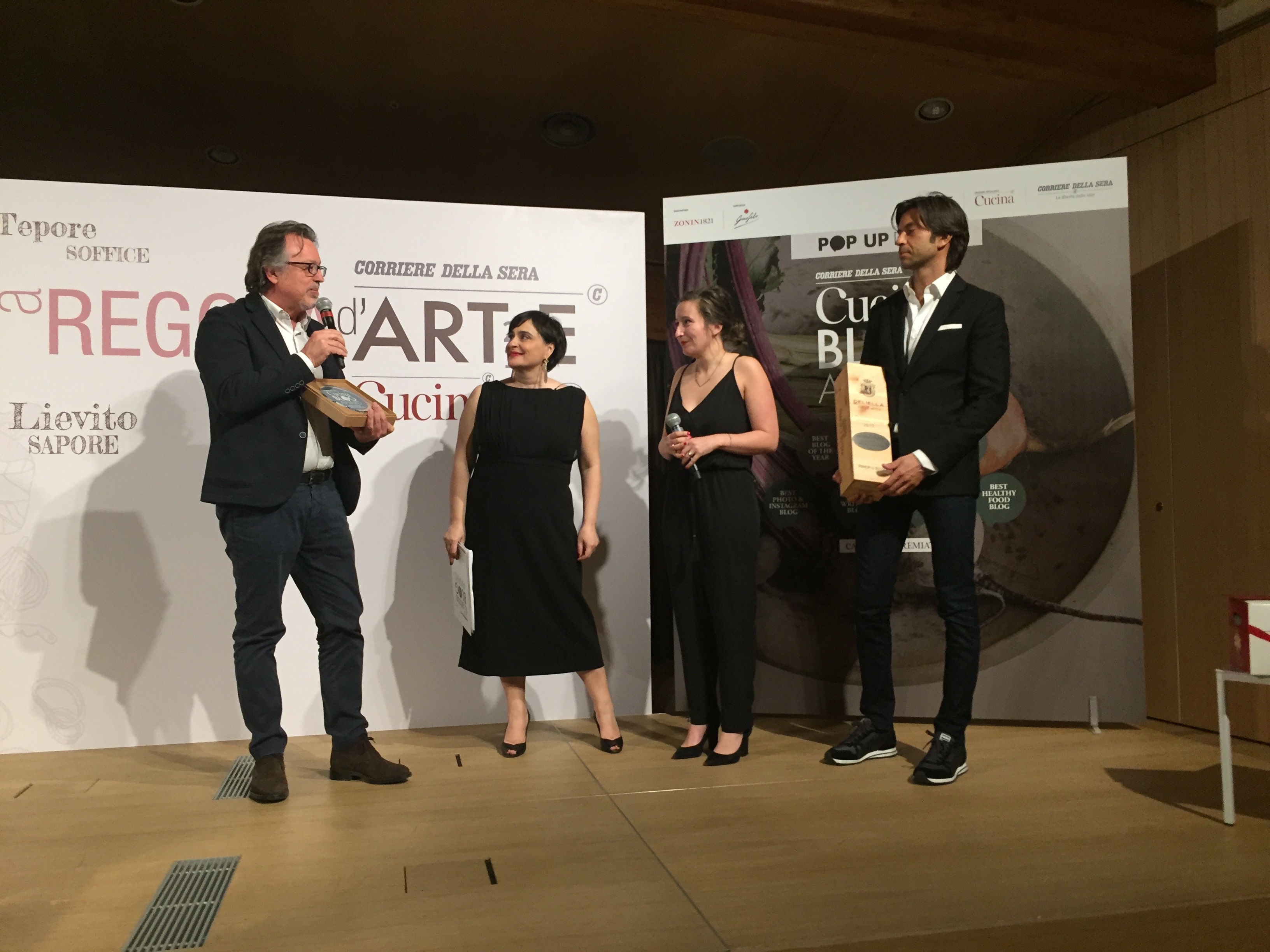
Fun times last night at the Corriere della Sera Cucina Blog Awards in Milan where Talia Kleinplatz, author of the awesome Two for the Bar, took home the award for Best Wine and Spirits blog.

My good friend Talia Baiocchi, editor and founder of PUNCH, was as disappointed as me not to win but it was great to connect in Milan and to get to know the other Talia. We had a blast sitting with her and another lovely friend, Elizabeth Minchilli, who was also in attendance.

From left in the photo above, that’s Luciano Ferraro, wine critic for Corriere della Sera (a writer I admire greatly); Angela Frenda, food editor for the paper; Talia, who won the award; and Francesco Zonin, scion of the Zonin winery group and underwriter of the awards (man, that Francesco is one tall glass of water!).

Thanks to everyone for all the support and kind words in the days leading up to the award ceremony. It was a bummer not to win but it was so much fun to come to Milan and see so many friends, including folks from Texas, from my NYC days, my school days in Italy, and so many more. I even got to have lunch with the celebrated Milanese writer, editor, and provocateur Pietro Cheli, who was as hilarious as he was thought-provoking.

Thanks especially to my great friend Giovanni Contrada, who dressed me for the occasion, and my bromance Giovanni Arcari, who always stands by me like a brother, in all things.

It’s a rainy, cloudy Sunday today in Milan but I’m looking forward to a date with the city and dinner with some old friends tonight.

Buona domenica a tutti! Happy Sunday, yall! 


Ungrafted classic-method Fortana, groovy Umbrian Sangiovese, and a favorite Australian in Houston

From the department of “in case you were concerned I’m not drinking well in Texas”…

It just goes to show the seemingly endless and encyclopedic breadth of Italian wine: until last week, I had never tasted a dry expression of the Fortana grape from Emilia. I had tasted a lot of sweet Fortana in Parma province: when vinified as amabile (sweet), the category is a classic pairing for Culatello di Zibello (and I believe the wine is also used to rinse the ham before it is aged). But last week I learned that dry Fortana is regularly produced in Ferrara province, where the sandy soils near the Adriatic allow growers to cultivate ungrafted (i.e., pre-phylloxera) vines.

Winemaker Mirco Mariotti was in town with his importer Ernest Ifkovitz of Portovino and his classic-method Fortana was nothing short of utterly delicious. I believe it lands in the U.S. with by-the-glass pricing. And Mirco’s website, I’m happy to report, is meticulously translated into English. Bravo, Mirco!

I can’t find any web presence for the winery or wines of Marco Merli, who told me that he is a resolute natural winemaker when I met him last week with Ernest and their Texas distributor Rootstock (also absent from the internets).

When I asked him about why he chose the path of natural winemaking over the shmate business (an Umbrian mainstay industry), he told me that he was inspired by the enologist he initially hired to help him make wines from family-owned vineyards.

“I disagreed with basically everything he did to the wines,” he said, “and so I decided to make them myself.”

Marco’s wines have sparked the attention of natural wine observers in Italy in recent years and rightly so: this monovarietal wine was lip-smackingly good, with that juicy red stone fruit character and zinging acidity that define great Sangiovese. I really loved it.

I was so glad to meet Marco and Mirco and taste these wonderful and soulful wines. For both winemakers, it was a first-time visit to Texas and they both seemed a little bit overwhelmed by the experience. But it’s so great to see courageous importers like Ernest bringing small-scale, thoughtful, and genuine winemakers to our state, where the two big distributors continue to expand their role as the Slugworths of wine.

I’m overjoyed that venerated Italian wine authority Alfonso Cevola, the Dallas-based Import Wine Director at Southern Glazer’s (America’s largest distributor), was wrong when he predicted in January of last year “the demise of the mid-size distributor… They have the lifespan of a tse-tse fly,” he wrote.

Gauging from its track record and the growing number of their wines I’m seeing in the Austin and Houston markets, it would seem that my friends at Rootstock are doing just dandy.

In other news, I was delighted to find this moderately priced bottle of 2015 Tyrrell’s last night at one of Houston’s best wine bars, Camerata.

We were all curious to see if the new wine director there, Chris Poldoian, could maintain the verve and continuity of his predecessor’s program. And I am happy to report that this artisanal-focused list continues to keep us drinking well.

For those who aren’t familiar with Tyrrell’s Hunter Valley Sémillon, it’s one of those classic examples of what Jancis Robinson famously called “Australia’s gift to the wine world.” It was salty and rich on the palate with reserved layers of nuttiness and dry fruit that I believe will only continue to emerge as this long-lived wine ages. Great wine! And great to see it in the Houston market.

I’ll be taking a short break from the blog this week as I head to Italy for the Corriere della Sera’s Cucina Blog Awards ceremony in Milan on Saturday. I’m happy to report that my blog has been nominated in the “best wine and spirits” category and I’m psyched to see all my friends in the world’s fashion capital (and one of my favorite cities). Wish me luck and wish me speed! I’ll see you on the other side…

Parzen family activism in Trump America: here’s to 7 years of Obamacare, the law of the land

Last month, after our congressman John Culberson refused to hold a town meeting and opted instead to speak to the Village Republican Women’s Group at the Lakeside Country Club in Houston, Tracie P (right) attended a protest outside the venue. I took care of our daughters, ages 3 and 5, that day.

On Friday evening, the Parzen family and the Levy-Kelly family — the whole Houston mispucha — raised a glass of organically farmed Prosecco col fondo to celebrate the seventh anniversary of President Obama’s Affordable Care Act.

Seven years and one day after he signed the bill into law, a Republican president and a Republican-controlled congress were unable to “repeal and replace” as they had promised. And President Trump failed to deliver on one of his signature campaign promises.

At the end of the day, a few hours before we toasted with our Glera-filled glasses, Speaker of the House Paul Ryan declared, “Obamacare is the law of the land.”

Here on my blog, I began posting our family’s vehement opposition to then putative Republican candidate Donald Trump back in June of last year. Since that time, I’ve begun posting regularly about his bigoted, hate-filled campaign platform and his racist policies and attitudes since taking office in January of this year.

Since the inauguration, my wife Tracie P (above, right) has become a devoted activist: she organizes monthly meetings of her women’s political activism group in our home and she has repeatedly visited the office of our representative in congress, John Culberson, a rank-and-file Republican, not to mention the offices of Texas Senators Ted Cruz and John Cornyn.

On Saturday, I took our daughters, ages 3 and 5, for the day and Tracie attended Culberson’s long overdue town hall here in Houston.

According to the Houston Chronicle, Houston’s paper of record: “police estimated about 500 people stood in a line [for the town hall] that snaked around the building when the room reached its capacity of 700. Some of those refused admittance were frustrated, shouting, ‘Let us in! Let us in!'”

Parzen family activism will not cease until our government abandons its racist, inhumane, un-Christian, un-Jewish, anti-Muslim, and un-American pursuit of its religious-based travel bans, useless walls on our borders, Russophilia, lower taxes for the wealthy, dismantling of regulation to benefit big business at the cost of everyday Americans, and undermining of the Affordable Care Act — the latter, a policy that actually helps the economically challenged white people who delivered Trump to power.

And Tracie and I will continue to teach our children that the Laws of Moses and the Word of Jesus Christ teach us to love, respect, and aid our fellow humans in time of need regardless of color, religion, ethnicity, or creed.

Earlier this month, Republican Representative Steve King of Iowa notoriously tweeted: “we can’t restore our civilization with somebody else’s babies.”

My parents were “somebody else’s babies,” children of immigrants. I was the child of “somebody else’s babies” and my children are the grandchildren of “somebody else’s babies.”

Evidently, my children’s ethnicity doesn’t align with Republican ideals and values. And the Parzen family is not going to stand for that.

Clos Cibonne 2015 Tibouren: what a great vintage for this wine!

Randall Grahm first poured me Clos Cibonne Côtes de Provence Tibouren when we visited over lunch six years ago in LA. He had picked it up at a southland wine shop while he was working the market. And he seemed to take as much delight in drinking the wine as he did turning me on to it.

Since that time, it’s become (when available in our market) one of the standbys and favorites at our dinner table. It usually lands in Texas when the hype around rosé wines begins to rev up each year.

We enjoy every vintage but this year, with the current release 2015, this wine has what the Italians call the marcia in più, that extra gear in the gearbox.

The fruit in this bottle last night was so vibrant, so transparent and pure, that it just seemed to sing in the glass. What a wine and what a great vintage!

Over the years, we’ve come to know and love the classic, elegant oxidative style of this cask-aged rosé. But in this year’s release, the fruit really jumps out — especially on the palate.

My recommendation: run don’t walk to your favorite wine shop and buy all you can.

So much to tell today and so little time. Thanks for being here this week and buon weekend, ya’ll!

Thoughts and prayers for our sisters and brothers in London…

I was trading emails with the London-based editor of a book I translated yesterday when the news of the attack broke and she went dark. I don’t believe she was anywhere near Westminster and I trust that she’s okay. But I still haven’t heard back from her.

Our thoughts and prayers go out today for our sisters and brothers in London…

Image via Hernán Piñera’s Flickr (Creative Commons).