
BUY THE NEW ALBUM HERE. JUST $9.99!
In another time in my life, writing and recording songs and performing live with my band was a main focus. Since 2013, when my French indy rock band Nous Non Plus stopped touring, my music career has taken a backseat to other interests and pursuits.
But this year, after I met my now bandmate Gwendolyn Knapp in Houston and first heard her songs, we decided to perform and produce an album culled from her songbook in my home studio.
The result is Turn Away (see the liner notes below). It’s available for sale (just $9.99!) on CDBaby as of yesterday and in a few days you’ll be able to find it on all the mainstream music streaming platforms (including iTunes and Spotify).
The album includes our Christmas single “(Nothing Good Rhymes with) Santa Claus,” the one track on the album that we co-wrote. As you’ll see in the video above, it’s a lot of fun and really fits the mood for this year’s holiday in America.
We hope you enjoy the music as much as we did producing it. And we thank you in advance for your support (please buy our album!).
Merry Christmas!
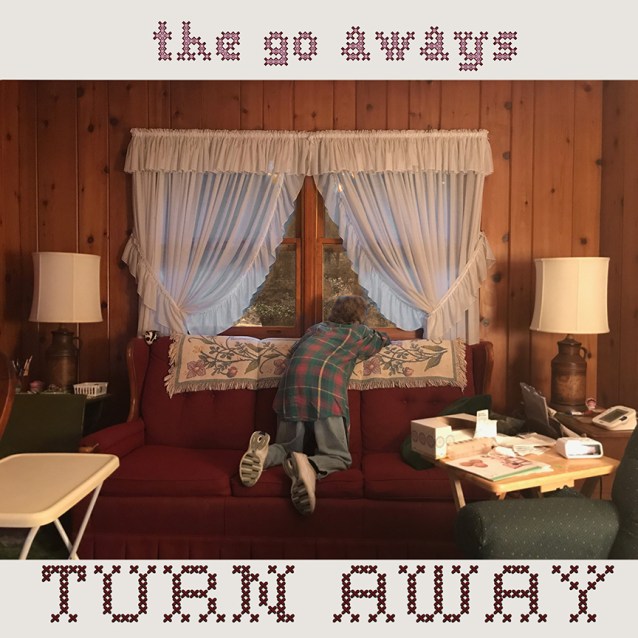 Where did the songs on “Turn Away” come from? How did the lyrics come about, you ask? It’s hard to say. Each song I write just starts with the simple act of fingers on guitar string and then some raw emotion takes over. As Hank once asked of David Allen Coe in “The Ride”: “Boy, can you make folks feel what you feel inside?” Everyone with a guitar and half an ego hopes to answer that question.
Even so, these songs are not autobiographical, but they are drawn from the same stockpile of imagery, feelings, experiences, and general craziness that inspire all of my writing. The voices in these few songs run dark and rampant. Basically, they’re just female narratives put to music, kind of southern gothic, kind of sappy, kind of funny, kind of creepy.
Such is the case with “Drowned,” which actually just began with the chorus some day it’s gonna catch up with you (I’d recently been cheated on when I came up with that little gem) but the lyrics evolved over time into an Old Western-inspired payback tale: A young girl and her sister hiding from the man that’s killed their entire family (as well as two pigs and a deaf mute), and planning to seek revenge on him.
I have a predisposition for writing about bad things, I suppose, having grown up a sixth generation Floridian in Pasco County. My family had its share of dysfunction, mental illness, addiction, alcoholism, baggage, lock ups and let-downs. All that seeps into everything I create, but I also just like the idea of writing songs that turn the trope of country or Americana or rock or folk on its head. Songs that may come off sweet and universal, but always feel a little unhinged when you get a closer listen.
Gwendolyn Knapp
December 1, 2017
Houston, Texas
Turn Away
by The Go Aways
Houston, Texas
1. Drowned
2. Bad People
3. Sweet Talking Man
4. Will You Still Be On My Mind
5. Cold Women, Wine, Whiskey, And Weed
6. Turn Away
7. (Nothing Good Rhymes With) Santa Claus
All songs written by Gwendolyn Knapp except “(Nothing Good Rhymes With) Santa Claus” written by Gwendolyn Knapp and Jeremy Parzen.
It’s Only About Music (ASCAP)
Have We Got Music for You (BMI)
Produced by Jeremy Parzen.
Recorded at Baby P Studios (Houston, Texas).
Mastered by John Moran Mastering.
Vocals and guitars: Gwendolyn Knapp
Bass, additional guitars, keyboards, percussion, drum programming, and background vocals: Jeremy Parzen
Drums: Richard Cholakian
The Go Aways use the ToneCraft Bass Preamp.
Special thanks to Tracie, Georgia, and Lila Jane Parzen.
TheGoAways.com
© Terrible Kids Music 2017
Warning: all rights reserved
Unauthorized duplication is a violation of applicable laws.
Made in U.S.A.
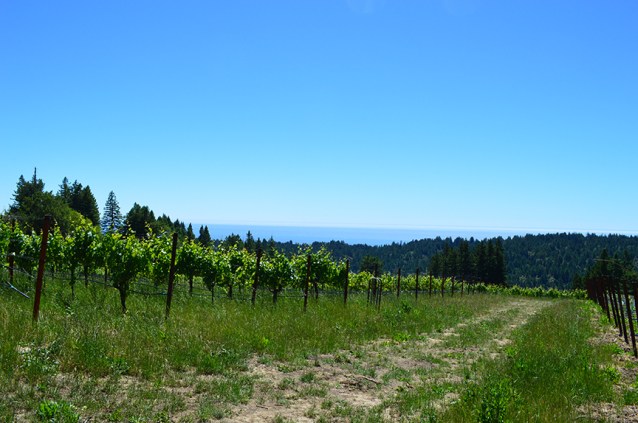 Last week, Slow Wine editor-in-chief Giancarlo Gariglio and I began publishing the first winery profiles from the 2018 Slow Wine guide to the wines of California on the Slow Wine blog.
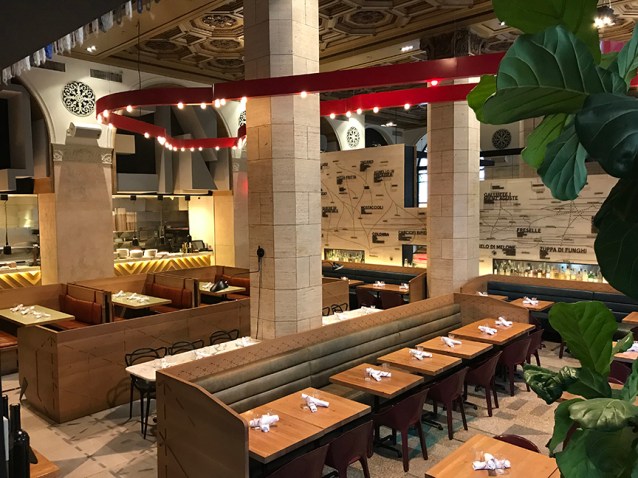 This week found me in LA where I checked in on the wine lists I author and co-author at Sotto and Rossoblu. I also spent some time this week eating out around town to catch up with what has shaped up to be a genuine Italian culinary renaissance here.
 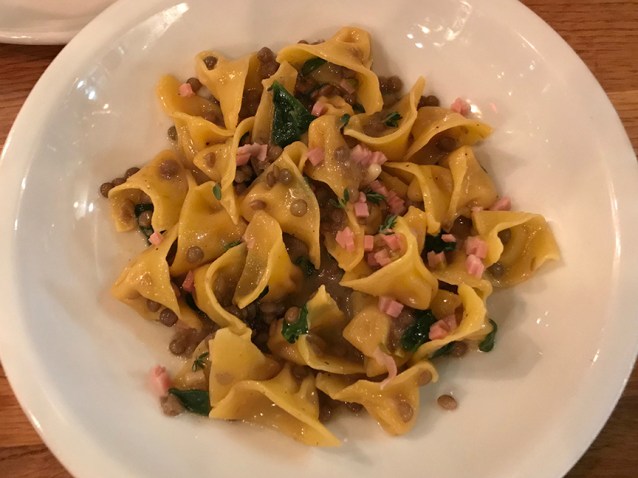 Bestia was completely packed on Monday night. The Monday after Thanksgiving! I had to pull a restaurant connection string to get a table but man, was it worth it.
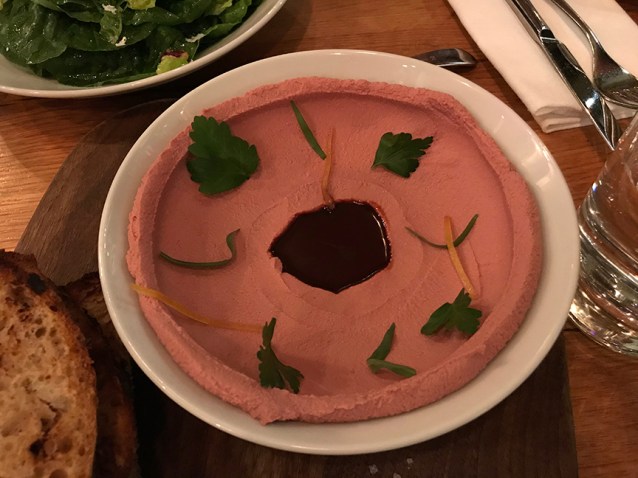 But as much as I loved Bestia and as much as I love the two restaurants I consult with here, the all-time king of Italian cuisine in Los Angeles will always and forever be Gino Angelini, owner and chef at the eponymous Angelini Osteria.
 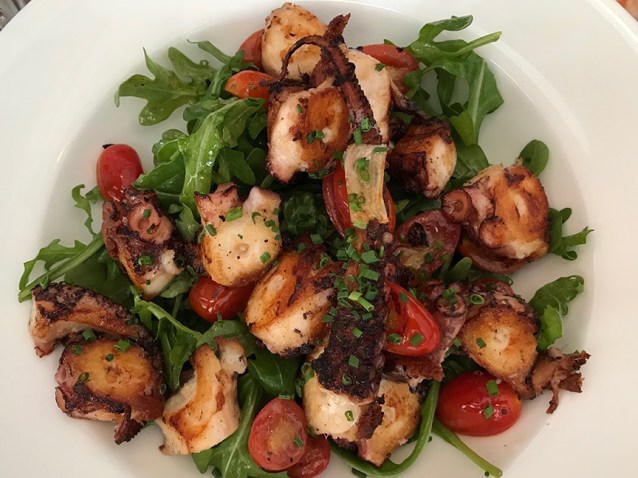 The legendary tagliolini al limone (below).
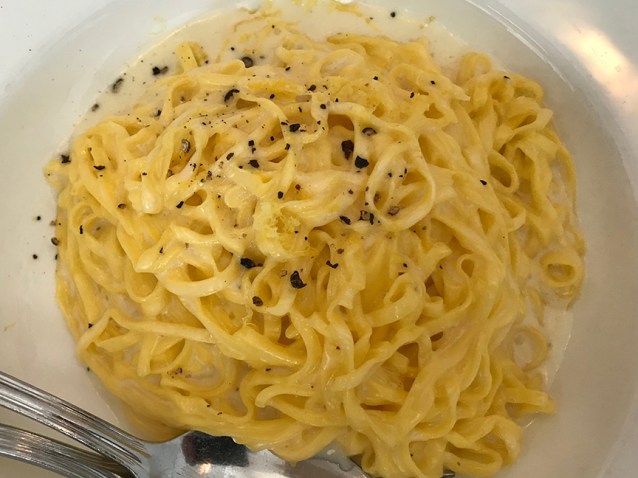 The pappardelle with duck ragù (below) were also fantastic.
 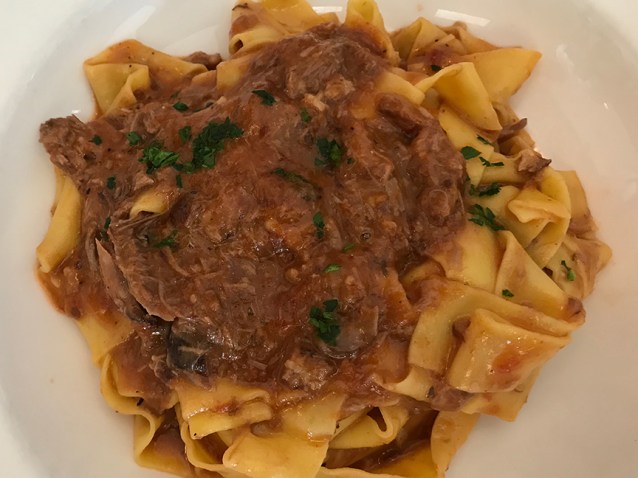 Wow, Gino, as always, ubi major minor cessat. I really love and have always loved your cooking. It was great to be back. Thanks for taking such good care of us (and thanks Anthony for treating!).
 If you’ve ever studied Italian as a second language, you know that you invariably encounter irregular nouns early on in your class.
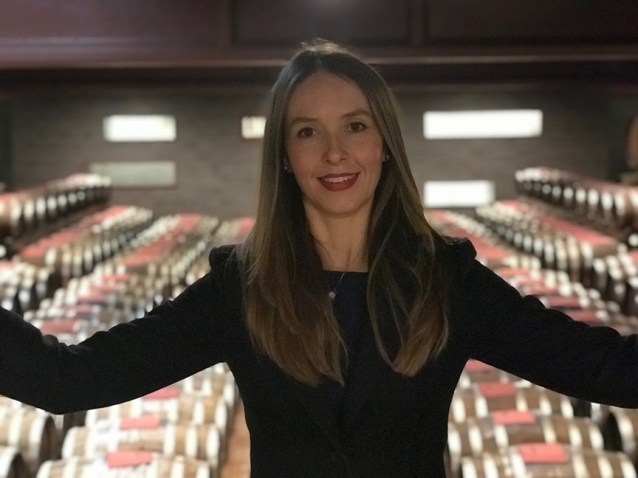 The magnetic Alicia Lini (above) and I will be pouring her wines at Rossoblu in downtown LA on Tuesday. Alicia’s one of my best friends in the wine business and her family’s wines are as contagious as she is.
  We’re thankful that our house didn’t flood and we were all safe in Hurricane Harvey.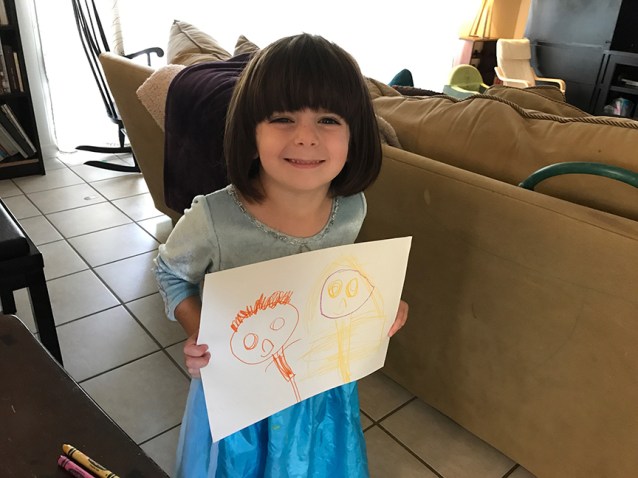
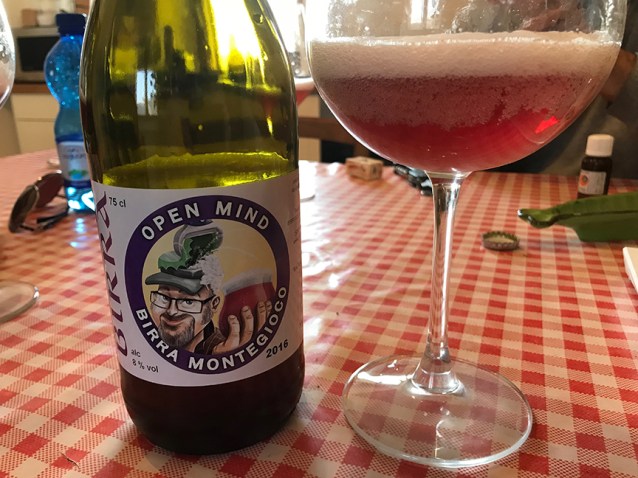 There’s a first time for everything and one of my firsts this week in Italy was tasting
 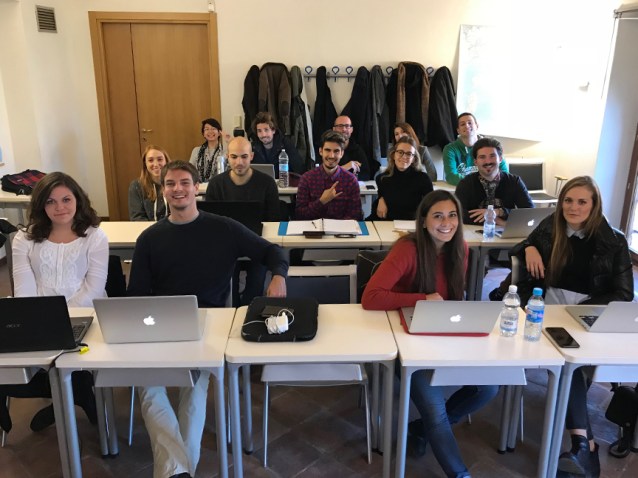 Today, I’ll teach my last wine writing seminar in
  Some of you may remember the famous line by John Landau, music critic and later record producer, published in 1974:
 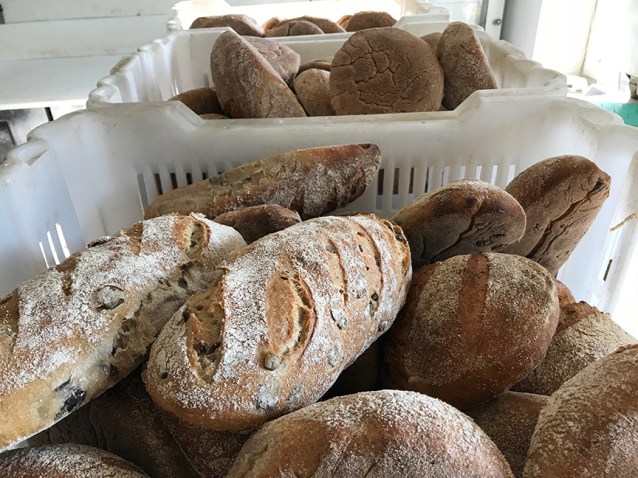 Carlo grows his own wheat and makes his own bread.
  He raises his own pigs and makes his own salumi.
  He farms his own barley for his line of beers.
 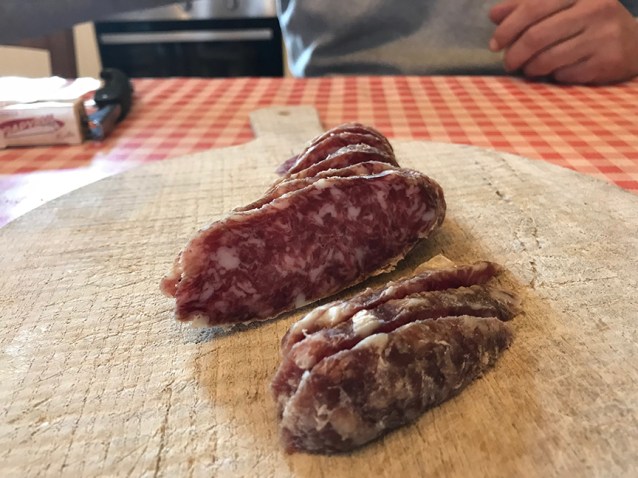 His salame, considered one of the best artisanal salamis in Italy today, was as creamy as butter (for real).
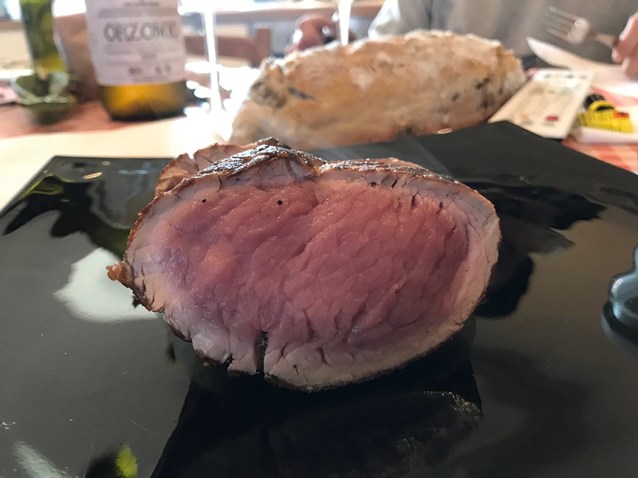 He prepared a pork loin from one of his pigs and then seared it — without any oil, other type of fat, or salt — in a non-stick pan to show us how flavorful it is.
 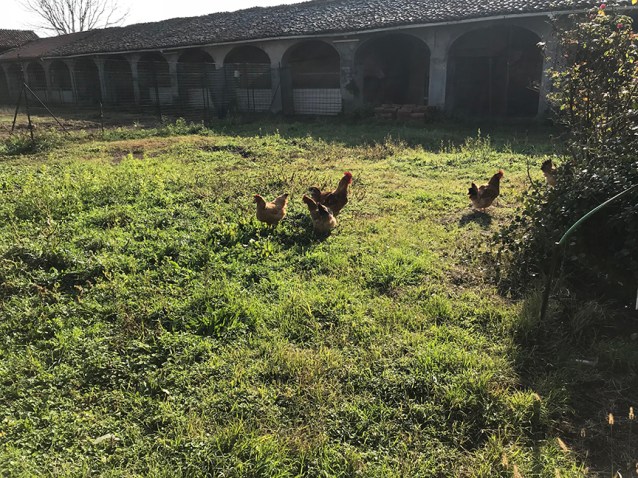 He also sells preserves and eggs from his farm.
  In the fall of 2012, an older white man in a pick-up truck pulled into the parking lot of the post office in the Austin, Texas-area middle-class neighborhood where my wife Tracie and I used to live with our two young daughters.
 It was remarkable to re-read the piece this morning.
 Back in my grad school days, my dissertation advisor — the great Milanese poet Luigi Ballerini — used to boast that he would never let our department become a fabbrica dei disoccupati, a factory churning out unemployable graduates.
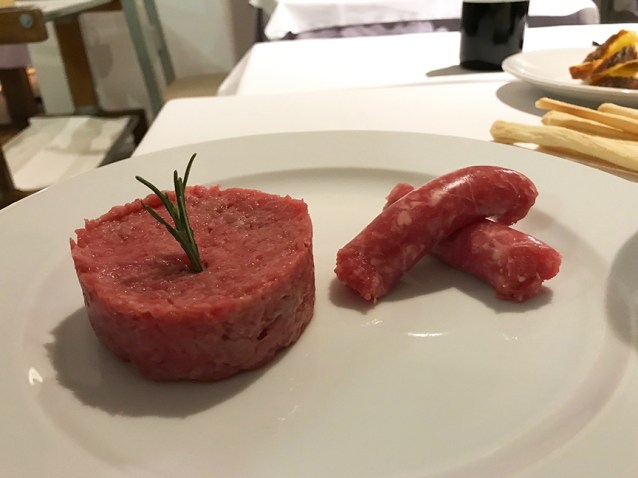 What a meal last night at


