MLK MARCH and Confederate monument PROTEST Monday in Orange, Texas: please join us!

Please join Tracie and me on Monday, January 15 for the NAACP Martin Luther King, Jr. Day March in Orange, Texas.

We will be meeting at Solomon Johnson Park at the corner of 2nd St. and Turrett Ave. at 12:30 p.m. for line-up. March will begin at 1:00 p.m.

Following the March, Tracie and I will be organizing a protest at the Confederate memorial at the intersection of Martin Luther King, Jr. Dr. and Interstate-10 (northwest corner). We are tentatively planning to meet at 3 p.m. and will stay there until sunset.

Here’s my email address if you need more info and/or want to coordinate a ride to Orange for the march and protest.

Yesterday evening the president of Southeast Texas Progressives Louis Ackerman and I met with the local chapter of the NAACP in Orange. Among the action items on our agenda, we discussed our family’s ongoing efforts to repurpose the Confederate memorial being built in Orange by the Sons of Confederate Veterans Texas Division. I’m happy to report that its board gave us its blessing in continuing our fight.

I’ve been researching the origins of the monument and I’ve discovered that the story behind the site is much more complicated than meets the eye. I’ll be writing about the memorial in coming weeks as more pieces in the puzzle come into focus. Please stay tuned: I’m confident that many readers will be surprised by what I’ve found.

The bottom line: despite what many have written and what many believe, ORANGE RESIDENTS DO NOT WANT THIS MONUMENT AND THEY WANT IT REPURPOSED. That’s all I can reveal at the moment…

PLEASE JOIN THE PARZEN FAMILY AT THE MARCH ON MONDAY AND PLEASE MEET US AT THE MONUMENT SITE AFTERWARDS FOR OUR PROTEST. WE ARE ENCOURAGING PROTESTERS TO USE QUOTES FROM MLK FOR THEIR SIGNS. WE WILL BRING EXTRA SIGNS FOR MARCHERS AND PROTESTERS. PLEASE SEE THE NAACP FLIER BELOW. HAPPY MARTIN LUTHER KING DAY!

Top image via Wikipedia Creative Commons. Lower image courtesy of the NAACP Orange Branch 6211.

Bruno De Conciliis: “Wine and may the dance begin,” a poem (translation mine)

Wine is a game, a serious game, a joyful game,
a heroic game, an erotic game, wine is skittish, it’s
joyful, it’s sad, it’s solitary, it’s a sea, it’s a road,
it’s a destination, it’s silence, it’s entropy.

Breathe.

White wine is green, yellow, gold, sometimes orange,
red is ruby, purple, violet, sometimes black.

Wine is instinct, science, pure creativity, painting, music,
Johann Sebastian Bach and Mozart, John
Coltrane and Jimi Hendrix; how is it possible
to drink a baroque wine listening to Purple Haze?

Wine, an intense pleasure, a happy thought, sometimes
requires, sometimes suggests, an undisputed star
or distant tapestry that takes a backseat to conversation
or food, the little pleasures to share with a
friend or a lustful torrent that enchants the viewer,
wine is a friend to humankind and it can be its
worst enemy, wine is happiness, simple sharing or opulence,
comfort in solitude, glue of friendship, wine’s solitary
pleasure creates deep friendships or becomes the
energy of a clique born from happenstance.

Wine is study, knowledge, an immovable journey,
curiosity and sloth, overwhelming passion,
a cruel struggle, a sincere friend who knows the way
you need to go or invents one where there is none.

Memories that lead us to tenderness or move us to laugh,
to smile, to enjoy, enemy of regret and blame, maternal bosom
where you can nurse until becoming aware.

Wine is born from deep within the land, from people
who are bound to it by an umbilical cord
that hasn’t been voluntarily severed, from the uniqueness
of that land, from the specific variety,
from the culture and knowledge of those people, that people.

Wine is the experience of that land, that culture,
the history of a village.

Wine and may the dance begin.

Bruno De Conciliis
(translated from the Italian by Jeremy Parzen)

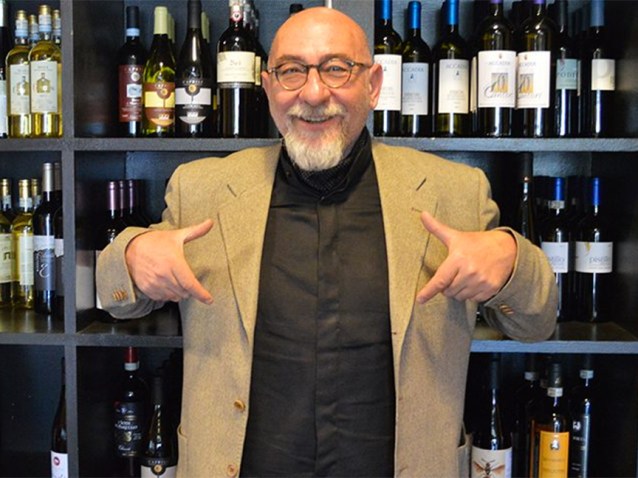
Bruno (below) and I will be leading a tasting of his wines at Sotto in Los Angeles on Thursday, January 25. Please join us. He’s one of the most fascinating grape growers and winemakers I’ve ever had the chance to taste with. And his wines are among the most compelling I’ve ever drawn to my lips. Stay tuned for details.

Protesting racist iconography in Southeast Texas: a recent effort and upcoming MLK march in Orange (TX)

Image courtesy of Southeast Texas Progressives.

On Wednesday of last week, my wife Tracie and I stood for two hours on the corner of Interstate 10 and Martin Luther King, Jr. Dr. in Orange, Texas in protest of the Confederate memorial being built there by the Sons of Confederate Veterans Texas Division.

We organized the gathering together with Southeast Texas Progressives, an advocacy and activist group created by its founders so that they and we could have “a place to express our shared ideals and political views without fear of being insulted or mocked.”

Here’s the Facebook group. Feel free to join and/or PM and I’ll invite you to join.

Here’s the Facebook page. Please like us and share in solidarity.

Our four-person protest was covered by both the Beaumont Enterprise and the Orange Leader. (Beaumont, Orange, and Port Arthur form what is known as the Golden Triangle in Southeast Texas.)

To get an incomplete picture of how our activism was received online, I encourage you to read the comment thread on the Enterprise site.
Continue reading

Jean-Luc Le Du Memorial: Thursday, January 4 @ City Winery (NYC)

The following info comes via the sommelier brain collective email list. The image comes via Yannick Benjamin’s Facebook.

I only had the opportunity to interact with wine industry legend Jean-Luc Le Du on a couple of occasions. He was the nicest guy and always seemed to have time to talk wine with anyone around him. I’ll never forget tasting Château Mouton Rothschild 1945 with him. It was one of the highlights of my decade in New York — the wine and the notes he shared.

Please check out this Wine Spectator profile and remembrance “Standing Up Next to a Mountain” by Bruce Sanderson to get a sense of Jean-Luc’s role in the New York and U.S. wine scene.

Iohannes Luca sit tibi terra levis.

*****

Dear friends,

Jean-Luc Le Du was a rockstar in our lives. He lived with kindness, humility, and generosity, and it infected everyone he met. In commemoration of his death, there will be a memorial this Thursday, January 4th, from 4-6:30pm, at City Winery to celebrate his life . There will be much reminiscing, a live band, and of course, toasts in his honor.

We encourage you all to bring a bottle of wine to share with your friends. Below is a flyer with additional information regarding the event and please feel free to share with your friends and social media. We hope to see you there.

Date: Thursday, January 4th
Time: 4:00pm-6:30pm
Where: City Winery, 155 Varick St.
BYOB

Yannick Benjamin
Co-Founder
Wheeling Forward | www.wheelingforward.org
Empowering people with disabilities to achieve NOW!

Parzen Family Christmas Letter 2017

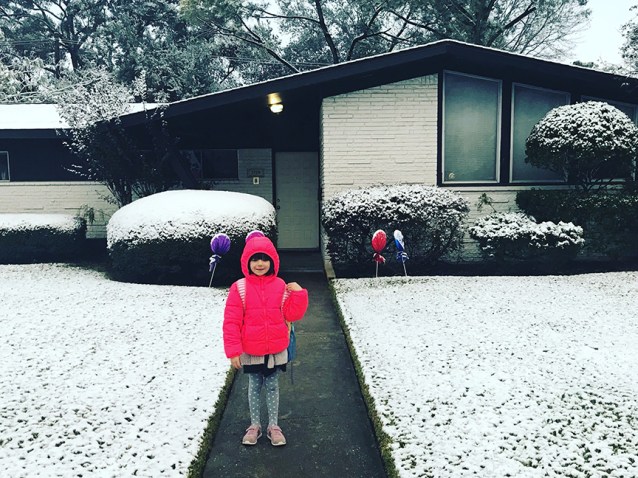
One of the most remarkable things about 2017 was that it snowed in Houston this year! That hadn’t happened since 2009. We were living in Austin then, we weren’t yet married, and neither of our girls had been born.

I happened to be in Los Angeles that day but when I spoke to Georgia (in the photo above) the wonder in her voice belonged to a girl whose wish had come true: to see the snow, a desire she’s been talking about for a few years now (especially after we watched the movie “Frozen”).

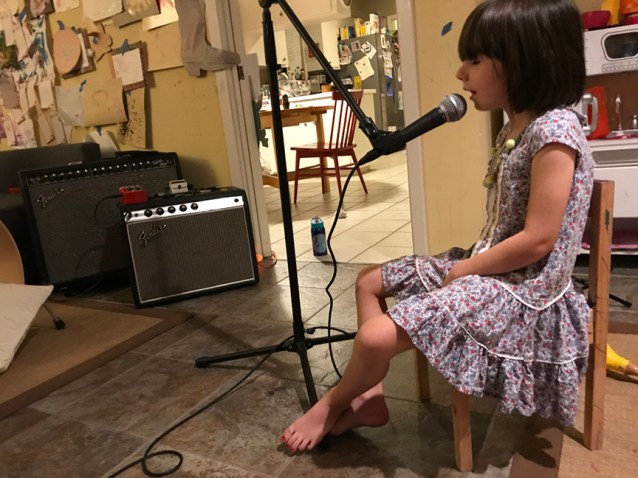
Georgia turned 6 a few days after the snow fell. She’s been enjoying her first year of kindergarten at a music magnet school and she loves her violin teacher (we love her, too). But her great obsession in 2017 has been the musical “Hamilton.”

She’s always been a big fan of musical theater (the apple doesn’t fall far from the tree, does it?). But there’s something special about her determination to learn every line in the show, to master every nuance of delivery, and to perfect the cadence and intonation of her performance. As the year comes to a close, it seems that she’s memorized nearly the entire score.

Lila Jane turned 4 this summer and her favorite form of artistic expression is dance. That’s her (center) at her mid-season dance recital earlier this month.

She’ll spend hours upon hours in our living room performing her personally choreographed ballets. But she’s equally devoted to her painting and to doing puzzles (something she has an impressive knack for). She’s also begun to develop her motor skills. She and Georgia got their first bicycles this season and I can’t image it’s going to be long before her training wheels come off.
Continue reading

10 biggest stories to watch in Italian wine in 2018 (#1 might surprise you)

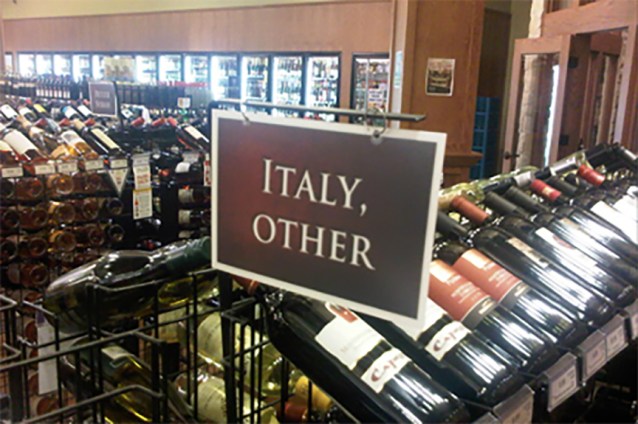
When I first moved to Texas nine years ago, it was common to see Italy grouped with “other” in wine shops (the Foucauldian implications were evident, at least to me). Today, it’s rare that Italy doesn’t have its own, distinct space on the retail floor.

10. The expanding Balkanization of importing and distributing.

Over the last two years, more and more blue chip and marquee-name Italian wineries have abandoned national distribution opting instead for a state-by-state strategy. None of the biggest players in Italian wine imports wield the power they did 10 years ago when the field of wines and importers was much smaller. California, with its extremely liberal importing and distributing regulation, sets the bar for this trend. It simply doesn’t make sense anymore to rely on the three-tier system with its inherent markups and bureaucratic obstacles.

9. The growth of self-importing.

More and more Italian wineries are investing in their own importing and distribution channels. In Texas, for example, a major northern Italian estate (with little history or market presence in the state) set-up its own importing and distributing company this year and from what the owner has told me, the company is looking to expand its reach to California and other states as well. High-profile Italian estates have also invested in existing companies in recent years. This trend will only continue to flourish.

8. Robust tribalization among big distributors.

As the big distributors have watched their empire dwindle as more and more small importer-distributors pop up across the U.S., they have doubled down on their efforts to muscle their smaller competitors through aggressive marketing and sometimes unfair market practices. Increasingly, I’ve seen wine buyers wooed with gifts and liberal expense accounts. It’s reminiscent of the “good old days” (as some would call them) when reps entered accounts with wads of cash to distribute. And it’s as scary as hell.

7. The importer vanity label.

Among their efforts to curb small-business mid-sized importers and distributors, the fat cats have increasingly turned to vanity labels — created out of nothing but ink, paper, glue, glass, and wine. They obtain large quantities of wine from commercial producers, concoct a back story and marketing campaign, and then sell the wines at a high markup. It’s a brilliant business model, no doubt. But it negates the very thing that makes Italian wine so cool: its small-scale familial approach to viticulture. Slap some Tuscan sun on to a bottle of Montepulciano farmed in Molise and pass out the cigars.

6. Multi-national corporations’ land grab.

One of the biggest stories of 2016 was the sale of Piedmont heritage producer Vietti to the American owners of the Kum and Go convenience store chain. One of the biggest Italian wine stories of 2017 was the release of what may be the highest-priced Italian wine ever. A growing number of Italians fear that it’s only a matter of time before many of the best Italian estates are bought-up by multi-national corporations. Sadly, the unstoppable march of capitalist progress is, well, unstoppable.

5. Sicily is the coolest kid on the block.

As a wine buyer and an Italian wine trade observer, I’ve been seeing more and more value-driven, high-quality wines coming from the island. Investment in Sicilian wine, from Etna to Vittoria, is only growing and Sicilians have become increasingly savvy about marketing their wines in the U.S. It seems like every day, I taste something great from a new Sicilian winery. And it’s not just limited to cool-kid estates. Last year, I was thrilled to see Monica Larner (who’s doing wondrous things for Italian wine, btw) devote so much ink to heritage winery Feudo Montoni and its show-stopping wines. This year, Ian D’Agata wrote the following for Vinous: “Feudo Montoni is one of Italy’s best but still relatively little known estates.” Yes! Keep the great wine (and great wine writing) coming…

4. Sparkling wine.

The unbridled success of Prosecco in the 1990s has spawned a wave of sparkling wine production in Italy. From Sicily to Gambellara, it seems that everyone wants to get in on the sparkling wine gravy train — with mixed results. There’s no doubt that sparkling wine is the fastest growing category in wine across the world and we are only going to see more bubbles and more investment in Italian bubbles marketing here in the U.S.

3. Natural wine.

The ongoing debate over what is and what is not natural wine remind me of the countless hours we used to spend in graduate seminars discussing the definition of post-post-modernism. Sometimes it took up so much time that we hardly devoted our attention to the works of literature we were supposed to be studying. There’s no doubt that natural wine has established itself firmly as a market and marketing category in the minds of U.S. consumers — especially among young ones. In bon appétite, wine writers Belle Cushing and Marissa A. Ross called natural wine “2017’s Drink of the Year.” One of their criteria for selecting a bottle of natural wine was “It’s Fine to Just Pick the Coolest Looking Label.” Yes, it’s come to that. But it can only be a good thing in my view: the newer wave of natural wine enthusiasts only continues their predecessors’ efforts to champion small-scale farming and wholesomeness. That’s a positive, at least where I come from.

2. Asti Secco.

The first wave tsunami of Asti Secco is beginning to hit American shores. It’s going to give Prosecco a run for the money. The category didn’t make landfall in time to insinuate itself fully into holiday sparkling wine sales in the U.S. market. But Prosecco growers are going to be carefully watching developments in 2018. There’s a lot of money and marketing savvy behind the brands that are pushing this newly created Italian wine. Hold on to your seats… it’s coming to a Target near you!

1. The delayed issuance of CMO marketing subsidies.

Although hardly noticed by the American wine trade, the biggest story in Italian wine in 2017 was Italy’s failure to renew its CMO subsidies. More widely known by its Italian acronym OCM, the EU’s Common Market Organisation includes programs to protect and promote heritage viticulture and sustainable farming practices. But it also provides funds for the marketing European wines abroad. In the fall 2017, France and Spain received their new round of foreign marketing subsidies without a hitch. Italy did not: the EU delayed the issuance of monies earmarked for the country until February of 2018. From what I’ve been able to find out, the delay is owed to the fact that Italy wasn’t able to spend all of the funds allocated for 2017.

Thanks for reading and thanks for drinking Italian wine in 2017, 2018, and beyond…

Gualtiero Marchesi, 87, pioneer of Italy’s new cuisine, dies

Gualtiero Marchesi, a pioneer of Italy’s new cuisine and the first Italian chef to be awarded three stars by the Michelin guide, has died.
The Corriere della Sera reports today that Marchesi was surrounded by his family at his home in Milan. The cause of death was a tumor.

Marchesi famously became the first Italian chef to be awarded the top ranking by the French restaurant guide in 1985 (published in 1986). He also made headlines when he “gave his stars back” in 2008.

“I’ve had enough with scores,” he said at the time. “From now on, I’m only accepting comments.”

A generation of Italian chefs — many of them now celebrities in their own right — cooked in his kitchens and studied with Marchesi, who is widely viewed as the father of the new wave of Italian cookery.

I only met him once, nearly 20 years ago in New York at an event at the Tavern on the Green. He was extremely approachable and polite, a true gentleman of Italian gastronomy.

In his talk that day, Marchesi, who was born in Milan and opened his first restaurant there, spoke of making a risotto alla milanese while attending a food event in Israel. He couldn’t use Parmigiano Reggiano — a key ingredient — to make the dish, he said, because it had to be kosher. He used olive oil instead, he recounted, noting that the omission of dairy didn’t diminish the authenticity of the recipe.

“You have to cook with the ingredients available to you,” he said. “That’s what makes for great cuisine.”

I’ve never forgotten his advice, nor will I ever.

Gualtere sit tibi terra levis.

Read the English-language Wikipedia entry on his life and career here.

Image via Bruno Cordioli’s Flickr (Creative Commons).

Best Champagne buys for the holidays (Houston-centric recommendations)

When it comes to sparkling wine for the holidays, there’s really no good reason for Champagne to eclipse the myriad classic-method wines available today from other appellations.

But let’s face it: even for the hippest and most ardent lovers and defenders of pét[illant]-nat[urel], there’s nothing that beats a great Champagne house — large, small, storied, best-kept-secret, corporate-owned, or family-run — on New Year’s Eve.

At our house, we will be drinking my favorite Franciacorta over the holidays (yes, Arcari + Danesi is now legal in Texas!). But we will also be drinking Champagne with the family friends we will be hosting for New Year’s.

Yesterday, I made the rounds of some of my favorite wine shops in Houston and here’s what I found.

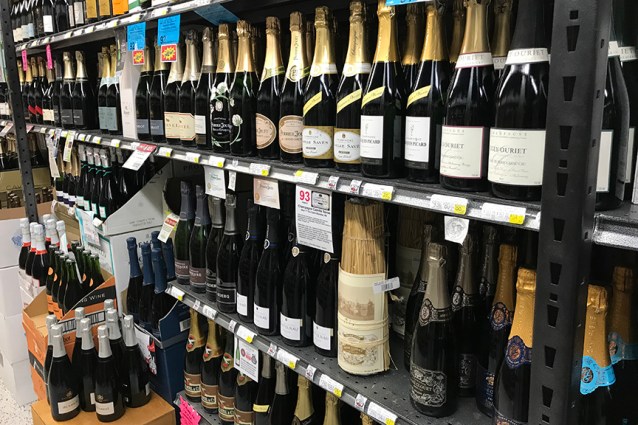
America’s behemoth wine and spirits retailer Spec’s has its flagship store in Midtown (on the “verge of downtown,” as my current favorite singer-songwriter-guitarist Robert Ellis would say). When it comes to Champagne, the outfit has cornered the market on the most aggressive pricing for the top domaines. And it also had the biggest selection of large-format Champagne — a great option for entertaining during the holidays.

I can’t ever recommend shopping at Spec’s without adding this caveat: when buying entry-tier wines there, you have to be sure to check the vintage to make sure that you’re getting the current release. Unfortunately, there are legions of stale wines that populate its shelves (especially when it comes to white wines). But when it comes to premium appellations like Champagne, Bordeaux, and Burgundy, Spec’s pricing is the most competitive.

Delamotte, Pol Roger, Bollinger, Pierre Péters, Billecart-Salmon, Henriot, Gaston Chiquet, André Clouet… Paying cash/debit and buying six bottles or more, all of the above wines landed at more-than reasonable prices (even when compared with more liberal markets like California, where wine sales are less heavily regulated by the Communist government there, a paradox and conundrum of contemporary American mores).

Spec’s also had a great price on La Montina Franciacorta, the vintage-dated rosé and the Satèn. If you’re looking to spend something closer to $30 as opposed to $50 (the average price for a decent bottle of Champagne), this is my number-one recommendation. I like the wines a lot from La Montina, an organic grower and solid winemaker.

Next on my itinerary was the Houston Wine Merchant where prices are higher but you the level of wine knowledge among the staff and attentive customer service are more than worth the admission price. I was impressed by some of the more coveted bottles they had there.

I wish I could afford the Pierre Gimonnet 2010 Spécial Club, for example, or the Vouette & Sorbée Saignée de Sorbée Rosé Brut Nature. I couldn’t find wines like that anywhere else in my adoptive city. Alas, they won’t be served at our house this year. Great wines…

One of the most overlooked venues for fine wines in Houston is the Kroger’s supermarket on North Shepherd, where a purchase of six bottles or more (mix-and-match) gets you a 10 percent discount.

You won’t find some of the more esoteric bottles of Champagne that some of us prefer for special occasions like New Year’s. But you will find extremely aggressive pricing. Entry-tier Taittinger and Perrier-Jouët — perfectly respectable, delicious wines — both clock in around $40 if you hit the six-bottle threshold (mix-and-match on any wine, including great prices on Qupé and Mattiasson, two of my favorite Californians, for example).

And if you want to land below $30, the Californian classic-method Domaine Carneros by Taittinger is a great option for a great domestic sparkler, available at Kroger’s.

Whatever you drink this year for the holidays, I hope you drink it with someone you love.

Happy holidays, everyone!

How to handle a faulty cage on a bottle of sparkling wine? Sommeliers please weigh in!

Over the weekend, Tracie, our girls, and I hosted a holiday party for roughly 50 people in our home. In keeping with seasonal spirit, I wanted to greet every adult guest with a glass of sparkling wine. And so I had chilled a six-pack of one of my favorites.

In order to have the wine ready, I decided to open the bottles a few minutes before guests were to arrive.

And that’s when something DISASTROUS happened: the cage on every bottle was faulty. Something at the winery must have gone awry when the wine was disgorged and sealed. Either that or the cages themselves were defective.

As any wine pro should be able to tell you, it takes six turns to remove the cage from a bottle of sparkling wine. But occasionally (rarely though it does happen), the wire will break before the cage can be removed. (It wasn’t the wine in the photo above btw; it was a wine from another European appellation.)

How do you deal with this issue when it arises? I’d really appreciate any insights.

Here’s how I handled the situation.

First of all, I took all the wine outside. I knew that the pressure of cutting the wire from the cage would agitate the bottle, making the pressure inside the bottle even strong and increasing the risk that I would not be able to contain the cork. I wanted to make sure that no one (including me) would be hurt.

Armed with a wine key, kitchen shears, and a dish towel, I gingerly used the knife of the wine key to pull the wire a few millimeters away from the bottle.

Then with my thumb placed firmly over the cage, I used the shears to cut the wire.

As I suspected, the cork was ready to pop. Even though I had been extremely carefully not to disturb the bottle too much, the force exerted to pry away and then cut the wire was enough to increase the pressure in the wine to the point that the cork would pop off if left unchecked.

Holding the cork tightly with my thumb, I loosened the cage until the cork popped off. It was extremely difficult to keep the corks from being shot across the backyard. I managed to hold on to all of them. But I was glad that I had stepped outside: it was clear to me that I risked not being able to control the situation.

Sommeliers, what tool should you have on hand for this situation? I had kitchen shears but I could have also used needle-nose wire cutters (that I always have handy for when I work on my guitars).

What do you do when this happens on the floor of a restaurant during service?